Record Information
Version1.0
Creation Date2014-08-29 05:46:52 UTC
Update Date2026-04-17 18:25:28 UTC
Accession NumberCHEM003110
Identification
Common NameHypoxanthine
ClassSmall Molecule
DescriptionHypoxanthine is a uremic toxin. Uremic toxins can be subdivided into three major groups based upon their chemical and physical characteristics: 1) small, water-soluble, non-protein-bound compounds, such as urea; 2) small, lipid-soluble and/or protein-bound compounds, such as the phenols and 3) larger so-called middle-molecules, such as beta2-microglobulin. Chronic exposure of uremic toxins can lead to a number of conditions including renal damage, chronic kidney disease and cardiovascular disease. Hypoxanthine is a naturally occurring purine derivative and a reaction intermediate in the metabolism of adenosine and in the formation of nucleic acids by the salvage pathway. Hypoxanthine is also a spontaneous deamination product of adenine. Lesch-Nyhan disease is caused by deficiency of the purine salvage enzyme hypoxanthine-guanine phosphoribosyltransferase.
Contaminant Sources
  • FooDB Chemicals
  • HMDB Contaminants - Feces
  • HMDB Contaminants - Urine
  • STOFF IDENT Compounds
  • T3DB toxins
  • ToxCast & Tox21 Chemicals
Contaminant Type
  • Food Toxin
  • Metabolite
  • Natural Compound
  • Organic Compound
  • Uremic Toxin
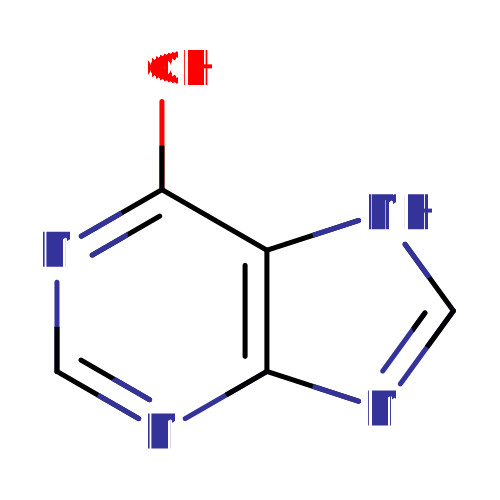
Chemical Structure
Thumb
Synonyms
ValueSource
6(1H)-PurinoneChEBI
6-OxopurineChEBI
9H-Purin-6(1H)-oneChEBI
HypChEBI
Purin-6(1H)-oneChEBI
Purine-6-olChEBI
1,7-Dihydro-6H-purin-6-oneHMDB
1,7-Dihydro-6H-purine-6-oneHMDB
1H,7H-HypoxanthineHMDB
3H-Purin-6-olHMDB
4-Hydroxy-1H-purineHMDB
6-Hydroxy-1H-purineHMDB
6-HydroxypurineHMDB
7H-Purin-6-olHMDB
9H-Purin-6-olHMDB
Hypoxanthine enolHMDB
Purin-6(3H)-oneHMDB
Purin-6-olHMDB
SarcineHMDB
SarkinHMDB
SarkineHMDB
Chemical FormulaC5H4N4O
Average Molecular Mass136.112 g/mol
Monoisotopic Mass136.039 g/mol
CAS Registry Number68-94-0
IUPAC Name7H-purin-6-ol
Traditional Name6-hydroxypurine
SMILESOC1=NC=NC2=C1NC=N2
InChI IdentifierInChI=1S/C5H4N4O/c10-5-3-4(7-1-6-3)8-2-9-5/h1-2H,(H2,6,7,8,9,10)
InChI KeyFDGQSTZJBFJUBT-UHFFFAOYSA-N
Chemical Taxonomy
Description belongs to the class of organic compounds known as hypoxanthines. Hypoxanthines are compounds containing the purine derivative 1H-purin-6(9H)-one. Purine is a bicyclic aromatic compound made up of a pyrimidine ring fused to an imidazole ring.
KingdomOrganic compounds
Super ClassOrganoheterocyclic compounds
ClassImidazopyrimidines
Sub ClassPurines and purine derivatives
Direct ParentHypoxanthines
Alternative Parents
Substituents
  • 6-oxopurine
  • Hypoxanthine
  • Pyrimidone
  • Pyrimidine
  • Azole
  • Imidazole
  • Vinylogous amide
  • Heteroaromatic compound
  • Azacycle
  • Organic oxide
  • Organopnictogen compound
  • Organooxygen compound
  • Organonitrogen compound
  • Organic nitrogen compound
  • Organic oxygen compound
  • Hydrocarbon derivative
  • Aromatic heteropolycyclic compound
Molecular FrameworkAromatic heteropolycyclic compounds
External Descriptors
Biological Properties
StatusDetected and Not Quantified
OriginEndogenous
Cellular Locations
  • Cytoplasm
  • Extracellular
  • Lysosome
  • Peroxisome
Biofluid LocationsNot Available
Tissue Locations
  • Adipose Tissue
  • Epidermis
  • Erythrocyte
  • Fibroblasts
  • Intestine
  • Kidney
  • Liver
  • Muscle
  • Placenta
  • Platelet
  • Prostate
  • Skeletal Muscle
  • Spleen
  • Testes
Pathways
NameSMPDB LinkKEGG Link
Purine MetabolismSMP00050 map00230
Xanthinuria type ISMP00512 Not Available
Xanthinuria type IISMP00513 Not Available
Molybdenium Cofactor DeficiencySMP00203 Not Available
Xanthine Dehydrogenase Deficiency (Xanthinuria)SMP00220 Not Available
ApplicationsNot Available
Biological Roles
Chemical RolesNot Available
Physical Properties
StateSolid
AppearanceWhite powder.
Experimental Properties
PropertyValue
Melting Point150°C
Boiling PointNot Available
Solubility0.7 mg/mL
Predicted Properties
PropertyValueSource
Water Solubility13 g/LALOGPS
logP-0.55ALOGPS
logP-0.048ChemAxon
logS-1ALOGPS
pKa (Strongest Acidic)8.72ChemAxon
pKa (Strongest Basic)1.73ChemAxon
Physiological Charge0ChemAxon
Hydrogen Acceptor Count4ChemAxon
Hydrogen Donor Count2ChemAxon
Polar Surface Area74.69 ŲChemAxon
Rotatable Bond Count0ChemAxon
Refractivity35.5 m³·mol⁻¹ChemAxon
Polarizability11.82 ųChemAxon
Number of Rings2ChemAxon
Bioavailability1ChemAxon
Rule of FiveYesChemAxon
Ghose FilterNoChemAxon
Veber's RuleNoChemAxon
MDDR-like RuleNoChemAxon
Spectra
Spectra
Spectrum TypeDescriptionSplash KeyView
GC-MSGC-MS Spectrum - GC-EI-TOF (Pegasus III TOF-MS system, Leco; GC 6890, Agilent Technologies) (2 TMS)splash10-0159-3970000000-0d844fae4a1ffe158823Spectrum
GC-MSGC-MS Spectrum - GC-EI-TOF (Pegasus III TOF-MS system, Leco; GC 6890, Agilent Technologies) (Non-derivatized)splash10-014i-1790000000-ae93bf8bf07b30b65e1aSpectrum
GC-MSGC-MS Spectrum - GC-EI-TOF (Pegasus III TOF-MS system, Leco; GC 6890, Agilent Technologies) (2 TMS)splash10-00di-9340000000-1184c503fb61344c4853Spectrum
GC-MSGC-MS Spectrum - GC-MS (2 TMS)splash10-014i-3590000000-a419976950afe7934cbcSpectrum
GC-MSGC-MS Spectrum - EI-B (Non-derivatized)splash10-000i-9800000000-9c266d6963658e9d2cf1Spectrum
GC-MSGC-MS Spectrum - GC-EI-TOF (Non-derivatized)splash10-0159-3970000000-0d844fae4a1ffe158823Spectrum
GC-MSGC-MS Spectrum - GC-EI-TOF (Non-derivatized)splash10-014i-1790000000-ae93bf8bf07b30b65e1aSpectrum
GC-MSGC-MS Spectrum - GC-EI-TOF (Non-derivatized)splash10-00di-9340000000-1184c503fb61344c4853Spectrum
GC-MSGC-MS Spectrum - GC-MS (Non-derivatized)splash10-014i-3590000000-a419976950afe7934cbcSpectrum
GC-MSGC-MS Spectrum - GC-EI-TOF (Non-derivatized)splash10-014i-2890000000-3be4d08be45781881bc1Spectrum
GC-MSGC-MS Spectrum - GC-EI-TOF (Non-derivatized)splash10-014i-1590000000-bb6f003bfa7bd04628a1Spectrum
Predicted GC-MSPredicted GC-MS Spectrum - GC-MS (Non-derivatized) - 70eV, Positivesplash10-0a5i-8900000000-e20eb5d939a2c406a6e2Spectrum
Predicted GC-MSPredicted GC-MS Spectrum - GC-MS (1 TMS) - 70eV, Positivesplash10-0613-5900000000-be0624b928ba71cc797dSpectrum
Predicted GC-MSPredicted GC-MS Spectrum - GC-MS (Non-derivatized) - 70eV, PositiveNot AvailableSpectrum
Predicted GC-MSPredicted GC-MS Spectrum - GC-MS (TMS_1_2) - 70eV, PositiveNot AvailableSpectrum
Predicted GC-MSPredicted GC-MS Spectrum - GC-MS (TBDMS_1_1) - 70eV, PositiveNot AvailableSpectrum
Predicted GC-MSPredicted GC-MS Spectrum - GC-MS (TBDMS_1_2) - 70eV, PositiveNot AvailableSpectrum
LC-MS/MSLC-MS/MS Spectrum - Quattro_QQQ 10V, Positive (Annotated)splash10-000i-0900000000-2b36c20acd9973b317f5Spectrum
LC-MS/MSLC-MS/MS Spectrum - Quattro_QQQ 25V, Positive (Annotated)splash10-0api-9800000000-fb4e3cccb7d27d119febSpectrum
LC-MS/MSLC-MS/MS Spectrum - Quattro_QQQ 40V, Positive (Annotated)splash10-0aor-9200000000-33c2f9eedf9a878530beSpectrum
LC-MS/MSLC-MS/MS Spectrum - EI-B (HITACHI M-80) , Positivesplash10-000i-9800000000-9c266d6963658e9d2cf1Spectrum
LC-MS/MSLC-MS/MS Spectrum - LC-ESI-ITFT (LTQ Orbitrap XL, Thermo Scientfic) , Positivesplash10-000i-0910000000-4da64abddc3ac8ab573aSpectrum
LC-MS/MSLC-MS/MS Spectrum - LC-ESI-ITFT (LTQ Orbitrap XL, Thermo Scientfic) , Positivesplash10-014i-1900000000-859f61101b12be0b2978Spectrum
LC-MS/MSLC-MS/MS Spectrum - LC-ESI-ITFT (LTQ Orbitrap XL, Thermo Scientfic) , Positivesplash10-014i-1900000000-f5d899e7988568d5bcabSpectrum
LC-MS/MSLC-MS/MS Spectrum - LC-ESI-ITFT (LTQ Orbitrap XL, Thermo Scientfic) , Positivesplash10-000i-0900000000-e19e6d04568d3560eb4aSpectrum
LC-MS/MSLC-MS/MS Spectrum - LC-ESI-ITFT (LTQ Orbitrap XL, Thermo Scientfic) , Positivesplash10-000i-0910000000-8def0d2ec82152826763Spectrum
LC-MS/MSLC-MS/MS Spectrum - LC-ESI-ITFT (LTQ Orbitrap XL, Thermo Scientfic) , Positivesplash10-014i-2900000000-a8361951a2f702a217c7Spectrum
LC-MS/MSLC-MS/MS Spectrum - LC-ESI-ITFT (LTQ Orbitrap XL, Thermo Scientfic) , Positivesplash10-000i-0900000000-3f653a7c81b328e46cb5Spectrum
LC-MS/MSLC-MS/MS Spectrum - LC-ESI-ITFT (LTQ Orbitrap XL, Thermo Scientfic) , Positivesplash10-014i-0080290000-be98ce43421dbf9007faSpectrum
LC-MS/MSLC-MS/MS Spectrum - LC-ESI-ITFT (LTQ Orbitrap XL, Thermo Scientfic) , Negativesplash10-000i-0930030000-56ea204dcb077bc174c2Spectrum
LC-MS/MSLC-MS/MS Spectrum - LC-ESI-ITFT (LTQ Orbitrap XL, Thermo Scientfic) , Negativesplash10-0006-9000000000-4c2d1980f9e5e4b720a5Spectrum
LC-MS/MSLC-MS/MS Spectrum - LC-ESI-ITFT (LTQ Orbitrap XL, Thermo Scientfic) , Negativesplash10-000i-0900000000-26b3c93bc9dea5a88032Spectrum
LC-MS/MSLC-MS/MS Spectrum - LC-ESI-QQ (API3000, Applied Biosystems) 10V, Negativesplash10-000i-1900000000-c367cd4c23aea0f74ecbSpectrum
LC-MS/MSLC-MS/MS Spectrum - LC-ESI-QQ (API3000, Applied Biosystems) 20V, Negativesplash10-000l-8900000000-91e35cdcc11d357119f0Spectrum
LC-MS/MSLC-MS/MS Spectrum - LC-ESI-QQ (API3000, Applied Biosystems) 30V, Negativesplash10-0006-9100000000-4fb8f4ee2d35aa874617Spectrum
LC-MS/MSLC-MS/MS Spectrum - LC-ESI-QQ (API3000, Applied Biosystems) 40V, Negativesplash10-014l-9000000000-7934b3037f39d69fc40aSpectrum
LC-MS/MSLC-MS/MS Spectrum - LC-ESI-QQ (API3000, Applied Biosystems) 50V, Negativesplash10-014i-9000000000-ad93e267446292bf247bSpectrum
LC-MS/MSLC-MS/MS Spectrum - LC-ESI-QQ (API3000, Applied Biosystems) 10V, Positivesplash10-014i-9000000000-4b8f9e13ed7adf0888c2Spectrum
LC-MS/MSLC-MS/MS Spectrum - LC-ESI-QQ (API3000, Applied Biosystems) 20V, Positivesplash10-014i-9000000000-f295755f591e27bb9f07Spectrum
LC-MS/MSLC-MS/MS Spectrum - LC-ESI-QQ (API3000, Applied Biosystems) 30V, Positivesplash10-014i-9000000000-aee48a44f42a4b767844Spectrum
LC-MS/MSLC-MS/MS Spectrum - LC-ESI-QQ (API3000, Applied Biosystems) 40V, Positivesplash10-014i-9000000000-f5ebd92e86cf00f28cf1Spectrum
LC-MS/MSLC-MS/MS Spectrum - LC-ESI-QQ (API3000, Applied Biosystems) 50V, Positivesplash10-014i-9000000000-9a1ad1aa2d8fb621b608Spectrum
MSMass Spectrum (Electron Ionization)splash10-000i-8900000000-ebf57ea530a2d4e31ffaSpectrum
1D NMR1H NMR SpectrumNot AvailableSpectrum
1D NMR13C NMR SpectrumNot AvailableSpectrum
1D NMR1H NMR SpectrumNot AvailableSpectrum
1D NMR13C NMR SpectrumNot AvailableSpectrum
1D NMR1H NMR SpectrumNot AvailableSpectrum
1D NMR13C NMR SpectrumNot AvailableSpectrum
1D NMR1H NMR SpectrumNot AvailableSpectrum
1D NMR13C NMR SpectrumNot AvailableSpectrum
1D NMR1H NMR SpectrumNot AvailableSpectrum
1D NMR13C NMR SpectrumNot AvailableSpectrum
1D NMR1H NMR SpectrumNot AvailableSpectrum
1D NMR13C NMR SpectrumNot AvailableSpectrum
1D NMR1H NMR SpectrumNot AvailableSpectrum
1D NMR13C NMR SpectrumNot AvailableSpectrum
1D NMR1H NMR SpectrumNot AvailableSpectrum
1D NMR13C NMR SpectrumNot AvailableSpectrum
1D NMR1H NMR SpectrumNot AvailableSpectrum
1D NMR13C NMR SpectrumNot AvailableSpectrum
1D NMR1H NMR SpectrumNot AvailableSpectrum
1D NMR13C NMR SpectrumNot AvailableSpectrum
1D NMR1H NMR SpectrumNot AvailableSpectrum
1D NMR13C NMR SpectrumNot AvailableSpectrum
1D NMR1H NMR SpectrumNot AvailableSpectrum
2D NMR[1H,1H] 2D NMR SpectrumNot AvailableSpectrum
2D NMR[1H,13C] 2D NMR SpectrumNot AvailableSpectrum
Toxicity Profile
Route of ExposureEndogenous, Ingestion, Dermal (contact)
Mechanism of ToxicityHypoxanthine is a poorly soluble compound. As a result high concentrations of serum hypoxanthine can lead to the formation of kidney stones which can, over the long term, induce kidney failure.
MetabolismUnder normal circumstances hypoxanthine is readily converted to uric acid. The enzyme xanthine oxidase makes uric acid from xanthine and hypoxanthine, which in turn are produced from other purines. In humans and higher primates, uric acid is the final oxidation (breakdown) product of purine metabolism and is excreted in urine.
Toxicity ValuesNot Available
Lethal DoseNot Available
Carcinogenicity (IARC Classification)No indication of carcinogenicity to humans (not listed by IARC).
Uses/SourcesNaturally produced by the body (endogenous).
Minimum Risk LevelNot Available
Health EffectsAs a uremic toxin, this compound can cause uremic syndrome. Uremic syndrome may affect any part of the body and can cause nausea, vomiting, loss of appetite, and weight loss. It can also cause changes in mental status, such as confusion, reduced awareness, agitation, psychosis, seizures, and coma. Abnormal bleeding, such as bleeding spontaneously or profusely from a very minor injury can also occur. Heart problems, such as an irregular heartbeat, inflammation in the sac that surrounds the heart (pericarditis), and increased pressure on the heart can be seen in patients with uremic syndrome. Shortness of breath from fluid buildup in the space between the lungs and the chest wall (pleural effusion) can also be present. Chronically high concentrations of hpyoxanthine can lead to health problems such as renal failure and xanthine kidney stones, one of the rarest types of kidney stones. Chronically high levels of hypoxanthine are associated with at least 4 inborn errors of metabolism including: Xanthinuria type I, Xanthuria type II, Molybdenium Cofactor Deficiency, and Xanthinuria.
SymptomsMay lead to arthropathy, myopathy, crystal nephropathy, urolithiasis, or renal failure.
TreatmentChronic Exposure: Kidney dialysis is usually needed to relieve the symptoms of xanthine toxicity until normal kidney function can be restored. Acute Exposure: EYES: irrigate opened eyes for several minutes under running water. INGESTION: do not induce vomiting. Rinse mouth with water (never give anything by mouth to an unconscious person). Seek immediate medical advice.
Concentrations
Not Available
DrugBank IDDB04076
HMDB IDHMDB0000157
FooDB IDFDB003949
Phenol Explorer IDNot Available
KNApSAcK IDC00001502
BiGG ID34434
BioCyc IDHYPOXANTHINE
METLIN ID83
PDB IDNot Available
Wikipedia LinkHypoxanthine
Chemspider ID768
ChEBI ID17368
PubChem Compound ID790
Kegg Compound IDC00262
YMDB IDYMDB00555
ECMDB IDECMDB00157
References
Synthesis Reference

Alvin J. Glasky, Heinrich Bollinger, Hans Rudolf Muller, “Methods of synthesis for 9-substituted hypoxanthine derivatives.” U.S. Patent US06849735, issued February 01, 2005.

MSDSNot Available
General References
1. Shaw, Elliott.New synthesis of the purines adenine, hypoxanthine, xanthine, and isoguanine. Journal of Biological Chemistry (1950), 185 439-47.
2. Tiemeyer W, Stohrer M, Giesecke D: Metabolites of nucleic acids in bovine milk. J Dairy Sci. 1984 Apr;67(4):723-8. doi: 10.3168/jds.S0022-0302(84)81361-2.
3. Shaw, Elliott.New synthesis of the purines adenine, hypoxanthine, xanthine, and isoguanine. Journal of Biological Chemistry (1950), 185 439-47.
4. Bullo B, Marlewski M, Smolenski RT, Rutkowski B, Swierczynski J, Manitius J: Erythrocyte nucleotides and blood hypoxanthine in patients with uremia evaluated immediately and 24 hours after hemodialysis. Ren Fail. 1996 Mar;18(2):247-52.
5. Ihara H, Shino Y, Morita Y, Kawaguchi E, Hashizume N, Yoshida M: Is skeletal muscle damaged by the oxidative stress following anaerobic exercise? J Clin Lab Anal. 2001;15(5):239-43.
6. Inokuchi T, Moriwaki Y, Takahashi S, Tsutsumi Z, Ka T, Yamamoto A, Cheng J, Hashimoto-Tamaoki T, Hada T, Yamamoto T: Identification of a new point mutation in hypoxanthine phosphoribosyl transferase responsible for hyperuricemia in a female patient. Metabolism. 2004 Nov;53(11):1500-2.
7. Niklasson F: Simultaneous liquid-chromatographic determination of hypoxanthine, xanthine, urate, and creatinine in cerebrospinal fluid, with direct injection. Clin Chem. 1983 Aug;29(8):1543-6.
8. Pietz J, Guttenberg N, Gluck L: Hypoxanthine: a marker for asphyxia. Obstet Gynecol. 1988 Nov;72(5):762-6.
9. Saari H: Oxygen derived free radicals and synovial fluid hyaluronate. Ann Rheum Dis. 1991 Jun;50(6):389-92.
10. Ohdoi C, Nyhan WL, Kuhara T: Chemical diagnosis of Lesch-Nyhan syndrome using gas chromatography-mass spectrometry detection. J Chromatogr B Analyt Technol Biomed Life Sci. 2003 Jul 15;792(1):123-30.
11. Castro-Gago M, Rodriguez IN, Rodriguez-Nunez A, Guitian JP, Rocamonde SL, Rodriguez-Segade S: Therapeutic criteria in hydrocephalic children. Childs Nerv Syst. 1989 Dec;5(6):361-3.
12. Storm H, Rognum TO, Saugstad OD, Skullerud K, Reichelt KL: Beta-endorphin immunoreactivity in spinal fluid and hypoxanthine in vitreous humour related to brain stem gliosis in sudden infant death victims. Eur J Pediatr. 1994 Sep;153(9):675-81.
13. Koellner G, Luic M, Shugar D, Saenger W, Bzowska A: Crystal structure of calf spleen purine nucleoside phosphorylase in a complex with hypoxanthine at 2.15 A resolution. J Mol Biol. 1997 Jan 17;265(2):202-16.
14. Kaya M, Moriwaki Y, Ka T, Inokuchi T, Yamamoto A, Takahashi S, Tsutsumi Z, Tsuzita J, Oku Y, Yamamoto T: Plasma concentrations and urinary excretion of purine bases (uric acid, hypoxanthine, and xanthine) and oxypurinol after rigorous exercise. Metabolism. 2006 Jan;55(1):103-7.
15. Nakayama Y, Kinoshita A, Tomita M: Dynamic simulation of red blood cell metabolism and its application to the analysis of a pathological condition. Theor Biol Med Model. 2005 May 9;2:18.
16. Smolenska Z, Kaznowska Z, Zarowny D, Simmonds HA, Smolenski RT: Effect of methotrexate on blood purine and pyrimidine levels in patients with rheumatoid arthritis. Rheumatology (Oxford). 1999 Oct;38(10):997-1002.
17. Eells JT, Spector R: Purine and pyrimidine base and nucleoside concentrations in human cerebrospinal fluid and plasma. Neurochem Res. 1983 Nov;8(11):1451-7.
18. Saiki S, Sato T, Kohzuki M, Kamimoto M, Yosida T: Changes in serum hypoxanthine levels by exercise in obese subjects. Metabolism. 2001 Jun;50(6):627-30.
19. Gudbjornsson B, Zak A, Niklasson F, Hallgren R: Hypoxanthine, xanthine, and urate in synovial fluid from patients with inflammatory arthritides. Ann Rheum Dis. 1991 Oct;50(10):669-72.
20. Saiki S, Sato T, Hiwatari M, Harada T, Oouchi M, Kamimoto M: Relation between changes in serum hypoxanthine levels by exercise and daily physical activity in the elderly. Tohoku J Exp Med. 1999 May;188(1):71-4.
21. Sreekumar A, Poisson LM, Rajendiran TM, Khan AP, Cao Q, Yu J, Laxman B, Mehra R, Lonigro RJ, Li Y, Nyati MK, Ahsan A, Kalyana-Sundaram S, Han B, Cao X, Byun J, Omenn GS, Ghosh D, Pennathur S, Alexander DC, Berger A, Shuster JR, Wei JT, Varambally S, Beecher C, Chinnaiyan AM: Metabolomic profiles delineate potential role for sarcosine in prostate cancer progression. Nature. 2009 Feb 12;457(7231):910-4. doi: 10.1038/nature07762.
22. Duranton F, Cohen G, De Smet R, Rodriguez M, Jankowski J, Vanholder R, Argiles A: Normal and pathologic concentrations of uremic toxins. J Am Soc Nephrol. 2012 Jul;23(7):1258-70. doi: 10.1681/ASN.2011121175. Epub 2012 May 24.
23. Elshenawy S, Pinney SE, Stuart T, Doulias PT, Zura G, Parry S, Elovitz MA, Bennett MJ, Bansal A, Strauss JF 3rd, Ischiropoulos H, Simmons RA: The Metabolomic Signature of the Placenta in Spontaneous Preterm Birth. Int J Mol Sci. 2020 Feb 4;21(3). pii: ijms21031043. doi: 10.3390/ijms21031043.
24. https://www.ncbi.nlm.nih.gov/pubmed/?term=14253484
25. https://www.ncbi.nlm.nih.gov/pubmed/?term=1557408
26. https://www.ncbi.nlm.nih.gov/pubmed/?term=22735334
27. https://www.ncbi.nlm.nih.gov/pubmed/?term=23400363
28. https://www.ncbi.nlm.nih.gov/pubmed/?term=23670363
29. https://www.ncbi.nlm.nih.gov/pubmed/?term=8016081