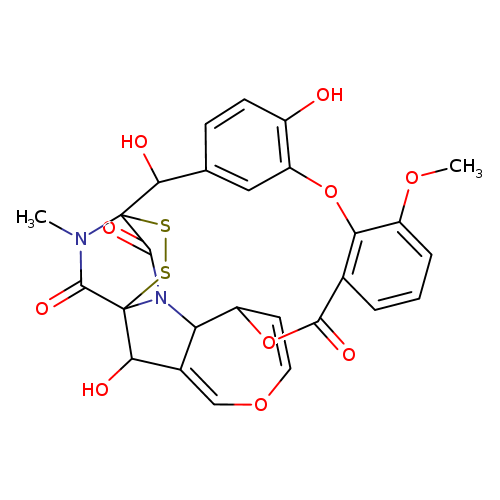
Emestrin is a mycotoxin produced by fungi of the genus Emericella. It mainly targets the heart, liver and thymus. Its action at the chemokine receptor has lead to its consideration as a possible treatment for autoimmune disorders including rheumatoid arthritis, atherosclerosis, multiple sclerosis, and infectious diseases. (1, 2)
belongs to the class of organic compounds known as macrolactams. These are cyclic amides of amino carboxylic acids, having a 1-azacycloalkan-2-one structure, or analogues having unsaturation or heteroatoms replacing one or more carbon atoms of the ring. They are nitrogen analogues (the a nitrogen atom replacing the o atom of the cyclic carboxylic acid group ) of the naturally occurring macrolides.
Oral, dermal, inhalation, and parenteral (contaminated drugs). (4)
Mechanism of Toxicity
Emestrin causes degeneration of the mitochondria in both cardiac muscle cells and hepatocytes, leading to necrosis. It is also known to act as an antagonist at the chemokine receptor, reducing the inflammatory effects of autoimmune disorders including rheumatoid arthritis, multiple sclerosis, atherosclerosis. Emestrin may also cause DNA fragmentation. (1, 3)
No indication of carcinogenicity to humans (not listed by IARC).
Uses/Sources
Emestrin is a mycotoxin produced by fungi of the genus Emericella. Its action at the chemokine receptor has lead to its consideration as a possible treatment for autoimmune disorders including rheumatoid arthritis, atherosclerosis, multiple sclerosis, and infectious diseases.
Minimum Risk Level
Not Available
Health Effects
Emestrin causes damage to the heart, liver and thymus. It can lead to cardiac failure. (2)