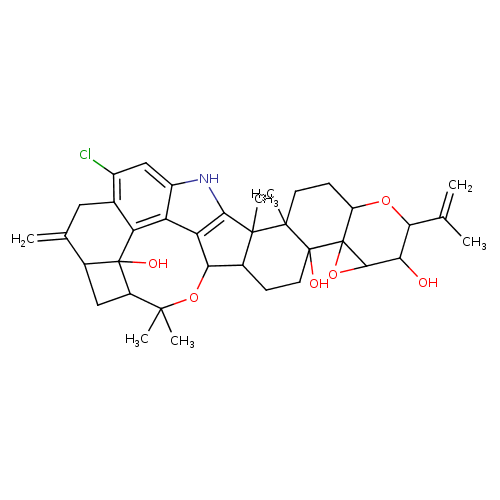
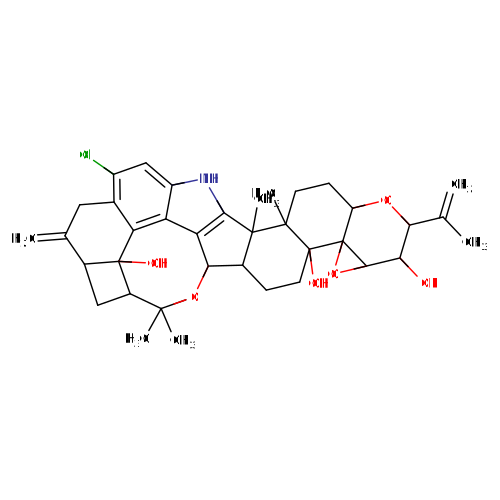
Penitrem A is a tremorgenic mycotoxin and neurotoxin found on ryegrass. It is produced by certain species of Aspergillus, Claviceps, and Penicillium. Penicillium crustosum in particular is a common foodborne fungus that causes spoilage in a wide variety of foods, including meat, cereals, nuts, cheese, eggs, fruit, and processed and refrigerated foods. Tremorgenic mycotoxins affect central nervous system activity and have been implicated in a number of neurologic diseases of horses and cattle collectively known as "staggers syndromes". (11, 4)
belongs to the class of organic compounds known as naphthopyrans. Naphthopyrans are compounds containing a pyran ring fused to a naphthalene moiety. Furan is a 6 membered-ring non-aromatic ring with five carbon and one oxygen atoms. Naphthalene is a polycyclic aromatic hydrocarbon made up of two fused benzene rings.
Oral, dermal, inhalation, and parenteral (contaminated drugs). (10)
Mechanism of Toxicity
Tremorgenic mycotoxins exert their toxic effects by interfering with neurotransmitter release, possibly by causing degeneration of nerve terminals. They are thought to inhibit gamma-aminobutyric acid (GABA) receptors, both pre- and postsynaptic, as well as inhibit transmitter breakdown at the GABA-T receptors. This would initially increase neurotransmitter levels, potentiating the GABA-induced chloride current, then lead to decreased levels of neurotransmitter in the synapse. Penitrem A is also know to increase the spontaneous release of the neurotransmitters glutamate and aspartate from cerebrocortical synaptosomes. In addition, it inhibits presynaptic high-conductance Ca+2 activated maxi-K+ channels in the smooth muscle. Penitrem A is also genotoxic and causes DNA damage. (3, 6, 8, 9)
Metabolism
Penitrem A is extensively metabolized in the liver to at least five metabolites that are less toxic and more hydrophilic than the parent compound. These metabolites are an oxidated metabolite, an oxidated, dehydrated metabolite, a water adduct, a dioxidated metabolite, and a product of water addition and oxidation. (7)
No indication of carcinogenicity to humans (not listed by IARC).
Uses/Sources
Penitrem A (tremortin) is a tremorgenic mycotoxin and neurotoxin found on ryegrass. It is produced by certain species of Aspergillus, Claviceps, and Penicillium. Penicillium crustosum in particular is a common foodborne fungus that causes spoilage in a wide variety of foods, including meat, cereals, nuts, cheese, eggs, fruit, and processed and refrigerated foods. (11, 4)
Minimum Risk Level
Not Available
Health Effects
Tremorgenic mycotoxins affect central nervous system activity. They cause a neurological disease of horses and cattle known as "staggers syndrome". Penitrem A is also genotoxic and causes DNA damage. (2, 9)
Symptoms
Penitrem A causes an tremorgenic syndrom consisting of acute tremor followed by chronic ataxia. Other symptoms include severe muscle fasciculations, vomiting, convulsions, tachycardia, and seizures, possibly leading to massive liver necrosis and death. Tremorgenic mycotoxins cause a neurological disease of cattle known as "staggers syndrome", which is characterized by muscle tremors and hyperexcitability. (2, 11, 4, 5)
Treatment
To control severe tremors caused by tremorgenic mycotoxins, methocarbamol should be administered. Generalized seizures may be treated with diazepam followed by methocarbamol or a barbiturate such as pentobarbital sodium. Gastric lavage should be performed and activated charcoal administered to limit further absorption of toxins. (1)