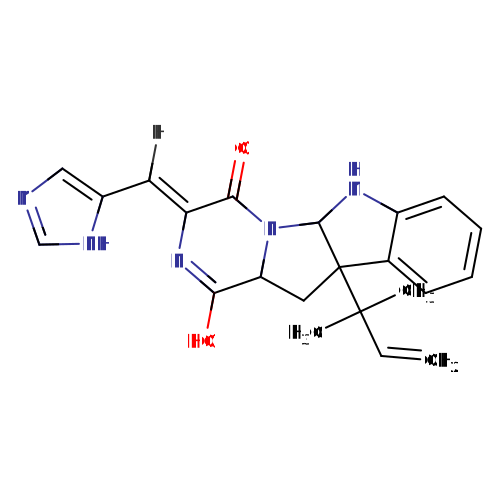
Roquefortine (CHEM002631)
| Record Information | |||||||||||||||||||||||||||||||||||||||||||||||||||||||||||||
|---|---|---|---|---|---|---|---|---|---|---|---|---|---|---|---|---|---|---|---|---|---|---|---|---|---|---|---|---|---|---|---|---|---|---|---|---|---|---|---|---|---|---|---|---|---|---|---|---|---|---|---|---|---|---|---|---|---|---|---|---|---|
| Version | 1.0 | ||||||||||||||||||||||||||||||||||||||||||||||||||||||||||||
| Creation Date | 2009-12-17 22:23:05 UTC | ||||||||||||||||||||||||||||||||||||||||||||||||||||||||||||
| Update Date | 2026-04-03 05:06:07 UTC | ||||||||||||||||||||||||||||||||||||||||||||||||||||||||||||
| Accession Number | CHEM002631 | ||||||||||||||||||||||||||||||||||||||||||||||||||||||||||||
| Identification | |||||||||||||||||||||||||||||||||||||||||||||||||||||||||||||
| Common Name | Roquefortine | ||||||||||||||||||||||||||||||||||||||||||||||||||||||||||||
| Class | Small Molecule | ||||||||||||||||||||||||||||||||||||||||||||||||||||||||||||
| Description | Roquefortine is found in milk and milk products. Roquefortine is a metabolite of Penicillium roquefortii, Penicillium commune, Penicillium cyclopium, Penicillium farinosum and many other Penicillium species Common constituent of blue cheese Roquefortine belongs to the family of Pyrroloindoles. These are compounds containing a pyrroloindole moiety, which is a tricyclic heterocycle which consists of a pyrrole ring fused to an indole. | ||||||||||||||||||||||||||||||||||||||||||||||||||||||||||||
| Contaminant Sources |
| ||||||||||||||||||||||||||||||||||||||||||||||||||||||||||||
| Contaminant Type |
| ||||||||||||||||||||||||||||||||||||||||||||||||||||||||||||
| Chemical Structure | 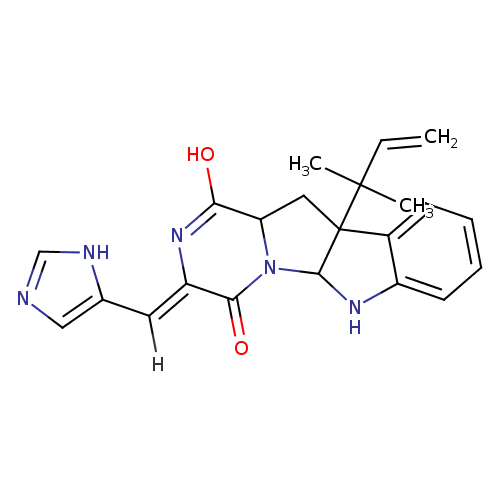 | ||||||||||||||||||||||||||||||||||||||||||||||||||||||||||||
| Synonyms |
| ||||||||||||||||||||||||||||||||||||||||||||||||||||||||||||
| Chemical Formula | C22H23N5O2 | ||||||||||||||||||||||||||||||||||||||||||||||||||||||||||||
| Average Molecular Mass | 389.450 g/mol | ||||||||||||||||||||||||||||||||||||||||||||||||||||||||||||
| Monoisotopic Mass | 389.185 g/mol | ||||||||||||||||||||||||||||||||||||||||||||||||||||||||||||
| CAS Registry Number | 58735-64-1 | ||||||||||||||||||||||||||||||||||||||||||||||||||||||||||||
| IUPAC Name | (4Z)-6-hydroxy-4-(1H-imidazol-5-ylmethylidene)-9-(2-methylbut-3-en-2-yl)-2,5,16-triazatetracyclo[7.7.0.0²,⁷.0¹⁰,¹⁵]hexadeca-5,10,12,14-tetraen-3-one | ||||||||||||||||||||||||||||||||||||||||||||||||||||||||||||
| Traditional Name | (4Z)-6-hydroxy-4-(3H-imidazol-4-ylmethylidene)-9-(2-methylbut-3-en-2-yl)-2,5,16-triazatetracyclo[7.7.0.0²,⁷.0¹⁰,¹⁵]hexadeca-5,10,12,14-tetraen-3-one | ||||||||||||||||||||||||||||||||||||||||||||||||||||||||||||
| SMILES | [H]\C(C1=CN=CN1)=C1\N=C(O)C2CC3(C(NC4=CC=CC=C34)N2C1=O)C(C)(C)C=C | ||||||||||||||||||||||||||||||||||||||||||||||||||||||||||||
| InChI Identifier | InChI=1S/C22H23N5O2/c1-4-21(2,3)22-10-17-18(28)25-16(9-13-11-23-12-24-13)19(29)27(17)20(22)26-15-8-6-5-7-14(15)22/h4-9,11-12,17,20,26H,1,10H2,2-3H3,(H,23,24)(H,25,28)/b16-9- | ||||||||||||||||||||||||||||||||||||||||||||||||||||||||||||
| InChI Key | SPWSUFUPTSJWNG-SXGWCWSVSA-N | ||||||||||||||||||||||||||||||||||||||||||||||||||||||||||||
| Chemical Taxonomy | |||||||||||||||||||||||||||||||||||||||||||||||||||||||||||||
| Description | belongs to the class of organic compounds known as pyrroloindoles. Pyrroloindoles are compounds containing a pyrroloindole moiety, which is a tricyclic heterocycle which consists of a pyrrole ring fused to an indole. Pyrrole is 5-membered ring consisting of four carbon atoms and one nitrogen atom. Indole is a bicyclic compound consisting of a six-membered benzene ring fused to a five-membered nitrogen-containing pyrrole ring. | ||||||||||||||||||||||||||||||||||||||||||||||||||||||||||||
| Kingdom | Organic compounds | ||||||||||||||||||||||||||||||||||||||||||||||||||||||||||||
| Super Class | Organoheterocyclic compounds | ||||||||||||||||||||||||||||||||||||||||||||||||||||||||||||
| Class | Indoles and derivatives | ||||||||||||||||||||||||||||||||||||||||||||||||||||||||||||
| Sub Class | Pyrroloindoles | ||||||||||||||||||||||||||||||||||||||||||||||||||||||||||||
| Direct Parent | Pyrroloindoles | ||||||||||||||||||||||||||||||||||||||||||||||||||||||||||||
| Alternative Parents |
| ||||||||||||||||||||||||||||||||||||||||||||||||||||||||||||
| Substituents |
| ||||||||||||||||||||||||||||||||||||||||||||||||||||||||||||
| Molecular Framework | Aromatic heteropolycyclic compounds | ||||||||||||||||||||||||||||||||||||||||||||||||||||||||||||
| External Descriptors | Not Available | ||||||||||||||||||||||||||||||||||||||||||||||||||||||||||||
| Biological Properties | |||||||||||||||||||||||||||||||||||||||||||||||||||||||||||||
| Status | Detected and Not Quantified | ||||||||||||||||||||||||||||||||||||||||||||||||||||||||||||
| Origin | Endogenous | ||||||||||||||||||||||||||||||||||||||||||||||||||||||||||||
| Cellular Locations |
| ||||||||||||||||||||||||||||||||||||||||||||||||||||||||||||
| Biofluid Locations | Not Available | ||||||||||||||||||||||||||||||||||||||||||||||||||||||||||||
| Tissue Locations | Not Available | ||||||||||||||||||||||||||||||||||||||||||||||||||||||||||||
| Pathways | Not Available | ||||||||||||||||||||||||||||||||||||||||||||||||||||||||||||
| Applications | Not Available | ||||||||||||||||||||||||||||||||||||||||||||||||||||||||||||
| Biological Roles | Not Available | ||||||||||||||||||||||||||||||||||||||||||||||||||||||||||||
| Chemical Roles | Not Available | ||||||||||||||||||||||||||||||||||||||||||||||||||||||||||||
| Physical Properties | |||||||||||||||||||||||||||||||||||||||||||||||||||||||||||||
| State | Solid | ||||||||||||||||||||||||||||||||||||||||||||||||||||||||||||
| Appearance | White powder (12) | ||||||||||||||||||||||||||||||||||||||||||||||||||||||||||||
| Experimental Properties |
| ||||||||||||||||||||||||||||||||||||||||||||||||||||||||||||
| Predicted Properties |
| ||||||||||||||||||||||||||||||||||||||||||||||||||||||||||||
| Spectra | |||||||||||||||||||||||||||||||||||||||||||||||||||||||||||||
| Spectra |
| ||||||||||||||||||||||||||||||||||||||||||||||||||||||||||||
| Toxicity Profile | |||||||||||||||||||||||||||||||||||||||||||||||||||||||||||||
| Route of Exposure | Oral, dermal, inhalation, and parenteral (contaminated drugs). (9) | ||||||||||||||||||||||||||||||||||||||||||||||||||||||||||||
| Mechanism of Toxicity | Tremorgenic mycotoxins exert their toxic effects by interfering with neurotransmitter release, possibly by causing degeneration of nerve terminals. They are thought to inhibit gamma-aminobutyric acid (GABA) receptors, both pre- and postsynaptic, as well as inhibit transmitter breakdown at the GABA-T receptors. This would initially increase neurotransmitter levels, potentiating the GABA-induced chloride current, then lead to decreased levels of neurotransmitter in the synapse. Roquefortine C also interacts with different forms of the cytochromes. (4, 6) | ||||||||||||||||||||||||||||||||||||||||||||||||||||||||||||
| Metabolism | Not Available | ||||||||||||||||||||||||||||||||||||||||||||||||||||||||||||
| Toxicity Values | LD50: 15-20 mg/kg (Intraperitoneal, Mouse) (5) | ||||||||||||||||||||||||||||||||||||||||||||||||||||||||||||
| Lethal Dose | Not Available | ||||||||||||||||||||||||||||||||||||||||||||||||||||||||||||
| Carcinogenicity (IARC Classification) | No indication of carcinogenicity to humans (not listed by IARC). | ||||||||||||||||||||||||||||||||||||||||||||||||||||||||||||
| Uses/Sources | Roquefortine C is a tremorgenic mycotoxin produced primarily by Penicillium roquefortii, but also by other Penicillium species. Penicillium roquefortii is used in the production of Roquefort and similar types of blue cheese, and has also been found growing in corn silage and mixed grains. Penicillium elaborated mycotoxins are well recognized as contaminants of many foods. These toxins, including mycophenolic acid (MPA), roquefortine (ROQ), penicillic acid (PA) and patulin (PAT) are reported to be toxic to several mammalian species. (2, 7) | ||||||||||||||||||||||||||||||||||||||||||||||||||||||||||||
| Minimum Risk Level | Not Available | ||||||||||||||||||||||||||||||||||||||||||||||||||||||||||||
| Health Effects | Tremorgenic mycotoxins affect central nervous system activity. They cause a neurological disease of cattle known as "staggers syndrome". In severe cases roquefortine C can cause respiratory tract irritation, which can progress to ARDS/acute lung injury. Irritation or burns of the esophagus or gastrointestinal tract are also possible. Prostration, seizures, and death can also follow after absorption. (1, 5, 6) | ||||||||||||||||||||||||||||||||||||||||||||||||||||||||||||
| Symptoms | Tremorgenic mycotoxins affect central nervous system activity, inducing neurologic symptoms including mental confusion, paralysis, tremors, seizures, and death. They cause a neurological disease of cattle known as "staggers syndrome", which is characterized by muscle tremors, hyperexcitability, convulsions and ataxia. Roquefortine C may also cause irritation of the eyes, skin, and respiratory tract. (1, 6) | ||||||||||||||||||||||||||||||||||||||||||||||||||||||||||||
| Treatment | To control severe tremors caused by tremorgenic mycotoxins, methocarbamol should be administered. Generalized seizures may be treated with diazepam followed by methocarbamol or a barbiturate such as pentobarbital sodium. Gastric lavage should be performed and activated charcoal administered to limit further absorption of toxins. (3) | ||||||||||||||||||||||||||||||||||||||||||||||||||||||||||||
| Concentrations | |||||||||||||||||||||||||||||||||||||||||||||||||||||||||||||
| Not Available | |||||||||||||||||||||||||||||||||||||||||||||||||||||||||||||
| External Links | |||||||||||||||||||||||||||||||||||||||||||||||||||||||||||||
| DrugBank ID | Not Available | ||||||||||||||||||||||||||||||||||||||||||||||||||||||||||||
| HMDB ID | Not Available | ||||||||||||||||||||||||||||||||||||||||||||||||||||||||||||
| FooDB ID | Not Available | ||||||||||||||||||||||||||||||||||||||||||||||||||||||||||||
| Phenol Explorer ID | Not Available | ||||||||||||||||||||||||||||||||||||||||||||||||||||||||||||
| KNApSAcK ID | Not Available | ||||||||||||||||||||||||||||||||||||||||||||||||||||||||||||
| BiGG ID | Not Available | ||||||||||||||||||||||||||||||||||||||||||||||||||||||||||||
| BioCyc ID | Not Available | ||||||||||||||||||||||||||||||||||||||||||||||||||||||||||||
| METLIN ID | Not Available | ||||||||||||||||||||||||||||||||||||||||||||||||||||||||||||
| PDB ID | Not Available | ||||||||||||||||||||||||||||||||||||||||||||||||||||||||||||
| Wikipedia Link | Roquefortine C | ||||||||||||||||||||||||||||||||||||||||||||||||||||||||||||
| Chemspider ID | Not Available | ||||||||||||||||||||||||||||||||||||||||||||||||||||||||||||
| ChEBI ID | Not Available | ||||||||||||||||||||||||||||||||||||||||||||||||||||||||||||
| PubChem Compound ID | 5358951 | ||||||||||||||||||||||||||||||||||||||||||||||||||||||||||||
| Kegg Compound ID | Not Available | ||||||||||||||||||||||||||||||||||||||||||||||||||||||||||||
| YMDB ID | Not Available | ||||||||||||||||||||||||||||||||||||||||||||||||||||||||||||
| ECMDB ID | Not Available | ||||||||||||||||||||||||||||||||||||||||||||||||||||||||||||
| References | |||||||||||||||||||||||||||||||||||||||||||||||||||||||||||||
| Synthesis Reference | Not Available | ||||||||||||||||||||||||||||||||||||||||||||||||||||||||||||
| MSDS | Not Available | ||||||||||||||||||||||||||||||||||||||||||||||||||||||||||||
| General References | Not Available | ||||||||||||||||||||||||||||||||||||||||||||||||||||||||||||