Record Information
Version1.0
Creation Date2009-07-05 03:12:29 UTC
Update Date2026-03-26 21:07:39 UTC
Accession NumberCHEM002088
Identification
Common NameGamma-Butyrolactone
ClassSmall Molecule
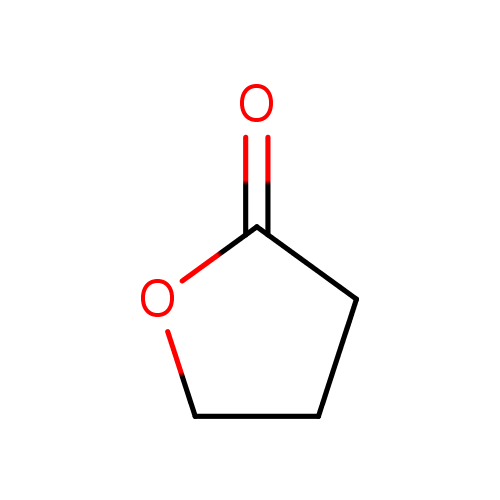
DescriptionOne of the furans with a carbonyl thereby forming a cyclic lactone. It is an endogenous compound made from gamma-aminobutyrate and is the precursor of gamma-hydroxybutyrate. It is also used as a pharmacological agent and solvent.
Contaminant Sources
  • DEA Chemicals
  • EAFUS Chemicals
  • FooDB Chemicals
  • HMDB Contaminants - Feces
  • HPV EPA Chemicals
  • IARC Carcinogens Group 3
  • STOFF IDENT Compounds
  • T3DB toxins
  • ToxCast & Tox21 Chemicals
Contaminant Type
  • Ester
  • Ether
  • Food Toxin
  • Household Toxin
  • Indicator and Reagent
  • Industrial/Workplace Toxin
  • Metabolite
  • Organic Compound
  • Solvent
  • Synthetic Compound
Chemical Structure
Thumb
Synonyms
ValueSource
1,2-ButanolideChEBI
1,4-ButanolideChEBI
1,4-LactoneChEBI
4-ButyrolactoneChEBI
4-Deoxytetronic acidChEBI
4-Hydroxybutyric acid lactoneChEBI
ButyrolactoneChEBI
Dihydro-2(3H)-furanoneChEBI
gamma-ButanolactoneChEBI
gamma-Hydroxybutyric acid lactoneChEBI
gamma-HydroxybutyrolactoneChEBI
Tetrahydrofuran-2-oneChEBI
4-DeoxytetronateGenerator
4-Hydroxybutyrate lactoneGenerator
g-ButanolactoneGenerator
Γ-butanolactoneGenerator
g-Hydroxybutyrate lactoneGenerator
g-Hydroxybutyric acid lactoneGenerator
gamma-Hydroxybutyrate lactoneGenerator
Γ-hydroxybutyrate lactoneGenerator
Γ-hydroxybutyric acid lactoneGenerator
g-HydroxybutyrolactoneGenerator
Γ-hydroxybutyrolactoneGenerator
g-ButyrolactoneGenerator
Γ-butyrolactoneGenerator
1-Oxacyclopentan-2-oneHMDB
2,3,4,5-Tetrahydro-2-furanoneHMDB
2-OxolanoneHMDB
2-OxotetrahydrofuranHMDB
4,5-Dihydro-2(3H)-furanoneHMDB
4-ButanolideHMDB
4-Hydroxy-butanoateHMDB
4-Hydroxy-butanoic acidHMDB
4-Hydroxy-butanoic acid g-lactoneHMDB
4-HydroxybutanoateHMDB
4-Hydroxybutanoic acidHMDB
4-Hydroxybutanoic acid lactoneHMDB
Butyric acid lactoneHMDB
g-ButalactoneHMDB
g-ButyryllactoneHMDB
gamma-ButalactoneHMDB
gamma-ButyryllactoneHMDB
GBLHMDB
Paint clean gHMDB
Tetrahydro-2-furanoneHMDB
4 ButyrolactoneHMDB
gamma ButyrolactoneHMDB
Furanone, tetrahydro 2HMDB
1,4 ButanolideHMDB
4 Hydroxybutyric acid lactoneHMDB
Lactone, 4-hydroxybutyric acidHMDB
gamma-ButyrolactoneMeSH
Chemical FormulaC4H6O2
Average Molecular Mass86.089 g/mol
Monoisotopic Mass86.037 g/mol
CAS Registry Number96-48-0
IUPAC Nameoxolan-2-one
Traditional Namebutyrolactone
SMILESO=C1CCCO1
InChI IdentifierInChI=1S/C4H6O2/c5-4-2-1-3-6-4/h1-3H2
InChI KeyYEJRWHAVMIAJKC-UHFFFAOYSA-N
Chemical Taxonomy
Description belongs to the class of organic compounds known as gamma butyrolactones. Gamma butyrolactones are compounds containing a gamma butyrolactone moiety, which consists of an aliphatic five-member ring with four carbon atoms, one oxygen atom, and bears a ketone group on the carbon adjacent to the oxygen atom.
KingdomOrganic compounds
Super ClassOrganoheterocyclic compounds
ClassLactones
Sub ClassGamma butyrolactones
Direct ParentGamma butyrolactones
Alternative Parents
Substituents
  • Gamma butyrolactone
  • Tetrahydrofuran
  • Carboxylic acid ester
  • Oxacycle
  • Monocarboxylic acid or derivatives
  • Carboxylic acid derivative
  • Organic oxygen compound
  • Organic oxide
  • Hydrocarbon derivative
  • Organooxygen compound
  • Carbonyl group
  • Aliphatic heteromonocyclic compound
Molecular FrameworkAliphatic heteromonocyclic compounds
External Descriptors
Biological Properties
StatusDetected and Not Quantified
OriginEndogenous
Cellular Locations
  • Cytoplasm
  • Extracellular
Biofluid LocationsNot Available
Tissue Locations
  • Adipose Tissue
  • Neuron
PathwaysNot Available
ApplicationsNot Available
Biological Roles
Chemical RolesNot Available
Physical Properties
StateLiquid
AppearanceColorless oily liquid (14).
Experimental Properties
PropertyValue
Melting Point-45°C
Boiling PointNot Available
Solubility1000.0 mg/mL
Predicted Properties
PropertyValueSource
Water Solubility238 g/LALOGPS
logP-0.11ALOGPS
logP0.15ChemAxon
logS0.44ALOGPS
pKa (Strongest Basic)-7ChemAxon
Physiological Charge0ChemAxon
Hydrogen Acceptor Count1ChemAxon
Hydrogen Donor Count0ChemAxon
Polar Surface Area26.3 ŲChemAxon
Rotatable Bond Count0ChemAxon
Refractivity20.31 m³·mol⁻¹ChemAxon
Polarizability8.23 ųChemAxon
Number of Rings1ChemAxon
Bioavailability1ChemAxon
Rule of FiveYesChemAxon
Ghose FilterNoChemAxon
Veber's RuleYesChemAxon
MDDR-like RuleNoChemAxon
Spectra
Spectra
Spectrum TypeDescriptionSplash KeyView
GC-MSGC-MS Spectrum - EI-B (Non-derivatized)splash10-004l-9000000000-500445dc73cb69119e6bSpectrum
GC-MSGC-MS Spectrum - EI-B (Non-derivatized)splash10-0006-9000000000-c2f6d51e7b2f9ce1e9f1Spectrum
GC-MSGC-MS Spectrum - EI-B (Non-derivatized)splash10-002f-9000000000-d3df175d3315ed446e14Spectrum
GC-MSGC-MS Spectrum - EI-B (Non-derivatized)splash10-004l-9000000000-500445dc73cb69119e6bSpectrum
GC-MSGC-MS Spectrum - EI-B (Non-derivatized)splash10-0006-9000000000-c2f6d51e7b2f9ce1e9f1Spectrum
GC-MSGC-MS Spectrum - EI-B (Non-derivatized)splash10-002f-9000000000-d3df175d3315ed446e14Spectrum
Predicted GC-MSPredicted GC-MS Spectrum - GC-MS (Non-derivatized) - 70eV, Positivesplash10-002f-9000000000-bd4b413f20907d13a107Spectrum
Predicted GC-MSPredicted GC-MS Spectrum - GC-MS (Non-derivatized) - 70eV, PositiveNot AvailableSpectrum
LC-MS/MSLC-MS/MS Spectrum - Quattro_QQQ 10V, Positive (Annotated)splash10-000i-9000000000-4a6de93563809aa51a33Spectrum
LC-MS/MSLC-MS/MS Spectrum - Quattro_QQQ 25V, Positive (Annotated)splash10-000i-9000000000-4a6de93563809aa51a33Spectrum
LC-MS/MSLC-MS/MS Spectrum - Quattro_QQQ 40V, Positive (Annotated)splash10-000i-9000000000-b5163f6eb1e8004e61a9Spectrum
LC-MS/MSLC-MS/MS Spectrum - EI-B (HITACHI RMU-7M) , Positivesplash10-004l-9000000000-1066d349a6023c66dd64Spectrum
LC-MS/MSLC-MS/MS Spectrum - EI-B (JEOL JMS-D-3000) , Positivesplash10-0006-9000000000-c2f6d51e7b2f9ce1e9f1Spectrum
LC-MS/MSLC-MS/MS Spectrum - EI-B (HITACHI M-80B) , Positivesplash10-002f-9000000000-d3df175d3315ed446e14Spectrum
Predicted LC-MS/MSPredicted LC-MS/MS Spectrum - 10V, Positivesplash10-000i-9000000000-507998514018a44c4cf0Spectrum
Predicted LC-MS/MSPredicted LC-MS/MS Spectrum - 20V, Positivesplash10-000l-9000000000-d4ec4947321dfb11fab4Spectrum
Predicted LC-MS/MSPredicted LC-MS/MS Spectrum - 40V, Positivesplash10-0006-9000000000-b2a1436205f5365513b0Spectrum
Predicted LC-MS/MSPredicted LC-MS/MS Spectrum - 10V, Negativesplash10-000i-9000000000-fb7c9ada825a0c62979fSpectrum
Predicted LC-MS/MSPredicted LC-MS/MS Spectrum - 20V, Negativesplash10-000l-9000000000-95fda8a898d02f7e71ffSpectrum
Predicted LC-MS/MSPredicted LC-MS/MS Spectrum - 40V, Negativesplash10-000l-9000000000-c8282365f175b61ca8c0Spectrum
Predicted LC-MS/MSPredicted LC-MS/MS Spectrum - 10V, Negativesplash10-000i-9000000000-ec20127c74818b1f634dSpectrum
Predicted LC-MS/MSPredicted LC-MS/MS Spectrum - 20V, Negativesplash10-052r-9000000000-86d21b481322417edf81Spectrum
Predicted LC-MS/MSPredicted LC-MS/MS Spectrum - 40V, Negativesplash10-0006-9000000000-4f454124d6cece18a212Spectrum
Predicted LC-MS/MSPredicted LC-MS/MS Spectrum - 10V, Positivesplash10-000i-9000000000-709821dd006aa045c8b0Spectrum
Predicted LC-MS/MSPredicted LC-MS/MS Spectrum - 20V, Positivesplash10-0006-9000000000-ffe2d9473d85a58305c1Spectrum
Predicted LC-MS/MSPredicted LC-MS/MS Spectrum - 40V, Positivesplash10-0006-9000000000-a4219a074939d10a0f5fSpectrum
MSMass Spectrum (Electron Ionization)splash10-004l-9000000000-2fc3f4165b5808b41e93Spectrum
1D NMR1H NMR SpectrumNot AvailableSpectrum
1D NMR13C NMR SpectrumNot AvailableSpectrum
1D NMR1H NMR SpectrumNot AvailableSpectrum
1D NMR13C NMR SpectrumNot AvailableSpectrum
1D NMR1H NMR SpectrumNot AvailableSpectrum
1D NMR13C NMR SpectrumNot AvailableSpectrum
1D NMR1H NMR SpectrumNot AvailableSpectrum
1D NMR13C NMR SpectrumNot AvailableSpectrum
1D NMR1H NMR SpectrumNot AvailableSpectrum
1D NMR13C NMR SpectrumNot AvailableSpectrum
1D NMR1H NMR SpectrumNot AvailableSpectrum
1D NMR13C NMR SpectrumNot AvailableSpectrum
1D NMR1H NMR SpectrumNot AvailableSpectrum
1D NMR13C NMR SpectrumNot AvailableSpectrum
1D NMR1H NMR SpectrumNot AvailableSpectrum
1D NMR13C NMR SpectrumNot AvailableSpectrum
1D NMR1H NMR SpectrumNot AvailableSpectrum
1D NMR13C NMR SpectrumNot AvailableSpectrum
1D NMR1H NMR SpectrumNot AvailableSpectrum
1D NMR13C NMR SpectrumNot AvailableSpectrum
1D NMR1H NMR SpectrumNot AvailableSpectrum
1D NMR13C NMR SpectrumNot AvailableSpectrum
1D NMR1H NMR SpectrumNot AvailableSpectrum
2D NMR[1H,13C] 2D NMR SpectrumNot AvailableSpectrum
Toxicity Profile
Route of ExposureInhalation (3) ; oral (3) ; injection (3) ; dermal (3).
Mechanism of ToxicityGamma-butyrolactone is rapidly converted to gamma-hydroxybutyrate. This may account for the subsequent central nervous system depressant. Gamma-butyrolactone is an anesthetic that causes a selective increase in brain dopamine by antagonizing transmitter release from nerve terminal. It is also an endogenous brain metabolite that may be derived from glutamate through gamma-aminobutyrate. GBL binds to the picrotoxin receptor (2, 1).
MetabolismGamma-Butyrolactone undergoes rapid and quantitative conversion by lactonases, yielding gamma-hydroxybutyric acid (4).
Toxicity ValuesLD50: 17.2 mL/kg (Oral, Rat) (581)
Lethal DoseNot Available
Carcinogenicity (IARC Classification)3, not classifiable as to its carcinogenicity to humans. (13)
Uses/SourcesCommon solvent and reagent in chemistry and is used as an aroma compound, as a stain remover, as a superglue remover, as a paint stripper, and as a solvent in some wet aluminium electrolytic capacitors (14).
Minimum Risk LevelNot Available
Health EffectsCNS depression; amnesia and hypotonia. Rarely, hypertension, orthostatic hypotension, apnea, dyskinesias, dystonias, and hypomania occur.
SymptomsHeadache, confusion, ataxia, urinary incontinence or urgency, difficulty breathing, bradycardia, uncontrollable shaking, hallucinations, seizure-like activity (uncontrollable or unusual movements), and acidosis. Hypothermia has been reported in adults and children following exposure (15).
TreatmentIn case of oral exposure, administer a benzodiazepine IV. There is no antidote. Treatment is symptomatic and supportive. (15)
Concentrations
Not Available
DrugBank IDDB04699
HMDB IDHMDB0000549
FooDB IDFDB003392
Phenol Explorer IDNot Available
KNApSAcK IDC00053167
BiGG IDNot Available
BioCyc IDNot Available
METLIN ID5533
PDB IDNot Available
Wikipedia LinkGamma-Butyrolactone
Chemspider ID7029
ChEBI ID42639
PubChem Compound ID7302
Kegg Compound IDC01770
YMDB IDYMDB01418
ECMDB IDM2MDB005646
References
Synthesis Reference

Fabio Giannessi, Maria Ornella Tinti, Francesco De Angelis, “Process for producing®-3-hydroxy-4-butyrolactone useful for preparing®-carnitine.” U.S. Patent US6127552, issued February, 1998.

MSDSLink
General References
1. https://www.ncbi.nlm.nih.gov/pubmed/?term=12429914
2. https://www.ncbi.nlm.nih.gov/pubmed/?term=23245230
3. https://www.ncbi.nlm.nih.gov/pubmed/?term=24500753
4. Zhu, Yulei; Li, Yongwang; Xiang, Hongwei; Su, Hualian; Wu, Jiaxiang. Process for preparation of g-butyrolactone with high yield and selectivity. Faming Zhuanli Shenqing Gongkai Shuomingshu (2001), 13 pp.
5. Fukui Y, Matsusima E, Muramoto K, Nagai N, Ohama K, Yamashita K: Validation of a simple gas chromatographic-mass spectrometric method for the determination of gamma-butyrolactone in human plasma. J Chromatogr B Analyt Technol Biomed Life Sci. 2003 Feb 25;785(1):73-80.
6. Thupari JN, Landree LE, Ronnett GV, Kuhajda FP: C75 increases peripheral energy utilization and fatty acid oxidation in diet-induced obesity. Proc Natl Acad Sci U S A. 2002 Jul 9;99(14):9498-502. Epub 2002 Jun 11.
7. Wood M, Laloup M, Samyn N, Morris MR, de Bruijn EA, Maes RA, Young MS, Maes V, De Boeck G: Simultaneous analysis of gamma-hydroxybutyric acid and its precursors in urine using liquid chromatography-tandem mass spectrometry. J Chromatogr A. 2004 Nov 12;1056(1-2):83-90.
8. Quintanilla RA, Orellana DI, Gonzalez-Billault C, Maccioni RB: Interleukin-6 induces Alzheimer-type phosphorylation of tau protein by deregulating the cdk5/p35 pathway. Exp Cell Res. 2004 Apr 15;295(1):245-57.
9. Knust U, Hull WE, Spiegelhalder B, Bartsch H, Strowitzki T, Owen RW: Analysis of enterolignan glucuronides in serum and urine by HPLC-ESI-MS. Food Chem Toxicol. 2006 Jul;44(7):1038-49. Epub 2006 Feb 20.
10. Selmaoui B, Aymard N, Lambrozo J, Touitou Y: Evaluation of the nocturnal levels of urinary biogenic amines in men exposed overnight to 50-Hz magnetic field. Life Sci. 2003 Oct 31;73(24):3073-82.
11. Oshima I, Saito S, Shiota K, Miyake A, Oka Y, Nakayama R: Kinetic study on disappearance of gamma-butyrolactone-gamma-carbonyl-L-histidyl-L-prolinamide (DN-1417) from plasma using a radioimmunoassay for DN-1417 isobutylamide. J Pharmacobiodyn. 1983 Mar;6(3):202-8.
12. Yeatman DT, Reid K: A study of urinary endogenous gamma-hydroxybutyrate (GHB) levels. J Anal Toxicol. 2003 Jan-Feb;27(1):40-2.
13. Elliott S, Burgess V: The presence of gamma-hydroxybutyric acid (GHB) and gamma-butyrolactone (GBL) in alcoholic and non-alcoholic beverages. Forensic Sci Int. 2005 Jul 16;151(2-3):289-92. doi: 10.1016/j.forsciint.2005.02.014.