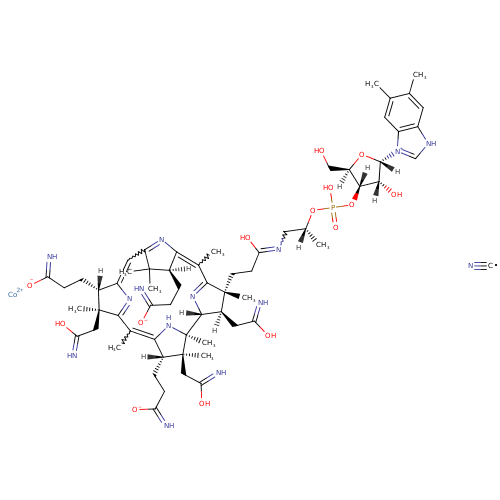
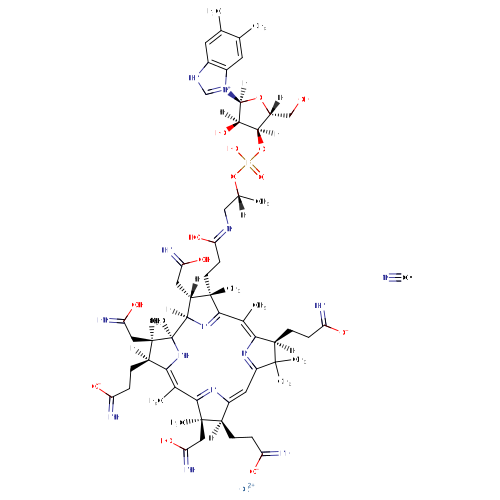
Cyanocobalamin (commonly known as Vitamin B12) is the most chemically complex of all the vitamins. Cyanocobalamin's structure is based on a corrin ring, which, although similar to the porphyrin ring found in heme, chlorophyll, and cytochrome, has two of the pyrrole rings directly bonded. The central metal ion is Co (cobalt). Cyanocobalamin cannot be made by plants or by animals, as the only type of organisms that have the enzymes required for the synthesis of cyanocobalamin are bacteria and archaea. Higher plants do not concentrate cyanocobalamin from the soil and so are a poor source of the substance as compared with animal tissues. Cyanocobalamin is naturally found in foods including meat (especially liver and shellfish), eggs, and milk products. [HMDB]
belongs to the class of organic compounds known as glutamic acid and derivatives. Glutamic acid and derivatives are compounds containing glutamic acid or a derivative thereof resulting from reaction of glutamic acid at the amino group or the carboxy group, or from the replacement of any hydrogen of glycine by a heteroatom.
Inhalation (26) ; oral (26) ; dermal (26)
Readily absorbed in the lower half of the ileum.
Mechanism of Toxicity
Vitamin B12 is used in the body in two forms: Methylcobalamin and 5-deoxyadenosyl cobalamin. The enzyme methionine synthase needs methylcobalamin as a cofactor. This enzyme is involved in the conversion of the amino acid homocysteine into methionine. Methionine in turn is required for DNA methylation. 5-Deoxyadenosyl cobalamin is a cofactor needed by the enzyme that converts L-methylmalonyl-CoA to succinyl-CoA. This conversion is an important step in the extraction of energy from proteins and fats. Furthermore, succinyl CoA is necessary for the production of hemoglobin, the substances that carries oxygen in red blood cells.
Metabolism
Cobalt is absorbed though the lungs, gastrointestinal tract, and skin. Since it is a component of the vitamin B12 (cyanocobalamin), it is distributed to most tissues of the body. It is transported in the blood, often bound to albumin, with the highest levels being found in the liver and kidney. Cobalt is excreted mainly in the urine and faeces. (26)
Half Life: Approximately 6 days (400 days in the liver).
Cyanocobalamin is a form of vitamin B12. (30) It is used for treatment of pernicious anemia (due to lack of or inhibition of intrinsic factor) and for prevention and treatment of vitamin B 12 deficiency.
Exposure to high amount of cobalt can cause heart, lung, kidney, and liver damage. Skin contact is known to result in contact dermatitis. Cobalt may also have mutagenic and carcinogenic effects. (26, 27)
Symptoms
Anaphylactic reaction (skin rash, itching, wheezing)-after parenteral administration. Cobalt inhalation can cause asthma-like breathing problems. Skin contact is known to result in contact dermatitis, which is characterized by irritation and rashes. Ingesting large amounts of cobalt may cause nausea and vomiting. (31)
Treatment
Treatment of cobalt poisoning is symptomatic. (26)