Record Information
Version1.0
Creation Date2009-03-06 18:58:02 UTC
Update Date2026-05-14 17:10:08 UTC
Accession NumberCHEM000070
Identification
Common NameZinc
ClassSmall Molecule
DescriptionA metallic element of atomic number 30 and atomic weight 65.38. It is a necessary trace element in the diet, forming an essential part of many enzymes, and playing an important role in protein synthesis and in cell division. Zinc deficiency is associated with anemia, short stature, hypogonadism, impaired wound healing, and geophagia. It is known by the symbol Zn.
Contaminant Sources
  • Clean Air Act Chemicals
  • FooDB Chemicals
  • HMDB Contaminants - Urine
  • HPV EPA Chemicals
  • OECD HPV Chemicals
  • T3DB toxins
Contaminant Type
  • Drug
  • Food Toxin
  • Household Toxin
  • Human Neurotoxin
  • Industrial/Workplace Toxin
  • Inorganic Compound
  • Metabolite
  • Metal
  • Natural Compound
  • Pollutant
  • Trace Element
  • Zinc Compound
Chemical Structure
Thumb
Synonyms
ValueSource
Dietary zincChEBI
Zinc cationChEBI
ZINC ionChEBI
Zinc, ion (ZN2+)ChEBI
ZN(II)ChEBI
ZN(2+)ChEBI
ZN2+ChEBI
Mannosidase b, alphaMeSH
alpha Mannosidase bMeSH
alpha-D-Mannoside mannohydrolaseMeSH
Neutral alpha-mannosidaseMeSH
alpha D MannosidaseMeSH
alpha-D-MannosidaseMeSH
Lysosomal alpha-mannosidaseMeSH
Mannohydrolase, alpha-D-mannosideMeSH
alpha MannosidaseMeSH
alpha-MannosidaseMeSH
LAMANMeSH
Lysosomal alpha mannosidaseMeSH
Neutral alpha mannosidaseMeSH
alpha D Mannoside mannohydrolaseMeSH
alpha-Mannosidase, lysosomalMeSH
alpha-Mannosidase, neutralMeSH
Topostin bMeSH
Chemical FormulaZn
Average Molecular Mass65.409 g/mol
Monoisotopic Mass63.929 g/mol
CAS Registry Number7440-66-6
IUPAC Namezinc
Traditional Namezinc(2+) ion
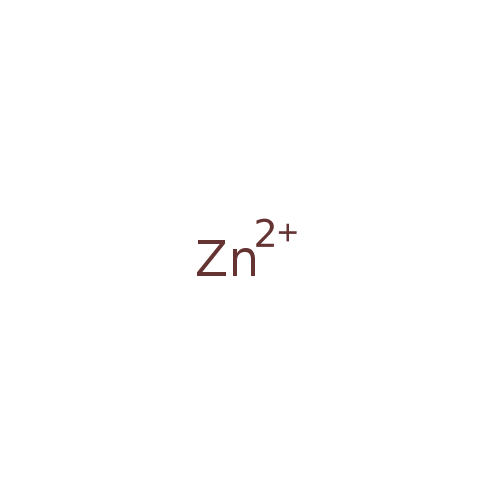
SMILES[Zn++]
InChI IdentifierInChI=1S/Zn/q+2
InChI KeyPTFCDOFLOPIGGS-UHFFFAOYSA-N
Chemical Taxonomy
Description belongs to the class of inorganic compounds known as homogeneous transition metal compounds. These are inorganic compounds containing only metal atoms,with the largest atom being a transition metal atom.
KingdomInorganic compounds
Super ClassHomogeneous metal compounds
ClassHomogeneous transition metal compounds
Sub ClassNot Available
Direct ParentHomogeneous transition metal compounds
Alternative ParentsNot Available
Substituents
  • Homogeneous transition metal
Molecular FrameworkNot Available
External Descriptors
Biological Properties
StatusDetected and Not Quantified
OriginEndogenous
Cellular Locations
  • Cytoplasm
  • Extracellular
Biofluid LocationsNot Available
Tissue LocationsNot Available
PathwaysNot Available
ApplicationsNot Available
Biological Roles
Chemical RolesNot Available
Physical Properties
StateSolid
AppearanceBluish-white metallic solid.
Experimental Properties
PropertyValue
Melting Point419.5°C
Boiling Point908°C
SolubilityNot Available
Predicted Properties
PropertyValueSource
logP0.16ChemAxon
pKa (Strongest Acidic)3.09ChemAxon
Physiological Charge2ChemAxon
Hydrogen Acceptor Count0ChemAxon
Hydrogen Donor Count0ChemAxon
Polar Surface Area0 ŲChemAxon
Rotatable Bond Count0ChemAxon
Refractivity0 m³·mol⁻¹ChemAxon
Polarizability1.78 ųChemAxon
Number of Rings0ChemAxon
Bioavailability1ChemAxon
Rule of FiveYesChemAxon
Ghose FilterNoChemAxon
Veber's RuleYesChemAxon
MDDR-like RuleNoChemAxon
Spectra
Spectra
Spectrum TypeDescriptionSplash KeyView
Predicted LC-MS/MSPredicted LC-MS/MS Spectrum - 10V, Positivesplash10-03di-9000000000-0cd08967c771fb645329Spectrum
Predicted LC-MS/MSPredicted LC-MS/MS Spectrum - 20V, Positivesplash10-03di-9000000000-0cd08967c771fb645329Spectrum
Predicted LC-MS/MSPredicted LC-MS/MS Spectrum - 40V, Positivesplash10-03di-9000000000-0cd08967c771fb645329Spectrum
Predicted LC-MS/MSPredicted LC-MS/MS Spectrum - 10V, Negativesplash10-03di-9000000000-29976d3ebd17b2d11a4bSpectrum
Predicted LC-MS/MSPredicted LC-MS/MS Spectrum - 20V, Negativesplash10-03di-9000000000-29976d3ebd17b2d11a4bSpectrum
Predicted LC-MS/MSPredicted LC-MS/MS Spectrum - 40V, Negativesplash10-03di-9000000000-29976d3ebd17b2d11a4bSpectrum
Toxicity Profile
Route of ExposureOral (3) ; inhalation (3) ; dermal (113)
Mechanism of ToxicityExcessive zinc intake alters copper and iron absorption, most likely through competitive binding in intestinal mucosal cells. Stomach acid dissolves metallic zinc, producing zinc chloride, which is a corrosive product damaging the stomach lining. Metal fume fever is thought to be an immune response to inhaled zinc. (2, 3, 1)
MetabolismZinc enters the body through the lungs, skin, and gastrointestinal tract. Intestinal absorption of zinc is controlled by zinc carrier protein CRIP and metallothioneins. Zinc is widely distributed in tissues and tissues fluids, and concentrated in the liver, gastrointestinal tract, kidney, skin, lung, brain, heart, and pancreas. Zinc binds to carbonic anhydrase in erythrocytes, and to albumin, α2-macroglobulin, and amino acids in the the plasma. Albumin and amino acid bound zinc can diffuse across tissue membranes. Zinc is excreted in the urine and faeces. (3)
Toxicity ValuesLD50: 630 mg/kg (Oral, Rat) (6)
Lethal DoseNot Available
Carcinogenicity (IARC Classification)No indication of carcinogenicity to humans (not listed by IARC).
Uses/SourcesZinc has many commercial uses as coatings to prevent rust, in dry cell batteries, and can be mixed with other metals to produce alloys such as brass and bronze. Zinc compounds are widely used in industry to make paint, rubber, dyes, wood preservatives, and ointments. (3)
Minimum Risk LevelIntermediate Oral: 0.3 mg/kg/day (5) Chronic Oral: 0.3 mg/kg/day (5)
Health EffectsChronic exposure to zinc causes anemia, atazia, lethargy, and decreases the level of HDL (good) cholesterol in the body. It is also believed to cause pancreatic and reproductive damages. Unbalanced levels of copper and zinc binding to Cu,Zn-superoxide dismutase have been linked to amyotrophic lateral sclerosis (ALS). (3)
SymptomsIngestion of large doses of zinc causes stomach cramps, nausea, and vomiting. Acute inhalation of large amounts of zinc causes metal fume fever, which is characterized by chills, fever, headache, weakness, dryness of the nose and throat, chest pain, and coughing. Dermal contact with zinc results in skin irritation. (3)
TreatmentZinc poisoning is treated symptomatically, often by administering fluids such as water or milk, or with gastric lavage. (3)

Concentrations
Not Available
DrugBank IDNot Available
HMDB IDHMDB0001303
FooDB IDFDB031256
Phenol Explorer IDNot Available
KNApSAcK IDNot Available
BiGG IDNot Available
BioCyc IDNot Available
METLIN IDNot Available
PDB IDNot Available
Wikipedia LinkNot Available
Chemspider IDNot Available
ChEBI ID29105
PubChem Compound ID32051
Kegg Compound IDC00038
YMDB IDYMDB01527
ECMDB IDECMDB01303
References
Synthesis Reference

Robert Nicaise, “Production of zinc powder for electrochemical batteries.” U.S. Patent US4104188, issued 1877.

MSDSLink
General References
1. Zhang P, Allen JC: A novel dialysis procedure measuring free Zn2+ in bovine milk and plasma. J Nutr. 1995 Jul;125(7):1904-10. doi: 10.1093/jn/125.7.1904.
2. Campillo N, Vinas P, Lopez-Garcia I, Hernandez-Cordoba M: Direct determination of copper and zinc in cow milk, human milk and infant formula samples using electrothermal atomization atomic absorption spectrometry. Talanta. 1998 Aug;46(4):615-22.
3. Gaucheron F: Milk and dairy products: a unique micronutrient combination. J Am Coll Nutr. 2011 Oct;30(5 Suppl 1):400S-9S.
4. Semaghiul Birghila, Simona Dobrinas, Gabriela Stanciu and Alina Soceanu. Determination of major and minor elements in milk through ICP-AES. Environmental Engineering and Management Journal. November/December 2008, Vol.7, No.6, 805-808
5. Park, Y. W; Juárez, Manuela ; Ramos, M.; Haenlein, G. F. W.. Physico-chemical characteristics of goat and sheep milk. Small Ruminant Res.(2007) 68:88-113 doi: 10.1016/j.smallrumres.2006.09.013
6. A. Foroutan et al. The Chemical Composition of Commercial Cow's Milk (in preparation)
7. Patricia Cava-Montesinos, M. Luisa Cervera Agustín Pastor Miguel de la Guardia. 2005. Room temperature acid sonication ICP-MS multielemental analysis of milk.Analytica Chimica Acta Volume 531, Issue 1, Pages 111-123
8. Z. Dobrzański, R. Kołacz, H. Górecka, K. Chojnacka, A. Bartkowiak. 2005. The Content of Microelements and Trace Elements in Raw Milk from Cows in the Silesian Region. Pol. J. Environ. Stud. 14(5):685–689
9. USDA Food Composition Databases: https://ndb.nal.usda.gov/ndb/
10. Fooddata+, The Technical University of Denmark (DTU): https://frida.fooddata.dk/QueryFood.php?fn=milk&lang=en