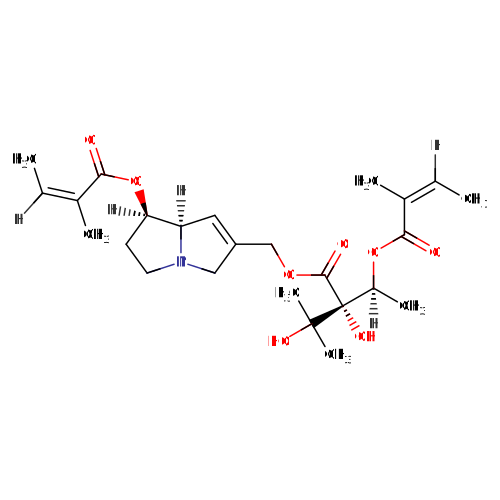
Echivulgarine (CHEM114392)
| Record Information | |||||||||
|---|---|---|---|---|---|---|---|---|---|
| Version | 1.0 | ||||||||
| Creation Date | 2026-04-06 01:44:20 UTC | ||||||||
| Update Date | 2026-05-21 01:17:45 UTC | ||||||||
| Accession Number | CHEM114392 | ||||||||
| Identification | |||||||||
| Common Name | Echivulgarine | ||||||||
| Class | Small Molecule | ||||||||
| Description | Echivulgarine is an organic compound with the chemical formula C25H37NO8 and an average molecular weight of 479.57 g/mol. Echivulgarine belongs to the tricarboxylic acids and derivatives, a subclass of carboxylic acids and derivatives within the organic compounds. The substance has been identified in or released from 13 recorded sources across several diverse sectors. Within electrical and electronic equipment, it is found in cell phones, capacitors, wires and cables, batteries, and printed circuit boards, among one other source. In the textiles, leather and furnishings sector, it is associated with synthetic textiles as well as carpets and rugs. It is also present in food packaging within the food, food processing and cookware sector, and in medical devices under healthcare, pharmaceuticals and veterinary products. Additionally, the compound is found in lubricants used in both the energy, oil and gas sector and the industrial manufacturing and chemical processing sector, along with one further sector. Recorded routes of exposure for this compound include inhalation, oral ingestion, and touch. | ||||||||
| Contaminant Sources | Not Available | ||||||||
| Contaminant Type |
| ||||||||
| Chemical Structure | 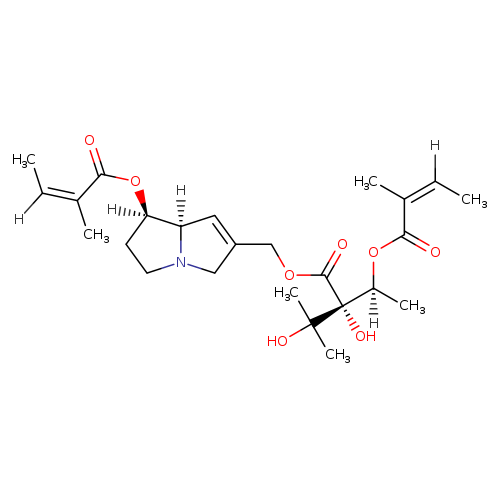 | ||||||||
| Synonyms | Not Available | ||||||||
| Chemical Formula | C25H37NO8 | ||||||||
| Average Molecular Mass | 479.570 g/mol | ||||||||
| Monoisotopic Mass | 479.252 g/mol | ||||||||
| CAS Registry Number | Not Available | ||||||||
| IUPAC Name | (1R,7aR)-6-[({(2R)-2,3-Dihydroxy-3-methyl-2-[(1S)-1-{[(2Z)-2-methylbut-2-enoyl]oxy}ethyl]butanoyl}oxy)methyl]-2,3,5,7a-tetrahydro-1H-pyrrolizin-1-yl (2Z)-2-methylbut-2-enoate | ||||||||
| Traditional Name | Not Available | ||||||||
| SMILES | [H][C@]1(CCN2CC(COC(=O)[C@@](O)([C@H](C)OC(=O)C(\C)=C/C)C(C)(C)O)=C[C@]12[H])OC(=O)C(\C)=C/C | ||||||||
| InChI Identifier | InChI=1S/C25H37NO8/c1-8-15(3)21(27)33-17(5)25(31,24(6,7)30)23(29)32-14-18-12-19-20(10-11-26(19)13-18)34-22(28)16(4)9-2/h8-9,12,17,19-20,30-31H,10-11,13-14H2,1-7H3/b15-8-,16-9-/t17-,19+,20+,25-/m0/s1 | ||||||||
| InChI Key | JZEITCZHHKPGHS-LTCADICWSA-N | ||||||||
| Chemical Taxonomy | |||||||||
| Classification | Not classified | ||||||||
| Biological Properties | |||||||||
| Status | Detected and Not Quantified | ||||||||
| Origin | Not Available | ||||||||
| Cellular Locations | Not Available | ||||||||
| Biofluid Locations | Not Available | ||||||||
| Tissue Locations | Not Available | ||||||||
| Pathways | Not Available | ||||||||
| Applications | Not Available | ||||||||
| Biological Roles | Not Available | ||||||||
| Chemical Roles | Not Available | ||||||||
| Physical Properties | |||||||||
| State | Not Available | ||||||||
| Appearance | Not Available | ||||||||
| Experimental Properties |
| ||||||||
| Predicted Properties | Not Available | ||||||||
| Spectra | |||||||||
| Spectra |
| ||||||||
| Toxicity Profile | |||||||||
| Route of Exposure | Not Available | ||||||||
| Mechanism of Toxicity | Not Available | ||||||||
| Metabolism | Not Available | ||||||||
| Toxicity Values | Not Available | ||||||||
| Lethal Dose | Not Available | ||||||||
| Carcinogenicity (IARC Classification) | Not Available | ||||||||
| Uses/Sources | Not Available | ||||||||
| Minimum Risk Level | Not Available | ||||||||
| Health Effects | Not Available | ||||||||
| Symptoms | Not Available | ||||||||
| Treatment | Not Available | ||||||||
| Concentrations | |||||||||
| Not Available | |||||||||
| External Links | |||||||||
| Identifiers | Not Available | ||||||||
| References | |||||||||
| Synthesis Reference | Not Available | ||||||||
| MSDS | Not Available | ||||||||
| General References | Not Available | ||||||||