2-[(Tributylstannyl)thio]pyridine 1-oxide (CHEM084906)
| Record Information | |||||||||
|---|---|---|---|---|---|---|---|---|---|
| Version | 1.0 | ||||||||
| Creation Date | 2026-04-04 23:28:19 UTC | ||||||||
| Update Date | 2026-04-04 23:28:19 UTC | ||||||||
| Accession Number | CHEM084906 | ||||||||
| Identification | |||||||||
| Common Name | 2-[(Tributylstannyl)thio]pyridine 1-oxide | ||||||||
| Class | Small Molecule | ||||||||
| Description | 2-[(Tributylstannyl)thio]pyridine 1-oxide belongs to the pyridinium derivatives, a subclass of pyridines and derivatives within the organic compounds. This organoheterocyclic compound has the chemical formula C17H32NOSSn and an average molecular weight of 416.21 g/mol. | ||||||||
| Contaminant Sources | Not Available | ||||||||
| Contaminant Type | Not Available | ||||||||
| Chemical Structure | 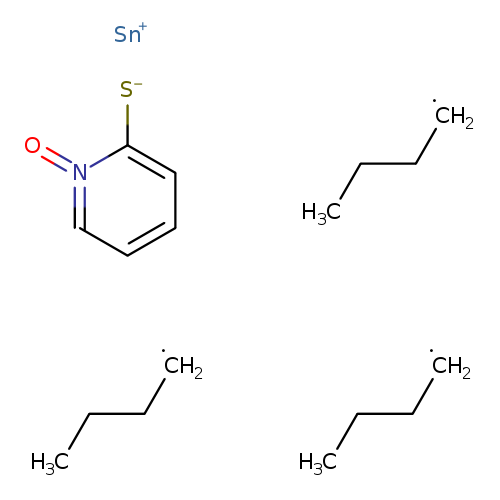 | ||||||||
| Synonyms | Not Available | ||||||||
| Chemical Formula | C17H32NOSSn | ||||||||
| Average Molecular Mass | 416.210 g/mol | ||||||||
| Monoisotopic Mass | 418.123 g/mol | ||||||||
| CAS Registry Number | 30860-66-3 | ||||||||
| IUPAC Name | Not Available | ||||||||
| Traditional Name | Not Available | ||||||||
| SMILES | CCCC[Sn](CCCC)(CCCC)SC1=CC=CC=[N+]1[O-] | ||||||||
| InChI Identifier | InChI=1/C5H5NOS.3C4H9.Sn/c7-6-4-2-1-3-5(6)8;3*1-3-4-2;/h1-4,8H;3*1,3-4H2,2H3;/q;;;;+1/p-1/rC17H31NOSSn/c1-4-7-14-21(15-8-5-2,16-9-6-3)20-17-12-10-11-13-18(17)19/h10-13H,4-9,14-16H2,1-3H3 | ||||||||
| InChI Key | IZLTYRKHPKGVOT-UHFFFAOYSA-M | ||||||||
| Chemical Taxonomy | |||||||||
| Description | belongs to the class of organic compounds known as pyridinium derivatives. Pyridinium derivatives are compounds containing a pyridinium ring, which is the cationic form of pyridine. | ||||||||
| Kingdom | Organic compounds | ||||||||
| Super Class | Organoheterocyclic compounds | ||||||||
| Class | Pyridines and derivatives | ||||||||
| Sub Class | Pyridinium derivatives | ||||||||
| Direct Parent | Pyridinium derivatives | ||||||||
| Alternative Parents | |||||||||
| Substituents |
| ||||||||
| Molecular Framework | Aromatic heteromonocyclic compounds | ||||||||
| External Descriptors | Not Available | ||||||||
| Biological Properties | |||||||||
| Status | Detected and Not Quantified | ||||||||
| Origin | Not Available | ||||||||
| Cellular Locations | Not Available | ||||||||
| Biofluid Locations | Not Available | ||||||||
| Tissue Locations | Not Available | ||||||||
| Pathways | Not Available | ||||||||
| Applications | Not Available | ||||||||
| Biological Roles | Not Available | ||||||||
| Chemical Roles | Not Available | ||||||||
| Physical Properties | |||||||||
| State | Not Available | ||||||||
| Appearance | Not Available | ||||||||
| Experimental Properties |
| ||||||||
| Predicted Properties | Not Available | ||||||||
| Spectra | |||||||||
| Spectra | Not Available | ||||||||
| Toxicity Profile | |||||||||
| Route of Exposure | Not Available | ||||||||
| Mechanism of Toxicity | Not Available | ||||||||
| Metabolism | Not Available | ||||||||
| Toxicity Values | Not Available | ||||||||
| Lethal Dose | Not Available | ||||||||
| Carcinogenicity (IARC Classification) | Not Available | ||||||||
| Uses/Sources | Not Available | ||||||||
| Minimum Risk Level | Not Available | ||||||||
| Health Effects | Not Available | ||||||||
| Symptoms | Not Available | ||||||||
| Treatment | Not Available | ||||||||
| Concentrations | |||||||||
| Not Available | |||||||||
| External Links | |||||||||
| DrugBank ID | Not Available | ||||||||
| HMDB ID | Not Available | ||||||||
| FooDB ID | Not Available | ||||||||
| Phenol Explorer ID | Not Available | ||||||||
| KNApSAcK ID | Not Available | ||||||||
| BiGG ID | Not Available | ||||||||
| BioCyc ID | Not Available | ||||||||
| METLIN ID | Not Available | ||||||||
| PDB ID | Not Available | ||||||||
| Wikipedia Link | Not Available | ||||||||
| Chemspider ID | Not Available | ||||||||
| ChEBI ID | Not Available | ||||||||
| PubChem Compound ID | 12718889 | ||||||||
| Kegg Compound ID | Not Available | ||||||||
| YMDB ID | Not Available | ||||||||
| ECMDB ID | Not Available | ||||||||
| References | |||||||||
| Synthesis Reference | Not Available | ||||||||
| MSDS | Not Available | ||||||||
| General References | Not Available | ||||||||