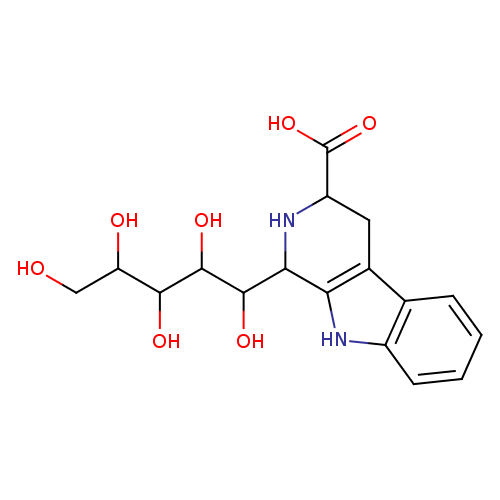
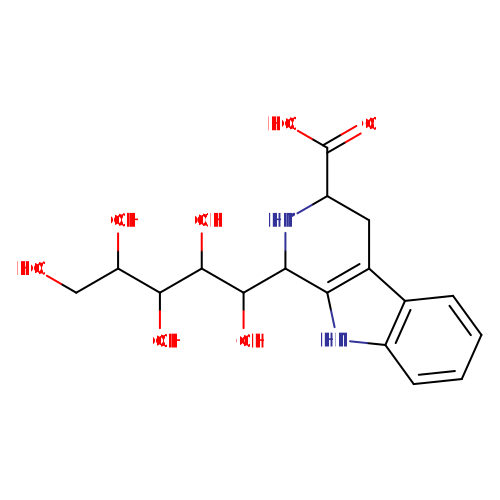
The novel carbohydrate-derived b-carboline, 1-pentahydroxypentyl-1,2,3,4-tetrahydro-b-carboline-3-carboxylic acid, was identified in fruit- and vegetable-derived products such as juices, jams, and tomato sauces. This compound occurred as two diastereoisomers, a cis isomer (the major compound) and a trans isomer, ranging from undetectable amounts to 6.5 ug/g. Grape, tomato, pineapple, and tropical juices exhibited the highest amount of this alkaloid (up to 3.8 mg/L), whereas apple, banana, and peach juices showed very low or nondetectable levels. This tetrahydro-b-carboline was also found in jams (up to 0.45 ug/g), and a relative high amount was present in tomato concentrate (6.5 ug/g) and sauce (up to 1.8 ug/g). This b-carboline occurred in fruit-derived products as a glycoconjugate from a chemical condensation of d-glucose and l-tryptophan that is highly favored at low pH values and high temperature. Production, processing treatments, and storage of fruit juices and jams can then release this b-carboline. Fruit-derived products and other foods containing this compound might be an exogenous dietary source of this glucose-derived tetrahydro-b-carboline.(PMID: 12137498).
belongs to the class of organic compounds known as 8-prenylated xanthones. These are organic compounds containing a C5-isoprenoid group linked to a xanthone moiety at the 8-position. Xanthone is a tricyclic compound made up of two benzene rings linearly fused to each other through a pyran ring that carries a ketone group.