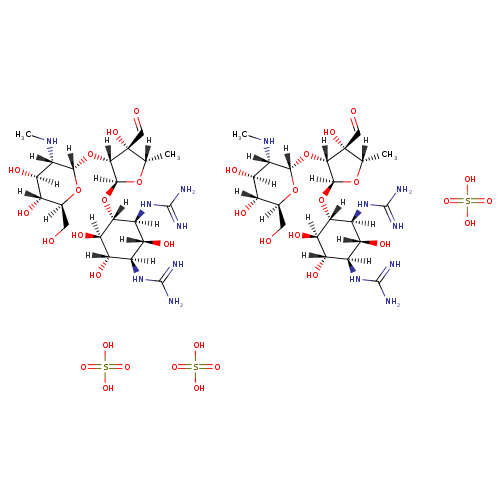
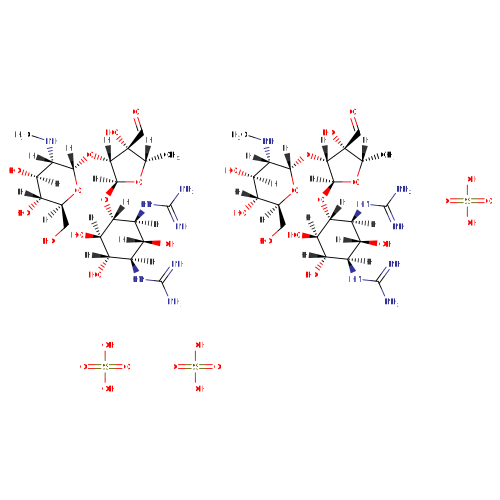
Streptomycin is an antibiotic used to treat a number of bacterial infections. This includes tuberculosis, Mycobacterium avium complex, endocarditis, brucellosis, Burkholderia infection, plague, tularemia, and rat bite fever. For active tuberculosis it is often given together with isoniazid, rifampicin, and pyrazinamide. It is given by injection into a vein or muscle.Common side effects include feeling like the world is spinning, vomiting, numbness of the face, fever, and rash. Use during pregnancy may result in permanent deafness in the developing baby. Use appears to be safe while breastfeeding. It is not recommended in people with myasthenia gravis or other neuromuscular disorders. Streptomycin is an aminoglycoside. It works by blocking the ability of 30S ribosomal subunits to make proteins, which results in bacterial death.Streptomycin was discovered in 1943 from Streptomyces griseus. It is on the World Health Organization's List of Essential Medicines, which lists the most effective and safe medicines needed in a health system. The wholesale cost in the developing world is between US$0.38 and $4.39 per day. In the United States, a course of treatment costs more than $200.
belongs to the class of organic compounds known as aminocyclitol glycosides. These are organic compounds containing an amicocyclitol moiety glycosidically linked to a carbohydrate moiety. There are two major classes of aminoglycosides containing a 2-streptamine core. They are called 4,5- and 4,6-disubstituted 2-deoxystreptamines.