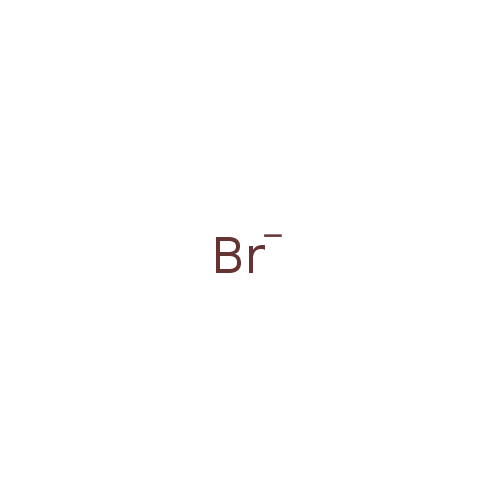
In nature, bromine is most abundant as a bromide ion. Physiologically, it exists as an ion in the body. A bromide is a chemical compound containing a bromide ion or ligand. Bromide compounds, especially potassium bromide, were frequently used as sedatives in the 19th and early 20th century. Their use in over-the-counter sedatives and headache remedies (such as Bromo-Seltzer) in the United States extended to 1975, when bromides were withdrawn as ingredients, due to chronic toxicity. Bromide is present in typical seawater (35 PSU) with a concentration of around 65 mg/L, which is around 0.2% of all dissolved salts. Bromide is needed by eosinophils (white blood cells of the granulocyte class, specialized for dealing with multi-cellular parasites), which use it to generate antiparasitic brominating compounds such as hypobromite, by the action of eosinophil peroxidase, a haloperoxidase enzyme which is able to use chloride, but preferentially uses bromide when available.
belongs to the class of inorganic compounds known as homogeneous halogens. These are inorganic non-metallic compounds in which the largest atom is a nobel gas.
The bromide ion is also known to affect the central nervous system, causing bromism. This is believed to be a result of bromide ions substituting for chloride ions in the in actions of neurotransmitters and transport systems, thus affecting numerous synaptic processes. (5, 6, 2)
Metabolism
Due to its reactivity, bromine quickly forms bromide and may be deposited in the tissues, displacing other halogens. (5)
No indication of carcinogenicity (not listed by IARC). (3)
Uses/Sources
Bromide is present in typical seawater (35 PSU) with a concentration of around 65 mg/L, which is around 0.2% of all dissolved salts. Bromide ions can be found in almost all living organisms, though it is not essential for life.
Minimum Risk Level
Not Available
Health Effects
The bromide ion is a central nervous system depressant and chronic exposure produces neuronal effects. This is called bromism and can result in central reactions reaching from somnolence to coma, cachexia, exicosis, loss of reflexes or pathologic reflexes, clonic seizures, tremor, ataxia, loss of neural sensitivity, paresis, papillar edema of the eyes, abnormal speech, cerebral edema, delirium, aggressiveness, and psychoses. (4, 5, 6)
Symptoms
The bromide ion is a central nervous system depressant producing ataxia, slurred speech, tremor, nausea, vomiting, lethargy, dizziness, visual disturbances, unsteadiness, headaches, impaired memory and concentration, disorientation and hallucinations. (5, 6)
Treatment
In case of acute exposure, bromide salts should be washed with water from any areas of dermal or ocular contact. If inhaled, treatment is mainly symptomatic and may include maintaining an adequate airway, administering oxygen, antibronchospasm therapy, and/or antibiotics. (5)