Record Information
Version1.0
Creation Date2014-09-05 17:13:05 UTC
Update Date2026-05-14 19:59:54 UTC
Accession NumberCHEM003566
Identification
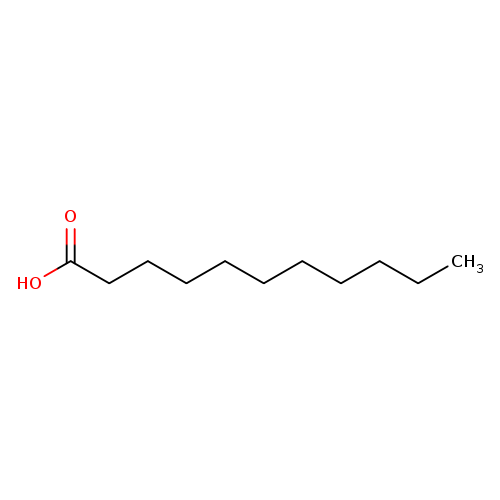
Common NameUndecanoic acid
ClassSmall Molecule
DescriptionUndecanoic acid is a medium chain length monocarboxylic acid that appears to be involved in the control of triacylglycerol synthesis.(7). It is found in breast milk produced by women in the United States (6), in infant formulas ( Mljekarstvo (2005), 55(2), 101-112.), in seminal plasma (5), and other fluids (3).
Contaminant Sources
  • EAFUS Chemicals
  • FooDB Chemicals
  • T3DB toxins
  • ToxCast & Tox21 Chemicals
Contaminant Type
  • Animal Toxin
  • Food Toxin
  • Metabolite
  • Natural Compound
  • Organic Compound
Chemical Structure
Thumb
Synonyms
ValueSource
1-Decanecarboxylic acidChEBI
CH3-[CH2]9-COOHChEBI
Hendecanoic acidChEBI
N-Undecanoic acidChEBI
N-Undecoic acidChEBI
N-Undecylic acidChEBI
UDAChEBI
Undecoic acidChEBI
Undecylic acidChEBI
UndekansaeureChEBI
1-DecanecarboxylateGenerator
HendecanoateGenerator
N-UndecanoateGenerator
N-UndecoateGenerator
N-UndecylateGenerator
UndecoateGenerator
UndecylateGenerator
UndecanoateGenerator
1N-Undecoic acidHMDB
FA(11:0)HMDB
Undecanoic acidMeSH
Chemical FormulaC11H22O2
Average Molecular Mass186.291 g/mol
Monoisotopic Mass186.162 g/mol
CAS Registry Number112-37-8
IUPAC Nameundecanoic acid
Traditional Nameundecanoic acid
SMILESCCCCCCCCCCC(O)=O
InChI IdentifierInChI=1S/C11H22O2/c1-2-3-4-5-6-7-8-9-10-11(12)13/h2-10H2,1H3,(H,12,13)
InChI KeyZDPHROOEEOARMN-UHFFFAOYSA-N
Chemical Taxonomy
Description belongs to the class of organic compounds known as medium-chain fatty acids. These are fatty acids with an aliphatic tail that contains between 4 and 12 carbon atoms.
KingdomOrganic compounds
Super ClassLipids and lipid-like molecules
ClassFatty Acyls
Sub ClassFatty acids and conjugates
Direct ParentMedium-chain fatty acids
Alternative Parents
Substituents
  • Medium-chain fatty acid
  • Straight chain fatty acid
  • Monocarboxylic acid or derivatives
  • Carboxylic acid
  • Carboxylic acid derivative
  • Organic oxygen compound
  • Organic oxide
  • Hydrocarbon derivative
  • Organooxygen compound
  • Carbonyl group
  • Aliphatic acyclic compound
Molecular FrameworkAliphatic acyclic compounds
External Descriptors
Biological Properties
StatusDetected and Not Quantified
OriginEndogenous
Cellular Locations
  • Extracellular
  • Membrane
Biofluid LocationsNot Available
Tissue LocationsNot Available
PathwaysNot Available
Applications
Biological Roles
Chemical RolesNot Available
Physical Properties
StateSolid
AppearanceWhite powder.
Experimental Properties
PropertyValue
Melting Point28.6 °C
Boiling Point228°C (442.4°F)
Solubility0.0522 mg/mL
Predicted Properties
PropertyValueSource
Water Solubility0.023 g/LALOGPS
logP4.49ALOGPS
logP4.03ChemAxon
logS-3.9ALOGPS
pKa (Strongest Acidic)4.95ChemAxon
Physiological Charge-1ChemAxon
Hydrogen Acceptor Count2ChemAxon
Hydrogen Donor Count1ChemAxon
Polar Surface Area37.3 ŲChemAxon
Rotatable Bond Count9ChemAxon
Refractivity54.08 m³·mol⁻¹ChemAxon
Polarizability23.73 ųChemAxon
Number of Rings0ChemAxon
Bioavailability1ChemAxon
Rule of FiveYesChemAxon
Ghose FilterYesChemAxon
Veber's RuleYesChemAxon
MDDR-like RuleNoChemAxon
Spectra
Spectra
Spectrum TypeDescriptionSplash KeyView
GC-MSGC-MS Spectrum - GC-MS (1 TMS)splash10-0159-2910000000-722a87fa01fa27b58b07Spectrum
GC-MSGC-MS Spectrum - EI-B (Non-derivatized)splash10-0706-9000000000-d7f6a00a2bcfd58539f5Spectrum
GC-MSGC-MS Spectrum - GC-MS (Non-derivatized)splash10-0159-2910000000-722a87fa01fa27b58b07Spectrum
Predicted GC-MSPredicted GC-MS Spectrum - GC-MS (Non-derivatized) - 70eV, Positivesplash10-06r6-9400000000-c452aa611294afd4b227Spectrum
Predicted GC-MSPredicted GC-MS Spectrum - GC-MS (1 TMS) - 70eV, Positivesplash10-00du-9310000000-90668bb3fcf413ecc767Spectrum
Predicted GC-MSPredicted GC-MS Spectrum - GC-MS (Non-derivatized) - 70eV, PositiveNot AvailableSpectrum
Predicted GC-MSPredicted GC-MS Spectrum - GC-MS (TBDMS_1_1) - 70eV, PositiveNot AvailableSpectrum
LC-MS/MSLC-MS/MS Spectrum - Quattro_QQQ 10V, Negative (Annotated)splash10-000i-0900000000-4e46062530f2b87127f2Spectrum
LC-MS/MSLC-MS/MS Spectrum - Quattro_QQQ 25V, Negative (Annotated)splash10-001i-2900000000-1bd11599567676fd18b8Spectrum
LC-MS/MSLC-MS/MS Spectrum - Quattro_QQQ 40V, Negative (Annotated)splash10-0019-3900000000-3ed16e9aae084b8128f7Spectrum
LC-MS/MSLC-MS/MS Spectrum - EI-B (HITACHI M-80B) , Positivesplash10-0706-9000000000-f0f2855ce0a7d3e0e44cSpectrum
LC-MS/MSLC-MS/MS Spectrum - LC-ESI-QQ (API3000, Applied Biosystems) 10V, Negativesplash10-000i-0900000000-70bc980554bccc2d565fSpectrum
LC-MS/MSLC-MS/MS Spectrum - LC-ESI-QQ (API3000, Applied Biosystems) 20V, Negativesplash10-000i-0900000000-1923c2ee9004b1a4f217Spectrum
LC-MS/MSLC-MS/MS Spectrum - LC-ESI-QQ (API3000, Applied Biosystems) 30V, Negativesplash10-000i-0900000000-818107787c04dbc613beSpectrum
LC-MS/MSLC-MS/MS Spectrum - LC-ESI-QQ (API3000, Applied Biosystems) 40V, Negativesplash10-01t9-9000000000-da3c8186be5724d14262Spectrum
LC-MS/MSLC-MS/MS Spectrum - LC-ESI-QQ (API3000, Applied Biosystems) 50V, Negativesplash10-052f-9000000000-4a1e2f342d24eb6ec79eSpectrum
LC-MS/MSLC-MS/MS Spectrum - ESI-TOF 10V, Negativesplash10-03di-0090000000-2dadd8baad50427686a7Spectrum
LC-MS/MSLC-MS/MS Spectrum - ESI-TOF 20V, Negativesplash10-03di-0090000000-2dadd8baad50427686a7Spectrum
LC-MS/MSLC-MS/MS Spectrum - ESI-TOF , Negativesplash10-000i-0900000000-d09512035285f332d56cSpectrum
LC-MS/MSLC-MS/MS Spectrum - ESI-TOF 10V, Negativesplash10-000i-0900000000-fca225c5971e85f0f121Spectrum
LC-MS/MSLC-MS/MS Spectrum - ESI-TOF 20V, Negativesplash10-000i-0900000000-0fabd46bd1eaa73e5af0Spectrum
LC-MS/MSLC-MS/MS Spectrum - ESI-TOF , Negativesplash10-000i-0900000000-d09512035285f332d56cSpectrum
LC-MS/MSLC-MS/MS Spectrum - LC-ESI-QQ , negativesplash10-000i-0900000000-70bc980554bccc2d565fSpectrum
LC-MS/MSLC-MS/MS Spectrum - LC-ESI-QQ , negativesplash10-000i-0900000000-1923c2ee9004b1a4f217Spectrum
LC-MS/MSLC-MS/MS Spectrum - LC-ESI-QQ , negativesplash10-000i-0900000000-f871962b32a5d16913f8Spectrum
LC-MS/MSLC-MS/MS Spectrum - LC-ESI-QQ , negativesplash10-01t9-9000000000-f75b1abf45a6ce1d1e16Spectrum
Predicted LC-MS/MSPredicted LC-MS/MS Spectrum - 10V, Positivesplash10-00kr-0900000000-5e1b204d52a76537f6ddSpectrum
Predicted LC-MS/MSPredicted LC-MS/MS Spectrum - 20V, Positivesplash10-000f-4900000000-4156178f661bac3b8785Spectrum
Predicted LC-MS/MSPredicted LC-MS/MS Spectrum - 40V, Positivesplash10-052f-9000000000-8f8e8441132607db272aSpectrum
Predicted LC-MS/MSPredicted LC-MS/MS Spectrum - 10V, Negativesplash10-000i-0900000000-36794ad067903d2b6624Spectrum
Predicted LC-MS/MSPredicted LC-MS/MS Spectrum - 20V, Negativesplash10-000l-1900000000-157dc43c0ad4ff0f5509Spectrum
Predicted LC-MS/MSPredicted LC-MS/MS Spectrum - 40V, Negativesplash10-0a4l-9300000000-95af6ebcd3a0e83715bdSpectrum
MSMass Spectrum (Electron Ionization)splash10-074l-9100000000-e152e90785434b58612cSpectrum
1D NMR1H NMR SpectrumNot AvailableSpectrum
1D NMR13C NMR SpectrumNot AvailableSpectrum
1D NMR1H NMR SpectrumNot AvailableSpectrum
1D NMR13C NMR SpectrumNot AvailableSpectrum
2D NMR[1H,13C] 2D NMR SpectrumNot AvailableSpectrum
Toxicity Profile
Route of ExposureNot Available
Mechanism of ToxicityNot Available
MetabolismNot Available
Toxicity ValuesNot Available
Lethal DoseNot Available
Carcinogenicity (IARC Classification)No indication of carcinogenicity to humans (not listed by IARC).
Uses/SourcesThis is an endogenously produced metabolite found in the human body. It is used in metabolic reactions, catabolic reactions or waste generation.
Minimum Risk LevelNot Available
Health EffectsNot Available
SymptomsNot Available
TreatmentNot Available
Concentrations
Not Available
DrugBank IDNot Available
HMDB IDHMDB0000947
FooDB IDFDB000700
Phenol Explorer IDNot Available
KNApSAcK IDC00007421
BiGG IDNot Available
BioCyc IDNot Available
METLIN ID5894
PDB IDNot Available
Wikipedia LinkUndecylic_acid
Chemspider ID7888
ChEBI ID32368
PubChem Compound ID8180
Kegg Compound IDC17715
YMDB IDYMDB01800
ECMDB IDNot Available
References
Synthesis ReferenceSchreyer, Gerd; Schwarze, Werner; Weigert, Wolfgang. Carboxylic acids by oxidation of vicinal diols. Ger. Offen. (1972), 10 pp.
MSDSLink
General References
1. Schreyer, Gerd; Schwarze, Werner; Weigert, Wolfgang. Carboxylic acids by oxidation of vicinal diols. Ger. Offen. (1972), 10 pp.
2. Jensen RG: The composition of bovine milk lipids: January 1995 to December 2000. J Dairy Sci. 2002 Feb;85(2):295-350. doi: 10.3168/jds.S0022-0302(02)74079-4.
3. GARTON GA: THE COMPOSITION AND BIOSYNTHESIS OF MILK LIPIDS. J Lipid Res. 1963 Jul;4:237-54.
4. Keenan TW, Morre DJ, Olson DE, Yunghans WN, Patton S: Biochemical and morphological comparison of plasma membrane and milk fat globule membrane from bovine mammary gland. J Cell Biol. 1970 Jan;44(1):80-93.
5. Glasser F, Ferlay A, Chilliard Y: Oilseed lipid supplements and fatty acid composition of cow milk: a meta-analysis. J Dairy Sci. 2008 Dec;91(12):4687-703. doi: 10.3168/jds.2008-0987.
6. Schreyer, Gerd; Schwarze, Werner; Weigert, Wolfgang. Carboxylic acids by oxidation of vicinal diols. Ger. Offen. (1972), 10 pp.
7. Avrahami D, Shai Y: Conjugation of a magainin analogue with lipophilic acids controls hydrophobicity, solution assembly, and cell selectivity. Biochemistry. 2002 Feb 19;41(7):2254-63.
8. Avrahami D, Shai Y: Bestowing antifungal and antibacterial activities by lipophilic acid conjugation to D,L-amino acid-containing antimicrobial peptides: a plausible mode of action. Biochemistry. 2003 Dec 23;42(50):14946-56.
9. Mingrone G, Greco AV, Capristo E, Benedetti G, Castagneto M, Gasbarrini G: An improved GLC method for a rapid, simultaneous analysis of both medium chain fatty acids and medium chain triglycerides in plasma. Clin Chim Acta. 1995 Sep 15;240(2):195-207.
10. Kinkaid AR, Wilton DC: A continuous fluorescence displacement assay for phospholipase A2 using albumin and medium chain phospholipid substrates. Anal Biochem. 1993 Jul;212(1):65-70.
11. Hamfler HW, Nissen HP, Heinze I, Kreysel HW, Schirren C: [Free fatty acid composition of human semen in different clinical diagnoses]. Andrologia. 1978 Nov-Dec;10(6):498-50.
12. Mosley EE, Wright AL, McGuire MK, McGuire MA: trans Fatty acids in milk produced by women in the United States. Am J Clin Nutr. 2005 Dec;82(6):1292-7.
13. Hornung B, Amtmann E, Sauer G: Medium chain length fatty acids stimulate triacylglycerol synthesis in tissue culture cells. Biochem Pharmacol. 1992 Jan 22;43(2):175-81.
14. Dutta-Roy AK, Demarco AC, Raha SK, Shay J, Garvey M, Horrobin DF: Effects of linoleic and gamma-linolenic acids (efamol evening primrose oil) on fatty acid-binding proteins of rat liver. Mol Cell Biochem. 1990 Oct 15-Nov 8;98(1-2):177-82.
15. Clinical Guide to Laboratory Tests, 2nd Ed. Norbert W. Tietz 1990
16. https://www.ncbi.nlm.nih.gov/pubmed/?term=16332663
17. https://www.ncbi.nlm.nih.gov/pubmed/?term=1739406
18. https://www.ncbi.nlm.nih.gov/pubmed/?term=18516670