Record Information
Version1.0
Creation Date2014-08-29 06:51:23 UTC
Update Date2026-04-16 21:17:42 UTC
Accession NumberCHEM003413
Identification
Common NameSuccinic acid
ClassSmall Molecule
DescriptionSuccinic acid is a dicarboxylic acid. The anion, succinate, is a component of the citric acid cycle capable of donating electrons to the electron transfer chain. Succinic acid is created as a byproduct of the fermentation of sugar. It lends to fermented beverages such as wine and beer a common taste that is a combination of saltiness, bitterness and acidity. Succinate is commonly used as a chemical intermediate, in medicine, the manufacture of lacquers, and to make perfume esters. It is also used in foods as a sequestrant, buffer, and a neutralizing agent. Succinate plays a role in the citric acid cycle, an energy-yielding process and is metabolized by succinate dehydrogenase to fumarate. Succinate dehydrogenase (SDH) plays an important role in the mitochondria, being both part of the respiratory chain and the Krebs cycle. SDH with a covalently attached FAD prosthetic group, binds enzyme substrates (succinate and fumarate) and physiological regulators (oxaloacetate and ATP). Oxidizing succinate links SDH to the fast-cycling Krebs cycle portion where it participates in the breakdown of acetyl-CoA throughout the whole Krebs cycle. Succinate can readily be imported into the mitochondrial matrix by the n-butylmalonate- (or phenylsuccinate-) sensitive dicarboxylate carrier in exchange with inorganic phosphate or another organic acid, e.g. malate. (1) Mutations in the four genes encoding the subunits of succinate dehydrogenase are associated with a wide spectrum of clinical presentations (i.e.: Huntington's disease. (2). Succinate also acts as an oncometabolite. Succinate inhibits 2-oxoglutarate-dependent histone and DNA demethylase enzymes, resulting in epigenetic silencing that affects neuroendocrine differentiation.
Contaminant Sources
  • EAFUS Chemicals
  • FooDB Chemicals
  • HMDB Contaminants - Feces
  • HMDB Contaminants - Urine
  • HPV EPA Chemicals
  • STOFF IDENT Compounds
  • T3DB toxins
  • ToxCast & Tox21 Chemicals
Contaminant Type
  • Animal Toxin
  • Dietary Supplement
  • Drug
  • Food Toxin
  • Metabolite
  • Micronutrient
  • Natural Compound
  • Nutraceutical
  • Organic Compound
  • Supplement
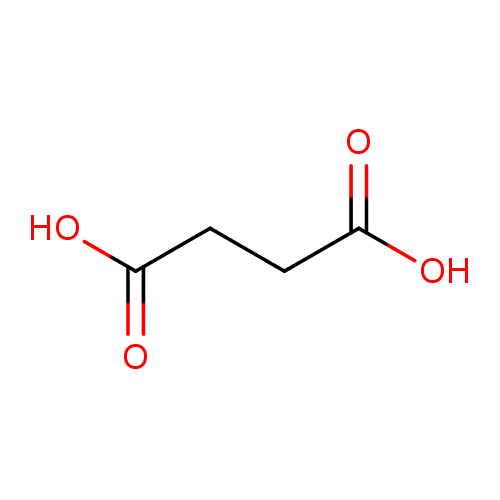
Chemical Structure
Thumb
Synonyms
ValueSource
1,2-Ethanedicarboxylic acidChEBI
Acide butanedioiqueChEBI
Acide succiniqueChEBI
Acidum succinicumChEBI
Amber acidChEBI
AsuccinChEBI
BernsteinsaeureChEBI
ButandisaeureChEBI
Butanedionic acidChEBI
Dihydrofumaric acidChEBI
e363ChEBI
Ethylenesuccinic acidChEBI
HOOC-CH2-CH2-COOHChEBI
Spirit OF amberChEBI
1,2-EthanedicarboxylateGenerator
ButanedionateGenerator
DihydrofumarateGenerator
EthylenesuccinateGenerator
SuccinateGenerator
1,2 Ethanedicarboxylic acidMeSH
1,4 Butanedioic acidMeSH
1,4-Butanedioic acidMeSH
Ammonium succinateMeSH
Butanedioic acidMeSH
Potassium succinateMeSH
Succinate, ammoniumMeSH
Succinate, potassiumMeSH
1,4-ButanedioateHMDB
KatasuccinHMDB
Wormwood acidHMDB
2-Acetamido-2-deoxy-D-glucoseChEBI, HMDB
D-GlcNAcChEBI, HMDB
N-Acetyl-D-glucosamineChEBI, HMDB
N-AcetylchitosamineChEBI, HMDB
N Acetyl D glucosamineHMDB
2 Acetamido 2 deoxy D glucoseHMDB
2 Acetamido 2 deoxyglucoseHMDB
2-Acetamido-2-deoxyglucoseHMDB
AcetylglucosamineHMDB
Chemical FormulaC4H6O4
Average Molecular Mass118.088 g/mol
Monoisotopic Mass118.027 g/mol
CAS Registry Number110-15-6
IUPAC Namebutanedioic acid
Traditional Namesuccinic acid
SMILESOC(=O)CCC(O)=O
InChI IdentifierInChI=1S/C4H6O4/c5-3(6)1-2-4(7)8/h1-2H2,(H,5,6)(H,7,8)
InChI KeyKDYFGRWQOYBRFD-UHFFFAOYSA-N
Chemical Taxonomy
Description belongs to the class of organic compounds known as dicarboxylic acids and derivatives. These are organic compounds containing exactly two carboxylic acid groups.
KingdomOrganic compounds
Super ClassOrganic acids and derivatives
ClassCarboxylic acids and derivatives
Sub ClassDicarboxylic acids and derivatives
Direct ParentDicarboxylic acids and derivatives
Alternative Parents
Substituents
  • Fatty acid
  • Dicarboxylic acid or derivatives
  • Carboxylic acid
  • Organic oxygen compound
  • Organic oxide
  • Hydrocarbon derivative
  • Organooxygen compound
  • Carbonyl group
  • Aliphatic acyclic compound
Molecular FrameworkAliphatic acyclic compounds
External Descriptors
Biological Properties
StatusDetected and Not Quantified
OriginEndogenous
Cellular Locations
  • Cytoplasm
  • Extracellular
Biofluid LocationsNot Available
Tissue Locations
  • All Tissues
Pathways
NameSMPDB LinkKEGG Link
Carnitine SynthesisSMP00465 Not Available
Citric Acid CycleSMP00057 map00020
Glutamate MetabolismSMP00072 map00250
Mitochondrial Electron Transport ChainSMP00355 map00190
Phytanic Acid Peroxisomal OxidationSMP00450 Not Available
Pyruvate Carboxylase DeficiencySMP00350 Not Available
ApoptosisNot Availablemap04210
Oxidative phosphorylationNot Availablemap00190
Insulin secretionNot Availablemap04911
Renin-angiotensin systemNot Availablemap04614
Metabolic PathwaysNot AvailableNot Available
Histidine MetabolismSMP00044 map00340
Benzoate DegradationNot AvailableNot Available
Cell cycleNot Availablemap04110
Pentose Phosphate PathwaySMP00031 map00030
Vitamin B6 MetabolismSMP00017 map00750
AminoglycosidesNot AvailableNot Available
Tyrosine MetabolismSMP00006 map00350
Butanoate metabolismNot Availablemap00650
Bile secretionNot Availablemap04976
Applications
Biological Roles
Chemical RolesNot Available
Physical Properties
StateSolid
AppearanceWhite crystalline powder
Experimental Properties
PropertyValue
Melting Point184°C
Boiling Point235°C
Solubility58 g/L
Predicted Properties
PropertyValueSource
Water Solubility211 g/LALOGPS
logP-0.53ALOGPS
logP-0.4ChemAxon
logS0.25ALOGPS
pKa (Strongest Acidic)3.55ChemAxon
Physiological Charge-2ChemAxon
Hydrogen Acceptor Count4ChemAxon
Hydrogen Donor Count2ChemAxon
Polar Surface Area74.6 ŲChemAxon
Rotatable Bond Count3ChemAxon
Refractivity23.54 m³·mol⁻¹ChemAxon
Polarizability10.14 ųChemAxon
Number of Rings0ChemAxon
Bioavailability1ChemAxon
Rule of FiveYesChemAxon
Ghose FilterNoChemAxon
Veber's RuleNoChemAxon
MDDR-like RuleNoChemAxon
Spectra
Spectra
Spectrum TypeDescriptionSplash KeyView
GC-MSGC-MS Spectrum - GC-EI-TOF (Pegasus III TOF-MS system, Leco; GC 6890, Agilent Technologies) (2 TMS)splash10-0002-0920000000-f286e6204a4163b823baSpectrum
GC-MSGC-MS Spectrum - GC-EI-TOF (Pegasus III TOF-MS system, Leco; GC 6890, Agilent Technologies) (Non-derivatized)splash10-0002-0900000000-bf336910bb37d7f78140Spectrum
GC-MSGC-MS Spectrum - GC-EI-TOF (Pegasus III TOF-MS system, Leco; GC 6890, Agilent Technologies) (2 TMS)splash10-006t-9800000000-df5ff4e8457d2d4ef919Spectrum
GC-MSGC-MS Spectrum - GC-MS (2 TMS)splash10-00c1-3930000000-3cc18e719822b5af661aSpectrum
GC-MSGC-MS Spectrum - EI-B (Non-derivatized)splash10-004i-9000000000-93b4807ae6275a3e59d7Spectrum
GC-MSGC-MS Spectrum - EI-B (Non-derivatized)splash10-0kos-9100000000-f1df0903a24c305e68ecSpectrum
GC-MSGC-MS Spectrum - EI-B (Non-derivatized)splash10-0002-0910000000-300c33b39fb991b5a73eSpectrum
GC-MSGC-MS Spectrum - GC-EI-TOF (Non-derivatized)splash10-0002-0920000000-f286e6204a4163b823baSpectrum
GC-MSGC-MS Spectrum - GC-EI-TOF (Non-derivatized)splash10-0002-0900000000-bf336910bb37d7f78140Spectrum
GC-MSGC-MS Spectrum - GC-EI-TOF (Non-derivatized)splash10-006t-9800000000-df5ff4e8457d2d4ef919Spectrum
GC-MSGC-MS Spectrum - GC-MS (Non-derivatized)splash10-00c1-3930000000-3cc18e719822b5af661aSpectrum
GC-MSGC-MS Spectrum - GC-EI-TOF (Non-derivatized)splash10-0002-0900000000-f838d863ee7c2b111f02Spectrum
Predicted GC-MSPredicted GC-MS Spectrum - GC-MS (Non-derivatized) - 70eV, Positivesplash10-00xr-9300000000-f0644daf4fbb11fcc2dcSpectrum
Predicted GC-MSPredicted GC-MS Spectrum - GC-MS (2 TMS) - 70eV, Positivesplash10-00dj-9710000000-ff8325384b9eefd19106Spectrum
Predicted GC-MSPredicted GC-MS Spectrum - GC-MS (Non-derivatized) - 70eV, PositiveNot AvailableSpectrum
Predicted GC-MSPredicted GC-MS Spectrum - GC-MS (TMS_1_1) - 70eV, PositiveNot AvailableSpectrum
Predicted GC-MSPredicted GC-MS Spectrum - GC-MS (TBDMS_1_1) - 70eV, PositiveNot AvailableSpectrum
Predicted GC-MSPredicted GC-MS Spectrum - GC-MS (TBDMS_2_1) - 70eV, PositiveNot AvailableSpectrum
LC-MS/MSLC-MS/MS Spectrum - Quattro_QQQ 10V, Negative (Annotated)splash10-00di-9300000000-f9dc864d93a09d3074f9Spectrum
LC-MS/MSLC-MS/MS Spectrum - Quattro_QQQ 25V, Negative (Annotated)splash10-00di-9300000000-76c151de384928b2256fSpectrum
LC-MS/MSLC-MS/MS Spectrum - Quattro_QQQ 40V, Negative (Annotated)splash10-01b9-7900000000-51d2341c097f04827944Spectrum
LC-MS/MSLC-MS/MS Spectrum - EI-B (Unknown) , Positivesplash10-004i-9000000000-93b4807ae6275a3e59d7Spectrum
LC-MS/MSLC-MS/MS Spectrum - LC-ESI-ITFT (LTQ Orbitrap XL, Thermo Scientfic) , Negativesplash10-03dj-0971010000-37d214dc7a8fdc26116bSpectrum
LC-MS/MSLC-MS/MS Spectrum - LC-ESI-ITFT (LTQ Orbitrap XL, Thermo Scientfic) , Negativesplash10-014i-9000000000-249222ac742c1634cec9Spectrum
LC-MS/MSLC-MS/MS Spectrum - LC-ESI-ITFT (LTQ Orbitrap XL, Thermo Scientfic) , Negativesplash10-00di-9000000000-6897d49472dba6a34a27Spectrum
LC-MS/MSLC-MS/MS Spectrum - LC-ESI-ITFT (LTQ Orbitrap XL, Thermo Scientfic) , Negativesplash10-0udi-0490000000-d138f8023125921b4b82Spectrum
LC-MS/MSLC-MS/MS Spectrum - LC-ESI-QQ (API3000, Applied Biosystems) 10V, Negativesplash10-014i-1900000000-4ffdabe5bde527b66982Spectrum
LC-MS/MSLC-MS/MS Spectrum - LC-ESI-QQ (API3000, Applied Biosystems) 20V, Negativesplash10-00di-9100000000-c20baa818f5ff5f678c1Spectrum
LC-MS/MSLC-MS/MS Spectrum - LC-ESI-QQ (API3000, Applied Biosystems) 30V, Negativesplash10-00di-9000000000-7a49a18aa6fcb2540a12Spectrum
LC-MS/MSLC-MS/MS Spectrum - LC-ESI-QQ (API3000, Applied Biosystems) 40V, Negativesplash10-00di-9000000000-9955aeb0e5a9f88ae70eSpectrum
LC-MS/MSLC-MS/MS Spectrum - LC-ESI-QQ (API3000, Applied Biosystems) 50V, Negativesplash10-00di-9000000000-7e1f195f111b4eafb4faSpectrum
LC-MS/MSLC-MS/MS Spectrum - LC-ESI-QTOF (UPLC Q-Tof Premier, Waters) , Negativesplash10-00xr-9400000000-e50afc90e20cd420ba9bSpectrum
LC-MS/MSLC-MS/MS Spectrum - LC-ESI-QTOF (UPLC Q-Tof Premier, Waters) , Negativesplash10-00xr-9600000000-43167f2549cbb5d5f7e8Spectrum
LC-MS/MSLC-MS/MS Spectrum - LC-ESI-QQ , negativesplash10-014i-1900000000-4ffdabe5bde527b66982Spectrum
LC-MS/MSLC-MS/MS Spectrum - LC-ESI-QQ , negativesplash10-00di-9100000000-7a8bfa543dc087bea06dSpectrum
LC-MS/MSLC-MS/MS Spectrum - LC-ESI-QQ , negativesplash10-00di-9000000000-fdec6c7458176f3cbeb8Spectrum
LC-MS/MSLC-MS/MS Spectrum - LC-ESI-QQ , negativesplash10-00di-9000000000-9955aeb0e5a9f88ae70eSpectrum
Predicted LC-MS/MSPredicted LC-MS/MS Spectrum - 10V, Positivesplash10-0gb9-2900000000-9d959a53833b07094158Spectrum
Predicted LC-MS/MSPredicted LC-MS/MS Spectrum - 20V, Positivesplash10-0l6r-9600000000-c367e11e737714d41418Spectrum
Predicted LC-MS/MSPredicted LC-MS/MS Spectrum - 40V, Positivesplash10-056r-9000000000-e65aa602a8293debec36Spectrum
Predicted LC-MS/MSPredicted LC-MS/MS Spectrum - 10V, Negativesplash10-014i-2900000000-e1f840494c9003279869Spectrum
Predicted LC-MS/MSPredicted LC-MS/MS Spectrum - 20V, Negativesplash10-014i-7900000000-1089efd4a3469bcf14f1Spectrum
Predicted LC-MS/MSPredicted LC-MS/MS Spectrum - 40V, Negativesplash10-0604-9000000000-0e0e60bb202ffb004894Spectrum
MSMass Spectrum (Electron Ionization)splash10-05di-9100000000-c629bea41d0d3d896425Spectrum
1D NMR13C NMR SpectrumNot AvailableSpectrum
1D NMR1H NMR SpectrumNot AvailableSpectrum
1D NMR13C NMR SpectrumNot AvailableSpectrum
1D NMR1H NMR SpectrumNot AvailableSpectrum
1D NMR13C NMR SpectrumNot AvailableSpectrum
1D NMR1H NMR SpectrumNot AvailableSpectrum
1D NMR13C NMR SpectrumNot AvailableSpectrum
1D NMR1H NMR SpectrumNot AvailableSpectrum
1D NMR13C NMR SpectrumNot AvailableSpectrum
1D NMR1H NMR SpectrumNot AvailableSpectrum
1D NMR13C NMR SpectrumNot AvailableSpectrum
1D NMR1H NMR SpectrumNot AvailableSpectrum
1D NMR13C NMR SpectrumNot AvailableSpectrum
1D NMR1H NMR SpectrumNot AvailableSpectrum
1D NMR13C NMR SpectrumNot AvailableSpectrum
1D NMR1H NMR SpectrumNot AvailableSpectrum
1D NMR13C NMR SpectrumNot AvailableSpectrum
1D NMR1H NMR SpectrumNot AvailableSpectrum
1D NMR13C NMR SpectrumNot AvailableSpectrum
1D NMR1H NMR SpectrumNot AvailableSpectrum
1D NMR13C NMR SpectrumNot AvailableSpectrum
1D NMR1H NMR SpectrumNot AvailableSpectrum
1D NMR13C NMR SpectrumNot AvailableSpectrum
1D NMR1H NMR SpectrumNot AvailableSpectrum
2D NMR[1H,1H] 2D NMR SpectrumNot AvailableSpectrum
2D NMR[1H,13C] 2D NMR SpectrumNot AvailableSpectrum
Toxicity Profile
Route of ExposureEye contact, Inhalation, Ingestion.
Mechanism of ToxicitySuccinate can inhibit the activities of α-KG–dependent oxygenases (KDMs) and the TET family of 5-methlycytosine (5mC) hydroxylases. Succinate also mediates allosteric inhibition of hypoxia inducible factor (HIF) prolyl hydroxylases (PHDs). Inhibition of HIF PHDs leads to activation of HIF-mediated pseudohypoxic response, whereas inhibition of KDMs and TET family of 5mC hydroxylases causes epigenetic alterations that ultimately cause cancer. Succination of KEAP1 in FH deficiency results in the constitutive activation of the antioxidant defense pathway mediated by NRF2, conferring a reductive milieu that promotes cell proliferation. Succination of the Krebs cycle enzyme Aco2 impairs aconitase activity in Fh1-deficient MEFs. Succination also causes irreversible inactivation of glyceraldehyde-3-phosphate dehydrogenase (GAPDH).
MetabolismSuccinic acid can be converted into fumaric acid by oxidation via succinate dehydrogenase.
Toxicity ValuesAcute oral toxicity (LD50): 2260 mg/kg [Rat].
Lethal DoseNot Available
Carcinogenicity (IARC Classification)Not listed by IARC. Has been implicated in oncogenesis (17).
Uses/SourcesSuccinic acid is a precursor to some specialized polyesters. It is also a component of some alkyd resins. Succinic acid is used in the food and beverage industry, primarily as an acidity regulator. It is also sold as a food additive and dietary supplement, and is generally recognized as safe by the US FDA.
Minimum Risk LevelNot Available
Health EffectsAt acute doses or exposures succinic acid is a skin irritant. Chronically high doses of succinate can lead to succinylation or succination of a variety of enzymes. Partial succinate dehydrogenase deficiency (15% to 50% of normal reference enzyme activity) in skeletal muscle leads to elevated succinate levels and causes mitochondrial myopathy with various symptoms, for example, brain involvement, cardiomyopathy, and/or exercise intolerance.
SymptomsAcute Exposure: the clinical signs of acute toxicity are weakness and diarrhea.
TreatmentEYES: irrigate opened eyes for several minutes under running water. INGESTION: do not induce vomiting. Rinse mouth with water (never give anything by mouth to an unconscious person). Seek immediate medical advice. SKIN: should be treated immediately by rinsing the affected parts in cold running water for at least 15 minutes, followed by thorough washing with soap and water. If necessary, the person should shower and change contaminated clothing and shoes, and then must seek medical attention. INHALATION: supply fresh air. If required provide artificial respiration.
Concentrations
Not Available
DrugBank IDDB00139
HMDB IDHMDB0000254
FooDB IDFDB001931
Phenol Explorer IDNot Available
KNApSAcK IDC00001205
BiGG IDNot Available
BioCyc IDSUC
METLIN IDNot Available
PDB IDNot Available
Wikipedia LinkSuccinic_acid
Chemspider ID1078
ChEBI ID15741
PubChem Compound ID1738118
Kegg Compound IDC00042
YMDB IDYMDB00338
ECMDB IDECMDB00254
References
Synthesis Reference

Michael Diamantoglou, Gerhard Meyer, “Process for the production of water-insoluble fibers of cellulose monoesters of maleic acid, succinic acid and phthalic acid, having an extremely high absorbability for water and physiological liquids.” U.S. Patent US4734239, issued April, 1941.

MSDSLink
General References
1. https://www.ncbi.nlm.nih.gov/pubmed/?term=17439666
2. Berglund, Kris Arvid; Andersson, Christian; Rova, Ulrika. Process for the production of succinic acid. PCT Int. Appl. (2007), 30pp.
3. Klein MS, Almstetter MF, Schlamberger G, Nurnberger N, Dettmer K, Oefner PJ, Meyer HH, Wiedemann S, Gronwald W: Nuclear magnetic resonance and mass spectrometry-based milk metabolomics in dairy cows during early and late lactation. J Dairy Sci. 2010 Apr;93(4):1539-50. doi: 10.3168/jds.2009-2563.
4. Melzer N, Wittenburg D, Hartwig S, Jakubowski S, Kesting U, Willmitzer L, Lisec J, Reinsch N, Repsilber D: Investigating associations between milk metabolite profiles and milk traits of Holstein cows. J Dairy Sci. 2013 Mar;96(3):1521-34. doi: 10.3168/jds.2012-5743.
5. Scano P, Murgia A, Pirisi FM, Caboni P: A gas chromatography-mass spectrometry-based metabolomic approach for the characterization of goat milk compared with cow milk. J Dairy Sci. 2014 Oct;97(10):6057-66. doi: 10.3168/jds.2014-8247. Epub 2014 Aug 6.
6. O'Callaghan TF, Vazquez-Fresno R, Serra-Cayuela A, Dong E, Mandal R, Hennessy D, McAuliffe S, Dillon P, Wishart DS, Stanton C, Ross RP: Pasture Feeding Changes the Bovine Rumen and Milk Metabolome. Metabolites. 2018 Apr 6;8(2). pii: metabo8020027. doi: 10.3390/metabo8020027.
7. Kurt J. Boudonck, Matthew W. Mitchell, Jacob Wulff and John A. Ryals. Characterization of the biochemical variability of bovine milk using metabolomics. Metabolomics (2009) 5:375?386
8. A. Foroutan et al. The Chemical Composition of Commercial Cow's Milk (in preparation)
9. Berglund, Kris Arvid; Andersson, Christian; Rova, Ulrika. Process for the production of succinic acid. PCT Int. Appl. (2007), 30pp.
10. Sreekumar A, Poisson LM, Rajendiran TM, Khan AP, Cao Q, Yu J, Laxman B, Mehra R, Lonigro RJ, Li Y, Nyati MK, Ahsan A, Kalyana-Sundaram S, Han B, Cao X, Byun J, Omenn GS, Ghosh D, Pennathur S, Alexander DC, Berger A, Shuster JR, Wei JT, Varambally S, Beecher C, Chinnaiyan AM: Metabolomic profiles delineate potential role for sarcosine in prostate cancer progression. Nature. 2009 Feb 12;457(7231):910-4. doi: 10.1038/nature07762.
11. Guneral F, Bachmann C: Age-related reference values for urinary organic acids in a healthy Turkish pediatric population. Clin Chem. 1994 Jun;40(6):862-6.
12. Hoffmann GF, Meier-Augenstein W, Stockler S, Surtees R, Rating D, Nyhan WL: Physiology and pathophysiology of organic acids in cerebrospinal fluid. J Inherit Metab Dis. 1993;16(4):648-69.
13. Silwood CJ, Lynch E, Claxson AW, Grootveld MC: 1H and (13)C NMR spectroscopic analysis of human saliva. J Dent Res. 2002 Jun;81(6):422-7.
14. Redjems-Bennani N, Jeandel C, Lefebvre E, Blain H, Vidailhet M, Gueant JL: Abnormal substrate levels that depend upon mitochondrial function in cerebrospinal fluid from Alzheimer patients. Gerontology. 1998;44(5):300-4.
15. Wevers RA, Engelke U, Wendel U, de Jong JG, Gabreels FJ, Heerschap A: Standardized method for high-resolution 1H-NMR of cerebrospinal fluid. Clin Chem. 1995 May;41(5):744-51.
16. Magera MJ, Helgeson JK, Matern D, Rinaldo P: Methylmalonic acid measured in plasma and urine by stable-isotope dilution and electrospray tandem mass spectrometry. Clin Chem. 2000 Nov;46(11):1804-10.
17. Zhang TM, Sener A, Malaisse WJ: Hydrolysis of succinic acid dimethyl ester in rat pancreatic islets. Biochem Mol Med. 1995 Aug;55(2):131-7.
18. Groenen PM, Engelke UF, Wevers RA, Hendriks JC, Eskes TK, Merkus HM, Steegers-Theunissen RP: High-resolution 1H NMR spectroscopy of amniotic fluids from spina bifida fetuses and controls. Eur J Obstet Gynecol Reprod Biol. 2004 Jan 15;112(1):16-23.
19. Meijer-Severs GJ, van Santen E: Short-chain fatty acids and succinate in feces of healthy human volunteers and their correlation with anaerobe cultural counts. Scand J Gastroenterol. 1987 Aug;22(6):672-6.
20. Ren LC, Huang XY, Long JH: [Effects of succinic acid on the function of in vitro cultured human fibroblasts]. Zhonghua Shao Shang Za Zhi. 2004 Feb;20(1):34-6.
21. Wevers RA, Engelke U, Heerschap A: High-resolution 1H-NMR spectroscopy of blood plasma for metabolic studies. Clin Chem. 1994 Jul;40(7 Pt 1):1245-50.
22. Borenstein DG, Gibbs CA, Jacobs RP: Gas-liquid chromatographic analysis of synovial fluid: volatile short-chain fatty acids in septic arthritis. Ann Rheum Dis. 1983 Aug;42(4):362-7.
23. Frenkel G, Peterson RN, Freund M: Oxidative and glycolytic metabolism of semen components by washed guinea pig spermatozoa. Fertil Steril. 1975 Feb;26(2):144-7.
24. Briere JJ, Favier J, El Ghouzzi V, Djouadi F, Benit P, Gimenez AP, Rustin P: Succinate dehydrogenase deficiency in human. Cell Mol Life Sci. 2005 Oct;62(19-20):2317-24.
25. Rustin P, Rotig A: Inborn errors of complex II--unusual human mitochondrial diseases. Biochim Biophys Acta. 2002 Jan 17;1553(1-2):117-22.
26. Gupta A, Dwivedi M, Mahdi AA, Khetrapal CL, Bhandari M: Broad identification of bacterial type in urinary tract infection using (1)h NMR spectroscopy. J Proteome Res. 2012 Mar 2;11(3):1844-54. doi: 10.1021/pr2010692. Epub 2012 Jan 31.
27. Sauer M, Porro D, Mattanovich D, Branduardi P: Microbial production of organic acids: expanding the markets. Trends Biotechnol. 2008 Feb;26(2):100-8. doi: 10.1016/j.tibtech.2007.11.006. Epub 2008 Jan 11.
28. Becker J, Lange A, Fabarius J, Wittmann C: Top value platform chemicals: bio-based production of organic acids. Curr Opin Biotechnol. 2015 Dec;36:168-75. doi: 10.1016/j.copbio.2015.08.022. Epub 2015 Sep 8.
29. Elshenawy S, Pinney SE, Stuart T, Doulias PT, Zura G, Parry S, Elovitz MA, Bennett MJ, Bansal A, Strauss JF 3rd, Ischiropoulos H, Simmons RA: The Metabolomic Signature of the Placenta in Spontaneous Preterm Birth. Int J Mol Sci. 2020 Feb 4;21(3). pii: ijms21031043. doi: 10.3390/ijms21031043.
30. Tretter L, Patocs A, Chinopoulos C: Succinate, an intermediate in metabolism, signal transduction, ROS, hypoxia, and tumorigenesis. Biochim Biophys Acta. 2016 Aug;1857(8):1086-1101. doi: 10.1016/j.bbabio.2016.03.012. Epub 2016 Mar 10.