Record Information
Version1.0
Creation Date2014-08-29 06:51:18 UTC
Update Date2026-05-14 17:52:41 UTC
Accession NumberCHEM003404
Identification
Common NamePropionic acid
ClassSmall Molecule
DescriptionPropionic acid (PA) is widely used as an antifungal agent in food. It is present naturally at low levels in dairy products and occurs ubiquitously, together with other short-chain fatty acids (SCFA), in the gastro-intestinal tract of humans and other mammals as an end-product of the microbial digestion of carbohydrates. It has significant physiological activity in animals. PA is irritant but produces no acute systemic effects and has no demonstrable genotoxic potential. Propionic aciduria is one of the most frequent organic acidurias, a disease that comprise many various disorders. The outcome of patients born with Propionic aciduria is poor intellectual development patterns, with 60% having an IQ less than 75 and requiring special education. Successful liver and/or renal transplantations, in a few patients, have resulted in better quality of life but have not necessarily prevented neurological and various visceral complications. These results emphasize the need for permanent metabolic follow-up whatever the therapeutic strategy. Decreased early mortality, less severe symptoms at diagnosis, and more favorable short-term neurodevelopmental outcome were recorded in patients identified through expanded newborn screening. (2, 3, 4).
Contaminant Sources
  • Clean Air Act Chemicals
  • EAFUS Chemicals
  • FooDB Chemicals
  • HMDB Contaminants - Feces
  • HMDB Contaminants - Urine
  • HPV EPA Chemicals
  • OECD HPV Chemicals
  • STOFF IDENT Compounds
  • T3DB toxins
  • ToxCast & Tox21 Chemicals
Contaminant Type
  • Animal Toxin
  • Food Toxin
  • Household Toxin
  • Mammal Toxin
  • Metabolite
  • Natural Compound
  • Organic Compound
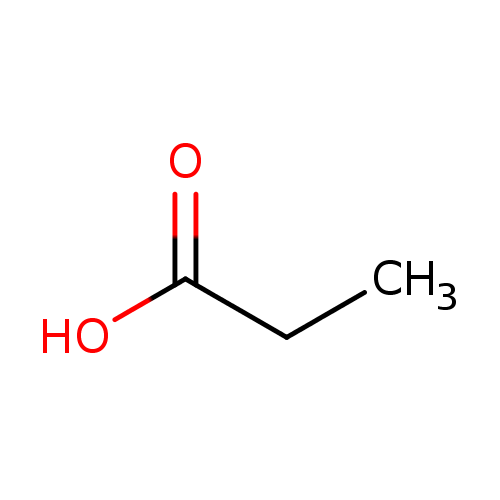
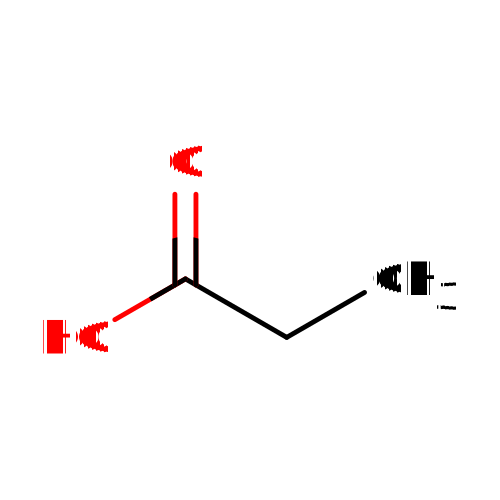
Chemical Structure
Thumb
Synonyms
ValueSource
Acide propanoiqueChEBI
Acide propioniqueChEBI
CarboxyethaneChEBI
CH3-CH2-COOHChEBI
Ethanecarboxylic acidChEBI
Ethylformic acidChEBI
Metacetonic acidChEBI
Methylacetic acidChEBI
PAChEBI
Propanoic acidChEBI
Propioic acidChEBI
PropionsaeureChEBI
Propoic acidChEBI
Pseudoacetic acidChEBI
PropionateKegg
EthanecarboxylateGenerator
EthylformateGenerator
MetacetonateGenerator
MethylacetateGenerator
PropanoateGenerator
PropioateGenerator
PropoateGenerator
PseudoacetateGenerator
AdofeedHMDB
Antischim bHMDB
LuprosilHMDB
MonoPropHMDB
PropanateHMDB
PropcornHMDB
PropkornHMDB
ProzoinHMDB
Toxi-checkHMDB
Propionic acid, zinc saltHMDB
Potassium propionateHMDB
Chromium propionateHMDB
Lithium propanoateHMDB
Zinc propionateHMDB
Chemical FormulaC3H6O2
Average Molecular Mass74.079 g/mol
Monoisotopic Mass74.037 g/mol
CAS Registry Number79-09-4
IUPAC Namepropanoic acid
Traditional Namepropanoic acid
SMILESCCC(O)=O
InChI IdentifierInChI=1S/C3H6O2/c1-2-3(4)5/h2H2,1H3,(H,4,5)
InChI KeyXBDQKXXYIPTUBI-UHFFFAOYSA-N
Chemical Taxonomy
Description belongs to the class of organic compounds known as carboxylic acids. Carboxylic acids are compounds containing a carboxylic acid group with the formula -C(=O)OH.
KingdomOrganic compounds
Super ClassOrganic acids and derivatives
ClassCarboxylic acids and derivatives
Sub ClassCarboxylic acids
Direct ParentCarboxylic acids
Alternative Parents
Substituents
  • Monocarboxylic acid or derivatives
  • Carboxylic acid
  • Organic oxygen compound
  • Organic oxide
  • Hydrocarbon derivative
  • Organooxygen compound
  • Carbonyl group
  • Aliphatic acyclic compound
Molecular FrameworkAliphatic acyclic compounds
External Descriptors
Biological Properties
StatusDetected and Not Quantified
OriginEndogenous
Cellular Locations
  • Cytoplasm
  • Extracellular
  • Mitochondria
Biofluid LocationsNot Available
Tissue Locations
  • Adipose Tissue
  • Brain
  • Epidermis
  • Fibroblasts
  • Intestine
  • Muscle
  • Neuron
  • Platelet
  • Stratum Corneum
  • Testes
Pathways
NameSMPDB LinkKEGG Link
Propanoate MetabolismSMP00016 map00640
Propionic AcidemiaSMP00236 Not Available
ApplicationsNot Available
Biological RolesNot Available
Chemical RolesNot Available
Physical Properties
StateLiquid
AppearanceNot Available
Experimental Properties
PropertyValue
Melting Point-20.7°C
Boiling Point140.99°C (285.8°F)
Solubility1000.0 mg/mL
Predicted Properties
PropertyValueSource
Water Solubility352 g/LALOGPS
logP0.31ALOGPS
logP0.48ChemAxon
logS0.68ALOGPS
pKa (Strongest Acidic)4.75ChemAxon
Physiological Charge-1ChemAxon
Hydrogen Acceptor Count2ChemAxon
Hydrogen Donor Count1ChemAxon
Polar Surface Area37.3 ŲChemAxon
Rotatable Bond Count1ChemAxon
Refractivity17.27 m³·mol⁻¹ChemAxon
Polarizability7.24 ųChemAxon
Number of Rings0ChemAxon
Bioavailability1ChemAxon
Rule of FiveYesChemAxon
Ghose FilterNoChemAxon
Veber's RuleYesChemAxon
MDDR-like RuleNoChemAxon
Spectra
Spectra
Spectrum TypeDescriptionSplash KeyView
GC-MSGC-MS Spectrum - EI-B (Non-derivatized)splash10-004i-9000000000-51f674be972a6c17185bSpectrum
GC-MSGC-MS Spectrum - EI-B (Non-derivatized)splash10-004i-9000000000-691dcd080b30c9898350Spectrum
GC-MSGC-MS Spectrum - EI-B (Non-derivatized)splash10-004i-9000000000-51f674be972a6c17185bSpectrum
GC-MSGC-MS Spectrum - EI-B (Non-derivatized)splash10-004i-9000000000-691dcd080b30c9898350Spectrum
Predicted GC-MSPredicted GC-MS Spectrum - GC-MS (Non-derivatized) - 70eV, Positivesplash10-00b9-9000000000-abf322c73e6badb078bfSpectrum
Predicted GC-MSPredicted GC-MS Spectrum - GC-MS (1 TMS) - 70eV, Positivesplash10-00fr-9100000000-cbfe9e32208652e70047Spectrum
Predicted GC-MSPredicted GC-MS Spectrum - GC-MS (Non-derivatized) - 70eV, PositiveNot AvailableSpectrum
Predicted GC-MSPredicted GC-MS Spectrum - GC-MS (TBDMS_1_1) - 70eV, PositiveNot AvailableSpectrum
LC-MS/MSLC-MS/MS Spectrum - Quattro_QQQ 10V, Positive (Annotated)splash10-004i-9000000000-1af60fc458a7f351a9b0Spectrum
LC-MS/MSLC-MS/MS Spectrum - Quattro_QQQ 25V, Positive (Annotated)splash10-004i-9000000000-aa6e765fc867ac8be641Spectrum
LC-MS/MSLC-MS/MS Spectrum - Quattro_QQQ 40V, Positive (Annotated)splash10-0006-9000000000-27e0b790e192d1304449Spectrum
LC-MS/MSLC-MS/MS Spectrum - EI-B (HITACHI RMU-6M) , Positivesplash10-004i-9000000000-51f674be972a6c17185bSpectrum
LC-MS/MSLC-MS/MS Spectrum - EI-B (HITACHI M-80B) , Positivesplash10-004i-9000000000-90d9e0181596093a2f85Spectrum
LC-MS/MSLC-MS/MS Spectrum - LC-ESI-QQ (API3000, Applied Biosystems) 10V, Negativesplash10-00di-9000000000-bdd7baa3d1bda886fb77Spectrum
LC-MS/MSLC-MS/MS Spectrum - LC-ESI-QQ (API3000, Applied Biosystems) 20V, Negativesplash10-00di-9000000000-e73379c8765802cf3228Spectrum
LC-MS/MSLC-MS/MS Spectrum - LC-ESI-QQ (API3000, Applied Biosystems) 30V, Negativesplash10-00di-9000000000-d6832c04c8b2ca0fdfa3Spectrum
LC-MS/MSLC-MS/MS Spectrum - LC-ESI-QQ (API3000, Applied Biosystems) 40V, Negativesplash10-00di-9000000000-d0c93844dbfaed791bb0Spectrum
LC-MS/MSLC-MS/MS Spectrum - LC-ESI-QQ , negativesplash10-00di-9000000000-bdd7baa3d1bda886fb77Spectrum
LC-MS/MSLC-MS/MS Spectrum - LC-ESI-QQ , negativesplash10-00di-9000000000-e73379c8765802cf3228Spectrum
LC-MS/MSLC-MS/MS Spectrum - LC-ESI-QQ , negativesplash10-00di-9000000000-d6832c04c8b2ca0fdfa3Spectrum
LC-MS/MSLC-MS/MS Spectrum - LC-ESI-QQ , negativesplash10-00di-9000000000-d0c93844dbfaed791bb0Spectrum
Predicted LC-MS/MSPredicted LC-MS/MS Spectrum - 10V, Positivesplash10-0a4i-9000000000-47364fadf00a5a2b7e93Spectrum
Predicted LC-MS/MSPredicted LC-MS/MS Spectrum - 20V, Positivesplash10-0a6r-9000000000-76fad523c005a6510264Spectrum
Predicted LC-MS/MSPredicted LC-MS/MS Spectrum - 40V, Positivesplash10-0a6r-9000000000-a1c0234da57ff32c6e12Spectrum
Predicted LC-MS/MSPredicted LC-MS/MS Spectrum - 10V, Positivesplash10-0a4i-9000000000-47364fadf00a5a2b7e93Spectrum
Predicted LC-MS/MSPredicted LC-MS/MS Spectrum - 20V, Positivesplash10-0a6r-9000000000-76fad523c005a6510264Spectrum
Predicted LC-MS/MSPredicted LC-MS/MS Spectrum - 40V, Positivesplash10-0a6r-9000000000-a1c0234da57ff32c6e12Spectrum
Predicted LC-MS/MSPredicted LC-MS/MS Spectrum - 10V, Negativesplash10-00di-9000000000-db59da781a70634d2526Spectrum
Predicted LC-MS/MSPredicted LC-MS/MS Spectrum - 20V, Negativesplash10-05fr-9000000000-bea4ff21e6ab6c664412Spectrum
Predicted LC-MS/MSPredicted LC-MS/MS Spectrum - 40V, Negativesplash10-0a4i-9000000000-782832f8f5ab85f2ef4fSpectrum
Predicted LC-MS/MSPredicted LC-MS/MS Spectrum - 10V, Negativesplash10-00di-9000000000-db59da781a70634d2526Spectrum
Predicted LC-MS/MSPredicted LC-MS/MS Spectrum - 20V, Negativesplash10-05fr-9000000000-bea4ff21e6ab6c664412Spectrum
Predicted LC-MS/MSPredicted LC-MS/MS Spectrum - 40V, Negativesplash10-0a4i-9000000000-782832f8f5ab85f2ef4fSpectrum
MSMass Spectrum (Electron Ionization)splash10-00b9-9000000000-0bb3297c4159bed2316eSpectrum
1D NMR13C NMR SpectrumNot AvailableSpectrum
1D NMR1H NMR SpectrumNot AvailableSpectrum
1D NMR13C NMR SpectrumNot AvailableSpectrum
1D NMR1H NMR SpectrumNot AvailableSpectrum
1D NMR13C NMR SpectrumNot AvailableSpectrum
2D NMR[1H,1H] 2D NMR SpectrumNot AvailableSpectrum
2D NMR[1H,13C] 2D NMR SpectrumNot AvailableSpectrum
Toxicity Profile
Route of ExposureNot Available
Mechanism of ToxicityIn healthy individuals, the enzyme propionyl CoA carboxylase converts propionyl CoA to methylmalonyl CoA. This is one step in the process of converting certain amino acids and fats into sugar for energy. Individuals with propionic acidemia cannot perform this conversion because the enzyme propionyl CoA carboxylase is nonfunctional. The essential amino acids; isoleucine, valine, threonine, and methionine and odd-chain fatty acids are simply converted to propionyl CoA, before the process stops, leading to a buildup of propionyl CoA. Instead of being converted to methylmalonyl CoA, propionyl CoA is then converted into propionic acid, which builds up in the bloodstream. Propionyl-CoA, propionic acid, ketones, ammonia, and other toxic compounds accumulate in the blood, causing the signs and symptoms of propionic acidemia. Propionate acts as a metabolic toxin in liver cells by accumulating in mitochondria. Propanoate is metabolized oxidatively by glia, which suggests astrocytic vulnerability in propanoic acidemia when intramitochondrial propionyl-CoA may accumulate. Propanoic acidemia may alter both neuronal and glial gene expression by affecting histone acetylation (22, 23). (Wikipedia)
MetabolismThe metabolism of propanoic acid begins with its conversion to propionyl coenzyme A (propionyl-CoA), the usual first step in the metabolism of carboxylic acids. Since propanoic acid has three carbons, propionyl-CoA cannot directly enter either beta oxidation or the citric acid cycles. In most vertebrates, propionyl-CoA is carboxylated to D-methylmalonyl-CoA, which is isomerised to L-methylmalonyl-CoA. A vitamin B12-dependent enzyme catalyzes rearrangement of L-methylmalonyl-CoA to succinyl-CoA, which is an intermediate of the citric acid cycle and can be readily incorporated there. (Wikipedia)
Toxicity ValuesNot Available
Lethal DoseNot Available
Carcinogenicity (IARC Classification)No indication of carcinogenicity to humans (not listed by IARC).
Uses/SourcesThis is an endogenously produced metabolite found in the human body. It is used in metabolic reactions, catabolic reactions or waste generation.
Minimum Risk LevelNot Available
Health EffectsPropionic acid occurs in chronically high levels in propionic acidemia. Propionic acidemia, also known as propionic aciduria, propionyl-CoA carboxylase deficiency and ketotic glycinemia, is an autosomal recessive metabolic disorder, classified as a branched-chain organic acidemia. The disorder presents in the early neonatal period with progressive encephalopathy. Death can occur quickly, due to secondary hyperammonemia, infection, cardiomyopathy, or basal ganglial stroke. In many cases, propionic acidemia can damage the brain, heart, and liver, cause seizures, and delays to normal development like walking and talking. (Wikipedia)
SymptomsPropionic acidemia is characterized almost immediately in newborns. Symptoms include poor feeding, vomiting, dehydration, acidosis, low muscle tone (hypotonia), seizures, and lethargy. The effects of propionic acidemia quickly become life-threatening. (Wikipedia)
TreatmentDuring times of illness the affected person may need to be hospitalized to prevent breakdown of proteins within the body. Each meal presents a challenge to those with propionic acidemia. If not constantly monitored, the effects would be devastating. Dietary needs must be closely managed by a metabolic geneticist or metabolic dietician. Patients with propionic acidemia should be started as early as possible on a low protein diet. In addition to a protein mixture that is devoid of methionine, threonine, valine, and isoleucine, the patient should also receive L-carnitine treatment and should be given antibiotics 10 days per month in order to remove the intestinal propiogenic flora. The patient should have diet protocols prepared for him with a “well day diet” with low protein content, a “half emergency diet” containing half of the protein requirements, and an “emergency diet” with no protein content. These patients are under the risk of severe hyperammonemia during infections that can lead to comatose states. Liver transplant is gaining a role in the management of these patients, with small series showing improved quality of life. (Wikipedia)
Concentrations
Not Available
DrugBank IDDB03766
HMDB IDHMDB0000237
FooDB IDFDB031132
Phenol Explorer IDNot Available
KNApSAcK IDC00044287
BiGG ID34098
BioCyc IDPROPIONATE
METLIN ID3215
PDB IDNot Available
Wikipedia LinkPropionic acid
Chemspider ID1005
ChEBI ID30768
PubChem Compound ID1032
Kegg Compound IDC00163
YMDB IDYMDB00857
ECMDB IDECMDB00237
References
Synthesis Reference

James R. Hazen, “Process for production of 3-(hydroxyphenylphosphinyl)-propanoic acid.” U.S. Patent US4769182, issued March, 1978.

MSDSLink
General References
1. Zhan, Jianghong; Meng, Wei; Gong, Tao; Huang, Fen-sheng. Preparation of propionic acid by propionaldehyde oxidation. Shihua Jishu Yu Yingyong (2005), 23(6), 421-423.
2. Somerma S, Lassus A, Salde L: Assessment of atrophy of human skin caused by corticosteroids using chamber occlusion and suction blister techniques. Acta Derm Venereol. 1984;64(1):41-5.
3. Marala RB, Brown JA, Kong JX, Tracey WR, Knight DR, Wester RT, Sun D, Kennedy SP, Hamanaka ES, Ruggeri RB, Hill RJ: Zoniporide: a potent and highly selective inhibitor of human Na(+)/H(+) exchanger-1. Eur J Pharmacol. 2002 Sep 6;451(1):37-41.
4. Lin SC, Bergles DE: Synaptic signaling between neurons and glia. Glia. 2004 Aug 15;47(3):290-8.
5. Alekseev OM, Widgren EE, Richardson RT, O'Rand MG: Association of NASP with HSP90 in mouse spermatogenic cells: stimulation of ATPase activity and transport of linker histones into nuclei. J Biol Chem. 2005 Jan 28;280(4):2904-11. Epub 2004 Nov 8.
6. Robertson MD, Bickerton AS, Dennis AL, Vidal H, Frayn KN: Insulin-sensitizing effects of dietary resistant starch and effects on skeletal muscle and adipose tissue metabolism. Am J Clin Nutr. 2005 Sep;82(3):559-67.
7. Esposito BP, Faljoni-Alario A, de Menezes JF, de Brito HF, Najjar R: A circular dichroism and fluorescence quenching study of the interactions between rhodium(II) complexes and human serum albumin. J Inorg Biochem. 1999 May 30;75(1):55-61.
8. Jeng JH, Chan CP, Ho YS, Lan WH, Hsieh CC, Chang MC: Effects of butyrate and propionate on the adhesion, growth, cell cycle kinetics, and protein synthesis of cultured human gingival fibroblasts. J Periodontol. 1999 Dec;70(12):1435-42.
9. Chandler RJ, Aswani V, Tsai MS, Falk M, Wehrli N, Stabler S, Allen R, Sedensky M, Kazazian HH, Venditti CP: Propionyl-CoA and adenosylcobalamin metabolism in Caenorhabditis elegans: evidence for a role of methylmalonyl-CoA epimerase in intermediary metabolism. Mol Genet Metab. 2006 Sep-Oct;89(1-2):64-73. Epub 2006 Jul 14.
10. Silwood CJ, Lynch E, Claxson AW, Grootveld MC: 1H and (13)C NMR spectroscopic analysis of human saliva. J Dent Res. 2002 Jun;81(6):422-7.
11. Christensen JK, Varming T, Ahring PK, Jorgensen TD, Nielsen EO: In vitro characterization of 5-carboxyl-2,4-di-benzamidobenzoic acid (NS3763), a noncompetitive antagonist of GLUK5 receptors. J Pharmacol Exp Ther. 2004 Jun;309(3):1003-10. Epub 2004 Feb 25.
12. Bintvihok A, Kositcharoenkul S: Effect of dietary calcium propionate on performance, hepatic enzyme activities and aflatoxin residues in broilers fed a diet containing low levels of aflatoxin B1. Toxicon. 2006 Jan;47(1):41-6. Epub 2005 Nov 18.
13. Mayer B, Schumacher M, Brandstatter H, Wagner FS, Hermetter A: High-throughput fluorescence screening of antioxidative capacity in human serum. Anal Biochem. 2001 Oct 15;297(2):144-53.
14. De Kanter R, De Jager MH, Draaisma AL, Jurva JU, Olinga P, Meijer DK, Groothuis GM: Drug-metabolizing activity of human and rat liver, lung, kidney and intestine slices. Xenobiotica. 2002 May;32(5):349-62.
15. Ridge BD, Batt MD, Palmer HE, Jarrett A: The dansyl chloride technique for stratum corneum renewal as an indicator of changes in epidermal mitotic activity following topical treatment. Br J Dermatol. 1988 Feb;118(2):167-74.
16. Koeppe RA, Frey KA, Snyder SE, Meyer P, Kilbourn MR, Kuhl DE: Kinetic modeling of N-[11C]methylpiperidin-4-yl propionate: alternatives for analysis of an irreversible positron emission tomography trace for measurement of acetylcholinesterase activity in human brain. J Cereb Blood Flow Metab. 1999 Oct;19(10):1150-63.
17. Nguyen TB, Snyder SE, Kilbourn MR: Syntheses of carbon-11 labeled piperidine esters as potential in vivo substrates for acetylcholinesterase. Nucl Med Biol. 1998 Nov;25(8):761-8.
18. Wendel U, Zass R, Leupold D: Contribution of odd-numbered fatty acid oxidation to propionate production in neonates with methylmalonic and propionic acidaemias. Eur J Pediatr. 1993 Dec;152(12):1021-3.
19. Beutler KT, Pankewycz O, Brautigan DL: Equivalent uptake of organic and inorganic zinc by monkey kidney fibroblasts, human intestinal epithelial cells, or perfused mouse intestine. Biol Trace Elem Res. 1998 Jan;61(1):19-31.
20. Harrison PT: Propionic acid and the phenomenon of rodent forestomach tumorigenesis: a review. Food Chem Toxicol. 1992 Apr;30(4):333-40.
21. de Baulny HO, Benoist JF, Rigal O, Touati G, Rabier D, Saudubray JM: Methylmalonic and propionic acidaemias: management and outcome. J Inherit Metab Dis. 2005;28(3):415-23.
22. Dionisi-Vici C, Deodato F, Roschinger W, Rhead W, Wilcken B: 'Classical' organic acidurias, propionic aciduria, methylmalonic aciduria and isovaleric aciduria: long-term outcome and effects of expanded newborn screening using tandem mass spectrometry. J Inherit Metab Dis. 2006 Apr-Jun;29(2-3):383-9.
23. https://www.ncbi.nlm.nih.gov/pubmed/?term=15868474
24. https://www.ncbi.nlm.nih.gov/pubmed/?term=1628870
25. https://www.ncbi.nlm.nih.gov/pubmed/?term=16763906