Record Information
Version1.0
Creation Date2014-08-29 06:35:59 UTC
Update Date2026-05-14 16:24:11 UTC
Accession NumberCHEM003331
Identification
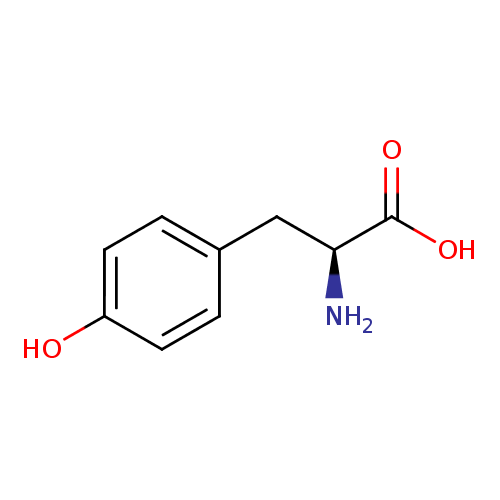
Common NameL-Tyrosine
ClassSmall Molecule
DescriptionTyrosine is an essential amino acid that readily passes the blood-brain barrier. Once in the brain, it is a precursor for the neurotransmitters dopamine, norepinephrine and epinephrine, better known as adrenalin. These neurotransmitters are an important part of the body's sympathetic nervous system, and their concentrations in the body and brain are directly dependent upon dietary tyrosine. Tyrosine is not found in large concentrations throughout the body, probably because it is rapidly metabolized. Folic acid, copper and vitamin C are cofactor nutrients of these reactions. Tyrosine is also the precursor for hormones, thyroid, catecholestrogens and the major human pigment, melanin. Tyrosine is an important amino acid in many proteins, peptides and even enkephalins, the body's natural pain reliever. Valine and other branched amino acids, and possibly tryptophan and phenylalanine may reduce tyrosine absorption. A number of genetic errors of tyrosine metabolism occur. Most common is the increased amount of tyrosine in the blood of premature infants, which is marked by decreased motor activity, lethargy and poor feeding. Infection and intellectual deficits may occur. Vitamin C supplements reverse the disease. Some adults also develop elevated tyrosine in their blood. This indicates a need for more vitamin C. More tyrosine is needed under stress, and tyrosine supplements prevent the stress-induced depletion of norepinephrine and can cure biochemical depression. However, tyrosine may not be good for psychosis. Many antipsychotic medications apparently function by inhibiting tyrosine metabolism. L-dopa, which is directly used in Parkinson's, is made from tyrosine. Tyrosine, the nutrient, can be used as an adjunct in the treatment of Parkinson's. Peripheral metabolism of tyrosine necessitates large doses of tyrosine, however, compared to L-dopa.
Contaminant Sources
  • Cosmetic Chemicals
  • EAFUS Chemicals
  • FooDB Chemicals
  • HMDB Contaminants - Feces
  • HMDB Contaminants - Urine
  • HPV EPA Chemicals
  • STOFF IDENT Compounds
  • T3DB toxins
  • ToxCast & Tox21 Chemicals
Contaminant Type
  • Amine
  • Animal Toxin
  • Dietary Supplement
  • Drug
  • Food Toxin
  • Metabolite
  • Micronutrient
  • Natural Compound
  • Non-Essential Amino Acid
  • Nutraceutical
  • Organic Compound
  • Supplement
Chemical Structure
Thumb
Synonyms
ValueSource
(-)-alpha-Amino-p-hydroxyhydrocinnamic acidChEBI
(2S)-2-Amino-3-(4-hydroxyphenyl)propanoic acidChEBI
(S)-(-)-TyrosineChEBI
(S)-2-Amino-3-(p-hydroxyphenyl)propionic acidChEBI
(S)-3-(p-Hydroxyphenyl)alanineChEBI
(S)-alpha-Amino-4-hydroxybenzenepropanoic acidChEBI
(S)-TyrosineChEBI
4-Hydroxy-L-phenylalanineChEBI
L-TyrosinChEBI
TyrChEBI
TYROSINEChEBI
YChEBI
(-)-a-Amino-p-hydroxyhydrocinnamateGenerator
(-)-a-Amino-p-hydroxyhydrocinnamic acidGenerator
(-)-alpha-Amino-p-hydroxyhydrocinnamateGenerator
(-)-Α-amino-p-hydroxyhydrocinnamateGenerator
(-)-Α-amino-p-hydroxyhydrocinnamic acidGenerator
(2S)-2-Amino-3-(4-hydroxyphenyl)propanoateGenerator
(S)-2-Amino-3-(p-hydroxyphenyl)propionateGenerator
(S)-a-Amino-4-hydroxybenzenepropanoateGenerator
(S)-a-Amino-4-hydroxybenzenepropanoic acidGenerator
(S)-alpha-Amino-4-hydroxybenzenepropanoateGenerator
(S)-Α-amino-4-hydroxybenzenepropanoateGenerator
(S)-Α-amino-4-hydroxybenzenepropanoic acidGenerator
(S)-a-Amino-4-hydroxy-benzenepropanoateHMDB
(S)-a-Amino-4-hydroxy-benzenepropanoic acidHMDB
(S)-alpha-Amino-4-hydroxy-benzenepropanoateHMDB
(S)-alpha-Amino-4-hydroxy-benzenepropanoic acidHMDB
2-Amino-3-(4-hydroxyphen yl)-2-amino-3-(4-hydroxyphenyl)-propanoateHMDB
2-Amino-3-(4-hydroxyphen yl)-2-amino-3-(4-hydroxyphenyl)-propanoic acidHMDB
3-(4-Hydroxyphenyl)-L-alanineHMDB
BenzenepropanoateHMDB
Benzenepropanoic acidHMDB
L-p-TyrosineHMDB
p-TyrosineHMDB
L TyrosineHMDB
Tyrosine, L-isomerHMDB
Tyrosine, L isomerHMDB
Para tyrosineHMDB
Para-tyrosineHMDB
Chemical FormulaC9H11NO3
Average Molecular Mass181.189 g/mol
Monoisotopic Mass181.074 g/mol
CAS Registry Number60-18-4
IUPAC Name(2S)-2-amino-3-(4-hydroxyphenyl)propanoic acid
Traditional NameL-tyrosine
SMILESN[C@@H](CC1=CC=C(O)C=C1)C(O)=O
InChI IdentifierInChI=1S/C9H11NO3/c10-8(9(12)13)5-6-1-3-7(11)4-2-6/h1-4,8,11H,5,10H2,(H,12,13)/t8-/m0/s1
InChI KeyOUYCCCASQSFEME-QMMMGPOBSA-N
Chemical Taxonomy
Description belongs to the class of organic compounds known as tyrosine and derivatives. Tyrosine and derivatives are compounds containing tyrosine or a derivative thereof resulting from reaction of tyrosine at the amino group or the carboxy group, or from the replacement of any hydrogen of glycine by a heteroatom.
KingdomOrganic compounds
Super ClassOrganic acids and derivatives
ClassCarboxylic acids and derivatives
Sub ClassAmino acids, peptides, and analogues
Direct ParentTyrosine and derivatives
Alternative Parents
Substituents
  • Tyrosine or derivatives
  • Phenylalanine or derivatives
  • 3-phenylpropanoic-acid
  • Alpha-amino acid
  • Amphetamine or derivatives
  • L-alpha-amino acid
  • 1-hydroxy-2-unsubstituted benzenoid
  • Phenol
  • Aralkylamine
  • Monocyclic benzene moiety
  • Benzenoid
  • Amino acid
  • Carboxylic acid
  • Monocarboxylic acid or derivatives
  • Organic oxide
  • Organooxygen compound
  • Organonitrogen compound
  • Amine
  • Primary aliphatic amine
  • Organic nitrogen compound
  • Carbonyl group
  • Organopnictogen compound
  • Organic oxygen compound
  • Hydrocarbon derivative
  • Primary amine
  • Aromatic homomonocyclic compound
Molecular FrameworkAromatic homomonocyclic compounds
External Descriptors
Biological Properties
StatusDetected and Not Quantified
OriginEndogenous
Cellular Locations
  • Cytoplasm
  • Extracellular
  • Mitochondria
Biofluid LocationsNot Available
Tissue Locations
  • All Tissues
  • Prostate
Pathways
NameSMPDB LinkKEGG Link
Catecholamine BiosynthesisSMP00012 map00350
Phenylalanine and Tyrosine MetabolismSMP00008 map00360
Transcription/TranslationSMP00019 Not Available
Tyrosine MetabolismSMP00006 map00350
Hartnup DisorderSMP00189 Not Available
HawkinsinuriaSMP00190 Not Available
Tyrosinemia, transient, of the newbornSMP00494 Not Available
Tyrosinemia Type 2 (or Richner-Hanhart syndrome)SMP00369 Not Available
Tyrosinemia Type 3 (TYRO3)SMP00370 Not Available
Tyrosinemia Type ISMP00218 Not Available
Applications
Biological Roles
Chemical Roles
Physical Properties
StateSolid
AppearanceWhite powder.
Experimental Properties
PropertyValue
Melting Point343 dec°C
Boiling PointNot Available
Solubility479 mg/L (at 25°C)
Predicted Properties
PropertyValueSource
Water Solubility7.67 g/LALOGPS
logP-2.4ALOGPS
logP-1.5ChemAxon
logS-1.4ALOGPS
pKa (Strongest Acidic)2ChemAxon
pKa (Strongest Basic)9.19ChemAxon
Physiological Charge0ChemAxon
Hydrogen Acceptor Count4ChemAxon
Hydrogen Donor Count3ChemAxon
Polar Surface Area83.55 ŲChemAxon
Rotatable Bond Count3ChemAxon
Refractivity47.1 m³·mol⁻¹ChemAxon
Polarizability18.01 ųChemAxon
Number of Rings1ChemAxon
Bioavailability1ChemAxon
Rule of FiveYesChemAxon
Ghose FilterNoChemAxon
Veber's RuleNoChemAxon
MDDR-like RuleNoChemAxon
Spectra
Spectra
Spectrum TypeDescriptionSplash KeyView
GC-MSGC-MS Spectrum - GC-EI-TOF (Pegasus III TOF-MS system, Leco; GC 6890, Agilent Technologies) (3 TMS)splash10-014i-0690000000-cbbf40bb26fc84f2aeadSpectrum
GC-MSGC-MS Spectrum - GC-EI-TOF (Pegasus III TOF-MS system, Leco; GC 6890, Agilent Technologies) (3 TMS)splash10-014i-0890000000-ca45f993f95c8b0cee44Spectrum
GC-MSGC-MS Spectrum - GC-EI-TOF (Pegasus III TOF-MS system, Leco; GC 6890, Agilent Technologies) (3 TMS)splash10-014i-0890000000-5749069211ba15d713efSpectrum
GC-MSGC-MS Spectrum - GC-EI-TOF (Pegasus III TOF-MS system, Leco; GC 6890, Agilent Technologies) (3 TMS)splash10-00xr-9240000000-2c87373c0d964e0edef5Spectrum
GC-MSGC-MS Spectrum - GC-EI-TOF (Pegasus III TOF-MS system, Leco; GC 6890, Agilent Technologies) (Non-derivatized)splash10-014i-0890000000-848b2a4f247a0b3f14e8Spectrum
GC-MSGC-MS Spectrum - GC-EI-TOF (Pegasus III TOF-MS system, Leco; GC 6890, Agilent Technologies) (3 TMS)splash10-00xr-9450000000-6d4550940f4dde6f18ffSpectrum
GC-MSGC-MS Spectrum - GC-MS (2 TMS)splash10-004i-1910000000-5cc19cad5dc24b3b9b11Spectrum
GC-MSGC-MS Spectrum - GC-MS (3 TMS)splash10-014i-1790000000-de22041357aadf60a06bSpectrum
GC-MSGC-MS Spectrum - GC-EI-TOF (Non-derivatized)splash10-014i-0690000000-cbbf40bb26fc84f2aeadSpectrum
GC-MSGC-MS Spectrum - GC-EI-TOF (Non-derivatized)splash10-014i-0890000000-ca45f993f95c8b0cee44Spectrum
GC-MSGC-MS Spectrum - GC-EI-TOF (Non-derivatized)splash10-014i-0890000000-5749069211ba15d713efSpectrum
GC-MSGC-MS Spectrum - GC-EI-TOF (Non-derivatized)splash10-00xr-9240000000-2c87373c0d964e0edef5Spectrum
GC-MSGC-MS Spectrum - GC-EI-TOF (Non-derivatized)splash10-014i-0890000000-848b2a4f247a0b3f14e8Spectrum
GC-MSGC-MS Spectrum - GC-EI-QQ (Non-derivatized)splash10-0udi-3319000000-1d3d28a67f82366fff22Spectrum
GC-MSGC-MS Spectrum - GC-EI-TOF (Non-derivatized)splash10-00xr-9450000000-6d4550940f4dde6f18ffSpectrum
GC-MSGC-MS Spectrum - GC-MS (Non-derivatized)splash10-004i-1910000000-5cc19cad5dc24b3b9b11Spectrum
GC-MSGC-MS Spectrum - GC-MS (Non-derivatized)splash10-014i-1790000000-de22041357aadf60a06bSpectrum
Predicted GC-MSPredicted GC-MS Spectrum - GC-MS (Non-derivatized) - 70eV, Positivesplash10-052r-4900000000-9be1412408207db5df4eSpectrum
Predicted GC-MSPredicted GC-MS Spectrum - GC-MS (2 TMS) - 70eV, Positivesplash10-05fr-9750000000-937b6ee7a745865ee7eeSpectrum
Predicted GC-MSPredicted GC-MS Spectrum - GC-MS (Non-derivatized) - 70eV, PositiveNot AvailableSpectrum
Predicted GC-MSPredicted GC-MS Spectrum - GC-MS (TMS_1_1) - 70eV, PositiveNot AvailableSpectrum
Predicted GC-MSPredicted GC-MS Spectrum - GC-MS (TMS_1_2) - 70eV, PositiveNot AvailableSpectrum
Predicted GC-MSPredicted GC-MS Spectrum - GC-MS (TMS_1_3) - 70eV, PositiveNot AvailableSpectrum
Predicted GC-MSPredicted GC-MS Spectrum - GC-MS (TMS_2_2) - 70eV, PositiveNot AvailableSpectrum
Predicted GC-MSPredicted GC-MS Spectrum - GC-MS (TMS_2_3) - 70eV, PositiveNot AvailableSpectrum
LC-MS/MSLC-MS/MS Spectrum - Quattro_QQQ 10V, Positive (Annotated)splash10-01p9-0900000000-580de2c16cd24559cd5cSpectrum
LC-MS/MSLC-MS/MS Spectrum - Quattro_QQQ 25V, Positive (Annotated)splash10-0006-9400000000-f233fbc6c58236ee4aebSpectrum
LC-MS/MSLC-MS/MS Spectrum - Quattro_QQQ 40V, Positive (Annotated)splash10-002f-9100000000-8b5e12eba034bcfdf8a1Spectrum
LC-MS/MSLC-MS/MS Spectrum - LC-ESI-ITFT (LTQ Orbitrap XL, Thermo Scientfic) , Positivesplash10-001i-0920000000-b43356ad3da227b488cbSpectrum
LC-MS/MSLC-MS/MS Spectrum - LC-ESI-ITFT (LTQ Orbitrap XL, Thermo Scientfic) , Positivesplash10-014i-0900000000-c04f0be6515621dda5acSpectrum
LC-MS/MSLC-MS/MS Spectrum - LC-ESI-ITFT (LTQ Orbitrap XL, Thermo Scientfic) , Positivesplash10-000i-0900000000-3ed8b68bfade9194763bSpectrum
LC-MS/MSLC-MS/MS Spectrum - LC-ESI-ITFT (LTQ Orbitrap XL, Thermo Scientfic) , Positivesplash10-0udi-0900000000-fe6a1ce69851a8c5db00Spectrum
LC-MS/MSLC-MS/MS Spectrum - LC-ESI-ITFT (LTQ Orbitrap XL, Thermo Scientfic) , Positivesplash10-001i-0900000000-aafdcea07be221817fd4Spectrum
LC-MS/MSLC-MS/MS Spectrum - LC-ESI-ITFT (LTQ Orbitrap XL, Thermo Scientfic) , Positivesplash10-0002-0900000000-66a5b9a0a48bdc0a2b47Spectrum
LC-MS/MSLC-MS/MS Spectrum - LC-ESI-ITFT (LTQ Orbitrap XL, Thermo Scientfic) , Positivesplash10-014i-0900000000-13eb4252ca23455a58daSpectrum
LC-MS/MSLC-MS/MS Spectrum - LC-ESI-ITFT (LTQ Orbitrap XL, Thermo Scientfic) , Positivesplash10-014i-0900000000-fb85798746829bac3f3dSpectrum
LC-MS/MSLC-MS/MS Spectrum - LC-ESI-ITFT (LTQ Orbitrap XL, Thermo Scientfic) , Negativesplash10-03e9-0839226000-5504e667281c746669ecSpectrum
LC-MS/MSLC-MS/MS Spectrum - LC-ESI-ITFT (LTQ Orbitrap XL, Thermo Scientfic) , Negativesplash10-03di-0900000000-f65cb3ad2fa730c922f7Spectrum
LC-MS/MSLC-MS/MS Spectrum - LC-ESI-ITFT (LTQ Orbitrap XL, Thermo Scientfic) , Negativesplash10-001i-0900000000-a9276fe43ef61b4693e6Spectrum
LC-MS/MSLC-MS/MS Spectrum - LC-ESI-ITFT (LTQ Orbitrap XL, Thermo Scientfic) , Negativesplash10-0a59-0039210000-21b4bd9870bf4965a6d1Spectrum
LC-MS/MSLC-MS/MS Spectrum - LC-ESI-ITFT (LTQ Orbitrap XL, Thermo Scientfic) , Negativesplash10-001i-0848491200-aae99eb0b66dd1c7036dSpectrum
LC-MS/MSLC-MS/MS Spectrum - LC-ESI-ITFT (LTQ Orbitrap XL, Thermo Scientfic) , Negativesplash10-03di-0900000000-4104a2ca5d5ef5f22f6dSpectrum
LC-MS/MSLC-MS/MS Spectrum - LC-ESI-ITFT (LTQ Orbitrap XL, Thermo Scientfic) , Negativesplash10-001i-0900000000-f309996d57a95c719debSpectrum
LC-MS/MSLC-MS/MS Spectrum - LC-ESI-ITFT (LTQ Orbitrap XL, Thermo Scientfic) , Negativesplash10-03di-0013090000-112cd9c2eea42dbc079bSpectrum
LC-MS/MSLC-MS/MS Spectrum - LC-ESI-QQ (API3000, Applied Biosystems) 10V, Negativesplash10-001i-0900000000-c7f95918d936586f633dSpectrum
LC-MS/MSLC-MS/MS Spectrum - LC-ESI-QQ (API3000, Applied Biosystems) 20V, Negativesplash10-03yi-1900000000-d1682546c1e0893c71e4Spectrum
LC-MS/MSLC-MS/MS Spectrum - LC-ESI-QQ (API3000, Applied Biosystems) 30V, Negativesplash10-014i-2900000000-a0cc78ed35e56dd812a5Spectrum
LC-MS/MSLC-MS/MS Spectrum - LC-ESI-QQ (API3000, Applied Biosystems) 40V, Negativesplash10-00kf-9500000000-d3f399f5dd10e338e25aSpectrum
LC-MS/MSLC-MS/MS Spectrum - LC-ESI-QQ (API3000, Applied Biosystems) 50V, Negativesplash10-0006-9200000000-8acd8d370f194bfe28edSpectrum
LC-MS/MSLC-MS/MS Spectrum - LC-ESI-QQ (API3000, Applied Biosystems) 10V, Positivesplash10-001i-0900000000-6b26ce2f5b326ace12a4Spectrum
MSMass Spectrum (Electron Ionization)splash10-0a4i-3900000000-7a26097fda66f2f445b5Spectrum
1D NMR1H NMR SpectrumNot AvailableSpectrum
1D NMR13C NMR SpectrumNot AvailableSpectrum
1D NMR1H NMR SpectrumNot AvailableSpectrum
1D NMR13C NMR SpectrumNot AvailableSpectrum
1D NMR1H NMR SpectrumNot AvailableSpectrum
1D NMR13C NMR SpectrumNot AvailableSpectrum
1D NMR1H NMR SpectrumNot AvailableSpectrum
1D NMR13C NMR SpectrumNot AvailableSpectrum
1D NMR1H NMR SpectrumNot AvailableSpectrum
1D NMR13C NMR SpectrumNot AvailableSpectrum
1D NMR1H NMR SpectrumNot AvailableSpectrum
1D NMR13C NMR SpectrumNot AvailableSpectrum
1D NMR1H NMR SpectrumNot AvailableSpectrum
1D NMR13C NMR SpectrumNot AvailableSpectrum
1D NMR1H NMR SpectrumNot AvailableSpectrum
1D NMR13C NMR SpectrumNot AvailableSpectrum
1D NMR1H NMR SpectrumNot AvailableSpectrum
1D NMR13C NMR SpectrumNot AvailableSpectrum
1D NMR1H NMR SpectrumNot AvailableSpectrum
1D NMR13C NMR SpectrumNot AvailableSpectrum
1D NMR1H NMR SpectrumNot AvailableSpectrum
1D NMR13C NMR SpectrumNot AvailableSpectrum
2D NMR[1H,1H] 2D NMR SpectrumNot AvailableSpectrum
2D NMR[1H,13C] 2D NMR SpectrumNot AvailableSpectrum
Toxicity Profile
Route of ExposureL-tyrosine is absorbed from the small intestine by a sodium-dependent active transport process.
Mechanism of ToxicityTyrosine is produced in cells by hydroxylating the essential amino acid phenylalanine. This relationship is much like that between cysteine and methionine. Half of the phenylalanine required goes into the production of tyrosine; if the diet is rich in tyrosine itself, the requirements for phenylalanine are reduced by about 50%. The mechanism of L-tyrosine's antidepressant activity can be accounted for by the precursor role of L-tyrosine in the synthesis of the neurotransmitters norepinephrine and dopamine. Elevated brain norepinephrine and dopamine levels are thought to be associated with antidepressant effects.
MetabolismIn the liver, L-tyrosine is involved in a number of biochemical reactions, including protein synthesis and oxidative catabolic reactions. L-tyrosine that is not metabolized in the liver is distributed via the systemic circulation to the various tissues of the body.
Toxicity ValuesLD50 (oral, rat) > 5110 mg/kg
Lethal DoseNot Available
Carcinogenicity (IARC Classification)No indication of carcinogenicity to humans (not listed by IARC).
Uses/SourcesTyrosine is claimed to act as an effective antidepressant, however results are mixed. Tyrosine has also been claimed to reduce stress and combat narcolepsy and chronic fatigue, however these claims have been refuted by some studies.
Minimum Risk LevelNot Available
Health EffectsNot Available
SymptomsNot Available
TreatmentNot Available
Concentrations
Not Available
DrugBank IDDB00135
HMDB IDHMDB0000158
FooDB IDFDB000446
Phenol Explorer IDNot Available
KNApSAcK IDC00001397
BiGG ID33785
BioCyc IDTYR
METLIN ID34
PDB IDNot Available
Wikipedia LinkTyrosine
Chemspider ID5833
ChEBI ID17895
PubChem Compound ID6057
Kegg Compound IDC00082
YMDB IDYMDB00364
ECMDB IDECMDB00158
References
Synthesis Reference

Hai-quan Mao, Kam W. Leong, “Biodegradable poly (phosphoester-co-desaminotyrosyl L-tyrosine ester) compounds, compositions, articles and methods for making and using the same.” U.S. Patent US5912225, issued May, 1960.

MSDSLink
General References
1. Enei, Hitoshi; Matsui, Hiroshi; Yamashita, Koichi; Okumura, Shinji; Yamada, Hideaki. Microbiological synthesis of L-tyrosine and 3,4-dihydroxyphenyl-L-alanine. I. Distribution of tyrosine phenol lyase in microorganisms. Agricultural and Biological Chemist 1972, 36:11, 1861-1868, DOI: 10.1080/00021369.1972.10860505
2. Klein MS, Almstetter MF, Schlamberger G, Nurnberger N, Dettmer K, Oefner PJ, Meyer HH, Wiedemann S, Gronwald W: Nuclear magnetic resonance and mass spectrometry-based milk metabolomics in dairy cows during early and late lactation. J Dairy Sci. 2010 Apr;93(4):1539-50. doi: 10.3168/jds.2009-2563.
3. Mung D, Li L: Development of Chemical Isotope Labeling LC-MS for Milk Metabolomics: Comprehensive and Quantitative Profiling of the Amine/Phenol Submetabolome. Anal Chem. 2017 Apr 18;89(8):4435-4443. doi: 10.1021/acs.analchem.6b03737. Epub 2017 Mar 28.
4. O'Callaghan TF, Vazquez-Fresno R, Serra-Cayuela A, Dong E, Mandal R, Hennessy D, McAuliffe S, Dillon P, Wishart DS, Stanton C, Ross RP: Pasture Feeding Changes the Bovine Rumen and Milk Metabolome. Metabolites. 2018 Apr 6;8(2). pii: metabo8020027. doi: 10.3390/metabo8020027.
5. Klein MS, Almstetter MF, Nurnberger N, Sigl G, Gronwald W, Wiedemann S, Dettmer K, Oefner PJ: Correlations between milk and plasma levels of amino and carboxylic acids in dairy cows. J Proteome Res. 2013 Nov 1;12(11):5223-32. doi: 10.1021/pr4006537. Epub 2013 Aug 23.
6. Mung D, Li L: Applying quantitative metabolomics based on chemical isotope labeling LC-MS for detecting potential milk adulterant in human milk. Anal Chim Acta. 2018 Feb 25;1001:78-85. doi: 10.1016/j.aca.2017.11.019. Epub 2017 Nov 14.
7. Kurt J. Boudonck, Matthew W. Mitchell, Jacob Wulff and John A. Ryals. Characterization of the biochemical variability of bovine milk using metabolomics. Metabolomics (2009) 5:375?386
8. A. Foroutan et al. The Chemical Composition of Commercial Cow's Milk (in preparation)
9. Fooddata+, The Technical University of Denmark (DTU): https://frida.fooddata.dk/QueryFood.php?fn=milk&lang=en
10. Enei, Hitoshi; Matsui, Hiroshi; Yamashita, Koichi; Okumura, Shinji; Yamada, Hideaki. Microbiological synthesis of L-tyrosine and 3,4-dihydroxyphenyl-L-alanine. I. Distribution of tyrosine phenol lyase in microorganisms. Agricultural and Biological Chemist 1972, 36:11, 1861-1868, DOI: 10.1080/00021369.1972.10860505
11. Deng C, Shang C, Hu Y, Zhang X: Rapid diagnosis of phenylketonuria and other aminoacidemias by quantitative analysis of amino acids in neonatal blood spots by gas chromatography-mass spectrometry. J Chromatogr B Analyt Technol Biomed Life Sci. 2002 Jul 25;775(1):115-20.
12. Peng CT, Wu KH, Lan SJ, Tsai JJ, Tsai FJ, Tsai CH: Amino acid concentrations in cerebrospinal fluid in children with acute lymphoblastic leukemia undergoing chemotherapy. Eur J Cancer. 2005 May;41(8):1158-63. Epub 2005 Apr 14.
13. Cynober LA: Plasma amino acid levels with a note on membrane transport: characteristics, regulation, and metabolic significance. Nutrition. 2002 Sep;18(9):761-6.
14. Rainesalo S, Keranen T, Palmio J, Peltola J, Oja SS, Saransaari P: Plasma and cerebrospinal fluid amino acids in epileptic patients. Neurochem Res. 2004 Jan;29(1):319-24.
15. Flamen P, Bernheim N, Deron P, Caveliers V, Chavatte K, Franken PR, Bossuyt A: Iodine-123 alpha-methyl-l-tyrosine single-photon emission tomography for the visualization of head and neck squamous cell carcinomas. Eur J Nucl Med. 1998 Feb;25(2):177-81.
16. Sjoberg S, Eriksson M, Nordin C: L-thyroxine treatment and neurotransmitter levels in the cerebrospinal fluid of hypothyroid patients: a pilot study. Eur J Endocrinol. 1998 Nov;139(5):493-7.
17. Ishiwata K, Tsukada H, Kubota K, Nariai T, Harada N, Kawamura K, Kimura Y, Oda K, Iwata R, Ishii K: Preclinical and clinical evaluation of O-[11C]methyl-L-tyrosine for tumor imaging by positron emission tomography. Nucl Med Biol. 2005 Apr;32(3):253-62.
18. Wannemacher RW Jr, Klainer AS, Dinterman RE, Beisel WR: The significance and mechanism of an increased serum phenylalanine-tyrosine ratio during infection. Am J Clin Nutr. 1976 Sep;29(9):997-1006.
19. Eklundh T, Eriksson M, Sjoberg S, Nordin C: Monoamine precursors, transmitters and metabolites in cerebrospinal fluid: a prospective study in healthy male subjects. J Psychiatr Res. 1996 May-Jun;30(3):201-8.
20. Silwood CJ, Lynch E, Claxson AW, Grootveld MC: 1H and (13)C NMR spectroscopic analysis of human saliva. J Dent Res. 2002 Jun;81(6):422-7.
21. Nicholson JK, O'Flynn MP, Sadler PJ, Macleod AF, Juul SM, Sonksen PH: Proton-nuclear-magnetic-resonance studies of serum, plasma and urine from fasting normal and diabetic subjects. Biochem J. 1984 Jan 15;217(2):365-75.
22. Engelborghs S, Marescau B, De Deyn PP: Amino acids and biogenic amines in cerebrospinal fluid of patients with Parkinson's disease. Neurochem Res. 2003 Aug;28(8):1145-50.
23. Hagenfeldt L, Bjerkenstedt L, Edman G, Sedvall G, Wiesel FA: Amino acids in plasma and CSF and monoamine metabolites in CSF: interrelationship in healthy subjects. J Neurochem. 1984 Mar;42(3):833-7.
24. Sreekumar A, Poisson LM, Rajendiran TM, Khan AP, Cao Q, Yu J, Laxman B, Mehra R, Lonigro RJ, Li Y, Nyati MK, Ahsan A, Kalyana-Sundaram S, Han B, Cao X, Byun J, Omenn GS, Ghosh D, Pennathur S, Alexander DC, Berger A, Shuster JR, Wei JT, Varambally S, Beecher C, Chinnaiyan AM: Metabolomic profiles delineate potential role for sarcosine in prostate cancer progression. Nature. 2009 Feb 12;457(7231):910-4. doi: 10.1038/nature07762.
25. Molnar GA, Wagner Z, Marko L, Ko Szegi T, Mohas M, Kocsis B, Matus Z, Wagner L, Tamasko M, Mazak I, Laczy B, Nagy J, Wittmann I: Urinary ortho-tyrosine excretion in diabetes mellitus and renal failure: evidence for hydroxyl radical production. Kidney Int. 2005 Nov;68(5):2281-7.
26. Molnar GA, Nemes V, Biro Z, Ludany A, Wagner Z, Wittmann I: Accumulation of the hydroxyl free radical markers meta-, ortho-tyrosine and DOPA in cataractous lenses is accompanied by a lower protein and phenylalanine content of the water-soluble phase. Free Radic Res. 2005 Dec;39(12):1359-66.
27. Hoffhines AJ, Damoc E, Bridges KG, Leary JA, Moore KL: Detection and purification of tyrosine-sulfated proteins using a novel anti-sulfotyrosine monoclonal antibody. J Biol Chem. 2006 Dec 8;281(49):37877-87. Epub 2006 Oct 17.
28. Elshenawy S, Pinney SE, Stuart T, Doulias PT, Zura G, Parry S, Elovitz MA, Bennett MJ, Bansal A, Strauss JF 3rd, Ischiropoulos H, Simmons RA: The Metabolomic Signature of the Placenta in Spontaneous Preterm Birth. Int J Mol Sci. 2020 Feb 4;21(3). pii: ijms21031043. doi: 10.3390/ijms21031043.
29. https://www.ncbi.nlm.nih.gov/pubmed/?term=15171683
30. https://www.ncbi.nlm.nih.gov/pubmed/?term=22360849
31. https://www.ncbi.nlm.nih.gov/pubmed/?term=22402312