Record Information
Version1.0
Creation Date2014-08-29 06:35:23 UTC
Update Date2026-05-14 16:24:02 UTC
Accession NumberCHEM003326
Identification
Common NameL-Phenylalanine
ClassSmall Molecule
DescriptionPhenylalanine is an essential amino acid and the precursor for the amino acid tyrosine. Like tyrosine, it is the precursor of catecholamines in the body (tyramine, dopamine, epinephrine and norepinephrine). The psychotropic drugs (mescaline, morphine, codeine, and papaverine) also have phenylalanine as a constituent. Phenylalanine is a precursor of the neurotransmitters called catecholamines, which are adrenalin-like substances. Phenylalanine is highly concentrated in the human brain and plasma. Normal metabolism of phenylalanine requires biopterin, iron, niacin, vitamin B6, copper and vitamin C. An average adult ingests 5 g of phenylalanine per day and may optimally need up to 8 g daily. Phenylalanine is highly concentrated in high protein foods, such as meat, cottage cheese and wheat germ. A new dietary source of phenylalanine is artificial sweeteners containing aspartame. Aspartame appears to be nutritious except in hot beverages; however, it should be avoided by phenylketonurics and pregnant women. Phenylketonurics, who have a genetic error of phenylalanine metabolism, have elevated serum plasma levels of phenylalanine up to 400 times normal. Mild phenylketonuria can be an unsuspected cause of hyperactivity, learning problems, and other developmental problems in children. Phenylalanine can be an effective pain reliever. Its use in premenstrual syndrome and Parkinson's may enhance the effects of acupuncture and electric transcutaneous nerve stimulation (TENS). Phenylalanine and tyrosine, like L-dopa, produce a catecholamine effect. Phenylalanine is better absorbed than tyrosine and may cause fewer headaches. Low phenylalanine diets have been prescribed for certain cancers with mixed results. Some tumors use more phenylalanine (particularly melatonin-producing tumors called melanoma). One strategy is to exclude this amino acid from the diet, i.e., a Phenylketonuria (PKU) diet (compliance is a difficult issue; it is hard to quantify and is under-researched). The other strategy is just to increase phenylalanine's competing amino acids, i.e., tryptophan, valine, isoleucine and leucine, but not tyrosine.
Contaminant Sources
  • Cosmetic Chemicals
  • EAFUS Chemicals
  • FooDB Chemicals
  • HMDB Contaminants - Feces
  • HMDB Contaminants - Urine
  • T3DB toxins
Contaminant Type
  • Amine
  • Amino Acid, Essential
  • Animal Toxin
  • Dietary Supplement
  • Drug
  • Food Toxin
  • Household Toxin
  • Metabolite
  • Micronutrient
  • Natural Compound
  • Nutraceutical
  • Organic Compound
  • Supplement
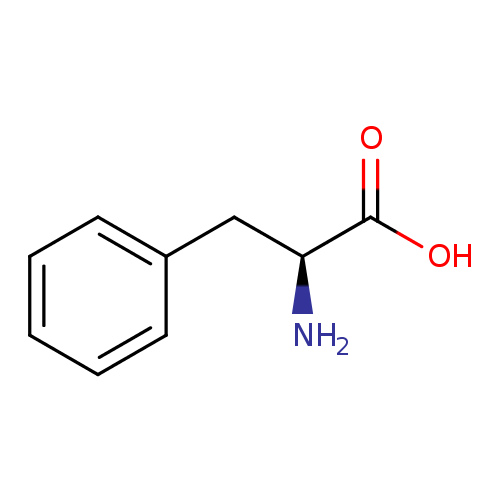
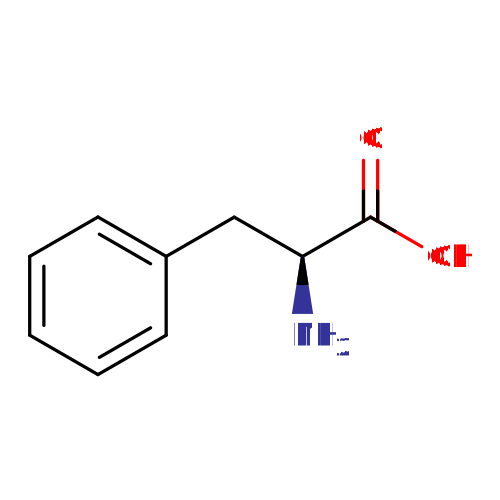
Chemical Structure
Thumb
Synonyms
ValueSource
(S)-2-Amino-3-phenylpropionic acidChEBI
(S)-alpha-Amino-beta-phenylpropionic acidChEBI
3-Phenyl-L-alanineChEBI
beta-Phenyl-L-alanineChEBI
FChEBI
PheChEBI
PHENYLALANINEChEBI
(S)-2-Amino-3-phenylpropionateGenerator
(S)-a-Amino-b-phenylpropionateGenerator
(S)-a-Amino-b-phenylpropionic acidGenerator
(S)-alpha-Amino-beta-phenylpropionateGenerator
(S)-Α-amino-β-phenylpropionateGenerator
(S)-Α-amino-β-phenylpropionic acidGenerator
b-Phenyl-L-alanineGenerator
Β-phenyl-L-alanineGenerator
(-)-beta-PhenylalanineHMDB
(L)-PhenylalanineHMDB
(S)-(-)-PhenylalanineHMDB
(S)-2-Amino-3-phenylpropanoateHMDB
(S)-2-Amino-3-phenylpropanoic acidHMDB
(S)-alpha-Amino-benzenepropanoateHMDB
(S)-alpha-Amino-benzenepropanoic acidHMDB
(S)-alpha-AminobenzenepropanoateHMDB
(S)-alpha-Aminobenzenepropanoic acidHMDB
(S)-alpha-AminohydrocinnamateHMDB
(S)-alpha-Aminohydrocinnamic acidHMDB
(S)-PhenylalanineHMDB
alpha-AminohydrocinnamateHMDB
alpha-Aminohydrocinnamic acidHMDB
beta-Phenyl-alpha-alanineHMDB
beta-PhenylalanineHMDB
L-2-Amino-3-phenylpropionateHMDB
L-2-Amino-3-phenylpropionic acidHMDB
Phenyl-alanineHMDB
PhenylalamineHMDB
L-Isomer phenylalanineHMDB
Phenylalanine, L isomerHMDB
Phenylalanine, L-isomerHMDB
EndorphenylHMDB
(6S)-TetrahydrofolateHMDB
(6S)-Tetrahydrofolic acidHMDB
(6S)-THFAHMDB
5,6,7,8-TetrahydrofolateHMDB
TetrahydrofolateHMDB
THFHMDB
5,6,7,8-Tetrahydrofolic acidHMDB
Chemical FormulaC9H11NO2
Average Molecular Mass165.189 g/mol
Monoisotopic Mass165.079 g/mol
CAS Registry Number63-91-2
IUPAC Name(2S)-2-amino-3-phenylpropanoic acid
Traditional NameL-phenylalanine
SMILESN[C@@H](CC1=CC=CC=C1)C(O)=O
InChI IdentifierInChI=1S/C9H11NO2/c10-8(9(11)12)6-7-4-2-1-3-5-7/h1-5,8H,6,10H2,(H,11,12)/t8-/m0/s1
InChI KeyCOLNVLDHVKWLRT-QMMMGPOBSA-N
Chemical Taxonomy
Description belongs to the class of organic compounds known as phenylalanine and derivatives. Phenylalanine and derivatives are compounds containing phenylalanine or a derivative thereof resulting from reaction of phenylalanine at the amino group or the carboxy group, or from the replacement of any hydrogen of glycine by a heteroatom.
KingdomOrganic compounds
Super ClassOrganic acids and derivatives
ClassCarboxylic acids and derivatives
Sub ClassAmino acids, peptides, and analogues
Direct ParentPhenylalanine and derivatives
Alternative Parents
Substituents
  • Phenylalanine or derivatives
  • 3-phenylpropanoic-acid
  • Alpha-amino acid
  • Amphetamine or derivatives
  • L-alpha-amino acid
  • Aralkylamine
  • Monocyclic benzene moiety
  • Benzenoid
  • Amino acid
  • Carboxylic acid
  • Monocarboxylic acid or derivatives
  • Organic nitrogen compound
  • Primary amine
  • Organooxygen compound
  • Organonitrogen compound
  • Hydrocarbon derivative
  • Primary aliphatic amine
  • Organic oxide
  • Carbonyl group
  • Organopnictogen compound
  • Organic oxygen compound
  • Amine
  • Aromatic homomonocyclic compound
Molecular FrameworkAromatic homomonocyclic compounds
External Descriptors
Biological Properties
StatusDetected and Not Quantified
OriginEndogenous
Cellular Locations
  • Cytoplasm
  • Extracellular
  • Mitochondria
Biofluid LocationsNot Available
Tissue Locations
  • All Tissues
  • Prostate
Pathways
NameSMPDB LinkKEGG Link
Phenylalanine and Tyrosine MetabolismSMP00008 map00360
Transcription/TranslationSMP00019 Not Available
Hartnup DisorderSMP00189 Not Available
Hyperphenylalaniemia due to guanosine triphosphate cyclohydrolase deficiencySMP00487 Not Available
PhenylketonuriaSMP00206 Not Available
Tyrosinemia Type 2 (or Richner-Hanhart syndrome)SMP00369 Not Available
Tyrosinemia Type 3 (TYRO3)SMP00370 Not Available
Applications
Biological Roles
Chemical RolesNot Available
Physical Properties
StateSolid
AppearanceWhite powder.
Experimental Properties
PropertyValue
Melting Point283 dec°C
Boiling PointNot Available
Solubility2.69E+004 mg/L (at 25°C)
Predicted Properties
PropertyValueSource
Water Solubility4.14 g/LALOGPS
logP-1.4ALOGPS
logP-1.2ChemAxon
logS-1.6ALOGPS
pKa (Strongest Acidic)2.47ChemAxon
pKa (Strongest Basic)9.45ChemAxon
Physiological Charge0ChemAxon
Hydrogen Acceptor Count3ChemAxon
Hydrogen Donor Count2ChemAxon
Polar Surface Area63.32 ŲChemAxon
Rotatable Bond Count3ChemAxon
Refractivity45.12 m³·mol⁻¹ChemAxon
Polarizability17.03 ųChemAxon
Number of Rings1ChemAxon
Bioavailability1ChemAxon
Rule of FiveYesChemAxon
Ghose FilterNoChemAxon
Veber's RuleNoChemAxon
MDDR-like RuleNoChemAxon
Spectra
Spectra
Spectrum TypeDescriptionSplash KeyView
GC-MSGC-MS Spectrum - GC-EI-TOF (Pegasus III TOF-MS system, Leco; GC 6890, Agilent Technologies) (2 TMS)splash10-0fr6-1930000000-a37fbccaf826443ef70cSpectrum
GC-MSGC-MS Spectrum - GC-EI-TOF (Pegasus III TOF-MS system, Leco; GC 6890, Agilent Technologies) (Non-derivatized)splash10-014l-1940000000-537e2725d621246630c1Spectrum
GC-MSGC-MS Spectrum - GC-EI-TOF (Pegasus III TOF-MS system, Leco; GC 6890, Agilent Technologies) (2 TMS)splash10-00di-9630000000-ead0919f9a19d2352d80Spectrum
GC-MSGC-MS Spectrum - GC-MS (1 TMS)splash10-00di-2900000000-cb2d6dc4bf9515150328Spectrum
GC-MSGC-MS Spectrum - GC-MS (2 TMS)splash10-014l-2960000000-f77489792f0652dd5613Spectrum
GC-MSGC-MS Spectrum - EI-B (Non-derivatized)splash10-014l-0970000000-792b341dd28b9e30bac2Spectrum
GC-MSGC-MS Spectrum - GC-EI-TOF (Non-derivatized)splash10-0fr6-1930000000-a37fbccaf826443ef70cSpectrum
GC-MSGC-MS Spectrum - GC-EI-TOF (Non-derivatized)splash10-014l-1940000000-537e2725d621246630c1Spectrum
GC-MSGC-MS Spectrum - GC-EI-QQ (Non-derivatized)splash10-0ul9-3659000000-b85be4e71798e2fdc47bSpectrum
GC-MSGC-MS Spectrum - GC-EI-TOF (Non-derivatized)splash10-00di-9630000000-ead0919f9a19d2352d80Spectrum
GC-MSGC-MS Spectrum - GC-MS (Non-derivatized)splash10-00di-2900000000-cb2d6dc4bf9515150328Spectrum
GC-MSGC-MS Spectrum - GC-MS (Non-derivatized)splash10-014l-2960000000-f77489792f0652dd5613Spectrum
Predicted GC-MSPredicted GC-MS Spectrum - GC-MS (Non-derivatized) - 70eV, Positivesplash10-006x-9600000000-df38fcb743d8f44fb876Spectrum
Predicted GC-MSPredicted GC-MS Spectrum - GC-MS (1 TMS) - 70eV, Positivesplash10-00di-7900000000-f21569d2ec75b88e1bdaSpectrum
Predicted GC-MSPredicted GC-MS Spectrum - GC-MS (Non-derivatized) - 70eV, PositiveNot AvailableSpectrum
Predicted GC-MSPredicted GC-MS Spectrum - GC-MS (TMS_1_2) - 70eV, PositiveNot AvailableSpectrum
Predicted GC-MSPredicted GC-MS Spectrum - GC-MS (TBDMS_1_1) - 70eV, PositiveNot AvailableSpectrum
Predicted GC-MSPredicted GC-MS Spectrum - GC-MS (TBDMS_1_2) - 70eV, PositiveNot AvailableSpectrum
LC-MS/MSLC-MS/MS Spectrum - Quattro_QQQ 10V, Positive (Annotated)splash10-014i-0900000000-0f3b994108b8a9fd2a56Spectrum
LC-MS/MSLC-MS/MS Spectrum - Quattro_QQQ 25V, Positive (Annotated)splash10-0gb9-2900000000-c14d44c8a67621757f3dSpectrum
LC-MS/MSLC-MS/MS Spectrum - Quattro_QQQ 40V, Positive (Annotated)splash10-004i-9300000000-08c642dab7f49c00da43Spectrum
LC-MS/MSLC-MS/MS Spectrum - LC-ESI-ITFT (LTQ Orbitrap XL, Thermo Scientfic) , Positivesplash10-014i-0900000000-7dce1e473976f7d2143eSpectrum
LC-MS/MSLC-MS/MS Spectrum - LC-ESI-ITFT (LTQ Orbitrap XL, Thermo Scientfic) , Positivesplash10-0f6x-9600000000-711557391093b0d8500aSpectrum
LC-MS/MSLC-MS/MS Spectrum - LC-ESI-ITFT (LTQ Orbitrap XL, Thermo Scientfic) , Positivesplash10-00di-0900000000-0c25a5c116eac7bb059bSpectrum
LC-MS/MSLC-MS/MS Spectrum - LC-ESI-ITFT (LTQ Orbitrap XL, Thermo Scientfic) , Positivesplash10-00di-0900000000-2804f79084ac4e67e155Spectrum
LC-MS/MSLC-MS/MS Spectrum - LC-ESI-ITFT (LTQ Orbitrap XL, Thermo Scientfic) , Positivesplash10-014i-0900000000-8a71bb1f8424064d7cafSpectrum
LC-MS/MSLC-MS/MS Spectrum - LC-ESI-ITFT (LTQ Orbitrap XL, Thermo Scientfic) , Positivesplash10-0f6x-9800000000-e027ff6bb67ce55e80a5Spectrum
LC-MS/MSLC-MS/MS Spectrum - LC-ESI-ITFT (LTQ Orbitrap XL, Thermo Scientfic) , Positivesplash10-014i-0900000000-9f6185e9c7d54189f369Spectrum
LC-MS/MSLC-MS/MS Spectrum - LC-ESI-ITFT (LTQ Orbitrap XL, Thermo Scientfic) , Positivesplash10-00di-0900000000-df5f72fe2bba91742427Spectrum
LC-MS/MSLC-MS/MS Spectrum - LC-ESI-ITFT (LTQ Orbitrap XL, Thermo Scientfic) , Negativesplash10-0ir3-0988735721-bac229222fe7b52812a8Spectrum
LC-MS/MSLC-MS/MS Spectrum - LC-ESI-ITFT (LTQ Orbitrap XL, Thermo Scientfic) , Negativesplash10-0002-0900000000-453477dec847a3672ffeSpectrum
LC-MS/MSLC-MS/MS Spectrum - LC-ESI-ITFT (LTQ Orbitrap XL, Thermo Scientfic) , Negativesplash10-0a4i-0010963000-079a66bf710f6778bcebSpectrum
LC-MS/MSLC-MS/MS Spectrum - LC-ESI-ITFT (LTQ Orbitrap XL, Thermo Scientfic) , Negativesplash10-00di-0000009000-62dbe98de4ecde484fb3Spectrum
LC-MS/MSLC-MS/MS Spectrum - LC-ESI-QQ (API3000, Applied Biosystems) 10V, Negativesplash10-03di-0900000000-80558c17dc1845663c85Spectrum
LC-MS/MSLC-MS/MS Spectrum - LC-ESI-QQ (API3000, Applied Biosystems) 20V, Negativesplash10-0002-3900000000-e1ee31d41e48824e84b7Spectrum
LC-MS/MSLC-MS/MS Spectrum - LC-ESI-QQ (API3000, Applied Biosystems) 30V, Negativesplash10-0f6x-9500000000-cc11290a37615f24e16eSpectrum
LC-MS/MSLC-MS/MS Spectrum - LC-ESI-QQ (API3000, Applied Biosystems) 50V, Negativesplash10-0006-9000000000-1a6020bce0e1a9a14832Spectrum
LC-MS/MSLC-MS/MS Spectrum - LC-ESI-QQ (API3000, Applied Biosystems) 40V, Negativesplash10-0006-9000000000-38c044a112152626962eSpectrum
LC-MS/MSLC-MS/MS Spectrum - LC-ESI-QQ (API3000, Applied Biosystems) 10V, Positivesplash10-014i-0900000000-9b908abfcb63153d60b3Spectrum
LC-MS/MSLC-MS/MS Spectrum - LC-ESI-QQ (API3000, Applied Biosystems) 20V, Positivesplash10-00di-1900000000-3ba5964e151bb1d56188Spectrum
LC-MS/MSLC-MS/MS Spectrum - LC-ESI-QQ (API3000, Applied Biosystems) 30V, Positivesplash10-00di-2900000000-20a7d24da0281f5b3b78Spectrum
LC-MS/MSLC-MS/MS Spectrum - LC-ESI-QQ (API3000, Applied Biosystems) 40V, Positivesplash10-0udi-5900000000-1800642a835b49f3398aSpectrum
LC-MS/MSLC-MS/MS Spectrum - LC-ESI-QQ (API3000, Applied Biosystems) 50V, Positivesplash10-0fb9-9300000000-f262384c85fb843f8a11Spectrum
MSMass Spectrum (Electron Ionization)splash10-00dl-9300000000-4782928378caea601f9bSpectrum
1D NMR1H NMR SpectrumNot AvailableSpectrum
1D NMR13C NMR SpectrumNot AvailableSpectrum
1D NMR1H NMR SpectrumNot AvailableSpectrum
1D NMR13C NMR SpectrumNot AvailableSpectrum
1D NMR1H NMR SpectrumNot AvailableSpectrum
1D NMR13C NMR SpectrumNot AvailableSpectrum
1D NMR1H NMR SpectrumNot AvailableSpectrum
1D NMR13C NMR SpectrumNot AvailableSpectrum
1D NMR1H NMR SpectrumNot AvailableSpectrum
1D NMR13C NMR SpectrumNot AvailableSpectrum
1D NMR1H NMR SpectrumNot AvailableSpectrum
1D NMR13C NMR SpectrumNot AvailableSpectrum
1D NMR1H NMR SpectrumNot AvailableSpectrum
1D NMR13C NMR SpectrumNot AvailableSpectrum
1D NMR1H NMR SpectrumNot AvailableSpectrum
1D NMR13C NMR SpectrumNot AvailableSpectrum
1D NMR1H NMR SpectrumNot AvailableSpectrum
1D NMR13C NMR SpectrumNot AvailableSpectrum
1D NMR1H NMR SpectrumNot AvailableSpectrum
1D NMR13C NMR SpectrumNot AvailableSpectrum
1D NMR1H NMR SpectrumNot AvailableSpectrum
1D NMR13C NMR SpectrumNot AvailableSpectrum
2D NMR[1H,1H] 2D NMR SpectrumNot AvailableSpectrum
2D NMR[1H,13C] 2D NMR SpectrumNot AvailableSpectrum
Toxicity Profile
Route of ExposureAbsorbed from the small intestine by a sodium dependent active transport process.
Mechanism of ToxicityExtremely high serum levels of phenylalanine are found in patients with the inborn error of metabolism (IEM) called Phenylketonuria (PKU). At pathological concentrations typical of PKU, phenylalanine self-assembles into fibrils with amyloid-like morphology and well-ordered electron diffraction. These fibrils and their resulting amyloid deposits that localize to the brain appear to be partially responsible for the neural tissue damage seen in PKU patients (4). It has also been suggested that very high plasma phenylalanine concentrations can increase phenylalanine entry into brain and thereby restrict the entry of other large neutral amino acids. The lack of large neutral amino acids may lead to disturbed cerebral protein synthesis, which is particularly important for young children (6). The mechanism of L-phenylalanine's putative antidepressant activity may be accounted for by its precursor role in the synthesis of the neurotransmitters norepinephrine and dopamine. Elevated brain norepinephrine and dopamine levels are thought to be associated with antidepressant effects.
The mechanism of L-phenylalanine's possible antivitiligo activity is not well understood. It is thought that L-phenylalanine may stimulate the production of melanin in the affected skin.
MetabolismHepatic. L-phenylalanine that is not metabolized in the liver is distributed via the systemic circulation to the various tissues of the body, where it undergoes metabolic reactions similar to those that take place in the liver.
Toxicity ValuesNot Available
Lethal DoseNot Available
Carcinogenicity (IARC Classification)No indication of carcinogenicity to humans (not listed by IARC).
Uses/SourcesL-phenylalanine may be helpful in some with depression. It may also be useful in the treatment of vitiligo. There is some evidence that L-phenylalanine may exacerbate tardive dyskinesia in some schizophrenic patients and in some who have used neuroleptic drugs.
Minimum Risk LevelNot Available
Health EffectsPhenylalanine is neurotoxic. Chronic exposure to very high levels of phenylalanine in the blood (as found in phenylketonuria, or PKU) can lead to a build up in the cerebrospinal fluid and brain, leading to seizures, organ damage and unusual posture. High phenylalnine levels are particularly dangerous for children, because it retards brain development and can cause serious learning difficulties. Complications of PKU include severe intellectual disability, brain function abnormalities, microcephaly, mood disorders, irregular motor functioning, and behavioral problems such as attention deficit hyperactivity disorder. Chronically high levels of phenylalanine are associated with at least four other inborn errors of metabolism including: Hartnup Disorder, Hyperphenylalaniemia due to guanosine triphosphate cyclohydrolase deficiency, Tyrosinemia Type 2 (or Richner-Hanhart syndrome) and Tyrosinemia Type 3 (TYRO3).
SymptomsComplications of PKU include severe intellectual disability, brain function abnormalities, microcephaly, mood disorders, irregular motor functioning, and behavioral problems such as attention deficit hyperactivity disorder.
TreatmentIf PKU is diagnosed early, an affected newborn can grow up with normal brain development, but only by managing and controlling phenylalanine levels through diet, or a combination of diet and medication. The diet requires severely restricting or eliminating foods high in phenylalanine, such as meat, chicken, fish, eggs, nuts, cheese, legumes, milk and other dairy products. Starchy foods, such as potatoes, bread, pasta, and corn, must be monitored. Optimal health ranges (or "target ranges") of serum phenylalanine are between 120 and 360 µmol/L, and aimed to be achieved during at least the first 10 years of life. Recently it has been found that a chiral isomer of L-phenylalanine (called D-phenylalanine) actually arrests the fibril formation by L-phenylalanine and gives rise to flakes. These flakes do not propagate further and prevent amyloid formation by L-phenylalanine. D-phenylalanine may qualify as a therapeutic molecule in phenylketonuria (5).
Concentrations
Not Available
DrugBank IDDB00120
HMDB IDHMDB0000159
FooDB IDFDB004940
Phenol Explorer IDNot Available
KNApSAcK IDC00001386
BiGG ID33775
BioCyc IDPHE
METLIN ID28
PDB IDNot Available
Wikipedia LinkPhenylalanine
Chemspider ID5910
ChEBI ID17295
PubChem Compound ID6140
Kegg Compound IDC00079
YMDB IDYMDB00304
ECMDB IDECMDB00159
References
Synthesis Reference

Gerald L. Bachman, “Recovery of L-phenylalanine and L-aspartic acid during preparation of .alpha.-L-aspartyl-L-phenylalanine methyl ester.” U.S. Patent US4348317, issued January, 1967.

MSDSLink
General References
1. Zhou, Hua; Zhong, Yao; Sun, Guanghai; Wei, Ping. Preparation of L-phenylalanine by an aqueous two-phase system. Huaxue Fanying Gongcheng Yu Gongyi (2006), 22(2), 146-150.
2. Klein MS, Almstetter MF, Schlamberger G, Nurnberger N, Dettmer K, Oefner PJ, Meyer HH, Wiedemann S, Gronwald W: Nuclear magnetic resonance and mass spectrometry-based milk metabolomics in dairy cows during early and late lactation. J Dairy Sci. 2010 Apr;93(4):1539-50. doi: 10.3168/jds.2009-2563.
3. Melzer N, Wittenburg D, Hartwig S, Jakubowski S, Kesting U, Willmitzer L, Lisec J, Reinsch N, Repsilber D: Investigating associations between milk metabolite profiles and milk traits of Holstein cows. J Dairy Sci. 2013 Mar;96(3):1521-34. doi: 10.3168/jds.2012-5743.
4. Mung D, Li L: Development of Chemical Isotope Labeling LC-MS for Milk Metabolomics: Comprehensive and Quantitative Profiling of the Amine/Phenol Submetabolome. Anal Chem. 2017 Apr 18;89(8):4435-4443. doi: 10.1021/acs.analchem.6b03737. Epub 2017 Mar 28.
5. Klein MS, Almstetter MF, Nurnberger N, Sigl G, Gronwald W, Wiedemann S, Dettmer K, Oefner PJ: Correlations between milk and plasma levels of amino and carboxylic acids in dairy cows. J Proteome Res. 2013 Nov 1;12(11):5223-32. doi: 10.1021/pr4006537. Epub 2013 Aug 23.
6. Mung D, Li L: Applying quantitative metabolomics based on chemical isotope labeling LC-MS for detecting potential milk adulterant in human milk. Anal Chim Acta. 2018 Feb 25;1001:78-85. doi: 10.1016/j.aca.2017.11.019. Epub 2017 Nov 14.
7. Kurt J. Boudonck, Matthew W. Mitchell, Jacob Wulff and John A. Ryals. Characterization of the biochemical variability of bovine milk using metabolomics. Metabolomics (2009) 5:375?386
8. A. Foroutan et al. The Chemical Composition of Commercial Cow's Milk (in preparation)
9. Fooddata+, The Technical University of Denmark (DTU): https://frida.fooddata.dk/QueryFood.php?fn=milk&lang=en
10. Zhou, Hua; Zhong, Yao; Sun, Guanghai; Wei, Ping. Preparation of L-phenylalanine by an aqueous two-phase system. Huaxue Fanying Gongcheng Yu Gongyi (2006), 22(2), 146-150.
11. Deng C, Shang C, Hu Y, Zhang X: Rapid diagnosis of phenylketonuria and other aminoacidemias by quantitative analysis of amino acids in neonatal blood spots by gas chromatography-mass spectrometry. J Chromatogr B Analyt Technol Biomed Life Sci. 2002 Jul 25;775(1):115-20.
12. Peng CT, Wu KH, Lan SJ, Tsai JJ, Tsai FJ, Tsai CH: Amino acid concentrations in cerebrospinal fluid in children with acute lymphoblastic leukemia undergoing chemotherapy. Eur J Cancer. 2005 May;41(8):1158-63. Epub 2005 Apr 14.
13. Cynober LA: Plasma amino acid levels with a note on membrane transport: characteristics, regulation, and metabolic significance. Nutrition. 2002 Sep;18(9):761-6.
14. Rainesalo S, Keranen T, Palmio J, Peltola J, Oja SS, Saransaari P: Plasma and cerebrospinal fluid amino acids in epileptic patients. Neurochem Res. 2004 Jan;29(1):319-24.
15. Sjoberg S, Eriksson M, Nordin C: L-thyroxine treatment and neurotransmitter levels in the cerebrospinal fluid of hypothyroid patients: a pilot study. Eur J Endocrinol. 1998 Nov;139(5):493-7.
16. Doellgast GJ, Meis PJ: Use of specific inhibitors to disciminate alkaline phosphatase isoenzymes originating from human liver, placenta and intestine: absence of meconial alkaline phosphatase in maternal serum. Clin Chem. 1979 Jul;25(7):1230-3.
17. Wannemacher RW Jr, Klainer AS, Dinterman RE, Beisel WR: The significance and mechanism of an increased serum phenylalanine-tyrosine ratio during infection. Am J Clin Nutr. 1976 Sep;29(9):997-1006.
18. Silwood CJ, Lynch E, Claxson AW, Grootveld MC: 1H and (13)C NMR spectroscopic analysis of human saliva. J Dent Res. 2002 Jun;81(6):422-7.
19. Kersemans V, Cornelissen B, Kersemans K, Bauwens M, Achten E, Dierckx RA, Mertens J, Slegers G: In vivo characterization of 123/125I-2-iodo-L-phenylalanine in an R1M rhabdomyosarcoma athymic mouse model as a potential tumor tracer for SPECT. J Nucl Med. 2005 Mar;46(3):532-9.
20. Klassen P, Furst P, Schulz C, Mazariegos M, Solomons NW: Plasma free amino acid concentrations in healthy Guatemalan adults and in patients with classic dengue. Am J Clin Nutr. 2001 Mar;73(3):647-52.
21. Nicholson JK, O'Flynn MP, Sadler PJ, Macleod AF, Juul SM, Sonksen PH: Proton-nuclear-magnetic-resonance studies of serum, plasma and urine from fasting normal and diabetic subjects. Biochem J. 1984 Jan 15;217(2):365-75.
22. Engelborghs S, Marescau B, De Deyn PP: Amino acids and biogenic amines in cerebrospinal fluid of patients with Parkinson's disease. Neurochem Res. 2003 Aug;28(8):1145-50.
23. Hagenfeldt L, Bjerkenstedt L, Edman G, Sedvall G, Wiesel FA: Amino acids in plasma and CSF and monoamine metabolites in CSF: interrelationship in healthy subjects. J Neurochem. 1984 Mar;42(3):833-7.
24. Sreekumar A, Poisson LM, Rajendiran TM, Khan AP, Cao Q, Yu J, Laxman B, Mehra R, Lonigro RJ, Li Y, Nyati MK, Ahsan A, Kalyana-Sundaram S, Han B, Cao X, Byun J, Omenn GS, Ghosh D, Pennathur S, Alexander DC, Berger A, Shuster JR, Wei JT, Varambally S, Beecher C, Chinnaiyan AM: Metabolomic profiles delineate potential role for sarcosine in prostate cancer progression. Nature. 2009 Feb 12;457(7231):910-4. doi: 10.1038/nature07762.
25. van Spronsen FJ, Hoeksma M, Reijngoud DJ: Brain dysfunction in phenylketonuria: is phenylalanine toxicity the only possible cause? J Inherit Metab Dis. 2009 Feb;32(1):46-51. doi: 10.1007/s10545-008-0946-2. Epub 2009 Jan 13.
26. Adler-Abramovich L, Vaks L, Carny O, Trudler D, Magno A, Caflisch A, Frenkel D, Gazit E: Phenylalanine assembly into toxic fibrils suggests amyloid etiology in phenylketonuria. Nat Chem Biol. 2012 Aug;8(8):701-6. doi: 10.1038/nchembio.1002. Epub 2012 Jun 17.
27. Elshenawy S, Pinney SE, Stuart T, Doulias PT, Zura G, Parry S, Elovitz MA, Bennett MJ, Bansal A, Strauss JF 3rd, Ischiropoulos H, Simmons RA: The Metabolomic Signature of the Placenta in Spontaneous Preterm Birth. Int J Mol Sci. 2020 Feb 4;21(3). pii: ijms21031043. doi: 10.3390/ijms21031043.
28. https://www.ncbi.nlm.nih.gov/pubmed/?term=13945318
29. https://www.ncbi.nlm.nih.gov/pubmed/?term=16893175
30. https://www.ncbi.nlm.nih.gov/pubmed/?term=17784858
31. https://www.ncbi.nlm.nih.gov/pubmed/?term=21203787
32. https://www.ncbi.nlm.nih.gov/pubmed/?term=21956539
33. https://www.ncbi.nlm.nih.gov/pubmed/?term=22081386
34. https://www.ncbi.nlm.nih.gov/pubmed/?term=22112574
35. https://www.ncbi.nlm.nih.gov/pubmed/?term=22143120
36. https://www.ncbi.nlm.nih.gov/pubmed/?term=22209218
37. https://www.ncbi.nlm.nih.gov/pubmed/?term=22494897
38. https://www.ncbi.nlm.nih.gov/pubmed/?term=23836015
39. https://www.ncbi.nlm.nih.gov/pubmed/?term=24464217
40. https://www.ncbi.nlm.nih.gov/pubmed/?term=24733517
41. https://www.ncbi.nlm.nih.gov/pubmed/?term=24966042