Record Information
Version1.0
Creation Date2014-08-29 06:34:56 UTC
Update Date2026-05-14 16:30:00 UTC
Accession NumberCHEM003323
Identification
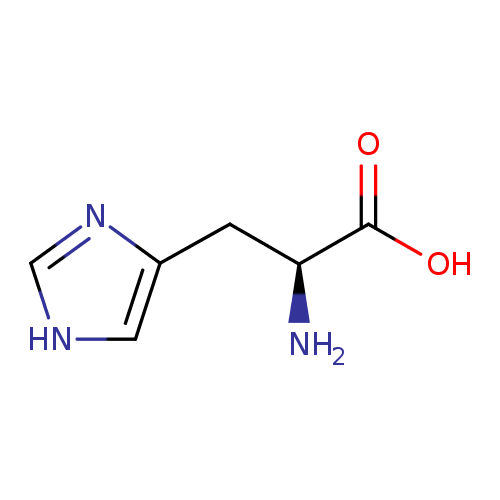
Common NameL-Histidine
ClassSmall Molecule
DescriptionHistidine is an alpha-amino acid with an imidazole functional group. It is one of the 22 proteinogenic amino acids. Histidine was first isolated by German physician Albrecht Kossel in 1896. Histidine is an essential amino acid in humans and other mammals. It was initially thought that it was only essential for infants, but longer-term studies established that it is also essential for adults. Infants four to six months old require 33 mg/kg of histidine. It is not clear how adults make small amounts of histidine, and dietary sources probably account for most of the histidine in the body. Histidine is a precursor for histamine and carnosine biosynthesis. Inborn errors of histidine metabolism exist and are marked by increased histidine levels in the blood. Elevated blood histidine is accompanied by a wide range of symptoms, from mental and physical retardation to poor intellectual functioning, emotional instability, tremor, ataxia and psychosis. Histidine and other imidazole compounds have anti-oxidant, anti-inflammatory and anti-secretory properties The efficacy of L-histidine in protecting inflamed tissue is attributed to the capacity of the imidazole ring to scavenge reactive oxygen species (ROS) generated by cells during acute inflammatory response Histidine, when administered in therapeutic quantities is able to inhibit cytokines and growth factors involved in cell and tissue damage (US patent 6150392). Histidine in medical therapies has its most promising trials in rheumatoid arthritis where up to 4.5 g daily have been used effectively in severely affected patients. Arthritis patients have been found to have low serum histidine levels, apparently because of very rapid removal of histidine from their blood Other patients besides arthritis patients that have been found to be low in serum histidine are those with chronic renal failure. Urinary levels of histidine are reduced in pediatric patients with pneumonia. Asthma patients exhibit increased serum levels of histidine over normal controls Serum histidine levels are lower and are negatively associated with inflammation and oxidative stress in obese women Histidine supplementation has been shown to reduce insulin resistance, reduce BMI and fat mass and suppress inflammation and oxidative stress in obese women with metabolic syndrome. Histidine appears to suppress pro-inflammatory cytokine expression, possibly via the NF-kappaB pathway, in adipocytes Low plasma concentrations of histidine are associated with protein-energy wasting, inflammation, oxidative stress, and greater mortality in chronic kidney disease patients Histidine may have many other possible functions because it is the precursor of the ubiquitous neurohormone-neurotransmitter histamine. Histidine increases histamine in the blood and probably in the brain. Low blood histamine with low serum histidine occurs in rheumatoid arthritis patients. Low blood histamine also occurs in some manic, schizophrenic, high copper and hyperactive groups of psychiatric patients. Histidine is a useful therapy in all patients with low histamine levels.
Contaminant Sources
  • Cosmetic Chemicals
  • EAFUS Chemicals
  • FooDB Chemicals
  • HMDB Contaminants - Feces
  • HMDB Contaminants - Urine
  • STOFF IDENT Compounds
  • T3DB toxins
Contaminant Type
  • Amine
  • Animal Toxin
  • Conditionally Essential Amino Acid
  • Dietary Supplement
  • Drug
  • Food Toxin
  • Household Toxin
  • Metabolite
  • Micronutrient
  • Natural Compound
  • Nutraceutical
  • Organic Compound
  • Supplement
Chemical Structure
Thumb
Synonyms
ValueSource
(S)-4-(2-Amino-2-carboxyethyl)imidazoleChEBI
(S)-alpha-Amino-1H-imidazole-4-propanoic acidChEBI
(S)-alpha-Amino-1H-imidazole-4-propionic acidChEBI
HChEBI
HisChEBI
HISTIDINEChEBI
L-(-)-HistidineChEBI
L-HistidinChEBI
(S)-a-Amino-1H-imidazole-4-propanoateGenerator
(S)-a-Amino-1H-imidazole-4-propanoic acidGenerator
(S)-alpha-Amino-1H-imidazole-4-propanoateGenerator
(S)-Α-amino-1H-imidazole-4-propanoateGenerator
(S)-Α-amino-1H-imidazole-4-propanoic acidGenerator
(S)-a-Amino-1H-imidazole-4-propionateGenerator
(S)-a-Amino-1H-imidazole-4-propionic acidGenerator
(S)-alpha-Amino-1H-imidazole-4-propionateGenerator
(S)-Α-amino-1H-imidazole-4-propionateGenerator
(S)-Α-amino-1H-imidazole-4-propionic acidGenerator
(S)-1H-Imidazole-4-alanineHMDB
(S)-2-Amino-3-(4-imidazolyl)propionsaeureHMDB
(S)-HistidineHMDB
(S)1H-Imidazole-4-alanineHMDB
3-(1H-Imidazol-4-yl)-L-alanineHMDB
Amino-1H-imidazole-4-propanoateHMDB
Amino-1H-imidazole-4-propanoic acidHMDB
Amino-4-imidazoleproprionateHMDB
Amino-4-imidazoleproprionic acidHMDB
Glyoxaline-5-alanineHMDB
Histidine, L isomerHMDB
Histidine, L-isomerHMDB
L-Isomer histidineHMDB
L-HistidineKEGG
Chemical FormulaC6H9N3O2
Average Molecular Mass155.155 g/mol
Monoisotopic Mass155.069 g/mol
CAS Registry Number71-00-1
IUPAC Name(2S)-2-amino-3-(1H-imidazol-5-yl)propanoic acid
Traditional NameL-histidine
SMILESN[C@@H](CC1=CN=CN1)C(O)=O
InChI IdentifierInChI=1S/C6H9N3O2/c7-5(6(10)11)1-4-2-8-3-9-4/h2-3,5H,1,7H2,(H,8,9)(H,10,11)/t5-/m0/s1
InChI KeyHNDVDQJCIGZPNO-YFKPBYRVSA-N
Chemical Taxonomy
Description belongs to the class of organic compounds known as histidine and derivatives. Histidine and derivatives are compounds containing cysteine or a derivative thereof resulting from reaction of cysteine at the amino group or the carboxy group, or from the replacement of any hydrogen of glycine by a heteroatom.
KingdomOrganic compounds
Super ClassOrganic acids and derivatives
ClassCarboxylic acids and derivatives
Sub ClassAmino acids, peptides, and analogues
Direct ParentHistidine and derivatives
Alternative Parents
Substituents
  • Histidine or derivatives
  • Alpha-amino acid
  • L-alpha-amino acid
  • Imidazolyl carboxylic acid derivative
  • Aralkylamine
  • Azole
  • Imidazole
  • Heteroaromatic compound
  • Amino acid
  • Carboxylic acid
  • Azacycle
  • Organoheterocyclic compound
  • Monocarboxylic acid or derivatives
  • Organic nitrogen compound
  • Organooxygen compound
  • Organonitrogen compound
  • Primary amine
  • Primary aliphatic amine
  • Hydrocarbon derivative
  • Organic oxide
  • Organopnictogen compound
  • Carbonyl group
  • Organic oxygen compound
  • Amine
  • Aromatic heteromonocyclic compound
Molecular FrameworkAromatic heteromonocyclic compounds
External Descriptors
Biological Properties
StatusDetected and Not Quantified
OriginEndogenous
Cellular Locations
  • Cytoplasm
  • Extracellular
  • Membrane
Biofluid LocationsNot Available
Tissue Locations
  • All Tissues
  • Prostate
Pathways
NameSMPDB LinkKEGG Link
Ammonia RecyclingSMP00009 map00910
Histidine MetabolismSMP00044 map00340
Transcription/TranslationSMP00019 Not Available
Hartnup DisorderSMP00189 Not Available
HistidinemiaSMP00191 Not Available
Applications
Biological Roles
Chemical RolesNot Available
Physical Properties
StateSolid
AppearanceWhite powder.
Experimental Properties
PropertyValue
Melting Point287 dec°C
Boiling PointNot Available
Solubility4.56E+004 mg/L (at 25°C)
Predicted Properties
PropertyValueSource
Water Solubility71.3 g/LALOGPS
logP-2.7ALOGPS
logP-3.6ChemAxon
logS-0.34ALOGPS
pKa (Strongest Acidic)1.85ChemAxon
pKa (Strongest Basic)9.44ChemAxon
Physiological Charge0ChemAxon
Hydrogen Acceptor Count4ChemAxon
Hydrogen Donor Count3ChemAxon
Polar Surface Area92 ŲChemAxon
Rotatable Bond Count3ChemAxon
Refractivity38.06 m³·mol⁻¹ChemAxon
Polarizability14.67 ųChemAxon
Number of Rings1ChemAxon
Bioavailability1ChemAxon
Rule of FiveYesChemAxon
Ghose FilterNoChemAxon
Veber's RuleNoChemAxon
MDDR-like RuleNoChemAxon
Spectra
Spectra
Spectrum TypeDescriptionSplash KeyView
GC-MSGC-MS Spectrum - GC-EI-TOF (Pegasus III TOF-MS system, Leco; GC 6890, Agilent Technologies) (3 TMS)splash10-0udi-0940000000-43b9b035189af65e19cbSpectrum
GC-MSGC-MS Spectrum - GC-EI-TOF (Pegasus III TOF-MS system, Leco; GC 6890, Agilent Technologies) (3 TMS)splash10-0udi-0910000000-fc3ecec9d4ff3aa8cb09Spectrum
GC-MSGC-MS Spectrum - GC-EI-TOF (Pegasus III TOF-MS system, Leco; GC 6890, Agilent Technologies) (Non-derivatized)splash10-0udi-0910000000-8284a673a35f7ac2241fSpectrum
GC-MSGC-MS Spectrum - GC-EI-TOF (Pegasus III TOF-MS system, Leco; GC 6890, Agilent Technologies) (3 TMS)splash10-0fk9-8910000000-a3231b1a418b5798ecacSpectrum
GC-MSGC-MS Spectrum - GC-MS (3 TMS)splash10-0udi-1920000000-227e8116769731104e82Spectrum
GC-MSGC-MS Spectrum - GC-MS (4 TMS)splash10-0ufu-2942100000-31605fd50ecc1f5be0edSpectrum
GC-MSGC-MS Spectrum - GC-EI-TOF (Non-derivatized)splash10-0udi-0940000000-43b9b035189af65e19cbSpectrum
GC-MSGC-MS Spectrum - GC-EI-TOF (Non-derivatized)splash10-0udi-0910000000-fc3ecec9d4ff3aa8cb09Spectrum
GC-MSGC-MS Spectrum - GC-EI-TOF (Non-derivatized)splash10-0udi-0910000000-8284a673a35f7ac2241fSpectrum
GC-MSGC-MS Spectrum - GC-EI-QQ (Non-derivatized)splash10-0002-2901100000-ae0f3865934743de764cSpectrum
GC-MSGC-MS Spectrum - GC-EI-TOF (Non-derivatized)splash10-0fk9-8910000000-a3231b1a418b5798ecacSpectrum
GC-MSGC-MS Spectrum - GC-MS (Non-derivatized)splash10-0udi-1920000000-227e8116769731104e82Spectrum
GC-MSGC-MS Spectrum - GC-MS (Non-derivatized)splash10-0ufu-2942100000-31605fd50ecc1f5be0edSpectrum
GC-MSGC-MS Spectrum - GC-EI-TOF (Non-derivatized)splash10-0ue9-0900000000-75e38a3f347210c301b0Spectrum
GC-MSGC-MS Spectrum - GC-EI-TOF (Non-derivatized)splash10-0udi-0910000000-c54bd92cc112eec7e509Spectrum
Predicted GC-MSPredicted GC-MS Spectrum - GC-MS (Non-derivatized) - 70eV, Positivesplash10-001i-9500000000-1d29684ccb6383687865Spectrum
Predicted GC-MSPredicted GC-MS Spectrum - GC-MS (1 TMS) - 70eV, Positivesplash10-03di-6900000000-1dd400a16b8067f4daeaSpectrum
Predicted GC-MSPredicted GC-MS Spectrum - GC-MS (Non-derivatized) - 70eV, PositiveNot AvailableSpectrum
Predicted GC-MSPredicted GC-MS Spectrum - GC-MS (TMS_1_2) - 70eV, PositiveNot AvailableSpectrum
Predicted GC-MSPredicted GC-MS Spectrum - GC-MS (TMS_1_3) - 70eV, PositiveNot AvailableSpectrum
Predicted GC-MSPredicted GC-MS Spectrum - GC-MS (TBDMS_1_1) - 70eV, PositiveNot AvailableSpectrum
Predicted GC-MSPredicted GC-MS Spectrum - GC-MS (TBDMS_1_2) - 70eV, PositiveNot AvailableSpectrum
Predicted GC-MSPredicted GC-MS Spectrum - GC-MS (TBDMS_1_3) - 70eV, PositiveNot AvailableSpectrum
LC-MS/MSLC-MS/MS Spectrum - Quattro_QQQ 10V, Positive (Annotated)splash10-0a4i-0900000000-21530fac9975dc1edc7cSpectrum
LC-MS/MSLC-MS/MS Spectrum - Quattro_QQQ 25V, Positive (Annotated)splash10-053r-9300000000-a946c375931adb366aaeSpectrum
LC-MS/MSLC-MS/MS Spectrum - Quattro_QQQ 40V, Positive (Annotated)splash10-053r-9000000000-61a3602d80bc0d54c579Spectrum
LC-MS/MSLC-MS/MS Spectrum - LC-ESI-ITFT (LTQ Orbitrap XL, Thermo Scientfic) , Positivesplash10-0a4i-0900000000-7d63b501889c2628f4f0Spectrum
LC-MS/MSLC-MS/MS Spectrum - LC-ESI-ITFT (LTQ Orbitrap XL, Thermo Scientfic) , Positivesplash10-001i-0900000000-d4ccd4e44ca818b4cb17Spectrum
LC-MS/MSLC-MS/MS Spectrum - LC-ESI-ITFT (LTQ Orbitrap XL, Thermo Scientfic) , Positivesplash10-0a4i-0900000000-811aee5724fe0999c134Spectrum
LC-MS/MSLC-MS/MS Spectrum - LC-ESI-ITFT (LTQ Orbitrap XL, Thermo Scientfic) , Positivesplash10-0a4i-2900000000-052753eb699ae7cb4cb9Spectrum
LC-MS/MSLC-MS/MS Spectrum - LC-ESI-ITFT (LTQ Orbitrap XL, Thermo Scientfic) , Positivesplash10-0a4i-0900000000-3e145a05e6a71a0a2f56Spectrum
LC-MS/MSLC-MS/MS Spectrum - LC-ESI-ITFT (LTQ Orbitrap XL, Thermo Scientfic) , Positivesplash10-0a4i-0900000000-143a4b9d88183bc5abe7Spectrum
LC-MS/MSLC-MS/MS Spectrum - LC-ESI-ITFT (LTQ Orbitrap XL, Thermo Scientfic) , Positivesplash10-03di-0900000000-a8c213472da676a241f2Spectrum
LC-MS/MSLC-MS/MS Spectrum - LC-ESI-ITFT (LTQ Orbitrap XL, Thermo Scientfic) , Positivesplash10-001i-0900000000-dfdf9562f155abb5fdebSpectrum
LC-MS/MSLC-MS/MS Spectrum - LC-ESI-ITFT (LTQ Orbitrap XL, Thermo Scientfic) , Negativesplash10-0uk9-0879331100-8434b5b9e7e5700c2353Spectrum
LC-MS/MSLC-MS/MS Spectrum - LC-ESI-ITFT (LTQ Orbitrap XL, Thermo Scientfic) , Negativesplash10-000i-0900000000-aaaaadcecd4cd7c94e1eSpectrum
LC-MS/MSLC-MS/MS Spectrum - LC-ESI-ITFT (LTQ Orbitrap XL, Thermo Scientfic) , Negativesplash10-0udi-0900000000-90c4cbd09d7abc003013Spectrum
LC-MS/MSLC-MS/MS Spectrum - LC-ESI-ITFT (LTQ Orbitrap XL, Thermo Scientfic) , Negativesplash10-0udi-0900000000-1381708d18c24486773dSpectrum
LC-MS/MSLC-MS/MS Spectrum - LC-ESI-ITFT (LTQ Orbitrap XL, Thermo Scientfic) , Negativesplash10-0w29-0696321100-eb62fc608270d1151707Spectrum
LC-MS/MSLC-MS/MS Spectrum - LC-ESI-ITFT (LTQ Orbitrap XL, Thermo Scientfic) , Negativesplash10-000i-0900000000-3450566ff38e6506a70fSpectrum
LC-MS/MSLC-MS/MS Spectrum - LC-ESI-ITFT (LTQ Orbitrap XL, Thermo Scientfic) , Negativesplash10-01q9-7900000000-124509a66476629ce10aSpectrum
LC-MS/MSLC-MS/MS Spectrum - LC-ESI-ITFT (LTQ Orbitrap XL, Thermo Scientfic) , Negativesplash10-0udi-0900000000-efa6a21b1be16fda0802Spectrum
LC-MS/MSLC-MS/MS Spectrum - LC-ESI-QQ (API3000, Applied Biosystems) 10V, Negativesplash10-0udi-0900000000-137840e69da48c6114e4Spectrum
LC-MS/MSLC-MS/MS Spectrum - LC-ESI-QQ (API3000, Applied Biosystems) 20V, Negativesplash10-0udu-3900000000-06d50e90c797793a72d7Spectrum
LC-MS/MSLC-MS/MS Spectrum - LC-ESI-QQ (API3000, Applied Biosystems) 30V, Negativesplash10-0006-9100000000-de7c9eb8068ef4f39f85Spectrum
LC-MS/MSLC-MS/MS Spectrum - LC-ESI-QQ (API3000, Applied Biosystems) 40V, Negativesplash10-00l6-9000000000-ebf778679d4c6d6a6057Spectrum
LC-MS/MSLC-MS/MS Spectrum - LC-ESI-QQ (API3000, Applied Biosystems) 50V, Negativesplash10-014i-9000000000-08d0188684283d1b2372Spectrum
LC-MS/MSLC-MS/MS Spectrum - LC-ESI-QQ (API3000, Applied Biosystems) 10V, Positivesplash10-0a4i-0900000000-46c2f608d27f0381a039Spectrum
MSMass Spectrum (Electron Ionization)splash10-001i-9100000000-ae0a0b81669663b3b4a5Spectrum
1D NMR1H NMR SpectrumNot AvailableSpectrum
1D NMR13C NMR SpectrumNot AvailableSpectrum
1D NMR1H NMR SpectrumNot AvailableSpectrum
1D NMR13C NMR SpectrumNot AvailableSpectrum
1D NMR1H NMR SpectrumNot AvailableSpectrum
1D NMR13C NMR SpectrumNot AvailableSpectrum
1D NMR1H NMR SpectrumNot AvailableSpectrum
1D NMR13C NMR SpectrumNot AvailableSpectrum
1D NMR1H NMR SpectrumNot AvailableSpectrum
1D NMR13C NMR SpectrumNot AvailableSpectrum
1D NMR1H NMR SpectrumNot AvailableSpectrum
1D NMR13C NMR SpectrumNot AvailableSpectrum
1D NMR1H NMR SpectrumNot AvailableSpectrum
1D NMR13C NMR SpectrumNot AvailableSpectrum
1D NMR1H NMR SpectrumNot AvailableSpectrum
1D NMR13C NMR SpectrumNot AvailableSpectrum
1D NMR1H NMR SpectrumNot AvailableSpectrum
1D NMR13C NMR SpectrumNot AvailableSpectrum
1D NMR1H NMR SpectrumNot AvailableSpectrum
1D NMR13C NMR SpectrumNot AvailableSpectrum
1D NMR1H NMR SpectrumNot AvailableSpectrum
1D NMR13C NMR SpectrumNot AvailableSpectrum
1D NMR1H NMR SpectrumNot AvailableSpectrum
2D NMR[1H,13C] 2D NMR SpectrumNot AvailableSpectrum
Toxicity Profile
Route of ExposureAbsorbed from the small intestine via an active transport mechanism requiring the presence of sodium.
Mechanism of ToxicitySince the actions of supplemental L-histidine are unclear, any postulated mechanism is entirely speculative. However, some facts are known about L-histidine and some of its metabolites, such as histamine and trans-urocanic acid, which suggest that supplemental L-histidine may one day be shown to have immunomodulatory and/or antioxidant activities. Low free histidine has been found in the serum of some rheumatoid arthritis patients. Serum concentrations of other amino acids have been found to be normal in these patients. L-histidine is an excellent chelating agent for such metals as copper, iron and zinc. Copper and iron participate in a reaction (Fenton reaction) that generates potent reactive oxygen species that could be destructive to tissues, including joints.
L-histidine is the obligate precursor of histamine, which is produced via the decarboxylation of the amino acid. In experimental animals, tissue histamine levels increase as the amount of dietary L-histidine increases. It is likely that this would be the case in humans as well. Histamine is known to possess immunomodulatory and antioxidant activity. Suppressor T cells have H2 receptors, and histamine activates them. Promotion of suppressor T cell activity could be beneficial in rheumatoid arthritis. Further, histamine has been shown to down-regulate the production of reactive oxygen species in phagocytic cells, such as monocytes, by binding to the H2 receptors on these cells. Decreased reactive oxygen species production by phagocytes could play antioxidant, anti-inflammatory and immunomodulatory roles in such diseases as rheumatoid arthritis.
This latter mechanism is the rationale for the use of histamine itself in several clinical trials studying histamine for the treatment of certain types of cancer and viral diseases. In these trials, down-regulation by histamine of reactive oxygen species formation appears to inhibit the suppression of natural killer (NK) cells and cytotoxic T lymphocytes, allowing these cells to be more effective in attacking cancer cells and virally infected cells.
MetabolismNot Available
Toxicity ValuesORL-RAT LD50 > 15000 mg/kg, IPR-RAT LD50 > 8000 mg/kg, ORL-MUS LD50 > 15000 mg/kg, IVN-MUS LD50 > 2000 mg/kg
Lethal DoseNot Available
Carcinogenicity (IARC Classification)No indication of carcinogenicity to humans (not listed by IARC).
Uses/SourcesThe actions of supplemental L-histidine are entirely unclear. It may have some immunomodulatory as well as antioxidant activity. L-histidine may be indicated for use in some with rheumatoid arthritis. It is not indicated for treatment of anemia or uremia or for lowering serum cholesterol.
Minimum Risk LevelNot Available
Health EffectsNot Available
SymptomsNot Available
TreatmentNot Available
Concentrations
Not Available
DrugBank IDDB00117
HMDB IDHMDB0000177
FooDB IDFDB011856
Phenol Explorer IDNot Available
KNApSAcK IDC00001363
BiGG ID33985
BioCyc IDHIS
METLIN ID21
PDB IDNot Available
Wikipedia LinkL-histidine
Chemspider ID6038
ChEBI ID15971
PubChem Compound ID6274
Kegg Compound IDC00135
YMDB IDYMDB00369
ECMDB IDECMDB00177
References
Synthesis Reference

Kazumi Araki, Tetsuro Kuga, “Process for producing L-histidine by fermentation.” U.S. Patent US4495283, issued April, 1975.

MSDSLink
General References
1. Aurelio Luigi; Brownlee Robert T C; Hughes Andrew B A novel synthesis of N-methyl asparagine, arginine, histidine, and tryptophan. Organic letters (2002), 4(21), 3767-9.
2. Mung D, Li L: Development of Chemical Isotope Labeling LC-MS for Milk Metabolomics: Comprehensive and Quantitative Profiling of the Amine/Phenol Submetabolome. Anal Chem. 2017 Apr 18;89(8):4435-4443. doi: 10.1021/acs.analchem.6b03737. Epub 2017 Mar 28.
3. Mung D, Li L: Applying quantitative metabolomics based on chemical isotope labeling LC-MS for detecting potential milk adulterant in human milk. Anal Chim Acta. 2018 Feb 25;1001:78-85. doi: 10.1016/j.aca.2017.11.019. Epub 2017 Nov 14.
4. Kurt J. Boudonck, Matthew W. Mitchell, Jacob Wulff and John A. Ryals. Characterization of the biochemical variability of bovine milk using metabolomics. Metabolomics (2009) 5:375?386
5. A. Foroutan et al. The Chemical Composition of Commercial Cow's Milk (in preparation)
6. Fooddata+, The Technical University of Denmark (DTU): https://frida.fooddata.dk/QueryFood.php?fn=milk&lang=en
7. Aurelio Luigi; Brownlee Robert T C; Hughes Andrew B A novel synthesis of N-methyl asparagine, arginine, histidine, and tryptophan. Organic letters (2002), 4(21), 3767-9.
8. Mukerji SK, Pimstone NR, Gandhi SN, Tan KT: Biochemical diagnosis and monitoring therapeutic modulation of disease activity in an unusual case of congenital erythropoietic porphyria. Clin Chem. 1985 Dec;31(12):1946-51.
9. Peng CT, Wu KH, Lan SJ, Tsai JJ, Tsai FJ, Tsai CH: Amino acid concentrations in cerebrospinal fluid in children with acute lymphoblastic leukemia undergoing chemotherapy. Eur J Cancer. 2005 May;41(8):1158-63. Epub 2005 Apr 14.
10. Cynober LA: Plasma amino acid levels with a note on membrane transport: characteristics, regulation, and metabolic significance. Nutrition. 2002 Sep;18(9):761-6.
11. Rainesalo S, Keranen T, Palmio J, Peltola J, Oja SS, Saransaari P: Plasma and cerebrospinal fluid amino acids in epileptic patients. Neurochem Res. 2004 Jan;29(1):319-24.
12. Xiao B, Jing C, Kelly G, Walker PA, Muskett FW, Frenkiel TA, Martin SR, Sarma K, Reinberg D, Gamblin SJ, Wilson JR: Specificity and mechanism of the histone methyltransferase Pr-Set7. Genes Dev. 2005 Jun 15;19(12):1444-54. Epub 2005 Jun 2.
13. Churchill D, Yacoub JM, Siu KP, Symes A, Gault MH: Toxic nephropathy after low-dose methoxyflurane anesthesia: drug interaction with secobarbital? Can Med Assoc J. 1976 Feb 21;114(4):326-8, 333.
14. Wevers RA, Engelke U, Wendel U, de Jong JG, Gabreels FJ, Heerschap A: Standardized method for high-resolution 1H-NMR of cerebrospinal fluid. Clin Chem. 1995 May;41(5):744-51.
15. Sieja K, Stanosz S, von Mach-Szczypinski J, Olewniczak S, Stanosz M: Concentration of histamine in serum and tissues of the primary ductal breast cancers in women. Breast. 2005 Jun;14(3):236-41. Epub 2005 Jan 21.
16. Silwood CJ, Lynch E, Claxson AW, Grootveld MC: 1H and (13)C NMR spectroscopic analysis of human saliva. J Dent Res. 2002 Jun;81(6):422-7.
17. Shoemaker JD, Elliott WH: Automated screening of urine samples for carbohydrates, organic and amino acids after treatment with urease. J Chromatogr. 1991 Jan 2;562(1-2):125-38.
18. Masini E, Fabbroni V, Giannini L, Vannacci A, Messerini L, Perna F, Cortesini C, Cianchi F: Histamine and histidine decarboxylase up-regulation in colorectal cancer: correlation with tumor stage. Inflamm Res. 2005 Apr;54 Suppl 1:S80-1.
19. Klassen P, Furst P, Schulz C, Mazariegos M, Solomons NW: Plasma free amino acid concentrations in healthy Guatemalan adults and in patients with classic dengue. Am J Clin Nutr. 2001 Mar;73(3):647-52.
20. Nicholson JK, O'Flynn MP, Sadler PJ, Macleod AF, Juul SM, Sonksen PH: Proton-nuclear-magnetic-resonance studies of serum, plasma and urine from fasting normal and diabetic subjects. Biochem J. 1984 Jan 15;217(2):365-75.
21. Xiao YP, Han CB, Mao XY, Li JY, Xu L, Ren CS, Xin Y: Relationship between abnormality of FHIT gene and EBV infection in gastric cancer. World J Gastroenterol. 2005 Jun 7;11(21):3212-6.
22. Mason AB, Halbrooks PJ, James NG, Connolly SA, Larouche JR, Smith VC, MacGillivray RT, Chasteen ND: Mutational analysis of C-lobe ligands of human serum transferrin: insights into the mechanism of iron release. Biochemistry. 2005 Jun 7;44(22):8013-21.
23. Janknecht R, Hipskind RA, Houthaeve T, Nordheim A, Stunnenberg HG: Identification of multiple SRF N-terminal phosphorylation sites affecting DNA binding properties. EMBO J. 1992 Mar;11(3):1045-54.
24. Hagenfeldt L, Bjerkenstedt L, Edman G, Sedvall G, Wiesel FA: Amino acids in plasma and CSF and monoamine metabolites in CSF: interrelationship in healthy subjects. J Neurochem. 1984 Mar;42(3):833-7.
25. Sreekumar A, Poisson LM, Rajendiran TM, Khan AP, Cao Q, Yu J, Laxman B, Mehra R, Lonigro RJ, Li Y, Nyati MK, Ahsan A, Kalyana-Sundaram S, Han B, Cao X, Byun J, Omenn GS, Ghosh D, Pennathur S, Alexander DC, Berger A, Shuster JR, Wei JT, Varambally S, Beecher C, Chinnaiyan AM: Metabolomic profiles delineate potential role for sarcosine in prostate cancer progression. Nature. 2009 Feb 12;457(7231):910-4. doi: 10.1038/nature07762.
26. Peterson JW, Boldogh I, Popov VL, Saini SS, Chopra AK: Anti-inflammatory and antisecretory potential of histidine in Salmonella-challenged mouse small intestine. Lab Invest. 1998 May;78(5):523-34.
27. Gerber DA: Low free serum histidine concentration in rheumatoid arthritis. A measure of disease activity. J Clin Invest. 1975 Jun;55(6):1164-73.
28. Hemler RJ, Hoogeveen JH, Kraaier V, Van Huffelen AC, Wieneke GH, Hijman R, Glerum JH: A pharmacological model of cerebral ischemia. The effects of indomethacin on cerebral blood flow velocity, quantitative EEG and cognitive functions. Methods Find Exp Clin Pharmacol. 1990 Nov;12(9):641-3.
29. Feng RN, Niu YC, Sun XW, Li Q, Zhao C, Wang C, Guo FC, Sun CH, Li Y: Histidine supplementation improves insulin resistance through suppressed inflammation in obese women with the metabolic syndrome: a randomised controlled trial. Diabetologia. 2013 May;56(5):985-94. doi: 10.1007/s00125-013-2839-7. Epub 2013 Jan 30.
30. Watanabe M, Suliman ME, Qureshi AR, Garcia-Lopez E, Barany P, Heimburger O, Stenvinkel P, Lindholm B: Consequences of low plasma histidine in chronic kidney disease patients: associations with inflammation, oxidative stress, and mortality. Am J Clin Nutr. 2008 Jun;87(6):1860-6.
31. Jung J, Kim SH, Lee HS, Choi GS, Jung YS, Ryu DH, Park HS, Hwang GS: Serum metabolomics reveals pathways and biomarkers associated with asthma pathogenesis. Clin Exp Allergy. 2013 Apr;43(4):425-33. doi: 10.1111/cea.12089.
32. Elshenawy S, Pinney SE, Stuart T, Doulias PT, Zura G, Parry S, Elovitz MA, Bennett MJ, Bansal A, Strauss JF 3rd, Ischiropoulos H, Simmons RA: The Metabolomic Signature of the Placenta in Spontaneous Preterm Birth. Int J Mol Sci. 2020 Feb 4;21(3). pii: ijms21031043. doi: 10.3390/ijms21031043.
33. Effective method for the amelioration and prevention of tissue and cellular damage: http://www.google.com/patents/US6150392
34. https://www.ncbi.nlm.nih.gov/pubmed/?term=15206581
35. https://www.ncbi.nlm.nih.gov/pubmed/?term=21608102
36. https://www.ncbi.nlm.nih.gov/pubmed/?term=21719207
37. https://www.ncbi.nlm.nih.gov/pubmed/?term=22324399
38. https://www.ncbi.nlm.nih.gov/pubmed/?term=22415677
39. https://www.ncbi.nlm.nih.gov/pubmed/?term=22517640