Record Information
Version1.0
Creation Date2014-08-29 06:27:43 UTC
Update Date2026-05-14 16:24:10 UTC
Accession NumberCHEM003288
Identification
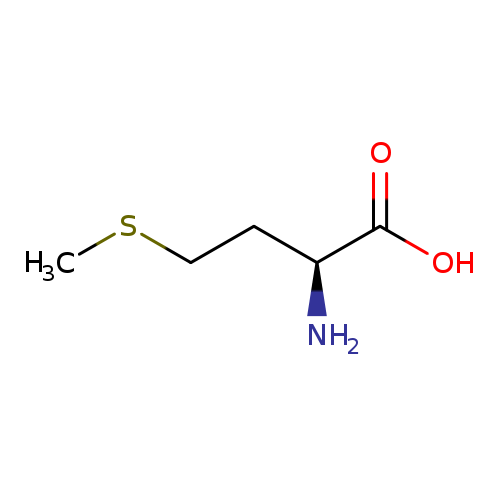
Common NameL-Methionine
ClassSmall Molecule
DescriptionMethionine is a dietary indispensable amino acid required for normal growth and development of humans, other mammals, and avian species. In addition to being a substrate for protein synthesis, it is an intermediate in transmethylation reactions, serving as the major methyl group donor in vivo, including the methyl groups for DNA and RNA intermediates. Methionine is a methyl acceptor for 5-methyltetrahydrofolate-homocysteine methyl transferase (methionine synthase), the only reaction that allows for the recycling of this form of folate, and is also a methyl acceptor for the catabolism of betaine. Methionine is also required for synthesis of cysteine. Methionine is accepted as the metabolic precursor for cysteine. Only the sulfur atom from methionine is transferred to cysteine; the carbon skeleton of cysteine is donated by serine. The adequacy range of dietary requirements of specific amino acids in disease states is difficult to determine. Requirements may not be similar in disease with regard to protein synthesis. Requirements for this purpose can be assessed only when such a function can be measured and related to clinical outcome. There is apparent consensus concerning normal sulfur amino acid (SAA) requirements. WHO recommendations amount to 13 mg/kg per 24 h in healthy adults. This amount is roughly doubled in artificial nutrition regimens. In disease or after trauma, requirements may be altered for methionine, cysteine, and taurine. Although in specific cases of congenital enzyme deficiency, prematurity, or diminished liver function, hypermethionemia or hyperhomocysteinemia may occur, SAA supplementation can be considered safe in amounts exceeding 2-3 times the minimal recommended daily intake. Apart from some very specific indications (e.g., acetaminophen poisoning) the usefulness of SAA supplementation is not yet established. Methionine is known to exacerbate psychopathological symptoms in schizophrenic patients, there is no evidence of similar effects in healthy subjects. The role of methionine as a precursor of homocysteine is the most notable cause for concern. A loading dose of methionine (0.1 g/kg) has been given, and the resultant acute increase in plasma homocysteine has been used as an index of the susceptibility to cardiovascular disease. Although this procedure results in vascular dysfunction, this is acute and unlikely to result in permanent damage. However, a 10-fold larger dose, given mistakenly, resulted in death. Longer-term studies in adults have indicated no adverse consequences of moderate fluctuations in dietary methionine intake, but intakes higher than 5 times normal resulted in elevated homocysteine levels. These effects of methionine on homocysteine and vascular function are moderated by supplements of vitamins B-6, B-12, C, and folic acid. In infants, methionine intakes of 2 to 5 times normal resulted in impaired growth and extremely high plasma methionine levels, but no adverse long-term consequences were observed. (1, 2, 3). It is a chelating agent for heavy metals.
Contaminant Sources
  • EAFUS Chemicals
  • FooDB Chemicals
  • HMDB Contaminants - Feces
  • HMDB Contaminants - Urine
  • HPV EPA Chemicals
  • T3DB toxins
Contaminant Type
  • Amine
  • Amino Acid, Essential
  • Animal Toxin
  • Dietary Supplement
  • Drug
  • Ether
  • Food Toxin
  • Household Toxin
  • Metabolite
  • Micronutrient
  • Natural Compound
  • Nutraceutical
  • Organic Compound
  • Supplement
Chemical Structure
Thumb
Synonyms
ValueSource
(2S)-2-Amino-4-(methylsulfanyl)butanoic acidChEBI
(S)-2-Amino-4-(methylthio)butanoic acidChEBI
(S)-2-Amino-4-(methylthio)butyric acidChEBI
(S)-MethionineChEBI
L-(-)-MethionineChEBI
L-alpha-Amino-gamma-methylmercaptobutyric acidChEBI
L-MethioninChEBI
MChEBI
MetChEBI
METHIONINEChEBI
L-2-Amino-4methylthiobutyric acidKegg
L-Methionine ZKegg
(2S)-2-Amino-4-(methylsulfanyl)butanoateGenerator
(2S)-2-Amino-4-(methylsulphanyl)butanoateGenerator
(2S)-2-Amino-4-(methylsulphanyl)butanoic acidGenerator
(S)-2-Amino-4-(methylthio)butanoateGenerator
(S)-2-Amino-4-(methylthio)butyrateGenerator
L-a-Amino-g-methylmercaptobutyrateGenerator
L-a-Amino-g-methylmercaptobutyric acidGenerator
L-alpha-Amino-gamma-methylmercaptobutyrateGenerator
L-Α-amino-γ-methylmercaptobutyrateGenerator
L-Α-amino-γ-methylmercaptobutyric acidGenerator
L-2-Amino-4methylthiobutyrateGenerator
(L)-MethionineHMDB
(S)-(+)-MethionineHMDB
(S)-2-Amino-4-(methylthio)-butanoateHMDB
(S)-2-Amino-4-(methylthio)-butanoic acidHMDB
2-Amino-4-(methylthio)butyrateHMDB
2-Amino-4-(methylthio)butyric acidHMDB
2-Amino-4-methylthiobutanoateHMDB
2-Amino-4-methylthiobutanoic acidHMDB
a-Amino-g-methylmercaptobutyrateHMDB
a-Amino-g-methylmercaptobutyric acidHMDB
AcimethinHMDB
alpha-Amino-alpha-aminobutyric acidHMDB
alpha-Amino-gamma-methylmercaptobutyrateHMDB
alpha-Amino-gamma-methylmercaptobutyric acidHMDB
CymethionHMDB
g-Methylthio-a-aminobutyrateHMDB
g-Methylthio-a-aminobutyric acidHMDB
gamma-Methylthio-alpha-aminobutyrateHMDB
gamma-Methylthio-alpha-aminobutyric acidHMDB
H-Met-HHMDB
H-Met-OHHMDB
L(-)-Amino-alpha-amino-alpha-aminobutyric acidHMDB
L(-)-Amino-gamma-methylthiobutyric acidHMDB
L-2-Amino-4-(methylthio)butyric acidHMDB
L-2-Amino-4-methylthiobutyric acidHMDB
L-a-Amino-g-methylthiobutyrateHMDB
L-a-Amino-g-methylthiobutyric acidHMDB
L-alpha-Amino-gamma-methylthiobutyrateHMDB
L-alpha-Amino-gamma-methylthiobutyric acidHMDB
L-gamma-Methylthio-alpha-aminobutyric acidHMDB
L-MethioninumHMDB
LiquimethHMDB
MepronHMDB
MethilaninHMDB
MethioninumHMDB
MetioninaHMDB
Neo-methidinHMDB
Poly-L-methionineHMDB
PolymethionineHMDB
S-MethionineHMDB
S-Methyl-L-homocysteineHMDB
Toxin warHMDB
L-Isomer methionineHMDB
Methionine, L-isomerHMDB
PedamethHMDB
Methionine, L isomerHMDB
(3R,3'r,6S)-4,5-DIDEHYDRO-5,6-dihydro-BETA,BETA-carotene-3,3'-diolChEBI
Bo-xanChEBI
e 161bChEBI
XanthophyllChEBI
(3R,3'r,6S)-4,5-DIDEHYDRO-5,6-dihydro-b,b-carotene-3,3'-diolGenerator
(3R,3'r,6S)-4,5-DIDEHYDRO-5,6-dihydro-β,β-carotene-3,3'-diolGenerator
Chemical FormulaC5H11NO2S
Average Molecular Mass149.211 g/mol
Monoisotopic Mass149.051 g/mol
CAS Registry Number63-68-3
IUPAC Name(2S)-2-amino-4-(methylsulfanyl)butanoic acid
Traditional NameL-methionine
SMILESCSCC[C@H](N)C(O)=O
InChI IdentifierInChI=1S/C5H11NO2S/c1-9-3-2-4(6)5(7)8/h4H,2-3,6H2,1H3,(H,7,8)/t4-/m0/s1
InChI KeyFFEARJCKVFRZRR-BYPYZUCNSA-N
Chemical Taxonomy
Description belongs to the class of organic compounds known as methionine and derivatives. Methionine and derivatives are compounds containing methionine or a derivative thereof resulting from reaction of methionine at the amino group or the carboxy group, or from the replacement of any hydrogen of glycine by a heteroatom.
KingdomOrganic compounds
Super ClassOrganic acids and derivatives
ClassCarboxylic acids and derivatives
Sub ClassAmino acids, peptides, and analogues
Direct ParentMethionine and derivatives
Alternative Parents
Substituents
  • Methionine or derivatives
  • Alpha-amino acid
  • L-alpha-amino acid
  • Thia fatty acid
  • Fatty acid
  • Fatty acyl
  • Amino acid
  • Carboxylic acid
  • Monocarboxylic acid or derivatives
  • Thioether
  • Sulfenyl compound
  • Dialkylthioether
  • Amine
  • Organic oxygen compound
  • Primary amine
  • Organosulfur compound
  • Organooxygen compound
  • Organonitrogen compound
  • Organic nitrogen compound
  • Primary aliphatic amine
  • Carbonyl group
  • Organopnictogen compound
  • Organic oxide
  • Hydrocarbon derivative
  • Aliphatic acyclic compound
Molecular FrameworkAliphatic acyclic compounds
External Descriptors
Biological Properties
StatusDetected and Not Quantified
OriginEndogenous
Cellular Locations
  • Extracellular
  • Membrane
Biofluid LocationsNot Available
Tissue Locations
  • Fibroblasts
  • Kidney
  • Liver
  • Muscle
  • Pancreas
  • Prostate
  • Spleen
Pathways
NameSMPDB LinkKEGG Link
Betaine MetabolismSMP00123 map00260
Glycine and Serine MetabolismSMP00004 map00260
Methionine MetabolismSMP00033 map00270
Spermidine and Spermine BiosynthesisSMP00445 Not Available
Transcription/TranslationSMP00019 Not Available
Cystathionine Beta-Synthase DeficiencySMP00177 Not Available
Glycine N-methyltransferase DeficiencySMP00222 Not Available
Homocystinuria-megaloblastic anemia due to defect in cobalamin metabolism, cblG complementation typeSMP00570 Not Available
HypermethioninemiaSMP00341 Not Available
Methionine Adenosyltransferase DeficiencySMP00221 Not Available
Methylenetetrahydrofolate Reductase Deficiency (MTHFRD)SMP00340 Not Available
S-Adenosylhomocysteine (SAH) Hydrolase DeficiencySMP00214 Not Available
Applications
Biological Roles
Chemical RolesNot Available
Physical Properties
StateSolid
AppearanceWhite powder.
Experimental Properties
PropertyValue
Melting Point283 dec°C
Boiling PointNot Available
Solubility5.66E+004 mg/L (at 25°C)
Predicted Properties
PropertyValueSource
Water Solubility23.9 g/LALOGPS
logP-1.8ALOGPS
logP-2.2ChemAxon
logS-0.8ALOGPS
pKa (Strongest Acidic)2.53ChemAxon
pKa (Strongest Basic)9.5ChemAxon
Physiological Charge0ChemAxon
Hydrogen Acceptor Count3ChemAxon
Hydrogen Donor Count2ChemAxon
Polar Surface Area63.32 ŲChemAxon
Rotatable Bond Count4ChemAxon
Refractivity37.59 m³·mol⁻¹ChemAxon
Polarizability15.5 ųChemAxon
Number of Rings0ChemAxon
Bioavailability1ChemAxon
Rule of FiveYesChemAxon
Ghose FilterNoChemAxon
Veber's RuleNoChemAxon
MDDR-like RuleNoChemAxon
Spectra
Spectra
Spectrum TypeDescriptionSplash KeyView
GC-MSGC-MS Spectrum - GC-EI-TOF (Pegasus III TOF-MS system, Leco; GC 6890, Agilent Technologies) (2 TMS)splash10-004i-0920000000-945c85aa7c9f5eb2dfbbSpectrum
GC-MSGC-MS Spectrum - GC-EI-TOF (Pegasus III TOF-MS system, Leco; GC 6890, Agilent Technologies) (Non-derivatized)splash10-004i-0910000000-b837ee0f4413856560f1Spectrum
GC-MSGC-MS Spectrum - GC-EI-TOF (Pegasus III TOF-MS system, Leco; GC 6890, Agilent Technologies) (2 TMS)splash10-00b9-7910000000-5a1558fbb2f5e86edc9bSpectrum
GC-MSGC-MS Spectrum - GC-MS (1 TMS)splash10-0udi-1900000000-1a97567ce4f25c4e8263Spectrum
GC-MSGC-MS Spectrum - GC-MS (2 TMS)splash10-004i-0910000000-1b0477118cb20549bf4dSpectrum
GC-MSGC-MS Spectrum - EI-B (Non-derivatized)splash10-004i-0920000000-8ffae5d87508e0704903Spectrum
GC-MSGC-MS Spectrum - GC-EI-TOF (Non-derivatized)splash10-004i-0920000000-945c85aa7c9f5eb2dfbbSpectrum
GC-MSGC-MS Spectrum - GC-EI-TOF (Non-derivatized)splash10-004i-0910000000-b837ee0f4413856560f1Spectrum
GC-MSGC-MS Spectrum - GC-EI-QQ (Non-derivatized)splash10-01bc-2692000000-c6a4af434abaeea2de87Spectrum
GC-MSGC-MS Spectrum - GC-EI-TOF (Non-derivatized)splash10-00b9-7910000000-5a1558fbb2f5e86edc9bSpectrum
GC-MSGC-MS Spectrum - GC-MS (Non-derivatized)splash10-0udi-1900000000-1a97567ce4f25c4e8263Spectrum
GC-MSGC-MS Spectrum - GC-MS (Non-derivatized)splash10-004i-0910000000-1b0477118cb20549bf4dSpectrum
Predicted GC-MSPredicted GC-MS Spectrum - GC-MS (Non-derivatized) - 70eV, Positivesplash10-0mbd-9200000000-77e5cfb78936ad02d71cSpectrum
Predicted GC-MSPredicted GC-MS Spectrum - GC-MS (1 TMS) - 70eV, Positivesplash10-00di-9510000000-c03dec8575710eed861eSpectrum
Predicted GC-MSPredicted GC-MS Spectrum - GC-MS (Non-derivatized) - 70eV, PositiveNot AvailableSpectrum
Predicted GC-MSPredicted GC-MS Spectrum - GC-MS (TMS_1_2) - 70eV, PositiveNot AvailableSpectrum
Predicted GC-MSPredicted GC-MS Spectrum - GC-MS (TBDMS_1_1) - 70eV, PositiveNot AvailableSpectrum
Predicted GC-MSPredicted GC-MS Spectrum - GC-MS (TBDMS_1_2) - 70eV, PositiveNot AvailableSpectrum
LC-MS/MSLC-MS/MS Spectrum - Quattro_QQQ 10V, Positive (Annotated)splash10-0uea-1900000000-b991859b2c5bed6592a8Spectrum
LC-MS/MSLC-MS/MS Spectrum - Quattro_QQQ 25V, Positive (Annotated)splash10-08fr-9000000000-66855ace60e59837f131Spectrum
LC-MS/MSLC-MS/MS Spectrum - Quattro_QQQ 40V, Positive (Annotated)splash10-08fr-9000000000-56a567791c824c6a9da6Spectrum
LC-MS/MSLC-MS/MS Spectrum - LC-ESI-ITFT (LTQ Orbitrap XL, Thermo Scientfic) , Positivesplash10-0fe0-0900000000-d680295f21b2e2b40366Spectrum
LC-MS/MSLC-MS/MS Spectrum - LC-ESI-ITFT (LTQ Orbitrap XL, Thermo Scientfic) , Positivesplash10-0006-9000000000-062d3540db4db22da836Spectrum
LC-MS/MSLC-MS/MS Spectrum - LC-ESI-ITFT (LTQ Orbitrap XL, Thermo Scientfic) , Positivesplash10-00di-0900000000-84467513e2c9ec1a6851Spectrum
LC-MS/MSLC-MS/MS Spectrum - LC-ESI-ITFT (LTQ Orbitrap XL, Thermo Scientfic) , Positivesplash10-001i-0900000000-88dc2bebb198eea550efSpectrum
LC-MS/MSLC-MS/MS Spectrum - LC-ESI-ITFT (LTQ Orbitrap XL, Thermo Scientfic) , Positivesplash10-0udi-0920000000-b444ad79abeb16acde43Spectrum
LC-MS/MSLC-MS/MS Spectrum - LC-ESI-ITFT (LTQ Orbitrap XL, Thermo Scientfic) , Positivesplash10-001i-0900000000-6e24a8df417e5f3db58cSpectrum
LC-MS/MSLC-MS/MS Spectrum - LC-ESI-ITFT (LTQ Orbitrap XL, Thermo Scientfic) , Positivesplash10-00di-0900000000-c60ef880eb9a816a274bSpectrum
LC-MS/MSLC-MS/MS Spectrum - LC-ESI-ITFT (LTQ Orbitrap XL, Thermo Scientfic) , Positivesplash10-000i-0900000000-a7b7d1a3481c0c691a5bSpectrum
LC-MS/MSLC-MS/MS Spectrum - LC-ESI-QQ (API3000, Applied Biosystems) 10V, Negativesplash10-0002-0900000000-9156f088f4cc9eafa892Spectrum
LC-MS/MSLC-MS/MS Spectrum - LC-ESI-QQ (API3000, Applied Biosystems) 20V, Negativesplash10-0002-9200000000-f78ba2aab8d5a0e0b135Spectrum
LC-MS/MSLC-MS/MS Spectrum - LC-ESI-QQ (API3000, Applied Biosystems) 30V, Negativesplash10-0002-9000000000-e7b819fd2d0ac3862860Spectrum
LC-MS/MSLC-MS/MS Spectrum - LC-ESI-QQ (API3000, Applied Biosystems) 40V, Negativesplash10-0002-9000000000-b61396e720381bd5ff85Spectrum
LC-MS/MSLC-MS/MS Spectrum - LC-ESI-QQ (API3000, Applied Biosystems) 50V, Negativesplash10-0002-9000000000-b61396e720381bd5ff85Spectrum
LC-MS/MSLC-MS/MS Spectrum - LC-ESI-QQ (API3000, Applied Biosystems) 10V, Positivesplash10-0udi-0900000000-c3557cb41fd6fe268819Spectrum
LC-MS/MSLC-MS/MS Spectrum - LC-ESI-QQ (API3000, Applied Biosystems) 20V, Positivesplash10-0udi-6900000000-6bf5af2d1c561013948aSpectrum
LC-MS/MSLC-MS/MS Spectrum - LC-ESI-QQ (API3000, Applied Biosystems) 30V, Positivesplash10-08fr-9000000000-63c9b1c138f9a27490e5Spectrum
LC-MS/MSLC-MS/MS Spectrum - LC-ESI-QQ (API3000, Applied Biosystems) 40V, Positivesplash10-03di-9000000000-e133c47b0efe4992589fSpectrum
LC-MS/MSLC-MS/MS Spectrum - LC-ESI-QQ (API3000, Applied Biosystems) 50V, Positivesplash10-03di-9000000000-dee78b4f34f8732fedb0Spectrum
LC-MS/MSLC-MS/MS Spectrum - CE-ESI-TOF (CE-system connected to 6210 Time-of-Flight MS, Agilent) , Positivesplash10-0udi-0900000000-d3f03ff5e8eacc8b6c8eSpectrum
LC-MS/MSLC-MS/MS Spectrum - LC-ESI-QTOF (UPLC Q-Tof Premier, Waters) , Positivesplash10-0udi-0900000000-e0dd5ff44b7962f6a2d2Spectrum
Predicted LC-MS/MSPredicted LC-MS/MS Spectrum - 10V, Positivesplash10-0udi-2900000000-305916dde72c899993b6Spectrum
Predicted LC-MS/MSPredicted LC-MS/MS Spectrum - 20V, Positivesplash10-0udi-9800000000-47e0a34a2ec02bd762bfSpectrum
1D NMR13C NMR SpectrumNot AvailableSpectrum
1D NMR1H NMR SpectrumNot AvailableSpectrum
1D NMR13C NMR SpectrumNot AvailableSpectrum
1D NMR1H NMR SpectrumNot AvailableSpectrum
1D NMR13C NMR SpectrumNot AvailableSpectrum
1D NMR1H NMR SpectrumNot AvailableSpectrum
1D NMR13C NMR SpectrumNot AvailableSpectrum
1D NMR1H NMR SpectrumNot AvailableSpectrum
1D NMR13C NMR SpectrumNot AvailableSpectrum
1D NMR1H NMR SpectrumNot AvailableSpectrum
1D NMR13C NMR SpectrumNot AvailableSpectrum
1D NMR1H NMR SpectrumNot AvailableSpectrum
1D NMR13C NMR SpectrumNot AvailableSpectrum
1D NMR1H NMR SpectrumNot AvailableSpectrum
1D NMR13C NMR SpectrumNot AvailableSpectrum
1D NMR1H NMR SpectrumNot AvailableSpectrum
1D NMR13C NMR SpectrumNot AvailableSpectrum
1D NMR1H NMR SpectrumNot AvailableSpectrum
1D NMR13C NMR SpectrumNot AvailableSpectrum
1D NMR1H NMR SpectrumNot AvailableSpectrum
1D NMR13C NMR SpectrumNot AvailableSpectrum
2D NMR[1H,1H] 2D NMR SpectrumNot AvailableSpectrum
2D NMR[1H,13C] 2D NMR SpectrumNot AvailableSpectrum
Toxicity Profile
Route of ExposureAbsorbed from the lumen of the small intestine into the enterocytes by an active transport process.
Mechanism of ToxicityThe mechanism of the possible anti-hepatotoxic activity of L-methionine is not entirely clear. It is thought that metabolism of high doses of acetaminophen in the liver lead to decreased levels of hepatic glutathione and increased oxidative stress. L-methionine is a precursor to L-cysteine. L-cysteine itself may have antioxidant activity. L-cysteine is also a precursor to the antioxidant glutathione. Antioxidant activity of L-methionine and metabolites of L-methionine appear to account for its possible anti-hepatotoxic activity. Recent research suggests that methionine itself has free-radical scavenging activity by virtue of its sulfur, as well as its chelating ability.
MetabolismHepatic
Toxicity ValuesNot Available
Lethal DoseNot Available
Carcinogenicity (IARC Classification)No indication of carcinogenicity to humans (not listed by IARC).
Uses/SourcesUsed for protein synthesis including the formation of SAMe, L-homocysteine, L-cysteine, taurine, and sulfate.
Minimum Risk LevelNot Available
Health EffectsChronically high levels of methionine are associated with at least 7 inborn errors of metabolism including: Cystathionine Beta-Synthase Deficiency, Glycine N-methyltransferase Deficiency, Homocystinuria-megaloblastic anemia due to defect in cobalamin metabolism, Methionine Adenosyltransferase Deficiency, Methylenetetrahydrofolate reductase deficiency and S-Adenosylhomocysteine (SAH) Hydrolase Deficiency.
SymptomsNot Available
TreatmentNot Available
Concentrations
Not Available
DrugBank IDDB00134
HMDB IDHMDB0000696
FooDB IDFDB012683
Phenol Explorer IDNot Available
KNApSAcK IDC00001379
BiGG ID33753
BioCyc IDMET
METLIN ID5664
PDB IDNot Available
Wikipedia LinkMethionine
Chemspider ID5907
ChEBI ID16643
PubChem Compound ID6137
Kegg Compound IDC00073
YMDB IDYMDB00318
ECMDB IDECMDB00696
References
Synthesis Reference

Clyde Eugene Stauffer, “Process for producing N-acyl-L-methionine.” U.S. Patent US3963573, issued June, 1950.

MSDSLink
General References
1. Boy, Matthias; Klein, Daniela; Schroeder, Hartwig. Method for the production and recovery of methionine. PCT Int. Appl. (2005), 34 pp.
2. A. Foroutan et al. The Chemical Composition of Commercial Cow's Milk (in preparation)
3. Fooddata+, The Technical University of Denmark (DTU): https://frida.fooddata.dk/QueryFood.php?fn=milk&lang=en
4. Boy, Matthias; Klein, Daniela; Schroeder, Hartwig. Method for the production and recovery of methionine. PCT Int. Appl. (2005), 34 pp.
5. Alme B, Bremmelgaard A, Sjovall J, Thomassen P: Analysis of metabolic profiles of bile acids in urine using a lipophilic anion exchanger and computerized gas-liquid chromatorgaphy-mass spectrometry. J Lipid Res. 1977 May;18(3):339-62.
6. Sardharwalla IB, Fowler B, Robins AJ, Komrower GM: Detection of heterozygotes for homocystinuria. Study of sulphur-containing amino acids in plasma and urine after L-methionine loading. Arch Dis Child. 1974 Jul;49(7):553-9.
7. Peng CT, Wu KH, Lan SJ, Tsai JJ, Tsai FJ, Tsai CH: Amino acid concentrations in cerebrospinal fluid in children with acute lymphoblastic leukemia undergoing chemotherapy. Eur J Cancer. 2005 May;41(8):1158-63. Epub 2005 Apr 14.
8. Cynober LA: Plasma amino acid levels with a note on membrane transport: characteristics, regulation, and metabolic significance. Nutrition. 2002 Sep;18(9):761-6.
9. Rainesalo S, Keranen T, Palmio J, Peltola J, Oja SS, Saransaari P: Plasma and cerebrospinal fluid amino acids in epileptic patients. Neurochem Res. 2004 Jan;29(1):319-24.
10. Alton KB, Hernandez A, Alvarez N, Patrick JE: High-performance liquid chromatographic determination of N-[2(S)-(mercaptomethyl)-3-(2-methylphenyl)-1-oxopropyl]-L-methionine, the active plasma metabolite of a prodrug atriopeptidase inhibitor (SCH 42495), using a thiol selective (Au/Hg) amperometric detector. J Chromatogr. 1992 Sep 2;579(2):307-17.
11. Fischer JL, Lancia JK, Mathur A, Smith ML: Selenium protection from DNA damage involves a Ref1/p53/Brca1 protein complex. Anticancer Res. 2006 Mar-Apr;26(2A):899-904.
12. Kersemans V, Cornelissen B, Kersemans K, Bauwens M, Achten E, Dierckx RA, Mertens J, Slegers G: In vivo characterization of 123/125I-2-iodo-L-phenylalanine in an R1M rhabdomyosarcoma athymic mouse model as a potential tumor tracer for SPECT. J Nucl Med. 2005 Mar;46(3):532-9.
13. Shoemaker JD, Elliott WH: Automated screening of urine samples for carbohydrates, organic and amino acids after treatment with urease. J Chromatogr. 1991 Jan 2;562(1-2):125-38.
14. Ditscheid B, Funfstuck R, Busch M, Schubert R, Gerth J, Jahreis G: Effect of L-methionine supplementation on plasma homocysteine and other free amino acids: a placebo-controlled double-blind cross-over study. Eur J Clin Nutr. 2005 Jun;59(6):768-75.
15. Hesse A, Heimbach D: Causes of phosphate stone formation and the importance of metaphylaxis by urinary acidification: a review. World J Urol. 1999 Oct;17(5):308-15.
16. Engelborghs S, Marescau B, De Deyn PP: Amino acids and biogenic amines in cerebrospinal fluid of patients with Parkinson's disease. Neurochem Res. 2003 Aug;28(8):1145-50.
17. Harth G, Horwitz MA: Inhibition of Mycobacterium tuberculosis glutamine synthetase as a novel antibiotic strategy against tuberculosis: demonstration of efficacy in vivo. Infect Immun. 2003 Jan;71(1):456-64.
18. Takasu A, Shimosegawa T, Shimosegawa E, Hatazawa J, Kimura K, Fujita M, Koizumi M, Kanno I, Toyota T: 11C-methionine uptake to the pancreas and its secretion: a positron emission tomography study in humans. Pancreas. 1999 May;18(4):392-8.
19. Hagenfeldt L, Bjerkenstedt L, Edman G, Sedvall G, Wiesel FA: Amino acids in plasma and CSF and monoamine metabolites in CSF: interrelationship in healthy subjects. J Neurochem. 1984 Mar;42(3):833-7.
20. Sreekumar A, Poisson LM, Rajendiran TM, Khan AP, Cao Q, Yu J, Laxman B, Mehra R, Lonigro RJ, Li Y, Nyati MK, Ahsan A, Kalyana-Sundaram S, Han B, Cao X, Byun J, Omenn GS, Ghosh D, Pennathur S, Alexander DC, Berger A, Shuster JR, Wei JT, Varambally S, Beecher C, Chinnaiyan AM: Metabolomic profiles delineate potential role for sarcosine in prostate cancer progression. Nature. 2009 Feb 12;457(7231):910-4. doi: 10.1038/nature07762.
21. Ball RO, Courtney-Martin G, Pencharz PB: The in vivo sparing of methionine by cysteine in sulfur amino acid requirements in animal models and adult humans. J Nutr. 2006 Jun;136(6 Suppl):1682S-1693S.
22. van de Poll MC, Dejong CH, Soeters PB: Adequate range for sulfur-containing amino acids and biomarkers for their excess: lessons from enteral and parenteral nutrition. J Nutr. 2006 Jun;136(6 Suppl):1694S-1700S.
23. Garlick PJ: Toxicity of methionine in humans. J Nutr. 2006 Jun;136(6 Suppl):1722S-1725S.
24. Selhub J, Troen AM: Sulfur amino acids and atherosclerosis: a role for excess dietary methionine. Ann N Y Acad Sci. 2016 Jan;1363:18-25. doi: 10.1111/nyas.12962. Epub 2015 Dec 8.
25. Virtanen JK, Voutilainen S, Rissanen TH, Happonen P, Mursu J, Laukkanen JA, Poulsen H, Lakka TA, Salonen JT: High dietary methionine intake increases the risk of acute coronary events in middle-aged men. Nutr Metab Cardiovasc Dis. 2006 Mar;16(2):113-20. doi: 10.1016/j.numecd.2005.05.005. Epub 2005 Nov 2.
26. Elshenawy S, Pinney SE, Stuart T, Doulias PT, Zura G, Parry S, Elovitz MA, Bennett MJ, Bansal A, Strauss JF 3rd, Ischiropoulos H, Simmons RA: The Metabolomic Signature of the Placenta in Spontaneous Preterm Birth. Int J Mol Sci. 2020 Feb 4;21(3). pii: ijms21031043. doi: 10.3390/ijms21031043.
27. https://www.ncbi.nlm.nih.gov/pubmed/?term=16575097
28. https://www.ncbi.nlm.nih.gov/pubmed/?term=21683740
29. https://www.ncbi.nlm.nih.gov/pubmed/?term=21946918
30. https://www.ncbi.nlm.nih.gov/pubmed/?term=22200379
31. https://www.ncbi.nlm.nih.gov/pubmed/?term=22370952
32. https://www.ncbi.nlm.nih.gov/pubmed/?term=22448874
33. https://www.ncbi.nlm.nih.gov/pubmed/?term=22517898
34. https://www.ncbi.nlm.nih.gov/pubmed/?term=24126240
35. https://www.ncbi.nlm.nih.gov/pubmed/?term=24939187
36. https://www.ncbi.nlm.nih.gov/pubmed/?term=5764336