Record Information
Version1.0
Creation Date2014-08-29 06:21:59 UTC
Update Date2026-04-17 17:45:38 UTC
Accession NumberCHEM003280
Identification
Common NameL-Alanine
ClassSmall Molecule
DescriptionAlanine is a nonessential amino acid made in the body from the conversion of the carbohydrate pyruvate or the breakdown of DNA and the dipeptides carnosine and anserine. It is highly concentrated in muscle and is one of the most important amino acids released by muscle, functioning as a major energy source. Plasma alanine is often decreased when the BCAA (Branched Chain Amino Acids) are deficient. This finding may relate to muscle metabolism. Alanine is highly concentrated in meat products and other high-protein foods like wheat germ and cottage cheese. Alanine is an important participant as well as regulator in glucose metabolism. Alanine levels parallel blood sugar levels in both diabetes and hypoglycemia, and alanine reduces both severe hypoglycemia and the ketosis of diabetes. It is an important amino acid for lymphocyte reproduction and immunity. Alanine therapy has helped dissolve kidney stones in experimental animals. Normal alanine metabolism, like that of other amino acids, is highly dependent upon enzymes that contain vitamin B6. Alanine, like GABA, taurine and glycine, is an inhibitory neurotransmitter in the brain. It is produced from pyruvate by transamination. It is involved in sugar and acid metabolism, increases immunity, and provides energy for muscle tissue, brain, and the central nervous system.
Contaminant Sources
  • Cosmetic Chemicals
  • EAFUS Chemicals
  • FooDB Chemicals
  • HMDB Contaminants - Feces
  • HMDB Contaminants - Urine
  • STOFF IDENT Compounds
  • T3DB toxins
Contaminant Type
  • Amine
  • Animal Toxin
  • Dietary Supplement
  • Drug
  • Food Toxin
  • Household Toxin
  • Metabolite
  • Micronutrient
  • Natural Compound
  • Non-Essential Amino Acid
  • Nutraceutical
  • Organic Compound
  • Supplement
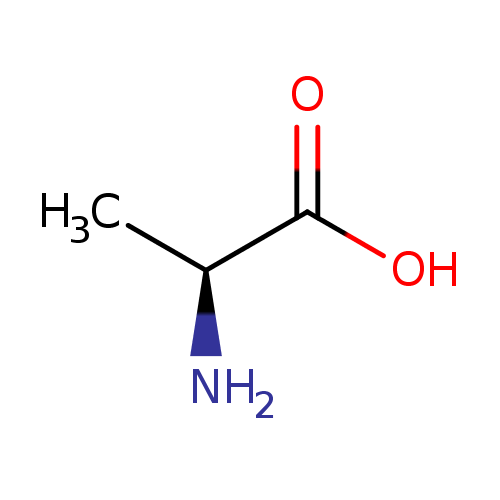
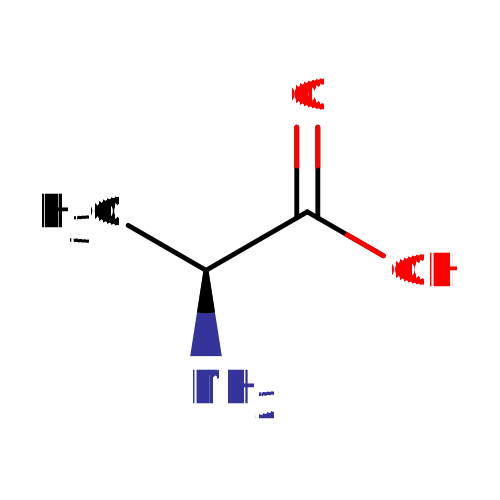
Chemical Structure
Thumb
Synonyms
ValueSource
(2S)-2-Aminopropanoic acidChEBI
(S)-2-Aminopropanoic acidChEBI
(S)-AlanineChEBI
AChEBI
AlaChEBI
ALANINEChEBI
L-2-Aminopropionic acidChEBI
L-AlaninChEBI
L-alpha-AlanineChEBI
(2S)-2-AminopropanoateGenerator
(S)-2-AminopropanoateGenerator
L-2-AminopropionateGenerator
L-a-AlanineGenerator
L-Α-alanineGenerator
(S)-(+)-AlanineHMDB
(S)-2-Amino-propanoateHMDB
(S)-2-Amino-propanoic acidHMDB
2-AminopropanoateHMDB
2-Aminopropanoic acidHMDB
2-AminopropionateHMDB
2-Aminopropionic acidHMDB
2-AmmoniopropanoateHMDB
2-Ammoniopropanoic acidHMDB
a-AlanineHMDB
a-AminopropionateHMDB
a-Aminopropionic acidHMDB
alpha-AlanineHMDB
alpha-AminopropanoateHMDB
alpha-Aminopropanoic acidHMDB
alpha-AminopropionateHMDB
alpha-Aminopropionic acidHMDB
L-(+)-AlanineHMDB
L-2-AminopropanoateHMDB
L-2-Aminopropanoic acidHMDB
L-a-AminopropionateHMDB
L-a-Aminopropionic acidHMDB
L-alpha-AminopropionateHMDB
L-alpha-Aminopropionic acidHMDB
AbufèneHMDB
Alanine doms-adrian brandHMDB
Alanine, L-isomerHMDB
Doms-adrian brand OF alanineHMDB
Doms adrian brand OF alanineHMDB
L-Isomer alanineHMDB
Alanine, L isomerHMDB
L AlanineHMDB
Chemical FormulaC3H7NO2
Average Molecular Mass89.093 g/mol
Monoisotopic Mass89.048 g/mol
CAS Registry Number56-41-7
IUPAC Name(2S)-2-aminopropanoic acid
Traditional NameL-alanine
SMILESC[C@H](N)C(O)=O
InChI IdentifierInChI=1S/C3H7NO2/c1-2(4)3(5)6/h2H,4H2,1H3,(H,5,6)/t2-/m0/s1
InChI KeyQNAYBMKLOCPYGJ-REOHCLBHSA-N
Chemical Taxonomy
Description belongs to the class of organic compounds known as alanine and derivatives. Alanine and derivatives are compounds containing alanine or a derivative thereof resulting from reaction of alanine at the amino group or the carboxy group, or from the replacement of any hydrogen of glycine by a heteroatom.
KingdomOrganic compounds
Super ClassOrganic acids and derivatives
ClassCarboxylic acids and derivatives
Sub ClassAmino acids, peptides, and analogues
Direct ParentAlanine and derivatives
Alternative Parents
Substituents
  • Alanine or derivatives
  • Alpha-amino acid
  • L-alpha-amino acid
  • Amino acid
  • Carboxylic acid
  • Monocarboxylic acid or derivatives
  • Hydrocarbon derivative
  • Organic oxygen compound
  • Primary amine
  • Organooxygen compound
  • Organonitrogen compound
  • Organic nitrogen compound
  • Primary aliphatic amine
  • Carbonyl group
  • Amine
  • Organopnictogen compound
  • Organic oxide
  • Aliphatic acyclic compound
Molecular FrameworkAliphatic acyclic compounds
External Descriptors
Biological Properties
StatusDetected and Not Quantified
OriginEndogenous
Cellular Locations
  • Cytoplasm
  • Extracellular
  • Lysosome
  • Membrane
  • Mitochondria
  • Peroxisome
Biofluid LocationsNot Available
Tissue Locations
  • All Tissues
  • Prostate
Pathways
NameSMPDB LinkKEGG Link
Alanine MetabolismSMP00055 map00250
Glucose-Alanine CycleSMP00127 Not Available
Glycine and Serine MetabolismSMP00004 map00260
Selenoamino Acid MetabolismSMP00029 map00450
Transcription/TranslationSMP00019 Not Available
Urea CycleSMP00059 Not Available
Citrullinemia Type ISMP00001 Not Available
Hartnup DisorderSMP00189 Not Available
Lactic AcidemiaSMP00313 Not Available
Leigh SyndromeSMP00196 Not Available
Ornithine Transcarbamylase Deficiency (OTC Deficiency)SMP00205 Not Available
Pyruvate Carboxylase DeficiencySMP00350 Not Available
ApplicationsNot Available
Biological Roles
Chemical Roles
Physical Properties
StateSolid
AppearanceWhite powder.
Experimental Properties
PropertyValue
Melting Point300 dec°C
Boiling PointNot Available
Solubility1.64E+005 mg/L (at 25°C)
Predicted Properties
PropertyValueSource
Water Solubility447 g/LALOGPS
logP-3ALOGPS
logP-2.8ChemAxon
logS0.7ALOGPS
pKa (Strongest Acidic)2.47ChemAxon
pKa (Strongest Basic)9.48ChemAxon
Physiological Charge0ChemAxon
Hydrogen Acceptor Count3ChemAxon
Hydrogen Donor Count2ChemAxon
Polar Surface Area63.32 ŲChemAxon
Rotatable Bond Count1ChemAxon
Refractivity20.5 m³·mol⁻¹ChemAxon
Polarizability8.49 ųChemAxon
Number of Rings0ChemAxon
Bioavailability1ChemAxon
Rule of FiveYesChemAxon
Ghose FilterNoChemAxon
Veber's RuleNoChemAxon
MDDR-like RuleNoChemAxon
Spectra
Spectra
Spectrum TypeDescriptionSplash KeyView
GC-MSGC-MS Spectrum - GC-EI-TOF (Pegasus III TOF-MS system, Leco; GC 6890, Agilent Technologies) (1 TMS)splash10-014i-0900000000-c7f6dbace291e8305a4eSpectrum
GC-MSGC-MS Spectrum - GC-EI-TOF (Pegasus III TOF-MS system, Leco; GC 6890, Agilent Technologies) (Non-derivatized)splash10-014i-0900000000-381ddf4d9ea77be0b8a5Spectrum
GC-MSGC-MS Spectrum - GC-EI-TOF (Pegasus III TOF-MS system, Leco; GC 6890, Agilent Technologies) (3 TMS)splash10-01b9-6900000000-6a7c1bb2915e5dd0791fSpectrum
GC-MSGC-MS Spectrum - GC-MS (2 TMS)splash10-014i-1900000000-84b389f82562c29a8148Spectrum
GC-MSGC-MS Spectrum - EI-B (Non-derivatized)splash10-00kf-9000000000-b2f7507be509a85d821bSpectrum
GC-MSGC-MS Spectrum - EI-B (Non-derivatized)splash10-014i-0900000000-941672891ab94cf5015dSpectrum
GC-MSGC-MS Spectrum - EI-B (Non-derivatized)splash10-0f79-0910000000-47bd3e3aa274a653a64eSpectrum
GC-MSGC-MS Spectrum - GC-EI-TOF (Non-derivatized)splash10-014i-0900000000-c7f6dbace291e8305a4eSpectrum
GC-MSGC-MS Spectrum - GC-EI-TOF (Non-derivatized)splash10-014i-0900000000-381ddf4d9ea77be0b8a5Spectrum
GC-MSGC-MS Spectrum - GC-EI-QQ (Non-derivatized)splash10-0a4i-1940000000-5def9f7c902aaf1ef607Spectrum
GC-MSGC-MS Spectrum - GC-EI-TOF (Non-derivatized)splash10-01b9-6900000000-6a7c1bb2915e5dd0791fSpectrum
GC-MSGC-MS Spectrum - GC-MS (Non-derivatized)splash10-014i-1900000000-84b389f82562c29a8148Spectrum
Predicted GC-MSPredicted GC-MS Spectrum - GC-MS (Non-derivatized) - 70eV, Positivesplash10-0006-9000000000-d31f7a2ed8284a740b59Spectrum
Predicted GC-MSPredicted GC-MS Spectrum - GC-MS (1 TMS) - 70eV, Positivesplash10-0006-9100000000-ab365202f52df8e6d401Spectrum
Predicted GC-MSPredicted GC-MS Spectrum - GC-MS (Non-derivatized) - 70eV, PositiveNot AvailableSpectrum
Predicted GC-MSPredicted GC-MS Spectrum - GC-MS (TMS_1_2) - 70eV, PositiveNot AvailableSpectrum
Predicted GC-MSPredicted GC-MS Spectrum - GC-MS (TBDMS_1_1) - 70eV, PositiveNot AvailableSpectrum
Predicted GC-MSPredicted GC-MS Spectrum - GC-MS (TBDMS_1_2) - 70eV, PositiveNot AvailableSpectrum
LC-MS/MSLC-MS/MS Spectrum - Quattro_QQQ 10V, Positive (Annotated)splash10-0006-9000000000-96b54b269c91ab21be08Spectrum
LC-MS/MSLC-MS/MS Spectrum - Quattro_QQQ 25V, Positive (Annotated)splash10-0006-9000000000-a8008305399aa1097e1aSpectrum
LC-MS/MSLC-MS/MS Spectrum - Quattro_QQQ 40V, Positive (Annotated)splash10-0006-9000000000-7253c912562200edc231Spectrum
LC-MS/MSLC-MS/MS Spectrum - EI-B (HITACHI RMU-6M) , Positivesplash10-00kf-9000000000-72694f3a1a5de3b49790Spectrum
LC-MS/MSLC-MS/MS Spectrum - LC-ESI-QQ (API3000, Applied Biosystems) 10V, Negativesplash10-000i-9000000000-55d0139f513946f76461Spectrum
LC-MS/MSLC-MS/MS Spectrum - LC-ESI-QQ (API3000, Applied Biosystems) 20V, Negativesplash10-000i-9000000000-5b0dff13a98daf782205Spectrum
LC-MS/MSLC-MS/MS Spectrum - LC-ESI-QQ (API3000, Applied Biosystems) 30V, Negativesplash10-000i-9000000000-37db595fcf7364600bc9Spectrum
LC-MS/MSLC-MS/MS Spectrum - LC-ESI-QQ (API3000, Applied Biosystems) 10V, Positivesplash10-0006-9000000000-5129e160acf979ac549eSpectrum
LC-MS/MSLC-MS/MS Spectrum - LC-ESI-QQ (API3000, Applied Biosystems) 20V, Positivesplash10-0006-9000000000-11c20eba8c5ad41d806cSpectrum
LC-MS/MSLC-MS/MS Spectrum - LC-ESI-QQ (API3000, Applied Biosystems) 30V, Positivesplash10-0006-9000000000-df7c7d6a6ae2d6bccefeSpectrum
LC-MS/MSLC-MS/MS Spectrum - LC-ESI-QQ (API3000, Applied Biosystems) 40V, Positivesplash10-0006-9000000000-32477244247613182214Spectrum
LC-MS/MSLC-MS/MS Spectrum - LC-ESI-QQ (API3000, Applied Biosystems) 50V, Positivesplash10-000f-9002000000-4873ce0cdcac54d68186Spectrum
LC-MS/MSLC-MS/MS Spectrum - CE-ESI-TOF (CE-system connected to 6210 Time-of-Flight MS, Agilent) , Positivesplash10-0006-9000000000-8193842b36c819ca3ec6Spectrum
LC-MS/MSLC-MS/MS Spectrum - LC-ESI-QQ , negativesplash10-000i-9000000000-55d0139f513946f76461Spectrum
LC-MS/MSLC-MS/MS Spectrum - LC-ESI-QQ , negativesplash10-000i-9000000000-5b0dff13a98daf782205Spectrum
LC-MS/MSLC-MS/MS Spectrum - LC-ESI-QQ , negativesplash10-000i-9000000000-37db595fcf7364600bc9Spectrum
LC-MS/MSLC-MS/MS Spectrum - LC-ESI-QQ , positivesplash10-0006-9000000000-fefc31c264a2f0fcf6d0Spectrum
LC-MS/MSLC-MS/MS Spectrum - LC-ESI-QQ , positivesplash10-0006-9000000000-ba42bcd60aa9182a780eSpectrum
LC-MS/MSLC-MS/MS Spectrum - LC-ESI-QQ , positivesplash10-0006-9000000000-df7c7d6a6ae2d6bccefeSpectrum
Predicted LC-MS/MSPredicted LC-MS/MS Spectrum - 10V, Positivesplash10-0006-9000000000-080ffbbf05d95b7bcfe6Spectrum
Predicted LC-MS/MSPredicted LC-MS/MS Spectrum - 20V, Positivesplash10-0006-9000000000-0dfcc5cb0b7d9f01e04aSpectrum
Predicted LC-MS/MSPredicted LC-MS/MS Spectrum - 40V, Positivesplash10-002f-9000000000-130c999fe6b63419cfa1Spectrum
Predicted LC-MS/MSPredicted LC-MS/MS Spectrum - 10V, Negativesplash10-000i-9000000000-2ddc0bb04bae8f928a23Spectrum
Predicted LC-MS/MSPredicted LC-MS/MS Spectrum - 20V, Negativesplash10-000i-9000000000-98c403c9cd494594babfSpectrum
Predicted LC-MS/MSPredicted LC-MS/MS Spectrum - 40V, Negativesplash10-00di-9000000000-38a12affa4e4f4e91626Spectrum
1D NMR1H NMR SpectrumNot AvailableSpectrum
1D NMR13C NMR SpectrumNot AvailableSpectrum
1D NMR1H NMR SpectrumNot AvailableSpectrum
1D NMR13C NMR SpectrumNot AvailableSpectrum
1D NMR1H NMR SpectrumNot AvailableSpectrum
1D NMR13C NMR SpectrumNot AvailableSpectrum
1D NMR1H NMR SpectrumNot AvailableSpectrum
1D NMR13C NMR SpectrumNot AvailableSpectrum
1D NMR1H NMR SpectrumNot AvailableSpectrum
1D NMR13C NMR SpectrumNot AvailableSpectrum
1D NMR1H NMR SpectrumNot AvailableSpectrum
1D NMR13C NMR SpectrumNot AvailableSpectrum
1D NMR1H NMR SpectrumNot AvailableSpectrum
1D NMR13C NMR SpectrumNot AvailableSpectrum
1D NMR1H NMR SpectrumNot AvailableSpectrum
1D NMR13C NMR SpectrumNot AvailableSpectrum
1D NMR1H NMR SpectrumNot AvailableSpectrum
1D NMR13C NMR SpectrumNot AvailableSpectrum
1D NMR1H NMR SpectrumNot AvailableSpectrum
1D NMR13C NMR SpectrumNot AvailableSpectrum
1D NMR1H NMR SpectrumNot AvailableSpectrum
2D NMR[1H,1H] 2D NMR SpectrumNot AvailableSpectrum
2D NMR[1H,13C] 2D NMR SpectrumNot AvailableSpectrum
Toxicity Profile
Route of ExposureNot Available
Mechanism of ToxicityL-Alanine is a non-essential amino acid that occurs in high levels in its free state in plasma. It is produced from pyruvate by transamination. It is involved in sugar and acid metabolism, increases immunity, and provides energy for muscle tissue, brain, and the central nervous system. BCAAs are used as a source of energy for muscle cells. During prolonged exercise, BCAAs are released from skeletal muscles and their carbon backbones are used as fuel, while their nitrogen portion is used to form another amino acid, Alanine. Alanine is then converted to Glucose by the liver. This form of energy production is called the Alanine-Glucose cycle, and it plays a major role in maintaining the body's blood sugar balance.
MetabolismNot Available
Toxicity ValuesNot Available
Lethal DoseNot Available
Carcinogenicity (IARC Classification)No indication of carcinogenicity to humans (not listed by IARC).
Uses/SourcesUsed for protein synthesis.
Minimum Risk LevelNot Available
Health EffectsNot Available
SymptomsNot Available
TreatmentNot Available
Concentrations
Not Available
DrugBank IDDB00160
HMDB IDHMDB0000161
FooDB IDFDB000556
Phenol Explorer IDNot Available
KNApSAcK IDC00001332
BiGG ID33629
BioCyc IDL-ALPHA-ALANINE
METLIN IDNot Available
PDB IDNot Available
Wikipedia LinkAlanine
Chemspider ID5735
ChEBI ID16977
PubChem Compound ID5950
Kegg Compound IDC00041
YMDB IDYMDB00154
ECMDB IDECMDB00161
References
Synthesis Reference

Daniel T. Belmont, Valerie Hendrickson, Mark J. Hoekman, “Process for the preparation of an L-alanine compound.” U.S. Patent US5268483, issued October, 1953.

MSDSLink
General References
1. Chibata I; Kakimoto T; Kato J Enzymatic production of L-alanine by Pseudomonas dacunhae. Applied microbiology (1965), 13(5), 638-45.
2. Klein MS, Almstetter MF, Schlamberger G, Nurnberger N, Dettmer K, Oefner PJ, Meyer HH, Wiedemann S, Gronwald W: Nuclear magnetic resonance and mass spectrometry-based milk metabolomics in dairy cows during early and late lactation. J Dairy Sci. 2010 Apr;93(4):1539-50. doi: 10.3168/jds.2009-2563.
3. Klein MS, Buttchereit N, Miemczyk SP, Immervoll AK, Louis C, Wiedemann S, Junge W, Thaller G, Oefner PJ, Gronwald W: NMR metabolomic analysis of dairy cows reveals milk glycerophosphocholine to phosphocholine ratio as prognostic biomarker for risk of ketosis. J Proteome Res. 2012 Feb 3;11(2):1373-81. doi: 10.1021/pr201017n. Epub 2011 Dec 9.
4. Melzer N, Wittenburg D, Hartwig S, Jakubowski S, Kesting U, Willmitzer L, Lisec J, Reinsch N, Repsilber D: Investigating associations between milk metabolite profiles and milk traits of Holstein cows. J Dairy Sci. 2013 Mar;96(3):1521-34. doi: 10.3168/jds.2012-5743.
5. Sundekilde UK, Gustavsson F, Poulsen NA, Glantz M, Paulsson M, Larsen LB, Bertram HC: Association between the bovine milk metabolome and rennet-induced coagulation properties of milk. J Dairy Sci. 2014 Oct;97(10):6076-84. doi: 10.3168/jds.2014-8304. Epub 2014 Jul 30.
6. Buitenhuis AJ, Sundekilde UK, Poulsen NA, Bertram HC, Larsen LB, Sorensen P: Estimation of genetic parameters and detection of quantitative trait loci for metabolites in Danish Holstein milk. J Dairy Sci. 2013 May;96(5):3285-95. doi: 10.3168/jds.2012-5914. Epub 2013 Mar 15.
7. Scano P, Murgia A, Pirisi FM, Caboni P: A gas chromatography-mass spectrometry-based metabolomic approach for the characterization of goat milk compared with cow milk. J Dairy Sci. 2014 Oct;97(10):6057-66. doi: 10.3168/jds.2014-8247. Epub 2014 Aug 6.
8. Lu J, Antunes Fernandes E, Paez Cano AE, Vinitwatanakhun J, Boeren S, van Hooijdonk T, van Knegsel A, Vervoort J, Hettinga KA: Changes in milk proteome and metabolome associated with dry period length, energy balance, and lactation stage in postparturient dairy cows. J Proteome Res. 2013 Jul 5;12(7):3288-96. doi: 10.1021/pr4001306. Epub 2013 Jun 5.
9. Sun HZ, Wang DM, Wang B, Wang JK, Liu HY, Guan le L, Liu JX: Metabolomics of four biofluids from dairy cows: potential biomarkers for milk production and quality. J Proteome Res. 2015 Feb 6;14(2):1287-98. doi: 10.1021/pr501305g. Epub 2015 Jan 28.
10. Mung D, Li L: Development of Chemical Isotope Labeling LC-MS for Milk Metabolomics: Comprehensive and Quantitative Profiling of the Amine/Phenol Submetabolome. Anal Chem. 2017 Apr 18;89(8):4435-4443. doi: 10.1021/acs.analchem.6b03737. Epub 2017 Mar 28.
11. O'Callaghan TF, Vazquez-Fresno R, Serra-Cayuela A, Dong E, Mandal R, Hennessy D, McAuliffe S, Dillon P, Wishart DS, Stanton C, Ross RP: Pasture Feeding Changes the Bovine Rumen and Milk Metabolome. Metabolites. 2018 Apr 6;8(2). pii: metabo8020027. doi: 10.3390/metabo8020027.
12. Mung D, Li L: Applying quantitative metabolomics based on chemical isotope labeling LC-MS for detecting potential milk adulterant in human milk. Anal Chim Acta. 2018 Feb 25;1001:78-85. doi: 10.1016/j.aca.2017.11.019. Epub 2017 Nov 14.
13. A. Foroutan et al. The Chemical Composition of Commercial Cow's Milk (in preparation)
14. Fooddata+, The Technical University of Denmark (DTU): https://frida.fooddata.dk/QueryFood.php?fn=milk&lang=en
15. Chibata I; Kakimoto T; Kato J Enzymatic production of L-alanine by Pseudomonas dacunhae. Applied microbiology (1965), 13(5), 638-45.
16. Iioka H, Hisanaga H, Moriyama IS, Akada S, Shimamoto T, Yamada Y, Ichijo M: Characterization of human placental activity for transport of L-alanine, using brush border (microvillous) membrane vesicles. Placenta. 1992 Mar-Apr;13(2):179-90.
17. Peng CT, Wu KH, Lan SJ, Tsai JJ, Tsai FJ, Tsai CH: Amino acid concentrations in cerebrospinal fluid in children with acute lymphoblastic leukemia undergoing chemotherapy. Eur J Cancer. 2005 May;41(8):1158-63. Epub 2005 Apr 14.
18. Cynober LA: Plasma amino acid levels with a note on membrane transport: characteristics, regulation, and metabolic significance. Nutrition. 2002 Sep;18(9):761-6.
19. Rainesalo S, Keranen T, Palmio J, Peltola J, Oja SS, Saransaari P: Plasma and cerebrospinal fluid amino acids in epileptic patients. Neurochem Res. 2004 Jan;29(1):319-24.
20. Bairaktari E, Katopodis K, Siamopoulos KC, Tsolas O: Paraquat-induced renal injury studied by 1H nuclear magnetic resonance spectroscopy of urine. Clin Chem. 1998 Jun;44(6 Pt 1):1256-61.
21. Saklatvala J: Hydrolysis of the elastase substrate succinyltrialanine nitroanilide by a metal-dependent enzyme in rheumatoid synovial fluid. J Clin Invest. 1977 May;59(5):794-801.
22. Wevers RA, Engelke U, Wendel U, de Jong JG, Gabreels FJ, Heerschap A: Standardized method for high-resolution 1H-NMR of cerebrospinal fluid. Clin Chem. 1995 May;41(5):744-51.
23. Silwood CJ, Lynch E, Claxson AW, Grootveld MC: 1H and (13)C NMR spectroscopic analysis of human saliva. J Dent Res. 2002 Jun;81(6):422-7.
24. Klassen P, Furst P, Schulz C, Mazariegos M, Solomons NW: Plasma free amino acid concentrations in healthy Guatemalan adults and in patients with classic dengue. Am J Clin Nutr. 2001 Mar;73(3):647-52.
25. Stahl A, Frick A, Imler M, Schlienger JL: Semiautomated enzymic microassay for plasma L-alanine. Enzyme. 1979;24(5):294-301.
26. Nicholson JK, O'Flynn MP, Sadler PJ, Macleod AF, Juul SM, Sonksen PH: Proton-nuclear-magnetic-resonance studies of serum, plasma and urine from fasting normal and diabetic subjects. Biochem J. 1984 Jan 15;217(2):365-75.
27. Hagenfeldt L, Bjerkenstedt L, Edman G, Sedvall G, Wiesel FA: Amino acids in plasma and CSF and monoamine metabolites in CSF: interrelationship in healthy subjects. J Neurochem. 1984 Mar;42(3):833-7.
28. Sreekumar A, Poisson LM, Rajendiran TM, Khan AP, Cao Q, Yu J, Laxman B, Mehra R, Lonigro RJ, Li Y, Nyati MK, Ahsan A, Kalyana-Sundaram S, Han B, Cao X, Byun J, Omenn GS, Ghosh D, Pennathur S, Alexander DC, Berger A, Shuster JR, Wei JT, Varambally S, Beecher C, Chinnaiyan AM: Metabolomic profiles delineate potential role for sarcosine in prostate cancer progression. Nature. 2009 Feb 12;457(7231):910-4. doi: 10.1038/nature07762.
29. Elshenawy S, Pinney SE, Stuart T, Doulias PT, Zura G, Parry S, Elovitz MA, Bennett MJ, Bansal A, Strauss JF 3rd, Ischiropoulos H, Simmons RA: The Metabolomic Signature of the Placenta in Spontaneous Preterm Birth. Int J Mol Sci. 2020 Feb 4;21(3). pii: ijms21031043. doi: 10.3390/ijms21031043.
30. https://www.ncbi.nlm.nih.gov/pubmed/?term=18235971
31. https://www.ncbi.nlm.nih.gov/pubmed/?term=22735334
32. https://www.ncbi.nlm.nih.gov/pubmed/?term=3275662