Record Information
Version1.0
Creation Date2014-08-29 06:21:45 UTC
Update Date2026-05-14 16:24:09 UTC
Accession NumberCHEM003279
Identification
Common NameL-Glutamine
ClassSmall Molecule
DescriptionL-Glutamine (Gln) is one of the 20 amino acids encoded by the standard genetic code. Its side chain is an amide; it is formed by replacing a side-chain hydroxyl of glutamic acid with an amine functional group. glutamine is found in foods high in proteins, such as fish, red meat, beans, and dairy products. glutamine is a supplement that is used in weightlifting, bodybuilding, endurance and other sports, as well as by those who suffer from muscular cramps or pain particularly elderly people. The main use of glutamine within the diet of either group is as a means of replenishing the body's stores of amino acids that have been used during exercise or everyday activities. Studies which are looking into problems with excessive consumption of glutamine thus far have proved inconclusive. However, normal supplementation is healthy mainly because glutamine is supposed to be supplemented after prolonged periods of exercise (for example, a workout or exercise in which amino acids are required for use) and replenishes amino acid stores; this being the main reason glutamine is recommended during fasting or for people who suffer from physical trauma, immune deficiencies, or cancer. There is a significant body of evidence that links glutamine-enriched diets with intestinal effects; aiding maintenance of gut barrier function, intestinal cell proliferation and differentiation, as well as generally reducing septic morbidity and the symptoms of Irritable Bowel Syndrome. The reason for such cleansing properties is thought to stem from the fact that the intestinal extraction rate of glutamine is higher than that for other amino acids, and is therefore thought to be the most viable option when attempting to alleviate conditions relating to the gastrointestinal tract. These conditions were discovered after comparing plasma concentration within the gut between glutamine-enriched and non glutamine-enriched diets. However, even though glutamine is thought to have cleansing properties and effects, it is unknown to what extent glutamine has clinical benefits, due to the varied concentrations of glutamine in varieties of food. It is also known that glutamine has various effects in reducing healing time after operations. Hospital waiting times after abdominal surgery are reduced by providing parenteral nutrition regimens containing amounts of glutamine to patients. Clinical trials have revealed that patients on supplementation regimes containing glutamine have improved nitrogen balances, generation of cysteinyl-leukotrienes from polymorphonuclear neutrophil granulocytes and improved lymphocyte recovery and intestinal permeability (in postoperative patients) - in comparison to those who had no glutamine within their dietary regime; all without any side-effects. It is synthesized from glutamic acid and ammonia. It is the principal carrier of nitrogen in the body and is an important energy source for many cells.
Contaminant Sources
  • Cosmetic Chemicals
  • EAFUS Chemicals
  • FooDB Chemicals
  • HMDB Contaminants - Feces
  • HMDB Contaminants - Urine
  • HPV EPA Chemicals
  • STOFF IDENT Compounds
  • T3DB toxins
Contaminant Type
  • Amine
  • Animal Toxin
  • Dietary Supplement
  • Drug
  • Food Toxin
  • Household Toxin
  • Metabolite
  • Micronutrient
  • Natural Compound
  • Non-Essential Amino Acid
  • Nutraceutical
  • Organic Compound
  • Supplement
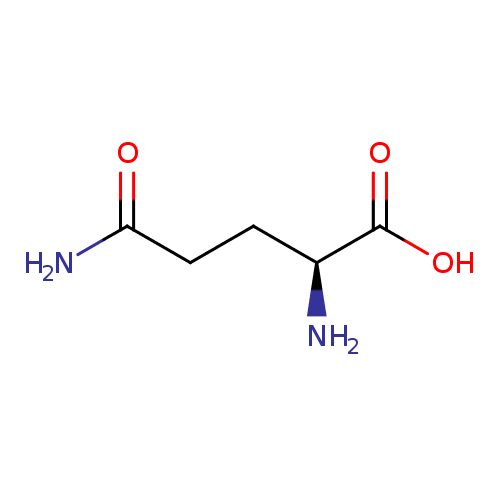
Chemical Structure
Thumb
Synonyms
ValueSource
(2S)-2,5-Diamino-5-oxopentanoic acidChEBI
(2S)-2-Amino-4-carbamoylbutanoic acidChEBI
(S)-2,5-Diamino-5-oxopentanoic acidChEBI
Glutamic acid 5-amideChEBI
Glutamic acid amideChEBI
GLUTAMINEChEBI
L-(+)-GlutamineChEBI
L-2-Aminoglutaramic acidChEBI
L-Glutamic acid gamma-amideChEBI
L-GlutaminChEBI
L-Glutaminsaeure-5-amidChEBI
LevoglutamideChEBI
QChEBI
EndariKegg
NutrestoreKegg
(2S)-2,5-Diamino-5-oxopentanoateGenerator
(2S)-2-Amino-4-carbamoylbutanoateGenerator
(S)-2,5-Diamino-5-oxopentanoateGenerator
Glutamate 5-amideGenerator
Glutamate amideGenerator
L-2-AminoglutaramateGenerator
L-Glutamate g-amideGenerator
L-Glutamate gamma-amideGenerator
L-Glutamate γ-amideGenerator
L-Glutamic acid g-amideGenerator
L-Glutamic acid γ-amideGenerator
2-Aminoglutaramic acidHMDB
CebrogenHMDB
gamma-GlutamineHMDB
GlavaminHMDB
GluminHMDB
L-2-Aminoglutaramidic acidHMDB
L-Glutamic acid 5-amideHMDB
L-GlutamidHMDB
L-GlutamideHMDB
LevoglutamidHMDB
LevoglutamidaHMDB
LevoglutamidumHMDB
LevoglutaminaHMDB
PolyglutamineHMDB
StimulinaHMDB
D-GlutamineHMDB
D GlutamineHMDB
L GlutamineHMDB
Chemical FormulaC5H10N2O3
Average Molecular Mass146.145 g/mol
Monoisotopic Mass146.069 g/mol
CAS Registry Number56-85-9
IUPAC Name(2S)-2-amino-4-carbamoylbutanoic acid
Traditional NameL-glutamine
SMILESN[C@@H](CCC(N)=O)C(O)=O
InChI IdentifierInChI=1S/C5H10N2O3/c6-3(5(9)10)1-2-4(7)8/h3H,1-2,6H2,(H2,7,8)(H,9,10)/t3-/m0/s1
InChI KeyZDXPYRJPNDTMRX-VKHMYHEASA-N
Chemical Taxonomy
Description belongs to the class of organic compounds known as l-alpha-amino acids. These are alpha amino acids which have the L-configuration of the alpha-carbon atom.
KingdomOrganic compounds
Super ClassOrganic acids and derivatives
ClassCarboxylic acids and derivatives
Sub ClassAmino acids, peptides, and analogues
Direct ParentL-alpha-amino acids
Alternative Parents
Substituents
  • L-alpha-amino acid
  • Fatty acid
  • Amino acid
  • Carboximidic acid
  • Carboximidic acid derivative
  • Carboxylic acid
  • Monocarboxylic acid or derivatives
  • Amine
  • Hydrocarbon derivative
  • Primary amine
  • Organooxygen compound
  • Organonitrogen compound
  • Organic oxide
  • Primary aliphatic amine
  • Organopnictogen compound
  • Organic oxygen compound
  • Organic nitrogen compound
  • Carbonyl group
  • Aliphatic acyclic compound
Molecular FrameworkAliphatic acyclic compounds
External Descriptors
Biological Properties
StatusDetected and Not Quantified
OriginEndogenous
Cellular Locations
  • Extracellular
  • Membrane
  • Mitochondria
Biofluid LocationsNot Available
Tissue Locations
  • Adipose Tissue
  • Fibroblasts
  • Gut
  • Intestine
  • Kidney
  • Muscle
  • Myelin
  • Neuron
  • Pancreas
  • Placenta
  • Prostate
  • Skeletal Muscle
  • Spleen
  • Stratum Corneum
  • Testes
Pathways
NameSMPDB LinkKEGG Link
Amino Sugar MetabolismSMP00045 map00520
Ammonia RecyclingSMP00009 map00910
Glutamate MetabolismSMP00072 map00250
Phenylacetate MetabolismSMP00126 map00360
Purine MetabolismSMP00050 map00230
Pyrimidine MetabolismSMP00046 map00240
Transcription/TranslationSMP00019 Not Available
Urea CycleSMP00059 Not Available
Citrullinemia Type ISMP00001 Not Available
Ornithine Transcarbamylase Deficiency (OTC Deficiency)SMP00205 Not Available
Propionic AcidemiaSMP00236 Not Available
Applications
Biological Roles
Chemical Roles
Physical Properties
StateSolid
AppearanceWhite powder.
Experimental Properties
PropertyValue
Melting Point185.5 dec°C
Boiling PointNot Available
Solubility4.13E+004 mg/L (at 25°C)
Predicted Properties
PropertyValueSource
Water Solubility97.8 g/LALOGPS
logP-3.3ALOGPS
logP-4ChemAxon
logS-0.17ALOGPS
pKa (Strongest Acidic)2.15ChemAxon
pKa (Strongest Basic)9.31ChemAxon
Physiological Charge0ChemAxon
Hydrogen Acceptor Count4ChemAxon
Hydrogen Donor Count3ChemAxon
Polar Surface Area106.41 ŲChemAxon
Rotatable Bond Count4ChemAxon
Refractivity33.11 m³·mol⁻¹ChemAxon
Polarizability13.87 ųChemAxon
Number of Rings0ChemAxon
Bioavailability1ChemAxon
Rule of FiveYesChemAxon
Ghose FilterNoChemAxon
Veber's RuleNoChemAxon
MDDR-like RuleNoChemAxon
Spectra
Spectra
Spectrum TypeDescriptionSplash KeyView
GC-MSGC-MS Spectrum - GC-EI-TOF (Pegasus III TOF-MS system, Leco; GC 6890, Agilent Technologies) (3 TMS)splash10-0a4i-0910000000-adb283bb40327f705680Spectrum
GC-MSGC-MS Spectrum - GC-EI-TOF (Pegasus III TOF-MS system, Leco; GC 6890, Agilent Technologies) (3 TMS)splash10-0a4i-0910000000-134e80840320dadf6ad1Spectrum
GC-MSGC-MS Spectrum - GC-EI-TOF (Pegasus III TOF-MS system, Leco; GC 6890, Agilent Technologies) (3 TMS)splash10-05fr-7910000000-89f87d4acc18299244f5Spectrum
GC-MSGC-MS Spectrum - GC-MS (2 TMS)splash10-0a4i-0900000000-952a471cad5e5ead0a7eSpectrum
GC-MSGC-MS Spectrum - GC-MS (4 TMS)splash10-004i-1961000000-94183211889cfe72d4ffSpectrum
GC-MSGC-MS Spectrum - GC-MS (3 TMS)splash10-0a4i-1920000000-6505cd814f3707a0febaSpectrum
GC-MSGC-MS Spectrum - GC-MS (4 TMS)splash10-004i-0692000000-9788416fdefb051b9586Spectrum
GC-MSGC-MS Spectrum - GC-EI-TOF (Non-derivatized)splash10-0a4i-0910000000-adb283bb40327f705680Spectrum
GC-MSGC-MS Spectrum - GC-EI-TOF (Non-derivatized)splash10-0a4i-0910000000-134e80840320dadf6ad1Spectrum
GC-MSGC-MS Spectrum - GC-EI-QQ (Non-derivatized)splash10-00dj-4921200000-5446333d9aa592da8a07Spectrum
GC-MSGC-MS Spectrum - GC-EI-TOF (Non-derivatized)splash10-05fr-7910000000-89f87d4acc18299244f5Spectrum
GC-MSGC-MS Spectrum - GC-MS (Non-derivatized)splash10-0a4i-0900000000-952a471cad5e5ead0a7eSpectrum
GC-MSGC-MS Spectrum - GC-MS (Non-derivatized)splash10-004i-1961000000-94183211889cfe72d4ffSpectrum
GC-MSGC-MS Spectrum - GC-MS (Non-derivatized)splash10-0a4i-1920000000-6505cd814f3707a0febaSpectrum
GC-MSGC-MS Spectrum - GC-MS (Non-derivatized)splash10-004i-0692000000-9788416fdefb051b9586Spectrum
GC-MSGC-MS Spectrum - GC-EI-TOF (Non-derivatized)splash10-0a4i-0910000000-ce2b15fe45c57a30c6bbSpectrum
GC-MSGC-MS Spectrum - GC-EI-TOF (Non-derivatized)splash10-0ab9-1900000000-7be5eab1056d2a249ab5Spectrum
GC-MSGC-MS Spectrum - GC-EI-TOF (Non-derivatized)splash10-0a4i-0900000000-5dc2d147bea250c7b80eSpectrum
GC-MSGC-MS Spectrum - GC-EI-TOF (Non-derivatized)splash10-0fb9-0921000000-5dcbab01982f543f7925Spectrum
GC-MSGC-MS Spectrum - GC-EI-TOF (Non-derivatized)splash10-004j-0940000000-102c9a43b5153f06927fSpectrum
Predicted GC-MSPredicted GC-MS Spectrum - GC-MS (Non-derivatized) - 70eV, Positivesplash10-0006-9300000000-716b1947d48f42862cdfSpectrum
Predicted GC-MSPredicted GC-MS Spectrum - GC-MS (1 TMS) - 70eV, Positivesplash10-00dl-9610000000-bfd7aa529a6e7f62de43Spectrum
Predicted GC-MSPredicted GC-MS Spectrum - GC-MS (Non-derivatized) - 70eV, PositiveNot AvailableSpectrum
Predicted GC-MSPredicted GC-MS Spectrum - GC-MS (TMS_1_2) - 70eV, PositiveNot AvailableSpectrum
LC-MS/MSLC-MS/MS Spectrum - Quattro_QQQ 10V, Positive (Annotated)splash10-0059-3900000000-c8f487d1a561e49327c0Spectrum
LC-MS/MSLC-MS/MS Spectrum - Quattro_QQQ 25V, Positive (Annotated)splash10-001i-9000000000-eee04836e7577e11d0d0Spectrum
LC-MS/MSLC-MS/MS Spectrum - Quattro_QQQ 40V, Positive (Annotated)splash10-0a59-9000000000-54ffbe5be8d7dbede389Spectrum
LC-MS/MSLC-MS/MS Spectrum - LC-ESI-ITFT (LTQ Orbitrap XL, Thermo Scientfic) , Positivesplash10-0002-0900000000-79283391c985f8286677Spectrum
LC-MS/MSLC-MS/MS Spectrum - LC-ESI-ITFT (LTQ Orbitrap XL, Thermo Scientfic) , Positivesplash10-001i-9000000000-6afbd5929b6e2371a371Spectrum
LC-MS/MSLC-MS/MS Spectrum - LC-ESI-ITFT (LTQ Orbitrap XL, Thermo Scientfic) , Positivesplash10-001i-0900000000-d5bd83614703b048228eSpectrum
LC-MS/MSLC-MS/MS Spectrum - LC-ESI-ITFT (LTQ Orbitrap XL, Thermo Scientfic) , Positivesplash10-001i-0900000000-dc8def340a2655f9a399Spectrum
LC-MS/MSLC-MS/MS Spectrum - LC-ESI-ITFT (LTQ Orbitrap XL, Thermo Scientfic) , Positivesplash10-0002-0900000000-47e3e94a4387c53e0bd6Spectrum
LC-MS/MSLC-MS/MS Spectrum - LC-ESI-ITFT (LTQ Orbitrap XL, Thermo Scientfic) , Positivesplash10-001i-9000000000-c1acfa3750a90d81ce15Spectrum
LC-MS/MSLC-MS/MS Spectrum - LC-ESI-ITFT (LTQ Orbitrap XL, Thermo Scientfic) , Positivesplash10-004i-0900000000-93f01bccbc98f18d4b07Spectrum
LC-MS/MSLC-MS/MS Spectrum - LC-ESI-ITFT (LTQ Orbitrap XL, Thermo Scientfic) , Positivesplash10-001i-0900000000-ce03708ec9ce55cd8952Spectrum
LC-MS/MSLC-MS/MS Spectrum - LC-ESI-ITFT (LTQ Orbitrap XL, Thermo Scientfic) , Negativesplash10-0002-0933201000-9339494cebedd9c39135Spectrum
LC-MS/MSLC-MS/MS Spectrum - LC-ESI-ITFT (LTQ Orbitrap XL, Thermo Scientfic) , Negativesplash10-004i-0900000000-64561a4c3590d5994e37Spectrum
LC-MS/MSLC-MS/MS Spectrum - LC-ESI-ITFT (LTQ Orbitrap XL, Thermo Scientfic) , Negativesplash10-0002-0900000000-fdcdd7591fb182d804e2Spectrum
LC-MS/MSLC-MS/MS Spectrum - LC-ESI-ITFT (LTQ Orbitrap XL, Thermo Scientfic) , Negativesplash10-03dm-0030900000-66314ae704783630947aSpectrum
LC-MS/MSLC-MS/MS Spectrum - LC-ESI-ITFT (LTQ Orbitrap XL, Thermo Scientfic) , Negativesplash10-0002-0933100000-8798d2e46a415bb1029aSpectrum
LC-MS/MSLC-MS/MS Spectrum - LC-ESI-ITFT (LTQ Orbitrap XL, Thermo Scientfic) , Negativesplash10-004i-0900000000-dddea137e500a9b364ccSpectrum
LC-MS/MSLC-MS/MS Spectrum - LC-ESI-ITFT (LTQ Orbitrap XL, Thermo Scientfic) , Negativesplash10-0002-0900000000-a78f8e4b2d6b37917b21Spectrum
LC-MS/MSLC-MS/MS Spectrum - LC-ESI-ITFT (LTQ Orbitrap XL, Thermo Scientfic) , Negativesplash10-0002-0920000000-8c6e1eb7de6f70911080Spectrum
LC-MS/MSLC-MS/MS Spectrum - LC-ESI-QQ (API3000, Applied Biosystems) 10V, Negativesplash10-0002-0900000000-fa42fc4bcba608992804Spectrum
LC-MS/MSLC-MS/MS Spectrum - LC-ESI-QQ (API3000, Applied Biosystems) 20V, Negativesplash10-004i-2900000000-074610880ea19a417f60Spectrum
LC-MS/MSLC-MS/MS Spectrum - LC-ESI-QQ (API3000, Applied Biosystems) 30V, Negativesplash10-059x-9200000000-8b7dae54eb8325667bd7Spectrum
LC-MS/MSLC-MS/MS Spectrum - LC-ESI-QQ (API3000, Applied Biosystems) 40V, Negativesplash10-0006-9000000000-e115d9215eea3f0c3629Spectrum
LC-MS/MSLC-MS/MS Spectrum - LC-ESI-QQ (API3000, Applied Biosystems) 50V, Negativesplash10-0006-9000000000-55b1ac62eea66274b984Spectrum
LC-MS/MSLC-MS/MS Spectrum - LC-ESI-QQ (API3000, Applied Biosystems) 10V, Positivesplash10-001j-0900000000-c9c71895033d66cb2becSpectrum
MSMass Spectrum (Electron Ionization)splash10-001i-9000000000-bc4e294b8a3fd8c5abceSpectrum
1D NMR13C NMR SpectrumNot AvailableSpectrum
1D NMR1H NMR SpectrumNot AvailableSpectrum
1D NMR13C NMR SpectrumNot AvailableSpectrum
1D NMR1H NMR SpectrumNot AvailableSpectrum
1D NMR13C NMR SpectrumNot AvailableSpectrum
1D NMR1H NMR SpectrumNot AvailableSpectrum
1D NMR13C NMR SpectrumNot AvailableSpectrum
1D NMR1H NMR SpectrumNot AvailableSpectrum
1D NMR13C NMR SpectrumNot AvailableSpectrum
1D NMR1H NMR SpectrumNot AvailableSpectrum
1D NMR13C NMR SpectrumNot AvailableSpectrum
1D NMR1H NMR SpectrumNot AvailableSpectrum
1D NMR13C NMR SpectrumNot AvailableSpectrum
1D NMR1H NMR SpectrumNot AvailableSpectrum
1D NMR13C NMR SpectrumNot AvailableSpectrum
1D NMR1H NMR SpectrumNot AvailableSpectrum
1D NMR13C NMR SpectrumNot AvailableSpectrum
1D NMR1H NMR SpectrumNot AvailableSpectrum
1D NMR13C NMR SpectrumNot AvailableSpectrum
1D NMR1H NMR SpectrumNot AvailableSpectrum
1D NMR13C NMR SpectrumNot AvailableSpectrum
1D NMR1H NMR SpectrumNot AvailableSpectrum
1D NMR13C NMR SpectrumNot AvailableSpectrum
2D NMR[1H,13C] 2D NMR SpectrumNot AvailableSpectrum
2D NMR[1H,1H] 2D NMR SpectrumNot AvailableSpectrum
Toxicity Profile
Route of ExposureAbsorption is efficient and occurs by an active transport mechanism
Mechanism of ToxicitySupplemental L-glutamine's possible immunomodulatory role may be accounted for in a number of ways. L-glutamine appears to play a major role in protecting the integrity of the gastrointestinal tract and, in particular, the large intestine. During catabolic states, the integrity of the intestinal mucosa may be compromised with consequent increased intestinal permeability and translocation of Gram-negative bacteria from the large intestine into the body. The demand for L-glutamine by the intestine, as well as by cells such as lymphocytes, appears to be much greater than that supplied by skeletal muscle, the major storage tissue for L-glutamine. L-glutamine is the preferred respiratory fuel for enterocytes, colonocytes and lymphocytes. Therefore, supplying supplemental L-glutamine under these conditions may do a number of things. For one, it may reverse the catabolic state by sparing skeletal muscle L-glutamine. It also may inhibit translocation of Gram-negative bacteria from the large intestine. L-glutamine helps maintain secretory IgA, which functions primarily by preventing the attachment of bacteria to mucosal cells. L-glutamine appears to be required to support the proliferation of mitogen-stimulated lymphocytes, as well as the production of interleukin-2 (IL-2) and interferon-gamma (IFN-gamma). It is also required for the maintenance of lymphokine-activated killer cells (LAK). L-glutamine can enhance phagocytosis by neutrophils and monocytes. It can lead to an increased synthesis of glutathione in the intestine, which may also play a role in maintaining the integrity of the intestinal mucosa by ameliorating oxidative stress. The exact mechanism of the possible immunomodulatory action of supplemental L-glutamine, however, remains unclear. It is conceivable that the major effect of L-glutamine occurs at the level of the intestine. Perhaps enteral L-glutamine acts directly on intestine-associated lymphoid tissue and stimulates overall immune function by that mechanism, without passing beyond the splanchnic bed.
MetabolismEnterocytes, Hepatic
Toxicity ValuesNot Available
Lethal DoseNot Available
Carcinogenicity (IARC Classification)No indication of carcinogenicity to humans (not listed by IARC).
Uses/SourcesUsed for nutritional supplementation, also for treating dietary shortage or imbalance.
Minimum Risk LevelNot Available
Health EffectsNot Available
SymptomsNot Available
TreatmentNot Available
Concentrations
Not Available
DrugBank IDDB00130
HMDB IDHMDB0000641
FooDB IDFDB030965
Phenol Explorer IDNot Available
KNApSAcK IDC00001359
BiGG ID33714
BioCyc IDGLN
METLIN ID5614
PDB IDNot Available
Wikipedia LinkGlutamine
Chemspider ID5746
ChEBI ID18050
PubChem Compound ID5961
Kegg Compound IDC00064
YMDB IDYMDB00002
ECMDB IDECMDB00641
References
Synthesis Reference

Stephen Paul, “Novel preparation of fiber, L-glutamine and a soy derivative for the purpose of enhancement of isoflavone bioavailability.” U.S. Patent US20020076455, issued June 20, 2002.

MSDSLink
General References
1. Jiao, Qingcai; Qian, Shaosong; Chen, Ran; Wu, Xiaoyan. Synthesis of L-glutamine. Faming Zhuanli Shenqing Gongkai Shuomingshu (2005), 7 pp.
2. Scano P, Murgia A, Pirisi FM, Caboni P: A gas chromatography-mass spectrometry-based metabolomic approach for the characterization of goat milk compared with cow milk. J Dairy Sci. 2014 Oct;97(10):6057-66. doi: 10.3168/jds.2014-8247. Epub 2014 Aug 6.
3. Mung D, Li L: Development of Chemical Isotope Labeling LC-MS for Milk Metabolomics: Comprehensive and Quantitative Profiling of the Amine/Phenol Submetabolome. Anal Chem. 2017 Apr 18;89(8):4435-4443. doi: 10.1021/acs.analchem.6b03737. Epub 2017 Mar 28.
4. Mung D, Li L: Applying quantitative metabolomics based on chemical isotope labeling LC-MS for detecting potential milk adulterant in human milk. Anal Chim Acta. 2018 Feb 25;1001:78-85. doi: 10.1016/j.aca.2017.11.019. Epub 2017 Nov 14.
5. Kurt J. Boudonck, Matthew W. Mitchell, Jacob Wulff and John A. Ryals. Characterization of the biochemical variability of bovine milk using metabolomics. Metabolomics (2009) 5:375?386
6. A. Foroutan et al. The Chemical Composition of Commercial Cow's Milk (in preparation)
7. Jiao, Qingcai; Qian, Shaosong; Chen, Ran; Wu, Xiaoyan. Synthesis of L-glutamine. Faming Zhuanli Shenqing Gongkai Shuomingshu (2005), 7 pp.
8. Szebenyi G, Morfini GA, Babcock A, Gould M, Selkoe K, Stenoien DL, Young M, Faber PW, MacDonald ME, McPhaul MJ, Brady ST: Neuropathogenic forms of huntingtin and androgen receptor inhibit fast axonal transport. Neuron. 2003 Sep 25;40(1):41-52.
9. Wada A, Yoshida R, Oda K, Fukuba E, Uchida N, Kitagaki H: Acute encephalopathy associated with intravenous immunoglobulin therapy. AJNR Am J Neuroradiol. 2005 Oct;26(9):2311-5.
10. Pennisi P, Gavrilova O, Setser-Portas J, Jou W, Santopietro S, Clemmons D, Yakar S, LeRoith D: Recombinant human insulin-like growth factor-I treatment inhibits gluconeogenesis in a transgenic mouse model of type 2 diabetes mellitus. Endocrinology. 2006 Jun;147(6):2619-30. Epub 2006 Mar 2.
11. Peng CT, Wu KH, Lan SJ, Tsai JJ, Tsai FJ, Tsai CH: Amino acid concentrations in cerebrospinal fluid in children with acute lymphoblastic leukemia undergoing chemotherapy. Eur J Cancer. 2005 May;41(8):1158-63. Epub 2005 Apr 14.
12. Cynober LA: Plasma amino acid levels with a note on membrane transport: characteristics, regulation, and metabolic significance. Nutrition. 2002 Sep;18(9):761-6.
13. Rainesalo S, Keranen T, Palmio J, Peltola J, Oja SS, Saransaari P: Plasma and cerebrospinal fluid amino acids in epileptic patients. Neurochem Res. 2004 Jan;29(1):319-24.
14. Subramanian A, Gupta A, Saxena S, Gupta A, Kumar R, Nigam A, Kumar R, Mandal SK, Roy R: Proton MR CSF analysis and a new software as predictors for the differentiation of meningitis in children. NMR Biomed. 2005 Jun;18(4):213-25.
15. Redjems-Bennani N, Jeandel C, Lefebvre E, Blain H, Vidailhet M, Gueant JL: Abnormal substrate levels that depend upon mitochondrial function in cerebrospinal fluid from Alzheimer patients. Gerontology. 1998;44(5):300-4.
16. Avila J, Barbaro B, Gangemi A, Romagnoli T, Kuechle J, Hansen M, Shapiro J, Testa G, Sankary H, Benedetti E, Lakey J, Oberholzer J: Intra-ductal glutamine administration reduces oxidative injury during human pancreatic islet isolation. Am J Transplant. 2005 Dec;5(12):2830-7.
17. Cooper AJ: Ammonia metabolism in normal and portacaval-shunted rats. Adv Exp Med Biol. 1990;272:23-46.
18. Melis GC, Boelens PG, van der Sijp JR, Popovici T, De Bandt JP, Cynober L, van Leeuwen PA: The feeding route (enteral or parenteral) affects the plasma response of the dipetide Ala-Gln and the amino acids glutamine, citrulline and arginine, with the administration of Ala-Gln in preoperative patients. Br J Nutr. 2005 Jul;94(1):19-26.
19. Choudry HA, Pan M, Karinch AM, Souba WW: Branched-chain amino acid-enriched nutritional support in surgical and cancer patients. J Nutr. 2006 Jan;136(1 Suppl):314S-8S.
20. Commodari F, Arnold DL, Sanctuary BC, Shoubridge EA: 1H NMR characterization of normal human cerebrospinal fluid and the detection of methylmalonic acid in a vitamin B12 deficient patient. NMR Biomed. 1991 Aug;4(4):192-200.
21. Frayn KN, Khan K, Coppack SW, Elia M: Amino acid metabolism in human subcutaneous adipose tissue in vivo. Clin Sci (Lond). 1991 May;80(5):471-4.
22. Silwood CJ, Lynch E, Claxson AW, Grootveld MC: 1H and (13)C NMR spectroscopic analysis of human saliva. J Dent Res. 2002 Jun;81(6):422-7.
23. Coeffier M, Miralles-Barrachina O, Le Pessot F, Lalaude O, Daveau M, Lavoinne A, Lerebours E, Dechelotte P: Influence of glutamine on cytokine production by human gut in vitro. Cytokine. 2001 Feb 7;13(3):148-54.
24. Nicholson JK, O'Flynn MP, Sadler PJ, Macleod AF, Juul SM, Sonksen PH: Proton-nuclear-magnetic-resonance studies of serum, plasma and urine from fasting normal and diabetic subjects. Biochem J. 1984 Jan 15;217(2):365-75.
25. Rutten EP, Engelen MP, Wouters EF, Schols AM, Deutz NE: Metabolic effects of glutamine and glutamate ingestion in healthy subjects and in persons with chronic obstructive pulmonary disease. Am J Clin Nutr. 2006 Jan;83(1):115-23.
26. van der Hulst RR, von Meyenfeldt MF, Deutz NE, Soeters PB: Glutamine extraction by the gut is reduced in depleted [corrected] patients with gastrointestinal cancer. Ann Surg. 1997 Jan;225(1):112-21.
27. Hagenfeldt L, Bjerkenstedt L, Edman G, Sedvall G, Wiesel FA: Amino acids in plasma and CSF and monoamine metabolites in CSF: interrelationship in healthy subjects. J Neurochem. 1984 Mar;42(3):833-7.
28. Sreekumar A, Poisson LM, Rajendiran TM, Khan AP, Cao Q, Yu J, Laxman B, Mehra R, Lonigro RJ, Li Y, Nyati MK, Ahsan A, Kalyana-Sundaram S, Han B, Cao X, Byun J, Omenn GS, Ghosh D, Pennathur S, Alexander DC, Berger A, Shuster JR, Wei JT, Varambally S, Beecher C, Chinnaiyan AM: Metabolomic profiles delineate potential role for sarcosine in prostate cancer progression. Nature. 2009 Feb 12;457(7231):910-4. doi: 10.1038/nature07762.
29. McAnena OJ, Moore FA, Moore EE, Jones TN, Parsons P: Selective uptake of glutamine in the gastrointestinal tract: confirmation in a human study. Br J Surg. 1991 Apr;78(4):480-2.
30. Morlion BJ, Stehle P, Wachtler P, Siedhoff HP, Koller M, Konig W, Furst P, Puchstein C: Total parenteral nutrition with glutamine dipeptide after major abdominal surgery: a randomized, double-blind, controlled study. Ann Surg. 1998 Feb;227(2):302-8.
31. Jian ZM, Cao JD, Zhu XG, Zhao WX, Yu JC, Ma EL, Wang XR, Zhu MW, Shu H, Liu YW: The impact of alanyl-glutamine on clinical safety, nitrogen balance, intestinal permeability, and clinical outcome in postoperative patients: a randomized, double-blind, controlled study of 120 patients. JPEN J Parenter Enteral Nutr. 1999 Sep-Oct;23(5 Suppl):S62-6.
32. Boza JJ, Dangin M, Moennoz D, Montigon F, Vuichoud J, Jarret A, Pouteau E, Gremaud G, Oguey-Araymon S, Courtois D, Woupeyi A, Finot PA, Ballevre O: Free and protein-bound glutamine have identical splanchnic extraction in healthy human volunteers. Am J Physiol Gastrointest Liver Physiol. 2001 Jul;281(1):G267-74.
33. Elshenawy S, Pinney SE, Stuart T, Doulias PT, Zura G, Parry S, Elovitz MA, Bennett MJ, Bansal A, Strauss JF 3rd, Ischiropoulos H, Simmons RA: The Metabolomic Signature of the Placenta in Spontaneous Preterm Birth. Int J Mol Sci. 2020 Feb 4;21(3). pii: ijms21031043. doi: 10.3390/ijms21031043.
34. https://www.ncbi.nlm.nih.gov/pubmed/?term=11139387
35. https://www.ncbi.nlm.nih.gov/pubmed/?term=15204730
36. https://www.ncbi.nlm.nih.gov/pubmed/?term=22055478
37. https://www.ncbi.nlm.nih.gov/pubmed/?term=22206385
38. https://www.ncbi.nlm.nih.gov/pubmed/?term=22451274
39. https://www.ncbi.nlm.nih.gov/pubmed/?term=22453904
40. https://www.ncbi.nlm.nih.gov/pubmed/?term=22575040
41. https://www.ncbi.nlm.nih.gov/pubmed/?term=22770225
42. https://www.ncbi.nlm.nih.gov/pubmed/?term=29438107