Record Information
Version1.0
Creation Date2014-08-29 06:21:32 UTC
Update Date2026-05-14 16:24:16 UTC
Accession NumberCHEM003278
Identification
Common NameGlycine
ClassSmall Molecule
DescriptionGlycine is a simple, nonessential amino acid, although experimental animals show reduced growth on low-glycine diets. The average adult ingests 3 to 5 grams of glycine daily. Glycine is involved in the body's production of DNA, phospholipids and collagen, and in release of energy. Glycine levels are effectively measured in plasma in both normal patients and those with inborn errors of glycine metabolism. Nonketotic hyperglycinaemia (OMIM 606899) is an autosomal recessive condition caused by deficient enzyme activity of the glycine cleavage enzyme system (EC 2.1.1.10). The glycine cleavage enzyme system comprises four proteins: P-, T-, H- and L-proteins (EC 1.4.4.2, EC 2.1.2.10 and EC 1.8.1.4 for P-, T- and L-proteins). Mutations have been described in the GLDC (OMIM 238300), AMT (OMIM 238310), and GCSH (OMIM 238330) genes encoding the P-, T-, and H-proteins respectively. The glycine cleavage system catalyses the oxidative conversion of glycine into carbon dioxide and ammonia, with the remaining one-carbon unit transferred to folate as methylenetetrahydrofolate. It is the main catabolic pathway for glycine and it also contributes to one-carbon metabolism. Patients with a deficiency of this enzyme system have increased glycine in plasma, urine and cerebrospinal fluid (CSF) with an increased CSF: plasma glycine ratio. (1). t is also a fast inhibitory neurotransmitter.
Contaminant Sources
  • Cosmetic Chemicals
  • EAFUS Chemicals
  • FooDB Chemicals
  • HMDB Contaminants - Feces
  • HMDB Contaminants - Urine
  • HPV EPA Chemicals
  • STOFF IDENT Compounds
  • T3DB toxins
  • ToxCast & Tox21 Chemicals
Contaminant Type
  • Amine
  • Animal Toxin
  • Dietary Supplement
  • Drug
  • Food Toxin
  • Glycine Agent
  • Household Toxin
  • Metabolite
  • Micronutrient
  • Natural Compound
  • Non-Essential Amino Acid
  • Nutraceutical
  • Organic Compound
  • Supplement
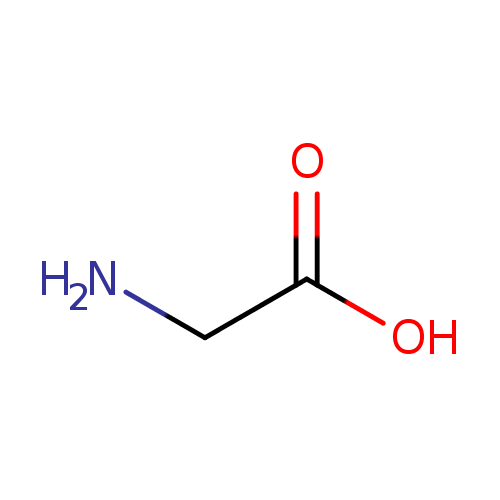
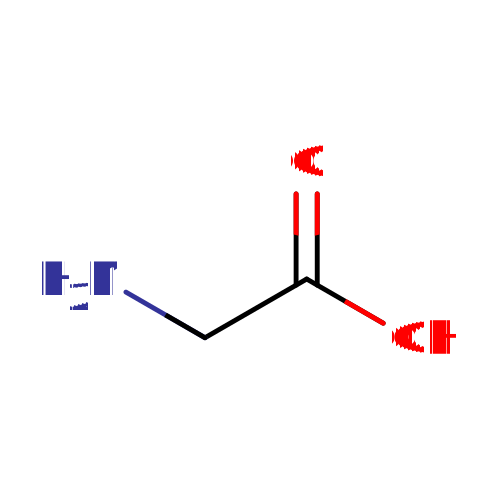
Chemical Structure
Thumb
Synonyms
ValueSource
Aminoacetic acidChEBI
AminoessigsaeureChEBI
Aminoethanoic acidChEBI
GChEBI
GlyChEBI
GlycinChEBI
GlycocollChEBI
GlykokollChEBI
GlyzinChEBI
H2N-CH2-COOHChEBI
HglyChEBI
LeimzuckerChEBI
AminoacetateGenerator
AminoethanoateGenerator
2-AminoacetateHMDB
2-Aminoacetic acidHMDB
AciportHMDB
Amino-acetateHMDB
Amino-acetic acidHMDB
GlicoaminHMDB
GlycolixirHMDB
GlycostheneHMDB
Gyn-hydralinHMDB
PadilHMDB
Glycine carbonate (1:1), monosodium saltHMDB
Glycine carbonate (2:1), monopotassium saltHMDB
Glycine sulfate (3:1)HMDB
Glycine, monoammonium saltHMDB
Glycine, monosodium saltHMDB
Glycine, sodium hydrogen carbonateHMDB
Monoammonium salt glycineHMDB
Calcium salt glycineHMDB
Glycine hydrochloride (2:1)HMDB
Glycine phosphate (1:1)HMDB
Glycine, monopotasssium saltHMDB
Monopotasssium salt glycineHMDB
Monosodium salt glycineHMDB
Glycine carbonate (2:1), monolithium saltHMDB
Glycine carbonate (2:1), monosodium saltHMDB
Glycine hydrochlorideHMDB
Glycine, copper saltHMDB
Hydrochloride, glycineHMDB
Salt glycine, monoammoniumHMDB
Acid, aminoaceticHMDB
Cobalt salt glycineHMDB
Copper salt glycineHMDB
Glycine phosphateHMDB
Glycine, calcium saltHMDB
Glycine, calcium salt (2:1)HMDB
Glycine, cobalt saltHMDB
Phosphate, glycineHMDB
Salt glycine, monosodiumHMDB
Chemical FormulaC2H5NO2
Average Molecular Mass75.067 g/mol
Monoisotopic Mass75.032 g/mol
CAS Registry Number56-40-6
IUPAC Name2-aminoacetic acid
Traditional Nameglycine
SMILESNCC(O)=O
InChI IdentifierInChI=1S/C2H5NO2/c3-1-2(4)5/h1,3H2,(H,4,5)
InChI KeyDHMQDGOQFOQNFH-UHFFFAOYSA-N
Chemical Taxonomy
Description belongs to the class of organic compounds known as alpha amino acids. These are amino acids in which the amino group is attached to the carbon atom immediately adjacent to the carboxylate group (alpha carbon).
KingdomOrganic compounds
Super ClassOrganic acids and derivatives
ClassCarboxylic acids and derivatives
Sub ClassAmino acids, peptides, and analogues
Direct ParentAlpha amino acids
Alternative Parents
Substituents
  • Alpha-amino acid
  • Amino acid
  • Carboxylic acid
  • Monocarboxylic acid or derivatives
  • Organic nitrogen compound
  • Organic oxide
  • Hydrocarbon derivative
  • Primary amine
  • Organooxygen compound
  • Organonitrogen compound
  • Organopnictogen compound
  • Primary aliphatic amine
  • Organic oxygen compound
  • Carbonyl group
  • Amine
  • Aliphatic acyclic compound
Molecular FrameworkAliphatic acyclic compounds
External Descriptors
Biological Properties
StatusDetected and Not Quantified
OriginEndogenous
Cellular Locations
  • Extracellular
  • Lysosome
  • Membrane
  • Mitochondria
  • Peroxisome
Biofluid LocationsNot Available
Tissue Locations
  • Bladder
  • Brain
  • Epidermis
  • Fibroblasts
  • Intestine
  • Kidney
  • Myelin
  • Neuron
  • Pancreas
  • Placenta
  • Platelet
  • Prostate
  • Spleen
  • Stratum Corneum
  • Thyroid Gland
Pathways
NameSMPDB LinkKEGG Link
Alanine MetabolismSMP00055 map00250
Ammonia RecyclingSMP00009 map00910
Bile Acid BiosynthesisSMP00035 Not Available
Carnitine SynthesisSMP00465 Not Available
Glutathione MetabolismSMP00015 map00480
Glycine and Serine MetabolismSMP00004 map00260
Methionine MetabolismSMP00033 map00270
Porphyrin MetabolismSMP00024 map00860
Citrullinemia Type ISMP00001 Not Available
Hyperglycinemia, non-ketoticSMP00485 Not Available
Hyperprolinemia Type ISMP00361 Not Available
Hyperprolinemia Type IISMP00360 Not Available
IminoglycinuriaSMP00193 Not Available
Isovaleric AciduriaSMP00238 Not Available
Malonic AciduriaSMP00198 Not Available
Methylmalonic AciduriaSMP00200 Not Available
Methylmalonic Aciduria Due to Cobalamin-Related DisordersSMP00201 Not Available
Non Ketotic HyperglycinemiaSMP00223 Not Available
Prolinemia Type IISMP00208 Not Available
Propionic AcidemiaSMP00236 Not Available
Short Chain Acyl CoA Dehydrogenase Deficiency (SCAD Deficiency)SMP00235 Not Available
Applications
Biological Roles
Chemical Roles
Physical Properties
StateSolid
AppearanceWhite powder.
Experimental Properties
PropertyValue
Melting Point262 dec°C
Boiling PointNot Available
Solubility2.49E+005 mg/L (at 25°C)
Predicted Properties
PropertyValueSource
Water Solubility552 g/LALOGPS
logP-3.3ALOGPS
logP-3.4ChemAxon
logS0.87ALOGPS
pKa (Strongest Acidic)2.31ChemAxon
pKa (Strongest Basic)9.24ChemAxon
Physiological Charge0ChemAxon
Hydrogen Acceptor Count3ChemAxon
Hydrogen Donor Count2ChemAxon
Polar Surface Area63.32 ŲChemAxon
Rotatable Bond Count1ChemAxon
Refractivity16 m³·mol⁻¹ChemAxon
Polarizability6.65 ųChemAxon
Number of Rings0ChemAxon
Bioavailability1ChemAxon
Rule of FiveYesChemAxon
Ghose FilterNoChemAxon
Veber's RuleNoChemAxon
MDDR-like RuleNoChemAxon
Spectra
Spectra
Spectrum TypeDescriptionSplash KeyView
GC-MSGC-MS Spectrum - GC-EI-TOF (Pegasus III TOF-MS system, Leco; GC 6890, Agilent Technologies) (3 TMS)splash10-00dj-2900000000-0ef96bcf06ce475afcddSpectrum
GC-MSGC-MS Spectrum - GC-EI-TOF (Pegasus III TOF-MS system, Leco; GC 6890, Agilent Technologies) (Non-derivatized)splash10-00dj-1900000000-1d289099ac79cfb8bb19Spectrum
GC-MSGC-MS Spectrum - GC-EI-TOF (Pegasus III TOF-MS system, Leco; GC 6890, Agilent Technologies) (3 TMS)splash10-00di-7910000000-6c972a683dfb75b69331Spectrum
GC-MSGC-MS Spectrum - GC-MS (2 TMS)splash10-0udi-0900000000-ef69e38ee6cebc2ece00Spectrum
GC-MSGC-MS Spectrum - GC-MS (3 TMS)splash10-00di-2910000000-3215b9e40f20c7b306cdSpectrum
GC-MSGC-MS Spectrum - EI-B (Non-derivatized)splash10-001i-9000000000-719b7f248956f13a312dSpectrum
GC-MSGC-MS Spectrum - EI-B (Non-derivatized)splash10-0udi-0900000000-99b4fc43740b21edc786Spectrum
GC-MSGC-MS Spectrum - EI-B (Non-derivatized)splash10-00di-1910000000-4cff4d14c73acff9442fSpectrum
GC-MSGC-MS Spectrum - GC-EI-TOF (Non-derivatized)splash10-00dj-2900000000-0ef96bcf06ce475afcddSpectrum
GC-MSGC-MS Spectrum - GC-EI-TOF (Non-derivatized)splash10-00dj-1900000000-1d289099ac79cfb8bb19Spectrum
GC-MSGC-MS Spectrum - GC-EI-QQ (Non-derivatized)splash10-0002-4960000000-2c6fa028e985c6019854Spectrum
GC-MSGC-MS Spectrum - GC-EI-TOF (Non-derivatized)splash10-00di-7910000000-6c972a683dfb75b69331Spectrum
GC-MSGC-MS Spectrum - GC-MS (Non-derivatized)splash10-00di-2910000000-3215b9e40f20c7b306cdSpectrum
GC-MSGC-MS Spectrum - GC-MS (Non-derivatized)splash10-0udi-0900000000-ef69e38ee6cebc2ece00Spectrum
GC-MSGC-MS Spectrum - GC-EI-TOF (Non-derivatized)splash10-00ds-2900000000-ffffed9c78c16a884e4aSpectrum
GC-MSGC-MS Spectrum - GC-EI-TOF (Non-derivatized)splash10-004r-3900000000-f288b50b7b6890429811Spectrum
GC-MSGC-MS Spectrum - GC-EI-TOF (Non-derivatized)splash10-0udi-1900000000-c76140c31c1f120e4b9dSpectrum
Predicted GC-MSPredicted GC-MS Spectrum - GC-MS (Non-derivatized) - 70eV, Positivesplash10-001i-9000000000-f0a2cfbefb9fcd9b6c3eSpectrum
Predicted GC-MSPredicted GC-MS Spectrum - GC-MS (1 TMS) - 70eV, Positivesplash10-00di-9300000000-b8bbfc1276d5adb1ba04Spectrum
Predicted GC-MSPredicted GC-MS Spectrum - GC-MS (Non-derivatized) - 70eV, PositiveNot AvailableSpectrum
Predicted GC-MSPredicted GC-MS Spectrum - GC-MS (TMS_1_2) - 70eV, PositiveNot AvailableSpectrum
Predicted GC-MSPredicted GC-MS Spectrum - GC-MS (TBDMS_1_1) - 70eV, PositiveNot AvailableSpectrum
Predicted GC-MSPredicted GC-MS Spectrum - GC-MS (TBDMS_1_2) - 70eV, PositiveNot AvailableSpectrum
LC-MS/MSLC-MS/MS Spectrum - Quattro_QQQ 10V, Positive (Annotated)splash10-003r-9000000000-725357e461c898a7451eSpectrum
LC-MS/MSLC-MS/MS Spectrum - Quattro_QQQ 25V, Positive (Annotated)splash10-001i-9000000000-9f3930e66b117ad91dcaSpectrum
LC-MS/MSLC-MS/MS Spectrum - Quattro_QQQ 40V, Positive (Annotated)splash10-001i-9000000000-b3336097dddbb5e22871Spectrum
LC-MS/MSLC-MS/MS Spectrum - EI-B (HITACHI RMU-6M) , Positivesplash10-001i-9000000000-719b7f248956f13a312dSpectrum
LC-MS/MSLC-MS/MS Spectrum - LC-ESI-QQ (API3000, Applied Biosystems) 10V, Negativesplash10-00di-9000000000-6001578fc511ba3fefefSpectrum
LC-MS/MSLC-MS/MS Spectrum - LC-ESI-QQ (API3000, Applied Biosystems) 20V, Negativesplash10-00di-9000000000-79b2a0a9d93de6a62358Spectrum
LC-MS/MSLC-MS/MS Spectrum - LC-ESI-QQ (API3000, Applied Biosystems) 30V, Negativesplash10-00di-9000000000-9290dbe208c4744f4431Spectrum
LC-MS/MSLC-MS/MS Spectrum - LC-ESI-QQ (API3000, Applied Biosystems) 10V, Positivesplash10-004i-9000000000-342ab462db0835abb3d2Spectrum
LC-MS/MSLC-MS/MS Spectrum - LC-ESI-QQ (API3000, Applied Biosystems) 20V, Positivesplash10-0ar1-9010000000-9daadc1d169a8530926dSpectrum
LC-MS/MSLC-MS/MS Spectrum - LC-ESI-QQ (API3000, Applied Biosystems) 30V, Positivesplash10-07y0-9220000000-8c7785f1f3aa8052679fSpectrum
LC-MS/MSLC-MS/MS Spectrum - LC-ESI-QQ (API3000, Applied Biosystems) 40V, Positivesplash10-0ula-9110000000-43ada06fe1b56b4e9fccSpectrum
LC-MS/MSLC-MS/MS Spectrum - LC-ESI-QQ (API3000, Applied Biosystems) 50V, Positivesplash10-017i-9000000000-fbd78fbb48f082235f42Spectrum
LC-MS/MSLC-MS/MS Spectrum - CE-ESI-TOF (CE-system connected to 6210 Time-of-Flight MS, Agilent) , Positivesplash10-004i-9000000000-c38d0fb28793438083a9Spectrum
LC-MS/MSLC-MS/MS Spectrum - DI-ESI-Q-Exactive Plus , Positivesplash10-004i-9000000000-18a7ae48c7b0e15cdf18Spectrum
LC-MS/MSLC-MS/MS Spectrum - LC-ESI-QQ , negativesplash10-00di-9000000000-6001578fc511ba3fefefSpectrum
LC-MS/MSLC-MS/MS Spectrum - LC-ESI-QQ , negativesplash10-00di-9000000000-79b2a0a9d93de6a62358Spectrum
LC-MS/MSLC-MS/MS Spectrum - LC-ESI-QQ , negativesplash10-00di-9000000000-9290dbe208c4744f4431Spectrum
LC-MS/MSLC-MS/MS Spectrum - , negativesplash10-00di-9000000000-605b44ac311a9af4bb7aSpectrum
LC-MS/MSLC-MS/MS Spectrum - LC-ESI-QQ , positivesplash10-004i-9000000000-342ab462db0835abb3d2Spectrum
Predicted LC-MS/MSPredicted LC-MS/MS Spectrum - 10V, Positivesplash10-0059-9000000000-c6b1ebc1dba89b6a6184Spectrum
Predicted LC-MS/MSPredicted LC-MS/MS Spectrum - 20V, Positivesplash10-001i-9000000000-851aa6a0263541a8b249Spectrum
Predicted LC-MS/MSPredicted LC-MS/MS Spectrum - 40V, Positivesplash10-053r-9000000000-d3b5624412082bb2cf60Spectrum
Predicted LC-MS/MSPredicted LC-MS/MS Spectrum - 10V, Negativesplash10-00di-9000000000-89b2c043a5afe3ebc6f6Spectrum
Predicted LC-MS/MSPredicted LC-MS/MS Spectrum - 20V, Negativesplash10-00di-9000000000-b4046e208ee8adb87021Spectrum
Predicted LC-MS/MSPredicted LC-MS/MS Spectrum - 40V, Negativesplash10-05fr-9000000000-36521e440c602bd2ca5aSpectrum
MSMass Spectrum (Electron Ionization)splash10-001i-9000000000-222d6c3a1ba6afcd7ea9Spectrum
1D NMR1H NMR SpectrumNot AvailableSpectrum
1D NMR13C NMR SpectrumNot AvailableSpectrum
1D NMR1H NMR SpectrumNot AvailableSpectrum
1D NMR13C NMR SpectrumNot AvailableSpectrum
1D NMR1H NMR SpectrumNot AvailableSpectrum
1D NMR13C NMR SpectrumNot AvailableSpectrum
1D NMR1H NMR SpectrumNot AvailableSpectrum
1D NMR13C NMR SpectrumNot AvailableSpectrum
1D NMR1H NMR SpectrumNot AvailableSpectrum
1D NMR13C NMR SpectrumNot AvailableSpectrum
1D NMR1H NMR SpectrumNot AvailableSpectrum
1D NMR13C NMR SpectrumNot AvailableSpectrum
1D NMR1H NMR SpectrumNot AvailableSpectrum
1D NMR13C NMR SpectrumNot AvailableSpectrum
1D NMR1H NMR SpectrumNot AvailableSpectrum
1D NMR13C NMR SpectrumNot AvailableSpectrum
1D NMR1H NMR SpectrumNot AvailableSpectrum
1D NMR13C NMR SpectrumNot AvailableSpectrum
1D NMR1H NMR SpectrumNot AvailableSpectrum
1D NMR13C NMR SpectrumNot AvailableSpectrum
1D NMR1H NMR SpectrumNot AvailableSpectrum
1D NMR13C NMR SpectrumNot AvailableSpectrum
1D NMR1H NMR SpectrumNot AvailableSpectrum
1D NMR13C NMR SpectrumNot AvailableSpectrum
1D NMR1H NMR SpectrumNot AvailableSpectrum
2D NMR[1H,1H] 2D NMR SpectrumNot AvailableSpectrum
2D NMR[1H,13C] 2D NMR SpectrumNot AvailableSpectrum
Toxicity Profile
Route of ExposureAbsorbed from the small intestine via an active transport mechanism.
Mechanism of ToxicityIn the CNS, there exist strychnine-sensitive glycine binding sites as well as strychnine-insensitive glycine binding sites. The strychnine-insensitive glycine-binding site is located on the NMDA receptor complex. The strychnine-sensitive glycine receptor complex is comprised of a chloride channel and is a member of the ligand-gated ion channel superfamily. The putative antispastic activity of supplemental glycine could be mediated by glycine's binding to strychnine-sensitive binding sites in the spinal cord. This would result in increased chloride conductance and consequent enhancement of inhibitory neurotransmission. The ability of glycine to potentiate NMDA receptor-mediated neurotransmission raised the possibility of its use in the management of neuroleptic-resistant negative symptoms in schizophrenia.
Animal studies indicate that supplemental glycine protects against endotoxin-induced lethality, hypoxia-reperfusion injury after liver transplantation, and D-galactosamine-mediated liver injury. Neutrophils are thought to participate in these pathologic processes via invasion of tissue and releasing such reactive oxygen species as superoxide. In vitro studies have shown that neutrophils contain a glycine-gated chloride channel that can attenuate increases in intracellular calcium and diminsh neutrophil oxidant production. This research is ealy-stage, but suggests that supplementary glycine may turn out to be useful in processes where neutrophil infiltration contributes to toxicity, such as ARDS.
MetabolismHepatic
Toxicity ValuesORL-RAT LD50 7930 mg/kg, SCU-RAT LD50 5200 mg/kg, IVN-RAT LD50 2600 mg/kg, ORL-MUS LD50 4920 mg/kg
Lethal DoseNot Available
Carcinogenicity (IARC Classification)No indication of carcinogenicity to humans (not listed by IARC).
Uses/SourcesSupplemental glycine may have antispastic activity. Very early findings suggest it may also have antipsychotic activity as well as antioxidant and anti-inflammatory activities.
Minimum Risk LevelNot Available
Health EffectsChronically high levels of glycine are associated with at least 12 inborn errors of metabolism including: Citrullinemia Type I, Hyperglycinemia, non-ketotic, Hyperprolinemia Type I, Hyperprolinemia Type II, Iminoglycinuria, Isovaleric Aciduria, Malonic Aciduria, Methylmalonic Aciduria, Methylmalonic Aciduria Due to Cobalamin-Related Disorders, Non Ketotic Hyperglycinemeia, Prolinemia Type II, Propionic academia and Short Chain Acyl CoA Dehydrogenase Deficiency (SCAD Deficiency).
SymptomsNot Available
TreatmentNot Available
Concentrations
Not Available
DrugBank IDDB00145
HMDB IDHMDB0000123
FooDB IDFDB000484
Phenol Explorer IDNot Available
KNApSAcK IDC00001361
BiGG ID33610
BioCyc IDGLY
METLIN ID20
PDB IDNot Available
Wikipedia LinkGlycine
Chemspider ID730
ChEBI ID15428
PubChem Compound ID750
Kegg Compound IDC00037
YMDB IDYMDB00016
ECMDB IDECMDB00123
References
Synthesis Reference

Koichi Niimura, Takako Kawabe, Takao Ando, Kenichi Saito, “Phenylalanine-glycine compounds having anti-tumor activity, process for preparation thereof, and pharmaceutical composition containing said compounds.” U.S. Patent US5411964, issued August, 1908.

MSDSLink
General References
1. Anslow, Winston K.; King, Harold. Synthesis of glycine. Journal of the Chemical Society (1929), 2163-6.
2. Klein MS, Almstetter MF, Schlamberger G, Nurnberger N, Dettmer K, Oefner PJ, Meyer HH, Wiedemann S, Gronwald W: Nuclear magnetic resonance and mass spectrometry-based milk metabolomics in dairy cows during early and late lactation. J Dairy Sci. 2010 Apr;93(4):1539-50. doi: 10.3168/jds.2009-2563.
3. Klein MS, Buttchereit N, Miemczyk SP, Immervoll AK, Louis C, Wiedemann S, Junge W, Thaller G, Oefner PJ, Gronwald W: NMR metabolomic analysis of dairy cows reveals milk glycerophosphocholine to phosphocholine ratio as prognostic biomarker for risk of ketosis. J Proteome Res. 2012 Feb 3;11(2):1373-81. doi: 10.1021/pr201017n. Epub 2011 Dec 9.
4. Scano P, Murgia A, Pirisi FM, Caboni P: A gas chromatography-mass spectrometry-based metabolomic approach for the characterization of goat milk compared with cow milk. J Dairy Sci. 2014 Oct;97(10):6057-66. doi: 10.3168/jds.2014-8247. Epub 2014 Aug 6.
5. Mung D, Li L: Development of Chemical Isotope Labeling LC-MS for Milk Metabolomics: Comprehensive and Quantitative Profiling of the Amine/Phenol Submetabolome. Anal Chem. 2017 Apr 18;89(8):4435-4443. doi: 10.1021/acs.analchem.6b03737. Epub 2017 Mar 28.
6. Mung D, Li L: Applying quantitative metabolomics based on chemical isotope labeling LC-MS for detecting potential milk adulterant in human milk. Anal Chim Acta. 2018 Feb 25;1001:78-85. doi: 10.1016/j.aca.2017.11.019. Epub 2017 Nov 14.
7. Kurt J. Boudonck, Matthew W. Mitchell, Jacob Wulff and John A. Ryals. Characterization of the biochemical variability of bovine milk using metabolomics. Metabolomics (2009) 5:375?386
8. A. Foroutan et al. The Chemical Composition of Commercial Cow's Milk (in preparation)
9. Fooddata+, The Technical University of Denmark (DTU): https://frida.fooddata.dk/QueryFood.php?fn=milk&lang=en
10. Anslow, Winston K.; King, Harold. Synthesis of glycine. Journal of the Chemical Society (1929), 2163-6.
11. Christie GR, Ford D, Howard A, Clark MA, Hirst BH: Glycine supply to human enterocytes mediated by high-affinity basolateral GLYT1. Gastroenterology. 2001 Feb;120(2):439-48.
12. Jones CM, Smith M, Henderson MJ: Reference data for cerebrospinal fluid and the utility of amino acid measurement for the diagnosis of inborn errors of metabolism. Ann Clin Biochem. 2006 Jan;43(Pt 1):63-6.
13. Peng CT, Wu KH, Lan SJ, Tsai JJ, Tsai FJ, Tsai CH: Amino acid concentrations in cerebrospinal fluid in children with acute lymphoblastic leukemia undergoing chemotherapy. Eur J Cancer. 2005 May;41(8):1158-63. Epub 2005 Apr 14.
14. Cynober LA: Plasma amino acid levels with a note on membrane transport: characteristics, regulation, and metabolic significance. Nutrition. 2002 Sep;18(9):761-6.
15. Rainesalo S, Keranen T, Palmio J, Peltola J, Oja SS, Saransaari P: Plasma and cerebrospinal fluid amino acids in epileptic patients. Neurochem Res. 2004 Jan;29(1):319-24.
16. Bennett FI, Jackson AA: Glycine is not formed through the amino transferase reaction in human or rat placenta. Placenta. 1998 May;19(4):329-31.
17. Gomeza J, Ohno K, Hulsmann S, Armsen W, Eulenburg V, Richter DW, Laube B, Betz H: Deletion of the mouse glycine transporter 2 results in a hyperekplexia phenotype and postnatal lethality. Neuron. 2003 Nov 13;40(4):797-806.
18. Collins JW, Macdermott S, Bradbrook RA, Keeley FX Jr, Timoney AG: Is using ethanol-glycine irrigating fluid monitoring and 'good surgical practice' enough to prevent harmful absorption during transurethral resection of the prostate? BJU Int. 2006 Jun;97(6):1247-51.
19. Boneh A, Degani Y, Harari M: Prognostic clues and outcome of early treatment of nonketotic hyperglycinemia. Pediatr Neurol. 1996 Sep;15(2):137-41.
20. Dicke JM, Verges D, Kelley LK, Smith CH: Glycine uptake by microvillous and basal plasma membrane vesicles from term human placentae. Placenta. 1993 Jan-Feb;14(1):85-92.
21. Silwood CJ, Lynch E, Claxson AW, Grootveld MC: 1H and (13)C NMR spectroscopic analysis of human saliva. J Dent Res. 2002 Jun;81(6):422-7.
22. Shoemaker JD, Elliott WH: Automated screening of urine samples for carbohydrates, organic and amino acids after treatment with urease. J Chromatogr. 1991 Jan 2;562(1-2):125-38.
23. Nicholson JK, O'Flynn MP, Sadler PJ, Macleod AF, Juul SM, Sonksen PH: Proton-nuclear-magnetic-resonance studies of serum, plasma and urine from fasting normal and diabetic subjects. Biochem J. 1984 Jan 15;217(2):365-75.
24. Prescot AP, de B Frederick B, Wang L, Brown J, Jensen JE, Kaufman MJ, Renshaw PF: In vivo detection of brain glycine with echo-time-averaged (1)H magnetic resonance spectroscopy at 4.0 T. Magn Reson Med. 2006 Mar;55(3):681-6.
25. Byard RW, Harrison R, Wells R, Gilbert JD: Glycine toxicity and unexpected intra-operative death. J Forensic Sci. 2001 Sep;46(5):1244-6.
26. Engelborghs S, Marescau B, De Deyn PP: Amino acids and biogenic amines in cerebrospinal fluid of patients with Parkinson's disease. Neurochem Res. 2003 Aug;28(8):1145-50.
27. Khan SA, Cox IJ, Hamilton G, Thomas HC, Taylor-Robinson SD: In vivo and in vitro nuclear magnetic resonance spectroscopy as a tool for investigating hepatobiliary disease: a review of H and P MRS applications. Liver Int. 2005 Apr;25(2):273-81.
28. Bales JR, Higham DP, Howe I, Nicholson JK, Sadler PJ: Use of high-resolution proton nuclear magnetic resonance spectroscopy for rapid multi-component analysis of urine. Clin Chem. 1984 Mar;30(3):426-32.
29. Hagenfeldt L, Bjerkenstedt L, Edman G, Sedvall G, Wiesel FA: Amino acids in plasma and CSF and monoamine metabolites in CSF: interrelationship in healthy subjects. J Neurochem. 1984 Mar;42(3):833-7.
30. Sreekumar A, Poisson LM, Rajendiran TM, Khan AP, Cao Q, Yu J, Laxman B, Mehra R, Lonigro RJ, Li Y, Nyati MK, Ahsan A, Kalyana-Sundaram S, Han B, Cao X, Byun J, Omenn GS, Ghosh D, Pennathur S, Alexander DC, Berger A, Shuster JR, Wei JT, Varambally S, Beecher C, Chinnaiyan AM: Metabolomic profiles delineate potential role for sarcosine in prostate cancer progression. Nature. 2009 Feb 12;457(7231):910-4. doi: 10.1038/nature07762.
31. Van Hove JL, Vande Kerckhove K, Hennermann JB, Mahieu V, Declercq P, Mertens S, De Becker M, Kishnani PS, Jaeken J: Benzoate treatment and the glycine index in nonketotic hyperglycinaemia. J Inherit Metab Dis. 2005;28(5):651-63.
32. Elshenawy S, Pinney SE, Stuart T, Doulias PT, Zura G, Parry S, Elovitz MA, Bennett MJ, Bansal A, Strauss JF 3rd, Ischiropoulos H, Simmons RA: The Metabolomic Signature of the Placenta in Spontaneous Preterm Birth. Int J Mol Sci. 2020 Feb 4;21(3). pii: ijms21031043. doi: 10.3390/ijms21031043.
33. https://www.ncbi.nlm.nih.gov/pubmed/?term=10930630
34. https://www.ncbi.nlm.nih.gov/pubmed/?term=11019925
35. https://www.ncbi.nlm.nih.gov/pubmed/?term=11174716
36. https://www.ncbi.nlm.nih.gov/pubmed/?term=11542461
37. https://www.ncbi.nlm.nih.gov/pubmed/?term=11806864
38. https://www.ncbi.nlm.nih.gov/pubmed/?term=12631515
39. https://www.ncbi.nlm.nih.gov/pubmed/?term=12754315
40. https://www.ncbi.nlm.nih.gov/pubmed/?term=12770151
41. https://www.ncbi.nlm.nih.gov/pubmed/?term=12921899
42. https://www.ncbi.nlm.nih.gov/pubmed/?term=15331688
43. https://www.ncbi.nlm.nih.gov/pubmed/?term=15388434
44. https://www.ncbi.nlm.nih.gov/pubmed/?term=15710237
45. https://www.ncbi.nlm.nih.gov/pubmed/?term=16105183
46. https://www.ncbi.nlm.nih.gov/pubmed/?term=16151895
47. https://www.ncbi.nlm.nih.gov/pubmed/?term=16214212
48. https://www.ncbi.nlm.nih.gov/pubmed/?term=16417482
49. https://www.ncbi.nlm.nih.gov/pubmed/?term=16444815
50. https://www.ncbi.nlm.nih.gov/pubmed/?term=16664855
51. https://www.ncbi.nlm.nih.gov/pubmed/?term=16901953
52. https://www.ncbi.nlm.nih.gov/pubmed/?term=16918424
53. https://www.ncbi.nlm.nih.gov/pubmed/?term=16986325
54. https://www.ncbi.nlm.nih.gov/pubmed/?term=16998855
55. https://www.ncbi.nlm.nih.gov/pubmed/?term=17154252
56. https://www.ncbi.nlm.nih.gov/pubmed/?term=17383967
57. https://www.ncbi.nlm.nih.gov/pubmed/?term=17582620
58. https://www.ncbi.nlm.nih.gov/pubmed/?term=17970719
59. https://www.ncbi.nlm.nih.gov/pubmed/?term=18079355
60. https://www.ncbi.nlm.nih.gov/pubmed/?term=18396796
61. https://www.ncbi.nlm.nih.gov/pubmed/?term=18440992
62. https://www.ncbi.nlm.nih.gov/pubmed/?term=18593588
63. https://www.ncbi.nlm.nih.gov/pubmed/?term=18816054
64. https://www.ncbi.nlm.nih.gov/pubmed/?term=18840508
65. https://www.ncbi.nlm.nih.gov/pubmed/?term=19028609
66. https://www.ncbi.nlm.nih.gov/pubmed/?term=19120667
67. https://www.ncbi.nlm.nih.gov/pubmed/?term=19449910
68. https://www.ncbi.nlm.nih.gov/pubmed/?term=19526731
69. https://www.ncbi.nlm.nih.gov/pubmed/?term=19544666
70. https://www.ncbi.nlm.nih.gov/pubmed/?term=19738917
71. https://www.ncbi.nlm.nih.gov/pubmed/?term=19916621
72. https://www.ncbi.nlm.nih.gov/pubmed/?term=19924257
73. https://www.ncbi.nlm.nih.gov/pubmed/?term=21751272
74. https://www.ncbi.nlm.nih.gov/pubmed/?term=22044190
75. https://www.ncbi.nlm.nih.gov/pubmed/?term=22079563
76. https://www.ncbi.nlm.nih.gov/pubmed/?term=22234938
77. https://www.ncbi.nlm.nih.gov/pubmed/?term=22264337
78. https://www.ncbi.nlm.nih.gov/pubmed/?term=22293292
79. https://www.ncbi.nlm.nih.gov/pubmed/?term=22401276
80. https://www.ncbi.nlm.nih.gov/pubmed/?term=22434786