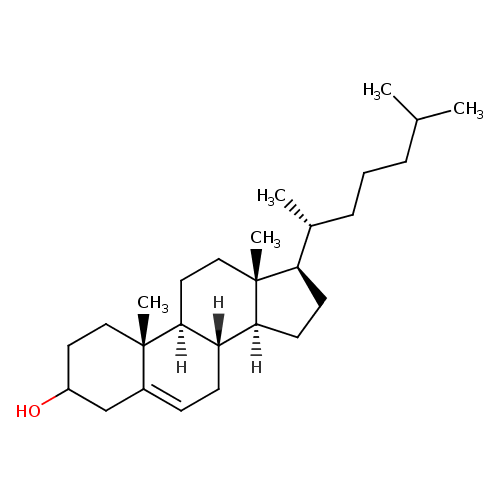
Cholesterol (CHEM003274)
| Record Information | |||||||||||||||||||||||||||||||||||||||||||||||||||||||||||||||||||||||||||||||
|---|---|---|---|---|---|---|---|---|---|---|---|---|---|---|---|---|---|---|---|---|---|---|---|---|---|---|---|---|---|---|---|---|---|---|---|---|---|---|---|---|---|---|---|---|---|---|---|---|---|---|---|---|---|---|---|---|---|---|---|---|---|---|---|---|---|---|---|---|---|---|---|---|---|---|---|---|---|---|---|
| Version | 1.0 | ||||||||||||||||||||||||||||||||||||||||||||||||||||||||||||||||||||||||||||||
| Creation Date | 2014-08-29 06:19:27 UTC | ||||||||||||||||||||||||||||||||||||||||||||||||||||||||||||||||||||||||||||||
| Update Date | 2026-04-17 17:48:12 UTC | ||||||||||||||||||||||||||||||||||||||||||||||||||||||||||||||||||||||||||||||
| Accession Number | CHEM003274 | ||||||||||||||||||||||||||||||||||||||||||||||||||||||||||||||||||||||||||||||
| Identification | |||||||||||||||||||||||||||||||||||||||||||||||||||||||||||||||||||||||||||||||
| Common Name | Cholesterol | ||||||||||||||||||||||||||||||||||||||||||||||||||||||||||||||||||||||||||||||
| Class | Small Molecule | ||||||||||||||||||||||||||||||||||||||||||||||||||||||||||||||||||||||||||||||
| Description | Cholesterol is a sterol (a combination steroid and alcohol) and a lipid found in the cell membranes of all body tissues, and transported in the blood plasma of all animals. The name originates from the Greek chole- (bile) and stereos (solid), and the chemical suffix -ol for an alcohol, as researchers first identified cholesterol in solid form in gallstones in 1784. In the body, cholesterol can exist in either the free form or as an ester with a single fatty acid (of 10-20 carbons in length) covalently attached to the hydroxyl group at position 3 of the cholesterol ring. Because of the mechanism of synthesis plasma cholesterol esters tend to contain relatively high proportions of polyunsaturated fatty acids. Most of the cholesterol consumed as a dietary lipid exists as cholesterol esters. Cholesterol esters have a lower solubility in water than cholesterol and are more hydrophobic. They are hydrolyzed by pancreatic enzymes, cholesterol esterase, to produce cholesterol and free fatty acids. Cholesterol has vital structural roles in membranes and in lipid metabolism in general. It is a biosynthetic precursor of bile acids, vitamin D and steroid hormones (glucocorticoids, estrogens, progesterones, androgens and aldosterone). In addition, it contributes to the development and working of the central nervous system, and it has major functions in signal transduction and sperm development. Cholesterol is a ubiquitous component of all animal tissues where much of it is located in the membranes, although it is not evenly distributed. The highest proportion of unesterified cholesterol is in the plasma membrane (roughly 30-50% of the lipid in the membrane or 60-80% of the cholesterol in the cell), while mitochondria and the endoplasmic reticulum have very low cholesterol contents. Cholesterol is also enriched in early and recycling endosomes, but not in late endosomes. The brain contains more cholesterol than any other organ, where it comprises roughly a quarter of the total free cholesterol in the human body. Of all the organic constituents of blood, only glucose is present in a higher molar concentration than cholesterol. Cholesterol esters appear to be the preferred form for transport in plasma and as a biologically inert storage (de-toxification) form. They do not contribute to membranes but are packed into intracellular lipid particles. Cholesterol molecules (i.e. cholesterol esters) are transported throughout the body via lipoprotein particles. The largest lipoproteins, which primarily transport fats from the intestinal mucosa to the liver, are called chylomicrons. They carry mostly triglyceride fats and cholesterol (that are from food and especially internal cholesterol secreted by the liver into the bile). In the liver, chylomicron particles give up triglycerides and some cholesterol, and are converted into low-density lipoprotein (LDL) particles, which carry triglycerides and cholesterol on to other body cells. In healthy individuals the LDL particles are large and relatively few in number. In contrast, large numbers of small LDL particles are strongly associated with promoting atheromatous disease within the arteries. (Lack of information on LDL particle number and size is one of the major problems of conventional lipid tests.). In conditions with elevated concentrations of oxidized LDL particles, especially small LDL particles, cholesterol promotes atheroma plaque deposits in the walls of arteries, a condition known as atherosclerosis, which is a major contributor to coronary heart disease and other forms of cardiovascular disease. There is a world-wide trend to believe that lower total cholesterol levels tend to correlate with lower atherosclerosis event rates (though some studies refute this idea). As a result, cholesterol has become a very large focus for the scientific community trying to determine the proper amount of cholesterol needed in a healthy diet. However, the primary association of atherosclerosis with cholesterol has always been specifically with cholesterol transport patterns, not total cholesterol per se. For example, total cholesterol can be low, yet made up primarily of small LDL and small HDL particles and atheroma growth rates are high. In contrast, however, if LDL particle number is low (mostly large particles) and a large percentage of the HDL particles are large (HDL is actively reverse transporting cholesterol), then atheroma growth rates are usually low, even negative, for any given total cholesterol concentration. These effects are further complicated by the relative concentration of asymmetric dimethylarginine (ADMA) in the endothelium, since ADMA down-regulates production of nitric oxide, a relaxant of the endothelium. Thus, high levels of ADMA, associated with highly oxidized levels of LDL, pose a heightened risk factor for vascular disease. | ||||||||||||||||||||||||||||||||||||||||||||||||||||||||||||||||||||||||||||||
| Contaminant Sources |
| ||||||||||||||||||||||||||||||||||||||||||||||||||||||||||||||||||||||||||||||
| Contaminant Type |
| ||||||||||||||||||||||||||||||||||||||||||||||||||||||||||||||||||||||||||||||
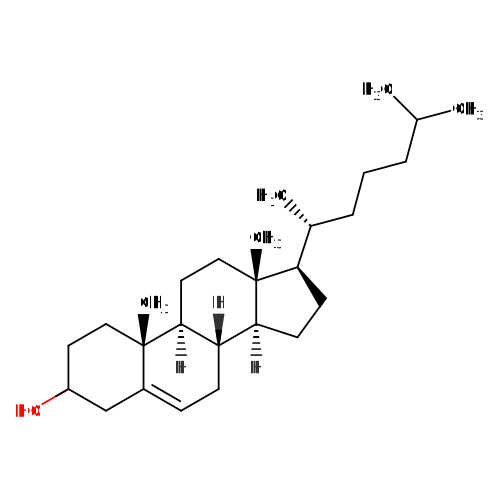
| Chemical Structure | |||||||||||||||||||||||||||||||||||||||||||||||||||||||||||||||||||||||||||||||
| Synonyms |
| ||||||||||||||||||||||||||||||||||||||||||||||||||||||||||||||||||||||||||||||
| Chemical Formula | C27H46O | ||||||||||||||||||||||||||||||||||||||||||||||||||||||||||||||||||||||||||||||
| Average Molecular Mass | 386.654 g/mol | ||||||||||||||||||||||||||||||||||||||||||||||||||||||||||||||||||||||||||||||
| Monoisotopic Mass | 386.355 g/mol | ||||||||||||||||||||||||||||||||||||||||||||||||||||||||||||||||||||||||||||||
| CAS Registry Number | 57-88-5 | ||||||||||||||||||||||||||||||||||||||||||||||||||||||||||||||||||||||||||||||
| IUPAC Name | (1S,2R,10S,11S,14R,15R)-2,15-dimethyl-14-[(2R)-6-methylheptan-2-yl]tetracyclo[8.7.0.0²,⁷.0¹¹,¹⁵]heptadec-7-en-5-ol | ||||||||||||||||||||||||||||||||||||||||||||||||||||||||||||||||||||||||||||||
| Traditional Name | cholest-5-en-3-ol | ||||||||||||||||||||||||||||||||||||||||||||||||||||||||||||||||||||||||||||||
| SMILES | [H][C@@]12CC[C@H]([C@H](C)CCCC(C)C)[C@@]1(C)CC[C@@]1([H])[C@@]2([H])CC=C2CC(O)CC[C@]12C | ||||||||||||||||||||||||||||||||||||||||||||||||||||||||||||||||||||||||||||||
| InChI Identifier | InChI=1S/C27H46O/c1-18(2)7-6-8-19(3)23-11-12-24-22-10-9-20-17-21(28)13-15-26(20,4)25(22)14-16-27(23,24)5/h9,18-19,21-25,28H,6-8,10-17H2,1-5H3/t19-,21?,22+,23-,24+,25+,26+,27-/m1/s1 | ||||||||||||||||||||||||||||||||||||||||||||||||||||||||||||||||||||||||||||||
| InChI Key | HVYWMOMLDIMFJA-FNOPAARDSA-N | ||||||||||||||||||||||||||||||||||||||||||||||||||||||||||||||||||||||||||||||
| Chemical Taxonomy | |||||||||||||||||||||||||||||||||||||||||||||||||||||||||||||||||||||||||||||||
| Description | belongs to the class of organic compounds known as cholesterols and derivatives. Cholesterols and derivatives are compounds containing a 3-hydroxylated cholestane core. | ||||||||||||||||||||||||||||||||||||||||||||||||||||||||||||||||||||||||||||||
| Kingdom | Organic compounds | ||||||||||||||||||||||||||||||||||||||||||||||||||||||||||||||||||||||||||||||
| Super Class | Lipids and lipid-like molecules | ||||||||||||||||||||||||||||||||||||||||||||||||||||||||||||||||||||||||||||||
| Class | Steroids and steroid derivatives | ||||||||||||||||||||||||||||||||||||||||||||||||||||||||||||||||||||||||||||||
| Sub Class | Cholestane steroids | ||||||||||||||||||||||||||||||||||||||||||||||||||||||||||||||||||||||||||||||
| Direct Parent | Cholesterols and derivatives | ||||||||||||||||||||||||||||||||||||||||||||||||||||||||||||||||||||||||||||||
| Alternative Parents | |||||||||||||||||||||||||||||||||||||||||||||||||||||||||||||||||||||||||||||||
| Substituents |
| ||||||||||||||||||||||||||||||||||||||||||||||||||||||||||||||||||||||||||||||
| Molecular Framework | Aliphatic homopolycyclic compounds | ||||||||||||||||||||||||||||||||||||||||||||||||||||||||||||||||||||||||||||||
| External Descriptors | Not Available | ||||||||||||||||||||||||||||||||||||||||||||||||||||||||||||||||||||||||||||||
| Biological Properties | |||||||||||||||||||||||||||||||||||||||||||||||||||||||||||||||||||||||||||||||
| Status | Detected and Not Quantified | ||||||||||||||||||||||||||||||||||||||||||||||||||||||||||||||||||||||||||||||
| Origin | Endogenous | ||||||||||||||||||||||||||||||||||||||||||||||||||||||||||||||||||||||||||||||
| Cellular Locations |
| ||||||||||||||||||||||||||||||||||||||||||||||||||||||||||||||||||||||||||||||
| Biofluid Locations | Not Available | ||||||||||||||||||||||||||||||||||||||||||||||||||||||||||||||||||||||||||||||
| Tissue Locations |
| ||||||||||||||||||||||||||||||||||||||||||||||||||||||||||||||||||||||||||||||
| Pathways |
| ||||||||||||||||||||||||||||||||||||||||||||||||||||||||||||||||||||||||||||||
| Applications | Not Available | ||||||||||||||||||||||||||||||||||||||||||||||||||||||||||||||||||||||||||||||
| Biological Roles | |||||||||||||||||||||||||||||||||||||||||||||||||||||||||||||||||||||||||||||||
| Chemical Roles | Not Available | ||||||||||||||||||||||||||||||||||||||||||||||||||||||||||||||||||||||||||||||
| Physical Properties | |||||||||||||||||||||||||||||||||||||||||||||||||||||||||||||||||||||||||||||||
| State | Solid | ||||||||||||||||||||||||||||||||||||||||||||||||||||||||||||||||||||||||||||||
| Appearance | White powder. | ||||||||||||||||||||||||||||||||||||||||||||||||||||||||||||||||||||||||||||||
| Experimental Properties |
| ||||||||||||||||||||||||||||||||||||||||||||||||||||||||||||||||||||||||||||||
| Predicted Properties |
| ||||||||||||||||||||||||||||||||||||||||||||||||||||||||||||||||||||||||||||||
| Spectra | |||||||||||||||||||||||||||||||||||||||||||||||||||||||||||||||||||||||||||||||
| Spectra |
| ||||||||||||||||||||||||||||||||||||||||||||||||||||||||||||||||||||||||||||||
| Toxicity Profile | |||||||||||||||||||||||||||||||||||||||||||||||||||||||||||||||||||||||||||||||
| Route of Exposure | Ingestion, endogenous production. | ||||||||||||||||||||||||||||||||||||||||||||||||||||||||||||||||||||||||||||||
| Mechanism of Toxicity | Cholesterol is essential for life. However, chronically high levels (from diet or from genetic predisposition or from diseases such as hyperlipidemia) of cholesterol and cholesterol esters lead to an excess of low-density lipoprotein (LDL) particles. In healthy individuals the LDL particles are large and relatively few in number. In contrast, large numbers of small LDL particles are strongly associated with promoting atheromatous disease within the arteries. In conditions with elevated concentrations of oxidized LDL particles, especially small LDL particles, cholesterol promotes atheroma plaque deposits in the walls of arteries, a condition known as atherosclerosis, which is a major contributor to coronary heart disease and other forms of cardiovascular disease. Resistin, a protein secreted by fat tissue, has been shown to increase the production of LDL in human liver cells and also degrades LDL receptors in the liver. As a result, the liver is less able to clear cholesterol from the bloodstream. Resistin accelerates the accumulation of LDL in arteries, increasing the risk of heart disease. | ||||||||||||||||||||||||||||||||||||||||||||||||||||||||||||||||||||||||||||||
| Metabolism | Cholesterol is not readily biodegradable and is primarily eliminated in the feces as bile acids. Only the liver possesses the enzymes to degrade significant amounts. Cholesterol and its oxidized metabolites (oxysterols) are transferred back from peripheral tissues in lipoprotein complexes to the liver for catabolism by conversion to oxysterols and bile acids. The latter are exported into the intestines to aid digestion. Until recently, it was believed that approximately 90% of cholesterol elimination from the body occurred via bile acids in humans. However, experiments with animal models now suggest that a significant amount is secreted directly into the intestines by a process known as trans-intestinal cholesterol efflux. | ||||||||||||||||||||||||||||||||||||||||||||||||||||||||||||||||||||||||||||||
| Toxicity Values | Not Available | ||||||||||||||||||||||||||||||||||||||||||||||||||||||||||||||||||||||||||||||
| Lethal Dose | Not Available | ||||||||||||||||||||||||||||||||||||||||||||||||||||||||||||||||||||||||||||||
| Carcinogenicity (IARC Classification) | 3, not classifiable as to its carcinogenicity to humans. (21) | ||||||||||||||||||||||||||||||||||||||||||||||||||||||||||||||||||||||||||||||
| Uses/Sources | Found in many foods (meats, eggs, milk, cheese, fish, shellfish) derived from animal products. Essential for membrane integrity. Used in steroid hormone synthesis. | ||||||||||||||||||||||||||||||||||||||||||||||||||||||||||||||||||||||||||||||
| Minimum Risk Level | Ideal plasma cholesterol (total free plust cholesterol ester) levels for adults should be <5200 uM or about <200 mg/dL. Chronically high values of >6200 uM (>240 mg/dL) are considered high risk and can lead to heart disease, atherosclerosis and stroke. The desirable LDL level is considered to be less than 100 mg/dL (2.6 mM) | ||||||||||||||||||||||||||||||||||||||||||||||||||||||||||||||||||||||||||||||
| Health Effects | High plasma levels lead to hyperlipidemia or hypercholesterolemia which over a long period of time can lead to athersoclerosis, heart disease, stroke, poor kidney function. Extremely low levels of cholesterol (hypocholesterolemia) can lead to depression, cancer and cerebral hemorrhage. Chronically high levels of cholesterol are associated with at least 5 inborn errors of metabolism including: Cerebrotendinous Xanthomatosis, Cholesteryl ester storage disease, Congenital Lipoid Adrenal Hyperplasia, Hypercholesterolemia and Zellweger syndrome. | ||||||||||||||||||||||||||||||||||||||||||||||||||||||||||||||||||||||||||||||
| Symptoms | There are no visible symptoms of high serum cholesterol. The following are symptoms of cardiovascular diseases: shortness of breath, chest pain, pain or weakness in legs or arms, pain in the neck, jaw, throat, upper abdomen, poor exercise tolerance, atherosclerotic plaques. | ||||||||||||||||||||||||||||||||||||||||||||||||||||||||||||||||||||||||||||||
| Treatment | Cardiologists recommend that individuals 20 or older should be screened for high cholesterol at least once every five years, with more frequent screenings for anyone deemed to be at high risk for heart disease. The USDA recommends that those wishing to reduce their cholesterol through a change in diet should aim to consume less than 7% of their daily energy needs from saturated fat and fewer than 200 mg of cholesterol per day. Statin drugs (which are HMG-CoA reductase inhibitors) are effective at reducing the amount of cholesterol produced in the liver. The National Institute for Health and Clinical Excellence (NICE) recommends statin treatment for adults with an estimated 10-year risk of developing cardiovascular disease that is greater than 20%. Several types of cholesterol-lowering medication are available, including niacin, bile acid resins, dietary fiber, psyllium and fibrates. But statins are the treatment of choice for most individuals. | ||||||||||||||||||||||||||||||||||||||||||||||||||||||||||||||||||||||||||||||
| Concentrations | |||||||||||||||||||||||||||||||||||||||||||||||||||||||||||||||||||||||||||||||
| Not Available | |||||||||||||||||||||||||||||||||||||||||||||||||||||||||||||||||||||||||||||||
| External Links | |||||||||||||||||||||||||||||||||||||||||||||||||||||||||||||||||||||||||||||||
| DrugBank ID | Not Available | ||||||||||||||||||||||||||||||||||||||||||||||||||||||||||||||||||||||||||||||
| HMDB ID | Not Available | ||||||||||||||||||||||||||||||||||||||||||||||||||||||||||||||||||||||||||||||
| FooDB ID | Not Available | ||||||||||||||||||||||||||||||||||||||||||||||||||||||||||||||||||||||||||||||
| Phenol Explorer ID | Not Available | ||||||||||||||||||||||||||||||||||||||||||||||||||||||||||||||||||||||||||||||
| KNApSAcK ID | Not Available | ||||||||||||||||||||||||||||||||||||||||||||||||||||||||||||||||||||||||||||||
| BiGG ID | Not Available | ||||||||||||||||||||||||||||||||||||||||||||||||||||||||||||||||||||||||||||||
| BioCyc ID | Not Available | ||||||||||||||||||||||||||||||||||||||||||||||||||||||||||||||||||||||||||||||
| METLIN ID | Not Available | ||||||||||||||||||||||||||||||||||||||||||||||||||||||||||||||||||||||||||||||
| PDB ID | Not Available | ||||||||||||||||||||||||||||||||||||||||||||||||||||||||||||||||||||||||||||||
| Wikipedia Link | Cholesterol | ||||||||||||||||||||||||||||||||||||||||||||||||||||||||||||||||||||||||||||||
| Chemspider ID | Not Available | ||||||||||||||||||||||||||||||||||||||||||||||||||||||||||||||||||||||||||||||
| ChEBI ID | Not Available | ||||||||||||||||||||||||||||||||||||||||||||||||||||||||||||||||||||||||||||||
| PubChem Compound ID | 11025495 | ||||||||||||||||||||||||||||||||||||||||||||||||||||||||||||||||||||||||||||||
| Kegg Compound ID | Not Available | ||||||||||||||||||||||||||||||||||||||||||||||||||||||||||||||||||||||||||||||
| YMDB ID | YMDB00313 | ||||||||||||||||||||||||||||||||||||||||||||||||||||||||||||||||||||||||||||||
| ECMDB ID | Not Available | ||||||||||||||||||||||||||||||||||||||||||||||||||||||||||||||||||||||||||||||
| References | |||||||||||||||||||||||||||||||||||||||||||||||||||||||||||||||||||||||||||||||
| Synthesis Reference | Tatu Miettenen, Ingmar Wester, Hannu Vanhanen, “Substance for lowering high cholesterol level in serum and methods for preparing and using the same.” U.S. Patent US6174560, issued February, 1944. | ||||||||||||||||||||||||||||||||||||||||||||||||||||||||||||||||||||||||||||||

| MSDS | Link | ||||||||||||||||||||||||||||||||||||||||||||||||||||||||||||||||||||||||||||||
| General References | |||||||||||||||||||||||||||||||||||||||||||||||||||||||||||||||||||||||||||||||