Record Information
Version1.0
Creation Date2014-08-29 06:17:27 UTC
Update Date2026-05-14 19:58:19 UTC
Accession NumberCHEM003263
Identification
Common Name3-Hydroxybutyric acid
ClassSmall Molecule
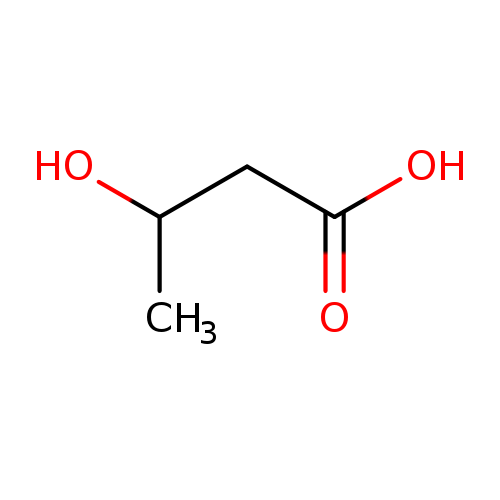
Description3-Hydroxybutyric acid (or beta-hydroxybutyrate) is a ketone body. Like the other ketone bodies (acetoacetate and acetone), levels of 3-hydroxybutyrate in blood and urine are raised in ketosis. In humans, 3-hydroxybutyrate is synthesized in the liver from acetyl-CoA, and can be used as an energy source by the brain when blood glucose is low. Blood levels of 3-Hydroxybutyric acid levels may be monitored in diabetic patients to look for diabetic ketoacidosis. Persistent mild hyperketonemia is a common finding in newborns. Ketone bodies serve as an indispensable source of energy for extrahepatic tissues, especially the brain and lung of developing mammals. Another important function of ketone bodies is to provide acetoacetyl-CoA and acetyl-CoA for synthesis of cholesterol, fatty acids, and complex lipids. During the early postnatal period, acetoacetate (AcAc) and beta-hydroxybutyrate are preferred over glucose as substrates for synthesis of phospholipids and sphingolipids in accord with requirements for brain growth and myelination. Thus, during the first 2 weeks of postnatal development, when the accumulation of cholesterol and phospholipids accelerates, the proportion of ketone bodies incorporated into these lipids increases. On the other hand, an increased proportion of ketone bodies is utilized for cerebroside synthesis during the period of active myelination. In the lung, AcAc serves better than glucose as a precursor for the synthesis of lung phospholipids. The synthesized lipids, particularly dipalmityl phosphatidylcholine, are incorporated into surfactant, and thus have a potential role in supplying adequate surfactant lipids to maintain lung function during the early days of life. (1).
Contaminant Sources
  • FooDB Chemicals
  • HMDB Contaminants - Feces
  • HMDB Contaminants - Urine
  • T3DB toxins
Contaminant Type
  • Animal Toxin
  • Food Toxin
  • Mammal Toxin
  • Metabolite
  • Natural Compound
  • Organic Compound
Chemical Structure
Thumb
Synonyms
ValueSource
(1)-3-Hydroxybutyric acidChEBI
3 HBAChEBI
3-HydroxybuttersaeureChEBI
3-OH-Butyric acidChEBI
beta-Hydroxy-N-butyric acidChEBI
beta-Hydroxybutanoic acidChEBI
beta-HydroxybuttersaeureChEBI
beta-Hydroxybutyric acidChEBI
BHBAChEBI
DL-beta-Hydroxybutyric acidChEBI
(1)-3-HydroxybutyrateGenerator
3-OH-ButyrateGenerator
b-Hydroxy-N-butyrateGenerator
b-Hydroxy-N-butyric acidGenerator
beta-Hydroxy-N-butyrateGenerator
Β-hydroxy-N-butyrateGenerator
Β-hydroxy-N-butyric acidGenerator
b-HydroxybutanoateGenerator
b-Hydroxybutanoic acidGenerator
beta-HydroxybutanoateGenerator
Β-hydroxybutanoateGenerator
Β-hydroxybutanoic acidGenerator
b-HydroxybuttersaeureGenerator
Β-hydroxybuttersaeureGenerator
b-HydroxybutyrateGenerator
b-Hydroxybutyric acidGenerator
beta-HydroxybutyrateGenerator
Β-hydroxybutyrateGenerator
Β-hydroxybutyric acidGenerator
DL-b-HydroxybutyrateGenerator
DL-b-Hydroxybutyric acidGenerator
DL-beta-HydroxybutyrateGenerator
DL-Β-hydroxybutyrateGenerator
DL-Β-hydroxybutyric acidGenerator
3-HydroxybutyrateGenerator
3-Hydroxy-butanoateHMDB
3-Hydroxy-butanoic acidHMDB
3-Hydroxy-butyrateHMDB
3-Hydroxy-butyric acidHMDB
3-HydroxybutanoateHMDB
3-Hydroxybutanoic acidHMDB
BiopolHMDB
DL-3-HydroxybutyrateHMDB
DL-3-Hydroxybutyric acidHMDB
beta Hydroxybutyric acidHMDB
3 Hydroxybutyric acidHMDB
beta HydroxybutyrateHMDB
(+ -)-3-Hydroxybutyric acidHMDB
3 HydroxybutyrateHMDB
Chemical FormulaC4H8O3
Average Molecular Mass104.105 g/mol
Monoisotopic Mass104.047 g/mol
CAS Registry Number300-85-6
IUPAC Name3-hydroxybutanoic acid
Traditional Name3 hydroxybutyrate
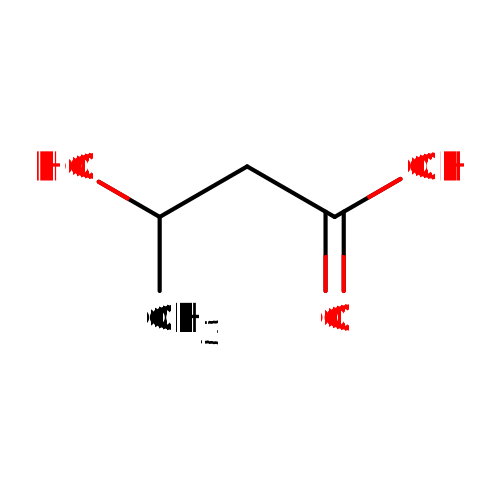
SMILESCC(O)CC(O)=O
InChI IdentifierInChI=1S/C4H8O3/c1-3(5)2-4(6)7/h3,5H,2H2,1H3,(H,6,7)
InChI KeyWHBMMWSBFZVSSR-UHFFFAOYSA-N
Chemical Taxonomy
Description belongs to the class of organic compounds known as beta hydroxy acids and derivatives. Beta hydroxy acids and derivatives are compounds containing a carboxylic acid substituted with a hydroxyl group on the C3 carbon atom.
KingdomOrganic compounds
Super ClassOrganic acids and derivatives
ClassHydroxy acids and derivatives
Sub ClassBeta hydroxy acids and derivatives
Direct ParentBeta hydroxy acids and derivatives
Alternative Parents
Substituents
  • Short-chain hydroxy acid
  • Beta-hydroxy acid
  • Fatty acid
  • Secondary alcohol
  • Monocarboxylic acid or derivatives
  • Carboxylic acid
  • Carboxylic acid derivative
  • Organic oxygen compound
  • Organic oxide
  • Hydrocarbon derivative
  • Organooxygen compound
  • Carbonyl group
  • Alcohol
  • Aliphatic acyclic compound
Molecular FrameworkAliphatic acyclic compounds
External Descriptors
Biological Properties
StatusDetected and Not Quantified
OriginEndogenous
Cellular Locations
  • Cytoplasm
  • Extracellular
Biofluid LocationsNot Available
Tissue Locations
  • Brain
  • Liver
  • Neuron
Pathways
NameSMPDB LinkKEGG Link
Fatty Acid BiosynthesisSMP00456 map00061
Beta-Ketothiolase DeficiencySMP00173 Not Available
Biotinidase DeficiencySMP00174 Not Available
Glutaric Aciduria Type ISMP00185 Not Available
Isovaleric AciduriaSMP00238 Not Available
ApplicationsNot Available
Biological Roles
Chemical RolesNot Available
Physical Properties
StateSolid
AppearanceWhite powder.
Experimental Properties
PropertyValue
Melting Point46°C
Boiling PointNot Available
Solubility444 mg/mL
Predicted Properties
PropertyValueSource
Water Solubility539 g/LALOGPS
logP-0.5ALOGPS
logP-0.39ChemAxon
logS0.71ALOGPS
pKa (Strongest Acidic)4.41ChemAxon
pKa (Strongest Basic)-2.6ChemAxon
Physiological Charge-1ChemAxon
Hydrogen Acceptor Count3ChemAxon
Hydrogen Donor Count2ChemAxon
Polar Surface Area57.53 ŲChemAxon
Rotatable Bond Count2ChemAxon
Refractivity23.46 m³·mol⁻¹ChemAxon
Polarizability10.01 ųChemAxon
Number of Rings0ChemAxon
Bioavailability1ChemAxon
Rule of FiveYesChemAxon
Ghose FilterNoChemAxon
Veber's RuleNoChemAxon
MDDR-like RuleNoChemAxon
Spectra
Spectra
Spectrum TypeDescriptionSplash KeyView
GC-MSGC-MS Spectrum - GC-EI-TOF (Pegasus III TOF-MS system, Leco; GC 6890, Agilent Technologies) (Non-derivatized)splash10-0002-0900000000-92be5c49a099fe1d9865Spectrum
GC-MSGC-MS Spectrum - GC-EI-TOF (Pegasus III TOF-MS system, Leco; GC 6890, Agilent Technologies) (Non-derivatized)splash10-01ot-1920000000-c93138bf9d35643fef30Spectrum
GC-MSGC-MS Spectrum - GC-EI-TOF (Pegasus III TOF-MS system, Leco; GC 6890, Agilent Technologies) (2 TMS)splash10-00dj-8900000000-e632e14fb4be28bdb786Spectrum
GC-MSGC-MS Spectrum - GC-MS (2 TMS)splash10-014l-1900000000-e192caba63f034040624Spectrum
GC-MSGC-MS Spectrum - GC-EI-TOF (Non-derivatized)splash10-0002-0900000000-92be5c49a099fe1d9865Spectrum
GC-MSGC-MS Spectrum - GC-EI-TOF (Non-derivatized)splash10-01ot-1920000000-c93138bf9d35643fef30Spectrum
GC-MSGC-MS Spectrum - GC-EI-TOF (Non-derivatized)splash10-00dj-8900000000-e632e14fb4be28bdb786Spectrum
GC-MSGC-MS Spectrum - GC-MS (Non-derivatized)splash10-014l-1900000000-e192caba63f034040624Spectrum
GC-MSGC-MS Spectrum - GC-EI-TOF (Non-derivatized)splash10-0002-0900000000-d06c5ac1a3733a38ea05Spectrum
Predicted GC-MSPredicted GC-MS Spectrum - GC-MS (Non-derivatized) - 70eV, Positivesplash10-0007-9000000000-63f261a4dc876e264246Spectrum
Predicted GC-MSPredicted GC-MS Spectrum - GC-MS (2 TMS) - 70eV, Positivesplash10-01ei-9710000000-2652bd46b41e50defdb0Spectrum
LC-MS/MSLC-MS/MS Spectrum - Quattro_QQQ 10V, Negative (Annotated)splash10-0a4i-9200000000-4156904e7472b5e97249Spectrum
LC-MS/MSLC-MS/MS Spectrum - Quattro_QQQ 25V, Negative (Annotated)splash10-0a4i-9300000000-505ae46abb0c49c78b1eSpectrum
LC-MS/MSLC-MS/MS Spectrum - Quattro_QQQ 40V, Negative (Annotated)splash10-0zfr-9600000000-dfed69c37c1a4d794440Spectrum
LC-MS/MSLC-MS/MS Spectrum - LC-ESI-QTOF (UPLC Q-Tof Premier, Waters) , Negativesplash10-0zfr-4900000000-537084557f5986f16b31Spectrum
LC-MS/MSLC-MS/MS Spectrum - LC-ESI-QTOF , negativesplash10-0zfr-4900000000-537084557f5986f16b31Spectrum
LC-MS/MSLC-MS/MS Spectrum - LC-ESI-IT , positivesplash10-000i-9000000000-7f0ec480b3c3c3911acdSpectrum
Predicted LC-MS/MSPredicted LC-MS/MS Spectrum - 10V, Positivesplash10-00kr-9100000000-05c4623b015ff4300a6dSpectrum
Predicted LC-MS/MSPredicted LC-MS/MS Spectrum - 20V, Positivesplash10-05n0-9000000000-cbe0653845ffe4dc6ad4Spectrum
Predicted LC-MS/MSPredicted LC-MS/MS Spectrum - 40V, Positivesplash10-0006-9000000000-e55d47308c7464e4cb22Spectrum
Predicted LC-MS/MSPredicted LC-MS/MS Spectrum - 10V, Negativesplash10-0zfr-8900000000-06dfbf939f6d19983ebeSpectrum
Predicted LC-MS/MSPredicted LC-MS/MS Spectrum - 20V, Negativesplash10-0pb9-9200000000-48b6e9b8656d41bff9cfSpectrum
Predicted LC-MS/MSPredicted LC-MS/MS Spectrum - 40V, Negativesplash10-0a4l-9000000000-f7d61596ff4428fe6b09Spectrum
MSMass Spectrum (Electron Ionization)splash10-0007-9000000000-7fc414806153ebd8822cSpectrum
1D NMR13C NMR SpectrumNot AvailableSpectrum
1D NMR1H NMR SpectrumNot AvailableSpectrum
2D NMR[1H,1H] 2D NMR SpectrumNot AvailableSpectrum
2D NMR[1H,13C] 2D NMR SpectrumNot AvailableSpectrum
Toxicity Profile
Route of ExposureNot Available
Mechanism of ToxicityNot Available
MetabolismNot Available
Toxicity ValuesNot Available
Lethal DoseNot Available
Carcinogenicity (IARC Classification)No indication of carcinogenicity to humans (not listed by IARC).
Uses/SourcesThis is an endogenously produced metabolite found in the human body. It is used in metabolic reactions, catabolic reactions or waste generation.
Minimum Risk LevelNot Available
Health EffectsNot Available
SymptomsNot Available
TreatmentNot Available
Concentrations
Not Available
DrugBank IDNot Available
HMDB IDHMDB0000357
FooDB IDFDB021797
Phenol Explorer IDNot Available
KNApSAcK IDNot Available
BiGG IDNot Available
BioCyc IDNot Available
METLIN ID125
PDB IDNot Available
Wikipedia Link3-hydroxybutyrate
Chemspider ID428
ChEBI ID20067
PubChem Compound ID441
Kegg Compound IDC01089
YMDB IDYMDB01561
ECMDB IDECMDB21418
References
Synthesis ReferenceYang, Wenling; Ma, Peisheng; Wang, Jianing; Wang, Chunfang; Li, Haixia. Study on the process of chemical synthesis of 3-hydroxybutyric acid. Huaxue Gongcheng (Xi'an, China) (2002), 30(5), 74-78.
MSDSLink
General References
1. Yang, Wenling; Ma, Peisheng; Wang, Jianing; Wang, Chunfang; Li, Haixia. Study on the process of chemical synthesis of 3-hydroxybutyric acid. Huaxue Gongcheng (Xi'an, China) (2002), 30(5), 74-78.
2. Enjalbert F, Nicot MC, Bayourthe C, Moncoulon R: Ketone bodies in milk and blood of dairy cows: relationship between concentrations and utilization for detection of subclinical ketosis. J Dairy Sci. 2001 Mar;84(3):583-9. doi: 10.3168/jds.S0022-0302(01)74511-0.
3. Nielsen NI, Ingvartsen KL, Larsen T: Diurnal variation and the effect of feed restriction on plasma and milk metabolites in TMR-fed dairy cows. J Vet Med A Physiol Pathol Clin Med. 2003 Mar;50(2):88-97.
4. Larsen T, Nielsen NI: Fluorometric determination of beta-hydroxybutyrate in milk and blood plasma. J Dairy Sci. 2005 Jun;88(6):2004-9. doi: 10.3168/jds.S0022-0302(05)72876-9.
5. Klein MS, Almstetter MF, Schlamberger G, Nurnberger N, Dettmer K, Oefner PJ, Meyer HH, Wiedemann S, Gronwald W: Nuclear magnetic resonance and mass spectrometry-based milk metabolomics in dairy cows during early and late lactation. J Dairy Sci. 2010 Apr;93(4):1539-50. doi: 10.3168/jds.2009-2563.
6. Klein MS, Buttchereit N, Miemczyk SP, Immervoll AK, Louis C, Wiedemann S, Junge W, Thaller G, Oefner PJ, Gronwald W: NMR metabolomic analysis of dairy cows reveals milk glycerophosphocholine to phosphocholine ratio as prognostic biomarker for risk of ketosis. J Proteome Res. 2012 Feb 3;11(2):1373-81. doi: 10.1021/pr201017n. Epub 2011 Dec 9.
7. Melzer N, Wittenburg D, Hartwig S, Jakubowski S, Kesting U, Willmitzer L, Lisec J, Reinsch N, Repsilber D: Investigating associations between milk metabolite profiles and milk traits of Holstein cows. J Dairy Sci. 2013 Mar;96(3):1521-34. doi: 10.3168/jds.2012-5743.
8. Sundekilde UK, Poulsen NA, Larsen LB, Bertram HC: Nuclear magnetic resonance metabonomics reveals strong association between milk metabolites and somatic cell count in bovine milk. J Dairy Sci. 2013 Jan;96(1):290-9. doi: 10.3168/jds.2012-5819. Epub 2012 Nov 22.
9. Buitenhuis AJ, Sundekilde UK, Poulsen NA, Bertram HC, Larsen LB, Sorensen P: Estimation of genetic parameters and detection of quantitative trait loci for metabolites in Danish Holstein milk. J Dairy Sci. 2013 May;96(5):3285-95. doi: 10.3168/jds.2012-5914. Epub 2013 Mar 15.
10. Lu J, Antunes Fernandes E, Paez Cano AE, Vinitwatanakhun J, Boeren S, van Hooijdonk T, van Knegsel A, Vervoort J, Hettinga KA: Changes in milk proteome and metabolome associated with dry period length, energy balance, and lactation stage in postparturient dairy cows. J Proteome Res. 2013 Jul 5;12(7):3288-96. doi: 10.1021/pr4001306. Epub 2013 Jun 5.
11. Qian L, Zhao A, Zhang Y, Chen T, Zeisel SH, Jia W, Cai W: Metabolomic Approaches to Explore Chemical Diversity of Human Breast-Milk, Formula Milk and Bovine Milk. Int J Mol Sci. 2016 Dec 17;17(12). pii: ijms17122128. doi: 10.3390/ijms17122128.
12. O'Callaghan TF, Vazquez-Fresno R, Serra-Cayuela A, Dong E, Mandal R, Hennessy D, McAuliffe S, Dillon P, Wishart DS, Stanton C, Ross RP: Pasture Feeding Changes the Bovine Rumen and Milk Metabolome. Metabolites. 2018 Apr 6;8(2). pii: metabo8020027. doi: 10.3390/metabo8020027.
13. Kurt J. Boudonck, Matthew W. Mitchell, Jacob Wulff and John A. Ryals. Characterization of the biochemical variability of bovine milk using metabolomics. Metabolomics (2009) 5:375?386
14. A. Foroutan et al. The Chemical Composition of Commercial Cow's Milk (in preparation)
15. Yang, Wenling; Ma, Peisheng; Wang, Jianing; Wang, Chunfang; Li, Haixia. Study on the process of chemical synthesis of 3-hydroxybutyric acid. Huaxue Gongcheng (Xi'an, China) (2002), 30(5), 74-78.
16. Zupke C, Sinskey AJ, Stephanopoulos G: Intracellular flux analysis applied to the effect of dissolved oxygen on hybridomas. Appl Microbiol Biotechnol. 1995 Dec;44(1-2):27-36.
17. Pan JW, Telang FW, Lee JH, de Graaf RA, Rothman DL, Stein DT, Hetherington HP: Measurement of beta-hydroxybutyrate in acute hyperketonemia in human brain. J Neurochem. 2001 Nov;79(3):539-44.
18. Redjems-Bennani N, Jeandel C, Lefebvre E, Blain H, Vidailhet M, Gueant JL: Abnormal substrate levels that depend upon mitochondrial function in cerebrospinal fluid from Alzheimer patients. Gerontology. 1998;44(5):300-4.
19. Abrahamsson K, Eriksson BO, Holme E, Jodal U, Jonsson A, Lindstedt S: Pivalic acid-induced carnitine deficiency and physical exercise in humans. Metabolism. 1996 Dec;45(12):1501-7.
20. Teresinski G, Buszewicz G, Madro R: The influence of ethanol on the level of ketone bodies in hypothermia. Forensic Sci Int. 2002 Jun 25;127(1-2):88-96.
21. Nalecz KA, Miecz D, Berezowski V, Cecchelli R: Carnitine: transport and physiological functions in the brain. Mol Aspects Med. 2004 Oct-Dec;25(5-6):551-67.
22. Plecko B, Stoeckler-Ipsiroglu S, Schober E, Harrer G, Mlynarik V, Gruber S, Moser E, Moeslinger D, Silgoner H, Ipsiroglu O: Oral beta-hydroxybutyrate supplementation in two patients with hyperinsulinemic hypoglycemia: monitoring of beta-hydroxybutyrate levels in blood and cerebrospinal fluid, and in the brain by in vivo magnetic resonance spectroscopy. Pediatr Res. 2002 Aug;52(2):301-6.
23. Shoemaker JD, Elliott WH: Automated screening of urine samples for carbohydrates, organic and amino acids after treatment with urease. J Chromatogr. 1991 Jan 2;562(1-2):125-38.
24. Blomqvist G, Alvarsson M, Grill V, Von Heijne G, Ingvar M, Thorell JO, Stone-Elander S, Widen L, Ekberg K: Effect of acute hyperketonemia on the cerebral uptake of ketone bodies in nondiabetic subjects and IDDM patients. Am J Physiol Endocrinol Metab. 2002 Jul;283(1):E20-8.
25. Krotkiewski M: Value of VLCD supplementation with medium chain triglycerides. Int J Obes Relat Metab Disord. 2001 Sep;25(9):1393-400.
26. Kamijo T, Indo Y, Souri M, Aoyama T, Hara T, Yamamoto S, Ushikubo S, Rinaldo P, Matsuda I, Komiyama A, Hashimoto T: Medium chain 3-ketoacyl-coenzyme A thiolase deficiency: a new disorder of mitochondrial fatty acid beta-oxidation. Pediatr Res. 1997 Nov;42(5):569-76.
27. Geary N, Grotschel H, Scharrer E: Blood metabolites and feeding during postinsulin hypophagia. Am J Physiol. 1982 Sep;243(3):R304-11.
28. Hoffmann GF, Meier-Augenstein W, Stockler S, Surtees R, Rating D, Nyhan WL: Physiology and pathophysiology of organic acids in cerebrospinal fluid. J Inherit Metab Dis. 1993;16(4):648-69.
29. Pan JW, Rothman TL, Behar KL, Stein DT, Hetherington HP: Human brain beta-hydroxybutyrate and lactate increase in fasting-induced ketosis. J Cereb Blood Flow Metab. 2000 Oct;20(10):1502-7.
30. Frenkel G, Peterson RN, Freund M: Oxidative and glycolytic metabolism of semen components by washed guinea pig spermatozoa. Fertil Steril. 1975 Feb;26(2):144-7.
31. Yeh YY, Sheehan PM: Preferential utilization of ketone bodies in the brain and lung of newborn rats. Fed Proc. 1985 Apr;44(7):2352-8.
32. Kita K, Ishimaru K, Teraoka M, Yanase H, Kato N: Properties of poly(3-hydroxybutyrate) depolymerase from a marine bacterium, Alcaligenes faecalis AE122. Appl Environ Microbiol. 1995 May;61(5):1727-30.
33. Kim BS, Lee SC, Lee SY, Chang HN, Chang YK, Woo SI: Production of poly(3-hydroxybutyric acid) by fed-batch culture of Alcaligenes eutrophus with glucose concentration control. Biotechnol Bioeng. 1994 Apr 15;43(9):892-8. doi: 10.1002/bit.260430908.
34. Elshenawy S, Pinney SE, Stuart T, Doulias PT, Zura G, Parry S, Elovitz MA, Bennett MJ, Bansal A, Strauss JF 3rd, Ischiropoulos H, Simmons RA: The Metabolomic Signature of the Placenta in Spontaneous Preterm Birth. Int J Mol Sci. 2020 Feb 4;21(3). pii: ijms21031043. doi: 10.3390/ijms21031043.
35. https://www.ncbi.nlm.nih.gov/pubmed/?term=10855969
36. https://www.ncbi.nlm.nih.gov/pubmed/?term=17190852
37. https://www.ncbi.nlm.nih.gov/pubmed/?term=17579249
38. https://www.ncbi.nlm.nih.gov/pubmed/?term=6061736