Record Information
Version1.0
Creation Date2014-08-29 06:16:44 UTC
Update Date2026-05-14 16:24:14 UTC
Accession NumberCHEM003256
Identification
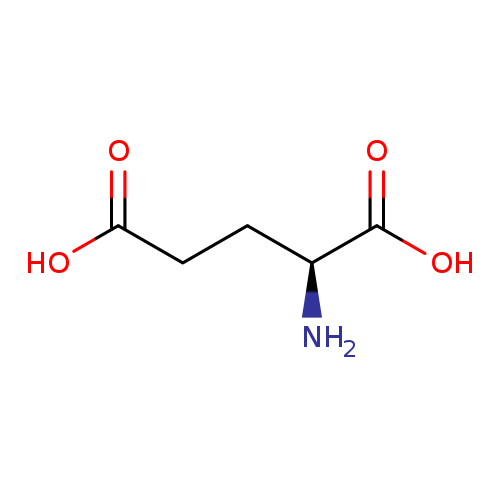
Common NameL-Glutamic acid
ClassSmall Molecule
DescriptionGlutamic acid (Glu), also referred to as glutamate (the anion), is one of the 20 proteinogenic amino acids. It is not among the essential amino acids. Glutamate is a key molecule in cellular metabolism. In humans, dietary proteins are broken down by digestion into amino acids, which serves as metabolic fuel or other functional roles in the body. Glutamate is the most abundant fast excitatory neurotransmitter in the mammalian nervous system. At chemical synapses, glutamate is stored in vesicles. Nerve impulses trigger release of glutamate from the pre-synaptic cell. In the opposing post-synaptic cell, glutamate receptors, such as the NMDA receptor, bind glutamate and are activated. Because of its role in synaptic plasticity, it is believed that glutamic acid is involved in cognitive functions like learning and memory in the brain. Glutamate transporters are found in neuronal and glial membranes. They rapidly remove glutamate from the extracellular space. In brain injury or disease, they can work in reverse and excess glutamate can accumulate outside cells. This process causes calcium ions to enter cells via NMDA receptor channels, leading to neuronal damage and eventual cell death, and is called excitotoxicity. The mechanisms of cell death include: * Damage to mitochondria from excessively high intracellular Ca2+. * Glu/Ca2+-mediated promotion of transcription factors for pro-apoptotic genes, or downregulation of transcription factors for anti-apoptotic genes. Excitotoxicity due to glutamate occurs as part of the ischemic cascade and is associated with stroke and diseases like amyotrophic lateral sclerosis, lathyrism, and Alzheimer's disease. glutamic acid has been implicated in epileptic seizures. Microinjection of glutamic acid into neurons produces spontaneous depolarization around one second apart, and this firing pattern is similar to what is known as paroxysmal depolarizing shift in epileptic attacks. This change in the resting membrane potential at seizure foci could cause spontaneous opening of voltage activated calcium channels, leading to glutamic acid release and further depolarization.
Contaminant Sources
  • EAFUS Chemicals
  • FooDB Chemicals
  • HMDB Contaminants - Feces
  • HMDB Contaminants - Urine
  • HPV EPA Chemicals
  • OECD HPV Chemicals
  • STOFF IDENT Compounds
  • T3DB toxins
  • ToxCast & Tox21 Chemicals
Contaminant Type
  • Amine
  • Animal Toxin
  • Dietary Supplement
  • Drug
  • Food Toxin
  • Household Toxin
  • Metabolite
  • Micronutrient
  • Natural Compound
  • Non-Essential Amino Acid
  • Nutraceutical
  • Organic Compound
  • Supplement
Chemical Structure
Thumb
Synonyms
ValueSource
(S)-2-Aminopentanedioic acidChEBI
(S)-Glutamic acidChEBI
Acide glutamiqueChEBI
Acido glutamicoChEBI
Acidum glutamicumChEBI
EChEBI
GluChEBI
GlutamateChEBI
GLUTAMIC ACIDChEBI
L-GluChEBI
L-Glutaminic acidChEBI
L-GlutaminsaeureChEBI
(S)-2-AminopentanedioateGenerator
(S)-GlutamateGenerator
L-GlutaminateGenerator
L-GlutamateGenerator
D-GlutamateMeSH
L GlutamateMeSH
L Glutamic acidMeSH
Aluminum L glutamateMeSH
Aluminum L-glutamateMeSH
Potassium glutamateMeSH
D GlutamateMeSH
Glutamate, potassiumMeSH
Glutamic acid, (D)-isomerMeSH
L-Glutamate, aluminumMeSH
(2S)-2-AminopentanedioateHMDB
(2S)-2-Aminopentanedioic acidHMDB
(S)-(+)-GlutamateHMDB
(S)-(+)-Glutamic acidHMDB
1-amino-Propane-1,3-dicarboxylateHMDB
1-amino-Propane-1,3-dicarboxylic acidHMDB
1-Aminopropane-1,3-dicarboxylateHMDB
1-Aminopropane-1,3-dicarboxylic acidHMDB
2-AminoglutarateHMDB
2-Aminoglutaric acidHMDB
2-AminopentanedioateHMDB
2-Aminopentanedioic acidHMDB
a-AminoglutarateHMDB
a-Aminoglutaric acidHMDB
a-GlutamateHMDB
a-Glutamic acidHMDB
AciglutHMDB
alpha-AminoglutarateHMDB
alpha-Aminoglutaric acidHMDB
alpha-GlutamateHMDB
alpha-Glutamic acidHMDB
AminoglutarateHMDB
Aminoglutaric acidHMDB
GltHMDB
GlusateHMDB
GlutHMDB
GlutacidHMDB
GlutamicolHMDB
GlutamidexHMDB
GlutaminateHMDB
Glutaminic acidHMDB
GlutaminolHMDB
GlutatonHMDB
L-(+)-GlutamateHMDB
L-(+)-Glutamic acidHMDB
L-a-AminoglutarateHMDB
L-a-Aminoglutaric acidHMDB
L-alpha-AminoglutarateHMDB
L-alpha-Aminoglutaric acidHMDB
2-Acetamido-2-deoxy-D-glucoseHMDB
D-GlcNAcHMDB
N-Acetyl-D-glucosamineHMDB
N-AcetylchitosamineHMDB
N Acetyl D glucosamineHMDB
2 Acetamido 2 deoxy D glucoseHMDB
2 Acetamido 2 deoxyglucoseHMDB
2-Acetamido-2-deoxyglucoseHMDB
AcetylglucosamineHMDB
3alpha,7alpha,12alpha-Trihydroxy-5beta-cholan-24-oylglycineHMDB
N-[(3alpha,5beta,7alpha,12alpha)-3,7,12-Trihydroxy-24-oxocholan-24-yl]glycineHMDB
N-CholoylglycineHMDB
3a,7a,12a-Trihydroxy-5b-cholan-24-oylglycineHMDB
3Α,7α,12α-trihydroxy-5β-cholan-24-oylglycineHMDB
N-[(3a,5b,7a,12a)-3,7,12-Trihydroxy-24-oxocholan-24-yl]glycineHMDB
N-[(3Α,5β,7α,12α)-3,7,12-trihydroxy-24-oxocholan-24-yl]glycineHMDB
GlycocholateHMDB
Glycine cholateHMDB
Glycocholic acid, sodium saltHMDB
CholylglycineHMDB
Glycocholate sodiumHMDB
3alpha,7alpha,12alpha-Trihydroxy-5beta-cholanic acid-24-glycineHMDB
3alpha,7alpha,12alpha-Trihydroxy-N-(carboxymethyl)-5beta-cholan-24-amideHMDB
3Α,7α,12α-trihydroxy-5β-cholanic acid-24-glycineHMDB
3Α,7α,12α-trihydroxy-N-(carboxymethyl)-5β-cholan-24-amideHMDB
Glycoreductodehydrocholic acidHMDB
GlycylcholateHMDB
Glycylcholic acidHMDB
N-(Carboxymethyl)-3alpha,7alpha,12alpha-trihydroxy-5beta-cholan-24-amideHMDB
N-(Carboxymethyl)-3α,7α,12α-trihydroxy-5β-cholan-24-amideHMDB
N-Choloyl-glycineHMDB
3-Hydroxy-1,3,5(10)-estratrien-17-oneHMDB
Follicular hormoneHMDB
FolliculinHMDB
OestroneHMDB
(+)-EstroneHMDB
1,3,5(10)-Estratrien-3-ol-17-oneHMDB
3-Hydroxy-17-keto-estra-1,3,5-trieneHMDB
3-Hydroxyestra-1,3,5(10)-trien-17-oneHMDB
3-Hydroxyestra-1,3,5(10)-triene-17-oneHMDB
3-Hydroxyoestra-1,3,5(10)-trien-17-oneHMDB
D1,3,5(10)-Estratrien-3-ol-17-oneHMDB
Estrone, (+-)-isomerHMDB
Hyrex brand OF estroneHMDB
Estrone, (9 beta)-isomerHMDB
EstrovarinHMDB
KestroneHMDB
WehgenHMDB
Estrone, (8 alpha)-isomerHMDB
Hauck brand OF estroneHMDB
UnigenHMDB
Vortech brand OF estroneHMDB
alpha,beta-Hydroxypropionic acidHMDB
D-GroAHMDB
R-Glyceric acidHMDB
GlycerateHMDB
(R)-GlycerateHMDB
a,b-HydroxypropionateHMDB
a,b-Hydroxypropionic acidHMDB
alpha,beta-HydroxypropionateHMDB
Α,β-hydroxypropionateHMDB
Α,β-hydroxypropionic acidHMDB
R-GlycerateHMDB
(R)-Glyceric acidHMDB
D-GlycerateHMDB
D-Glyceric acidHMDB
(2R)-2,3-Dihydroxypropanoic acidHMDB
(R)-2,3-Dihydroxypropanoic acidHMDB
D-2,3-Dihydroxypropanoic acidHMDB
1-Amino-2-hydroxyethaneHMDB
2-Amino-1-ethanolHMDB
2-Amino-ethanolHMDB
2-Aminoethan-1-olHMDB
2-Aminoethyl alcoholHMDB
2-HydroxyethylamineHMDB
AethanolaminHMDB
AminoethanolHMDB
beta-AminoethanolHMDB
beta-Aminoethyl alcoholHMDB
beta-EthanolamineHMDB
beta-HydroxyethylamineHMDB
ColamineHMDB
ETAHMDB
GlycinolHMDB
HeaHMDB
MEAHMDB
MONOETHANOLAMINEHMDB
b-AminoethanolHMDB
Β-aminoethanolHMDB
b-Aminoethyl alcoholHMDB
Β-aminoethyl alcoholHMDB
b-EthanolamineHMDB
Β-ethanolamineHMDB
b-HydroxyethylamineHMDB
Β-hydroxyethylamineHMDB
2-AminoethanolHMDB
2-EthanolamineHMDB
2-HydroxyethanamineHMDB
Envision conditioner PDD 9020HMDB
EthylolamineHMDB
H-GlycinolHMDB
MonoaethanolaminHMDB
OlamineHMDB
2 AminoethanolHMDB
(3R,4S,5R)-5-[(1R)-1-Carboxy-2,2-difluoro-1-(phosphonooxy)ethoxy]-4-hydroxy-3-(phosphonooxy)cyclohex-1-ene-1-carboxylateHMDB
(1S)-2-[(3-O-b-D-Glucopyranosyl-b-D-galactopyranosyl)oxy]-1-{[(9E)-octadec-9-enoyloxy]methyl}ethyl (10E)-nonadec-10-enoateHMDB
(1S)-2-[(3-O-b-D-Glucopyranosyl-b-D-galactopyranosyl)oxy]-1-{[(9E)-octadec-9-enoyloxy]methyl}ethyl (10E)-nonadec-10-enoic acidHMDB
(1S)-2-[(3-O-beta-D-Glucopyranosyl-beta-D-galactopyranosyl)oxy]-1-{[(9E)-octadec-9-enoyloxy]methyl}ethyl (10E)-nonadec-10-enoic acidHMDB
(1S)-2-[(3-O-Β-D-glucopyranosyl-β-D-galactopyranosyl)oxy]-1-{[(9E)-octadec-9-enoyloxy]methyl}ethyl (10E)-nonadec-10-enoateHMDB
(1S)-2-[(3-O-Β-D-glucopyranosyl-β-D-galactopyranosyl)oxy]-1-{[(9E)-octadec-9-enoyloxy]methyl}ethyl (10E)-nonadec-10-enoic acidHMDB
Chemical FormulaC5H9NO4
Average Molecular Mass147.129 g/mol
Monoisotopic Mass147.053 g/mol
CAS Registry Number56-86-0
IUPAC Name(2S)-2-aminopentanedioic acid
Traditional NameL-glutamic acid
SMILESN[C@@H](CCC(O)=O)C(O)=O
InChI IdentifierInChI=1S/C5H9NO4/c6-3(5(9)10)1-2-4(7)8/h3H,1-2,6H2,(H,7,8)(H,9,10)/t3-/m0/s1
InChI KeyWHUUTDBJXJRKMK-VKHMYHEASA-N
Chemical Taxonomy
Description belongs to the class of organic compounds known as glutamic acid and derivatives. Glutamic acid and derivatives are compounds containing glutamic acid or a derivative thereof resulting from reaction of glutamic acid at the amino group or the carboxy group, or from the replacement of any hydrogen of glycine by a heteroatom.
KingdomOrganic compounds
Super ClassOrganic acids and derivatives
ClassCarboxylic acids and derivatives
Sub ClassAmino acids, peptides, and analogues
Direct ParentGlutamic acid and derivatives
Alternative Parents
Substituents
  • Glutamic acid or derivatives
  • Alpha-amino acid
  • L-alpha-amino acid
  • Amino fatty acid
  • Dicarboxylic acid or derivatives
  • Fatty acid
  • Fatty acyl
  • Amino acid
  • Carboxylic acid
  • Organic oxide
  • Primary amine
  • Organooxygen compound
  • Organonitrogen compound
  • Primary aliphatic amine
  • Organopnictogen compound
  • Carbonyl group
  • Organic oxygen compound
  • Amine
  • Organic nitrogen compound
  • Hydrocarbon derivative
  • Aliphatic acyclic compound
Molecular FrameworkAliphatic acyclic compounds
External Descriptors
Biological Properties
StatusDetected and Not Quantified
OriginEndogenous
Cellular Locations
  • Endoplasmic reticulum
  • Extracellular
  • Lysosome
  • Membrane
  • Mitochondria
Biofluid LocationsNot Available
Tissue Locations
  • Adipose Tissue
  • Adrenal Medulla
  • Epidermis
  • Fibroblasts
  • Intestine
  • Kidney
  • Muscle
  • Myelin
  • Nerve Cells
  • Neuron
  • Pancreas
  • Placenta
  • Platelet
  • Prostate
  • Skeletal Muscle
  • Spleen
  • Stratum Corneum
Pathways
NameSMPDB LinkKEGG Link
Alanine MetabolismSMP00055 map00250
Amino Sugar MetabolismSMP00045 map00520
Ammonia RecyclingSMP00009 map00910
Arginine and Proline MetabolismSMP00020 map00330
Cysteine MetabolismSMP00013 map00270
Folate MetabolismSMP00053 map00670
Glucose-Alanine CycleSMP00127 Not Available
Glutamate MetabolismSMP00072 map00250
Glutathione MetabolismSMP00015 map00480
Glycine and Serine MetabolismSMP00004 map00260
Histidine MetabolismSMP00044 map00340
Malate-Aspartate ShuttleSMP00129 Not Available
Transcription/TranslationSMP00019 Not Available
Urea CycleSMP00059 Not Available
Argininosuccinic AciduriaSMP00003 Not Available
Applications
Biological Roles
Chemical RolesNot Available
Physical Properties
StateSolid
AppearanceWhite powder.
Experimental Properties
PropertyValue
Melting Point224 dec°C
Boiling PointNot Available
Solubility8570 mg/L (at 25°C)
Predicted Properties
PropertyValueSource
Water Solubility80.6 g/LALOGPS
logP-3.5ALOGPS
logP-3.2ChemAxon
logS-0.26ALOGPS
pKa (Strongest Acidic)1.88ChemAxon
pKa (Strongest Basic)9.54ChemAxon
Physiological Charge-1ChemAxon
Hydrogen Acceptor Count5ChemAxon
Hydrogen Donor Count3ChemAxon
Polar Surface Area100.62 ŲChemAxon
Rotatable Bond Count4ChemAxon
Refractivity31.29 m³·mol⁻¹ChemAxon
Polarizability13.32 ųChemAxon
Number of Rings0ChemAxon
Bioavailability1ChemAxon
Rule of FiveYesChemAxon
Ghose FilterNoChemAxon
Veber's RuleNoChemAxon
MDDR-like RuleNoChemAxon
Spectra
Spectra
Spectrum TypeDescriptionSplash KeyView
GC-MSGC-MS Spectrum - GC-EI-TOF (Pegasus III TOF-MS system, Leco; GC 6890, Agilent Technologies) (3 TMS)splash10-0002-2950000000-2d6edc93ec5f8dee2223Spectrum
GC-MSGC-MS Spectrum - GC-EI-TOF (Pegasus III TOF-MS system, Leco; GC 6890, Agilent Technologies) (Non-derivatized)splash10-002b-0940000000-4e285988bc537825d94dSpectrum
GC-MSGC-MS Spectrum - GC-EI-TOF (Pegasus III TOF-MS system, Leco; GC 6890, Agilent Technologies) (3 TMS)splash10-00dj-9630000000-1ecc76aab86283892139Spectrum
GC-MSGC-MS Spectrum - GC-MS (2 TMS)splash10-001i-8910000000-00f65ced0c55aa4ad169Spectrum
GC-MSGC-MS Spectrum - GC-MS (3 TMS)splash10-0032-3980000000-3069de5b6c49e4176968Spectrum
GC-MSGC-MS Spectrum - EI-B (Non-derivatized)splash10-0002-0790000000-79d3e289c22cb183faa1Spectrum
GC-MSGC-MS Spectrum - GC-EI-TOF (Non-derivatized)splash10-0002-2950000000-2d6edc93ec5f8dee2223Spectrum
GC-MSGC-MS Spectrum - GC-EI-TOF (Non-derivatized)splash10-002b-0940000000-4e285988bc537825d94dSpectrum
GC-MSGC-MS Spectrum - GC-EI-QQ (Non-derivatized)splash10-00ea-6932100000-30d3f5dcc198a5971e96Spectrum
GC-MSGC-MS Spectrum - GC-EI-TOF (Non-derivatized)splash10-00dj-9630000000-1ecc76aab86283892139Spectrum
GC-MSGC-MS Spectrum - GC-MS (Non-derivatized)splash10-001i-8910000000-00f65ced0c55aa4ad169Spectrum
GC-MSGC-MS Spectrum - GC-MS (Non-derivatized)splash10-0032-3980000000-3069de5b6c49e4176968Spectrum
Predicted GC-MSPredicted GC-MS Spectrum - GC-MS (Non-derivatized) - 70eV, Positivesplash10-0znc-9300000000-f88e86b78a4cee99a2d4Spectrum
Predicted GC-MSPredicted GC-MS Spectrum - GC-MS (2 TMS) - 70eV, Positivesplash10-00di-8290000000-f99e03763f636e557887Spectrum
Predicted GC-MSPredicted GC-MS Spectrum - GC-MS (Non-derivatized) - 70eV, PositiveNot AvailableSpectrum
Predicted GC-MSPredicted GC-MS Spectrum - GC-MS (TMS_1_1) - 70eV, PositiveNot AvailableSpectrum
Predicted GC-MSPredicted GC-MS Spectrum - GC-MS (TMS_1_2) - 70eV, PositiveNot AvailableSpectrum
Predicted GC-MSPredicted GC-MS Spectrum - GC-MS (TMS_1_3) - 70eV, PositiveNot AvailableSpectrum
Predicted GC-MSPredicted GC-MS Spectrum - GC-MS (TMS_2_2) - 70eV, PositiveNot AvailableSpectrum
Predicted GC-MSPredicted GC-MS Spectrum - GC-MS (TMS_2_3) - 70eV, PositiveNot AvailableSpectrum
Predicted GC-MSPredicted GC-MS Spectrum - GC-MS (TMS_2_4) - 70eV, PositiveNot AvailableSpectrum
Predicted GC-MSPredicted GC-MS Spectrum - GC-MS (TBDMS_1_1) - 70eV, PositiveNot AvailableSpectrum
Predicted GC-MSPredicted GC-MS Spectrum - GC-MS (TBDMS_1_2) - 70eV, PositiveNot AvailableSpectrum
Predicted GC-MSPredicted GC-MS Spectrum - GC-MS (TBDMS_1_3) - 70eV, PositiveNot AvailableSpectrum
Predicted GC-MSPredicted GC-MS Spectrum - GC-MS (TBDMS_2_1) - 70eV, PositiveNot AvailableSpectrum
LC-MS/MSLC-MS/MS Spectrum - Quattro_QQQ 10V, Positive (Annotated)splash10-003r-6900000000-95b0a084dc076f9c7b91Spectrum
LC-MS/MSLC-MS/MS Spectrum - Quattro_QQQ 25V, Positive (Annotated)splash10-001i-9000000000-c37d4c80a14ec029ef63Spectrum
LC-MS/MSLC-MS/MS Spectrum - Quattro_QQQ 40V, Positive (Annotated)splash10-0a59-9000000000-6f1888aa71bcb0adf76cSpectrum
LC-MS/MSLC-MS/MS Spectrum - LC-ESI-ITFT (LTQ Orbitrap XL, Thermo Scientfic) , Positivesplash10-004j-0900000000-5fa8a338dcd2f2a6bdd2Spectrum
LC-MS/MSLC-MS/MS Spectrum - LC-ESI-ITFT (LTQ Orbitrap XL, Thermo Scientfic) , Positivesplash10-004i-0900000000-16763200aa07f7629ad4Spectrum
LC-MS/MSLC-MS/MS Spectrum - LC-ESI-ITFT (LTQ Orbitrap XL, Thermo Scientfic) , Positivesplash10-03di-3900000000-d9cfc5187aa799f6f978Spectrum
LC-MS/MSLC-MS/MS Spectrum - LC-ESI-ITFT (LTQ Orbitrap XL, Thermo Scientfic) , Positivesplash10-0a4i-0900000000-10ee9a593e13550bec1cSpectrum
LC-MS/MSLC-MS/MS Spectrum - LC-ESI-ITFT (LTQ Orbitrap XL, Thermo Scientfic) , Positivesplash10-0002-0900000000-4d045a3c1fc6e56f801bSpectrum
LC-MS/MSLC-MS/MS Spectrum - LC-ESI-ITFT (LTQ Orbitrap XL, Thermo Scientfic) , Positivesplash10-001i-9000000000-c3c7f8f3754109a0c25bSpectrum
LC-MS/MSLC-MS/MS Spectrum - LC-ESI-ITFT (LTQ Orbitrap XL, Thermo Scientfic) , Positivesplash10-004i-0900000000-48bfae26c69408b7f0aeSpectrum
LC-MS/MSLC-MS/MS Spectrum - LC-ESI-ITFT (LTQ Orbitrap XL, Thermo Scientfic) , Positivesplash10-0002-0900000000-82c2a681e7522a7bb1d1Spectrum
LC-MS/MSLC-MS/MS Spectrum - LC-ESI-ITFT (LTQ Orbitrap XL, Thermo Scientfic) , Negativesplash10-0002-0905010000-af1c9ec4d0062fa6960eSpectrum
LC-MS/MSLC-MS/MS Spectrum - LC-ESI-ITFT (LTQ Orbitrap XL, Thermo Scientfic) , Negativesplash10-01q9-9700000000-2b967b896a6e48914512Spectrum
LC-MS/MSLC-MS/MS Spectrum - LC-ESI-ITFT (LTQ Orbitrap XL, Thermo Scientfic) , Negativesplash10-004i-0900000000-1434321646181ea894a0Spectrum
LC-MS/MSLC-MS/MS Spectrum - LC-ESI-ITFT (LTQ Orbitrap XL, Thermo Scientfic) , Negativesplash10-00di-0900000000-11fadb2530828eedad8aSpectrum
LC-MS/MSLC-MS/MS Spectrum - LC-ESI-ITFT (LTQ Orbitrap XL, Thermo Scientfic) , Negativesplash10-006t-0941100000-07d051890cb1d9e5c856Spectrum
LC-MS/MSLC-MS/MS Spectrum - LC-ESI-ITFT (LTQ Orbitrap XL, Thermo Scientfic) , Negativesplash10-004i-9200000000-f8619d11f1f54d836bb1Spectrum
LC-MS/MSLC-MS/MS Spectrum - LC-ESI-ITFT (LTQ Orbitrap XL, Thermo Scientfic) , Negativesplash10-004i-0900000000-ea2dd00e79ef06e8dc04Spectrum
LC-MS/MSLC-MS/MS Spectrum - LC-ESI-ITFT (LTQ Orbitrap XL, Thermo Scientfic) , Negativesplash10-00di-0900000000-3e239d4014c95a2ef873Spectrum
LC-MS/MSLC-MS/MS Spectrum - LC-ESI-QQ (API3000, Applied Biosystems) 10V, Negativesplash10-0002-0900000000-b548959edce39d319cf4Spectrum
LC-MS/MSLC-MS/MS Spectrum - LC-ESI-QQ (API3000, Applied Biosystems) 20V, Negativesplash10-0udi-0900000000-40d901f655797db2cd0fSpectrum
LC-MS/MSLC-MS/MS Spectrum - LC-ESI-QQ (API3000, Applied Biosystems) 30V, Negativesplash10-0udi-1900000000-f997527a39900ac431c7Spectrum
LC-MS/MSLC-MS/MS Spectrum - LC-ESI-QQ (API3000, Applied Biosystems) 40V, Negativesplash10-0udi-7900000000-60816f0601a4e6d25ffbSpectrum
LC-MS/MSLC-MS/MS Spectrum - LC-ESI-QQ (API3000, Applied Biosystems) 50V, Negativesplash10-0007-9000000000-6ee821f657c604d1afcaSpectrum
LC-MS/MSLC-MS/MS Spectrum - LC-ESI-QQ (API3000, Applied Biosystems) 10V, Positivesplash10-000t-0900000000-7c02624abe56da9247a2Spectrum
1D NMR1H NMR SpectrumNot AvailableSpectrum
1D NMR13C NMR SpectrumNot AvailableSpectrum
1D NMR1H NMR SpectrumNot AvailableSpectrum
1D NMR13C NMR SpectrumNot AvailableSpectrum
1D NMR1H NMR SpectrumNot AvailableSpectrum
1D NMR13C NMR SpectrumNot AvailableSpectrum
1D NMR1H NMR SpectrumNot AvailableSpectrum
1D NMR13C NMR SpectrumNot AvailableSpectrum
1D NMR1H NMR SpectrumNot AvailableSpectrum
1D NMR13C NMR SpectrumNot AvailableSpectrum
1D NMR1H NMR SpectrumNot AvailableSpectrum
1D NMR13C NMR SpectrumNot AvailableSpectrum
1D NMR1H NMR SpectrumNot AvailableSpectrum
1D NMR13C NMR SpectrumNot AvailableSpectrum
1D NMR1H NMR SpectrumNot AvailableSpectrum
1D NMR13C NMR SpectrumNot AvailableSpectrum
1D NMR1H NMR SpectrumNot AvailableSpectrum
1D NMR13C NMR SpectrumNot AvailableSpectrum
1D NMR1H NMR SpectrumNot AvailableSpectrum
1D NMR13C NMR SpectrumNot AvailableSpectrum
1D NMR1H NMR SpectrumNot AvailableSpectrum
1D NMR13C NMR SpectrumNot AvailableSpectrum
1D NMR1H NMR SpectrumNot AvailableSpectrum
2D NMR[1H,1H] 2D NMR SpectrumNot AvailableSpectrum
2D NMR[1H,13C] 2D NMR SpectrumNot AvailableSpectrum
Toxicity Profile
Route of ExposureAbsorbed from the lumen of the small intestine into the enterocytes.Absorption is efficient and occurs by an active transport mechanism.
Mechanism of ToxicityGlutamate activates both ionotropic and metabotropic glutamate receptors. The ionotropic ones being non-NMDA (AMPA and kainate) and NMDA receptors. Free glutamic acid cannot cross the blood-brain barrier in appreciable quantities; instead it is converted into L-glutamine, which the brain uses for fuel and protein synthesis. It is conjectured that glutamate is involved in cognitive functions like learning and memory in the brain, though excessive amounts may cause neuronal damage associated in diseases like amyotrophic lateral sclerosis, lathyrism, and Alzheimer's disease. Also, the drug phencyclidine (more commonly known as PCP) antagonizes glutamate at the NMDA receptor, causing behavior reminiscent of schizophrenia. Glutamate in action is extremely difficult to study due to its transient nature.
MetabolismHepatic
Toxicity ValuesNot Available
Lethal DoseNot Available
Carcinogenicity (IARC Classification)No indication of carcinogenicity to humans (not listed by IARC).
Uses/SourcesConsidered to be nature's "Brain food" by improving mental capacities; helps speed the healing of ulcers; gives a "lift" from fatigue; helps control alcoholism, schizophrenia and the craving for sugar.
Minimum Risk LevelNot Available
Health EffectsNot Available
SymptomsNot Available
TreatmentNot Available
Concentrations
Not Available
DrugBank IDDB00142
HMDB IDHMDB0000148
FooDB IDFDB012535
Phenol Explorer IDNot Available
KNApSAcK IDC00001358
BiGG IDNot Available
BioCyc IDGLT
METLIN IDNot Available
PDB IDNot Available
Wikipedia LinkL-Glutamic_Acid
Chemspider IDNot Available
ChEBI ID16015
PubChem Compound ID33032
Kegg Compound IDC00025
YMDB IDYMDB00271
ECMDB IDECMDB00148
References
Synthesis Reference

Nobuharu Tujimoto, Yoshimi Kikuchi, Osamu Kurahashi, Yoshiko Kawahara, “Mutant Escherichia coli capable of enhanced L-glutamic acid production.” U.S. Patent US5393671, issued August, 1960.

MSDSLink
General References
1. Horner, L.; Gross, A. Tertiary phosphines. IV. Use of phosphine imines in causing the introduction of primary amino groups. Liebigs Ann. Chem. (1955), 591 117-34.
2. Molinari F, Raas-Rothschild A, Rio M, Fiermonte G, Encha-Razavi F, Palmieri L, Palmieri F, Ben-Neriah Z, Kadhom N, Vekemans M, Attie-Bitach T, Munnich A, Rustin P, Colleaux L: Impaired mitochondrial glutamate transport in autosomal recessive neonatal myoclonic epilepsy. Am J Hum Genet. 2005 Feb;76(2):334-9. Epub 2004 Dec 8.
3. Sreekumar A, Poisson LM, Rajendiran TM, Khan AP, Cao Q, Yu J, Laxman B, Mehra R, Lonigro RJ, Li Y, Nyati MK, Ahsan A, Kalyana-Sundaram S, Han B, Cao X, Byun J, Omenn GS, Ghosh D, Pennathur S, Alexander DC, Berger A, Shuster JR, Wei JT, Varambally S, Beecher C, Chinnaiyan AM: Metabolomic profiles delineate potential role for sarcosine in prostate cancer progression. Nature. 2009 Feb 12;457(7231):910-4. doi: 10.1038/nature07762.
4. Silwood CJ, Lynch E, Claxson AW, Grootveld MC: 1H and (13)C NMR spectroscopic analysis of human saliva. J Dent Res. 2002 Jun;81(6):422-7.
5. Zupke C, Sinskey AJ, Stephanopoulos G: Intracellular flux analysis applied to the effect of dissolved oxygen on hybridomas. Appl Microbiol Biotechnol. 1995 Dec;44(1-2):27-36.
6. Nicholson JK, O'Flynn MP, Sadler PJ, Macleod AF, Juul SM, Sonksen PH: Proton-nuclear-magnetic-resonance studies of serum, plasma and urine from fasting normal and diabetic subjects. Biochem J. 1984 Jan 15;217(2):365-75.
7. Peng CT, Wu KH, Lan SJ, Tsai JJ, Tsai FJ, Tsai CH: Amino acid concentrations in cerebrospinal fluid in children with acute lymphoblastic leukemia undergoing chemotherapy. Eur J Cancer. 2005 May;41(8):1158-63. Epub 2005 Apr 14.
8. Cynober LA: Plasma amino acid levels with a note on membrane transport: characteristics, regulation, and metabolic significance. Nutrition. 2002 Sep;18(9):761-6.
9. Rainesalo S, Keranen T, Palmio J, Peltola J, Oja SS, Saransaari P: Plasma and cerebrospinal fluid amino acids in epileptic patients. Neurochem Res. 2004 Jan;29(1):319-24.
10. Mross K, Maessen P, van der Vijgh WJ, Gall H, Boven E, Pinedo HM: Pharmacokinetics and metabolism of epidoxorubicin and doxorubicin in humans. J Clin Oncol. 1988 Mar;6(3):517-26.
11. Noorlander CW, de Graan PN, Nikkels PG, Schrama LH, Visser GH: Distribution of glutamate transporters in the human placenta. Placenta. 2004 Jul;25(6):489-95.
12. Grasselli G, Vigano L, Capri G, Locatelli A, Tarenzi E, Spreafico C, Bertuzzi A, Giani A, Materazzo C, Cresta S, Perotti A, Valagussa P, Gianni L: Clinical and pharmacologic study of the epirubicin and paclitaxel combination in women with metastatic breast cancer. J Clin Oncol. 2001 Apr 15;19(8):2222-31.
13. Frayn KN, Khan K, Coppack SW, Elia M: Amino acid metabolism in human subcutaneous adipose tissue in vivo. Clin Sci (Lond). 1991 May;80(5):471-4.
14. Alfredsson G, Wiesel FA, Tylec A: Relationships between glutamate and monoamine metabolites in cerebrospinal fluid and serum in healthy volunteers. Biol Psychiatry. 1988 Apr 1;23(7):689-97.
15. Zoia C, Cogliati T, Tagliabue E, Cavaletti G, Sala G, Galimberti G, Rivolta I, Rossi V, Frattola L, Ferrarese C: Glutamate transporters in platelets: EAAT1 decrease in aging and in Alzheimer's disease. Neurobiol Aging. 2004 Feb;25(2):149-57.
16. Rizzo V, Anesi A, Montalbetti L, Bellantoni G, Trotti R, Melzi d'Eril GV: Reference values of neuroactive amino acids in the cerebrospinal fluid by high-performance liquid chromatography with electrochemical and fluorescence detection. J Chromatogr A. 1996 Apr 5;729(1-2):181-8.
17. Agnati LF, Ferre S, Lluis C, Franco R, Fuxe K: Molecular mechanisms and therapeutical implications of intramembrane receptor/receptor interactions among heptahelical receptors with examples from the striatopallidal GABA neurons. Pharmacol Rev. 2003 Sep;55(3):509-50. Epub 2003 Jul 17.
18. Rutten EP, Engelen MP, Wouters EF, Schols AM, Deutz NE: Metabolic effects of glutamine and glutamate ingestion in healthy subjects and in persons with chronic obstructive pulmonary disease. Am J Clin Nutr. 2006 Jan;83(1):115-23.
19. Agarwal A, Tripathi LM, Pandey VC: Status of ammonia, glutamate, lactate and pyruvate during Plasmodium yoelii infection and pyrimethamine treatment in mice. J Commun Dis. 1997 Sep;29(3):235-41.
20. Heuschen UA, Allemeyer EH, Hinz U, Langer K, Heuschen G, Decker-Baumann C, Herfarth C, Stern J: Glutamine distribution in patients with ulcerative colitis and in patients with familial adenomatous polyposis coli before and after restorative proctocolectomy. Int J Colorectal Dis. 2002 Jul;17(4):245-52. Epub 2001 Dec 18.
21. Olson RC: A proposed role for nerve growth factor in the etiology of multiple sclerosis. Med Hypotheses. 1998 Dec;51(6):493-8.
22. Nakamura K, Matsumura K, Kobayashi S, Kaneko T: Sympathetic premotor neurons mediating thermoregulatory functions. Neurosci Res. 2005 Jan;51(1):1-8.
23. Corrie JE, DeSantis A, Katayama Y, Khodakhah K, Messenger JB, Ogden DC, Trentham DR: Postsynaptic activation at the squid giant synapse by photolytic release of L-glutamate from a 'caged' L-glutamate. J Physiol. 1993 Jun;465:1-8.
24. Reeds PJ, Burrin DG, Stoll B, Jahoor F: Intestinal glutamate metabolism. J Nutr. 2000 Apr;130(4S Suppl):978S-82S.
25. Smith QR: Transport of glutamate and other amino acids at the blood-brain barrier. J Nutr. 2000 Apr;130(4S Suppl):1016S-22S.
26. Okumoto S, Looger LL, Micheva KD, Reimer RJ, Smith SJ, Frommer WB: Detection of glutamate release from neurons by genetically encoded surface-displayed FRET nanosensors. Proc Natl Acad Sci U S A. 2005 Jun 14;102(24):8740-5. Epub 2005 Jun 6.
27. Augustin H, Grosjean Y, Chen K, Sheng Q, Featherstone DE: Nonvesicular release of glutamate by glial xCT transporters suppresses glutamate receptor clustering in vivo. J Neurosci. 2007 Jan 3;27(1):111-23.
28. Elshenawy S, Pinney SE, Stuart T, Doulias PT, Zura G, Parry S, Elovitz MA, Bennett MJ, Bansal A, Strauss JF 3rd, Ischiropoulos H, Simmons RA: The Metabolomic Signature of the Placenta in Spontaneous Preterm Birth. Int J Mol Sci. 2020 Feb 4;21(3). pii: ijms21031043. doi: 10.3390/ijms21031043.
29. Horner, L.; Gross, A. Tertiary phosphines. IV. Use of phosphine imines in causing the introduction of primary amino groups. Liebigs Ann. Chem. (1955), 591 117-34.
30. Klein MS, Almstetter MF, Schlamberger G, Nurnberger N, Dettmer K, Oefner PJ, Meyer HH, Wiedemann S, Gronwald W: Nuclear magnetic resonance and mass spectrometry-based milk metabolomics in dairy cows during early and late lactation. J Dairy Sci. 2010 Apr;93(4):1539-50. doi: 10.3168/jds.2009-2563.
31. Klein MS, Buttchereit N, Miemczyk SP, Immervoll AK, Louis C, Wiedemann S, Junge W, Thaller G, Oefner PJ, Gronwald W: NMR metabolomic analysis of dairy cows reveals milk glycerophosphocholine to phosphocholine ratio as prognostic biomarker for risk of ketosis. J Proteome Res. 2012 Feb 3;11(2):1373-81. doi: 10.1021/pr201017n. Epub 2011 Dec 9.
32. Sundekilde UK, Gustavsson F, Poulsen NA, Glantz M, Paulsson M, Larsen LB, Bertram HC: Association between the bovine milk metabolome and rennet-induced coagulation properties of milk. J Dairy Sci. 2014 Oct;97(10):6076-84. doi: 10.3168/jds.2014-8304. Epub 2014 Jul 30.
33. Buitenhuis AJ, Sundekilde UK, Poulsen NA, Bertram HC, Larsen LB, Sorensen P: Estimation of genetic parameters and detection of quantitative trait loci for metabolites in Danish Holstein milk. J Dairy Sci. 2013 May;96(5):3285-95. doi: 10.3168/jds.2012-5914. Epub 2013 Mar 15.
34. Lu J, Antunes Fernandes E, Paez Cano AE, Vinitwatanakhun J, Boeren S, van Hooijdonk T, van Knegsel A, Vervoort J, Hettinga KA: Changes in milk proteome and metabolome associated with dry period length, energy balance, and lactation stage in postparturient dairy cows. J Proteome Res. 2013 Jul 5;12(7):3288-96. doi: 10.1021/pr4001306. Epub 2013 Jun 5.
35. Mung D, Li L: Development of Chemical Isotope Labeling LC-MS for Milk Metabolomics: Comprehensive and Quantitative Profiling of the Amine/Phenol Submetabolome. Anal Chem. 2017 Apr 18;89(8):4435-4443. doi: 10.1021/acs.analchem.6b03737. Epub 2017 Mar 28.
36. O'Callaghan TF, Vazquez-Fresno R, Serra-Cayuela A, Dong E, Mandal R, Hennessy D, McAuliffe S, Dillon P, Wishart DS, Stanton C, Ross RP: Pasture Feeding Changes the Bovine Rumen and Milk Metabolome. Metabolites. 2018 Apr 6;8(2). pii: metabo8020027. doi: 10.3390/metabo8020027.
37. A. Foroutan et al. The Chemical Composition of Commercial Cow's Milk (in preparation)
38. Fooddata+, The Technical University of Denmark (DTU): https://frida.fooddata.dk/QueryFood.php?fn=milk&lang=en
39. https://www.ncbi.nlm.nih.gov/pubmed/?term=15739367
40. https://www.ncbi.nlm.nih.gov/pubmed/?term=15930465
41. https://www.ncbi.nlm.nih.gov/pubmed/?term=16719819
42. https://www.ncbi.nlm.nih.gov/pubmed/?term=16892196
43. https://www.ncbi.nlm.nih.gov/pubmed/?term=19581495
44. https://www.ncbi.nlm.nih.gov/pubmed/?term=22219301
45. https://www.ncbi.nlm.nih.gov/pubmed/?term=22735334