Record Information
Version1.0
Creation Date2014-08-29 06:11:12 UTC
Update Date2026-05-14 17:48:02 UTC
Accession NumberCHEM003230
Identification
Common NamePyroglutamic acid
ClassSmall Molecule
DescriptionPyroglutamic acid, or 5-oxoproline, is a cyclized derivative of L-glutamic acid. It is an uncommon amino acid derivative in which the free amino group of glutamic acid cyclizes to form a lactam. It is formed nonenzymatically from glutamate, glutamine, and gamma-glutamylated peptides, but it can also be produced by the action of gamma-glutamylcyclotransferase on an L-amino acid. Elevated blood levels may be associated with problems of glutamine or glutathione metabolism. This compound is found in substantial amounts in brain tissue and other tissue in bound form, especially skin. Also present in plant tissues. It is sold, over the counter, as a smart drug for improving blood circulation in the brain.
Contaminant Sources
  • FooDB Chemicals
  • HMDB Contaminants - Feces
  • HMDB Contaminants - Urine
  • STOFF IDENT Compounds
  • T3DB toxins
  • ToxCast & Tox21 Chemicals
Contaminant Type
  • Animal Toxin
  • Food Toxin
  • Metabolite
  • Natural Compound
  • Organic Compound
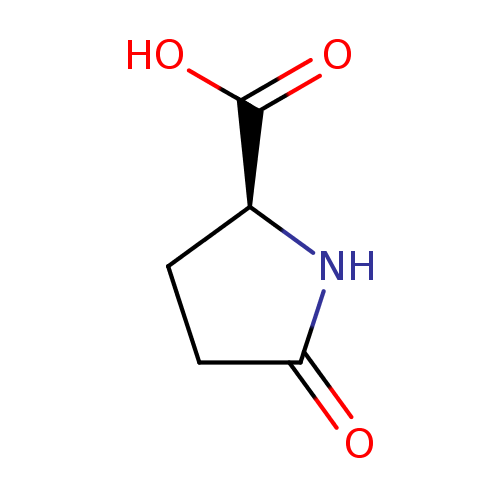
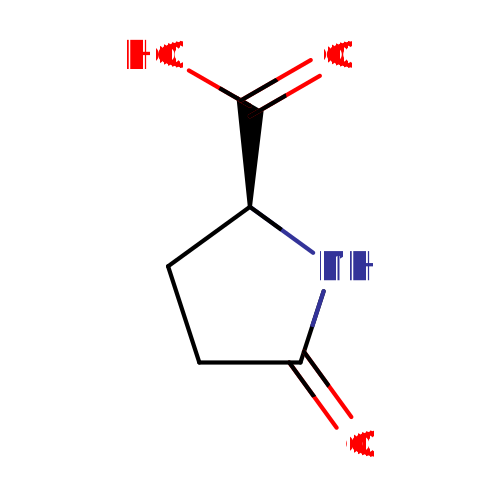
Chemical Structure
Thumb
Synonyms
ValueSource
(-)-2-Pyrrolidone-5-carboxylic acidChEBI
(S)-(-)-2-Pyrrolidone-5-carboxylic acidChEBI
(S)-Pyroglutamic acidChEBI
5-Pyrrolidone-2-carboxylic acidChEBI
L-5-Pyrrolidone-2-carboxylic acidChEBI
L-Pyroglutamic acidChEBI
Pidolic acidChEBI
PyroglutamateChEBI
5-oxo-L-ProlineKegg
(-)-2-Pyrrolidone-5-carboxylateGenerator
(S)-(-)-2-Pyrrolidone-5-carboxylateGenerator
(S)-PyroglutamateGenerator
5-Pyrrolidone-2-carboxylateGenerator
L-5-Pyrrolidone-2-carboxylateGenerator
L-PyroglutamateGenerator
PidolateGenerator
(-)-PyroglutamateHMDB
(-)-Pyroglutamic acidHMDB
(5S)-2-Oxopyrrolidine-5-carboxylateHMDB
(5S)-2-Oxopyrrolidine-5-carboxylic acidHMDB
(S)-(-)-g-Butyrolactam-g-carboxylateHMDB
(S)-(-)-g-Butyrolactam-g-carboxylic acidHMDB
(S)-(-)-gamma-Butyrolactam-gamma-carboxylateHMDB
(S)-(-)-gamma-Butyrolactam-gamma-carboxylic acidHMDB
(S)-2-Pyrrolidone-5-carboxylateHMDB
(S)-2-Pyrrolidone-5-carboxylic acidHMDB
(S)-5-oxo-2-PyrrolidinecarboxylateHMDB
(S)-5-oxo-2-Pyrrolidinecarboxylic acidHMDB
2-L-Pyrrolidone-5-carboxylateHMDB
2-L-Pyrrolidone-5-carboxylic acidHMDB
2-Oxopyrrolidine-5(S)-carboxylateHMDB
2-Oxopyrrolidine-5(S)-carboxylic acidHMDB
2-Pyrrolidinone-5-carboxylateHMDB
2-Pyrrolidinone-5-carboxylic acidHMDB
5-Carboxy-2-pyrrolidinoneHMDB
5-L-OxoprolineHMDB
5-OxoprolineHMDB
5-Pyrrolidinone-2-carboxylateHMDB
5-Pyrrolidinone-2-carboxylic acidHMDB
Ajidew a 100HMDB
GlutimateHMDB
Glutimic acidHMDB
GlutiminateHMDB
Glutiminic acidHMDB
L-2-Pyrrolidone-5-carboxylateHMDB
L-2-Pyrrolidone-5-carboxylic acidHMDB
L-5-Carboxy-2-pyrrolidinoneHMDB
L-5-oxo-2-PyrrolidinecarboxylateHMDB
L-5-oxo-2-Pyrrolidinecarboxylic acidHMDB
L-5-OxoprolineHMDB
L-Glutamic acid g-lactamHMDB
L-GlutimateHMDB
L-Glutimic acidHMDB
L-GlutiminateHMDB
L-Glutiminic acidHMDB
L-PyrrolidinonecarboxylateHMDB
L-Pyrrolidinonecarboxylic acidHMDB
L-PyrrolidonecarboxylateHMDB
L-Pyrrolidonecarboxylic acidHMDB
OxoprolineHMDB
OxopyrrolidinecarboxylateHMDB
Oxopyrrolidinecarboxylic acidHMDB
PidolidoneHMDB
PyrrolidinonecarboxylateHMDB
Pyrrolidinonecarboxylic acidHMDB
Pyrrolidone-5-carboxylateHMDB
Pyrrolidone-5-carboxylic acidHMDB
Pyrrolidonecarboxylic acidHMDB
5-KetoprolineHMDB
Pidolate, magnesiumHMDB
5-Oxopyrrolidine-2-carboxylic acidHMDB
Magnesium pidolateHMDB
2-Pyrrolidone-5-carboxylic acidHMDB
5-OxoprolinateHMDB
PCAHMDB
Chemical FormulaC5H7NO3
Average Molecular Mass129.114 g/mol
Monoisotopic Mass129.043 g/mol
CAS Registry Number98-79-3
IUPAC Name(2S)-5-oxopyrrolidine-2-carboxylic acid
Traditional Namepyroglutamic acid
SMILESOC(=O)[C@@H]1CCC(=O)N1
InChI IdentifierInChI=1S/C5H7NO3/c7-4-2-1-3(6-4)5(8)9/h3H,1-2H2,(H,6,7)(H,8,9)/t3-/m0/s1
InChI KeyODHCTXKNWHHXJC-VKHMYHEASA-N
Chemical Taxonomy
Description belongs to the class of organic compounds known as alpha amino acids and derivatives. These are amino acids in which the amino group is attached to the carbon atom immediately adjacent to the carboxylate group (alpha carbon), or a derivative thereof.
KingdomOrganic compounds
Super ClassOrganic acids and derivatives
ClassCarboxylic acids and derivatives
Sub ClassAmino acids, peptides, and analogues
Direct ParentAlpha amino acids and derivatives
Alternative Parents
Substituents
  • Alpha-amino acid or derivatives
  • Pyrroline carboxylic acid
  • Pyrroline carboxylic acid or derivatives
  • Pyrroline
  • Cyclic carboximidic acid
  • Lactim
  • Carboxylic acid
  • Monocarboxylic acid or derivatives
  • Propargyl-type 1,3-dipolar organic compound
  • Organic 1,3-dipolar compound
  • Azacycle
  • Organoheterocyclic compound
  • Organopnictogen compound
  • Organic oxygen compound
  • Organooxygen compound
  • Organic oxide
  • Hydrocarbon derivative
  • Carbonyl group
  • Organic nitrogen compound
  • Organonitrogen compound
  • Aliphatic heteromonocyclic compound
Molecular FrameworkAliphatic heteromonocyclic compounds
External Descriptors
Biological Properties
StatusDetected and Not Quantified
OriginEndogenous
Cellular Locations
  • Cytoplasm
  • Extracellular
Biofluid LocationsNot Available
Tissue Locations
  • Brain
  • Prostate
  • Skin
Pathways
NameSMPDB LinkKEGG Link
Glutathione MetabolismSMP00015 map00480
5-OxoprolinuriaSMP00143 Not Available
5-oxoprolinase deficiencySMP00500 Not Available
Glutathione Synthetase DeficiencySMP00337 Not Available
HawkinsinuriaSMP00190 Not Available
Propionic AcidemiaSMP00236 Not Available
ApplicationsNot Available
Biological RolesNot Available
Chemical RolesNot Available
Physical Properties
StateSolid
AppearanceWhite powder.
Experimental Properties
PropertyValue
Melting Point158°C (316.4°F)
Boiling PointNot Available
Solubility476.0 mg/mL at 13°C
Predicted Properties
PropertyValueSource
Water Solubility151 g/LALOGPS
logP-1ALOGPS
logP-0.89ChemAxon
logS0.07ALOGPS
pKa (Strongest Acidic)3.61ChemAxon
pKa (Strongest Basic)-2.2ChemAxon
Physiological Charge-1ChemAxon
Hydrogen Acceptor Count3ChemAxon
Hydrogen Donor Count2ChemAxon
Polar Surface Area66.4 ŲChemAxon
Rotatable Bond Count1ChemAxon
Refractivity28.09 m³·mol⁻¹ChemAxon
Polarizability11.56 ųChemAxon
Number of Rings1ChemAxon
Bioavailability1ChemAxon
Rule of FiveYesChemAxon
Ghose FilterNoChemAxon
Veber's RuleNoChemAxon
MDDR-like RuleNoChemAxon
Spectra
Spectra
Spectrum TypeDescriptionSplash KeyView
GC-MSGC-MS Spectrum - GC-EI-TOF (Pegasus III TOF-MS system, Leco; GC 6890, Agilent Technologies) (2 TMS)splash10-0ab9-8900000000-f79dc90370ba38f587c9Spectrum
GC-MSGC-MS Spectrum - GC-EI-TOF (Non-derivatized)splash10-0ab9-8900000000-f79dc90370ba38f587c9Spectrum
GC-MSGC-MS Spectrum - GC-EI-TOF (Non-derivatized)splash10-0a4i-0900000000-90fb43273551aeb9b2c4Spectrum
Predicted GC-MSPredicted GC-MS Spectrum - GC-MS (Non-derivatized) - 70eV, Positivesplash10-0a6r-9000000000-130a8f31f82e83c4be07Spectrum
Predicted GC-MSPredicted GC-MS Spectrum - GC-MS (1 TMS) - 70eV, Positivesplash10-05fr-9200000000-d69b52257404ab658d5bSpectrum
Predicted GC-MSPredicted GC-MS Spectrum - GC-MS (Non-derivatized) - 70eV, PositiveNot AvailableSpectrum
Predicted GC-MSPredicted GC-MS Spectrum - GC-MS (TMS_1_2) - 70eV, PositiveNot AvailableSpectrum
Predicted GC-MSPredicted GC-MS Spectrum - GC-MS (TBDMS_1_1) - 70eV, PositiveNot AvailableSpectrum
Predicted GC-MSPredicted GC-MS Spectrum - GC-MS (TBDMS_1_2) - 70eV, PositiveNot AvailableSpectrum
LC-MS/MSLC-MS/MS Spectrum - Quattro_QQQ 10V, Positive (Annotated)splash10-001i-9500000000-ebc64308ec5d5bdb303eSpectrum
LC-MS/MSLC-MS/MS Spectrum - Quattro_QQQ 25V, Positive (Annotated)splash10-053r-9000000000-7377cb17491942e9589cSpectrum
LC-MS/MSLC-MS/MS Spectrum - Quattro_QQQ 40V, Positive (Annotated)splash10-053u-9000000000-fcab1396867356ebd6aeSpectrum
LC-MS/MSLC-MS/MS Spectrum - LC-ESI-QQ (API3000, Applied Biosystems) 10V, Negativesplash10-004i-0900000000-5b0c6536e1b3217b8544Spectrum
LC-MS/MSLC-MS/MS Spectrum - LC-ESI-QQ (API3000, Applied Biosystems) 20V, Negativesplash10-004i-0900000000-c30ac0bd264c8007ef92Spectrum
LC-MS/MSLC-MS/MS Spectrum - LC-ESI-QQ (API3000, Applied Biosystems) 30V, Negativesplash10-004i-5900000000-ea3a164653e4235716aeSpectrum
LC-MS/MSLC-MS/MS Spectrum - LC-ESI-QQ (API3000, Applied Biosystems) 40V, Negativesplash10-0f89-9000000000-f6620738e68f990d0594Spectrum
LC-MS/MSLC-MS/MS Spectrum - LC-ESI-QQ (API3000, Applied Biosystems) 50V, Negativesplash10-0udi-9000000000-7937bee2e9a6d6b29cbdSpectrum
LC-MS/MSLC-MS/MS Spectrum - LC-ESI-QQ (API3000, Applied Biosystems) 10V, Negativesplash10-004i-0900000000-f20401903b234914b936Spectrum
LC-MS/MSLC-MS/MS Spectrum - LC-ESI-QQ (API3000, Applied Biosystems) 20V, Negativesplash10-004i-0900000000-9446bb65e0edd72cfd59Spectrum
LC-MS/MSLC-MS/MS Spectrum - LC-ESI-QQ (API3000, Applied Biosystems) 30V, Negativesplash10-0059-7900000000-74eccdeb9f0d5fd17614Spectrum
LC-MS/MSLC-MS/MS Spectrum - LC-ESI-QQ (API3000, Applied Biosystems) 40V, Negativesplash10-0f8a-9000000000-8786a9cd5e488192f34dSpectrum
LC-MS/MSLC-MS/MS Spectrum - LC-ESI-QQ (API3000, Applied Biosystems) 50V, Negativesplash10-0f6t-9000000000-ebcc1ac4acd525218e80Spectrum
LC-MS/MSLC-MS/MS Spectrum - LC-ESI-QQ (API3000, Applied Biosystems) 10V, Positivesplash10-01q9-2900000000-754ae9b699ec1b22cd76Spectrum
LC-MS/MSLC-MS/MS Spectrum - LC-ESI-QQ (API3000, Applied Biosystems) 20V, Positivesplash10-001i-9300000000-eabb8c4dc0d1111e0431Spectrum
LC-MS/MSLC-MS/MS Spectrum - LC-ESI-QQ (API3000, Applied Biosystems) 30V, Positivesplash10-00lr-9100000000-1dd17702aee7e5bce618Spectrum
LC-MS/MSLC-MS/MS Spectrum - LC-ESI-QQ (API3000, Applied Biosystems) 40V, Positivesplash10-067i-9000000000-c9669794d3a8746be498Spectrum
LC-MS/MSLC-MS/MS Spectrum - LC-ESI-QQ (API3000, Applied Biosystems) 50V, Positivesplash10-014i-9000000000-9e103abb0a6ed890051eSpectrum
LC-MS/MSLC-MS/MS Spectrum - LC-ESI-QQ (API3000, Applied Biosystems) 10V, Positivesplash10-03e9-3900000000-da8cf252285c1d616586Spectrum
LC-MS/MSLC-MS/MS Spectrum - LC-ESI-QQ (API3000, Applied Biosystems) 20V, Positivesplash10-01q9-9400000000-96a7fe5a81188c49d1baSpectrum
LC-MS/MSLC-MS/MS Spectrum - LC-ESI-QQ (API3000, Applied Biosystems) 30V, Positivesplash10-014i-9000000000-356215339a43217dea66Spectrum
LC-MS/MSLC-MS/MS Spectrum - LC-ESI-QQ (API3000, Applied Biosystems) 40V, Positivesplash10-02vl-9000000000-ed47ec6e675eb338da19Spectrum
LC-MS/MSLC-MS/MS Spectrum - LC-ESI-QQ (API3000, Applied Biosystems) 50V, Positivesplash10-014i-9000000000-f647da344adbdf7bfb1bSpectrum
LC-MS/MSLC-MS/MS Spectrum - LC-ESI-QTOF (UPLC Q-Tof Premier, Waters) , Positivesplash10-001i-9200000000-0bddc68d58c6fb981d1aSpectrum
LC-MS/MSLC-MS/MS Spectrum - LC-ESI-QTOF (UPLC Q-Tof Premier, Waters) , Negativesplash10-004i-0900000000-c70c79fa828bbf137ebcSpectrum
MSMass Spectrum (Electron Ionization)splash10-001i-9000000000-6c87253da642bb4800dfSpectrum
1D NMR1H NMR SpectrumNot AvailableSpectrum
1D NMR13C NMR SpectrumNot AvailableSpectrum
1D NMR1H NMR SpectrumNot AvailableSpectrum
1D NMR13C NMR SpectrumNot AvailableSpectrum
1D NMR1H NMR SpectrumNot AvailableSpectrum
1D NMR13C NMR SpectrumNot AvailableSpectrum
1D NMR1H NMR SpectrumNot AvailableSpectrum
1D NMR13C NMR SpectrumNot AvailableSpectrum
1D NMR1H NMR SpectrumNot AvailableSpectrum
1D NMR13C NMR SpectrumNot AvailableSpectrum
1D NMR1H NMR SpectrumNot AvailableSpectrum
1D NMR13C NMR SpectrumNot AvailableSpectrum
1D NMR1H NMR SpectrumNot AvailableSpectrum
1D NMR13C NMR SpectrumNot AvailableSpectrum
1D NMR1H NMR SpectrumNot AvailableSpectrum
1D NMR13C NMR SpectrumNot AvailableSpectrum
1D NMR1H NMR SpectrumNot AvailableSpectrum
1D NMR13C NMR SpectrumNot AvailableSpectrum
1D NMR1H NMR SpectrumNot AvailableSpectrum
1D NMR13C NMR SpectrumNot AvailableSpectrum
1D NMR1H NMR SpectrumNot AvailableSpectrum
2D NMR[1H,13C] 2D NMR SpectrumNot AvailableSpectrum
Toxicity Profile
Route of ExposureNot Available
Mechanism of Toxicity5-Oxoprolinuria develops in moderate to severe cases of glutathione synthetase deficiency. The deficiency in glutathione synthetase leads to the accumulation of γ-glutamylcysteine, which is converted into 5-oxoproline by the action of γ-glutamyl cyclotransferase. The excessive formation of 5-oxoproline exceeds the capacity of 5-oxoprolinase, leading to accumulation of 5-oxoproline in body fluids causing metabolic acidosis and 5-oxoprolinuria. 5-Oxoproline accumulation is thought to be the cause of metabolic acidosis in Hawkinsinuria. 5-Oxoprolinase deficiency also leads to decreased conversion of 5-oxoproline to glutamate, resulting in elevated levels of 5-oxoproline in body fluids. 5-Oxoprolinuria has also been described in patients with urea cycle defects, such as ornithine transcarbamoylase deficiency or homocystinuria. In nephropathic cystinosis 5-oxoprolinuria may occur because of secondary impairment of the γ-glutamyl cycle resulting from decreased availability of free cysteine and can be corrected through cysteamine therapy. Transient 5-oxoprolinuria of unknown cause has been reported in very preterm infants. Limited availability of glycine in malnutrition and pregnancy as well as increased turnover of collagen, fibrinogen and other proteins containing considerable amounts of 5-oxoproline in patients with severe burns or Stevens-Johnson syndrome may lead to 5-oxoprolinuria. In addition, certain drugs, such as paracetamol, vigabatrin or some antibiotics (flucloxacillin, netimicin), are known to induce 5-oxoprolinuria, probably through interaction with the γ-glutamyl cycle. Particular infant formulas and tomato juice may contain modified proteins with increased content of 5-oxoproline. (15)
Metabolism5-Oxoproline is part of the glutathione metabolism pathway. Degradation of glutathione is initiated by γ-glutamyl transpeptidase, which catalyses the transfer of its γ-glutamyl-group to acceptors. The γ-glutamyl residues are substrates of the γ-glutamyl-cyclotransferase, which converts them to 5-oxoproline and the corresponding amino acids. Conversion of 5-oxoproline to glutamate is catalysed by 5-oxoprolinase. (15)
Toxicity ValuesNot Available
Lethal DoseNot Available
Carcinogenicity (IARC Classification)No indication of carcinogenicity to humans (not listed by IARC).
Uses/SourcesThis is an endogenously produced metabolite found in the human body. It is used in metabolic reactions, catabolic reactions or waste generation.
Minimum Risk LevelNot Available
Health EffectsChronically high levels of pyroglutamic acid are associated with at least 5 inborn errors of metabolism including: 5-Oxoprolinuria, 5-oxoprolinase deficiency, Glutathione Synthetase Deficiency, Hawkinsinuria and Propionic acidemia.
SymptomsPatients with the moderate variant of glutathione synthetase deficiency usually present during the neonatal period with severe and chronic metabolic acidosis, mild to moderate haemolytic anaemia, jaundice and 5-oxoprolinuria. After the neonatal period, the condition usually stabilises, but patients may become critically ill during infections owing to pronounced acidosis and electrolyte imbalances. Several patients have died during such episodes. In addition to the symptoms mentioned above, patients with severe GS deficiency develop progressive CNS symptoms, e.g. mental retardation, seizures, spasticity, ataxia and intention tremor. In addition, some patients suffer from recurrent severe bacterial infections, which is probably due to defective granulocyte function. Hawkinsinuria is characterised by failure to thrive and metabolic acidosis in infancy. After the 1st year of life the condition appears to be asymptomatic. Early weaning from breastfeeding seems to precipitate the disease; the condition may be asymptomatic in breastfed infants. 5-Oxoprolinase Deficiency: Up to now, eight patients in six different families have been described. The clinical symptoms are inconstant and very heterogeneous, including renal stone formation, enterocolitis, neonatal hypoglycaemia, microcytic anaemia, microcephaly and mental retardation. It remains to be established wheter symptoms in identified patients are merely a coincidence. (15)
TreatmentGlutathione Synthetase Deficiency: The clinical management of GS deficient patients is aimed at correction of acidosis, prevention of haemolytic crises and support of endogenous defence against reactive oxygen species (ROS). In the neonatal period, correction of metabolic acidosis, electrolyte imbalances, treatment of anaemia and excessive hyperbilirubinaemia are of crucial importance. Correction of acidosis can be reached through bicarbonate, citrate or tris-hydroxymethyl aminomethane (THAM). Doses of up to 10 mmol/kg/day, or even higher in episodes of acute infections, may be required. Repeated blood transfusions may be necessary in patients with massive haemolysis. Drugs and foods known to precipitate haemolytic crises in patients with glucose- 6-phosphatase dehydrogenase deficiency should be avoided. Successful treatment with erythropoietin has been reported in one patient. Early supplementation with vitamin E and vitamin C are thought to replenish the lack of GSH as a scavenger of free radicals. Recommended doses are 10 mg/kg/day for vitamin E and 100 mg/kg/day for vitamin C. A longterm follow-up study of 28 patients suggested that early supplementation with both vitamins may prevent CNS damage and improve the long-term clinical outcome in GS-deficient patients. The value of N-acetylcysteine, which is known to protect cells from oxidative stress in vitro, in the treatment of GS deficiency is controversial. It was suggested that the low intracellular GSH concentrations and cysteine availabilty might be increased by N-acetylcysteine. However, supplementation with N-acetylcysteine should not be recommended, because it was shown at least in cultured fibroblasts that patients with GS deficiency accumulate cysteine, which is known to be neurotoxic in excessive amounts. A therapeutic trial with orally administered GSH showed no lasting benefit in two patients with GS deficiency. GSH esters, lipid-soluble preparations which are easily transported into cells where they are converted into GSH, have been tried in animal models of GSH deficiency and in two patients with GS deficiency. However, associated toxic effects due to production of alcohols as a by-product during hydrolysis to release GSH make them of limited use. In vitro studies have shown that addition of S-acetylglutathione to the medium of cultured fibroblasts from patients with GS deficiency normalised intracellular GSH content. Owing to the rarity of the disease and the heterogeneity of the clinical condition the prognosis for individual patients is difficult to predict. Early diagnosis, correction of acidosis and early supplementation with vitamin E and vitamin C appear to be the most important factors regarding the survival and the long-term outcome. Hawkinsinuria: Symptoms in infancy respond to a return to breastfeeding or a diet restricted in tyrosine and phenylalanine along with vitamin C supplementation. The condition is asymptomatic after the 1st year of life, and affected infants are reported to have developed normally. 5-Oxoprolinase Deficiency: No specific treatment has been proposed or tried. (15)
Concentrations
Not Available
DrugBank IDDB03088
HMDB IDHMDB0000267
FooDB IDFDB014506
Phenol Explorer IDNot Available
KNApSAcK IDC00007403
BiGG IDNot Available
BioCyc ID5-OXOPROLINE
METLIN IDNot Available
PDB IDNot Available
Wikipedia LinkPyroglutamic_acid
Chemspider IDNot Available
ChEBI ID18183
PubChem Compound ID7405
Kegg Compound IDC01879
YMDB IDYMDB00107
ECMDB IDM2MDB004291
References
Synthesis Reference

John G. Black, Ian R. Scott, “Pyroglutamic acid esters, their synthesis and use in topical products.” U.S. Patent US4774255, issued December, 1974.

MSDSLink
General References
1. Pumpor, Ksenia; Boettcher, Christoph; Fehn, Susanna; Burger, Klaus. Hexafluoroacetone as protecting and activating reagent: an efficient strategy for activation of pyroglutamic acid and homologs.Heterocycles (2003), 61 259-269.
2. Melzer N, Wittenburg D, Hartwig S, Jakubowski S, Kesting U, Willmitzer L, Lisec J, Reinsch N, Repsilber D: Investigating associations between milk metabolite profiles and milk traits of Holstein cows. J Dairy Sci. 2013 Mar;96(3):1521-34. doi: 10.3168/jds.2012-5743.
3. Sun HZ, Shi K, Wu XH, Xue MY, Wei ZH, Liu JX, Liu HY: Lactation-related metabolic mechanism investigated based on mammary gland metabolomics and 4 biofluids' metabolomics relationships in dairy cows. BMC Genomics. 2017 Dec 2;18(1):936. doi: 10.1186/s12864-017-4314-1.
4. Qian L, Zhao A, Zhang Y, Chen T, Zeisel SH, Jia W, Cai W: Metabolomic Approaches to Explore Chemical Diversity of Human Breast-Milk, Formula Milk and Bovine Milk. Int J Mol Sci. 2016 Dec 17;17(12). pii: ijms17122128. doi: 10.3390/ijms17122128.
5. Kurt J. Boudonck, Matthew W. Mitchell, Jacob Wulff and John A. Ryals. Characterization of the biochemical variability of bovine milk using metabolomics. Metabolomics (2009) 5:375?386
6. Kurt J. Boudonck, Matthew W. Mitchell, Jacob Wulff, John A. Ryals. Characterization of the biochemical variability of bovine milk using metabolomics. Metabolomics (2009) 5:375-386 doi: 10.1007/s11306-009-0160-8
7. Pumpor, Ksenia; Boettcher, Christoph; Fehn, Susanna; Burger, Klaus. Hexafluoroacetone as protecting and activating reagent: an efficient strategy for activation of pyroglutamic acid and homologs.Heterocycles (2003), 61 259-269.
8. Manning NJ, Davies NP, Olpin SE, Carpenter KH, Smith MF, Pollitt RJ, Duncan SL, Larsson A, Carlsson B: Prenatal diagnosis of glutathione synthase deficiency. Prenat Diagn. 1994 Jun;14(6):475-8.
9. Caspers PJ, Lucassen GW, Carter EA, Bruining HA, Puppels GJ: In vivo confocal Raman microspectroscopy of the skin: noninvasive determination of molecular concentration profiles. J Invest Dermatol. 2001 Mar;116(3):434-42.
10. Hussain Z, Lannigan R, Stoakes L: A new approach for presumptive identification of clinically important streptococci. Zentralbl Bakteriol Mikrobiol Hyg A. 1984 Oct;258(1):74-9.
11. Guneral F, Bachmann C: Age-related reference values for urinary organic acids in a healthy Turkish pediatric population. Clin Chem. 1994 Jun;40(6):862-6.
12. Creer MH, Lau BW, Jones JD, Chan KM: Pyroglutamic acidemia in an adult patient. Clin Chem. 1989 Apr;35(4):684-6.
13. Hammond JW, Potter M, Truscott R, Wilcken B: gamma-Glutamylglutamine identified in plasma and cerebrospinal fluid from hyperammonaemic patients. Clin Chim Acta. 1990 Dec 24;194(2-3):173-83.
14. Uhlhaas S, Lange H: Striatal deficiency of L-pyroglutamic acid in Huntington's disease is accompanied by increased plasma levels. Brain Res. 1988 Aug 2;457(1):196-9.
15. Jellum E, Stokke O, Eldjarn L: Combined use of gas chromatography, mass spectrometry, and computer in diagnosis and studies of metabolic disorders. Clin Chem. 1972 Aug;18(8):800-9.
16. Croal BL, Glen AC, Kelly CJ, Logan RW: Transient 5-oxoprolinuria (pyroglutamic aciduria) with systemic acidosis in an adult receiving antibiotic therapy. Clin Chem. 1998 Feb;44(2):336-40.
17. Winslow JW, Shih A, Bourell JH, Weiss G, Reed B, Stults JT, Goldsmith LT: Human seminal relaxin is a product of the same gene as human luteal relaxin. Endocrinology. 1992 May;130(5):2660-8.
18. Hoffmann GF, Meier-Augenstein W, Stockler S, Surtees R, Rating D, Nyhan WL: Physiology and pathophysiology of organic acids in cerebrospinal fluid. J Inherit Metab Dis. 1993;16(4):648-69.
19. Wevers RA, Engelke U, Heerschap A: High-resolution 1H-NMR spectroscopy of blood plasma for metabolic studies. Clin Chem. 1994 Jul;40(7 Pt 1):1245-50.
20. Erasmus E, Mienie LJ, de Vries WN, de Wet WJ, Carlsson B, Larsson A: Prenatal analysis in two suspected cases of glutathione synthetase deficiency. J Inherit Metab Dis. 1993;16(5):837-43.
21. Sreekumar A, Poisson LM, Rajendiran TM, Khan AP, Cao Q, Yu J, Laxman B, Mehra R, Lonigro RJ, Li Y, Nyati MK, Ahsan A, Kalyana-Sundaram S, Han B, Cao X, Byun J, Omenn GS, Ghosh D, Pennathur S, Alexander DC, Berger A, Shuster JR, Wei JT, Varambally S, Beecher C, Chinnaiyan AM: Metabolomic profiles delineate potential role for sarcosine in prostate cancer progression. Nature. 2009 Feb 12;457(7231):910-4. doi: 10.1038/nature07762.
22. Palekar AG, Tate SS, Sullivan JF, Meister A: Accumulation of 50oxo-L-proline and 5-oxo-D-proline in the blood plasma in end stage renal disease. Biochem Med. 1975 Nov;14(3):339-45.
23. Monsigny M, Rondanino C, Duverger E, Fajac I, Roche AC: Glyco-dependent nuclear import of glycoproteins, glycoplexes and glycosylated plasmids. Biochim Biophys Acta. 2004 Jul 6;1673(1-2):94-103.
24. Thiele I, Swainston N, Fleming RM, Hoppe A, Sahoo S, Aurich MK, Haraldsdottir H, Mo ML, Rolfsson O, Stobbe MD, Thorleifsson SG, Agren R, Bolling C, Bordel S, Chavali AK, Dobson P, Dunn WB, Endler L, Hala D, Hucka M, Hull D, Jameson D, Jamshidi N, Jonsson JJ, Juty N, Keating S, Nookaew I, Le Novere N, Malys N, Mazein A, Papin JA, Price ND, Selkov E Sr, Sigurdsson MI, Simeonidis E, Sonnenschein N, Smallbone K, Sorokin A, van Beek JH, Weichart D, Goryanin I, Nielsen J, Westerhoff HV, Kell DB, Mendes P, Palsson BO: A community-driven global reconstruction of human metabolism. Nat Biotechnol. 2013 May;31(5):419-25. doi: 10.1038/nbt.2488. Epub 2013 Mar 3.
25. Elshenawy S, Pinney SE, Stuart T, Doulias PT, Zura G, Parry S, Elovitz MA, Bennett MJ, Bansal A, Strauss JF 3rd, Ischiropoulos H, Simmons RA: The Metabolomic Signature of the Placenta in Spontaneous Preterm Birth. Int J Mol Sci. 2020 Feb 4;21(3). pii: ijms21031043. doi: 10.3390/ijms21031043.
26. https://www.ncbi.nlm.nih.gov/pubmed/?term=17439666
27. https://www.ncbi.nlm.nih.gov/pubmed/?term=22560249
28. https://www.ncbi.nlm.nih.gov/pubmed/?term=22619187