Record Information
Version1.0
Creation Date2014-08-29 06:07:24 UTC
Update Date2026-05-14 19:42:18 UTC
Accession NumberCHEM003213
Identification
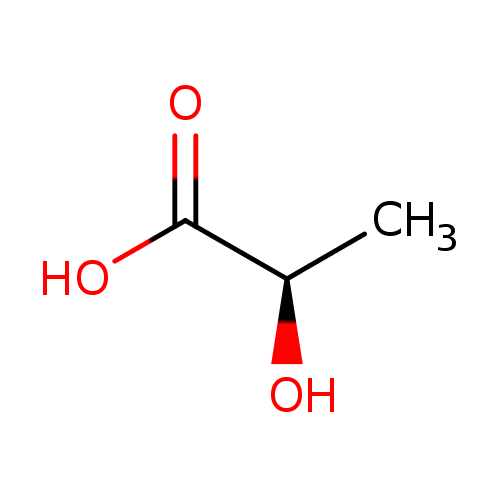
Common NameL-Lactic acid
ClassSmall Molecule
DescriptionLactic acid plays a role in several biochemical processes and is produced in the muscles during intense activity. Lactate measurement in the critically ill has been traditionally used to stratify patients with poor outcome. However, plasma lactate levels are the result of a finely tuned interplay of factors that affect the balance between its production and its clearance. When the oxygen supply does not match its consumption, organisms such as man who are forced to produce ATP for their integrity adapt in many different ways up to the point when energy failure occurs. Lactate, being part of the adaptive response, may then be used to assess the severity of the supply/demand imbalance. In such a scenario, the time to intervention becomes relevant: early and effective treatment may allow the cell to revert to a normal state, as long as the oxygen machinery (i.e. mitochondria) is intact. Conversely, once the mitochondria are deranged, energy failure occurs even in the presence of normoxia. The lactate increase in critically ill patients may therefore be viewed as an early marker of a potentially reversible state. A number of studies have demonstrated that malignant transformation is associated with an increase in glycolytic flux and in anaerobic and aerobic cellular lactate excretion. Using quantitative bioluminescence imaging in various primary carcinomas in patients (uterine cervix, head and neck, colorectal region) at first diagnosis of the disease, lactate concentrations in tumors in vivo could be relatively low or extremely high (up to 40 micromol/g) in different individual tumors or within the same lesion. In all tumor entities investigated, high molar concentrations of lactate were correlated with a high incidence of distant metastasis already in an early stage of the disease. Low lactate tumors (< median of approximately 8 micromol/g) were associated with both a longer overall and disease free survival compared to high lactate lesions (lactate > approximately 8 micromol/g). Lactate dehydrogenase was found to be upregulated in most of these tumors compared to surrounding normal tissue. (1, 2).
Contaminant Sources
  • FooDB Chemicals
  • HMDB Contaminants - Feces
  • HMDB Contaminants - Urine
  • HPV EPA Chemicals
  • OECD HPV Chemicals
  • STOFF IDENT Compounds
  • T3DB toxins
Contaminant Type
  • Animal Toxin
  • Food Toxin
  • Household Toxin
  • Industrial/Workplace Toxin
  • Metabolite
  • Natural Compound
  • Organic Compound
Chemical Structure
Thumb
Synonyms
ValueSource
(-)-Lactic acidChEBI
(R)-(-)-Lactic acidChEBI
D-2-Hydroxypropanoic acidChEBI
D-2-Hydroxypropionic acidChEBI
D-MilchsaeureChEBI
LACTIC ACIDChEBI
D-LactateKegg
(-)-LactateGenerator
(R)-(-)-LactateGenerator
D-2-HydroxypropanoateGenerator
D-2-HydroxypropionateGenerator
LACTateGenerator
L-LactateHMDB
(R)-2-HydroxypropanoateHMDB
(R)-2-Hydroxypropanoic acidHMDB
(R)-2-HydroxypropionateHMDB
(R)-2-Hydroxypropionic acidHMDB
(R)-a-HydroxypropionateHMDB
(R)-a-Hydroxypropionic acidHMDB
(R)-alpha-HydroxypropionateHMDB
(R)-alpha-Hydroxypropionic acidHMDB
(R)-LactateHMDB
(R)-Lactic acidHMDB
D-(-)-LactateHMDB
D-(-)-Lactic acidHMDB
delta-(-)-LactateHMDB
delta-(-)-Lactic acidHMDB
delta-2-HydroxypropanoateHMDB
delta-2-Hydroxypropanoic acidHMDB
delta-2-HydroxypropionateHMDB
delta-2-Hydroxypropionic acidHMDB
delta-LactateHMDB
delta-Lactic acidHMDB
DLAHMDB
L-(+)-LactateHMDB
PropelHMDB
TisulacHMDB
2 Hydroxypropanoic acidHMDB
2 Hydroxypropionic acidHMDB
2-Hydroxypropanoic acidHMDB
Ammonium lactateHMDB
L Lactic acidHMDB
2-Hydroxypropionic acidHMDB
Sarcolactic acidHMDB
D Lactic acidHMDB
Lactate, ammoniumHMDB
L-Lactic acidHMDB
D-Lactic acidChEBI
Chemical FormulaC3H6O3
Average Molecular Mass90.078 g/mol
Monoisotopic Mass90.032 g/mol
CAS Registry Number79-33-4
IUPAC Name(2S)-2-hydroxypropanoic acid
Traditional NameD-lactic acid
SMILESC[C@H](O)C(O)=O
InChI IdentifierInChI=1S/C3H6O3/c1-2(4)3(5)6/h2,4H,1H3,(H,5,6)/t2-/m0/s1
InChI KeyJVTAAEKCZFNVCJ-REOHCLBHSA-N
Chemical Taxonomy
Description belongs to the class of organic compounds known as alpha hydroxy acids and derivatives. These are organic compounds containing a carboxylic acid substituted with a hydroxyl group on the adjacent carbon.
KingdomOrganic compounds
Super ClassOrganic acids and derivatives
ClassHydroxy acids and derivatives
Sub ClassAlpha hydroxy acids and derivatives
Direct ParentAlpha hydroxy acids and derivatives
Alternative Parents
Substituents
  • Alpha-hydroxy acid
  • Secondary alcohol
  • Monocarboxylic acid or derivatives
  • Carboxylic acid
  • Carboxylic acid derivative
  • Organic oxygen compound
  • Organic oxide
  • Hydrocarbon derivative
  • Organooxygen compound
  • Carbonyl group
  • Alcohol
  • Aliphatic acyclic compound
Molecular FrameworkAliphatic acyclic compounds
External Descriptors
Biological Properties
StatusDetected and Not Quantified
OriginEndogenous
Cellular Locations
  • Cytoplasm
  • Extracellular
  • Mitochondria
Biofluid LocationsNot Available
Tissue Locations
  • All Tissues
Pathways
NameSMPDB LinkKEGG Link
GluconeogenesisSMP00128 Not Available
Pyruvate MetabolismSMP00060 map00620
2-Methyl-3-Hydroxybutryl CoA Dehydrogenase DeficiencySMP00137 Not Available
Biotinidase DeficiencySMP00174 Not Available
Fructose-1,6-diphosphatase deficiencySMP00562 Not Available
Glycogen Storage Disease Type 1A (GSD1A) or Von Gierke DiseaseSMP00374 Not Available
Glycogenosis, Type IBSMP00573 Not Available
Glycogenosis, Type ICSMP00574 Not Available
Glycogenosis, Type VI. Hers diseaseSMP00555 Not Available
Lactic AcidemiaSMP00313 Not Available
Leigh SyndromeSMP00196 Not Available
Methylmalonate Semialdehyde Dehydrogenase DeficiencySMP00384 Not Available
Pyruvate Decarboxylase E1 Component Deficiency (PDHE1 Deficiency)SMP00334 Not Available
Pyruvate Dehydrogenase Complex DeficiencySMP00212 Not Available
Pyruvate dehydrogenase deficiency (E2)SMP00551 Not Available
Short Chain Acyl CoA Dehydrogenase Deficiency (SCAD Deficiency)SMP00235 Not Available
ApplicationsNot Available
Biological Roles
Chemical RolesNot Available
Physical Properties
StateLiquid
AppearanceNot Available
Experimental Properties
PropertyValue
Melting Point16.8°C
Boiling Point122°C
SolubilityNot Available
Predicted Properties
PropertyValueSource
Water Solubility562 g/LALOGPS
logP-0.79ALOGPS
logP-0.47ChemAxon
logS0.79ALOGPS
pKa (Strongest Acidic)3.78ChemAxon
pKa (Strongest Basic)-3.7ChemAxon
Physiological Charge-1ChemAxon
Hydrogen Acceptor Count3ChemAxon
Hydrogen Donor Count2ChemAxon
Polar Surface Area57.53 ŲChemAxon
Rotatable Bond Count1ChemAxon
Refractivity18.84 m³·mol⁻¹ChemAxon
Polarizability8.05 ųChemAxon
Number of Rings0ChemAxon
Bioavailability1ChemAxon
Rule of FiveYesChemAxon
Ghose FilterNoChemAxon
Veber's RuleNoChemAxon
MDDR-like RuleNoChemAxon
Spectra
Spectra
Spectrum TypeDescriptionSplash KeyView
GC-MSGC-MS Spectrum - GC-EI-TOF (Pegasus III TOF-MS system, Leco; GC 6890, Agilent Technologies) (Non-derivatized)splash10-00kb-0900000000-fb59ec16914501aa19abSpectrum
GC-MSGC-MS Spectrum - EI-B (Non-derivatized)splash10-014j-0900000000-c4d9e12b4b0150eda54bSpectrum
GC-MSGC-MS Spectrum - GC-EI-TOF (Non-derivatized)splash10-00kb-0900000000-fb59ec16914501aa19abSpectrum
Predicted GC-MSPredicted GC-MS Spectrum - GC-MS (Non-derivatized) - 70eV, Positivesplash10-0006-9000000000-a3691f383d440fb00e1fSpectrum
Predicted GC-MSPredicted GC-MS Spectrum - GC-MS (2 TMS) - 70eV, Positivesplash10-01b9-9620000000-f7faa7db9c1be3d9d975Spectrum
Predicted GC-MSPredicted GC-MS Spectrum - GC-MS (Non-derivatized) - 70eV, PositiveNot AvailableSpectrum
LC-MS/MSLC-MS/MS Spectrum - Quattro_QQQ 10V, Negative (Annotated)splash10-000i-9000000000-704f8ff33156c82a02d1Spectrum
LC-MS/MSLC-MS/MS Spectrum - Quattro_QQQ 25V, Negative (Annotated)splash10-000m-9000000000-023931446d9bb3330e7fSpectrum
LC-MS/MSLC-MS/MS Spectrum - Quattro_QQQ 40V, Negative (Annotated)splash10-000l-9000000000-0fb29afb128baea2240bSpectrum
LC-MS/MSLC-MS/MS Spectrum - LC-ESI-IT , negativesplash10-000i-9000000000-d7cd347946e49a57860eSpectrum
LC-MS/MSLC-MS/MS Spectrum - 40V, Negativesplash10-0006-9000000000-aee01e43e8ee93db755dSpectrum
LC-MS/MSLC-MS/MS Spectrum - 10V, Negativesplash10-000f-9000000000-581a00222505e9e4b458Spectrum
LC-MS/MSLC-MS/MS Spectrum - 20V, Negativesplash10-0006-9000000000-5bfd9fdf1c0df2054452Spectrum
Predicted LC-MS/MSPredicted LC-MS/MS Spectrum - 10V, Positivesplash10-006x-9000000000-5f417f4a6d08f0ab00edSpectrum
Predicted LC-MS/MSPredicted LC-MS/MS Spectrum - 20V, Positivesplash10-00dm-9000000000-df7a94bb1a9cf6e78e1aSpectrum
Predicted LC-MS/MSPredicted LC-MS/MS Spectrum - 40V, Positivesplash10-004j-9000000000-dc2a1b965287b9dfee9cSpectrum
Predicted LC-MS/MSPredicted LC-MS/MS Spectrum - 10V, Negativesplash10-000i-9000000000-c3686a681cc9bbf039e1Spectrum
Predicted LC-MS/MSPredicted LC-MS/MS Spectrum - 20V, Negativesplash10-000i-9000000000-ddad20647c2ac56efd22Spectrum
Predicted LC-MS/MSPredicted LC-MS/MS Spectrum - 40V, Negativesplash10-00di-9000000000-b728b45617afcc6b67daSpectrum
Predicted LC-MS/MSPredicted LC-MS/MS Spectrum - 10V, Negativesplash10-000i-9000000000-b586cb8f053eb4465b4eSpectrum
Predicted LC-MS/MSPredicted LC-MS/MS Spectrum - 20V, Negativesplash10-000i-9000000000-400a5f1c0dfcc32ef2bbSpectrum
Predicted LC-MS/MSPredicted LC-MS/MS Spectrum - 40V, Negativesplash10-0007-9000000000-ad5eb77c7e0a96f3a40aSpectrum
Predicted LC-MS/MSPredicted LC-MS/MS Spectrum - 10V, Positivesplash10-0002-9000000000-00ba25458eb6c0cc2940Spectrum
Predicted LC-MS/MSPredicted LC-MS/MS Spectrum - 20V, Positivesplash10-0002-9000000000-00ba25458eb6c0cc2940Spectrum
Predicted LC-MS/MSPredicted LC-MS/MS Spectrum - 40V, Positivesplash10-0002-9000000000-00ba25458eb6c0cc2940Spectrum
MSMass Spectrum (Electron Ionization)splash10-002b-9000000000-50213d6b39ef9741c466Spectrum
1D NMR1H NMR SpectrumNot AvailableSpectrum
1D NMR13C NMR SpectrumNot AvailableSpectrum
1D NMR1H NMR SpectrumNot AvailableSpectrum
1D NMR13C NMR SpectrumNot AvailableSpectrum
1D NMR1H NMR SpectrumNot AvailableSpectrum
1D NMR13C NMR SpectrumNot AvailableSpectrum
1D NMR1H NMR SpectrumNot AvailableSpectrum
1D NMR13C NMR SpectrumNot AvailableSpectrum
1D NMR1H NMR SpectrumNot AvailableSpectrum
1D NMR13C NMR SpectrumNot AvailableSpectrum
1D NMR1H NMR SpectrumNot AvailableSpectrum
1D NMR13C NMR SpectrumNot AvailableSpectrum
1D NMR1H NMR SpectrumNot AvailableSpectrum
1D NMR13C NMR SpectrumNot AvailableSpectrum
1D NMR1H NMR SpectrumNot AvailableSpectrum
1D NMR13C NMR SpectrumNot AvailableSpectrum
1D NMR1H NMR SpectrumNot AvailableSpectrum
1D NMR13C NMR SpectrumNot AvailableSpectrum
1D NMR1H NMR SpectrumNot AvailableSpectrum
1D NMR13C NMR SpectrumNot AvailableSpectrum
1D NMR1H NMR SpectrumNot AvailableSpectrum
1D NMR13C NMR SpectrumNot AvailableSpectrum
2D NMR[1H,1H] 2D NMR SpectrumNot AvailableSpectrum
2D NMR[1H,13C] 2D NMR SpectrumNot AvailableSpectrum
Toxicity Profile
Route of ExposureNot Available
Mechanism of ToxicityAccumulation of L-lactic acid in the body has been shown to be toxic. At times of lactic acidosis, when excess intracellular lactate is released into the blood, maintenance of electroneutrality of the blood requires that a cation be released into the blood, as well. This can reduce blood pH. Lactate may exert a strong action over GABAergic networks in the developing brain, making them more inhibitory than it was previously assumed, acting either through better support of metabolites, or alterations in base intracellular pH levels, or both. (Wikipedia)
MetabolismNot Available
Toxicity ValuesNot Available
Lethal DoseNot Available
Carcinogenicity (IARC Classification)Not listed by IARC.
Uses/SourcesNot Available
Minimum Risk LevelNot Available
Health EffectsChronically high levels of Lactic acid are associated with at least a dozen inborn errors of metabolism including: 2-Methyl-3-hydroxybutyryl CoA dehydrogenase deficiency, Biotinidase deficiency, Fructose-1,6-diphosphatase deficiency, Glycogen Storage Disease Type 1A (GSD1A) or Von Gierke Disease, Glycogenosis, Type IB, Glycogenosis, Type IC, Glycogenosis, Type VI. Hers disease, Lactic Acidemia, Leigh Syndrome, Methylmalonate Semialdehyde Dehydrogenase Deficiency, Pyruvate Decarboxylase E1 Component Deficiency, Pyruvate dehydrogenase complex deficiency, Pyruvate dehydrogenase deficiency, Short Chain Acyl CoA Dehydrogenase Deficiency (SCAD Deficiency).
SymptomsNot Available
TreatmentNot Available
Concentrations
Not Available
DrugBank IDDB03066
HMDB IDHMDB0001311
FooDB IDFDB030146
Phenol Explorer IDNot Available
KNApSAcK IDC00019549
BiGG ID34414
BioCyc IDD-LACTATE
METLIN ID6150
PDB IDNot Available
Wikipedia LinkLactic_acid
Chemspider ID55423
ChEBI ID42111
PubChem Compound ID61503
Kegg Compound IDC00256
YMDB IDYMDB00247
ECMDB IDECMDB00190
References
Synthesis ReferenceLao, Hanzhang; Sun, Jianrong; Wang, Jian; Qian, Zhiliang. Process for preparation of high-purity L-lactic acid. Faming Zhuanli Shenqing Gongkai Shuomingshu (2007), 9pp.
MSDSLink
General References
1. Lao, Hanzhang; Sun, Jianrong; Wang, Jian; Qian, Zhiliang. Process for preparation of high-purity L-lactic acid. Faming Zhuanli Shenqing Gongkai Shuomingshu (2007), 9pp.
2. Faulkner A, Pollock HT: Changes in the concentration of metabolites in milk from cows fed on diets supplemented with soyabean oil or fatty acids. J Dairy Res. 1989 May;56(2):179-83.
3. Hurtaud C, Lemosquet S, Rulquin H: Effect of graded duodenal infusions of glucose on yield and composition of milk from dairy cows. 2. Diets based on grass silage. J Dairy Sci. 2000 Dec;83(12):2952-62. doi: 10.3168/jds.S0022-0302(00)75195-2.
4. Klein MS, Almstetter MF, Schlamberger G, Nurnberger N, Dettmer K, Oefner PJ, Meyer HH, Wiedemann S, Gronwald W: Nuclear magnetic resonance and mass spectrometry-based milk metabolomics in dairy cows during early and late lactation. J Dairy Sci. 2010 Apr;93(4):1539-50. doi: 10.3168/jds.2009-2563.
5. Klein MS, Buttchereit N, Miemczyk SP, Immervoll AK, Louis C, Wiedemann S, Junge W, Thaller G, Oefner PJ, Gronwald W: NMR metabolomic analysis of dairy cows reveals milk glycerophosphocholine to phosphocholine ratio as prognostic biomarker for risk of ketosis. J Proteome Res. 2012 Feb 3;11(2):1373-81. doi: 10.1021/pr201017n. Epub 2011 Dec 9.
6. Melzer N, Wittenburg D, Hartwig S, Jakubowski S, Kesting U, Willmitzer L, Lisec J, Reinsch N, Repsilber D: Investigating associations between milk metabolite profiles and milk traits of Holstein cows. J Dairy Sci. 2013 Mar;96(3):1521-34. doi: 10.3168/jds.2012-5743.
7. Sundekilde UK, Poulsen NA, Larsen LB, Bertram HC: Nuclear magnetic resonance metabonomics reveals strong association between milk metabolites and somatic cell count in bovine milk. J Dairy Sci. 2013 Jan;96(1):290-9. doi: 10.3168/jds.2012-5819. Epub 2012 Nov 22.
8. Sundekilde UK, Gustavsson F, Poulsen NA, Glantz M, Paulsson M, Larsen LB, Bertram HC: Association between the bovine milk metabolome and rennet-induced coagulation properties of milk. J Dairy Sci. 2014 Oct;97(10):6076-84. doi: 10.3168/jds.2014-8304. Epub 2014 Jul 30.
9. Buitenhuis AJ, Sundekilde UK, Poulsen NA, Bertram HC, Larsen LB, Sorensen P: Estimation of genetic parameters and detection of quantitative trait loci for metabolites in Danish Holstein milk. J Dairy Sci. 2013 May;96(5):3285-95. doi: 10.3168/jds.2012-5914. Epub 2013 Mar 15.
10. Scano P, Murgia A, Pirisi FM, Caboni P: A gas chromatography-mass spectrometry-based metabolomic approach for the characterization of goat milk compared with cow milk. J Dairy Sci. 2014 Oct;97(10):6057-66. doi: 10.3168/jds.2014-8247. Epub 2014 Aug 6.
11. O'Callaghan TF, Vazquez-Fresno R, Serra-Cayuela A, Dong E, Mandal R, Hennessy D, McAuliffe S, Dillon P, Wishart DS, Stanton C, Ross RP: Pasture Feeding Changes the Bovine Rumen and Milk Metabolome. Metabolites. 2018 Apr 6;8(2). pii: metabo8020027. doi: 10.3390/metabo8020027.
12. A. Foroutan et al. The Chemical Composition of Commercial Cow's Milk (in preparation)
13. Hsieh, Chun Lung; Houng, Jer Yiing. Preparation of D-lactic acid from D,L-lactic acid ester using wheat germ or pancreatic lipase. U.S. (1997), 5 pp.
14. Hasegawa H, Fukushima T, Lee JA, Tsukamoto K, Moriya K, Ono Y, Imai K: Determination of serum D-lactic and L-lactic acids in normal subjects and diabetic patients by column-switching HPLC with pre-column fluorescence derivatization. Anal Bioanal Chem. 2003 Nov;377(5):886-91. Epub 2003 Jul 19.
15. Smith SM, Eng RH, Buccini F: Use of D-lactic acid measurements in the diagnosis of bacterial infections. J Infect Dis. 1986 Oct;154(4):658-64.
16. Ellis LC, Groesbeck MD, Farr CH, Tesi RJ: Contractility of seminiferous tubules as related to sperm transport in the male. Arch Androl. 1981 Jun;6(4):283-94.
17. Pedersen M: Ciliary activity and pollution. Lung. 1990;168 Suppl:368-76.
18. McLellan AC, Phillips SA, Thornalley PJ: Fluorimetric assay of D-lactate. Anal Biochem. 1992 Oct;206(1):12-6.
19. Schmid-Schonbein GW: Microlymphatics and lymph flow. Physiol Rev. 1990 Oct;70(4):987-1028.
20. Solito R, Alessandrini C, Fruschelli M, Pucci AM, Gerli R: An immunological correlation between the anchoring filaments of initial lymph vessels and the neighboring elastic fibers: a unified morphofunctional concept. Lymphology. 1997 Dec;30(4):194-202.
21. Brandt RB, Siegel SA: Methylglyoxal production in human blood. Ciba Found Symp. 1978;(67):211-23.
22. Zhang YJ, O'Neal WK, Randell SH, Blackburn K, Moyer MB, Boucher RC, Ostrowski LE: Identification of dynein heavy chain 7 as an inner arm component of human cilia that is synthesized but not assembled in a case of primary ciliary dyskinesia. J Biol Chem. 2002 May 17;277(20):17906-15. Epub 2002 Mar 4.
23. Tanyel FC, Ulusu NN, Tezcan EF, Buyukpamukcu N: Total calcium content of sacs associated with inguinal hernia, hydrocele or undescended testis reflects differences dictated by programmed cell death. Urol Int. 2003;70(3):211-5.
24. Kaneko T, Bando Y, Kurihara H, Satomi K, Nonoyama K, Matsuura N: Fecal microflora in a patient with short-bowel syndrome and identification of dominant lactobacilli. J Clin Microbiol. 1997 Dec;35(12):3181-5.
25. Hoijer MA, Melief MJ, van Helden-Meeuwsen CG, Eulderink F, Hazenberg MP: Detection of muramic acid in a carbohydrate fraction of human spleen. Infect Immun. 1995 May;63(5):1652-7.
26. Juturu V, Wu JC: Microbial production of lactic acid: the latest development. Crit Rev Biotechnol. 2016 Dec;36(6):967-977. doi: 10.3109/07388551.2015.1066305. Epub 2015 Aug 11.
27. Becker J, Lange A, Fabarius J, Wittmann C: Top value platform chemicals: bio-based production of organic acids. Curr Opin Biotechnol. 2015 Dec;36:168-75. doi: 10.1016/j.copbio.2015.08.022. Epub 2015 Sep 8.
28. https://www.ncbi.nlm.nih.gov/pubmed/?term=21842515
29. https://www.ncbi.nlm.nih.gov/pubmed/?term=22127808
30. https://www.ncbi.nlm.nih.gov/pubmed/?term=22277286
31. https://www.ncbi.nlm.nih.gov/pubmed/?term=22344644