Record Information
Version1.0
Creation Date2014-08-29 06:03:38 UTC
Update Date2026-05-14 17:40:38 UTC
Accession NumberCHEM003210
Identification
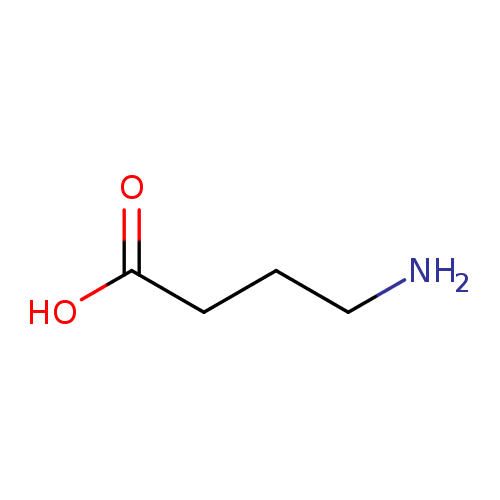
Common NameGamma-Aminobutyric acid
ClassSmall Molecule
DescriptionGamma-aminobutyric acid (GABA) is an inhibitory neurotransmitter found in the nervous systems of widely divergent species. It is the chief inhibitory neurotransmitter in the vertebrate central nervous system. In vertebrates, GABA acts at inhibitory synapses in the brain. GABA acts by binding to specific transmembrane receptors in the plasma membrane of both pre- and postsynaptic neurons. This binding causes the opening of ion channels to allow either the flow of negatively-charged chloride ions into the cell or positively-charged potassium ions out of the cell. This will typically result in a negative change in the transmembrane potential, usually causing hyperpolarization. Three general classes of GABA receptor are known. These include GABAA and GABAC ionotropic receptors, which are ion channels themselves, and GABAB metabotropic receptors, which are G protein-coupled receptors that open ion channels via intermediaries (G proteins). Neurons that produce GABA as their output are called GABAergic neurons, and have chiefly inhibitory action at receptors in the vertebrate. Medium Spiny Cells are a typical example of inhibitory CNS GABAergic cells. GABA exhibits excitatory actions in insects, mediating muscle activation at synapses between nerves and muscle cells and also the stimulation of certain glands. GABA has also been shown to have excitatory roles in the vertebrate, most notably in the developing cortex. Organisms synthesize GABA from glutamate using the enzyme L-glutamic acid decarboxylase and pyridoxal phosphate as a cofactor. It is worth noting that this involves converting the principal excitatory neurotransmitter (glutamate) into the principal inhibitory one (GABA). Drugs that act as agonists of GABA receptors (known as GABA analogues or GABAergic drugs) or increase the available amount of GABA typically have relaxing, anti-anxiety and anti-convulsive effects. Doses of GABA 1 to 3 g orally also have been used effectively to raise the IQ of mentally retarded persons. GABA is found to be deficient in cerebrospinal fluid and brain in many studies of experimental and human epilepsy. Benzodiazepines (such as Valium) are useful in status epilepticus because they act on GABA receptors. GABA increases in the brain after administration of many seizure medications. Hence, GABA is clearly an antiepileptic nutrient. Inhibitors of GAM metabolism can also produce convulsions. Spasticity and involuntary movement syndromes, e.g., Parkinson's, Friedreich's ataxia, tardive dyskinesia, and Huntington's chorea are all marked by low GABA when amino acid levels are studied. Trials of 2 to 3 g of GABA given orally have been effective in various epilepsy and spasticity syndromes. Agents that elevate GABA also are useful in lowering hypertension. Three grams orally have been effective in control of blood pressure. GABA is decreased in various encephalopathies. GABA can reduce appetite and is decreased in hypoglycemics. GABA reduces blood sugar in diabetics. Chronic brain syndromes can also be marked by deficiency of GABA; GABA has many promising uses in therapy. Cerebrospinal fluid levels of GABA may be useful in diagnosing very serious diseases. Vitamin B6, manganese, taurine and lysine can increase both GABA synthesis and effects, while aspartic acid and glutamic acid probably inhibit GABA effects. The brain's principal inhibitory neurotransmitter, GABA, along with serotonin and norepinephrine, is one of several neurotransmitters that appear to be involved in the pathogenesis of anxiety and mood disorders. There are two principal subtypes of postsynaptic GABA receptor complexes, the GABA-A and GABA-B receptor complexes. Activation of the GABA-B receptor by GABA causes neuronal membrane hyperpolarization and a resultant inhibition of neurotransmitter release. In addition to binding sites for GABA, the GABA-A receptor has binding sites for benzodiazepines, barbiturates, and neurosteroids. GABA-A receptors are coupled to chloride ion channels; activation of the receptor induces increased inward chloride ion flux, resulting in membrane hyperpolarization and neuronal inhibition. After release into the synapse, free GABA that does not bind to either the GABA-A or GABA-B receptor complexes can be taken up by neurons and glial cells. Four different membrane transporter proteins, known as GAT-1, GAT-2, GAT-3, and BGT-1, which differ in their distribution in the CNS, are believed to mediate the uptake of synaptic GABA into neurons and glial cells. The GABA-A receptor subtype regulates neuronal excitability and rapid changes in fear arousal, such as anxiety, panic, and the acute stress response. Drugs that stimulate GABA-A receptors, such as the benzodiazepines and barbiturates, have anxiolytic and anti-seizure effects via GABA-A-mediated reduction of neuronal excitability, which effectively raises the seizure threshold. In support of the anticonvulsant and anxiolytic effects of the GABA-A receptor are findings that GABA-A antagonists produce convulsions in animals and the demonstration that there is decreased GABA-A receptor binding in a positron emission tomography (PET) study of patients with panic disorder. Low plasma GABA has been reported in some depressed patients and, in fact, may be a useful trait marker for mood disorders.
Contaminant Sources
  • Cosmetic Chemicals
  • EAFUS Chemicals
  • FooDB Chemicals
  • HMDB Contaminants - Feces
  • HMDB Contaminants - Urine
  • STOFF IDENT Compounds
  • T3DB toxins
  • ToxCast & Tox21 Chemicals
Contaminant Type
  • Amine
  • Animal Toxin
  • Food Toxin
  • Metabolite
  • Natural Compound
  • Organic Compound
Chemical Structure
Thumb
Synonyms
ValueSource
4-Aminobutanoic acidChEBI
4-Aminobutyric acidChEBI
4AbuChEBI
GABAChEBI
GAMMA-AMINO-butanoIC ACIDChEBI
gamma-Amino-N-butyric acidChEBI
gamma-Aminobutanoic acidChEBI
gamma-AminobuttersaeureChEBI
Omega-aminobutyric acidChEBI
Piperidic acidChEBI
Piperidinic acidChEBI
4-AminobutyrateKegg
GammalonKegg
4-AminobutanoateGenerator
g-AMINO-butanoateGenerator
g-AMINO-butanoic acidGenerator
gamma-AMINO-butanoateGenerator
Γ-amino-butanoateGenerator
Γ-amino-butanoic acidGenerator
g-Amino-N-butyrateGenerator
g-Amino-N-butyric acidGenerator
gamma-Amino-N-butyrateGenerator
Γ-amino-N-butyrateGenerator
Γ-amino-N-butyric acidGenerator
g-AminobutanoateGenerator
g-Aminobutanoic acidGenerator
gamma-AminobutanoateGenerator
Γ-aminobutanoateGenerator
Γ-aminobutanoic acidGenerator
g-AminobuttersaeureGenerator
Γ-aminobuttersaeureGenerator
Omega-aminobutyrateGenerator
PiperidateGenerator
PiperidinateGenerator
g-AminobutyrateGenerator
g-Aminobutyric acidGenerator
gamma-AminobutyrateGenerator
Γ-aminobutyrateGenerator
Γ-aminobutyric acidGenerator
3-CarboxypropylamineHMDB
AminalonHMDB
GaballonHMDB
GamarexHMDB
gamma AminobutyrateHMDB
gamma Aminobutyric acidHMDB
GammaloneHMDB
GammarHMDB
GammasolHMDB
MielogenHMDB
MielomadeHMDB
W-AminobutyrateHMDB
W-Aminobutyric acidHMDB
gamma-Aminobutyric acid, calcium salt (2:1)HMDB
gamma-Aminobutyric acid, hydrochlorideHMDB
gamma-Aminobutyric acid, zinc salt (2:1)HMDB
4 Aminobutanoic acidHMDB
4 Aminobutyric acidHMDB
Lithium gabaHMDB
gamma Aminobutyric acid, monolithium saltHMDB
gamma Aminobutyric acid, monosodium saltHMDB
gamma-Aminobutyric acid, monolithium saltHMDB
gamma-Aminobutyric acid, monosodium saltHMDB
Acid, hydrochloride gamma-aminobutyricHMDB
AminaloneHMDB
GABA, lithiumHMDB
Hydrochloride gamma-aminobutyric acidHMDB
gamma Aminobutyric acid, hydrochlorideHMDB
4-Amino-butanoateHMDB
gamma-Aminobutyric acidKEGG
Chemical FormulaC4H9NO2
Average Molecular Mass103.120 g/mol
Monoisotopic Mass103.063 g/mol
CAS Registry Number56-12-2
IUPAC Name4-aminobutanoic acid
Traditional Namegamma(amino)-butyric acid
SMILESNCCCC(O)=O
InChI IdentifierInChI=1S/C4H9NO2/c5-3-1-2-4(6)7/h1-3,5H2,(H,6,7)
InChI KeyBTCSSZJGUNDROE-UHFFFAOYSA-N
Chemical Taxonomy
Description belongs to the class of organic compounds known as gamma amino acids and derivatives. These are amino acids having a (-NH2) group attached to the gamma carbon atom.
KingdomOrganic compounds
Super ClassOrganic acids and derivatives
ClassCarboxylic acids and derivatives
Sub ClassAmino acids, peptides, and analogues
Direct ParentGamma amino acids and derivatives
Alternative Parents
Substituents
  • Gamma amino acid or derivatives
  • Amino fatty acid
  • Straight chain fatty acid
  • Fatty acid
  • Fatty acyl
  • Amino acid
  • Monocarboxylic acid or derivatives
  • Carboxylic acid
  • Organic oxide
  • Organopnictogen compound
  • Primary amine
  • Organooxygen compound
  • Organonitrogen compound
  • Primary aliphatic amine
  • Organic oxygen compound
  • Carbonyl group
  • Organic nitrogen compound
  • Amine
  • Hydrocarbon derivative
  • Aliphatic acyclic compound
Molecular FrameworkAliphatic acyclic compounds
External Descriptors
Biological Properties
StatusDetected and Not Quantified
OriginEndogenous
Cellular Locations
  • Extracellular
  • Lysosome
  • Membrane
  • Mitochondria
Biofluid LocationsNot Available
Tissue Locations
  • Adrenal Cortex
  • Brain
  • Epidermis
  • Fibroblasts
  • Hippocampus
  • Kidney
  • Muscle
  • Nerve Cells
  • Neuron
  • Spleen
  • Testes
Pathways
NameSMPDB LinkKEGG Link
Glutamate MetabolismSMP00072 map00250
2-Hydroxyglutric Aciduria (D And L Form)SMP00136 Not Available
4-Hydroxybutyric Aciduria/Succinic Semialdehyde Dehydrogenase DeficiencySMP00243 Not Available
GABA-Transaminase DeficiencySMP00351 Not Available
HomocarnosinosisSMP00385 Not Available
Succinic semialdehyde dehydrogenase deficiencySMP00567 Not Available
ApplicationsNot Available
Biological Roles
Chemical RolesNot Available
Physical Properties
StateSolid
AppearanceWhite powder.
Experimental Properties
PropertyValue
Melting Point203°C
Boiling PointNot Available
Solubility1300.0 mg/mL
Predicted Properties
PropertyValueSource
Water Solubility365 g/LALOGPS
logP-3ALOGPS
logP-2.9ChemAxon
logS0.55ALOGPS
pKa (Strongest Acidic)4.53ChemAxon
pKa (Strongest Basic)10.22ChemAxon
Physiological Charge0ChemAxon
Hydrogen Acceptor Count3ChemAxon
Hydrogen Donor Count2ChemAxon
Polar Surface Area63.32 ŲChemAxon
Rotatable Bond Count3ChemAxon
Refractivity25.46 m³·mol⁻¹ChemAxon
Polarizability10.62 ųChemAxon
Number of Rings0ChemAxon
Bioavailability1ChemAxon
Rule of FiveYesChemAxon
Ghose FilterNoChemAxon
Veber's RuleNoChemAxon
MDDR-like RuleNoChemAxon
Spectra
Spectra
Spectrum TypeDescriptionSplash KeyView
GC-MSGC-MS Spectrum - GC-EI-TOF (Pegasus III TOF-MS system, Leco; GC 6890, Agilent Technologies) (3 TMS)splash10-00dj-1900000000-f831f79dfcaeffa8b177Spectrum
GC-MSGC-MS Spectrum - GC-EI-TOF (Pegasus III TOF-MS system, Leco; GC 6890, Agilent Technologies) (3 TMS)splash10-00di-1900000000-2de9d92a2cfc7bc655f4Spectrum
GC-MSGC-MS Spectrum - GC-EI-TOF (Pegasus III TOF-MS system, Leco; GC 6890, Agilent Technologies) (3 TMS)splash10-00di-1900000000-73bbf2ee0803f058dbedSpectrum
GC-MSGC-MS Spectrum - GC-EI-TOF (Pegasus III TOF-MS system, Leco; GC 6890, Agilent Technologies) (3 TMS)splash10-00di-1901000000-85d4bd98af8534428b5aSpectrum
GC-MSGC-MS Spectrum - GC-EI-TOF (Pegasus III TOF-MS system, Leco; GC 6890, Agilent Technologies) (3 TMS)splash10-00di-0900000000-6be23968e972a414be51Spectrum
GC-MSGC-MS Spectrum - GC-EI-TOF (Pegasus III TOF-MS system, Leco; GC 6890, Agilent Technologies) (Non-derivatized)splash10-00di-1900000000-9a224763afd8ca892addSpectrum
GC-MSGC-MS Spectrum - GC-EI-TOF (Pegasus III TOF-MS system, Leco; GC 6890, Agilent Technologies) (3 TMS)splash10-00di-9800000000-d8906d09ca1872a6391cSpectrum
GC-MSGC-MS Spectrum - GC-MS (2 TMS)splash10-0udi-1900000000-54db7e21790401045519Spectrum
GC-MSGC-MS Spectrum - GC-MS (3 TMS)splash10-00di-1901000000-b047af158215c2b5b8e8Spectrum
GC-MSGC-MS Spectrum - EI-B (Non-derivatized)splash10-001i-9000000000-21ea76dfb0da62031f1dSpectrum
GC-MSGC-MS Spectrum - EI-B (Non-derivatized)splash10-00di-0901000000-5d60b0a446fd8122f613Spectrum
GC-MSGC-MS Spectrum - GC-EI-TOF (Non-derivatized)splash10-00dj-1900000000-f831f79dfcaeffa8b177Spectrum
GC-MSGC-MS Spectrum - GC-EI-TOF (Non-derivatized)splash10-00di-1900000000-2de9d92a2cfc7bc655f4Spectrum
GC-MSGC-MS Spectrum - GC-EI-TOF (Non-derivatized)splash10-00di-1900000000-73bbf2ee0803f058dbedSpectrum
GC-MSGC-MS Spectrum - GC-EI-TOF (Non-derivatized)splash10-00di-1901000000-85d4bd98af8534428b5aSpectrum
GC-MSGC-MS Spectrum - GC-EI-TOF (Non-derivatized)splash10-00di-0900000000-6be23968e972a414be51Spectrum
GC-MSGC-MS Spectrum - GC-EI-TOF (Non-derivatized)splash10-00di-1900000000-9a224763afd8ca892addSpectrum
GC-MSGC-MS Spectrum - GC-EI-TOF (Non-derivatized)splash10-00di-9800000000-d8906d09ca1872a6391cSpectrum
GC-MSGC-MS Spectrum - GC-MS (Non-derivatized)splash10-0udi-1900000000-54db7e21790401045519Spectrum
GC-MSGC-MS Spectrum - GC-MS (Non-derivatized)splash10-00di-1901000000-b047af158215c2b5b8e8Spectrum
GC-MSGC-MS Spectrum - GC-EI-TOF (Non-derivatized)splash10-00dj-1900000000-1219470a0be188da64e6Spectrum
GC-MSGC-MS Spectrum - GC-EI-TOF (Non-derivatized)splash10-0udi-0900000000-f7117dfaf9d856c95919Spectrum
GC-MSGC-MS Spectrum - GC-EI-TOF (Non-derivatized)splash10-0006-1900000000-e35585a985d8128d044eSpectrum
Predicted GC-MSPredicted GC-MS Spectrum - GC-MS (Non-derivatized) - 70eV, Positivesplash10-001i-9000000000-d5f55a414ff1e8c65d9dSpectrum
Predicted GC-MSPredicted GC-MS Spectrum - GC-MS (1 TMS) - 70eV, Positivesplash10-0fk9-9700000000-4b2809309587240dd479Spectrum
LC-MS/MSLC-MS/MS Spectrum - Quattro_QQQ 10V, Positive (Annotated)splash10-0uxr-8900000000-ce0d8f44422836cd9965Spectrum
LC-MS/MSLC-MS/MS Spectrum - Quattro_QQQ 25V, Positive (Annotated)splash10-0005-9000000000-8ce5afb97d7c08821da3Spectrum
LC-MS/MSLC-MS/MS Spectrum - Quattro_QQQ 40V, Positive (Annotated)splash10-0005-9100000000-32c433b2c916697690f8Spectrum
LC-MS/MSLC-MS/MS Spectrum - LC-ESI-ITFT (LTQ Orbitrap XL, Thermo Scientfic) , Positivesplash10-0udi-0900000000-5831aaabdf53f3132ae5Spectrum
LC-MS/MSLC-MS/MS Spectrum - LC-ESI-ITFT (LTQ Orbitrap XL, Thermo Scientfic) , Positivesplash10-0a4i-9000000000-9babfd4a6937ecba7318Spectrum
LC-MS/MSLC-MS/MS Spectrum - LC-ESI-ITFT (LTQ Orbitrap XL, Thermo Scientfic) , Positivesplash10-0a4i-9000000000-e1c0c1485d846e9b123bSpectrum
LC-MS/MSLC-MS/MS Spectrum - LC-ESI-ITFT (LTQ Orbitrap XL, Thermo Scientfic) , Positivesplash10-0udi-0900000000-647d55ecf98850e7a875Spectrum
LC-MS/MSLC-MS/MS Spectrum - LC-ESI-ITFT (LTQ Orbitrap XL, Thermo Scientfic) , Positivesplash10-0udi-0900000000-7c107641a38922c88fcaSpectrum
LC-MS/MSLC-MS/MS Spectrum - LC-ESI-ITFT (LTQ Orbitrap XL, Thermo Scientfic) , Positivesplash10-000i-9000000000-86718b349efad6334e3aSpectrum
LC-MS/MSLC-MS/MS Spectrum - LC-ESI-ITFT (LTQ Orbitrap XL, Thermo Scientfic) , Positivesplash10-000i-9000000000-a1e84e55e4b6c6628d5dSpectrum
LC-MS/MSLC-MS/MS Spectrum - LC-ESI-ITFT (LTQ Orbitrap XL, Thermo Scientfic) , Positivesplash10-0006-0009000000-29c22bf0ed844d09c0afSpectrum
LC-MS/MSLC-MS/MS Spectrum - LC-ESI-QQ (API3000, Applied Biosystems) 10V, Negativesplash10-0udi-0900000000-1d00adad47e42c60c340Spectrum
LC-MS/MSLC-MS/MS Spectrum - LC-ESI-QQ (API3000, Applied Biosystems) 20V, Negativesplash10-0udi-1900000000-47b195fb74720cc99464Spectrum
LC-MS/MSLC-MS/MS Spectrum - LC-ESI-QQ (API3000, Applied Biosystems) 30V, Negativesplash10-001i-9000000000-a14a52dc59bf9988bb44Spectrum
LC-MS/MSLC-MS/MS Spectrum - LC-ESI-QQ (API3000, Applied Biosystems) 10V, Positivesplash10-0udi-5900000000-20c55b2809389d5ad83bSpectrum
LC-MS/MSLC-MS/MS Spectrum - LC-ESI-QQ (API3000, Applied Biosystems) 20V, Positivesplash10-000i-9000000000-eca4c5aefca98751a11eSpectrum
LC-MS/MSLC-MS/MS Spectrum - LC-ESI-QQ (API3000, Applied Biosystems) 30V, Positivesplash10-014j-9000000000-f0783316e09291749409Spectrum
LC-MS/MSLC-MS/MS Spectrum - LC-ESI-QQ (API3000, Applied Biosystems) 40V, Positivesplash10-0005-9000000000-81837eb9c0b926cb0e81Spectrum
LC-MS/MSLC-MS/MS Spectrum - LC-ESI-QQ (API3000, Applied Biosystems) 50V, Positivesplash10-0005-9000000000-8b48126992d7fa242636Spectrum
LC-MS/MSLC-MS/MS Spectrum - LC-ESI-QTOF (UPLC Q-Tof Premier, Waters) , Positivesplash10-000i-9000000000-7d4636efbc4e5d75872eSpectrum
Predicted LC-MS/MSPredicted LC-MS/MS Spectrum - 10V, Positivesplash10-000i-9100000000-655f9d93a35bfa537583Spectrum
Predicted LC-MS/MSPredicted LC-MS/MS Spectrum - 20V, Positivesplash10-00ku-9000000000-4a334d5e272576f62403Spectrum
Predicted LC-MS/MSPredicted LC-MS/MS Spectrum - 40V, Positivesplash10-0006-9000000000-4a13b03446b3370ccd43Spectrum
Predicted LC-MS/MSPredicted LC-MS/MS Spectrum - 10V, Positivesplash10-000i-9100000000-655f9d93a35bfa537583Spectrum
Predicted LC-MS/MSPredicted LC-MS/MS Spectrum - 20V, Positivesplash10-00ku-9000000000-4a334d5e272576f62403Spectrum
MSMass Spectrum (Electron Ionization)splash10-001i-9000000000-dbf4f9e19a35f953a189Spectrum
1D NMR1H NMR SpectrumNot AvailableSpectrum
1D NMR13C NMR SpectrumNot AvailableSpectrum
1D NMR1H NMR SpectrumNot AvailableSpectrum
1D NMR13C NMR SpectrumNot AvailableSpectrum
1D NMR1H NMR SpectrumNot AvailableSpectrum
1D NMR13C NMR SpectrumNot AvailableSpectrum
1D NMR1H NMR SpectrumNot AvailableSpectrum
1D NMR13C NMR SpectrumNot AvailableSpectrum
1D NMR1H NMR SpectrumNot AvailableSpectrum
1D NMR13C NMR SpectrumNot AvailableSpectrum
1D NMR1H NMR SpectrumNot AvailableSpectrum
1D NMR13C NMR SpectrumNot AvailableSpectrum
1D NMR1H NMR SpectrumNot AvailableSpectrum
1D NMR13C NMR SpectrumNot AvailableSpectrum
1D NMR1H NMR SpectrumNot AvailableSpectrum
1D NMR13C NMR SpectrumNot AvailableSpectrum
1D NMR1H NMR SpectrumNot AvailableSpectrum
1D NMR13C NMR SpectrumNot AvailableSpectrum
1D NMR1H NMR SpectrumNot AvailableSpectrum
1D NMR13C NMR SpectrumNot AvailableSpectrum
1D NMR1H NMR SpectrumNot AvailableSpectrum
1D NMR13C NMR SpectrumNot AvailableSpectrum
1D NMR1H NMR SpectrumNot AvailableSpectrum
1D NMR13C NMR SpectrumNot AvailableSpectrum
2D NMR[1H,13C] 2D NMR SpectrumNot AvailableSpectrum
Toxicity Profile
Route of ExposureNot Available
Mechanism of ToxicityNot Available
MetabolismNot Available
Toxicity ValuesNot Available
Lethal DoseNot Available
Carcinogenicity (IARC Classification)No indication of carcinogenicity to humans (not listed by IARC).
Uses/SourcesThis is an endogenously produced metabolite found in the human body. It is used in metabolic reactions, catabolic reactions or waste generation.
Minimum Risk LevelNot Available
Health EffectsChronically high levels of GABA are associated with at least 5 inborn errors of metabolism including: D-2-Hydroxyglutaric Aciduria, 4-Hydroxybutyric Aciduria/Succinic Semialdehyde Dehydrogenase Deficiency, GABA-Transaminase Deficiency, Homocarnosinosis and Succinic semialdehyde dehydrogenase deficiency.
SymptomsNot Available
TreatmentNot Available
Concentrations
Not Available
DrugBank IDDB02530
HMDB IDHMDB0000112
FooDB IDFDB030489
Phenol Explorer IDNot Available
KNApSAcK IDC00001337
BiGG ID34652
BioCyc ID4-AMINO-BUTYRATE
METLIN IDNot Available
PDB IDNot Available
Wikipedia LinkGamma-Aminobutyric_acid
Chemspider ID116
ChEBI ID16865
PubChem Compound ID119
Kegg Compound IDC00334
YMDB IDYMDB00335
ECMDB IDECMDB04017
References
Synthesis ReferenceNot Available
MSDSNot Available
General References
1. Minoshima, Ryoichi. Preparation of gamma-aminobutyric acid with unripened beans. PCT Int. Appl. (2007), 25pp.
2. Melzer N, Wittenburg D, Hartwig S, Jakubowski S, Kesting U, Willmitzer L, Lisec J, Reinsch N, Repsilber D: Investigating associations between milk metabolite profiles and milk traits of Holstein cows. J Dairy Sci. 2013 Mar;96(3):1521-34. doi: 10.3168/jds.2012-5743.
3. Mung D, Li L: Development of Chemical Isotope Labeling LC-MS for Milk Metabolomics: Comprehensive and Quantitative Profiling of the Amine/Phenol Submetabolome. Anal Chem. 2017 Apr 18;89(8):4435-4443. doi: 10.1021/acs.analchem.6b03737. Epub 2017 Mar 28.
4. Minoshima, Ryoichi. Preparation of gamma-aminobutyric acid with unripened beans. PCT Int. Appl. (2007), 25pp.
5. Silwood CJ, Lynch E, Claxson AW, Grootveld MC: 1H and (13)C NMR spectroscopic analysis of human saliva. J Dent Res. 2002 Jun;81(6):422-7.
6. Zarnowska ED, Pearce RA, Saad AA, Perouansky M: The gamma-subunit governs the susceptibility of recombinant gamma-aminobutyric acid type A receptors to block by the nonimmobilizer 1,2-dichlorohexafluorocyclobutane (F6, 2N). Anesth Analg. 2005 Aug;101(2):401-6, table of contents.
7. Levy LM, Levy-Reis I, Fujii M, Dalakas MC: Brain gamma-aminobutyric acid changes in stiff-person syndrome. Arch Neurol. 2005 Jun;62(6):970-4.
8. Hasler G, Neumeister A, van der Veen JW, Tumonis T, Bain EE, Shen J, Drevets WC, Charney DS: Normal prefrontal gamma-aminobutyric acid levels in remitted depressed subjects determined by proton magnetic resonance spectroscopy. Biol Psychiatry. 2005 Dec 15;58(12):969-73. Epub 2005 Jul 25.
9. Denda M, Inoue K, Inomata S, Denda S: gamma-Aminobutyric acid (A) receptor agonists accelerate cutaneous barrier recovery and prevent epidermal hyperplasia induced by barrier disruption. J Invest Dermatol. 2002 Nov;119(5):1041-7.
10. Wiens SC, Trudeau VL: Thyroid hormone and gamma-aminobutyric acid (GABA) interactions in neuroendocrine systems. Comp Biochem Physiol A Mol Integr Physiol. 2006 Jul;144(3):332-44. Epub 2006 Mar 9.
11. Choi C, Coupland NJ, Hanstock CC, Ogilvie CJ, Higgins AC, Gheorghiu D, Allen PS: Brain gamma-aminobutyric acid measurement by proton double-quantum filtering with selective J rewinding. Magn Reson Med. 2005 Aug;54(2):272-9.
12. Metzeler K, Agoston A, Gratzl M: An Intrinsic gamma-aminobutyric acid (GABA)ergic system in the adrenal cortex: findings from human and rat adrenal glands and the NCI-H295R cell line. Endocrinology. 2004 May;145(5):2402-11. Epub 2004 Jan 15.
13. Naini AB, Vontzalidou E, Cote LJ: Isocratic HPLC assay with electrochemical detection of free gamma-aminobutyric acid in cerebrospinal fluid. Clin Chem. 1993 Feb;39(2):247-50.
14. Levy LM, Henkin RI: Brain gamma-aminobutyric acid levels are decreased in patients with phantageusia and phantosmia demonstrated by magnetic resonance spectroscopy. J Comput Assist Tomogr. 2004 Nov-Dec;28(6):721-7.
15. Rating D, Siemes H, Loscher W: Low CSF GABA concentration in children with febrile convulsions, untreated epilepsy, and meningitis. J Neurol. 1983;230(4):217-25.
16. Spanaki MV, Siegel H, Kopylev L, Fazilat S, Dean A, Liow K, Ben-Menachem E, Gaillard WD, Theodore WH: The effect of vigabatrin (gamma-vinyl GABA) on cerebral blood flow and metabolism. Neurology. 1999 Oct 22;53(7):1518-22.
17. Campollo O, MacGillivray BB, McIntyre N: [Association of plasma ammonia and GABA levels and the degree of hepatic encephalopathy]. Rev Invest Clin. 1992 Oct-Dec;44(4):483-90.
18. Nicholson-Guthrie CS, Guthrie GD, Sutton GP, Baenziger JC: Urine GABA levels in ovarian cancer patients: elevated GABA in malignancy. Cancer Lett. 2001 Jan 10;162(1):27-30.
19. Nisijima K, Ishiguro T: Cerebrospinal fluid levels of monoamine metabolites and gamma-aminobutyric acid in neuroleptic malignant syndrome. J Psychiatr Res. 1995 May-Jun;29(3):233-44.
20. Chebib M, Johnston GA: The 'ABC' of GABA receptors: a brief review. Clin Exp Pharmacol Physiol. 1999 Nov;26(11):937-40.
21. Petroff OA: GABA and glutamate in the human brain. Neuroscientist. 2002 Dec;8(6):562-73. doi: 10.1177/1073858402238515.
22. Pearl PL, Hartka TR, Cabalza JL, Taylor J, Gibson MK: Inherited disorders of GABA metabolism. Future Neurol. 2006 Sep;1(5):631-636. doi: 10.2217/14796708.1.5.631.
23. Mezzelani A, Landini M, Facchiano F, Raggi ME, Villa L, Molteni M, De Santis B, Brera C, Caroli AM, Milanesi L, Marabotti A: Environment, dysbiosis, immunity and sex-specific susceptibility: a translational hypothesis for regressive autism pathogenesis. Nutr Neurosci. 2015 May;18(4):145-61. doi: 10.1179/1476830513Y.0000000108. Epub 2014 Jan 21.
24. Elshenawy S, Pinney SE, Stuart T, Doulias PT, Zura G, Parry S, Elovitz MA, Bennett MJ, Bansal A, Strauss JF 3rd, Ischiropoulos H, Simmons RA: The Metabolomic Signature of the Placenta in Spontaneous Preterm Birth. Int J Mol Sci. 2020 Feb 4;21(3). pii: ijms21031043. doi: 10.3390/ijms21031043.
25. https://www.ncbi.nlm.nih.gov/pubmed/?term=10630630
26. https://www.ncbi.nlm.nih.gov/pubmed/?term=10930630
27. https://www.ncbi.nlm.nih.gov/pubmed/?term=16276116
28. https://www.ncbi.nlm.nih.gov/pubmed/?term=21614609
29. https://www.ncbi.nlm.nih.gov/pubmed/?term=22770225