Record Information
Version1.0
Creation Date2014-08-29 06:03:19 UTC
Update Date2026-05-14 16:30:10 UTC
Accession NumberCHEM003208
Identification
Common NameL-Lysine
ClassSmall Molecule
DescriptionL-Lysine (abbreviated as Lys or K) is an alpha-amino acid with the chemical formula HO2CCH(NH2)(CH2)4NH2. This amino acid is an essential amino acid, which means that humans cannot synthesize it. Its codons are AAA and AAG. L-Lysine is a base, as are arginine and histidine. The epsilon-amino group often participates in hydrogen bonding and as a general base in catalysis. Common posttranslational modifications include methylation of the epsilon-amino group, giving methyl-, dimethyl-, and trimethyllysine. The latter occurs in calmodulin. Other posttranslational modifications include acetylation. Collagen contains hydroxylysine which is derived from lysine by lysyl hydroxylase. O-Glycosylation of lysine residues in the endoplasmic reticulum or Golgi apparatus is used to mark certain proteins for secretion from the cell.L-lysine is an essential amino acid. Normal requirements for lysine have been found to be about 8 g per day or 12 mg/kg in adults. Children and infants need more- 44 mg/kg per day for an eleven to-twelve-year old, and 97 mg/kg per day for three-to six-month old. Lysine is highly concentrated in muscle compared to most other amino acids. Lysine is high in foods such as wheat germ, cottage cheese and chicken. Of meat products, wild game and pork have the highest concentration of lysine. Fruits and vegetables contain little lysine, except avocados. Normal lysine metabolism is dependent upon many nutrients including niacin, vitamin B6, riboflavin, vitamin C, glutamic acid and iron. Excess arginine antagonizes lysine. Several inborn errors of lysine metabolism are known. Most are marked by mental retardation with occasional diverse symptoms such as absence of secondary sex characteristics, undescended testes, abnormal facial structure, anemia, obesity, enlarged liver and spleen, and eye muscle imbalance. Lysine also may be a useful adjunct in the treatment of osteoporosis. Although high protein diets result in loss of large amounts of calcium in urine, so does lysine deficiency. Lysine may be an adjunct therapy because it reduces calcium losses in urine. Lysine deficiency also may result in immunodeficiency. Requirements for this amino acid are probably increased by stress. Lysine toxicity has not occurred with oral doses in humans. Lysine dosages are presently too small and may fail to reach the concentrations necessary to prove potential therapeutic applications. Lysine metabolites, amino caproic acid and carnitine have already shown their therapeutic potential. Thirty grams daily of amino caproic acid has been used as an initial daily dose in treating blood clotting disorders, indicating that the proper doses of lysine, its precursor, have yet to be used in medicine. Low lysine levels have been found in patients with Parkinson's, hypothyroidism, kidney disease, asthma and depression. The exact significance of these levels is unclear, yet lysine therapy can normalize the level and has been associated with improvement of some patients with these conditions. Abnormally elevated hydroxylysines have been found in virtually all chronic degenerative diseases and coumadin therapy. The levels of this stress marker may be improved by high doses of vitamin C. Lysine is particularly useful in therapy for marasmus (wasting) and herpes simplex. It stops the growth of herpes simplex in culture, and has helped to reduce the number and occurrence of cold sores in clinical studies. Dosing has not been adequately studied, but beneficial clinical effects occur in doses ranging from 100 mg to 4 g a day. Higher doses may also be useful, and toxicity has not been reported in doses as high as 8 g per day. Diets high in lysine and low in arginine can be useful in the prevention and treatment of herpes. Some researchers think herpes simplex virus is involved in many other diseases related to cranial nerves such as migraines, Bell's palsy and Meniere's disease. Herpes blister fluid will produce fatal encephalitis in the rabbit.
Contaminant Sources
  • Cosmetic Chemicals
  • EAFUS Chemicals
  • FooDB Chemicals
  • HMDB Contaminants - Feces
  • HMDB Contaminants - Urine
  • STOFF IDENT Compounds
  • T3DB toxins
  • ToxCast & Tox21 Chemicals
Contaminant Type
  • Amine
  • Amino Acid, Essential
  • Animal Toxin
  • Dietary Supplement
  • Drug
  • Food Toxin
  • Household Toxin
  • Metabolite
  • Micronutrient
  • Natural Compound
  • Nutraceutical
  • Organic Compound
  • Supplement
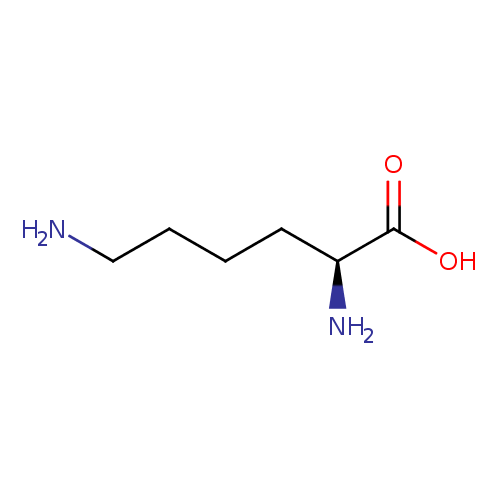
Chemical Structure
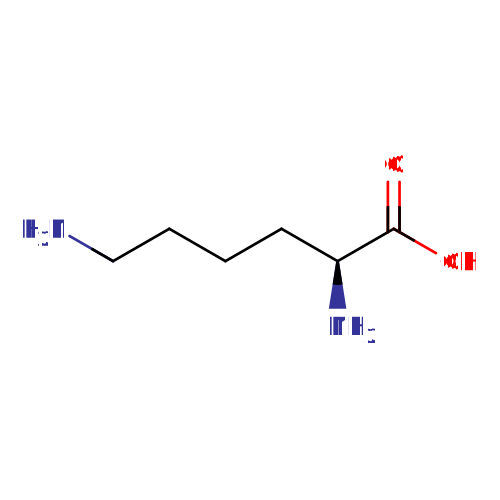
Thumb
Synonyms
ValueSource
(S)-2,6-Diaminohexanoic acidChEBI
(S)-alpha,epsilon-Diaminocaproic acidChEBI
(S)-LysineChEBI
6-Ammonio-L-norleucineChEBI
KChEBI
L-2,6-Diaminocaproic acidChEBI
L-LysinChEBI
LysChEBI
LysinaChEBI
LysineChEBI
Lysine acidChEBI
LysinumChEBI
2,6-Diaminohexanoic acidKegg
(S)-2,6-DiaminohexanoateGenerator
(S)-a,epsilon-DiaminocaproateGenerator
(S)-a,epsilon-Diaminocaproic acidGenerator
(S)-alpha,epsilon-DiaminocaproateGenerator
(S)-Α,epsilon-diaminocaproateGenerator
(S)-Α,epsilon-diaminocaproic acidGenerator
L-2,6-DiaminocaproateGenerator
2,6-DiaminohexanoateGenerator
(+)-S-LysineHMDB
(S)-2,6-Diamino-hexanoateHMDB
(S)-2,6-Diamino-hexanoic acidHMDB
(S)-a,e-DiaminocaproateHMDB
(S)-a,e-Diaminocaproic acidHMDB
6-Amino-aminutrinHMDB
6-Amino-L-norleucineHMDB
a-LysineHMDB
alpha-LysineHMDB
AminutrinHMDB
H-Lys-OHHMDB
L-(+)-LysineHMDB
L-2,6-DiainohexanoateHMDB
L-2,6-Diainohexanoic acidHMDB
L-LysHMDB
Acetate, lysineHMDB
EnisylHMDB
Lysine hydrochlorideHMDB
L LysineHMDB
Lysine acetateHMDB
Chemical FormulaC6H14N2O2
Average Molecular Mass146.188 g/mol
Monoisotopic Mass146.106 g/mol
CAS Registry Number56-87-1
IUPAC Name(2S)-2,6-diaminohexanoic acid
Traditional NameL-lysine
SMILESNCCCC[C@H](N)C(O)=O
InChI IdentifierInChI=1S/C6H14N2O2/c7-4-2-1-3-5(8)6(9)10/h5H,1-4,7-8H2,(H,9,10)/t5-/m0/s1
InChI KeyKDXKERNSBIXSRK-YFKPBYRVSA-N
Chemical Taxonomy
Description belongs to the class of organic compounds known as l-alpha-amino acids. These are alpha amino acids which have the L-configuration of the alpha-carbon atom.
KingdomOrganic compounds
Super ClassOrganic acids and derivatives
ClassCarboxylic acids and derivatives
Sub ClassAmino acids, peptides, and analogues
Direct ParentL-alpha-amino acids
Alternative Parents
Substituents
  • L-alpha-amino acid
  • Medium-chain fatty acid
  • Amino fatty acid
  • Fatty acid
  • Fatty acyl
  • Amino acid
  • Monocarboxylic acid or derivatives
  • Carboxylic acid
  • Organic oxide
  • Organopnictogen compound
  • Organic oxygen compound
  • Primary amine
  • Organooxygen compound
  • Organonitrogen compound
  • Primary aliphatic amine
  • Carbonyl group
  • Organic nitrogen compound
  • Amine
  • Hydrocarbon derivative
  • Aliphatic acyclic compound
Molecular FrameworkAliphatic acyclic compounds
External Descriptors
Biological Properties
StatusDetected and Not Quantified
OriginEndogenous
Cellular Locations
  • Cytoplasm
  • Extracellular
  • Membrane
  • Mitochondria
  • Nucleus
  • Peroxisome
Biofluid LocationsNot Available
Tissue Locations
  • All Tissues
  • Prostate
Pathways
NameSMPDB LinkKEGG Link
Biotin MetabolismSMP00066 map00780
Carnitine SynthesisSMP00465 Not Available
Lysine DegradationSMP00037 map00310
Transcription/TranslationSMP00019 Not Available
2-Hydroxyglutric Aciduria (D And L Form)SMP00136 Not Available
Hyperlysinemia I, FamilialSMP00527 Not Available
Hyperlysinemia II or SaccharopinuriaSMP00528 Not Available
Pyruvate Carboxylase DeficiencySMP00350 Not Available
Saccharopinuria/Hyperlysinemia IISMP00239 Not Available
Applications
Biological Roles
Chemical RolesNot Available
Physical Properties
StateSolid
AppearanceWhite powder.
Experimental Properties
PropertyValue
Melting Point224.5 dec°C
Boiling PointNot Available
Solubility1E+006 mg/L (at 20°C)
Predicted Properties
PropertyValueSource
Water Solubility105 g/LALOGPS
logP-3.8ALOGPS
logP-3.2ChemAxon
logS-0.14ALOGPS
pKa (Strongest Acidic)2.74ChemAxon
pKa (Strongest Basic)10.29ChemAxon
Physiological Charge1ChemAxon
Hydrogen Acceptor Count4ChemAxon
Hydrogen Donor Count3ChemAxon
Polar Surface Area89.34 ŲChemAxon
Rotatable Bond Count5ChemAxon
Refractivity37.81 m³·mol⁻¹ChemAxon
Polarizability15.84 ųChemAxon
Number of Rings0ChemAxon
Bioavailability1ChemAxon
Rule of FiveYesChemAxon
Ghose FilterNoChemAxon
Veber's RuleNoChemAxon
MDDR-like RuleNoChemAxon
Spectra
Spectra
Spectrum TypeDescriptionSplash KeyView
GC-MSGC-MS Spectrum - GC-EI-TOF (Pegasus III TOF-MS system, Leco; GC 6890, Agilent Technologies) (3 TMS)splash10-00di-3910000000-98c565675de67aa87900Spectrum
GC-MSGC-MS Spectrum - GC-EI-TOF (Pegasus III TOF-MS system, Leco; GC 6890, Agilent Technologies) (Non-derivatized)splash10-0ab9-1910000000-87ef8534f592041f50f2Spectrum
GC-MSGC-MS Spectrum - GC-EI-TOF (Pegasus III TOF-MS system, Leco; GC 6890, Agilent Technologies) (4 TMS)splash10-0a4i-1921000000-84f7815b0f650fa17444Spectrum
GC-MSGC-MS Spectrum - GC-MS (3 TMS)splash10-001i-9600000000-823408dba509cb204acfSpectrum
GC-MSGC-MS Spectrum - GC-MS (3 TMS)splash10-00di-3910000000-4f5578af5e7d8b6c49f7Spectrum
GC-MSGC-MS Spectrum - GC-MS (4 TMS)splash10-0adi-1921000000-4e56d95e623e792f9e6bSpectrum
GC-MSGC-MS Spectrum - EI-B (Non-derivatized)splash10-00di-0921000000-eeb49e57bc1a75193058Spectrum
GC-MSGC-MS Spectrum - EI-B (Non-derivatized)splash10-0ab9-0921000000-ebb902be0f3754225b2fSpectrum
GC-MSGC-MS Spectrum - GC-EI-TOF (Non-derivatized)splash10-00di-3910000000-98c565675de67aa87900Spectrum
GC-MSGC-MS Spectrum - GC-EI-TOF (Non-derivatized)splash10-0ab9-1910000000-87ef8534f592041f50f2Spectrum
GC-MSGC-MS Spectrum - GC-EI-QQ (Non-derivatized)splash10-0fdk-3923000000-15b84c2649c1b0455de1Spectrum
GC-MSGC-MS Spectrum - GC-EI-TOF (Non-derivatized)splash10-0a4i-1921000000-84f7815b0f650fa17444Spectrum
GC-MSGC-MS Spectrum - GC-MS (Non-derivatized)splash10-001i-9600000000-823408dba509cb204acfSpectrum
GC-MSGC-MS Spectrum - GC-MS (Non-derivatized)splash10-00di-3910000000-4f5578af5e7d8b6c49f7Spectrum
GC-MSGC-MS Spectrum - GC-MS (Non-derivatized)splash10-0adi-1921000000-4e56d95e623e792f9e6bSpectrum
GC-MSGC-MS Spectrum - GC-EI-TOF (Non-derivatized)splash10-0abi-1900000000-9ad174122e4d6e003eb8Spectrum
Predicted GC-MSPredicted GC-MS Spectrum - GC-MS (Non-derivatized) - 70eV, Positivesplash10-0089-9100000000-974cc55c9130ed5213ebSpectrum
Predicted GC-MSPredicted GC-MS Spectrum - GC-MS (1 TMS) - 70eV, Positivesplash10-0ue9-9700000000-57b24ae819b6ec26bfd2Spectrum
Predicted GC-MSPredicted GC-MS Spectrum - GC-MS (Non-derivatized) - 70eV, PositiveNot AvailableSpectrum
Predicted GC-MSPredicted GC-MS Spectrum - GC-MS (TMS_1_2) - 70eV, PositiveNot AvailableSpectrum
Predicted GC-MSPredicted GC-MS Spectrum - GC-MS (TMS_1_3) - 70eV, PositiveNot AvailableSpectrum
Predicted GC-MSPredicted GC-MS Spectrum - GC-MS (TBDMS_1_1) - 70eV, PositiveNot AvailableSpectrum
Predicted GC-MSPredicted GC-MS Spectrum - GC-MS (TBDMS_1_2) - 70eV, PositiveNot AvailableSpectrum
Predicted GC-MSPredicted GC-MS Spectrum - GC-MS (TBDMS_1_3) - 70eV, PositiveNot AvailableSpectrum
LC-MS/MSLC-MS/MS Spectrum - Quattro_QQQ 10V, Positive (Annotated)splash10-003r-8900000000-470a0beb4f338ed89bcaSpectrum
LC-MS/MSLC-MS/MS Spectrum - Quattro_QQQ 25V, Positive (Annotated)splash10-001i-9000000000-74e9193d9d33c2509bfaSpectrum
LC-MS/MSLC-MS/MS Spectrum - Quattro_QQQ 40V, Positive (Annotated)splash10-0a59-9000000000-822c4e78250fffa56e39Spectrum
LC-MS/MSLC-MS/MS Spectrum - LC-ESI-ITFT (LTQ Orbitrap XL, Thermo Scientfic) , Positivesplash10-0002-0900000000-04f9a62a77fb5a37ca22Spectrum
LC-MS/MSLC-MS/MS Spectrum - LC-ESI-ITFT (LTQ Orbitrap XL, Thermo Scientfic) , Positivesplash10-001i-9000000000-035035ecfa084671479bSpectrum
LC-MS/MSLC-MS/MS Spectrum - LC-ESI-ITFT (LTQ Orbitrap XL, Thermo Scientfic) , Positivesplash10-001i-0900000000-5bb15839f86f4fca0d0bSpectrum
LC-MS/MSLC-MS/MS Spectrum - LC-ESI-ITFT (LTQ Orbitrap XL, Thermo Scientfic) , Positivesplash10-001i-0900000000-6c8ef03aa83eb1cab35bSpectrum
LC-MS/MSLC-MS/MS Spectrum - LC-ESI-ITFT (LTQ Orbitrap XL, Thermo Scientfic) , Positivesplash10-01ot-0910000000-c182a7dcdbc260666978Spectrum
LC-MS/MSLC-MS/MS Spectrum - LC-ESI-ITFT (LTQ Orbitrap XL, Thermo Scientfic) , Positivesplash10-0a4j-0900000000-6c5f378cef2f14204e15Spectrum
LC-MS/MSLC-MS/MS Spectrum - LC-ESI-ITFT (LTQ Orbitrap XL, Thermo Scientfic) , Positivesplash10-001i-0900000000-41e1a6499097748934b0Spectrum
LC-MS/MSLC-MS/MS Spectrum - LC-ESI-ITFT (LTQ Orbitrap XL, Thermo Scientfic) , Positivesplash10-03di-0390000000-7270a0b85b9e3f9f6373Spectrum
LC-MS/MSLC-MS/MS Spectrum - LC-ESI-QQ (API3000, Applied Biosystems) 10V, Negativesplash10-0002-0900000000-a997e809874357908880Spectrum
LC-MS/MSLC-MS/MS Spectrum - LC-ESI-QQ (API3000, Applied Biosystems) 20V, Negativesplash10-0002-2900000000-f64110414f82c93e1fe8Spectrum
LC-MS/MSLC-MS/MS Spectrum - LC-ESI-QQ (API3000, Applied Biosystems) 30V, Negativesplash10-014m-9200000000-33a38e6370811c5ddc82Spectrum
LC-MS/MSLC-MS/MS Spectrum - LC-ESI-QQ (API3000, Applied Biosystems) 40V, Negativesplash10-0006-9000000000-3a8b0b6e62f5c66d3720Spectrum
LC-MS/MSLC-MS/MS Spectrum - LC-ESI-QQ (API3000, Applied Biosystems) 50V, Negativesplash10-0006-9000000000-d5167570d11d77fd541eSpectrum
LC-MS/MSLC-MS/MS Spectrum - LC-ESI-QQ (API3000, Applied Biosystems) 10V, Positivesplash10-0002-0900000000-a46231bd529176101129Spectrum
LC-MS/MSLC-MS/MS Spectrum - LC-ESI-QQ (API3000, Applied Biosystems) 20V, Positivesplash10-001i-9200000000-f8b9f01b2a9886c51df9Spectrum
LC-MS/MSLC-MS/MS Spectrum - LC-ESI-QQ (API3000, Applied Biosystems) 30V, Positivesplash10-001i-9000000000-ace0361476d939043e98Spectrum
LC-MS/MSLC-MS/MS Spectrum - LC-ESI-QQ (API3000, Applied Biosystems) 40V, Positivesplash10-001i-9000000000-5b06b6e9dcf9faf8e89cSpectrum
LC-MS/MSLC-MS/MS Spectrum - LC-ESI-QQ (API3000, Applied Biosystems) 50V, Positivesplash10-053r-9000000000-2894ef6d7f72ea71688eSpectrum
LC-MS/MSLC-MS/MS Spectrum - CE-ESI-TOF (CE-system connected to 6210 Time-of-Flight MS, Agilent) , Positivesplash10-0002-0900000000-290902f43cf851e8ef5eSpectrum
LC-MS/MSLC-MS/MS Spectrum - LC-ESI-QTOF (UPLC Q-Tof Premier, Waters) , Positivesplash10-001i-9300000000-f81193f6b50235ec8147Spectrum
LC-MS/MSLC-MS/MS Spectrum - LC-ESI-QTOF (UPLC Q-Tof Premier, Waters) , Positivesplash10-001i-9300000000-8931d2193adab166d5e4Spectrum
LC-MS/MSLC-MS/MS Spectrum - LC-ESI-QTOF (UPLC Q-Tof Premier, Waters) , Negativesplash10-0002-0900000000-b4825cc64fcb830c6967Spectrum
1D NMR1H NMR SpectrumNot AvailableSpectrum
1D NMR13C NMR SpectrumNot AvailableSpectrum
1D NMR1H NMR SpectrumNot AvailableSpectrum
1D NMR13C NMR SpectrumNot AvailableSpectrum
1D NMR1H NMR SpectrumNot AvailableSpectrum
1D NMR13C NMR SpectrumNot AvailableSpectrum
1D NMR1H NMR SpectrumNot AvailableSpectrum
1D NMR13C NMR SpectrumNot AvailableSpectrum
1D NMR1H NMR SpectrumNot AvailableSpectrum
1D NMR13C NMR SpectrumNot AvailableSpectrum
1D NMR1H NMR SpectrumNot AvailableSpectrum
1D NMR13C NMR SpectrumNot AvailableSpectrum
1D NMR1H NMR SpectrumNot AvailableSpectrum
1D NMR13C NMR SpectrumNot AvailableSpectrum
1D NMR1H NMR SpectrumNot AvailableSpectrum
1D NMR13C NMR SpectrumNot AvailableSpectrum
1D NMR1H NMR SpectrumNot AvailableSpectrum
1D NMR13C NMR SpectrumNot AvailableSpectrum
1D NMR1H NMR SpectrumNot AvailableSpectrum
1D NMR13C NMR SpectrumNot AvailableSpectrum
1D NMR1H NMR SpectrumNot AvailableSpectrum
1D NMR13C NMR SpectrumNot AvailableSpectrum
1D NMR1H NMR SpectrumNot AvailableSpectrum
1D NMR13C NMR SpectrumNot AvailableSpectrum
2D NMR[1H,1H] 2D NMR SpectrumNot AvailableSpectrum
2D NMR[1H,13C] 2D NMR SpectrumNot AvailableSpectrum
Toxicity Profile
Route of ExposureAbsorbed from the lumen of the small intestine into the enterocytes by an active transport process
Mechanism of ToxicityProteins of the herpes simplex virus are rich in L-arginine, and tissue culture studies indicate an enhancing effect on viral replication when the amino acid ratio of L-arginine to L-lysine is high in the tissue culture media. When the ratio of L-lysine to L-arginine is high, viral replication and the cytopathogenicity of herpes simplex virus have been found to be inhibited. L-lysine may facilitate the absorption of calcium from the small intestine.
MetabolismHepatic
Toxicity ValuesNot Available
Lethal DoseNot Available
Carcinogenicity (IARC Classification)No indication of carcinogenicity to humans (not listed by IARC).
Uses/SourcesSupplemental L-lysine has putative anti-herpes simplex virus activity. There is preliminary research suggesting that it may have some anti-osteoporotic activity.
Minimum Risk LevelNot Available
Health EffectsChronically high levels of lysine are associated with at least 5 inborn errors of metabolism including: D-2-Hydroxyglutaric Aciduria, Familial Hyperlysinemia I, Hyperlysinemia II, Pyruvate carboxylase deficiency and Saccharopinuria.
SymptomsNot Available
TreatmentNot Available
Concentrations
Not Available
DrugBank IDDB00123
HMDB IDHMDB0000182
FooDB IDFDB000474
Phenol Explorer IDNot Available
KNApSAcK IDC00001378
BiGG ID33655
BioCyc IDLYS
METLIN ID5200
PDB IDLYS
Wikipedia LinkLysine
Chemspider ID5747
ChEBI ID18019
PubChem Compound ID5962
Kegg Compound IDC00047
YMDB IDYMDB00330
ECMDB IDECMDB00182
References
Synthesis Reference

Joseph Michael Stevens, Thomas P. Binder, “Process for making granular L-lysine.” U.S. Patent US5990350, issued 0000.

MSDSLink
General References
1. Rothstein, Morton. DL-Lysine-6-C14 and DL-a-aminoadipic acid-6-C14. Biochemical Preparations (1961), 8 85-8.
2. Klein MS, Almstetter MF, Schlamberger G, Nurnberger N, Dettmer K, Oefner PJ, Meyer HH, Wiedemann S, Gronwald W: Nuclear magnetic resonance and mass spectrometry-based milk metabolomics in dairy cows during early and late lactation. J Dairy Sci. 2010 Apr;93(4):1539-50. doi: 10.3168/jds.2009-2563.
3. Mung D, Li L: Development of Chemical Isotope Labeling LC-MS for Milk Metabolomics: Comprehensive and Quantitative Profiling of the Amine/Phenol Submetabolome. Anal Chem. 2017 Apr 18;89(8):4435-4443. doi: 10.1021/acs.analchem.6b03737. Epub 2017 Mar 28.
4. Klein MS, Almstetter MF, Nurnberger N, Sigl G, Gronwald W, Wiedemann S, Dettmer K, Oefner PJ: Correlations between milk and plasma levels of amino and carboxylic acids in dairy cows. J Proteome Res. 2013 Nov 1;12(11):5223-32. doi: 10.1021/pr4006537. Epub 2013 Aug 23.
5. Mung D, Li L: Applying quantitative metabolomics based on chemical isotope labeling LC-MS for detecting potential milk adulterant in human milk. Anal Chim Acta. 2018 Feb 25;1001:78-85. doi: 10.1016/j.aca.2017.11.019. Epub 2017 Nov 14.
6. Kurt J. Boudonck, Matthew W. Mitchell, Jacob Wulff and John A. Ryals. Characterization of the biochemical variability of bovine milk using metabolomics. Metabolomics (2009) 5:375?386
7. A. Foroutan et al. The Chemical Composition of Commercial Cow's Milk (in preparation)
8. Fooddata+, The Technical University of Denmark (DTU): https://frida.fooddata.dk/QueryFood.php?fn=milk&lang=en
9. Rothstein, Morton. DL-Lysine-6-C14 and DL-a-aminoadipic acid-6-C14. Biochemical Preparations (1961), 8 85-8.
10. Kranz BR: Detection of rare malignant cells and their apoptotic fragments in cerebrospinal fluid. Lancet. 2000 Oct 7;356(9237):1242-4.
11. Peng CT, Wu KH, Lan SJ, Tsai JJ, Tsai FJ, Tsai CH: Amino acid concentrations in cerebrospinal fluid in children with acute lymphoblastic leukemia undergoing chemotherapy. Eur J Cancer. 2005 May;41(8):1158-63. Epub 2005 Apr 14.
12. Cynober LA: Plasma amino acid levels with a note on membrane transport: characteristics, regulation, and metabolic significance. Nutrition. 2002 Sep;18(9):761-6.
13. Rainesalo S, Keranen T, Palmio J, Peltola J, Oja SS, Saransaari P: Plasma and cerebrospinal fluid amino acids in epileptic patients. Neurochem Res. 2004 Jan;29(1):319-24.
14. Silwood CJ, Lynch E, Claxson AW, Grootveld MC: 1H and (13)C NMR spectroscopic analysis of human saliva. J Dent Res. 2002 Jun;81(6):422-7.
15. Hajishengallis G, Koga T, Russell MW: Affinity and specificity of the interactions between Streptococcus mutans antigen I/II and salivary components. J Dent Res. 1994 Sep;73(9):1493-502.
16. Pahler A, Parker J, Dekant W: Dose-dependent protein adduct formation in kidney, liver, and blood of rats and in human blood after perchloroethene inhalation. Toxicol Sci. 1999 Mar;48(1):5-13.
17. Nicholson JK, O'Flynn MP, Sadler PJ, Macleod AF, Juul SM, Sonksen PH: Proton-nuclear-magnetic-resonance studies of serum, plasma and urine from fasting normal and diabetic subjects. Biochem J. 1984 Jan 15;217(2):365-75.
18. Engelborghs S, Marescau B, De Deyn PP: Amino acids and biogenic amines in cerebrospinal fluid of patients with Parkinson's disease. Neurochem Res. 2003 Aug;28(8):1145-50.
19. Faraasen S, Voros J, Csucs G, Textor M, Merkle HP, Walter E: Ligand-specific targeting of microspheres to phagocytes by surface modification with poly(L-lysine)-grafted poly(ethylene glycol) conjugate. Pharm Res. 2003 Feb;20(2):237-46.
20. Hagenfeldt L, Bjerkenstedt L, Edman G, Sedvall G, Wiesel FA: Amino acids in plasma and CSF and monoamine metabolites in CSF: interrelationship in healthy subjects. J Neurochem. 1984 Mar;42(3):833-7.
21. Sreekumar A, Poisson LM, Rajendiran TM, Khan AP, Cao Q, Yu J, Laxman B, Mehra R, Lonigro RJ, Li Y, Nyati MK, Ahsan A, Kalyana-Sundaram S, Han B, Cao X, Byun J, Omenn GS, Ghosh D, Pennathur S, Alexander DC, Berger A, Shuster JR, Wei JT, Varambally S, Beecher C, Chinnaiyan AM: Metabolomic profiles delineate potential role for sarcosine in prostate cancer progression. Nature. 2009 Feb 12;457(7231):910-4. doi: 10.1038/nature07762.
22. Brunk E, Sahoo S, Zielinski DC, Altunkaya A, Drager A, Mih N, Gatto F, Nilsson A, Preciat Gonzalez GA, Aurich MK, Prlic A, Sastry A, Danielsdottir AD, Heinken A, Noronha A, Rose PW, Burley SK, Fleming RMT, Nielsen J, Thiele I, Palsson BO: Recon3D enables a three-dimensional view of gene variation in human metabolism. Nat Biotechnol. 2018 Mar;36(3):272-281. doi: 10.1038/nbt.4072. Epub 2018 Feb 19.
23. Elshenawy S, Pinney SE, Stuart T, Doulias PT, Zura G, Parry S, Elovitz MA, Bennett MJ, Bansal A, Strauss JF 3rd, Ischiropoulos H, Simmons RA: The Metabolomic Signature of the Placenta in Spontaneous Preterm Birth. Int J Mol Sci. 2020 Feb 4;21(3). pii: ijms21031043. doi: 10.3390/ijms21031043.
24. https://www.ncbi.nlm.nih.gov/pubmed/?term=10930630
25. https://www.ncbi.nlm.nih.gov/pubmed/?term=16901854
26. https://www.ncbi.nlm.nih.gov/pubmed/?term=17051348
27. https://www.ncbi.nlm.nih.gov/pubmed/?term=17979222
28. https://www.ncbi.nlm.nih.gov/pubmed/?term=22019452
29. https://www.ncbi.nlm.nih.gov/pubmed/?term=22064742
30. https://www.ncbi.nlm.nih.gov/pubmed/?term=22575419
31. https://www.ncbi.nlm.nih.gov/pubmed/?term=22735334
32. https://www.ncbi.nlm.nih.gov/pubmed/?term=23167968
33. https://www.ncbi.nlm.nih.gov/pubmed/?term=23325920
34. https://www.ncbi.nlm.nih.gov/pubmed/?term=23722415
35. https://www.ncbi.nlm.nih.gov/pubmed/?term=24064214
36. https://www.ncbi.nlm.nih.gov/pubmed/?term=24831709
37. https://www.ncbi.nlm.nih.gov/pubmed/?term=25108762
38. https://www.ncbi.nlm.nih.gov/pubmed/?term=8070089
39. https://www.ncbi.nlm.nih.gov/pubmed/?term=8587651