Record Information
Version1.0
Creation Date2014-08-29 05:58:32 UTC
Update Date2026-04-16 21:17:44 UTC
Accession NumberCHEM003197
Identification
Common NameFumaric acid
ClassSmall Molecule
DescriptionFumaric acid is a precursor to L-malate in the Krebs tricarboxylic acid cycle. It is formed by the oxidation of succinate by succinate dehydrogenase. Fumarate is converted by fumarase to malate. A fumarate is a salt or ester of the organic compound fumaric acid, a dicarboxylic acid. Fumarate has recently been recognized as an oncometabolite. (8). As a food additive, fumaric acid is used to impart a tart taste to processed foods. It is also used as an antifungal agent in boxed foods such as cake mixes and flours, as well as tortillas. Fumaric acid is also added to bread to increase the porosity of the final baked product. It is used to impart a sour taste to sourdough and rye bread. In cake mixes, it is used to maintain a low pH and prevent clumping of the flours used in the mix. In fruit drinks, fumaric acid is used to maintain a low pH which, in turn, helps to stabilize flavor and color. Fumaric acid also prevents the growth of E. coli in beverages when used in combination with sodium benzoate. When added to wines, fumaric acid helps to prevent further fermentation and yet maintain low pH and eliminate traces of metallic elements. In this fashion, it helps to stabilize the taste of wine. Fumaric acid can also be added to dairy products, sports drinks, jams, jellies and candies. Fumaric acid helps to break down bonds between gluten proteins in wheat and helps to create a more pliable dough. Fumaric acid is used in paper sizing, printer toner, and polyester resin for making molded walls.
Contaminant Sources
  • Clean Air Act Chemicals
  • Cosmetic Chemicals
  • EAFUS Chemicals
  • FooDB Chemicals
  • HMDB Contaminants - Feces
  • HMDB Contaminants - Urine
  • HPV EPA Chemicals
  • T3DB toxins
  • ToxCast & Tox21 Chemicals
Contaminant Type
  • Animal Toxin
  • Food Toxin
  • Lachrymator
  • Metabolite
  • Natural Compound
  • Organic Compound
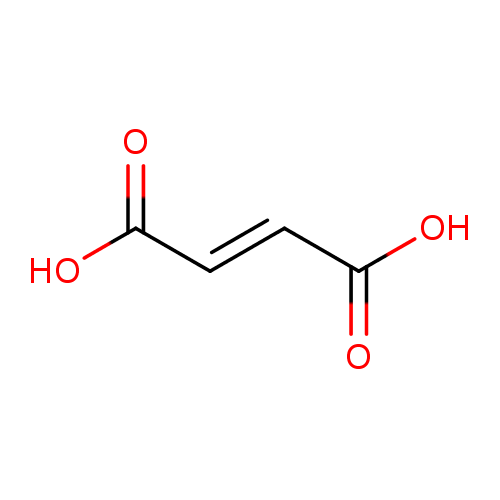
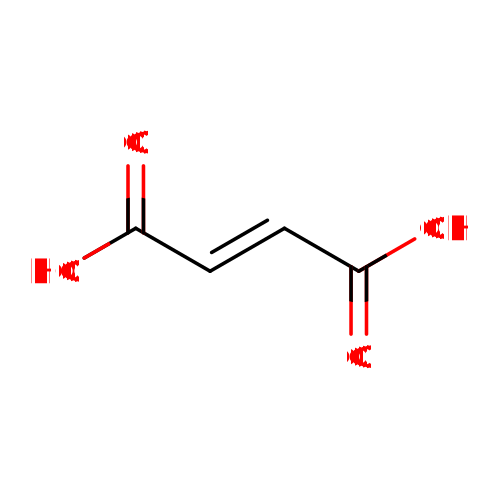
Chemical Structure
Thumb
Synonyms
ValueSource
(2E)-2-Butenedioic acidChEBI
(e)-2-Butenedioic acidChEBI
e297ChEBI
FumarsaeureChEBI
trans-1,2-Ethylenedicarboxylic acidChEBI
trans-But-2-enedioic acidChEBI
trans-Butenedioic acidChEBI
(2E)-2-ButenedioateGenerator
(e)-2-ButenedioateGenerator
trans-1,2-EthylenedicarboxylateGenerator
trans-But-2-enedioateGenerator
trans-ButenedioateGenerator
FumarateGenerator
(2E)-But-2-enedioateHMDB
(2E)-But-2-enedioic acidHMDB
2-(e)-ButenedioateHMDB
2-(e)-Butenedioic acidHMDB
AllomaleateHMDB
Allomaleic acidHMDB
BoletateHMDB
Boletic acidHMDB
FC 33HMDB
LichenateHMDB
Lichenic acidHMDB
trans-2-ButenedioateHMDB
trans-2-Butenedioic acidHMDB
FuramagHMDB
MafusolHMDB
Fumaric acidHMDB
Chemical FormulaC4H4O4
Average Molecular Mass116.072 g/mol
Monoisotopic Mass116.011 g/mol
CAS Registry Number110-17-8
IUPAC Name(2E)-but-2-enedioic acid
Traditional Namefumaric acid
SMILESOC(=O)\C=C\C(O)=O
InChI IdentifierInChI=1S/C4H4O4/c5-3(6)1-2-4(7)8/h1-2H,(H,5,6)(H,7,8)/b2-1+
InChI KeyVZCYOOQTPOCHFL-OWOJBTEDSA-N
Chemical Taxonomy
Description belongs to the class of organic compounds known as dicarboxylic acids and derivatives. These are organic compounds containing exactly two carboxylic acid groups.
KingdomOrganic compounds
Super ClassOrganic acids and derivatives
ClassCarboxylic acids and derivatives
Sub ClassDicarboxylic acids and derivatives
Direct ParentDicarboxylic acids and derivatives
Alternative Parents
Substituents
  • Fatty acyl
  • Fatty acid
  • Unsaturated fatty acid
  • Dicarboxylic acid or derivatives
  • Carboxylic acid
  • Organic oxygen compound
  • Organic oxide
  • Hydrocarbon derivative
  • Organooxygen compound
  • Carbonyl group
  • Aliphatic acyclic compound
Molecular FrameworkAliphatic acyclic compounds
External Descriptors
Biological Properties
StatusDetected and Not Quantified
OriginEndogenous
Cellular Locations
  • Cytoplasm
  • Extracellular
  • Membrane
  • Mitochondria
Biofluid LocationsNot Available
Tissue Locations
  • Prostate
Pathways
NameSMPDB LinkKEGG Link
Arginine and Proline MetabolismSMP00020 map00330
Aspartate MetabolismSMP00067 map00250
Citric Acid CycleSMP00057 map00020
Mitochondrial Electron Transport ChainSMP00355 map00190
Phenylalanine and Tyrosine MetabolismSMP00008 map00360
Tyrosine MetabolismSMP00006 map00350
Urea CycleSMP00059 Not Available
2-ketoglutarate dehydrogenase complex deficiencySMP00549 Not Available
Fumarase deficiencySMP00547 Not Available
Pyruvate Carboxylase DeficiencySMP00350 Not Available
Applications
Biological Roles
Chemical RolesNot Available
Physical Properties
StateSolid
AppearanceWhite powder.
Experimental Properties
PropertyValue
Melting Point549°C
Boiling PointNot Available
Solubility7.0 mg/mL
Predicted Properties
PropertyValueSource
Water Solubility24.1 g/LALOGPS
logP0.21ALOGPS
logP-0.041ChemAxon
logS-0.68ALOGPS
pKa (Strongest Acidic)3.55ChemAxon
Physiological Charge-2ChemAxon
Hydrogen Acceptor Count4ChemAxon
Hydrogen Donor Count2ChemAxon
Polar Surface Area74.6 ŲChemAxon
Rotatable Bond Count2ChemAxon
Refractivity24.61 m³·mol⁻¹ChemAxon
Polarizability9.35 ųChemAxon
Number of Rings0ChemAxon
Bioavailability1ChemAxon
Rule of FiveYesChemAxon
Ghose FilterNoChemAxon
Veber's RuleNoChemAxon
MDDR-like RuleNoChemAxon
Spectra
Spectra
Spectrum TypeDescriptionSplash KeyView
GC-MSGC-MS Spectrum - GC-EI-TOF (Pegasus III TOF-MS system, Leco; GC 6890, Agilent Technologies) (2 TMS)splash10-0002-2940000000-e988056514d4ce4acc27Spectrum
GC-MSGC-MS Spectrum - GC-EI-TOF (Pegasus III TOF-MS system, Leco; GC 6890, Agilent Technologies) (2 TMS)splash10-0002-2960000000-a5ebaf2bbade922838ecSpectrum
GC-MSGC-MS Spectrum - GC-EI-TOF (Pegasus III TOF-MS system, Leco; GC 6890, Agilent Technologies) (2 TMS)splash10-0002-2950000000-32afa4d45e0e72b174b4Spectrum
GC-MSGC-MS Spectrum - GC-EI-TOF (Pegasus III TOF-MS system, Leco; GC 6890, Agilent Technologies) (Non-derivatized)splash10-0002-0950000000-fe0f05c02c783d0b6f6bSpectrum
GC-MSGC-MS Spectrum - GC-EI-TOF (Pegasus III TOF-MS system, Leco; GC 6890, Agilent Technologies) (2 TMS)splash10-006t-9530000000-0fc03f31f09dc8dbf4c6Spectrum
GC-MSGC-MS Spectrum - GC-MS (2 TMS)splash10-0002-3690000000-75089756992cdbe841e3Spectrum
GC-MSGC-MS Spectrum - EI-B (Non-derivatized)splash10-0002-9100000000-2cf649749b42cc0c610cSpectrum
GC-MSGC-MS Spectrum - EI-B (Non-derivatized)splash10-0007-0890000000-b1c35cd55deb81254f66Spectrum
GC-MSGC-MS Spectrum - GC-EI-TOF (Non-derivatized)splash10-0002-2940000000-e988056514d4ce4acc27Spectrum
GC-MSGC-MS Spectrum - GC-EI-TOF (Non-derivatized)splash10-0002-2960000000-a5ebaf2bbade922838ecSpectrum
GC-MSGC-MS Spectrum - GC-EI-TOF (Non-derivatized)splash10-0002-2950000000-32afa4d45e0e72b174b4Spectrum
GC-MSGC-MS Spectrum - GC-EI-TOF (Non-derivatized)splash10-0002-0950000000-fe0f05c02c783d0b6f6bSpectrum
GC-MSGC-MS Spectrum - GC-EI-TOF (Non-derivatized)splash10-006t-9530000000-0fc03f31f09dc8dbf4c6Spectrum
GC-MSGC-MS Spectrum - GC-MS (Non-derivatized)splash10-0002-3690000000-75089756992cdbe841e3Spectrum
GC-MSGC-MS Spectrum - GC-EI-TOF (Non-derivatized)splash10-0002-0940000000-177fdb9168659029ffaaSpectrum
Predicted GC-MSPredicted GC-MS Spectrum - GC-MS (Non-derivatized) - 70eV, Positivesplash10-01ba-9200000000-52f88e04bac0ff8cdf17Spectrum
Predicted GC-MSPredicted GC-MS Spectrum - GC-MS (2 TMS) - 70eV, Positivesplash10-00di-8920000000-06da44f348d0fe0358b3Spectrum
Predicted GC-MSPredicted GC-MS Spectrum - GC-MS (Non-derivatized) - 70eV, PositiveNot AvailableSpectrum
Predicted GC-MSPredicted GC-MS Spectrum - GC-MS (TMS_1_1) - 70eV, PositiveNot AvailableSpectrum
Predicted GC-MSPredicted GC-MS Spectrum - GC-MS (TBDMS_1_1) - 70eV, PositiveNot AvailableSpectrum
Predicted GC-MSPredicted GC-MS Spectrum - GC-MS (TBDMS_2_1) - 70eV, PositiveNot AvailableSpectrum
LC-MS/MSLC-MS/MS Spectrum - Quattro_QQQ 10V, Negative (Annotated)splash10-00di-9100000000-57f13cd433a6fe4bf0b3Spectrum
LC-MS/MSLC-MS/MS Spectrum - Quattro_QQQ 25V, Negative (Annotated)splash10-0229-9600000000-cd9e2979d0bb1e2a62f2Spectrum
LC-MS/MSLC-MS/MS Spectrum - Quattro_QQQ 40V, Negative (Annotated)splash10-03k9-8900000000-dc50dbf8a50872383d54Spectrum
LC-MS/MSLC-MS/MS Spectrum - EI-B (HITACHI RMU-6L) , Positivesplash10-0002-9100000000-b47e534bc82a6ed36e7cSpectrum
LC-MS/MSLC-MS/MS Spectrum - 10V, Negativesplash10-00di-9000000000-04b277f233e1bd56c9afSpectrum
LC-MS/MSLC-MS/MS Spectrum - 10V, Negativesplash10-03di-4900000000-99764eff7d7cb7bfaee3Spectrum
LC-MS/MSLC-MS/MS Spectrum - 35V, Negativesplash10-00di-9000000000-453b921a0aaf64cfd558Spectrum
LC-MS/MSLC-MS/MS Spectrum - 40V, Positivesplash10-0f6x-9000000000-cd7e7026d13bb5fe844bSpectrum
LC-MS/MSLC-MS/MS Spectrum - 10V, Positivesplash10-00dj-9000000000-383c22a29e2769626c47Spectrum
LC-MS/MSLC-MS/MS Spectrum - 20V, Positivesplash10-0ir3-9000000000-3013847e2e0f9bf18d29Spectrum
LC-MS/MSLC-MS/MS Spectrum - 30V, Negativesplash10-00di-9000000000-9cc4f29b523ed34dc0b6Spectrum
LC-MS/MSLC-MS/MS Spectrum - 15V, Negativesplash10-00di-9000000000-d9885a6093f38dd8b9faSpectrum
LC-MS/MSLC-MS/MS Spectrum - 45V, Negativesplash10-00di-9000000000-46fdee94b5a787f1b81fSpectrum
LC-MS/MSLC-MS/MS Spectrum - 35V, Negativesplash10-03k9-8900000000-3ff0fb725ec9dffc3688Spectrum
LC-MS/MSLC-MS/MS Spectrum - 20V, Negativesplash10-014m-9000000000-394fd8f1b59c7befec9dSpectrum
Predicted LC-MS/MSPredicted LC-MS/MS Spectrum - 10V, Positivesplash10-014j-9800000000-dbf34563376daeb2901fSpectrum
Predicted LC-MS/MSPredicted LC-MS/MS Spectrum - 20V, Positivesplash10-00xs-9200000000-113bf08cdc77707ed3adSpectrum
Predicted LC-MS/MSPredicted LC-MS/MS Spectrum - 40V, Positivesplash10-00fr-9000000000-f32d7ec65e8649bc2b0aSpectrum
Predicted LC-MS/MSPredicted LC-MS/MS Spectrum - 10V, Negativesplash10-014i-2900000000-408d53a9fff7acc8ca23Spectrum
Predicted LC-MS/MSPredicted LC-MS/MS Spectrum - 20V, Negativesplash10-014i-6900000000-f149e9e5a34e27dd4d4eSpectrum
Predicted LC-MS/MSPredicted LC-MS/MS Spectrum - 40V, Negativesplash10-0fxt-9000000000-cae5f71dc27daaf17d9eSpectrum
Predicted LC-MS/MSPredicted LC-MS/MS Spectrum - 10V, Negativesplash10-00di-9000000000-3d34cd791255c022876aSpectrum
Predicted LC-MS/MSPredicted LC-MS/MS Spectrum - 20V, Negativesplash10-00di-9000000000-55a5c43ec34fdd2cb0a4Spectrum
Predicted LC-MS/MSPredicted LC-MS/MS Spectrum - 40V, Negativesplash10-0uk9-9000000000-7c9639a65d534cd8ff97Spectrum
Predicted LC-MS/MSPredicted LC-MS/MS Spectrum - 10V, Positivesplash10-000t-9000000000-c5eb63dc643f72e91edeSpectrum
MSMass Spectrum (Electron Ionization)splash10-0092-9000000000-003dd2d9303272b2ebeaSpectrum
1D NMR1H NMR SpectrumNot AvailableSpectrum
1D NMR13C NMR SpectrumNot AvailableSpectrum
1D NMR1H NMR SpectrumNot AvailableSpectrum
1D NMR13C NMR SpectrumNot AvailableSpectrum
1D NMR1H NMR SpectrumNot AvailableSpectrum
1D NMR13C NMR SpectrumNot AvailableSpectrum
1D NMR1H NMR SpectrumNot AvailableSpectrum
1D NMR13C NMR SpectrumNot AvailableSpectrum
1D NMR1H NMR SpectrumNot AvailableSpectrum
1D NMR13C NMR SpectrumNot AvailableSpectrum
1D NMR1H NMR SpectrumNot AvailableSpectrum
1D NMR13C NMR SpectrumNot AvailableSpectrum
1D NMR1H NMR SpectrumNot AvailableSpectrum
1D NMR13C NMR SpectrumNot AvailableSpectrum
1D NMR1H NMR SpectrumNot AvailableSpectrum
1D NMR13C NMR SpectrumNot AvailableSpectrum
1D NMR1H NMR SpectrumNot AvailableSpectrum
1D NMR13C NMR SpectrumNot AvailableSpectrum
1D NMR1H NMR SpectrumNot AvailableSpectrum
1D NMR13C NMR SpectrumNot AvailableSpectrum
1D NMR1H NMR SpectrumNot AvailableSpectrum
1D NMR13C NMR SpectrumNot AvailableSpectrum
1D NMR1H NMR SpectrumNot AvailableSpectrum
1D NMR13C NMR SpectrumNot AvailableSpectrum
1D NMR1H NMR SpectrumNot AvailableSpectrum
2D NMR[1H,1H] 2D NMR SpectrumNot AvailableSpectrum
2D NMR[1H,13C] 2D NMR SpectrumNot AvailableSpectrum
Toxicity Profile
Route of ExposureEndogenous, ingestion, contact (skin and eyes)
Mechanism of ToxicityAcute Toxicity: Fumarate is also an endogenous electrophile and reacts spontaneously with cysteine residues in proteins by a Michael addition reaction to form S-(2-succinyl) cysteine, a process termed succination. Lachrymators such as fumarate are thought to act by attacking sulfhydryl functional groups in enzymes. One of the most probable protein targets is the TRPA1 ion channel that is expressed in sensory nerves (trigeminal nerve) of the eyes, nose, mouth and lungs. Chronic Toxicity: Fumarate is increasingly being identified as an oncometabolite. Fumarase or fumarate hydratase (FH) is a tumor suppressor, whose mutation is associated with the development of leiomyomata, renal cysts, and tumors. Loss of FH enzymatic activity results in accumulation of intracellular fumarate which has been proposed to act as a competitive inhibitor of 2-oxoglutarate-dependent oxygenases including the hypoxia-inducible factor (HIF) hydroxylases, thus activating oncogenic HIF pathways. Mitochondrial dysfunction is also associated with FH deficiency. Fumarate hydratase-deficient cells and tumors have been shown to accumulate fumarate to very high levels with multiple consequences including the activation of oncogenic pathways (8). Fumarate (and succinate) inhibit the activity or function of other members of the 2-oxoglutarate-dependent oxygenase superfamily, including histone demethylase enzymes (HDMs) and the TET family of 5-methlycytosine (5mC) hydroxylases which are critical in epigenetic regulation of gene expression.. Fumarate accumulation may also affect cytosolic pathways by inhibiting the reactions involved in the biosynthesis of arginine and purine. More recently it has been found that fumarate promotes p65 phosphorylation and p65 accumulation at the HIF-1α promoter through non-canonical signaling via the upstream Tank Binding Kinase 1 (TBK1). Fumarate is also an endogenous electrophile and reacts spontaneously with cysteine residues in proteins by a Michael addition reaction to form S-(2-succinyl) cysteine, a process termed succination. Accumulation of cellular fumarate has been shown to correlate directly with an increase in succinated proteins. Targets for succination include the glycolytic enzyme glyceraldehyde-3-phosphate dehydrogenase, adiponectin, cytoskeletal proteins, and endoplasmic reticulum chaperone proteins. Furthermore, evidence suggests that succination of these proteins in cells may impair their functions.
MetabolismFumarate is an intermediate in the citric acid cycle used by cells to produce energy in the form of adenosine triphosphate (ATP) from food. It is formed by the oxidation of succinate by the enzyme succinate dehydrogenase. Fumarate is then converted by the enzyme fumarase (fumarate hydratase) to malate.
Toxicity ValuesNot Available
Lethal DoseNot Available
Carcinogenicity (IARC Classification)Not listed by IARC. Has been implicated in oncogenesis (6, 7).
Uses/SourcesFumaric acid is naturally produced by the body, however for industrial applications it is synthesized chemically. Fumaric acid is used to impart a tart taste to processed foods. It is also used as an antifungal agent in boxed foods such as cake mixes and flours, as well as tortillas. Fumaric acid is also added to bread to increase the porosity of the final baked product. It is used to impart a sour taste to sourdough and rye bread. In cake mixes, it is used to maintain a low pH and prevent clumping of the flours used in the mix. In fruit drinks, fumaric acid is used to maintain a low pH which, in turn, helps to stabilize flavor and color. Fumaric acid also prevents the growth of E. coli in beverages when used in combination with sodium benzoate. When added to wines, fumaric acid helps to prevent further fermentation and yet maintain low pH and eliminate traces of metallic elements. In this fashion, it helps to stabilize the taste of wine. Fumaric acid can also be added to dairy products, sports drinks, jams, jellies and candies. Fumaric acid helps to break down bonds between gluten proteins in wheat and helps to create a more pliable dough. Fumaric acid is used in paper sizing, printer toner, and polyester resin for making molded walls.
Minimum Risk LevelNot Available
Health EffectsAcute exposure to fumaric acid can cause skin redness (skin contact), cough or sore throat (inhalation), abdominal cramps, nausea and diarrhea (ingestion). Chronically high levels of fumaric acid are associated with at least 3 inborn errors of metabolism including: 2-Ketoglutarate dehydrogenase complex deficiency, Fumarase deficiency and Pyruvate carboxylase deficiency. Fumarase deficiency causes encephalopathy, severe mental retardation, unusual facial features, brain malformation, and epileptic seizures. High intracellular fumaric acid levels are associated with the development of renal cancer, leiomyomata, renal cysts, and tumors.
SymptomsAcute exposure to fumaric acid can cause eye and skin irritation, cough or sore throat (inhalation), abdominal cramps, nausea and diarrhea (ingestion).
TreatmentAcute exposure: EYES: irrigate opened eyes for several minutes under running water. INGESTION: do not induce vomiting. Rinse mouth with water (never give anything by mouth to an unconscious person). Seek immediate medical advice. SKIN: should be treated immediately by rinsing the affected parts in cold running water for at least 15 minutes, followed by thorough washing with soap and water. If necessary, the person should shower and change contaminated clothing and shoes, and then must seek medical attention. Chronic Exposure: There is no treatment for fumarase deficiencies. Only palliative care is possible. For cancers caused by intracellular fumarate excess, there are a wide variety of cancer treatments including drugs and surgery.
Concentrations
Not Available
DrugBank IDDB01677
HMDB IDHMDB0000134
FooDB IDFDB003291
Phenol Explorer IDNot Available
KNApSAcK IDC00001183
BiGG ID33938
BioCyc IDFUM
METLIN ID3242
PDB IDNot Available
Wikipedia LinkFumaric_Acid
Chemspider ID10197150
ChEBI ID18012
PubChem Compound ID444972
Kegg Compound IDC00122
YMDB IDYMDB00101
ECMDB IDECMDB00176
References
Synthesis Reference

Chung Kun Shih, Craig W. Gleason, Edmund H. Braun, II, “Solventless process for producing dialkyl fumarate-vinyl acetate copolymers.” U.S. Patent US4772674, issued September, 1980.

MSDSLink
General References
1. Dong, Changsheng; Ma, Xinming. Method for preparation of fumaric acid from the tail gas acid spray solution from oxidation of phthalic anhydride. Faming Zhuanli Shenqing Gongkai Shuomingshu (2007), 5pp.
2. Klein MS, Almstetter MF, Schlamberger G, Nurnberger N, Dettmer K, Oefner PJ, Meyer HH, Wiedemann S, Gronwald W: Nuclear magnetic resonance and mass spectrometry-based milk metabolomics in dairy cows during early and late lactation. J Dairy Sci. 2010 Apr;93(4):1539-50. doi: 10.3168/jds.2009-2563.
3. Klein MS, Buttchereit N, Miemczyk SP, Immervoll AK, Louis C, Wiedemann S, Junge W, Thaller G, Oefner PJ, Gronwald W: NMR metabolomic analysis of dairy cows reveals milk glycerophosphocholine to phosphocholine ratio as prognostic biomarker for risk of ketosis. J Proteome Res. 2012 Feb 3;11(2):1373-81. doi: 10.1021/pr201017n. Epub 2011 Dec 9.
4. Sundekilde UK, Poulsen NA, Larsen LB, Bertram HC: Nuclear magnetic resonance metabonomics reveals strong association between milk metabolites and somatic cell count in bovine milk. J Dairy Sci. 2013 Jan;96(1):290-9. doi: 10.3168/jds.2012-5819. Epub 2012 Nov 22.
5. Sundekilde UK, Gustavsson F, Poulsen NA, Glantz M, Paulsson M, Larsen LB, Bertram HC: Association between the bovine milk metabolome and rennet-induced coagulation properties of milk. J Dairy Sci. 2014 Oct;97(10):6076-84. doi: 10.3168/jds.2014-8304. Epub 2014 Jul 30.
6. Buitenhuis AJ, Sundekilde UK, Poulsen NA, Bertram HC, Larsen LB, Sorensen P: Estimation of genetic parameters and detection of quantitative trait loci for metabolites in Danish Holstein milk. J Dairy Sci. 2013 May;96(5):3285-95. doi: 10.3168/jds.2012-5914. Epub 2013 Mar 15.
7. Scano P, Murgia A, Pirisi FM, Caboni P: A gas chromatography-mass spectrometry-based metabolomic approach for the characterization of goat milk compared with cow milk. J Dairy Sci. 2014 Oct;97(10):6057-66. doi: 10.3168/jds.2014-8247. Epub 2014 Aug 6.
8. Maher AD, Hayes B, Cocks B, Marett L, Wales WJ, Rochfort SJ: Latent biochemical relationships in the blood-milk metabolic axis of dairy cows revealed by statistical integration of 1H NMR spectroscopic data. J Proteome Res. 2013 Mar 1;12(3):1428-35. doi: 10.1021/pr301056q. Epub 2013 Feb 21.
9. O'Callaghan TF, Vazquez-Fresno R, Serra-Cayuela A, Dong E, Mandal R, Hennessy D, McAuliffe S, Dillon P, Wishart DS, Stanton C, Ross RP: Pasture Feeding Changes the Bovine Rumen and Milk Metabolome. Metabolites. 2018 Apr 6;8(2). pii: metabo8020027. doi: 10.3390/metabo8020027.
10. Kurt J. Boudonck, Matthew W. Mitchell, Jacob Wulff and John A. Ryals. Characterization of the biochemical variability of bovine milk using metabolomics. Metabolomics (2009) 5:375?386
11. A. Foroutan et al. The Chemical Composition of Commercial Cow's Milk (in preparation)
12. Dong, Changsheng; Ma, Xinming. Method for preparation of fumaric acid from the tail gas acid spray solution from oxidation of phthalic anhydride. Faming Zhuanli Shenqing Gongkai Shuomingshu (2007), 5pp.
13. Guneral F, Bachmann C: Age-related reference values for urinary organic acids in a healthy Turkish pediatric population. Clin Chem. 1994 Jun;40(6):862-6.
14. Redjems-Bennani N, Jeandel C, Lefebvre E, Blain H, Vidailhet M, Gueant JL: Abnormal substrate levels that depend upon mitochondrial function in cerebrospinal fluid from Alzheimer patients. Gerontology. 1998;44(5):300-4.
15. Shoemaker JD, Elliott WH: Automated screening of urine samples for carbohydrates, organic and amino acids after treatment with urease. J Chromatogr. 1991 Jan 2;562(1-2):125-38.
16. Hoffmann GF, Meier-Augenstein W, Stockler S, Surtees R, Rating D, Nyhan WL: Physiology and pathophysiology of organic acids in cerebrospinal fluid. J Inherit Metab Dis. 1993;16(4):648-69.
17. Sreekumar A, Poisson LM, Rajendiran TM, Khan AP, Cao Q, Yu J, Laxman B, Mehra R, Lonigro RJ, Li Y, Nyati MK, Ahsan A, Kalyana-Sundaram S, Han B, Cao X, Byun J, Omenn GS, Ghosh D, Pennathur S, Alexander DC, Berger A, Shuster JR, Wei JT, Varambally S, Beecher C, Chinnaiyan AM: Metabolomic profiles delineate potential role for sarcosine in prostate cancer progression. Nature. 2009 Feb 12;457(7231):910-4. doi: 10.1038/nature07762.
18. Elshenawy S, Pinney SE, Stuart T, Doulias PT, Zura G, Parry S, Elovitz MA, Bennett MJ, Bansal A, Strauss JF 3rd, Ischiropoulos H, Simmons RA: The Metabolomic Signature of the Placenta in Spontaneous Preterm Birth. Int J Mol Sci. 2020 Feb 4;21(3). pii: ijms21031043. doi: 10.3390/ijms21031043.
19. https://www.ncbi.nlm.nih.gov/pubmed/?term=17439666
20. https://www.ncbi.nlm.nih.gov/pubmed/?term=21414846
21. https://www.ncbi.nlm.nih.gov/pubmed/?term=22113915
22. https://www.ncbi.nlm.nih.gov/pubmed/?term=22217732
23. https://www.ncbi.nlm.nih.gov/pubmed/?term=22516248