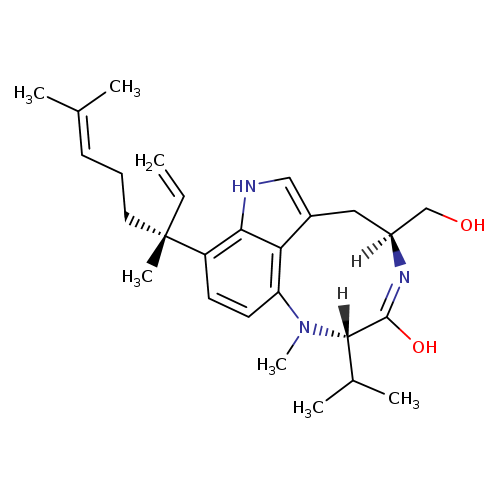
Lyngbyatoxin-a (C27H39N3O2) is an exogenous solid with an average molecular weight of 437.62 g/mol. Lyngbyatoxin-a belongs to the amino acids, peptides, and analogues, a subclass of carboxylic acids and derivatives within the organic compounds.
This compound is found in or released from 13 recorded sources across several sectors. These include electrical and electronic equipment, specifically cell phones, capacitors, wires and cables, batteries, and printed circuit boards, among one other source. It is also present in synthetic textiles, carpets, and rugs within the textiles, leather and furnishings sector. Other recorded sources include food packaging from the food, food processing and cookware sector, medical devices from the healthcare, pharmaceuticals and veterinary products sector, and lubricants used in both the energy, oil and gas sector and industrial manufacturing and chemical processing sector, as well as one additional sector. Recorded exposure routes for this substance include oral, inhalation, and touch.
Lyngbyatoxin-a is a cyanotoxin produced by certain cyanobacteria species, notably Moorea producens (formerly classified as Lyngbya majuscula). It is used as a defensive secretion to protect this cyanobacteria from predation by fish, being a potent irritant and vesicant, as well as a carcinogen.