Record Information
Version1.0
Creation Date2014-08-29 05:55:01 UTC
Update Date2026-03-26 21:59:57 UTC
Accession NumberCHEM003190
Identification
Common NameEthyl acetate
ClassSmall Molecule
DescriptionEthyl acetate is found in alcoholic beverages. Ethyl acetate is found in cereal crops, radishes, fruit juices, beer, wine, spirits etc. and produced by Anthemis nobilis (Roman chamomile) and Rubus species Ethyl acetate is used in artificial fruit essences. Ethyl acetate is used as a solvent in the manufacture of modified hop extract and decaffeinated tea or coffee. Also used for colour and inks used to mark fruit or vegetables.In the field of entomology, ethyl acetate is an effective asphyxiant for use in insect collecting and study. In a killing jar charged with ethyl acetate, the vapors will kill the collected (usually adult) insect quickly without destroying it. Because it is not hygroscopic, ethyl acetate also keeps the insect soft enough to allow proper mounting suitable for a collection. Ethyl acetate has been shown to exhibit anti-arthritic, anti-mycotic, anti-nociceptive, hepatoprotective and anti-inflammatory functions Ethyl acetate belongs to the family of Carboxylic Acid Esters. These are carboxylic acid derivatives in which the carbo atom from the carbonyl group is atached to an alkyl or oaryl moiety through an oxygen atom (forming an ester group). (1, 2, 3, 4, 5).
Contaminant Sources
  • Clean Air Act Chemicals
  • Cosmetic Chemicals
  • EAFUS Chemicals
  • FooDB Chemicals
  • HMDB Contaminants - Feces
  • HMDB Contaminants - Urine
  • HPV EPA Chemicals
  • OECD HPV Chemicals
  • STOFF IDENT Compounds
  • T3DB toxins
  • Tobacco Smoke Compounds
  • ToxCast & Tox21 Chemicals
Contaminant Type
  • Cigarette Toxin
  • Ester
  • Ether
  • Food Toxin
  • Household Toxin
  • Industrial/Workplace Toxin
  • Metabolite
  • Natural Compound
  • Organic Compound
  • Plant Toxin
  • Solvent
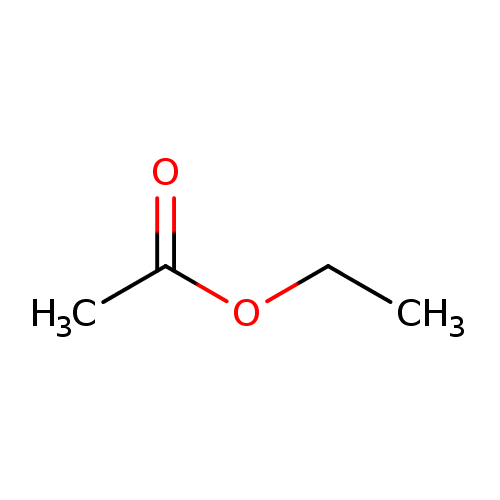
Chemical Structure
Thumb
Synonyms
ValueSource
1-AcetoxyethaneChEBI
Acetic acid ethyl esterChEBI
Acetic acid, ethyl esterChEBI
Acetic esterChEBI
AcetoxyethaneChEBI
Acetyl esterChEBI
AcOEtChEBI
CH3-CO-O-CH3ChEBI
EssigesterChEBI
EssigsaeureethylesterChEBI
Ethyl acetic esterChEBI
Ethyl ethanoateChEBI
EthylacetatChEBI
EthylazetatChEBI
EtOAcChEBI
Vinegar naphthaChEBI
Acetate ethyl esterGenerator
Acetate, ethyl esterGenerator
Ethyl ethanoic acidGenerator
Ethyl acetic acidGenerator
Acetic etherHMDB
Acetic-acid-ethylesterHMDB
AcetidinHMDB
DibutylamineHMDB
Ethyl ester OF acetic acidHMDB
Chemical FormulaC4H8O2
Average Molecular Mass88.105 g/mol
Monoisotopic Mass88.052 g/mol
CAS Registry Number141-78-6
IUPAC Nameethyl acetate
Traditional Nameethyl acetate
SMILESCCOC(C)=O
InChI IdentifierInChI=1S/C4H8O2/c1-3-6-4(2)5/h3H2,1-2H3
InChI KeyXEKOWRVHYACXOJ-UHFFFAOYSA-N
Chemical Taxonomy
Description belongs to the class of organic compounds known as carboxylic acid esters. These are carboxylic acid derivatives in which the carbon atom from the carbonyl group is attached to an alkyl or an aryl moiety through an oxygen atom (forming an ester group).
KingdomOrganic compounds
Super ClassOrganic acids and derivatives
ClassCarboxylic acids and derivatives
Sub ClassCarboxylic acid derivatives
Direct ParentCarboxylic acid esters
Alternative Parents
Substituents
  • Carboxylic acid ester
  • Monocarboxylic acid or derivatives
  • Organic oxygen compound
  • Organic oxide
  • Hydrocarbon derivative
  • Organooxygen compound
  • Carbonyl group
  • Aliphatic acyclic compound
Molecular FrameworkAliphatic acyclic compounds
External Descriptors
Biological Properties
StatusDetected and Not Quantified
OriginExogenous
Cellular Locations
  • Cytoplasm
  • Extracellular
Biofluid LocationsNot Available
Tissue LocationsNot Available
PathwaysNot Available
Applications
Biological Roles
Chemical Roles
Physical Properties
StateLiquid
AppearanceNot Available
Experimental Properties
PropertyValue
Melting Point-83.6°C
Boiling Point77°C (170.6°F)
Solubility80 mg/mL at 25°C
Predicted Properties
PropertyValueSource
Water Solubility123 g/LALOGPS
logP0.74ALOGPS
logP0.28ChemAxon
logS0.14ALOGPS
pKa (Strongest Basic)-7ChemAxon
Physiological Charge0ChemAxon
Hydrogen Acceptor Count1ChemAxon
Hydrogen Donor Count0ChemAxon
Polar Surface Area26.3 ŲChemAxon
Rotatable Bond Count2ChemAxon
Refractivity22.16 m³·mol⁻¹ChemAxon
Polarizability9.28 ųChemAxon
Number of Rings0ChemAxon
Bioavailability1ChemAxon
Rule of FiveYesChemAxon
Ghose FilterNoChemAxon
Veber's RuleYesChemAxon
MDDR-like RuleNoChemAxon
Spectra
Spectra
Spectrum TypeDescriptionSplash KeyView
GC-MSGC-MS Spectrum - EI-B (Non-derivatized)splash10-0006-9000000000-f48a6e770df57144ce33Spectrum
GC-MSGC-MS Spectrum - EI-B (Non-derivatized)splash10-0006-9000000000-4fbfd506d2d6d053e57fSpectrum
GC-MSGC-MS Spectrum - EI-B (Non-derivatized)splash10-0006-9000000000-4950ee9233400dc5bfe6Spectrum
GC-MSGC-MS Spectrum - EI-B (Non-derivatized)splash10-0006-9000000000-6209b0c76b2469152461Spectrum
GC-MSGC-MS Spectrum - EI-B (Non-derivatized)splash10-0006-9000000000-f48a6e770df57144ce33Spectrum
GC-MSGC-MS Spectrum - EI-B (Non-derivatized)splash10-0006-9000000000-4fbfd506d2d6d053e57fSpectrum
GC-MSGC-MS Spectrum - EI-B (Non-derivatized)splash10-0006-9000000000-4950ee9233400dc5bfe6Spectrum
GC-MSGC-MS Spectrum - EI-B (Non-derivatized)splash10-0006-9000000000-6209b0c76b2469152461Spectrum
Predicted GC-MSPredicted GC-MS Spectrum - GC-MS (Non-derivatized) - 70eV, Positivesplash10-004i-9000000000-02a908aacbb859e863a6Spectrum
Predicted GC-MSPredicted GC-MS Spectrum - GC-MS (Non-derivatized) - 70eV, PositiveNot AvailableSpectrum
Predicted LC-MS/MSPredicted LC-MS/MS Spectrum - 10V, Positivesplash10-000i-9000000000-f63aacf19cf8128e45b7Spectrum
Predicted LC-MS/MSPredicted LC-MS/MS Spectrum - 20V, Positivesplash10-000i-9000000000-2f521fd52e7d4d4ca892Spectrum
Predicted LC-MS/MSPredicted LC-MS/MS Spectrum - 40V, Positivesplash10-0204-9000000000-ac5b9c25d1bbbc164b29Spectrum
Predicted LC-MS/MSPredicted LC-MS/MS Spectrum - 10V, Negativesplash10-000i-9000000000-0e2695334ff196319a22Spectrum
Predicted LC-MS/MSPredicted LC-MS/MS Spectrum - 20V, Negativesplash10-000i-9000000000-e76a0fdf754f6a64b87dSpectrum
Predicted LC-MS/MSPredicted LC-MS/MS Spectrum - 40V, Negativesplash10-0a4i-9000000000-3ac243b7106e4fd2963cSpectrum
Predicted LC-MS/MSPredicted LC-MS/MS Spectrum - 10V, Positivesplash10-0006-9000000000-d24572f8800bb077f98aSpectrum
Predicted LC-MS/MSPredicted LC-MS/MS Spectrum - 20V, Positivesplash10-0006-9000000000-87bbaed151efac084591Spectrum
Predicted LC-MS/MSPredicted LC-MS/MS Spectrum - 40V, Positivesplash10-0006-9000000000-87bbaed151efac084591Spectrum
Predicted LC-MS/MSPredicted LC-MS/MS Spectrum - 10V, Negativesplash10-0a4i-9000000000-c01bbbf5bed889264ddbSpectrum
Predicted LC-MS/MSPredicted LC-MS/MS Spectrum - 20V, Negativesplash10-0a4i-9000000000-c01bbbf5bed889264ddbSpectrum
Predicted LC-MS/MSPredicted LC-MS/MS Spectrum - 40V, Negativesplash10-0a4l-9000000000-e67f2acdbf749024e916Spectrum
MSMass Spectrum (Electron Ionization)splash10-0006-9000000000-000dcb6fa74327b50a3bSpectrum
1D NMR1H NMR SpectrumNot AvailableSpectrum
1D NMR13C NMR SpectrumNot AvailableSpectrum
Toxicity Profile
Route of ExposureNot Available
Mechanism of ToxicityNot Available
MetabolismNot Available
Toxicity ValuesNot Available
Lethal DoseNot Available
Carcinogenicity (IARC Classification)No indication of carcinogenicity to humans (not listed by IARC).
Uses/SourcesThis is a toxic chemical found in cigarettes or generated by tobacco combustion.
Minimum Risk LevelNot Available
Health EffectsNot Available
SymptomsNot Available
TreatmentNot Available
Concentrations
Not Available
DrugBank IDNot Available
HMDB IDHMDB0031217
FooDB IDFDB003240
Phenol Explorer IDNot Available
KNApSAcK IDC00001308
BiGG IDNot Available
BioCyc IDNot Available
METLIN IDNot Available
PDB IDEEE
Wikipedia LinkEthyl_acetate
Chemspider ID8525
ChEBI ID27750
PubChem Compound ID8857
Kegg Compound IDC00849
YMDB IDYMDB00569
ECMDB IDNot Available
References
Synthesis ReferenceNot Available
MSDSLink
General References
1. https://www.ncbi.nlm.nih.gov/pubmed/?term=11684179
2. https://www.ncbi.nlm.nih.gov/pubmed/?term=15497757
3. https://www.ncbi.nlm.nih.gov/pubmed/?term=21764274
4. https://www.ncbi.nlm.nih.gov/pubmed/?term=21797203
5. https://www.ncbi.nlm.nih.gov/pubmed/?term=23078109
6. https://www.ncbi.nlm.nih.gov/pubmed/?term=23089728
7. https://www.ncbi.nlm.nih.gov/pubmed/?term=23108979
8. https://www.ncbi.nlm.nih.gov/pubmed/?term=23351147
9. https://www.ncbi.nlm.nih.gov/pubmed/?term=23614288
10. Toso B, Procida G, Stefanon B: Determination of volatile compounds in cows' milk using headspace GC-MS. J Dairy Res. 2002 Nov;69(4):569-77.
11. Brigitta Gaspardo et al. Determination of volatile fractions in raw milk and ripened cheese by means of GC-MS. Results of a survey performed in the marginal area between Italy and Slovenia. Italian Jounal of Animal Science Vol 8, 377-390, 2009
12. Li DW, Hyun JE, Jeong CS, Kim YS, Lee EB: Antiinflammatory activity of alpha-hederin methyl ester from the alkaline hydrolysate of the butanol fraction of Kalopanax pictus bark extract. Biol Pharm Bull. 2003 Apr;26(4):429-33.
13. Buzzini P, Pieroni A: Antimicrobial activity of extracts of Clematis vitalba towards pathogenic yeast and yeast-like microorganisms. Fitoterapia. 2003 Jun;74(4):397-400.
14. Nascimento MV, Galdino PM, Florentino IF, Sampaio BL, Vanderlinde FA, de Paula JR, Costa EA: Antinociceptive effect of Lafoensia pacari A. St.-Hil. independent of anti-inflammatory activity of ellagic acid. J Nat Med. 2011 Jul;65(3-4):448-54. doi: 10.1007/s11418-011-0517-y. Epub 2011 Feb 22.
15. Panovska TK, Kulevanova S, Gjorgoski I, Bogdanova M, Petrushevska G: Hepatoprotective effect of the ethyl acetate extract of Teucrium polium L. against carbontetrachloride-induced hepatic injury in rats. Acta Pharm. 2007 Jun;57(2):241-8.
16. Kim TH, Bae JS: Ecklonia cava extracts inhibit lipopolysaccharide induced inflammatory responses in human endothelial cells. Food Chem Toxicol. 2010 Jun;48(6):1682-7. doi: 10.1016/j.fct.2010.03.045. Epub 2010 Apr 2.
17. Yannai, Shmuel. (2004) Dictionary of food compounds with CD-ROM: Additives, flavors, and ingredients. Boca Raton: Chapman & Hall/CRC.