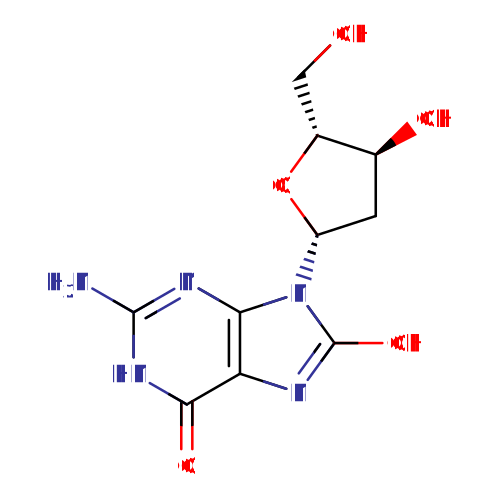
Record Information
Version1.0
Creation Date2014-08-29 05:49:39 UTC
Update Date2026-04-05 12:57:58 UTC
Accession NumberCHEM003135
Identification
Common Name8-Hydroxy-deoxyguanosine
ClassSmall Molecule
Description8-Hydroxy-deoxyguanosine is a uremic toxin. Uremic toxins can be subdivided into three major groups based upon their chemical and physical characteristics: 1) small, water-soluble, non-protein-bound compounds, such as urea; 2) small, lipid-soluble and/or protein-bound compounds, such as the phenols and 3) larger so-called middle-molecules, such as beta2-microglobulin. Chronic exposure of uremic toxins can lead to a number of conditions including renal damage, chronic kidney disease and cardiovascular disease. 8-Hydroxy-deoxyguanosine (8-OHdG) is a sensitive marker of the DNA damage due to hydroxyl radical attack at the C8 of guanine. This damage, if left unrepaired, has been proposed to contribute to mutagenicity and cancer promotion.
Contaminant Sources
  • FooDB Chemicals
  • HMDB Contaminants - Urine
  • T3DB toxins
Contaminant Type
  • Amine
  • Ether
  • Food Toxin
  • Metabolite
  • Natural Compound
  • Organic Compound
  • Uremic Toxin
Chemical Structure
Thumb
Synonyms
ValueSource
7,8-Dihydro-2'-deoxy-8-oxoguanosineChEBI
8-HydroxydeoxyguanosineChEBI
8-OHdGChEBI
8-oxo-2'-DeoxyguanineChEBI
8-oxo-2'-DGChEBI
8-oxo-7,8-Dihydro-2'-deoxyguanosineChEBI
8-oxo-7-HydrodeoxyguanosineChEBI
8-oxo-DGChEBI
8-OxoguanosineChEBI
7,8-dihydro-8-oxo-2'-DeoxyguanosineHMDB, MeSH
7,8-dihydro-8-OxodeoxyguanosineHMDB
8-Hydroxy-2'-deoxyguanosineHMDB
8-Hydroxy-2'deoxyguanosineHMDB
8-Hydroxy-2-deoxyguanosineHMDB
8-Hydroxydeoxy-guanosineHMDB
8-HydroxydeoxyguanineHMDB
8-oxo-7,8-DihydrodeoxyguanosineHMDB, MeSH
8-OxodgHMDB, MeSH
OH8DgHMDB
2'-Deoxy-7,8-dihydro-8-oxoguanosineMeSH, HMDB
2'-Deoxy-8-oxo-7,8-dihydroguanosineMeSH, HMDB
8-OHdG compoundMeSH, HMDB
8-OxodGuoMeSH, HMDB
O-D-DGMeSH, HMDB
2'-Deoxy-8-oxoguanosineMeSH, HMDB
8-oxo-2'-DeoxyguanosineMeSH, HMDB
7-hydro-8-OxodeoxyguanosineMeSH, HMDB
8-OH-DGMeSH, HMDB
2'-Deoxy-8-hydroxyguanosineMeSH, HMDB
8-oxo-DGuoMeSH, HMDB
Chemical FormulaC10H13N5O5
Average Molecular Mass283.241 g/mol
Monoisotopic Mass283.092 g/mol
CAS Registry Number88847-89-6
IUPAC Name2-amino-8-hydroxy-9-[(2R,4S,5R)-4-hydroxy-5-(hydroxymethyl)oxolan-2-yl]-6,9-dihydro-1H-purin-6-one
Traditional Name8-hydroxy-2'-deoxyguanosine
SMILESNC1=NC2=C(N=C(O)N2[C@H]2C[C@H](O)[C@@H](CO)O2)C(=O)N1
InChI IdentifierInChI=1S/C10H13N5O5/c11-9-13-7-6(8(18)14-9)12-10(19)15(7)5-1-3(17)4(2-16)20-5/h3-5,16-17H,1-2H2,(H,12,19)(H3,11,13,14,18)/t3-,4+,5+/m0/s1
InChI KeyHCAJQHYUCKICQH-VPENINKCSA-N
Chemical Taxonomy
Description belongs to the class of organic compounds known as purine 2'-deoxyribonucleosides. Purine 2'-deoxyribonucleosides are compounds consisting of a purine linked to a ribose which lacks a hydroxyl group at position 2.
KingdomOrganic compounds
Super ClassNucleosides, nucleotides, and analogues
ClassPurine nucleosides
Sub ClassPurine 2'-deoxyribonucleosides
Direct ParentPurine 2'-deoxyribonucleosides
Alternative Parents
Substituents
  • Purine 2'-deoxyribonucleoside
  • Imidazopyrimidine
  • Purine
  • Hydroxypyrimidine
  • N-substituted imidazole
  • Pyrimidine
  • Tetrahydrofuran
  • Heteroaromatic compound
  • Azole
  • Imidazole
  • Secondary alcohol
  • Oxacycle
  • Azacycle
  • Organoheterocyclic compound
  • Hydrocarbon derivative
  • Primary alcohol
  • Organooxygen compound
  • Organonitrogen compound
  • Alcohol
  • Organic nitrogen compound
  • Organic oxygen compound
  • Organopnictogen compound
  • Aromatic heteropolycyclic compound
Molecular FrameworkAromatic heteropolycyclic compounds
External Descriptors
Biological Properties
StatusDetected and Not Quantified
OriginEndogenous
Cellular Locations
  • Cytoplasm
  • Extracellular
  • Nucleus
Biofluid LocationsNot Available
Tissue Locations
  • All Tissues
PathwaysNot Available
Applications
Biological RolesNot Available
Chemical RolesNot Available
Physical Properties
StateSolid
AppearanceWhite powder.
Experimental Properties
PropertyValue
Melting PointNot Available
Boiling PointNot Available
SolubilityNot Available
Predicted Properties
PropertyValueSource
Water Solubility14.8 g/LALOGPS
logP-1.7ALOGPS
logP-1.4ChemAxon
logS-1.3ALOGPS
pKa (Strongest Acidic)10.09ChemAxon
pKa (Strongest Basic)1.59ChemAxon
Physiological Charge0ChemAxon
Hydrogen Acceptor Count8ChemAxon
Hydrogen Donor Count5ChemAxon
Polar Surface Area155.22 ŲChemAxon
Rotatable Bond Count2ChemAxon
Refractivity64.56 m³·mol⁻¹ChemAxon
Polarizability25.82 ųChemAxon
Number of Rings3ChemAxon
Bioavailability1ChemAxon
Rule of FiveYesChemAxon
Ghose FilterNoChemAxon
Veber's RuleNoChemAxon
MDDR-like RuleNoChemAxon
Spectra
Spectra
Spectrum TypeDescriptionSplash KeyView
Predicted GC-MSPredicted GC-MS Spectrum - GC-MS (Non-derivatized) - 70eV, Positivesplash10-0006-9270000000-cbf066db8be0f3462b6dSpectrum
Predicted GC-MSPredicted GC-MS Spectrum - GC-MS (3 TMS) - 70eV, Positivesplash10-0006-9503400000-ff14681f666eee936938Spectrum
Predicted GC-MSPredicted GC-MS Spectrum - GC-MS (Non-derivatized) - 70eV, PositiveNot AvailableSpectrum
LC-MS/MSLC-MS/MS Spectrum - LC-ESI-Ion Trap , Positivesplash10-0a4i-1649170600-b830f720eac21d5be0a6Spectrum
LC-MS/MSLC-MS/MS Spectrum - , positivesplash10-014i-0900000000-bda7c71c752f3e3c4c51Spectrum
Predicted LC-MS/MSPredicted LC-MS/MS Spectrum - 10V, Positivesplash10-014i-0900000000-279a84bf501a3d5c6555Spectrum
Predicted LC-MS/MSPredicted LC-MS/MS Spectrum - 20V, Positivesplash10-014i-0900000000-8b53d5aeced1f8b887aeSpectrum
Predicted LC-MS/MSPredicted LC-MS/MS Spectrum - 40V, Positivesplash10-0uxr-0900000000-1db539ae30cc3fae45efSpectrum
Predicted LC-MS/MSPredicted LC-MS/MS Spectrum - 10V, Negativesplash10-001i-0290000000-77880ee90b3d77e9f3f4Spectrum
Predicted LC-MS/MSPredicted LC-MS/MS Spectrum - 20V, Negativesplash10-00kf-0920000000-8ab5275c7f1f98f7c143Spectrum
Predicted LC-MS/MSPredicted LC-MS/MS Spectrum - 40V, Negativesplash10-00dm-4900000000-4c65e34bf57ca440e280Spectrum
Predicted LC-MS/MSPredicted LC-MS/MS Spectrum - 10V, Negativesplash10-001i-0090000000-1df07afca955f854b771Spectrum
Predicted LC-MS/MSPredicted LC-MS/MS Spectrum - 20V, Negativesplash10-014r-0950000000-7088092794cc25cf636cSpectrum
Predicted LC-MS/MSPredicted LC-MS/MS Spectrum - 40V, Negativesplash10-0fxy-2900000000-16fdd2a07e854814fc6aSpectrum
Predicted LC-MS/MSPredicted LC-MS/MS Spectrum - 10V, Positivesplash10-00lr-0490000000-6a3ea27ba97cf9405385Spectrum
Predicted LC-MS/MSPredicted LC-MS/MS Spectrum - 20V, Positivesplash10-014i-0900000000-d28ab0ab8ba89b944e85Spectrum
Predicted LC-MS/MSPredicted LC-MS/MS Spectrum - 40V, Positivesplash10-05ox-2910000000-d457b32e33bd1c0ab8f9Spectrum
1D NMR13C NMR SpectrumNot AvailableSpectrum
1D NMR1H NMR SpectrumNot AvailableSpectrum
1D NMR13C NMR SpectrumNot AvailableSpectrum
1D NMR1H NMR SpectrumNot AvailableSpectrum
1D NMR13C NMR SpectrumNot AvailableSpectrum
1D NMR1H NMR SpectrumNot AvailableSpectrum
1D NMR13C NMR SpectrumNot AvailableSpectrum
1D NMR1H NMR SpectrumNot AvailableSpectrum
1D NMR13C NMR SpectrumNot AvailableSpectrum
1D NMR1H NMR SpectrumNot AvailableSpectrum
1D NMR13C NMR SpectrumNot AvailableSpectrum
1D NMR1H NMR SpectrumNot AvailableSpectrum
1D NMR13C NMR SpectrumNot AvailableSpectrum
1D NMR1H NMR SpectrumNot AvailableSpectrum
1D NMR13C NMR SpectrumNot AvailableSpectrum
1D NMR1H NMR SpectrumNot AvailableSpectrum
1D NMR13C NMR SpectrumNot AvailableSpectrum
1D NMR1H NMR SpectrumNot AvailableSpectrum
1D NMR13C NMR SpectrumNot AvailableSpectrum
1D NMR1H NMR SpectrumNot AvailableSpectrum
Toxicity Profile
Route of ExposureEndogenous, Ingestion, Dermal (contact)
Mechanism of ToxicityUremic toxins such as 8-Hydroxy-2Х-deoxyguanosine are actively transported into the kidneys via organic ion transporters (especially OAT3). Increased levels of uremic toxins can stimulate the production of reactive oxygen species. This seems to be mediated by the direct binding or inhibition by uremic toxins of the enzyme NADPH oxidase (especially NOX4 which is abundant in the kidneys and heart) (3). Reactive oxygen species can induce several different DNA methyltransferases (DNMTs) which are involved in the silencing of a protein known as KLOTHO. KLOTHO has been identified as having important roles in anti-aging, mineral metabolism, and vitamin D metabolism. A number of studies have indicated that KLOTHO mRNA and protein levels are reduced during acute or chronic kidney diseases in response to high local levels of reactive oxygen species (4).
MetabolismUremic toxins tend to accumulate in the blood either through dietary excess or through poor filtration by the kidneys. Most uremic toxins are metabolic waste products and are normally excreted in the urine or feces.
Toxicity ValuesNot Available
Lethal DoseNot Available
Carcinogenicity (IARC Classification)Not listed by IARC.
Uses/SourcesNaturally produced by the body (endogenous).
Minimum Risk LevelNot Available
Health EffectsChronic exposure to uremic toxins can lead to a number of conditions including renal damage, chronic kidney disease and cardiovascular disease.
SymptomsAs a uremic toxin, this compound can cause uremic syndrome. Uremic syndrome may affect any part of the body and can cause nausea, vomiting, loss of appetite, and weight loss. It can also cause changes in mental status, such as confusion, reduced awareness, agitation, psychosis, seizures, and coma. Abnormal bleeding, such as bleeding spontaneously or profusely from a very minor injury can also occur. Heart problems, such as an irregular heartbeat, inflammation in the sac that surrounds the heart (pericarditis), and increased pressure on the heart can be seen in patients with uremic syndrome. Shortness of breath from fluid buildup in the space between the lungs and the chest wall (pleural effusion) can also be present.
TreatmentKidney dialysis is usually needed to relieve the symptoms of uremic syndrome until normal kidney function can be restored.
Concentrations
Not Available
DrugBank IDDB02502
HMDB IDHMDB0003333
FooDB IDFDB023145
Phenol Explorer IDNot Available
KNApSAcK IDNot Available
BiGG IDNot Available
BioCyc IDNot Available
METLIN ID6890
PDB IDNot Available
Wikipedia Link8-Oxo-2'-deoxyguanosine
Chemspider ID66049
ChEBI ID40304
PubChem Compound ID73318
Kegg Compound IDNot Available
YMDB IDNot Available
ECMDB IDNot Available
References
Synthesis ReferenceNot Available
MSDSLink
General References
1. https://www.ncbi.nlm.nih.gov/pubmed/?term=11559029
2. https://www.ncbi.nlm.nih.gov/pubmed/?term=20081197
3. https://www.ncbi.nlm.nih.gov/pubmed/?term=9778313
4. Kawamoto T; Ikeuchi Y; Mikata Y; Kishigami M K; Yano S; Murayama C; Mori T; Yoneda F Promotion of radiation-induced formation of 8-oxo-7,8-dihydro-2'-deoxyguanosine by nitro 5-deazaflavin derivatives. Bioorganic & medicinal chemistry letters (2001), 11(13), 1745-8.
5. Tarng DC, Huang TP, Wei YH, Liu TY, Chen HW, Wen Chen T, Yang WC: 8-hydroxy-2'-deoxyguanosine of leukocyte DNA as a marker of oxidative stress in chronic hemodialysis patients. Am J Kidney Dis. 2000 Nov;36(5):934-44.
6. Sumida S, Doi T, Sakurai M, Yoshioka Y, Okamura K: Effect of a single bout of exercise and beta-carotene supplementation on the urinary excretion of 8-hydroxy-deoxyguanosine in humans. Free Radic Res. 1997 Dec;27(6):607-18.
7. Takane M, Sugano N, Iwasaki H, Iwano Y, Shimizu N, Ito K: New biomarker evidence of oxidative DNA damage in whole saliva from clinically healthy and periodontally diseased individuals. J Periodontol. 2002 May;73(5):551-4.
8. Shen HM, Chia SE, Ni ZY, New AL, Lee BL, Ong CN: Detection of oxidative DNA damage in human sperm and the association with cigarette smoking. Reprod Toxicol. 1997 Sep-Oct;11(5):675-80.
9. Farinati F, Cardin R, Degan P, De Maria N, Floyd RA, Van Thiel DH, Naccarato R: Oxidative DNA damage in circulating leukocytes occurs as an early event in chronic HCV infection. Free Radic Biol Med. 1999 Dec;27(11-12):1284-91.
10. Lagorio S, Tagesson C, Forastiere F, Iavarone I, Axelson O, Carere A: Exposure to benzene and urinary concentrations of 8-hydroxydeoxyguanosine, a biological marker of oxidative damage to DNA. Occup Environ Med. 1994 Nov;51(11):739-43.
11. Okamura K, Doi T, Hamada K, Sakurai M, Yoshioka Y, Mitsuzono R, Migita T, Sumida S, Sugawa-Katayama Y: Effect of repeated exercise on urinary 8-hydroxy-deoxyguanosine excretion in humans. Free Radic Res. 1997 Jun;26(6):507-14.
12. Ni ZY, Liu YQ, Shen HM, Chia SE, Ong CN: Does the increase of 8-hydroxydeoxyguanosine lead to poor sperm quality? Mutat Res. 1997 Nov 19;381(1):77-82.
13. Mitsui T, Umaki Y, Nagasawa M, Akaike M, Ohtsuka S, Odomi M, Aki K, Matsumoto T: Motor neuron involvement in a patient with long-term corticosteroid administration. Intern Med. 2003 Sep;42(9):862-6.
14. Bergman V, Leanderson P, Starkhammar H, Tagesson C: Urinary excretion of 8-hydroxydeoxyguanosine and malondialdehyde after high dose radiochemotherapy preceding stem cell transplantation. Free Radic Biol Med. 2004 Feb 1;36(3):300-6.
15. Wakai K, Ando M, Ozasa K, Ito Y, Suzuki K, Nishino Y, Kuriyama S, Seki N, Kondo T, Watanabe Y, Ohno Y, Tamakoshi A: Updated information on risk factors for lung cancer: findings from the JACC Study. J Epidemiol. 2005 Jun;15 Suppl 2:S134-9.
16. Tarng DC, Huang TP, Liu TY, Chen HW, Sung YJ, Wei YH: Effect of vitamin E-bonded membrane on the 8-hydroxy 2'-deoxyguanosine level in leukocyte DNA of hemodialysis patients. Kidney Int. 2000 Aug;58(2):790-9.
17. Kitada T, Seki S, Iwai S, Yamada T, Sakaguchi H, Wakasa K: In situ detection of oxidative DNA damage, 8-hydroxydeoxyguanosine, in chronic human liver disease. J Hepatol. 2001 Nov;35(5):613-8.
18. Schmidt MC, Askew EW, Roberts DE, Prior RL, Ensign WY Jr, Hesslink RE Jr: Oxidative stress in humans training in a cold, moderate altitude environment and their response to a phytochemical antioxidant supplement. Wilderness Environ Med. 2002 Summer;13(2):94-105.
19. Sabatini L, Barbieri A, Tosi M, Roda A, Violante FS: A method for routine quantitation of urinary 8-hydroxy-2'-deoxyguanosine based on solid-phase extraction and micro-high-performance liquid chromatography/electrospray ionization tandem mass spectrometry. Rapid Commun Mass Spectrom. 2005;19(2):147-52.
20. Sumida S, Okamura K, Doi T, Sakurai M, Yoshioka Y, Sugawa-Katayama Y: No influence of a single bout of exercise on urinary excretion of 8-hydroxy-deoxyguanosine in humans. Biochem Mol Biol Int. 1997 Jul;42(3):601-9.
21. Sugano N, Yokoyama K, Oshikawa M, Kumagai K, Takane M, Tanaka H, Ito K: Detection of Streptococcus anginosus and 8-hydroxydeoxyguanosine in saliva. J Oral Sci. 2003 Dec;45(4):181-4.
22. Leighton F, Cuevas A, Guasch V, Perez DD, Strobel P, San Martin A, Urzua U, Diez MS, Foncea R, Castillo O, Mizon C, Espinoza MA, Urquiaga I, Rozowski J, Maiz A, Germain A: Plasma polyphenols and antioxidants, oxidative DNA damage and endothelial function in a diet and wine intervention study in humans. Drugs Exp Clin Res. 1999;25(2-3):133-41.
23. Xu DX, Shen HM, Zhu QX, Chua L, Wang QN, Chia SE, Ong CN: The associations among semen quality, oxidative DNA damage in human spermatozoa and concentrations of cadmium, lead and selenium in seminal plasma. Mutat Res. 2003 Jan 10;534(1-2):155-63.
24. Xu D, Ong C, Shen H: [The associations between concentration of selenium in semen and sperm parameters as well as oxidative DNA damage in human sperm]. Zhonghua Yu Fang Yi Xue Za Zhi. 2001 Nov;35(6):394-6.
25. Duranton F, Cohen G, De Smet R, Rodriguez M, Jankowski J, Vanholder R, Argiles A: Normal and pathologic concentrations of uremic toxins. J Am Soc Nephrol. 2012 Jul;23(7):1258-70. doi: 10.1681/ASN.2011121175. Epub 2012 May 24.