Record Information
Version1.0
Creation Date2014-08-29 05:48:32 UTC
Update Date2026-05-14 18:04:46 UTC
Accession NumberCHEM003125
Identification
Common Name2-Aminobenzoic acid
ClassSmall Molecule
Description2-Aminobenzoic acid is a uremic toxin. Uremic toxins can be subdivided into three major groups based upon their chemical and physical characteristics: 1) small, water-soluble, non-protein-bound compounds, such as urea; 2) small, lipid-soluble and/or protein-bound compounds, such as the phenols and 3) larger so-called middle-molecules, such as beta2-microglobulin. Chronic exposure of uremic toxins can lead to a number of conditions including renal damage, chronic kidney disease and cardiovascular disease. 2-Aminobenzoic acid is an organic compound. It is a substrate of enzyme anthranilate hydroxylase [EC 1.14.13.35] in benzoate degradation via hydroxylation pathway (KEGG).
Contaminant Sources
  • DEA Chemicals
  • FooDB Chemicals
  • HMDB Contaminants - Urine
  • HPV EPA Chemicals
  • IARC Carcinogens Group 3
  • STOFF IDENT Compounds
  • T3DB toxins
  • ToxCast & Tox21 Chemicals
Contaminant Type
  • Amide
  • Amine
  • Ester
  • Food Toxin
  • Metabolite
  • Natural Compound
  • Organic Compound
  • Uremic Toxin
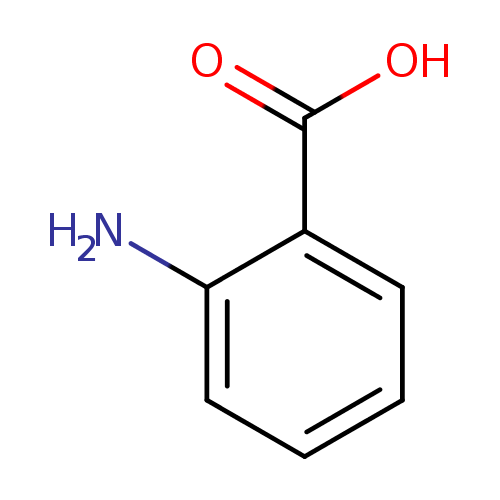
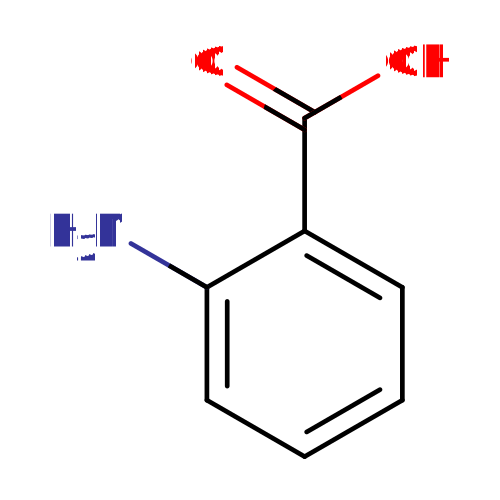
Chemical Structure
Thumb
Synonyms
ValueSource
2-AminobenzoesaeureChEBI
2-CarboxyanilineChEBI
O-AminobenzoesaeureChEBI
O-Aminobenzoic acidChEBI
O-CarboxyanilineChEBI
Vitamin L1ChEBI
Anthranilic acidKegg
2-AminobenzoateKegg
O-AminobenzoateGenerator
AnthranilateGenerator
Anthranilic acid, cadmium saltHMDB
Anthranilic acid, calcium (2:1) saltHMDB
Anthranilic acid, monolithium saltHMDB
Sodium anthranilateHMDB
Anthranilic acid, dihydrochlorideHMDB
Anthranilic acid, hydrochlorideHMDB
Anthranilic acid, monosodium saltHMDB
1-Amino-2-carboxybenzeneHMDB
2-Amino-benzoateHMDB
2-Amino-benzoic acidHMDB
2-AminophenylacetateHMDB
2-Aminophenylacetic acidHMDB
AnthranateHMDB
Anthranic acidHMDB
Anthranilic acid GRHMDB
CarboxyanilineHMDB
H-2-Abz-OHHMDB
Kyselina anthranilovaHMDB
Kyselina O-aminobenzoovaHMDB
O-Amino-benzoateHMDB
O-Amino-benzoic acidHMDB
O-AnthranilateHMDB
O-Anthranilic acidHMDB
Ortho-amidobenzoateHMDB
Ortho-amidobenzoic acidHMDB
Ortho-aminobenzoateHMDB
Ortho-aminobenzoic acidHMDB
Vitamin LHMDB
Chemical FormulaC7H7NO2
Average Molecular Mass137.136 g/mol
Monoisotopic Mass137.048 g/mol
CAS Registry Number118-92-3
IUPAC Name2-aminobenzoic acid
Traditional Name2-aminobenzoic acid
SMILESNC1=CC=CC=C1C(O)=O
InChI IdentifierInChI=1S/C7H7NO2/c8-6-4-2-1-3-5(6)7(9)10/h1-4H,8H2,(H,9,10)
InChI KeyRWZYAGGXGHYGMB-UHFFFAOYSA-N
Chemical Taxonomy
Description belongs to the class of organic compounds known as aminobenzoic acids. These are benzoic acids containing an amine group attached to the benzene moiety.
KingdomOrganic compounds
Super ClassBenzenoids
ClassBenzene and substituted derivatives
Sub ClassBenzoic acids and derivatives
Direct ParentAminobenzoic acids
Alternative Parents
Substituents
  • Aminobenzoic acid
  • Benzoic acid
  • Benzoyl
  • Aniline or substituted anilines
  • Vinylogous amide
  • Amino acid or derivatives
  • Amino acid
  • Monocarboxylic acid or derivatives
  • Carboxylic acid
  • Carboxylic acid derivative
  • Organic oxide
  • Primary amine
  • Organooxygen compound
  • Organonitrogen compound
  • Organopnictogen compound
  • Organic oxygen compound
  • Organic nitrogen compound
  • Amine
  • Hydrocarbon derivative
  • Aromatic homomonocyclic compound
Molecular FrameworkAromatic homomonocyclic compounds
External Descriptors
Biological Properties
StatusDetected and Not Quantified
OriginEndogenous
Cellular Locations
  • Cytoplasm
  • Extracellular
Biofluid LocationsNot Available
Tissue Locations
  • Epidermis
  • Fibroblasts
Pathways
NameSMPDB LinkKEGG Link
Tryptophan MetabolismSMP00063 map00380
ApplicationsNot Available
Biological Roles
Chemical RolesNot Available
Physical Properties
StateSolid
AppearanceWhite powder.
Experimental Properties
PropertyValue
Melting Point146.5°C
Boiling PointNot Available
Solubility3.5 mg/mL
Predicted Properties
PropertyValueSource
Water Solubility6.81 g/LALOGPS
logP0.78ALOGPS
logP1.45ChemAxon
logS-1.3ALOGPS
pKa (Strongest Acidic)4.89ChemAxon
pKa (Strongest Basic)1.95ChemAxon
Physiological Charge-1ChemAxon
Hydrogen Acceptor Count3ChemAxon
Hydrogen Donor Count2ChemAxon
Polar Surface Area63.32 ŲChemAxon
Rotatable Bond Count1ChemAxon
Refractivity38.01 m³·mol⁻¹ChemAxon
Polarizability13.29 ųChemAxon
Number of Rings1ChemAxon
Bioavailability1ChemAxon
Rule of FiveYesChemAxon
Ghose FilterNoChemAxon
Veber's RuleNoChemAxon
MDDR-like RuleNoChemAxon
Spectra
Spectra
Spectrum TypeDescriptionSplash KeyView
GC-MSGC-MS Spectrum - GC-EI-TOF (Pegasus III TOF-MS system, Leco; GC 6890, Agilent Technologies) (2 TMS)splash10-014i-1950000000-5595652a2e8f93679437Spectrum
GC-MSGC-MS Spectrum - GC-EI-TOF (Pegasus III TOF-MS system, Leco; GC 6890, Agilent Technologies) (Non-derivatized)splash10-014i-1960000000-889ed538406d5aa57a5dSpectrum
GC-MSGC-MS Spectrum - GC-EI-TOF (Pegasus III TOF-MS system, Leco; GC 6890, Agilent Technologies) (2 TMS)splash10-00xr-9650000000-e0611721f0bf7b5bb2f8Spectrum
GC-MSGC-MS Spectrum - GC-MS (1 TMS)splash10-00r6-2910000000-0daf33fe6231b5e15b0eSpectrum
GC-MSGC-MS Spectrum - GC-MS (2 TMS)splash10-014i-3970000000-3351c7d8036c42c4cd41Spectrum
GC-MSGC-MS Spectrum - EI-B (Non-derivatized)splash10-00kf-9400000000-b65ee27505e8c4bcca28Spectrum
GC-MSGC-MS Spectrum - EI-B (Non-derivatized)splash10-014i-0490000000-4165d1d7b8fff53889ddSpectrum
GC-MSGC-MS Spectrum - GC-EI-TOF (Non-derivatized)splash10-014i-1950000000-5595652a2e8f93679437Spectrum
GC-MSGC-MS Spectrum - GC-EI-TOF (Non-derivatized)splash10-014i-1960000000-889ed538406d5aa57a5dSpectrum
GC-MSGC-MS Spectrum - GC-EI-TOF (Non-derivatized)splash10-00xr-9650000000-e0611721f0bf7b5bb2f8Spectrum
GC-MSGC-MS Spectrum - GC-MS (Non-derivatized)splash10-00r6-2910000000-0daf33fe6231b5e15b0eSpectrum
GC-MSGC-MS Spectrum - GC-MS (Non-derivatized)splash10-014i-3970000000-3351c7d8036c42c4cd41Spectrum
Predicted GC-MSPredicted GC-MS Spectrum - GC-MS (Non-derivatized) - 70eV, Positivesplash10-00kr-7900000000-a9c510a71b30a8fcc1b8Spectrum
Predicted GC-MSPredicted GC-MS Spectrum - GC-MS (1 TMS) - 70eV, Positivesplash10-00di-7900000000-cb7be965685a5ee30fbdSpectrum
Predicted GC-MSPredicted GC-MS Spectrum - GC-MS (Non-derivatized) - 70eV, PositiveNot AvailableSpectrum
LC-MS/MSLC-MS/MS Spectrum - EI-B (HITACHI RMU-7M) , Positivesplash10-00kf-9400000000-395d42e11895b80f4e9cSpectrum
LC-MS/MSLC-MS/MS Spectrum - LC-ESI-ITFT (LTQ Orbitrap XL, Thermo Scientfic) , Positivesplash10-000i-0900000000-8c390367e035aea8527aSpectrum
LC-MS/MSLC-MS/MS Spectrum - LC-ESI-ITFT (LTQ Orbitrap XL, Thermo Scientfic) , Positivesplash10-0006-9000000000-899b596a227cd9a1769dSpectrum
LC-MS/MSLC-MS/MS Spectrum - LC-ESI-ITFT (LTQ Orbitrap XL, Thermo Scientfic) , Positivesplash10-014i-0900000000-3cc9be013399e30d7eaeSpectrum
LC-MS/MSLC-MS/MS Spectrum - LC-ESI-ITFT (LTQ Orbitrap XL, Thermo Scientfic) , Positivesplash10-00di-0900000000-655ef8fc722e0b1b6d14Spectrum
LC-MS/MSLC-MS/MS Spectrum - LC-ESI-ITFT (LTQ Orbitrap XL, Thermo Scientfic) , Positivesplash10-000i-0900000000-4d0520217d12a10f9273Spectrum
LC-MS/MSLC-MS/MS Spectrum - LC-ESI-ITFT (LTQ Orbitrap XL, Thermo Scientfic) , Positivesplash10-0006-9000000000-bab8539624c8af4e6434Spectrum
LC-MS/MSLC-MS/MS Spectrum - LC-ESI-ITFT (LTQ Orbitrap XL, Thermo Scientfic) , Positivesplash10-014i-0900000000-f51f2db6bf1da2e26d20Spectrum
LC-MS/MSLC-MS/MS Spectrum - LC-ESI-ITFT (LTQ Orbitrap XL, Thermo Scientfic) , Positivesplash10-00di-0900000000-86d698a8c81a3e765840Spectrum
LC-MS/MSLC-MS/MS Spectrum - LC-ESI-QQ (API3000, Applied Biosystems) 10V, Negativesplash10-000i-0900000000-6df94712ad580bebfd21Spectrum
LC-MS/MSLC-MS/MS Spectrum - LC-ESI-QQ (API3000, Applied Biosystems) 20V, Negativesplash10-0006-9100000000-a1ce64280c2d7f3b85dfSpectrum
LC-MS/MSLC-MS/MS Spectrum - LC-ESI-QQ (API3000, Applied Biosystems) 30V, Negativesplash10-0006-9000000000-454f848122c778e951adSpectrum
LC-MS/MSLC-MS/MS Spectrum - LC-ESI-QQ (API3000, Applied Biosystems) 40V, Negativesplash10-0006-9000000000-7de473c1ca6bf702b2acSpectrum
LC-MS/MSLC-MS/MS Spectrum - LC-ESI-QQ (API3000, Applied Biosystems) 50V, Negativesplash10-0006-9000000000-94f19baa1ae36f43be60Spectrum
LC-MS/MSLC-MS/MS Spectrum - LC-ESI-QQ (API3000, Applied Biosystems) 10V, Positivesplash10-00di-2900000000-c2bbbe5e00434e635ad2Spectrum
LC-MS/MSLC-MS/MS Spectrum - LC-ESI-QQ (API3000, Applied Biosystems) 20V, Positivesplash10-00di-4900000000-f8f84a5536375300afbdSpectrum
LC-MS/MSLC-MS/MS Spectrum - LC-ESI-QQ (API3000, Applied Biosystems) 30V, Positivesplash10-00r6-9200000000-fccd86d3a0a4bfe2e5d7Spectrum
LC-MS/MSLC-MS/MS Spectrum - LC-ESI-QQ (API3000, Applied Biosystems) 40V, Positivesplash10-014i-9000000000-91ceb340e5cf91473cbaSpectrum
LC-MS/MSLC-MS/MS Spectrum - LC-ESI-QQ (API3000, Applied Biosystems) 50V, Positivesplash10-014i-9000000000-80972c552b97ae764bc4Spectrum
LC-MS/MSLC-MS/MS Spectrum - LC-ESI-QTOF (UPLC Q-Tof Premier, Waters) , Positivesplash10-00di-4900000000-f494672ce9de4818b8c5Spectrum
LC-MS/MSLC-MS/MS Spectrum - LC-ESI-QTOF (UPLC Q-Tof Premier, Waters) , Negativesplash10-0006-9300000000-9bbb2f00817538e072d5Spectrum
Predicted LC-MS/MSPredicted LC-MS/MS Spectrum - 10V, Positivesplash10-0079-0900000000-e7e07e78dd5baa5c3f87Spectrum
Predicted LC-MS/MSPredicted LC-MS/MS Spectrum - 20V, Positivesplash10-00di-1900000000-54a3d793d6fbf0220b47Spectrum
Predicted LC-MS/MSPredicted LC-MS/MS Spectrum - 40V, Positivesplash10-0umi-9200000000-bd780d6ca957af006488Spectrum
Predicted LC-MS/MSPredicted LC-MS/MS Spectrum - 10V, Negativesplash10-000f-9800000000-93111d593c96a3298a6cSpectrum
MSMass Spectrum (Electron Ionization)splash10-014u-9600000000-5b8e271f29d04a87c89aSpectrum
1D NMR1H NMR SpectrumNot AvailableSpectrum
1D NMR13C NMR SpectrumNot AvailableSpectrum
1D NMR1H NMR SpectrumNot AvailableSpectrum
1D NMR13C NMR SpectrumNot AvailableSpectrum
1D NMR1H NMR SpectrumNot AvailableSpectrum
1D NMR13C NMR SpectrumNot AvailableSpectrum
1D NMR1H NMR SpectrumNot AvailableSpectrum
1D NMR13C NMR SpectrumNot AvailableSpectrum
1D NMR1H NMR SpectrumNot AvailableSpectrum
1D NMR13C NMR SpectrumNot AvailableSpectrum
1D NMR1H NMR SpectrumNot AvailableSpectrum
1D NMR13C NMR SpectrumNot AvailableSpectrum
1D NMR1H NMR SpectrumNot AvailableSpectrum
1D NMR13C NMR SpectrumNot AvailableSpectrum
1D NMR1H NMR SpectrumNot AvailableSpectrum
1D NMR13C NMR SpectrumNot AvailableSpectrum
1D NMR1H NMR SpectrumNot AvailableSpectrum
1D NMR13C NMR SpectrumNot AvailableSpectrum
1D NMR1H NMR SpectrumNot AvailableSpectrum
1D NMR13C NMR SpectrumNot AvailableSpectrum
1D NMR1H NMR SpectrumNot AvailableSpectrum
2D NMR[1H,1H] 2D NMR SpectrumNot AvailableSpectrum
2D NMR[1H,13C] 2D NMR SpectrumNot AvailableSpectrum
Toxicity Profile
Route of ExposureEndogenous, Ingestion, Dermal (contact)
Mechanism of ToxicityUremic toxins such as anthranilic acid are actively transported into the kidneys via organic ion transporters (especially OAT3). Increased levels of uremic toxins can stimulate the production of reactive oxygen species. This seems to be mediated by the direct binding or inhibition by uremic toxins of the enzyme NADPH oxidase (especially NOX4 which is abundant in the kidneys and heart) (2). Reactive oxygen species can induce several different DNA methyltransferases (DNMTs) which are involved in the silencing of a protein known as KLOTHO. KLOTHO has been identified as having important roles in anti-aging, mineral metabolism, and vitamin D metabolism. A number of studies have indicated that KLOTHO mRNA and protein levels are reduced during acute or chronic kidney diseases in response to high local levels of reactive oxygen species (3).
MetabolismUremic toxins tend to accumulate in the blood either through dietary excess or through poor filtration by the kidneys. Most uremic toxins are metabolic waste products and are normally excreted in the urine or feces.
Toxicity ValuesNot Available
Lethal DoseNot Available
Carcinogenicity (IARC Classification)3, not classifiable as to its carcinogenicity to humans. (15)
Uses/SourcesNaturally produced by the body (endogenous).
Minimum Risk LevelNot Available
Health EffectsChronic exposure to uremic toxins can lead to a number of conditions including renal damage, chronic kidney disease and cardiovascular disease.
SymptomsAs a uremic toxin, this compound can cause uremic syndrome. Uremic syndrome may affect any part of the body and can cause nausea, vomiting, loss of appetite, and weight loss. It can also cause changes in mental status, such as confusion, reduced awareness, agitation, psychosis, seizures, and coma. Abnormal bleeding, such as bleeding spontaneously or profusely from a very minor injury can also occur. Heart problems, such as an irregular heartbeat, inflammation in the sac that surrounds the heart (pericarditis), and increased pressure on the heart can be seen in patients with uremic syndrome. Shortness of breath from fluid buildup in the space between the lungs and the chest wall (pleural effusion) can also be present.
TreatmentKidney dialysis is usually needed to relieve the symptoms of uremic syndrome until normal kidney function can be restored.
Concentrations
Not Available
DrugBank IDDB04166
HMDB IDHMDB0001123
FooDB IDFDB000896
Phenol Explorer IDNot Available
KNApSAcK IDC00007382
BiGG ID33883
BioCyc IDANTHRANILATE
METLIN ID6018
PDB IDNot Available
Wikipedia LinkAnthranilic_acid
Chemspider ID222
ChEBI ID30754
PubChem Compound ID227
Kegg Compound IDC00108
YMDB IDYMDB00278
ECMDB IDECMDB01123
References
Synthesis ReferenceNot Available
MSDSLink
General References
1. Wang, Chengyin; Yang, Jisheng; Wang, Honghai. Production of o-aminobenzoic acid from by-product o-nitrobenzoic acid. Huaxue Shijie (1999), 40(5), 274-277.
2. Wang, Chengyin; Yang, Jisheng; Wang, Honghai. Production of o-aminobenzoic acid from by-product o-nitrobenzoic acid. Huaxue Shijie (1999), 40(5), 274-277.
3. Di Marco GS, Quinto BM, Juliano M, Carmona AK, Stella RC, Plavnik FL, Casarini DE: Purification and characterization of a neutral endopeptidase-like enzyme from human urine. J Hypertens. 1998 Dec;16(12 Pt 2):1971-8.
4. Hagag N, Birnbaum ER, Darnall DW: Resonance energy transfer between cysteine-34, tryptophan-214, and tyrosine-411 of human serum albumin. Biochemistry. 1983 May 10;22(10):2420-7.
5. Little CH, Georgiou GM, Shelton MJ, Simpson F, Cone RE: Clinical and immunological responses in subjects sensitive to solvents. Arch Environ Health. 1999 Jan-Feb;54(1):6-14.
6. Calandra P: Research on tryptophan metabolites "via kynurenine" in epidermis of man and mouse. Acta Vitaminol Enzymol. 1975;29(1-6):158-60.
7. Ritchie MR, Morton MS, Thompson AM, Deighton N, Blake A, Cummings JH, Steel CM: Investigation of the reliability of 24 h urine excretion as a biomarker of isoflavone exposure over time and over a wide range of isoflavone intakes. Eur J Clin Nutr. 2004 Sep;58(9):1286-9.
8. Ortega RM, Andres P, Martinez RM, Lopez-Sobaler AM: Vitamin A status during the third trimester of pregnancy in Spanish women: influence on concentrations of vitamin A in breast milk. Am J Clin Nutr. 1997 Sep;66(3):564-8.
9. Alves MF, Araujo MC, Juliano MA, Oliveira EM, Krieger JE, Casarini DE, Juliano L, Carmona AK: A continuous fluorescent assay for the determination of plasma and tissue angiotensin I-converting enzyme activity. Braz J Med Biol Res. 2005 Jun;38(6):861-8. Epub 2005 Jun 1.
10. Soma J, Sugawara T, Huang YD, Nakajima J, Kawamura M: Tranilast slows the progression of advanced diabetic nephropathy. Nephron. 2002;92(3):693-8.
11. Ahmad S: The functional roles of cytochrome P-450 mediated systems: present knowledge and future areas of investigations. Drug Metab Rev. 1979;10(1):1-14.
12. Spivak W, Carey MC: Reverse-phase h.p.l.c. separation, quantification and preparation of bilirubin and its conjugates from native bile. Quantitative analysis of the intact tetrapyrroles based on h.p.l.c. of their ethyl anthranilate azo derivatives. Biochem J. 1985 Feb 1;225(3):787-805.
13. Igari T, Tsuchizawa M, Shimamura T: Alteration of tryptophan metabolism in the synovial fluid of patients with rheumatoid arthritis and osteoarthritis. Tohoku J Exp Med. 1987 Oct;153(2):79-86.
14. Duranton F, Cohen G, De Smet R, Rodriguez M, Jankowski J, Vanholder R, Argiles A: Normal and pathologic concentrations of uremic toxins. J Am Soc Nephrol. 2012 Jul;23(7):1258-70. doi: 10.1681/ASN.2011121175. Epub 2012 May 24.
15. https://www.ncbi.nlm.nih.gov/pubmed/?term=11680877
16. https://www.ncbi.nlm.nih.gov/pubmed/?term=19745702
17. https://www.ncbi.nlm.nih.gov/pubmed/?term=20511543
18. https://www.ncbi.nlm.nih.gov/pubmed/?term=22321994
19. https://www.ncbi.nlm.nih.gov/pubmed/?term=22341575
20. https://www.ncbi.nlm.nih.gov/pubmed/?term=22784643
21. https://www.ncbi.nlm.nih.gov/pubmed/?term=28166217
22. https://www.ncbi.nlm.nih.gov/pubmed/?term=9784247