Record Information
Version1.0
Creation Date2014-08-29 05:48:00 UTC
Update Date2026-05-14 19:14:56 UTC
Accession NumberCHEM003120
Identification
Common NameKynurenic acid
ClassSmall Molecule
DescriptionKynurenic acid is a uremic toxin. Uremic toxins can be subdivided into three major groups based upon their chemical and physical characteristics: 1) small, water-soluble, non-protein-bound compounds, such as urea; 2) small, lipid-soluble and/or protein-bound compounds, such as the phenols and 3) larger so-called middle-molecules, such as beta2-microglobulin. Chronic exposure of uremic toxins can lead to a number of conditions including renal damage, chronic kidney disease and cardiovascular disease. Kynurenic acid (KYNA) is a well-known endogenous antagonist of the glutamate ionotropic excitatory amino acid receptors N-methyl-D-aspartate (NMDA), alphaamino-3-hydroxy-5-methylisoxazole-4-propionic acid and kainate receptors and of the nicotine cholinergic subtype alpha 7 receptors. KYNA neuroprotective and anticonvulsive activities have been demonstrated in animal models of neurodegenerative diseases. Because of KYNA's neuromodulatory character, its involvement has been speculatively linked to the pathogenesis of a number of neurological conditions including those in the ageing process. Different patterns of abnormalities in various stages of KYNA metabolism in the CNS have been reported in Alzheimer's disease, Parkinson's disease and Huntington's disease. In HIV-1-infected patients and in patients with Lyme neuroborreliosis a marked rise of KYNA metabolism was seen. In the ageing process KYNA metabolism in the CNS of rats shows a characteristic pattern of changes throughout the life span. A marked increase of the KYNA content in the CNS occurs before the birth, followed by a dramatic decline on the day of birth. A low activity was seen during ontogenesis, and a slow and progressive enhancement occurs during maturation and ageing. This remarkable profile of KYNA metabolism alterations in the mammalian brain has been suggested to result from the development of the organisation of neuronal connections and synaptic plasticity, development of receptor recognition sites, maturation and ageing. There is significant evidence that KYNA can improve cognition and memory, but it has also been demonstrated that it interferes with working memory. Impairment of cognitive function in various neurodegenerative disorders is accompanied by profound reduction and/or elevation of KYNA metabolism. The view that enhancement of CNS KYNA levels could underlie cognitive decline is supported by the increased KYNA metabolism in Alzheimer's disease, by the increased KYNA metabolism in down's syndrome and the enhancement of KYNA function during the early stage of Huntington's disease. Kynurenic acid is the only endogenous N-methyl-D-aspartate (NMDA) receptor antagonist identified up to now, that mediates glutamatergic hypofunction. Schizophrenia is a disorder of dopaminergic neurotransmission, but modulation of the dopaminergic system by glutamatergic neurotransmission seems to play a key role. Despite the NMDA receptor antagonism, kynurenic acid also blocks, in lower doses, the nicotinergic acetycholine receptor, i.e., increased kynurenic acid levels can explain psychotic symptoms and cognitive deterioration. Kynurenic acid levels are described to be higher in the cerebrospinal fluid (CSF) and in critical central nervous system (CNS) regions of schizophrenics as compared to controls. (2, 3).
Contaminant Sources
  • FooDB Chemicals
  • HMDB Contaminants - Urine
  • T3DB toxins
Contaminant Type
  • Amide
  • Ester
  • Food Toxin
  • Metabolite
  • Natural Compound
  • Organic Compound
  • Uremic Toxin
Chemical Structure
Thumb
Synonyms
ValueSource
4-Hydroxy-2-chinolincarbonsaeureChEBI
4-Hydroxy-2-quinolinecarboxylic acidChEBI
4-Hydroxyquinaldic acidChEBI
4-Hydroxyquinaldinic acidChEBI
KynurenateChEBI
KynurensaeureChEBI
4-Hydroxy-2-quinolinecarboxylateGenerator
4-HydroxyquinaldateGenerator
4-HydroxyquinaldinateGenerator
2-Carboxy-4-hydroxyquinolineHMDB
4-Hydroxy-quinaldateHMDB
4-Hydroxy-quinaldic acidHMDB
4-Hydroxyquinoline-2-carboxylateHMDB
4-Hydroxyquinoline-2-carboxylic acidHMDB
Quinurenic acidHMDB
Acid, kynurenicMeSH, HMDB
Chemical FormulaC10H7NO3
Average Molecular Mass189.168 g/mol
Monoisotopic Mass189.043 g/mol
CAS Registry Number492-27-3
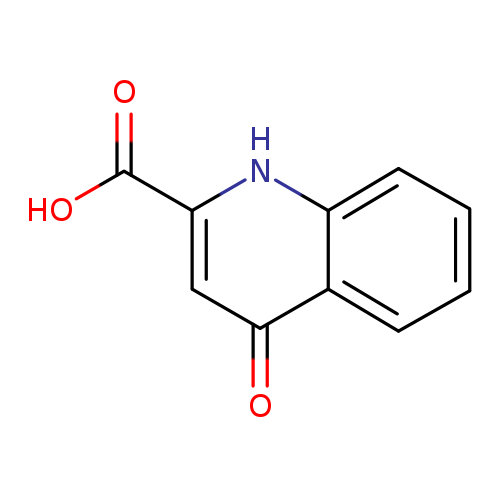
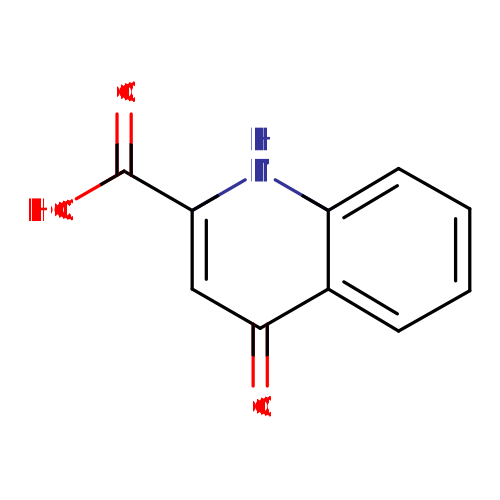
IUPAC Name4-oxo-1,4-dihydroquinoline-2-carboxylic acid
Traditional Nameacid, kynurenic
SMILESOC(=O)C1=CC(=O)C2=CC=CC=C2N1
InChI IdentifierInChI=1S/C10H7NO3/c12-9-5-8(10(13)14)11-7-4-2-1-3-6(7)9/h1-5H,(H,11,12)(H,13,14)
InChI KeyHCZHHEIFKROPDY-UHFFFAOYSA-N
Chemical Taxonomy
Description belongs to the class of organic compounds known as quinoline carboxylic acids. These are quinolines in which the quinoline ring system is substituted by a carboxyl group at one or more positions.
KingdomOrganic compounds
Super ClassOrganoheterocyclic compounds
ClassQuinolines and derivatives
Sub ClassQuinoline carboxylic acids
Direct ParentQuinoline carboxylic acids
Alternative Parents
Substituents
  • Quinoline-2-carboxylic acid
  • Dihydroquinolone
  • Dihydroquinoline
  • Pyridine carboxylic acid
  • Pyridine carboxylic acid or derivatives
  • Pyridine
  • Benzenoid
  • Heteroaromatic compound
  • Vinylogous amide
  • Monocarboxylic acid or derivatives
  • Carboxylic acid
  • Azacycle
  • Carboxylic acid derivative
  • Hydrocarbon derivative
  • Organic oxide
  • Organopnictogen compound
  • Organooxygen compound
  • Organonitrogen compound
  • Organic oxygen compound
  • Organic nitrogen compound
  • Aromatic heteropolycyclic compound
Molecular FrameworkAromatic heteropolycyclic compounds
External Descriptors
Biological Properties
StatusDetected and Not Quantified
OriginEndogenous
Cellular Locations
  • Cytoplasm
  • Extracellular
Biofluid LocationsNot Available
Tissue Locations
  • Brain
  • Epidermis
  • Fibroblasts
  • Prostate
Pathways
NameSMPDB LinkKEGG Link
Tryptophan MetabolismSMP00063 map00380
Applications
Biological Roles
Chemical RolesNot Available
Physical Properties
StateSolid
AppearanceWhite powder.
Experimental Properties
PropertyValue
Melting Point280°C
Boiling PointNot Available
SolubilityNot Available
Predicted Properties
PropertyValueSource
Water Solubility0.95 g/LALOGPS
logP1.16ALOGPS
logP1.58ChemAxon
logS-2.3ALOGPS
pKa (Strongest Acidic)3.17ChemAxon
pKa (Strongest Basic)-4.4ChemAxon
Physiological Charge-1ChemAxon
Hydrogen Acceptor Count4ChemAxon
Hydrogen Donor Count2ChemAxon
Polar Surface Area66.4 ŲChemAxon
Rotatable Bond Count1ChemAxon
Refractivity52.32 m³·mol⁻¹ChemAxon
Polarizability18.05 ųChemAxon
Number of Rings2ChemAxon
Bioavailability1ChemAxon
Rule of FiveYesChemAxon
Ghose FilterYesChemAxon
Veber's RuleNoChemAxon
MDDR-like RuleNoChemAxon
Spectra
Spectra
Spectrum TypeDescriptionSplash KeyView
GC-MSGC-MS Spectrum - GC-EI-TOF (Pegasus III TOF-MS system, Leco; GC 6890, Agilent Technologies) (Non-derivatized)splash10-0159-1985000000-f1c74ffc481c3d0faaa2Spectrum
GC-MSGC-MS Spectrum - GC-MS (2 TMS)splash10-0159-3895000000-6ba2750c5a9d9754abccSpectrum
GC-MSGC-MS Spectrum - EI-B (Non-derivatized)splash10-0159-0498000000-3db9df2c3d8456d7ba63Spectrum
GC-MSGC-MS Spectrum - GC-EI-TOF (Non-derivatized)splash10-0159-1985000000-f1c74ffc481c3d0faaa2Spectrum
GC-MSGC-MS Spectrum - GC-MS (Non-derivatized)splash10-0159-3895000000-6ba2750c5a9d9754abccSpectrum
GC-MSGC-MS Spectrum - GC-EI-TOF (Non-derivatized)splash10-0159-1895000000-e25b66b0b42d1928cc67Spectrum
Predicted GC-MSPredicted GC-MS Spectrum - GC-MS (Non-derivatized) - 70eV, Positivesplash10-02ga-1900000000-8c67ab2acdc02b88af2bSpectrum
Predicted GC-MSPredicted GC-MS Spectrum - GC-MS (1 TMS) - 70eV, Positivesplash10-00di-9740000000-a7c5c056d48055e0d44fSpectrum
Predicted GC-MSPredicted GC-MS Spectrum - GC-MS (Non-derivatized) - 70eV, PositiveNot AvailableSpectrum
Predicted GC-MSPredicted GC-MS Spectrum - GC-MS (TMS_1_2) - 70eV, PositiveNot AvailableSpectrum
Predicted GC-MSPredicted GC-MS Spectrum - GC-MS (TBDMS_1_1) - 70eV, PositiveNot AvailableSpectrum
Predicted GC-MSPredicted GC-MS Spectrum - GC-MS (TBDMS_1_2) - 70eV, PositiveNot AvailableSpectrum
LC-MS/MSLC-MS/MS Spectrum - Quattro_QQQ 10V, Positive (Annotated)splash10-000i-0900000000-7a5c54ced5b83f291e67Spectrum
LC-MS/MSLC-MS/MS Spectrum - Quattro_QQQ 25V, Positive (Annotated)splash10-0006-0900000000-e6b451ee354ed2717160Spectrum
LC-MS/MSLC-MS/MS Spectrum - Quattro_QQQ 40V, Positive (Annotated)splash10-000i-9500000000-887e5157431b2908f31eSpectrum
LC-MS/MSLC-MS/MS Spectrum - LC-ESI-QTOF (UPLC Q-Tof Premier, Waters) , Positivesplash10-0006-1900000000-06f7059894cc245cb344Spectrum
LC-MS/MSLC-MS/MS Spectrum - LC-ESI-QTOF (UPLC Q-Tof Premier, Waters) , Negativesplash10-0006-0900000000-89a88f44f08b8b68d5c1Spectrum
LC-MS/MSLC-MS/MS Spectrum - LC-ESI-qTof , Positivesplash10-014l-0900000000-3a256522dd8694fe04c0Spectrum
LC-MS/MSLC-MS/MS Spectrum - LC-ESI-QTOF , negativesplash10-000f-0900000000-a4b194b85fef656b9b65Spectrum
LC-MS/MSLC-MS/MS Spectrum - LC-ESI-QTOF , negativesplash10-0006-0900000000-7862c532805b6036dc67Spectrum
LC-MS/MSLC-MS/MS Spectrum - LC-ESI-QTOF , negativesplash10-0006-0900000000-5fe3171fdaece30b78c8Spectrum
LC-MS/MSLC-MS/MS Spectrum - LC-ESI-QTOF , negativesplash10-0006-0900000000-df3b5b36289798800ad8Spectrum
LC-MS/MSLC-MS/MS Spectrum - LC-ESI-QTOF , negativesplash10-0006-0900000000-d4c11672b9479b2cd4b6Spectrum
LC-MS/MSLC-MS/MS Spectrum - LC-ESI-QTOF , negativesplash10-0006-0900000000-89a88f44f08b8b68d5c1Spectrum
LC-MS/MSLC-MS/MS Spectrum - Linear Ion Trap , negativesplash10-0006-0900000000-9c26ffa9c04aa03d60f5Spectrum
LC-MS/MSLC-MS/MS Spectrum - Linear Ion Trap , negativesplash10-0006-0900000000-6a8662ef19d900499a55Spectrum
LC-MS/MSLC-MS/MS Spectrum - , negativesplash10-0006-0900000000-d69a430b0eb34f38ad54Spectrum
LC-MS/MSLC-MS/MS Spectrum - LC-ESI-QTOF , positivesplash10-0006-0900000000-d0ef7c769d4985e85667Spectrum
LC-MS/MSLC-MS/MS Spectrum - LC-ESI-QTOF , positivesplash10-01ox-0900000000-2a593c8017254be4a387Spectrum
LC-MS/MSLC-MS/MS Spectrum - LC-ESI-QTOF , positivesplash10-01ox-0900000000-59f3559c0b95c9411d2cSpectrum
LC-MS/MSLC-MS/MS Spectrum - LC-ESI-QTOF , positivesplash10-02tc-0900000000-57dbbfb8e12c60951d77Spectrum
Predicted LC-MS/MSPredicted LC-MS/MS Spectrum - 10V, Positivesplash10-0006-0900000000-878dcda0ee5ec971fa72Spectrum
Predicted LC-MS/MSPredicted LC-MS/MS Spectrum - 20V, Positivesplash10-0006-0900000000-92fe5294ec4a771f14e0Spectrum
Predicted LC-MS/MSPredicted LC-MS/MS Spectrum - 40V, Positivesplash10-0006-1900000000-fa8b36fb6db8e403b711Spectrum
Predicted LC-MS/MSPredicted LC-MS/MS Spectrum - 10V, Negativesplash10-000i-0900000000-9cede81ef6dfc45f5f7aSpectrum
Predicted LC-MS/MSPredicted LC-MS/MS Spectrum - 20V, Negativesplash10-000f-0900000000-0d5cf046565b518442d5Spectrum
Predicted LC-MS/MSPredicted LC-MS/MS Spectrum - 40V, Negativesplash10-0006-2900000000-2c420ff1e59666527005Spectrum
1D NMR1H NMR SpectrumNot AvailableSpectrum
1D NMR13C NMR SpectrumNot AvailableSpectrum
2D NMR[1H,13C] 2D NMR SpectrumNot AvailableSpectrum
Toxicity Profile
Route of ExposureEndogenous, Ingestion, Dermal (contact)
Mechanism of ToxicityUremic toxins such as kynurenic acid are actively transported into the kidneys via organic ion transporters (especially OAT3). Increased levels of uremic toxins can stimulate the production of reactive oxygen species. This seems to be mediated by the direct binding or inhibition by uremic toxins of the enzyme NADPH oxidase (especially NOX4 which is abundant in the kidneys and heart) (5). Reactive oxygen species can induce several different DNA methyltransferases (DNMTs) which are involved in the silencing of a protein known as KLOTHO. KLOTHO has been identified as having important roles in anti-aging, mineral metabolism, and vitamin D metabolism. A number of studies have indicated that KLOTHO mRNA and protein levels are reduced during acute or chronic kidney diseases in response to high local levels of reactive oxygen species (6).
MetabolismUremic toxins tend to accumulate in the blood either through dietary excess or through poor filtration by the kidneys. Most uremic toxins are metabolic waste products and are normally excreted in the urine or feces.
Toxicity ValuesNot Available
Lethal DoseNot Available
Carcinogenicity (IARC Classification)No indication of carcinogenicity to humans (not listed by IARC).
Uses/SourcesNaturally produced by the body (endogenous).
Minimum Risk LevelNot Available
Health EffectsChronic exposure to uremic toxins can lead to a number of conditions including renal damage, chronic kidney disease and cardiovascular disease.
SymptomsAs a uremic toxin, this compound can cause uremic syndrome. Uremic syndrome may affect any part of the body and can cause nausea, vomiting, loss of appetite, and weight loss. It can also cause changes in mental status, such as confusion, reduced awareness, agitation, psychosis, seizures, and coma. Abnormal bleeding, such as bleeding spontaneously or profusely from a very minor injury can also occur. Heart problems, such as an irregular heartbeat, inflammation in the sac that surrounds the heart (pericarditis), and increased pressure on the heart can be seen in patients with uremic syndrome. Shortness of breath from fluid buildup in the space between the lungs and the chest wall (pleural effusion) can also be present.
TreatmentKidney dialysis is usually needed to relieve the symptoms of uremic syndrome until normal kidney function can be restored.
Concentrations
Not Available
DrugBank IDDB11937
HMDB IDHMDB0000715
FooDB IDFDB022200
Phenol Explorer IDNot Available
KNApSAcK IDC00026453
BiGG ID38234
BioCyc IDKYNURENATE
METLIN ID5683
PDB IDNot Available
Wikipedia LinkKynurenic_acid
Chemspider ID3712
ChEBI ID18344
PubChem Compound ID3845
Kegg Compound IDC01717
YMDB IDYMDB01725
ECMDB IDNot Available
References
Synthesis ReferenceStone, T. W. Development and therapeutic potential of kynurenic acid and kynurenine derivatives for neuroprotection. Trends in Pharmacological Sciences (2000), 21(4), 149-154.
MSDSLink
General References
1. https://www.ncbi.nlm.nih.gov/pubmed/?term=10088651
2. https://www.ncbi.nlm.nih.gov/pubmed/?term=10867830
3. https://www.ncbi.nlm.nih.gov/pubmed/?term=10881031
4. https://www.ncbi.nlm.nih.gov/pubmed/?term=11051465
5. https://www.ncbi.nlm.nih.gov/pubmed/?term=11129102
6. https://www.ncbi.nlm.nih.gov/pubmed/?term=11191832
7. https://www.ncbi.nlm.nih.gov/pubmed/?term=11244357
8. https://www.ncbi.nlm.nih.gov/pubmed/?term=11334243
9. https://www.ncbi.nlm.nih.gov/pubmed/?term=11452979
10. https://www.ncbi.nlm.nih.gov/pubmed/?term=11521749
11. https://www.ncbi.nlm.nih.gov/pubmed/?term=11982504
12. https://www.ncbi.nlm.nih.gov/pubmed/?term=12503245
13. https://www.ncbi.nlm.nih.gov/pubmed/?term=12757473
14. https://www.ncbi.nlm.nih.gov/pubmed/?term=12926536
15. https://www.ncbi.nlm.nih.gov/pubmed/?term=14724046
16. https://www.ncbi.nlm.nih.gov/pubmed/?term=14770276
17. https://www.ncbi.nlm.nih.gov/pubmed/?term=15206728
18. https://www.ncbi.nlm.nih.gov/pubmed/?term=15364012
19. https://www.ncbi.nlm.nih.gov/pubmed/?term=15517427
20. https://www.ncbi.nlm.nih.gov/pubmed/?term=15605380
21. https://www.ncbi.nlm.nih.gov/pubmed/?term=15961072
22. https://www.ncbi.nlm.nih.gov/pubmed/?term=16088227
23. https://www.ncbi.nlm.nih.gov/pubmed/?term=16220290
24. https://www.ncbi.nlm.nih.gov/pubmed/?term=16388784
25. https://www.ncbi.nlm.nih.gov/pubmed/?term=16416446
26. https://www.ncbi.nlm.nih.gov/pubmed/?term=16457470
27. https://www.ncbi.nlm.nih.gov/pubmed/?term=16603336
28. https://www.ncbi.nlm.nih.gov/pubmed/?term=16644124
29. https://www.ncbi.nlm.nih.gov/pubmed/?term=16845213
30. https://www.ncbi.nlm.nih.gov/pubmed/?term=16888405
31. https://www.ncbi.nlm.nih.gov/pubmed/?term=16920787
32. https://www.ncbi.nlm.nih.gov/pubmed/?term=17023091
33. https://www.ncbi.nlm.nih.gov/pubmed/?term=17364732
34. https://www.ncbi.nlm.nih.gov/pubmed/?term=17573079
35. https://www.ncbi.nlm.nih.gov/pubmed/?term=17959203
36. https://www.ncbi.nlm.nih.gov/pubmed/?term=18231708
37. https://www.ncbi.nlm.nih.gov/pubmed/?term=18235993
38. https://www.ncbi.nlm.nih.gov/pubmed/?term=18346850
39. https://www.ncbi.nlm.nih.gov/pubmed/?term=18462830
40. https://www.ncbi.nlm.nih.gov/pubmed/?term=18836681
41. https://www.ncbi.nlm.nih.gov/pubmed/?term=18950711
42. https://www.ncbi.nlm.nih.gov/pubmed/?term=19187269
43. https://www.ncbi.nlm.nih.gov/pubmed/?term=19523966
44. https://www.ncbi.nlm.nih.gov/pubmed/?term=19616570
45. https://www.ncbi.nlm.nih.gov/pubmed/?term=19815960
46. https://www.ncbi.nlm.nih.gov/pubmed/?term=19816853
47. https://www.ncbi.nlm.nih.gov/pubmed/?term=22065206
48. https://www.ncbi.nlm.nih.gov/pubmed/?term=22108572
49. https://www.ncbi.nlm.nih.gov/pubmed/?term=22224417
50. https://www.ncbi.nlm.nih.gov/pubmed/?term=22732505
51. https://www.ncbi.nlm.nih.gov/pubmed/?term=22770225
52. https://www.ncbi.nlm.nih.gov/pubmed/?term=22814028
53. https://www.ncbi.nlm.nih.gov/pubmed/?term=22915278
54. https://www.ncbi.nlm.nih.gov/pubmed/?term=23030614
55. https://www.ncbi.nlm.nih.gov/pubmed/?term=7882580
56. https://www.ncbi.nlm.nih.gov/pubmed/?term=8579218
57. https://www.ncbi.nlm.nih.gov/pubmed/?term=8637415
58. https://www.ncbi.nlm.nih.gov/pubmed/?term=9078543
59. Stone, T. W. Development and therapeutic potential of kynurenic acid and kynurenine derivatives for neuroprotection. Trends in Pharmacological Sciences (2000), 21(4), 149-154.
60. Stone, T. W. Development and therapeutic potential of kynurenic acid and kynurenine derivatives for neuroprotection. Trends in Pharmacological Sciences (2000), 21(4), 149-154.
61. Parada-Turska J, Rzeski W, Zgrajka W, Majdan M, Kandefer-Szerszen M, Turski W: Kynurenic acid, an endogenous constituent of rheumatoid arthritis synovial fluid, inhibits proliferation of synoviocytes in vitro. Rheumatol Int. 2006 Mar;26(5):422-6. Epub 2005 Oct 12.
62. Amirkhani A, Heldin E, Markides KE, Bergquist J: Quantitation of tryptophan, kynurenine and kynurenic acid in human plasma by capillary liquid chromatography-electrospray ionization tandem mass spectrometry. J Chromatogr B Analyt Technol Biomed Life Sci. 2002 Nov 25;780(2):381-7.
63. Ilzecka J, Kocki T, Stelmasiak Z, Turski WA: Endogenous protectant kynurenic acid in amyotrophic lateral sclerosis. Acta Neurol Scand. 2003 Jun;107(6):412-8.
64. Bapurao S, Krishnaswamy K: Vitamin B6 nutritional status of pellagrins and their leucine tolerance. Am J Clin Nutr. 1978 May;31(5):819-24.
65. Nilsson LK, Nordin C, Jonsson EG, Engberg G, Linderholm KR, Erhardt S: Cerebrospinal fluid kynurenic acid in male and female controls - correlation with monoamine metabolites and influences of confounding factors. J Psychiatr Res. 2007 Jan-Feb;41(1-2):144-51. Epub 2006 Jan 24.
66. Milart P, Sikorski R: [Kynurenic acid concentration in blood and urine during normal pregnancy]. Ginekol Pol. 1998 Dec;69(12):968-73.
67. Moroni F, Russi P, Lombardi G, Beni M, Carla V: Presence of kynurenic acid in the mammalian brain. J Neurochem. 1988 Jul;51(1):177-80.
68. Turski WA, Nakamura M, Todd WP, Carpenter BK, Whetsell WO Jr, Schwarcz R: Identification and quantification of kynurenic acid in human brain tissue. Brain Res. 1988 Jun 28;454(1-2):164-9.
69. Medana IM, Hien TT, Day NP, Phu NH, Mai NT, Chu'ong LV, Chau TT, Taylor A, Salahifar H, Stocker R, Smythe G, Turner GD, Farrar J, White NJ, Hunt NH: The clinical significance of cerebrospinal fluid levels of kynurenine pathway metabolites and lactate in severe malaria. J Infect Dis. 2002 Mar 1;185(5):650-6. Epub 2002 Feb 14.
70. Connick JH, Carla V, Moroni F, Stone TW: Increase in kynurenic acid in Huntington's disease motor cortex. J Neurochem. 1989 Mar;52(3):985-7.
71. Swartz KJ, Matson WR, MacGarvey U, Ryan EA, Beal MF: Measurement of kynurenic acid in mammalian brain extracts and cerebrospinal fluid by high-performance liquid chromatography with fluorometric and coulometric electrode array detection. Anal Biochem. 1990 Mar;185(2):363-76.
72. Baran H, Cairns N, Lubec B, Lubec G: Increased kynurenic acid levels and decreased brain kynurenine aminotransferase I in patients with Down syndrome. Life Sci. 1996;58(21):1891-9.
73. Medana IM, Day NP, Salahifar-Sabet H, Stocker R, Smythe G, Bwanaisa L, Njobvu A, Kayira K, Turner GD, Taylor TE, Hunt NH: Metabolites of the kynurenine pathway of tryptophan metabolism in the cerebrospinal fluid of Malawian children with malaria. J Infect Dis. 2003 Sep 15;188(6):844-9. Epub 2003 Sep 9.
74. Heyes MP, Saito K, Crowley JS, Davis LE, Demitrack MA, Der M, Dilling LA, Elia J, Kruesi MJ, Lackner A, et al.: Quinolinic acid and kynurenine pathway metabolism in inflammatory and non-inflammatory neurological disease. Brain. 1992 Oct;115 ( Pt 5):1249-73.
75. Beal MF, Matson WR, Storey E, Milbury P, Ryan EA, Ogawa T, Bird ED: Kynurenic acid concentrations are reduced in Huntington's disease cerebral cortex. J Neurol Sci. 1992 Mar;108(1):80-7.
76. Kepplinger B, Baran H, Kainz A, Ferraz-Leite H, Newcombe J, Kalina P: Age-related increase of kynurenic acid in human cerebrospinal fluid - IgG and beta2-microglobulin changes. Neurosignals. 2005;14(3):126-35.
77. Sreekumar A, Poisson LM, Rajendiran TM, Khan AP, Cao Q, Yu J, Laxman B, Mehra R, Lonigro RJ, Li Y, Nyati MK, Ahsan A, Kalyana-Sundaram S, Han B, Cao X, Byun J, Omenn GS, Ghosh D, Pennathur S, Alexander DC, Berger A, Shuster JR, Wei JT, Varambally S, Beecher C, Chinnaiyan AM: Metabolomic profiles delineate potential role for sarcosine in prostate cancer progression. Nature. 2009 Feb 12;457(7231):910-4. doi: 10.1038/nature07762.
78. Muller N, Schwarz M: Schizophrenia as an inflammation-mediated dysbalance of glutamatergic neurotransmission. Neurotox Res. 2006 Oct;10(2):131-48.
79. Duranton F, Cohen G, De Smet R, Rodriguez M, Jankowski J, Vanholder R, Argiles A: Normal and pathologic concentrations of uremic toxins. J Am Soc Nephrol. 2012 Jul;23(7):1258-70. doi: 10.1681/ASN.2011121175. Epub 2012 May 24.
80. Elshenawy S, Pinney SE, Stuart T, Doulias PT, Zura G, Parry S, Elovitz MA, Bennett MJ, Bansal A, Strauss JF 3rd, Ischiropoulos H, Simmons RA: The Metabolomic Signature of the Placenta in Spontaneous Preterm Birth. Int J Mol Sci. 2020 Feb 4;21(3). pii: ijms21031043. doi: 10.3390/ijms21031043.