Record Information
Version1.0
Creation Date2014-08-29 05:47:53 UTC
Update Date2026-05-14 19:59:43 UTC
Accession NumberCHEM003119
Identification
Common NameHippuric acid
ClassSmall Molecule
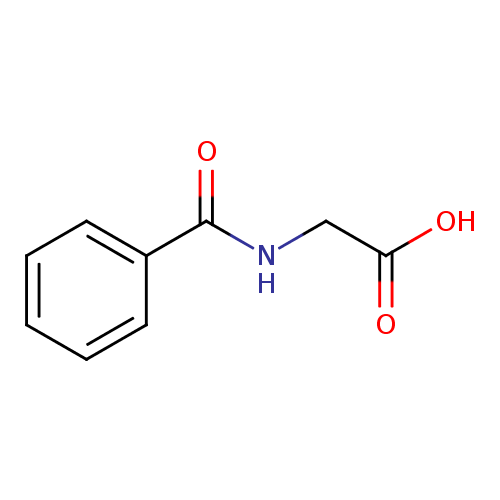
DescriptionHippuric acid is a uremic toxin. Uremic toxins can be subdivided into three major groups based upon their chemical and physical characteristics: 1) small, water-soluble, non-protein-bound compounds, such as urea; 2) small, lipid-soluble and/or protein-bound compounds, such as the phenols and 3) larger so-called middle-molecules, such as beta2-microglobulin. Chronic exposure of uremic toxins can lead to a number of conditions including renal damage, chronic kidney disease and cardiovascular disease. Hippuric acid is an acyl glycine formed by the conjugation of benzoic aicd with glycine. Acyl glycines are produced through the action of glycine N-acyltransferase (EC 2.3.1.13) which is an enzyme that catalyzes the chemical reaction: acyl-CoA + glycine < -- > CoA + N-acylglycine. Hippuric acid is a normal component of urine and is typically increased with increased consumption of phenolic compounds (tea, wine, fruit juices). These phenols are converted to benzoic acid which is then converted to hippuric acid and excreted in the urine. Hippuric acid is the most frequently used biomarker in the biological monitoring of occupational exposure to toluene. This product of solvent biotransformation may be also found in the urine of individuals who have not been exposed to the solvent. A smaller fraction of the absorbed toluene is oxidized to aromatic compounds including ortho-cresol, which is not found significantly in the urine of nonexposed individuals. The concentration of hippuric acid in the urine of individuals exposed to a low toluene concentration does not differ from that of individuals not exposed to the solvent. This has led to the conclusion that hippuric acid should not be utilized in the biological monitoring of occupational exposure to low levels of toluene in the air. Protein-bound organic acids such as hippuric acid are markedly accumulated in uremic plasma and produce defective protein binding of drugs. (2, 3).
Contaminant Sources
  • FooDB Chemicals
  • HMDB Contaminants - Urine
  • T3DB toxins
  • ToxCast & Tox21 Chemicals
Contaminant Type
  • Amide
  • Amine
  • Ester
  • Food Toxin
  • Industrial/Workplace Toxin
  • Metabolite
  • Natural Compound
  • Organic Compound
  • Solvent
  • Uremic Toxin
Chemical Structure
Thumb
Synonyms
ValueSource
Benzamidoacetic acidChEBI
BenzamidoessigsaeureChEBI
Benzoylaminoacetic acidChEBI
BenzoylaminoessigsaeureChEBI
HippurateChEBI
HippursaeureChEBI
Phenylcarbonylaminoacetic acidChEBI
N-BenzoylglycineKegg
BenzamidoacetateGenerator
BenzoylaminoacetateGenerator
PhenylcarbonylaminoacetateGenerator
HippateGenerator
Hippic acidGenerator
(Benzoylamino)-acetateHMDB
(Benzoylamino)-acetic acidHMDB
2-BenzamidoacetateHMDB
2-Benzamidoacetic acidHMDB
BenzoylglycineHMDB
N-BenzoylglycinateHMDB
Hippuric acidHMDB
Chemical FormulaC9H9NO3
Average Molecular Mass179.173 g/mol
Monoisotopic Mass179.058 g/mol
CAS Registry Number495-69-2
IUPAC Name2-(phenylformamido)acetic acid
Traditional Namehippuric acid
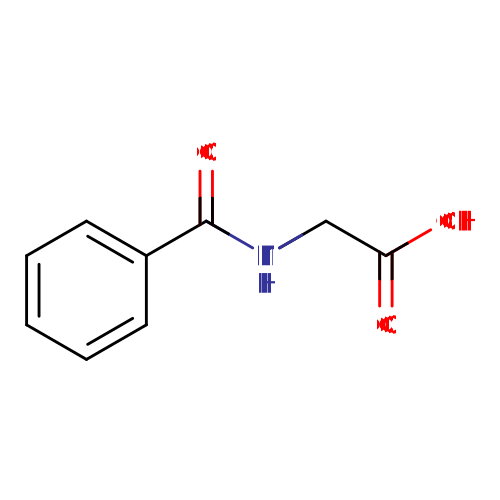
SMILESOC(=O)CNC(=O)C1=CC=CC=C1
InChI IdentifierInChI=1S/C9H9NO3/c11-8(12)6-10-9(13)7-4-2-1-3-5-7/h1-5H,6H2,(H,10,13)(H,11,12)
InChI KeyQIAFMBKCNZACKA-UHFFFAOYSA-N
Chemical Taxonomy
Description belongs to the class of organic compounds known as hippuric acids. Hippuric acids are compounds containing hippuric acid, which consists of a of a benzoyl group linked to the N-terminal of a glycine.
KingdomOrganic compounds
Super ClassBenzenoids
ClassBenzene and substituted derivatives
Sub ClassBenzoic acids and derivatives
Direct ParentHippuric acids
Alternative Parents
Substituents
  • Hippuric acid
  • N-acyl-alpha-amino acid
  • N-acyl-alpha amino acid or derivatives
  • Alpha-amino acid or derivatives
  • Benzoyl
  • Carboxamide group
  • Secondary carboxylic acid amide
  • Monocarboxylic acid or derivatives
  • Carboxylic acid
  • Carboxylic acid derivative
  • Organonitrogen compound
  • Hydrocarbon derivative
  • Organic oxide
  • Organopnictogen compound
  • Organic nitrogen compound
  • Carbonyl group
  • Organic oxygen compound
  • Organooxygen compound
  • Aromatic homomonocyclic compound
Molecular FrameworkAromatic homomonocyclic compounds
External Descriptors
Biological Properties
StatusDetected and Not Quantified
OriginEndogenous
Cellular Locations
  • Cytoplasm
  • Extracellular
Biofluid LocationsNot Available
Tissue Locations
  • Kidney
  • Liver
  • Prostate
PathwaysNot Available
ApplicationsNot Available
Biological Roles
Chemical RolesNot Available
Physical Properties
StateSolid
AppearanceWhite powder.
Experimental Properties
PropertyValue
Melting Point187 - 191°C
Boiling Point240°C (decomposes)
Solubility3.75 mg/mL
Predicted Properties
PropertyValueSource
Water Solubility1.18 g/LALOGPS
logP0.23ALOGPS
logP0.53ChemAxon
logS-2.2ALOGPS
pKa (Strongest Acidic)3.59ChemAxon
pKa (Strongest Basic)-1.3ChemAxon
Physiological Charge-1ChemAxon
Hydrogen Acceptor Count3ChemAxon
Hydrogen Donor Count2ChemAxon
Polar Surface Area66.4 ŲChemAxon
Rotatable Bond Count3ChemAxon
Refractivity46.12 m³·mol⁻¹ChemAxon
Polarizability17.57 ųChemAxon
Number of Rings1ChemAxon
Bioavailability1ChemAxon
Rule of FiveYesChemAxon
Ghose FilterYesChemAxon
Veber's RuleNoChemAxon
MDDR-like RuleNoChemAxon
Spectra
Spectra
Spectrum TypeDescriptionSplash KeyView
GC-MSGC-MS Spectrum - GC-EI-TOF (Pegasus III TOF-MS system, Leco; GC 6890, Agilent Technologies) (Non-derivatized)splash10-0a4i-2910000000-fac0a1c19c9209e1daf5Spectrum
GC-MSGC-MS Spectrum - GC-EI-TOF (Pegasus III TOF-MS system, Leco; GC 6890, Agilent Technologies) (Non-derivatized)splash10-0a4i-0930000000-6f50aaca6d403e269682Spectrum
GC-MSGC-MS Spectrum - GC-MS (1 TMS)splash10-0a4i-5930000000-166d57ae498305a4eee9Spectrum
GC-MSGC-MS Spectrum - GC-MS (2 TMS)splash10-0a4i-4920000000-358e012cae8853105371Spectrum
GC-MSGC-MS Spectrum - EI-B (Non-derivatized)splash10-0a6r-8900000000-01e7057139a995115ddbSpectrum
GC-MSGC-MS Spectrum - EI-B (Non-derivatized)splash10-0il0-9700000000-5eb7d5acc34cdb44f3e0Spectrum
GC-MSGC-MS Spectrum - EI-B (Non-derivatized)splash10-0a6r-6900000000-9bebc859a11a987fc2d4Spectrum
GC-MSGC-MS Spectrum - GC-EI-TOF (Non-derivatized)splash10-0a4i-2910000000-fac0a1c19c9209e1daf5Spectrum
GC-MSGC-MS Spectrum - GC-EI-TOF (Non-derivatized)splash10-0a4i-0930000000-6f50aaca6d403e269682Spectrum
GC-MSGC-MS Spectrum - GC-MS (Non-derivatized)splash10-0a4i-5930000000-166d57ae498305a4eee9Spectrum
GC-MSGC-MS Spectrum - GC-MS (Non-derivatized)splash10-0a4i-4920000000-358e012cae8853105371Spectrum
GC-MSGC-MS Spectrum - GC-EI-TOF (Non-derivatized)splash10-0a4i-2910000000-19b240c27664cf096501Spectrum
GC-MSGC-MS Spectrum - GC-EI-TOF (Non-derivatized)splash10-0a4i-0930000000-b1d771fba596fcbf4d44Spectrum
Predicted GC-MSPredicted GC-MS Spectrum - GC-MS (Non-derivatized) - 70eV, Positivesplash10-0a4i-2900000000-3f2da6ec78f21732afeaSpectrum
Predicted GC-MSPredicted GC-MS Spectrum - GC-MS (1 TMS) - 70eV, Positivesplash10-0ab9-9810000000-58ac2f50544c1db5247fSpectrum
Predicted GC-MSPredicted GC-MS Spectrum - GC-MS (Non-derivatized) - 70eV, PositiveNot AvailableSpectrum
Predicted GC-MSPredicted GC-MS Spectrum - GC-MS (TMS_1_2) - 70eV, PositiveNot AvailableSpectrum
Predicted GC-MSPredicted GC-MS Spectrum - GC-MS (TBDMS_1_1) - 70eV, PositiveNot AvailableSpectrum
Predicted GC-MSPredicted GC-MS Spectrum - GC-MS (TBDMS_1_2) - 70eV, PositiveNot AvailableSpectrum
LC-MS/MSLC-MS/MS Spectrum - Quattro_QQQ 10V, Negative (Annotated)splash10-0059-1900000000-412e9313d23685caab38Spectrum
LC-MS/MSLC-MS/MS Spectrum - Quattro_QQQ 25V, Negative (Annotated)splash10-004i-9100000000-cc560a494407b3c33abbSpectrum
LC-MS/MSLC-MS/MS Spectrum - Quattro_QQQ 40V, Negative (Annotated)splash10-004i-9200000000-103f81d635660cdb0aa0Spectrum
LC-MS/MSLC-MS/MS Spectrum - EI-B (VARIAN MAT-44) , Positivesplash10-0a6r-8900000000-734176188abc8a1dd766Spectrum
LC-MS/MSLC-MS/MS Spectrum - EI-B (HITACHI RMU-6E) , Positivesplash10-0a6r-6900000000-9bebc859a11a987fc2d4Spectrum
LC-MS/MSLC-MS/MS Spectrum - LC-ESI-QQ (API3000, Applied Biosystems) 10V, Negativesplash10-004i-0900000000-7f332f3c98391a276547Spectrum
LC-MS/MSLC-MS/MS Spectrum - LC-ESI-QQ (API3000, Applied Biosystems) 20V, Negativesplash10-003r-2900000000-a8b444dcb0522a2aab6dSpectrum
LC-MS/MSLC-MS/MS Spectrum - LC-ESI-QQ (API3000, Applied Biosystems) 30V, Negativesplash10-004i-9200000000-fc8a26847a77460ed21aSpectrum
LC-MS/MSLC-MS/MS Spectrum - LC-ESI-QQ (API3000, Applied Biosystems) 40V, Negativesplash10-0a6r-9000000000-9c160b377301023f1df2Spectrum
LC-MS/MSLC-MS/MS Spectrum - LC-ESI-QQ (API3000, Applied Biosystems) 50V, Negativesplash10-0a4i-9000000000-7ac8420c577cebb0e8a9Spectrum
LC-MS/MSLC-MS/MS Spectrum - LC-ESI-QQ , negativesplash10-004i-0900000000-7f332f3c98391a276547Spectrum
LC-MS/MSLC-MS/MS Spectrum - LC-ESI-QQ , negativesplash10-003r-2900000000-a8b444dcb0522a2aab6dSpectrum
LC-MS/MSLC-MS/MS Spectrum - LC-ESI-QQ , negativesplash10-004i-9200000000-d20e52137daf3db2f638Spectrum
LC-MS/MSLC-MS/MS Spectrum - LC-ESI-QQ , negativesplash10-0a6r-9000000000-1beabd6a9820b379f52fSpectrum
LC-MS/MSLC-MS/MS Spectrum - LC-ESI-QQ , negativesplash10-0a4i-9000000000-7ac8420c577cebb0e8a9Spectrum
LC-MS/MSLC-MS/MS Spectrum - LC-ESI-IT , negativesplash10-001i-0900000000-fae7f8c300bf6943f8d5Spectrum
LC-MS/MSLC-MS/MS Spectrum - LC-ESI-QTOF , negativesplash10-003r-0900000000-5d25dcc019489d867073Spectrum
LC-MS/MSLC-MS/MS Spectrum - , negativesplash10-003r-0900000000-ef98916bdf0fc8627083Spectrum
LC-MS/MSLC-MS/MS Spectrum - , positivesplash10-0a4i-0900000000-cbfff04acbf0c95d7e30Spectrum
Predicted LC-MS/MSPredicted LC-MS/MS Spectrum - 10V, Positivesplash10-001i-0900000000-65954d58bf9851d84f75Spectrum
Predicted LC-MS/MSPredicted LC-MS/MS Spectrum - 20V, Positivesplash10-001i-0900000000-730b49f058aae1303abaSpectrum
Predicted LC-MS/MSPredicted LC-MS/MS Spectrum - 40V, Positivesplash10-056r-9500000000-2707fadcc633cb9d989cSpectrum
Predicted LC-MS/MSPredicted LC-MS/MS Spectrum - 10V, Negativesplash10-004i-0900000000-8040a946088ae227b41eSpectrum
Predicted LC-MS/MSPredicted LC-MS/MS Spectrum - 20V, Negativesplash10-004i-2900000000-48c46f688fb318e3a7baSpectrum
Predicted LC-MS/MSPredicted LC-MS/MS Spectrum - 40V, Negativesplash10-004i-9300000000-4ded9b0d44ce0068065dSpectrum
MSMass Spectrum (Electron Ionization)splash10-0a4i-5900000000-99084c1783177c807011Spectrum
1D NMR13C NMR SpectrumNot AvailableSpectrum
1D NMR1H NMR SpectrumNot AvailableSpectrum
1D NMR13C NMR SpectrumNot AvailableSpectrum
2D NMR[1H,13C] 2D NMR SpectrumNot AvailableSpectrum
Toxicity Profile
Route of ExposureEndogenous, Ingestion, Dermal (contact)
Mechanism of ToxicityUremic toxins such as hippuric acid are actively transported into the kidneys via organic ion transporters (especially OAT3). Increased levels of uremic toxins can stimulate the production of reactive oxygen species. This seems to be mediated by the direct binding or inhibition by uremic toxins of the enzyme NADPH oxidase (especially NOX4 which is abundant in the kidneys and heart) (6). Reactive oxygen species can induce several different DNA methyltransferases (DNMTs) which are involved in the silencing of a protein known as KLOTHO. KLOTHO has been identified as having important roles in anti-aging, mineral metabolism, and vitamin D metabolism. A number of studies have indicated that KLOTHO mRNA and protein levels are reduced during acute or chronic kidney diseases in response to high local levels of reactive oxygen species (7).
MetabolismUremic toxins tend to accumulate in the blood either through dietary excess or through poor filtration by the kidneys. Most uremic toxins are metabolic waste products and are normally excreted in the urine or feces.
Toxicity ValuesNot Available
Lethal DoseNot Available
Carcinogenicity (IARC Classification)No indication of carcinogenicity to humans (not listed by IARC).
Uses/SourcesNaturally produced by the body (endogenous).
Minimum Risk LevelNot Available
Health EffectsChronic exposure to uremic toxins can lead to a number of conditions including renal damage, chronic kidney disease and cardiovascular disease.
SymptomsAs a uremic toxin, this compound can cause uremic syndrome. Uremic syndrome may affect any part of the body and can cause nausea, vomiting, loss of appetite, and weight loss. It can also cause changes in mental status, such as confusion, reduced awareness, agitation, psychosis, seizures, and coma. Abnormal bleeding, such as bleeding spontaneously or profusely from a very minor injury can also occur. Heart problems, such as an irregular heartbeat, inflammation in the sac that surrounds the heart (pericarditis), and increased pressure on the heart can be seen in patients with uremic syndrome. Shortness of breath from fluid buildup in the space between the lungs and the chest wall (pleural effusion) can also be present.
TreatmentKidney dialysis is usually needed to relieve the symptoms of uremic syndrome until normal kidney function can be restored.
Concentrations
Not Available
DrugBank IDNot Available
HMDB IDHMDB0000714
FooDB IDFDB001819
Phenol Explorer IDNot Available
KNApSAcK IDC00030483
BiGG IDNot Available
BioCyc IDCPD-425
METLIN ID1301
PDB IDNot Available
Wikipedia LinkHippuric_acid
Chemspider ID451
ChEBI ID18089
PubChem Compound ID464
Kegg Compound IDC01586
YMDB IDNot Available
ECMDB IDNot Available
References
Synthesis ReferenceIngersoll, A. W.; Barcock, S. H. Hippuric acid. Organic Syntheses (1932), XII 40-2.
MSDSLink
General References
1. Ingersoll, A. W.; Barcock, S. H. Hippuric acid. Organic Syntheses (1932), XII 40-2.
2. Sundekilde UK, Poulsen NA, Larsen LB, Bertram HC: Nuclear magnetic resonance metabonomics reveals strong association between milk metabolites and somatic cell count in bovine milk. J Dairy Sci. 2013 Jan;96(1):290-9. doi: 10.3168/jds.2012-5819. Epub 2012 Nov 22.
3. Sundekilde UK, Gustavsson F, Poulsen NA, Glantz M, Paulsson M, Larsen LB, Bertram HC: Association between the bovine milk metabolome and rennet-induced coagulation properties of milk. J Dairy Sci. 2014 Oct;97(10):6076-84. doi: 10.3168/jds.2014-8304. Epub 2014 Jul 30.
4. Buitenhuis AJ, Sundekilde UK, Poulsen NA, Bertram HC, Larsen LB, Sorensen P: Estimation of genetic parameters and detection of quantitative trait loci for metabolites in Danish Holstein milk. J Dairy Sci. 2013 May;96(5):3285-95. doi: 10.3168/jds.2012-5914. Epub 2013 Mar 15.
5. Lu J, Antunes Fernandes E, Paez Cano AE, Vinitwatanakhun J, Boeren S, van Hooijdonk T, van Knegsel A, Vervoort J, Hettinga KA: Changes in milk proteome and metabolome associated with dry period length, energy balance, and lactation stage in postparturient dairy cows. J Proteome Res. 2013 Jul 5;12(7):3288-96. doi: 10.1021/pr4001306. Epub 2013 Jun 5.
6. O'Callaghan TF, Vazquez-Fresno R, Serra-Cayuela A, Dong E, Mandal R, Hennessy D, McAuliffe S, Dillon P, Wishart DS, Stanton C, Ross RP: Pasture Feeding Changes the Bovine Rumen and Milk Metabolome. Metabolites. 2018 Apr 6;8(2). pii: metabo8020027. doi: 10.3390/metabo8020027.
7. Kurt J. Boudonck, Matthew W. Mitchell, Jacob Wulff and John A. Ryals. Characterization of the biochemical variability of bovine milk using metabolomics. Metabolomics (2009) 5:375?386
8. A. Foroutan et al. The Chemical Composition of Commercial Cow's Milk (in preparation)
9. Ingersoll, A. W.; Barcock, S. H. Hippuric acid. Organic Syntheses (1932), XII 40-2.
10. Angerer J, Kassebart V, Szadkowski D, Lehnert G: [Occupational chronic exposure to organic solvents. III. Gas-chromatographic determination of hippuric acid in serum (author's transl)]. Int Arch Arbeitsmed. 1975;34(3):199-207.
11. Akira K, Hashimoto T: Hippuric acid test using 13C-labelling and NMR spectroscopy. Clin Chem Lab Med. 2001 Mar;39(3):215-7.
12. Pelclova D, Cerna M, Pastorkova A, Vrbikova V, Prochazka B, Hurychova D, Dlaskova Z, Hornychova M: Study of the genotoxicity of toluene. Arch Environ Health. 2000 Jul-Aug;55(4):268-73.
13. Rutner M, Fitzek J, Jahnel-Kracht H, Otto J, Krause W: [Therapy of rheumatic disease with a hydroxyethylsalicylate gel. Results of 2 clinical studies of effectiveness and bioavailability]. Fortschr Med. 1995 Mar 20;113(8):111-3.
14. Bjorkman L, McLean C, Steen G: Organic acids in urine from human newborns. Clin Chem. 1976 Jan;22(1):49-52.
15. Bairaktari E, Katopodis K, Siamopoulos KC, Tsolas O: Paraquat-induced renal injury studied by 1H nuclear magnetic resonance spectroscopy of urine. Clin Chem. 1998 Jun;44(6 Pt 1):1256-61.
16. Caldwell J, Moffatt JR, Smith RL: Post-mortem survival of hippuric acid formation in rat and human cadaver tissue samples. Xenobiotica. 1976 May;6(5):275-80.
17. Ukai H, Takada S, Inui S, Imai Y, Kawai T, Shimbo S, Ikeda M: Occupational exposure to solvent mixtures: effects on health and metabolism. Occup Environ Med. 1994 Aug;51(8):523-9.
18. Sebekova K, Lajdova I, Spustova V, Opatrny K Jr: Comparison of creatinine, hippuric acid, 5-hydroxyindoleacetic acid, serotonin, and pseudouridine concentrations in blood withdrawn from vein and arteriovenous fistula of uremic patients on maintenance hemodialysis. Artif Organs. 1991 Oct;15(5):434-5.
19. Pickert A, Bauerle A, Liebich HM: Determination of hippuric acid and furanic acid in serum of dialysis patients and control persons by high-performance liquid chromatography. J Chromatogr. 1989 Oct 27;495:95-104.
20. Mulder TP, Rietveld AG, van Amelsvoort JM: Consumption of both black tea and green tea results in an increase in the excretion of hippuric acid into urine. Am J Clin Nutr. 2005 Jan;81(1 Suppl):256S-260S.
21. Porter RD, Cathcart-Rake WF, Wan SH, Whittier FC, Grantham JJ: Secretory activity and aryl acid content of serum, urine, and cerebrospinal fluid in normal and uremic man. J Lab Clin Med. 1975 May;85(5):723-31.
22. Lof A, Hansen SH, Naslund P, Steiner E, Wallen M, Hjelm EW: Relationship between uptake and elimination of toluene and debrisoquin hydroxylation polymorphism. Clin Pharmacol Ther. 1990 Mar;47(3):412-7.
23. Kirshon B, Mari G, Moise KJ Jr: Indomethacin therapy in the treatment of symptomatic polyhydramnios. Obstet Gynecol. 1990 Feb;75(2):202-5.
24. Beving H, Olsson U, Bemgard A, Kristensson J, Palmborg J, Sollenberg J: High-performance liquid chromatographic analysis of hippuric acid in human blood plasma. J Chromatogr. 1990 Oct 26;532(1):45-53.
25. Sreekumar A, Poisson LM, Rajendiran TM, Khan AP, Cao Q, Yu J, Laxman B, Mehra R, Lonigro RJ, Li Y, Nyati MK, Ahsan A, Kalyana-Sundaram S, Han B, Cao X, Byun J, Omenn GS, Ghosh D, Pennathur S, Alexander DC, Berger A, Shuster JR, Wei JT, Varambally S, Beecher C, Chinnaiyan AM: Metabolomic profiles delineate potential role for sarcosine in prostate cancer progression. Nature. 2009 Feb 12;457(7231):910-4. doi: 10.1038/nature07762.
26. Amorim LC, Alvarez-Leite EM: Determination of o-cresol by gas chromatography and comparison with hippuric acid levels in urine samples of individuals exposed to toluene. J Toxicol Environ Health. 1997 Mar;50(4):401-7.
27. Niwa T: Organic acids and the uremic syndrome: protein metabolite hypothesis in the progression of chronic renal failure. Semin Nephrol. 1996 May;16(3):167-82.
28. Pallister T, Jackson MA, Martin TC, Zierer J, Jennings A, Mohney RP, MacGregor A, Steves CJ, Cassidy A, Spector TD, Menni C: Hippurate as a metabolomic marker of gut microbiome diversity: Modulation by diet and relationship to metabolic syndrome. Sci Rep. 2017 Oct 20;7(1):13670. doi: 10.1038/s41598-017-13722-4.
29. Duranton F, Cohen G, De Smet R, Rodriguez M, Jankowski J, Vanholder R, Argiles A: Normal and pathologic concentrations of uremic toxins. J Am Soc Nephrol. 2012 Jul;23(7):1258-70. doi: 10.1681/ASN.2011121175. Epub 2012 May 24.
30. Elshenawy S, Pinney SE, Stuart T, Doulias PT, Zura G, Parry S, Elovitz MA, Bennett MJ, Bansal A, Strauss JF 3rd, Ischiropoulos H, Simmons RA: The Metabolomic Signature of the Placenta in Spontaneous Preterm Birth. Int J Mol Sci. 2020 Feb 4;21(3). pii: ijms21031043. doi: 10.3390/ijms21031043.
31. Publications of the University of Eastern Finland. Dissertations in Health Sciences., no 510
32. https://www.ncbi.nlm.nih.gov/pubmed/?term=14646363
33. https://www.ncbi.nlm.nih.gov/pubmed/?term=15879000
34. https://www.ncbi.nlm.nih.gov/pubmed/?term=16760132
35. https://www.ncbi.nlm.nih.gov/pubmed/?term=17190852
36. https://www.ncbi.nlm.nih.gov/pubmed/?term=19283696
37. https://www.ncbi.nlm.nih.gov/pubmed/?term=19891605
38. https://www.ncbi.nlm.nih.gov/pubmed/?term=20405919
39. https://www.ncbi.nlm.nih.gov/pubmed/?term=22770225
40. https://www.ncbi.nlm.nih.gov/pubmed/?term=7153346
41. https://www.ncbi.nlm.nih.gov/pubmed/?term=8734460
42. https://www.ncbi.nlm.nih.gov/pubmed/?term=9120876
43. https://www.ncbi.nlm.nih.gov/pubmed/?term=9609721