Record Information
Version1.0
Creation Date2014-08-29 05:47:31 UTC
Update Date2026-03-31 17:06:53 UTC
Accession NumberCHEM003116
Identification
Common NameL-Cysteine
ClassSmall Molecule
DescriptionCysteine is a uremic toxin. Uremic toxins can be subdivided into three major groups based upon their chemical and physical characteristics: 1) small, water-soluble, non-protein-bound compounds, such as urea; 2) small, lipid-soluble and/or protein-bound compounds, such as the phenols and 3) larger so-called middle-molecules, such as beta2-microglobulin. Chronic exposure of uremic toxins can lead to a number of conditions including renal damage, chronic kidney disease and cardiovascular disease. Cysteine is a naturally occurring, sulfur-containing amino acid that is found in most proteins, although only in small quantities. Cysteine is unique amongst the twenty natural amino acids as it contains a thiol group. Thiol groups can undergo oxidation/reduction (redox) reactions; when cysteine is oxidized it can form cystine, which is two cysteine residues joined by a disulfide bond. This reaction is reversible: as reduction of this disulphide bond regenerates two cysteine molecules. The disulphide bonds of cystine are crucial to defining the structures of many proteins. Cysteine is often involved in electron-transfer reactions, and help the enzyme catalyze its reaction. Cysteine is also part of the antioxidant glutathione. N-acetyl-L-cysteine (NAC) is a form of cysteine where an acetyl group is attached to cysteine's nitrogen atom and is sold as a dietary supplement. Cysteine is named after cystine, which comes from the Greek word kustis meaning bladder - cystine was first isolated from kidney stones. As cysteine contains a sulphydryl group, it can undergo redox reactions. Oxidation of cysteine can produce a disulfide bond with another thiol, or further oxidation can produce sulphfinic or sulfonic acids. The cysteine thiol group is also a nucleophile and can undergo addition and substitution reactions. Thiol groups become much more reactive when they are ionized, and cysteine residues in proteins have pKa values close to neutrality, so are often in their reactive thiolate form in the cell. The thiol group also has a high affinity for heavy metals and proteins containing cysteine will bind metals such as mercury, lead and cadmium tightly. Due to this ability to undergo redox reactions, cysteine has antioxidant properties. Cysteine is an important source of sulfur in human metabolism, and although it is classified as a non-essential amino acid, cysteine may be essential for infants, the elderly, and individuals with certain metabolic disease or who suffer from malabsorption syndromes. Cysteine may at some point be recognized as an essential or conditionally essential amino acid. Cysteine is important in energy metabolism. As cystine, it is a structural component of many tissues and hormones. Cysteine has clinical uses ranging from baldness to psoriasis to preventing smoker's hack. In some cases, oral cysteine therapy has proved excellent for treatment of asthmatics, enabling them to stop theophylline and other medications. Cysteine also enhances the effect of topically applied silver, tin and zinc salts in preventing dental cavities. In the future, cysteine may play a role in the treatment of cobalt toxicity, diabetes, psychosis, cancer and seizures.
Contaminant Sources
  • Cosmetic Chemicals
  • EAFUS Chemicals
  • FooDB Chemicals
  • HMDB Contaminants - Feces
  • HMDB Contaminants - Urine
  • HPV EPA Chemicals
  • STOFF IDENT Compounds
  • T3DB toxins
Contaminant Type
  • Amine
  • Dietary Supplement
  • Drug
  • Food Toxin
  • Household Toxin
  • Metabolite
  • Natural Compound
  • Nutraceutical
  • Nutritional Support
  • Organic Compound
  • Supplement
  • Uremic Toxin
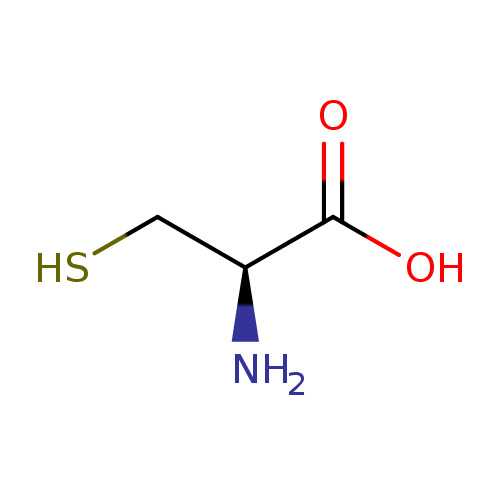
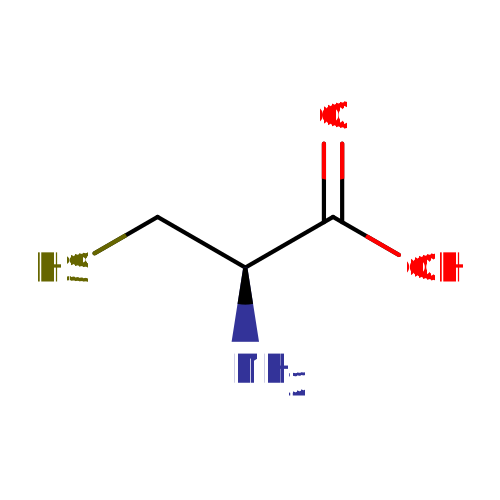
Chemical Structure
Thumb
Synonyms
ValueSource
(2R)-2-Amino-3-mercaptopropanoic acidChEBI
(2R)-2-Amino-3-sulfanylpropanoic acidChEBI
(R)-2-Amino-3-mercaptopropanoic acidChEBI
CChEBI
CysChEBI
CYSTEINEChEBI
e 920ChEBI
e-920ChEBI
e920ChEBI
FREE cysteineChEBI
L-2-Amino-3-mercaptopropionic acidChEBI
L-CysteinChEBI
L-ZysteinChEBI
EcolanKegg
(2R)-2-Amino-3-mercaptopropanoateGenerator
(2R)-2-Amino-3-sulfanylpropanoateGenerator
(2R)-2-Amino-3-sulphanylpropanoateGenerator
(2R)-2-Amino-3-sulphanylpropanoic acidGenerator
(R)-2-Amino-3-mercaptopropanoateGenerator
L-2-Amino-3-mercaptopropionateGenerator
(+)-2-Amino-3-mercaptopropionic acidHMDB
(R)-(+)-CysteineHMDB
(R)-2-Amino-3-mercapto-propanoateHMDB
(R)-2-Amino-3-mercapto-propanoic acidHMDB
(R)-CysteineHMDB
2-Amino-3-mercaptopropanoateHMDB
2-Amino-3-mercaptopropanoic acidHMDB
2-Amino-3-mercaptopropionateHMDB
2-Amino-3-mercaptopropionic acidHMDB
3-Mercapto-L-alanineHMDB
AcetylcysteineHMDB
alpha-Amino-beta-thiolpropionic acidHMDB
b-MercaptoalanineHMDB
beta-MercaptoalanineHMDB
CarbocysteineHMDB
CisteinaHMDB
CisteinumHMDB
CysteinHMDB
CysteinumHMDB
Half-cystineHMDB
L CysteineHMDB
L-(+)-CysteineHMDB
L-2-Amino-3-mercaptopropanoateHMDB
L-2-Amino-3-mercaptopropanoic acidHMDB
PolycysteineHMDB
ThioserineHMDB
Cysteine hydrochlorideHMDB
Zinc cysteinateHMDB
Half cystineHMDB
Chemical FormulaC3H7NO2S
Average Molecular Mass121.158 g/mol
Monoisotopic Mass121.020 g/mol
CAS Registry Number52-90-4
IUPAC Name(2R)-2-amino-3-sulfanylpropanoic acid
Traditional NameL-cysteine
SMILESN[C@@H](CS)C(O)=O
InChI IdentifierInChI=1S/C3H7NO2S/c4-2(1-7)3(5)6/h2,7H,1,4H2,(H,5,6)/t2-/m0/s1
InChI KeyXUJNEKJLAYXESH-REOHCLBHSA-N
Chemical Taxonomy
Description belongs to the class of organic compounds known as cysteine and derivatives. Cysteine and derivatives are compounds containing cysteine or a derivative thereof resulting from reaction of cysteine at the amino group or the carboxy group, or from the replacement of any hydrogen of glycine by a heteroatom.
KingdomOrganic compounds
Super ClassOrganic acids and derivatives
ClassCarboxylic acids and derivatives
Sub ClassAmino acids, peptides, and analogues
Direct ParentCysteine and derivatives
Alternative Parents
Substituents
  • Cysteine or derivatives
  • Alpha-amino acid
  • L-alpha-amino acid
  • Amino acid
  • Alkylthiol
  • Carboxylic acid
  • Monocarboxylic acid or derivatives
  • Organic oxygen compound
  • Primary amine
  • Organosulfur compound
  • Organooxygen compound
  • Organonitrogen compound
  • Organic nitrogen compound
  • Primary aliphatic amine
  • Carbonyl group
  • Amine
  • Hydrocarbon derivative
  • Organopnictogen compound
  • Organic oxide
  • Aliphatic acyclic compound
Molecular FrameworkAliphatic acyclic compounds
External Descriptors
Biological Properties
StatusDetected and Not Quantified
OriginEndogenous
Cellular Locations
  • Cytoplasm
  • Extracellular
  • Membrane
  • Mitochondria
Biofluid LocationsNot Available
Tissue Locations
  • Adrenal Cortex
  • Epidermis
  • Fibroblasts
  • Intestine
  • Kidney
  • Liver
  • Muscle
  • Myelin
  • Neuron
  • Placenta
  • Platelet
  • Prostate
  • Skeletal Muscle
  • Spleen
  • Testes
  • Thyroid Gland
Pathways
NameSMPDB LinkKEGG Link
Cysteine MetabolismSMP00013 map00270
Glutathione MetabolismSMP00015 map00480
Glycine and Serine MetabolismSMP00004 map00260
Methionine MetabolismSMP00033 map00270
Pantothenate and CoA BiosynthesisSMP00027 map00770
Taurine and Hypotaurine MetabolismSMP00021 map00430
Transcription/TranslationSMP00019 Not Available
Gamma-glutamyl-transpeptidase deficiencySMP00501 Not Available
Gamma-Glutamyltransferase DeficiencySMP00183 Not Available
HypermethioninemiaSMP00341 Not Available
Applications
Biological Roles
Chemical Roles
Physical Properties
StateSolid
AppearanceWhite powder.
Experimental Properties
PropertyValue
Melting Point240 dec°C
Boiling PointNot Available
Solubility2.77E+005 mg/L (at 25°C)
Predicted Properties
PropertyValueSource
Water Solubility23.1 g/LALOGPS
logP-2.6ALOGPS
logP-2.8ChemAxon
logS-0.72ALOGPS
pKa (Strongest Acidic)2.35ChemAxon
pKa (Strongest Basic)9.05ChemAxon
Physiological Charge0ChemAxon
Hydrogen Acceptor Count3ChemAxon
Hydrogen Donor Count3ChemAxon
Polar Surface Area63.32 ŲChemAxon
Rotatable Bond Count2ChemAxon
Refractivity28.22 m³·mol⁻¹ChemAxon
Polarizability11.41 ųChemAxon
Number of Rings0ChemAxon
Bioavailability1ChemAxon
Rule of FiveYesChemAxon
Ghose FilterNoChemAxon
Veber's RuleNoChemAxon
MDDR-like RuleNoChemAxon
Spectra
Spectra
Spectrum TypeDescriptionSplash KeyView
GC-MSGC-MS Spectrum - GC-EI-TOF (Pegasus III TOF-MS system, Leco; GC 6890, Agilent Technologies) (4 TMS)splash10-00kb-0950000000-df7e91c95b610ff21c79Spectrum
GC-MSGC-MS Spectrum - GC-EI-TOF (Pegasus III TOF-MS system, Leco; GC 6890, Agilent Technologies) (4 TMS)splash10-00kb-0940000000-aefe34765fb447090a23Spectrum
GC-MSGC-MS Spectrum - GC-EI-TOF (Pegasus III TOF-MS system, Leco; GC 6890, Agilent Technologies) (4 TMS)splash10-00kb-0970000000-10a155c40ea499023052Spectrum
GC-MSGC-MS Spectrum - GC-EI-TOF (Pegasus III TOF-MS system, Leco; GC 6890, Agilent Technologies) (Non-derivatized)splash10-00kb-0940000000-037a3a34651c3154b3b3Spectrum
GC-MSGC-MS Spectrum - GC-EI-TOF (Pegasus III TOF-MS system, Leco; GC 6890, Agilent Technologies) (4 TMS)splash10-00di-9850000000-118c43e33861a6baa8d2Spectrum
GC-MSGC-MS Spectrum - EI-B (Non-derivatized)splash10-014j-0690100000-0aeb88fd507505e6b718Spectrum
GC-MSGC-MS Spectrum - GC-EI-TOF (Non-derivatized)splash10-00kb-0950000000-df7e91c95b610ff21c79Spectrum
GC-MSGC-MS Spectrum - GC-EI-TOF (Non-derivatized)splash10-00kb-0940000000-aefe34765fb447090a23Spectrum
GC-MSGC-MS Spectrum - GC-EI-TOF (Non-derivatized)splash10-00kb-0970000000-10a155c40ea499023052Spectrum
GC-MSGC-MS Spectrum - GC-EI-TOF (Non-derivatized)splash10-00kb-0940000000-037a3a34651c3154b3b3Spectrum
GC-MSGC-MS Spectrum - GC-EI-QQ (Non-derivatized)splash10-0uk9-5619100000-8cb2558373966174ced3Spectrum
GC-MSGC-MS Spectrum - GC-EI-TOF (Non-derivatized)splash10-00di-9850000000-118c43e33861a6baa8d2Spectrum
GC-MSGC-MS Spectrum - GC-EI-TOF (Non-derivatized)splash10-0gi0-0960000000-03b2097de6f9637d29cbSpectrum
Predicted GC-MSPredicted GC-MS Spectrum - GC-MS (Non-derivatized) - 70eV, Positivesplash10-004l-9100000000-4553906a941a5e87ec97Spectrum
Predicted GC-MSPredicted GC-MS Spectrum - GC-MS (1 TMS) - 70eV, Positivesplash10-004i-9200000000-cfaf705cd0452d428454Spectrum
Predicted GC-MSPredicted GC-MS Spectrum - GC-MS (Non-derivatized) - 70eV, PositiveNot AvailableSpectrum
Predicted GC-MSPredicted GC-MS Spectrum - GC-MS (TMS_1_2) - 70eV, PositiveNot AvailableSpectrum
Predicted GC-MSPredicted GC-MS Spectrum - GC-MS (TMS_1_3) - 70eV, PositiveNot AvailableSpectrum
Predicted GC-MSPredicted GC-MS Spectrum - GC-MS (TBDMS_1_1) - 70eV, PositiveNot AvailableSpectrum
Predicted GC-MSPredicted GC-MS Spectrum - GC-MS (TBDMS_1_2) - 70eV, PositiveNot AvailableSpectrum
Predicted GC-MSPredicted GC-MS Spectrum - GC-MS (TBDMS_1_3) - 70eV, PositiveNot AvailableSpectrum
LC-MS/MSLC-MS/MS Spectrum - Quattro_QQQ 10V, Positive (Annotated)splash10-00b9-9600000000-374c5872d68662832769Spectrum
LC-MS/MSLC-MS/MS Spectrum - Quattro_QQQ 25V, Positive (Annotated)splash10-0a4i-9000000000-ddbd3df6b8dbb280ffbaSpectrum
LC-MS/MSLC-MS/MS Spectrum - Quattro_QQQ 40V, Positive (Annotated)splash10-0a4i-9000000000-320a2c77443b80ebf733Spectrum
LC-MS/MSLC-MS/MS Spectrum - LC-ESI-ITFT (LTQ Orbitrap XL, Thermo Scientfic) , Positivesplash10-0089-0900000000-9dcd3d757c5cd11eb18eSpectrum
LC-MS/MSLC-MS/MS Spectrum - LC-ESI-ITFT (LTQ Orbitrap XL, Thermo Scientfic) , Positivesplash10-0udi-3900000000-212e081fe83ad70de0adSpectrum
LC-MS/MSLC-MS/MS Spectrum - LC-ESI-ITFT (LTQ Orbitrap XL, Thermo Scientfic) , Positivesplash10-000i-9000000000-2eb01f41c225f614db24Spectrum
LC-MS/MSLC-MS/MS Spectrum - LC-ESI-ITFT (LTQ Orbitrap XL, Thermo Scientfic) , Positivesplash10-001i-0900000000-a19834eb7cb9f211fdf2Spectrum
LC-MS/MSLC-MS/MS Spectrum - LC-ESI-ITFT (LTQ Orbitrap XL, Thermo Scientfic) , Positivesplash10-00di-0900000000-2458f2587761e779ed93Spectrum
LC-MS/MSLC-MS/MS Spectrum - LC-ESI-ITFT (LTQ Orbitrap XL, Thermo Scientfic) , Positivesplash10-0a4i-9000000000-77e590f0ed26f69b31c0Spectrum
LC-MS/MSLC-MS/MS Spectrum - LC-ESI-ITFT (LTQ Orbitrap XL, Thermo Scientfic) , Positivesplash10-0udi-3900000000-7b1857997392b006b95fSpectrum
LC-MS/MSLC-MS/MS Spectrum - LC-ESI-ITFT (LTQ Orbitrap XL, Thermo Scientfic) , Positivesplash10-0a4i-3900000000-bc268c27ed5706a4bbd2Spectrum
LC-MS/MSLC-MS/MS Spectrum - CE-ESI-TOF (CE-system connected to 6210 Time-of-Flight MS, Agilent) , Positivesplash10-00di-0900000000-4573390bccc238e3c91bSpectrum
LC-MS/MSLC-MS/MS Spectrum - LC-ESI-ITFT , positivesplash10-0udi-3900000000-212e081fe83ad70de0adSpectrum
LC-MS/MSLC-MS/MS Spectrum - LC-ESI-ITFT , positivesplash10-0udi-3900000000-7b1857997392b006b95fSpectrum
LC-MS/MSLC-MS/MS Spectrum - QqQ 14V, negativesplash10-001i-9000000000-5dc69d3b59bd15290aefSpectrum
LC-MS/MSLC-MS/MS Spectrum - 10V, Positivesplash10-0a6r-9100000000-ed3c9c47ed98679090abSpectrum
LC-MS/MSLC-MS/MS Spectrum - 0V, Positivesplash10-00di-2900000000-8bb219d17ccdf7ac0a5dSpectrum
LC-MS/MSLC-MS/MS Spectrum - 30V, Positivesplash10-0a4i-9000000000-e623d5a27b5075c82b4dSpectrum
LC-MS/MSLC-MS/MS Spectrum - 10V, Positivesplash10-056r-9100000000-4e26cc13af7c878115f7Spectrum
Predicted LC-MS/MSPredicted LC-MS/MS Spectrum - 10V, Positivesplash10-00b9-9600000000-4352a7b437c34c04d9f0Spectrum
Predicted LC-MS/MSPredicted LC-MS/MS Spectrum - 20V, Positivesplash10-004i-9200000000-7b4cd034c717561c61ddSpectrum
Predicted LC-MS/MSPredicted LC-MS/MS Spectrum - 40V, Positivesplash10-052f-9000000000-8f351cbca6ffed356a9bSpectrum
Predicted LC-MS/MSPredicted LC-MS/MS Spectrum - 10V, Negativesplash10-00di-6900000000-51ba0df80cc33423420bSpectrum
Predicted LC-MS/MSPredicted LC-MS/MS Spectrum - 20V, Negativesplash10-0079-9400000000-4aa2b707c391d5838d29Spectrum
Predicted LC-MS/MSPredicted LC-MS/MS Spectrum - 40V, Negativesplash10-001i-9000000000-95c7672c7836c0fc51c9Spectrum
1D NMR13C NMR SpectrumNot AvailableSpectrum
1D NMR1H NMR SpectrumNot AvailableSpectrum
1D NMR13C NMR SpectrumNot AvailableSpectrum
1D NMR1H NMR SpectrumNot AvailableSpectrum
1D NMR13C NMR SpectrumNot AvailableSpectrum
1D NMR1H NMR SpectrumNot AvailableSpectrum
1D NMR13C NMR SpectrumNot AvailableSpectrum
1D NMR1H NMR SpectrumNot AvailableSpectrum
1D NMR13C NMR SpectrumNot AvailableSpectrum
1D NMR1H NMR SpectrumNot AvailableSpectrum
1D NMR13C NMR SpectrumNot AvailableSpectrum
1D NMR1H NMR SpectrumNot AvailableSpectrum
1D NMR13C NMR SpectrumNot AvailableSpectrum
1D NMR1H NMR SpectrumNot AvailableSpectrum
1D NMR13C NMR SpectrumNot AvailableSpectrum
1D NMR1H NMR SpectrumNot AvailableSpectrum
1D NMR13C NMR SpectrumNot AvailableSpectrum
1D NMR1H NMR SpectrumNot AvailableSpectrum
1D NMR13C NMR SpectrumNot AvailableSpectrum
1D NMR1H NMR SpectrumNot AvailableSpectrum
1D NMR13C NMR SpectrumNot AvailableSpectrum
1D NMR1H NMR SpectrumNot AvailableSpectrum
1D NMR13C NMR SpectrumNot AvailableSpectrum
2D NMR[1H,1H] 2D NMR SpectrumNot AvailableSpectrum
2D NMR[1H,13C] 2D NMR SpectrumNot AvailableSpectrum
Toxicity Profile
Route of ExposureEndogenous, Ingestion, Dermal (contact)
Mechanism of ToxicityUremic toxins such as cysteine are actively transported into the kidneys via organic ion transporters (especially OAT3). Increased levels of uremic toxins can stimulate the production of reactive oxygen species. This seems to be mediated by the direct binding or inhibition by uremic toxins of the enzyme NADPH oxidase (especially NOX4 which is abundant in the kidneys and heart) (3). Reactive oxygen species can induce several different DNA methyltransferases (DNMTs) which are involved in the silencing of a protein known as KLOTHO. KLOTHO has been identified as having important roles in anti-aging, mineral metabolism, and vitamin D metabolism. A number of studies have indicated that KLOTHO mRNA and protein levels are reduced during acute or chronic kidney diseases in response to high local levels of reactive oxygen species (4). Although classified as a non-essential amino acid cysteine may be essential for infants, the elderly, and individuals with certain metabolic disease or who suffer from malabsorption syndromes. Cysteine can usually be synthesized by the human body under normal physiological conditions if a sufficient quantity of methionine is available. Due to the ability of thiols to undergo redox reactions, cysteine has antioxidant properties. Cysteine's antioxidant properties are typically expressed in the tripeptide glutathione, which occurs in humans as well as other organisms. The systemic availability of oral glutathione (GSH) is negligible; so it must be biosynthesized from its constituent amino acids, cysteine, glycine, and glutamic acid. Glutamic acid and glycine are readily available in the diets of most industrialized countries, but the availability of cysteine can be the limiting substrate. Cysteine is also an important source of sulfide in human metabolism. The sulfide in iron-sulfur clusters and in nitrogenase is extracted from cysteine, which is converted to alanine in the process. In a 1994 report released by five top cigarette companies, cysteine is one of the 599 additives to cigarettes. Its use or purpose, however, is unknown, like most cigarette additives. Its inclusion in cigarettes could offer two benefits: Acting as an expectorant, since smoking increases mucus production in the lungs; and increasing the beneficial antioxidant glutathione (which is diminished in smokers).
MetabolismUremic toxins tend to accumulate in the blood either through dietary excess or through poor filtration by the kidneys. Most uremic toxins are metabolic waste products and are normally excreted in the urine or feces.
Toxicity ValuesNot Available
Lethal DoseNot Available
Carcinogenicity (IARC Classification)No indication of carcinogenicity to humans (not listed by IARC).
Uses/SourcesFor the prevention of liver damage and kidney damage associated with overdoses of acetaminophen
Minimum Risk LevelNot Available
Health EffectsChronic exposure to uremic toxins can lead to a number of conditions including renal damage, chronic kidney disease and cardiovascular disease.
SymptomsAs a uremic toxin, this compound can cause uremic syndrome. Uremic syndrome may affect any part of the body and can cause nausea, vomiting, loss of appetite, and weight loss. It can also cause changes in mental status, such as confusion, reduced awareness, agitation, psychosis, seizures, and coma. Abnormal bleeding, such as bleeding spontaneously or profusely from a very minor injury can also occur. Heart problems, such as an irregular heartbeat, inflammation in the sac that surrounds the heart (pericarditis), and increased pressure on the heart can be seen in patients with uremic syndrome. Shortness of breath from fluid buildup in the space between the lungs and the chest wall (pleural effusion) can also be present.
TreatmentKidney dialysis is usually needed to relieve the symptoms of uremic syndrome until normal kidney function can be restored.
Concentrations
Not Available
DrugBank IDDB00151
HMDB IDHMDB0000574
FooDB IDFDB012678
Phenol Explorer IDNot Available
KNApSAcK IDC00001351
BiGG ID33843
BioCyc IDCYS
METLIN ID5556
PDB IDNot Available
Wikipedia LinkCysteine
Chemspider ID5653
ChEBI ID17561
PubChem Compound ID5862
Kegg Compound IDC00097
YMDB IDYMDB00046
ECMDB IDECMDB00574
References
Synthesis Reference

Alfred Maierhofer, Hans Wagner, “Process for the production of high purity S-carboxymethyl-L-cysteine.” U.S. Patent US4129593, issued May, 1965.

MSDSLink
General References
1. Kumagai, Hidehiko; Tanaka, Hideyuki; Sejima, Shunsuke; Yamada, Hideaki. Elimination and replacement reactions of b-chloro-L-alanine by cysteine desulfhydrase from Aerobacter aerogenes. Agricultural and Biological Chemistry (1977), 41(10), 2071-5.
2. Sandmann J, Schwedhelm KS, Tsikas D: Specific transport of S-nitrosocysteine in human red blood cells: Implications for formation of S-nitrosothiols and transport of NO bioactivity within the vasculature. FEBS Lett. 2005 Aug 1;579(19):4119-24.
3. Paivalainen S, Suokas M, Lahti O, Heape AM: Degraded myelin-associated glycoprotein (dMAG) formation from pure human brain myelin-associated glycoprotein (MAG) is not mediated by calpain or cathepsin L-like activities. J Neurochem. 2003 Feb;84(3):533-45.
4. Iyer S, Leonidas DD, Swaminathan GJ, Maglione D, Battisti M, Tucci M, Persico MG, Acharya KR: The crystal structure of human placenta growth factor-1 (PlGF-1), an angiogenic protein, at 2.0 A resolution. J Biol Chem. 2001 Apr 13;276(15):12153-61. Epub 2000 Nov 7.
5. Nishiya Y, Yoshida Y, Yoshimura M, Fukamachi H, Nakano Y: Homogeneous enzymatic assay for L-cysteine with betaC-S lyase. Biosci Biotechnol Biochem. 2005 Nov;69(11):2244-6.
6. Cynober LA: Plasma amino acid levels with a note on membrane transport: characteristics, regulation, and metabolic significance. Nutrition. 2002 Sep;18(9):761-6.
7. Santamaria I, Velasco G, Cazorla M, Fueyo A, Campo E, Lopez-Otin C: Cathepsin L2, a novel human cysteine proteinase produced by breast and colorectal carcinomas. Cancer Res. 1998 Apr 15;58(8):1624-30.
8. Eriksson A, Tohonen V, Wedell A, Nordqvist K: Isolation of the human testatin gene and analysis in patients with abnormal gonadal development. Mol Hum Reprod. 2002 Jan;8(1):8-15.
9. Kaminska J, Wisniewska A, Koscielak J: Chemical modifications of alpha1,6-fucosyltransferase define amino acid residues of catalytic importance. Biochimie. 2003 Mar-Apr;85(3-4):303-10.
10. Li Y, Gamper N, Shapiro MS: Single-channel analysis of KCNQ K+ channels reveals the mechanism of augmentation by a cysteine-modifying reagent. J Neurosci. 2004 Jun 2;24(22):5079-90.
11. Lindzen M, Gottschalk KE, Fuzesi M, Garty H, Karlish SJ: Structural interactions between FXYD proteins and Na+,K+-ATPase: alpha/beta/FXYD subunit stoichiometry and cross-linking. J Biol Chem. 2006 Mar 3;281(9):5947-55. Epub 2005 Dec 21.
12. Norris FA, Wilson MP, Wallis TS, Galyov EE, Majerus PW: SopB, a protein required for virulence of Salmonella dublin, is an inositol phosphate phosphatase. Proc Natl Acad Sci U S A. 1998 Nov 24;95(24):14057-9.
13. Kersemans V, Cornelissen B, Kersemans K, Bauwens M, Achten E, Dierckx RA, Mertens J, Slegers G: In vivo characterization of 123/125I-2-iodo-L-phenylalanine in an R1M rhabdomyosarcoma athymic mouse model as a potential tumor tracer for SPECT. J Nucl Med. 2005 Mar;46(3):532-9.
14. Foss CA, Mease RC, Fan H, Wang Y, Ravert HT, Dannals RF, Olszewski RT, Heston WD, Kozikowski AP, Pomper MG: Radiolabeled small-molecule ligands for prostate-specific membrane antigen: in vivo imaging in experimental models of prostate cancer. Clin Cancer Res. 2005 Jun 1;11(11):4022-8.
15. Nicholson JK, O'Flynn MP, Sadler PJ, Macleod AF, Juul SM, Sonksen PH: Proton-nuclear-magnetic-resonance studies of serum, plasma and urine from fasting normal and diabetic subjects. Biochem J. 1984 Jan 15;217(2):365-75.
16. Kozaki K, Miyaishi O, Asai N, Iida K, Sakata K, Hayashi M, Nishida T, Matsuyama M, Shimizu S, Kaneda T, et al.: Tissue distribution of ERp61 and association of its increased expression with IgG production in hybridoma cells. Exp Cell Res. 1994 Aug;213(2):348-58.
17. Amberger VR, Hensel T, Ogata N, Schwab ME: Spreading and migration of human glioma and rat C6 cells on central nervous system myelin in vitro is correlated with tumor malignancy and involves a metalloproteolytic activity. Cancer Res. 1998 Jan 1;58(1):149-58.
18. Zhang JT, Li QX, Wang D, Zhu ZL, Yang YH, Cui DS, Wang MW, Sun XF: Up-regulation of PINCH in the stroma of oral squamous cell carcinoma predicts nodal metastasis. Oncol Rep. 2005 Dec;14(6):1519-22.
19. Taveau M, Bourg N, Sillon G, Roudaut C, Bartoli M, Richard I: Calpain 3 is activated through autolysis within the active site and lyses sarcomeric and sarcolemmal components. Mol Cell Biol. 2003 Dec;23(24):9127-35.
20. Yu FH, Westenbroek RE, Silos-Santiago I, McCormick KA, Lawson D, Ge P, Ferriera H, Lilly J, DiStefano PS, Catterall WA, Scheuer T, Curtis R: Sodium channel beta4, a new disulfide-linked auxiliary subunit with similarity to beta2. J Neurosci. 2003 Aug 20;23(20):7577-85.
21. Naisbitt DJ, Vilar FJ, Stalford AC, Wilkins EG, Pirmohamed M, Park BK: Plasma cysteine deficiency and decreased reduction of nitrososulfamethoxazole with HIV infection. AIDS Res Hum Retroviruses. 2000 Dec 10;16(18):1929-38.
22. Sreekumar A, Poisson LM, Rajendiran TM, Khan AP, Cao Q, Yu J, Laxman B, Mehra R, Lonigro RJ, Li Y, Nyati MK, Ahsan A, Kalyana-Sundaram S, Han B, Cao X, Byun J, Omenn GS, Ghosh D, Pennathur S, Alexander DC, Berger A, Shuster JR, Wei JT, Varambally S, Beecher C, Chinnaiyan AM: Metabolomic profiles delineate potential role for sarcosine in prostate cancer progression. Nature. 2009 Feb 12;457(7231):910-4. doi: 10.1038/nature07762.
23. Baker DH, Czarnecki-Maulden GL: Pharmacologic role of cysteine in ameliorating or exacerbating mineral toxicities. J Nutr. 1987 Jun;117(6):1003-10.
24. Bulaj G, Kortemme T, Goldenberg DP: Ionization-reactivity relationships for cysteine thiols in polypeptides. Biochemistry. 1998 Jun 23;37(25):8965-72.
25. Duranton F, Cohen G, De Smet R, Rodriguez M, Jankowski J, Vanholder R, Argiles A: Normal and pathologic concentrations of uremic toxins. J Am Soc Nephrol. 2012 Jul;23(7):1258-70. doi: 10.1681/ASN.2011121175. Epub 2012 May 24.
26. Elshenawy S, Pinney SE, Stuart T, Doulias PT, Zura G, Parry S, Elovitz MA, Bennett MJ, Bansal A, Strauss JF 3rd, Ischiropoulos H, Simmons RA: The Metabolomic Signature of the Placenta in Spontaneous Preterm Birth. Int J Mol Sci. 2020 Feb 4;21(3). pii: ijms21031043. doi: 10.3390/ijms21031043.
27. https://www.ncbi.nlm.nih.gov/pubmed/?term=11732994
28. https://www.ncbi.nlm.nih.gov/pubmed/?term=13761469
29. https://www.ncbi.nlm.nih.gov/pubmed/?term=22735334