Record Information
Version1.0
Creation Date2014-08-29 05:47:21 UTC
Update Date2026-03-31 16:51:54 UTC
Accession NumberCHEM003114
Identification
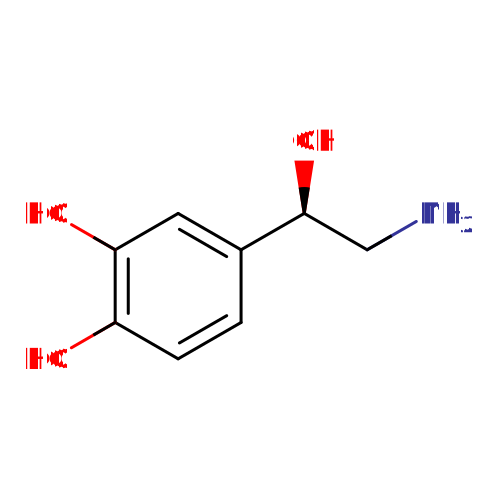
Common NameNorepinephrine
ClassSmall Molecule
DescriptionNoradrenalin is a uremic toxin. Uremic toxins can be subdivided into three major groups based upon their chemical and physical characteristics: 1) small, water-soluble, non-protein-bound compounds, such as urea; 2) small, lipid-soluble and/or protein-bound compounds, such as the phenols and 3) larger so-called middle-molecules, such as beta2-microglobulin. Chronic exposure of uremic toxins can lead to a number of conditions including renal damage, chronic kidney disease and cardiovascular disease. Precursor of epinephrine that is secreted by the adrenal medulla and is a widespread central and autonomic neurotransmitter. Norepinephrine is the principal transmitter of most postganglionic sympathetic fibers and of the diffuse projection system in the brain arising from the locus ceruleus. It is also found in plants and is used pharmacologically as a sympathomimetic. [PubChem]
Contaminant Sources
  • FooDB Chemicals
  • HMDB Contaminants - Urine
  • STOFF IDENT Compounds
  • T3DB toxins
  • ToxCast & Tox21 Chemicals
Contaminant Type
  • Adrenergic alpha-Agonist
  • Amine
  • Drug
  • Food Toxin
  • Metabolite
  • Natural Compound
  • Organic Compound
  • Sympathomimetic
  • Uremic Toxin
  • Vasoconstrictor Agent
Chemical Structure
Thumb
Synonyms
ValueSource
(-)-ArterenolChEBI
(-)-NoradrenalineChEBI
(-)-NorepinephrineChEBI
(R)-(-)-NorepinephrineChEBI
(R)-4-(2-amino-1-Hydroxyethyl)-1,2-benzenediolChEBI
(R)-NorepinephrineChEBI
4-[(1R)-2-amino-1-Hydroxyethyl]-1,2-benzenediolChEBI
ArterenolChEBI
L-NoradrenalineChEBI
L-NorepinephrineChEBI
NoradrenalineChEBI
NorepinefrinaChEBI
NorepinephrinumChEBI
(-)-(R)-NorepinephrineHMDB
(-)-alpha-(Aminomethyl)protocatechuyl alcoholHMDB
(R)-NoradrenalineHMDB
4-(2-amino-1-Hydroxyethyl)-1,2-benzenediolHMDB
AdrenorHMDB
AktaminHMDB
L-2-amino-1-(3,4-Dihydroxyphenyl)ethanolHMDB
L-3,4-DihydroxyphenylethanolamineHMDB
L-alpha-(Aminomethyl)-3,4-dihydroxybenzyl alcoholHMDB
L-ArterenolHMDB
LevarterenolHMDB, MeSH
LevoarterenolHMDB
LevonorHMDB, MeSH
LevonoradrenalineHMDB
LevonorepinephrineHMDB, MeSH
LevophedHMDB, MeSH
Nor-epirenanHMDB
NoradrenalinHMDB
NorartrinalHMDB
NorepirenamineHMDB
Sympathin EHMDB
Chemical FormulaC8H11NO3
Average Molecular Mass169.178 g/mol
Monoisotopic Mass169.074 g/mol
CAS Registry Number51-41-2
IUPAC Name4-[(1R)-2-amino-1-hydroxyethyl]benzene-1,2-diol
Traditional Namenorepinephrine
SMILESNC[C@H](O)C1=CC(O)=C(O)C=C1
InChI IdentifierInChI=1S/C8H11NO3/c9-4-8(12)5-1-2-6(10)7(11)3-5/h1-3,8,10-12H,4,9H2/t8-/m0/s1
InChI KeySFLSHLFXELFNJZ-QMMMGPOBSA-N
Chemical Taxonomy
Description belongs to the class of organic compounds known as catechols. Catechols are compounds containing a 1,2-benzenediol moiety.
KingdomOrganic compounds
Super ClassBenzenoids
ClassPhenols
Sub ClassBenzenediols
Direct ParentCatechols
Alternative Parents
Substituents
  • Catechol
  • 1-hydroxy-4-unsubstituted benzenoid
  • 1-hydroxy-2-unsubstituted benzenoid
  • Aralkylamine
  • Monocyclic benzene moiety
  • 1,2-aminoalcohol
  • Secondary alcohol
  • Organic nitrogen compound
  • Aromatic alcohol
  • Hydrocarbon derivative
  • Primary amine
  • Organooxygen compound
  • Organonitrogen compound
  • Primary aliphatic amine
  • Organopnictogen compound
  • Organic oxygen compound
  • Amine
  • Alcohol
  • Aromatic homomonocyclic compound
Molecular FrameworkAromatic homomonocyclic compounds
External Descriptors
Biological Properties
StatusDetected and Not Quantified
OriginEndogenous
Cellular Locations
  • Cytoplasm
  • Extracellular
Biofluid LocationsNot Available
Tissue Locations
  • Adipose Tissue
  • Adrenal Cortex
  • Adrenal Gland
  • Adrenal Medulla
  • Bladder
  • Brain
  • Central Nervous System
  • Epidermis
  • Fibroblasts
  • Gonads
  • Heart
  • Intestine
  • Kidney
  • Lymphocyte
  • Muscle
  • Nerve Cells
  • Neuron
  • Pancreas
  • Placenta
  • Platelet
  • Prostate
  • Skeletal Muscle
Pathways
NameSMPDB LinkKEGG Link
Catecholamine BiosynthesisSMP00012 map00350
Tyrosine MetabolismSMP00006 map00350
Applications
Biological Roles
Chemical RolesNot Available
Physical Properties
StateSolid
AppearanceWhite powder.
Experimental Properties
PropertyValue
Melting Point217 dec°C
Boiling PointNot Available
Solubility849 mg/mL
Predicted Properties
PropertyValueSource
logP-0.68ChemAxon
pKa (Strongest Acidic)9.5ChemAxon
pKa (Strongest Basic)8.85ChemAxon
Physiological Charge1ChemAxon
Hydrogen Acceptor Count4ChemAxon
Hydrogen Donor Count4ChemAxon
Polar Surface Area86.71 ŲChemAxon
Rotatable Bond Count2ChemAxon
Refractivity44.46 m³·mol⁻¹ChemAxon
Polarizability16.96 ųChemAxon
Number of Rings1ChemAxon
Bioavailability1ChemAxon
Rule of FiveYesChemAxon
Ghose FilterNoChemAxon
Veber's RuleNoChemAxon
MDDR-like RuleNoChemAxon
Spectra
Spectra
Spectrum TypeDescriptionSplash KeyView
GC-MSGC-MS Spectrum - GC-MS (5 TMS)splash10-00di-1900000000-c9b4a0a230d610dd0e61Spectrum
GC-MSGC-MS Spectrum - EI-B (Non-derivatized)splash10-000l-4900000000-b0893c23c186c5f8a344Spectrum
GC-MSGC-MS Spectrum - GC-MS (Non-derivatized)splash10-00di-1900000000-c9b4a0a230d610dd0e61Spectrum
Predicted GC-MSPredicted GC-MS Spectrum - GC-MS (Non-derivatized) - 70eV, Positivesplash10-001i-7900000000-ce77a851a3951304f4d0Spectrum
Predicted GC-MSPredicted GC-MS Spectrum - GC-MS (3 TMS) - 70eV, Positivesplash10-0229-5974000000-c3ce7fc56442d79ae5b9Spectrum
Predicted GC-MSPredicted GC-MS Spectrum - GC-MS (Non-derivatized) - 70eV, PositiveNot AvailableSpectrum
Predicted GC-MSPredicted GC-MS Spectrum - GC-MS (TMS_1_1) - 70eV, PositiveNot AvailableSpectrum
Predicted GC-MSPredicted GC-MS Spectrum - GC-MS (TMS_1_2) - 70eV, PositiveNot AvailableSpectrum
Predicted GC-MSPredicted GC-MS Spectrum - GC-MS (TMS_1_3) - 70eV, PositiveNot AvailableSpectrum
Predicted GC-MSPredicted GC-MS Spectrum - GC-MS (TMS_1_4) - 70eV, PositiveNot AvailableSpectrum
Predicted GC-MSPredicted GC-MS Spectrum - GC-MS (TMS_2_1) - 70eV, PositiveNot AvailableSpectrum
Predicted GC-MSPredicted GC-MS Spectrum - GC-MS (TMS_2_2) - 70eV, PositiveNot AvailableSpectrum
Predicted GC-MSPredicted GC-MS Spectrum - GC-MS (TMS_2_3) - 70eV, PositiveNot AvailableSpectrum
Predicted GC-MSPredicted GC-MS Spectrum - GC-MS (TMS_2_4) - 70eV, PositiveNot AvailableSpectrum
Predicted GC-MSPredicted GC-MS Spectrum - GC-MS (TMS_2_5) - 70eV, PositiveNot AvailableSpectrum
Predicted GC-MSPredicted GC-MS Spectrum - GC-MS (TMS_2_6) - 70eV, PositiveNot AvailableSpectrum
Predicted GC-MSPredicted GC-MS Spectrum - GC-MS (TMS_2_7) - 70eV, PositiveNot AvailableSpectrum
Predicted GC-MSPredicted GC-MS Spectrum - GC-MS (TMS_3_2) - 70eV, PositiveNot AvailableSpectrum
Predicted GC-MSPredicted GC-MS Spectrum - GC-MS (TMS_3_3) - 70eV, PositiveNot AvailableSpectrum
Predicted GC-MSPredicted GC-MS Spectrum - GC-MS (TMS_3_4) - 70eV, PositiveNot AvailableSpectrum
Predicted GC-MSPredicted GC-MS Spectrum - GC-MS (TMS_3_5) - 70eV, PositiveNot AvailableSpectrum
Predicted GC-MSPredicted GC-MS Spectrum - GC-MS (TMS_3_6) - 70eV, PositiveNot AvailableSpectrum
Predicted GC-MSPredicted GC-MS Spectrum - GC-MS (TMS_3_7) - 70eV, PositiveNot AvailableSpectrum
Predicted GC-MSPredicted GC-MS Spectrum - GC-MS (TBDMS_1_1) - 70eV, PositiveNot AvailableSpectrum
LC-MS/MSLC-MS/MS Spectrum - Quattro_QQQ 10V, N/A (Annotated)splash10-0udi-0900000000-5610e21bd478a4ca7bdeSpectrum
LC-MS/MSLC-MS/MS Spectrum - Quattro_QQQ 25V, N/A (Annotated)splash10-0a6r-5900000000-5d7cd24a6af23a36af3aSpectrum
LC-MS/MSLC-MS/MS Spectrum - Quattro_QQQ 40V, N/A (Annotated)splash10-004i-9000000000-3c8de1511861fa1d028cSpectrum
LC-MS/MSLC-MS/MS Spectrum - EI-B (HITACHI M-80) , Positivesplash10-000l-4900000000-b0893c23c186c5f8a344Spectrum
LC-MS/MSLC-MS/MS Spectrum - LC-ESI-QQ (API3000, Applied Biosystems) 10V, Positivesplash10-0udi-0900000000-11725b1d61843966aa7cSpectrum
LC-MS/MSLC-MS/MS Spectrum - LC-ESI-QQ (API3000, Applied Biosystems) 20V, Positivesplash10-0udi-1900000000-6931e73a397f3917ad96Spectrum
LC-MS/MSLC-MS/MS Spectrum - LC-ESI-QQ (API3000, Applied Biosystems) 30V, Positivesplash10-0a4i-3900000000-bddd6ee748aa9ebecb15Spectrum
LC-MS/MSLC-MS/MS Spectrum - LC-ESI-QQ (API3000, Applied Biosystems) 40V, Positivesplash10-056r-9500000000-6abd3337785c1b580668Spectrum
LC-MS/MSLC-MS/MS Spectrum - LC-ESI-QQ (API3000, Applied Biosystems) 50V, Positivesplash10-004i-9100000000-ede02e0e3e74bdddc9f4Spectrum
LC-MS/MSLC-MS/MS Spectrum - LC-ESI-QQ , positivesplash10-0udi-0900000000-11725b1d61843966aa7cSpectrum
LC-MS/MSLC-MS/MS Spectrum - LC-ESI-QQ , positivesplash10-0udi-1900000000-6931e73a397f3917ad96Spectrum
LC-MS/MSLC-MS/MS Spectrum - LC-ESI-QQ , positivesplash10-0a4i-3900000000-918c4cbdffc5e02eafd5Spectrum
LC-MS/MSLC-MS/MS Spectrum - LC-ESI-QQ , positivesplash10-056r-9500000000-6abd3337785c1b580668Spectrum
LC-MS/MSLC-MS/MS Spectrum - LC-ESI-QQ , positivesplash10-004i-9100000000-ede02e0e3e74bdddc9f4Spectrum
LC-MS/MSLC-MS/MS Spectrum - 40V, Positivesplash10-0pdi-9200000000-3d99ed9123eec62ff62dSpectrum
LC-MS/MSLC-MS/MS Spectrum - 30V, Positivesplash10-0a6r-9800000000-de86d31e5e71d6797483Spectrum
LC-MS/MSLC-MS/MS Spectrum - 40V, Positivesplash10-004i-9000000000-f80ee469d3be93674e92Spectrum
LC-MS/MSLC-MS/MS Spectrum - 10V, Positivesplash10-0udi-4900000000-fcf1ba1ad34b038d9ecdSpectrum
LC-MS/MSLC-MS/MS Spectrum - 20V, Positivesplash10-0a4i-9700000000-a7986bc2f2986d323df1Spectrum
Predicted LC-MS/MSPredicted LC-MS/MS Spectrum - 10V, Positivesplash10-0uk9-0900000000-3d6d08077184bc7a41e2Spectrum
Predicted LC-MS/MSPredicted LC-MS/MS Spectrum - 20V, Positivesplash10-0f79-0900000000-470ddb022c86b9ee2fdcSpectrum
Predicted LC-MS/MSPredicted LC-MS/MS Spectrum - 40V, Positivesplash10-0zgr-7900000000-c1bd5e2d31685ca3b0c1Spectrum
Predicted LC-MS/MSPredicted LC-MS/MS Spectrum - 10V, Negativesplash10-014i-0900000000-9eabcf1f0c800fc62a37Spectrum
Predicted LC-MS/MSPredicted LC-MS/MS Spectrum - 20V, Negativesplash10-0gi9-0900000000-2ff1cb280b5fe5254689Spectrum
Predicted LC-MS/MSPredicted LC-MS/MS Spectrum - 40V, Negativesplash10-0a4i-4900000000-c16efed37585b9aac58aSpectrum
1D NMR13C NMR SpectrumNot AvailableSpectrum
1D NMR1H NMR SpectrumNot AvailableSpectrum
1D NMR13C NMR SpectrumNot AvailableSpectrum
1D NMR1H NMR SpectrumNot AvailableSpectrum
1D NMR13C NMR SpectrumNot AvailableSpectrum
1D NMR1H NMR SpectrumNot AvailableSpectrum
1D NMR13C NMR SpectrumNot AvailableSpectrum
1D NMR1H NMR SpectrumNot AvailableSpectrum
1D NMR13C NMR SpectrumNot AvailableSpectrum
1D NMR1H NMR SpectrumNot AvailableSpectrum
1D NMR13C NMR SpectrumNot AvailableSpectrum
1D NMR1H NMR SpectrumNot AvailableSpectrum
1D NMR13C NMR SpectrumNot AvailableSpectrum
1D NMR1H NMR SpectrumNot AvailableSpectrum
1D NMR13C NMR SpectrumNot AvailableSpectrum
1D NMR1H NMR SpectrumNot AvailableSpectrum
1D NMR13C NMR SpectrumNot AvailableSpectrum
1D NMR1H NMR SpectrumNot AvailableSpectrum
1D NMR13C NMR SpectrumNot AvailableSpectrum
1D NMR1H NMR SpectrumNot AvailableSpectrum
1D NMR13C NMR SpectrumNot AvailableSpectrum
2D NMR[1H,13C] 2D NMR SpectrumNot AvailableSpectrum
Toxicity Profile
Route of ExposureEndogenous, Ingestion, Dermal (contact)
Mechanism of ToxicityUremic toxins such as noradrenalin are actively transported into the kidneys via organic ion transporters (especially OAT3). Increased levels of uremic toxins can stimulate the production of reactive oxygen species. This seems to be mediated by the direct binding or inhibition by uremic toxins of the enzyme NADPH oxidase (especially NOX4 which is abundant in the kidneys and heart) (2). Reactive oxygen species can induce several different DNA methyltransferases (DNMTs) which are involved in the silencing of a protein known as KLOTHO. KLOTHO has been identified as having important roles in anti-aging, mineral metabolism, and vitamin D metabolism. A number of studies have indicated that KLOTHO mRNA and protein levels are reduced during acute or chronic kidney diseases in response to high local levels of reactive oxygen species (3). Norepinephrine functions as a peripheral vasoconstrictor by acting on alpha-adrenergic receptors. It is also an inotropic stimulator of the heart and dilator of coronary arteries as a result of it's activity at the beta-adrenergic receptors.
MetabolismUremic toxins tend to accumulate in the blood either through dietary excess or through poor filtration by the kidneys. Most uremic toxins are metabolic waste products and are normally excreted in the urine or feces.
Toxicity ValuesNot Available
Lethal DoseNot Available
Carcinogenicity (IARC Classification)No indication of carcinogenicity to humans (not listed by IARC).
Uses/SourcesMainly used to treat patients in vasodilatory shock states such as septic shock and neurogenic shock and has shown a survival benefit over dopamine. Also used as a vasopressor medication for patients with critical hypotension.
Minimum Risk LevelNot Available
Health EffectsChronic exposure to uremic toxins can lead to a number of conditions including renal damage, chronic kidney disease and cardiovascular disease.
SymptomsAs a uremic toxin, this compound can cause uremic syndrome. Uremic syndrome may affect any part of the body and can cause nausea, vomiting, loss of appetite, and weight loss. It can also cause changes in mental status, such as confusion, reduced awareness, agitation, psychosis, seizures, and coma. Abnormal bleeding, such as bleeding spontaneously or profusely from a very minor injury can also occur. Heart problems, such as an irregular heartbeat, inflammation in the sac that surrounds the heart (pericarditis), and increased pressure on the heart can be seen in patients with uremic syndrome. Shortness of breath from fluid buildup in the space between the lungs and the chest wall (pleural effusion) can also be present.
TreatmentKidney dialysis is usually needed to relieve the symptoms of uremic syndrome until normal kidney function can be restored.
Concentrations
Not Available
DrugBank IDDB00368
HMDB IDHMDB0000216
FooDB IDFDB016812
Phenol Explorer IDNot Available
KNApSAcK IDC00001424
BiGG ID35313
BioCyc IDNot Available
METLIN ID5226
PDB IDNot Available
Wikipedia LinkNorepinephrine
Chemspider ID388394
ChEBI ID18357
PubChem Compound ID439260
Kegg Compound IDC00547
YMDB IDNot Available
ECMDB IDM2MDB005081
References
Synthesis ReferenceNot Available
MSDSNot Available
General References
1. Goodall, McC.; Kirshner, Norman. Biosynthesis of adrenaline and norepinephrine by sympathetic nerves and ganglia. Circulation (1958), 17 366-71.
2. Ahlskog JE, Uitti RJ, Tyce GM, O'Brien JF, Petersen RC, Kokmen E: Plasma catechols and monoamine oxidase metabolites in untreated Parkinson's and Alzheimer's diseases. J Neurol Sci. 1996 Mar;136(1-2):162-8.
3. Rajda C, Bencsik K, Fuvesi J, Seres E, Vecsei L, Bergquist J: The norepinephrine level is decreased in the lymphocytes of long-term interferon-beta-treated multiple sclerosis patients. Mult Scler. 2006 Jun;12(3):265-70.
4. Sjoberg S, Eriksson M, Nordin C: L-thyroxine treatment and neurotransmitter levels in the cerebrospinal fluid of hypothyroid patients: a pilot study. Eur J Endocrinol. 1998 Nov;139(5):493-7.
5. Panholzer TJ, Beyer J, Lichtwald K: Coupled-column liquid chromatographic analysis of catecholamines, serotonin, and metabolites in human urine. Clin Chem. 1999 Feb;45(2):262-8.
6. Eklundh T, Eriksson M, Sjoberg S, Nordin C: Monoamine precursors, transmitters and metabolites in cerebrospinal fluid: a prospective study in healthy male subjects. J Psychiatr Res. 1996 May-Jun;30(3):201-8.
7. Takahashi S, Gjessing LR: A fluorometric method combined with thin layer chromatography for the determination of norepinephrine, epinephrine and dopamine in human urine. Clin Chim Acta. 1972 Feb;36(2):369-78.
8. Ross HA, van Gurp PJ, Willemsen JJ, Lenders JW, Tack CJ, Sweep FC: Transport within the interstitial space, rather than membrane permeability, determines norepinephrine recovery in microdialysis. J Pharmacol Exp Ther. 2006 Nov;319(2):840-6. Epub 2006 Aug 10.
9. Martinsons A, Rudzite V, Bratslavska O, Saulite V: The influence of kynurenine, neopterin, and norepinephrine on tubular epithelial cells and alveolar fibroblasts. Adv Exp Med Biol. 1999;467:347-52.
10. Lake CR, Sternberg DE, van Kammen DP, Ballenger JC, Ziegler MG, Post RM, Kopin IJ, Bunney WE: Schizophrenia: elevated cerebrospinal fluid norepinephrine. Science. 1980 Jan 18;207(4428):331-3.
11. Kaya M, Moriwaki Y, Ka T, Inokuchi T, Yamamoto A, Takahashi S, Tsutsumi Z, Tsuzita J, Oku Y, Yamamoto T: Plasma concentrations and urinary excretion of purine bases (uric acid, hypoxanthine, and xanthine) and oxypurinol after rigorous exercise. Metabolism. 2006 Jan;55(1):103-7.
12. Eisenhofer G, Keiser H, Friberg P, Mezey E, Huynh TT, Hiremagalur B, Ellingson T, Duddempudi S, Eijsbouts A, Lenders JW: Plasma metanephrines are markers of pheochromocytoma produced by catechol-O-methyltransferase within tumors. J Clin Endocrinol Metab. 1998 Jun;83(6):2175-85.
13. Fernqvist E, Linde B: Potent mental stress and insulin absorption in normal subjects. Diabetes Care. 1988 Sep;11(8):650-5.
14. Pasternak K, Dabrowski W, Wyciszczok T, Korycinska A, Dobija J, Biernacka J, Rzecki Z: The relationship between magnesium, epinephrine and norepinephrine blood concentrations during CABG with normovolemic hemodilution. Magnes Res. 2005 Dec;18(4):245-52.
15. Engelborghs S, Marescau B, De Deyn PP: Amino acids and biogenic amines in cerebrospinal fluid of patients with Parkinson's disease. Neurochem Res. 2003 Aug;28(8):1145-50.
16. Albanese J, Leone M, Garnier F, Bourgoin A, Antonini F, Martin C: Renal effects of norepinephrine in septic and nonseptic patients. Chest. 2004 Aug;126(2):534-9.
17. Shibahara J, Goto A, Niki T, Tanaka M, Nakajima J, Fukayama M: Primary pulmonary paraganglioma: report of a functioning case with immunohistochemical and ultrastructural study. Am J Surg Pathol. 2004 Jun;28(6):825-9.
18. Wanner A, Horvath G, Brieva JL, Kumar SD, Mendes ES: Nongenomic actions of glucocorticosteroids on the airway vasculature in asthma. Proc Am Thorac Soc. 2004;1(3):235-8.
19. Raw I, Schmidt BJ, Merzel J: Catecholamines and congenital pain insensitivity. Braz J Med Biol Res. 1984;17(3-4):271-9.
20. Zhu Y, Zhang W, Chen M, Liu N, Guo J: [Study on expression of norepinephrine and dopamine placental tissues of normal pregnancy and pregnancy induced hypertension syndrome]. Zhonghua Fu Chan Ke Za Zhi. 2002 Mar;37(3):142-5.
21. Mezzelani A, Landini M, Facchiano F, Raggi ME, Villa L, Molteni M, De Santis B, Brera C, Caroli AM, Milanesi L, Marabotti A: Environment, dysbiosis, immunity and sex-specific susceptibility: a translational hypothesis for regressive autism pathogenesis. Nutr Neurosci. 2015 May;18(4):145-61. doi: 10.1179/1476830513Y.0000000108. Epub 2014 Jan 21.
22. Duranton F, Cohen G, De Smet R, Rodriguez M, Jankowski J, Vanholder R, Argiles A: Normal and pathologic concentrations of uremic toxins. J Am Soc Nephrol. 2012 Jul;23(7):1258-70. doi: 10.1681/ASN.2011121175. Epub 2012 May 24.
23. Pastuszak I, Drake R, Elbein AD. Kidney N-acetylgalactosamine (GalNAc)-1-phosphate kinase, a new pathway of GalNAc activation. J Biol Chem. 1996 Aug 23;271(34):20776-82.
24. Yannai, Shmuel. (2004) Dictionary of food compounds with CD-ROM: Additives, flavors, and ingredients. Boca Raton: Chapman & Hall/CRC.