Record Information
Version1.0
Creation Date2010-05-14 14:53:47 UTC
Update Date2026-04-02 23:26:25 UTC
Accession NumberCHEM002723
Identification
Common NameEmodin
ClassSmall Molecule
DescriptionEmodin is found in dock. Emodin is present in Cascara sagrada.Emodin is a purgative resin from rhubarb, Polygonum cuspidatum, the buckthorn and Japanese Knotweed (Fallopia japonica). The term may also refer to any one of a series of principles isomeric with the emodin of rhubarb. (Wikipedia) Emodin has been shown to exhibit anti-inflammatory, signalling, antibiotic, muscle building and anti-angiogenic functions (7, 14, 15, 16, 17).
Contaminant Sources
  • FooDB Chemicals
  • T3DB toxins
  • ToxCast & Tox21 Chemicals
Contaminant Type
  • Ester
  • Food Toxin
  • Fungal Toxin
  • Metabolite
  • Mycotoxin
  • Natural Compound
  • Organic Compound
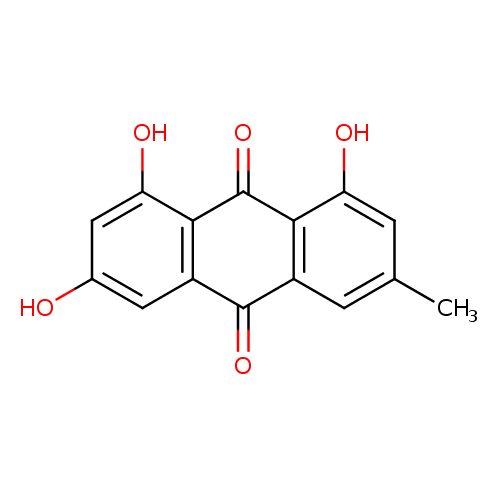
Chemical Structure
Thumb
Synonyms
ValueSource
1,3,8-Trihydroxy-6-methyl-9,10-anthracenedioneChEBI
1,3,8-Trihydroxy-6-methyl-9,10-anthraquinoneChEBI
3-METHYL-1,6,8-trihydroxyanthraquinoneChEBI
SchuttgelbChEBI
1,3, 8-Trihydroxy-6-methyl-9,10-anthraquinoneHMDB
1,3,8-Trihydroxy-6-methyl-9,10-anthracenedione, 9ciHMDB
1,3,8-Trihydroxy-6-methylanthra-9,10-quinoneHMDB
4,5,7-Trihydroxy-2-methylanthraquinoneHMDB
6-Methyl-1,3,8-trihydroxy-9,10-anthracenedioneHMDB
6-Methyl-1,3,8-trihydroxyanthraquinoneHMDB
9,10-Anthracenedione, 1,3,8-trihydroxy-6-methyl- (9ci)HMDB
ArchinHMDB, MeSH
EmodolHMDB
Frangula emodinHMDB, MeSH
Frangulic acidHMDB, MeSH
Frangulinic acidHMDB
Rheum-emodinHMDB
Emodin, rheumMeSH, HMDB
Emodin, frangulaMeSH, HMDB
Rheum emodinMeSH, HMDB
Chemical FormulaC15H10O5
Average Molecular Mass270.237 g/mol
Monoisotopic Mass270.053 g/mol
CAS Registry Number518-82-1
IUPAC Name1,3,8-trihydroxy-6-methyl-9,10-dihydroanthracene-9,10-dione
Traditional Nameemodin
SMILESCC1=CC2=C(C(O)=C1)C(=O)C1=C(C=C(O)C=C1O)C2=O
InChI IdentifierInChI=1S/C15H10O5/c1-6-2-8-12(10(17)3-6)15(20)13-9(14(8)19)4-7(16)5-11(13)18/h2-5,16-18H,1H3
InChI KeyRHMXXJGYXNZAPX-UHFFFAOYSA-N
Chemical Taxonomy
Description belongs to the class of organic compounds known as hydroxyanthraquinones. Hydroxyanthraquinones are compounds containing a hydroxyanthraquinone moiety, which consists of an anthracene bearing a quinone, and hydroxyl group.
KingdomOrganic compounds
Super ClassBenzenoids
ClassAnthracenes
Sub ClassAnthraquinones
Direct ParentHydroxyanthraquinones
Alternative Parents
Substituents
  • Hydroxyanthraquinone
  • Aryl ketone
  • 1-hydroxy-4-unsubstituted benzenoid
  • 1-hydroxy-2-unsubstituted benzenoid
  • Vinylogous acid
  • Ketone
  • Polyol
  • Organic oxygen compound
  • Organic oxide
  • Hydrocarbon derivative
  • Organooxygen compound
  • Aromatic homopolycyclic compound
Molecular FrameworkAromatic homopolycyclic compounds
External Descriptors
Biological Properties
StatusDetected and Not Quantified
OriginExogenous
Cellular Locations
  • Membrane
Biofluid LocationsNot Available
Tissue LocationsNot Available
PathwaysNot Available
Applications
Biological Roles
Chemical Roles
Physical Properties
StateSolid
AppearanceWhite powder.
Experimental Properties
PropertyValue
Melting Point266 - 268°C
Boiling PointNot Available
SolubilityNot Available
Predicted Properties
PropertyValueSource
Water Solubility0.22 g/LALOGPS
logP2.66ALOGPS
logP3.82ChemAxon
logS-3.1ALOGPS
pKa (Strongest Acidic)7.29ChemAxon
pKa (Strongest Basic)-5.4ChemAxon
Physiological Charge0ChemAxon
Hydrogen Acceptor Count5ChemAxon
Hydrogen Donor Count3ChemAxon
Polar Surface Area94.83 ŲChemAxon
Rotatable Bond Count0ChemAxon
Refractivity72.13 m³·mol⁻¹ChemAxon
Polarizability26.58 ųChemAxon
Number of Rings3ChemAxon
Bioavailability1ChemAxon
Rule of FiveYesChemAxon
Ghose FilterYesChemAxon
Veber's RuleNoChemAxon
MDDR-like RuleNoChemAxon
Spectra
Spectra
Spectrum TypeDescriptionSplash KeyView
Predicted GC-MSPredicted GC-MS Spectrum - GC-MS (Non-derivatized) - 70eV, Positivesplash10-007o-0590000000-e5d8430a10335839599bSpectrum
Predicted GC-MSPredicted GC-MS Spectrum - GC-MS (3 TMS) - 70eV, Positivesplash10-00di-2222900000-d6c47b3e4308e1f69c9dSpectrum
Predicted GC-MSPredicted GC-MS Spectrum - GC-MS (Non-derivatized) - 70eV, PositiveNot AvailableSpectrum
LC-MS/MSLC-MS/MS Spectrum - DI-ESI-qTof , Positivesplash10-00di-0390000000-e186d58c552ffeba821eSpectrum
LC-MS/MSLC-MS/MS Spectrum - LC-ESI-qTof , Positivesplash10-00fr-2920000000-4cb1f49316cc48238122Spectrum
LC-MS/MSLC-MS/MS Spectrum - LC-ESI-QTOF , negativesplash10-014i-0090000000-7b75ac0aede192dc2ee6Spectrum
LC-MS/MSLC-MS/MS Spectrum - LC-ESI-QTOF , negativesplash10-014i-0090000000-4df9d81040eb8a48e65cSpectrum
LC-MS/MSLC-MS/MS Spectrum - LC-ESI-QTOF , negativesplash10-014i-0090000000-7b8f9b479ca718fde6eeSpectrum
LC-MS/MSLC-MS/MS Spectrum - LC-ESI-QTOF , negativesplash10-004i-0290000000-88fa3da245399884b6bcSpectrum
LC-MS/MSLC-MS/MS Spectrum - LC-ESI-QTOF , negativesplash10-009e-0960000000-93c437b387d3e1aa7d90Spectrum
LC-MS/MSLC-MS/MS Spectrum - LC-ESI-ITFT , negativesplash10-014i-0090000000-79e91c5055c98d8e3db0Spectrum
LC-MS/MSLC-MS/MS Spectrum - Linear Ion Trap , negativesplash10-004i-0090000000-bdb88728428b2b7baa22Spectrum
LC-MS/MSLC-MS/MS Spectrum - Linear Ion Trap , negativesplash10-004i-0090000000-9da9425656e26f3ca941Spectrum
LC-MS/MSLC-MS/MS Spectrum - LC-ESI-QTOF , positivesplash10-00di-0090000000-8c9267f9d7e631944de2Spectrum
LC-MS/MSLC-MS/MS Spectrum - LC-ESI-QTOF , positivesplash10-00di-0090000000-c886ca3730f953370e44Spectrum
LC-MS/MSLC-MS/MS Spectrum - LC-ESI-QTOF , positivesplash10-00di-0190000000-41f1d89cf454e5ae7574Spectrum
LC-MS/MSLC-MS/MS Spectrum - LC-ESI-QTOF , positivesplash10-002b-0940000000-780c17885ad8db4f5a18Spectrum
LC-MS/MSLC-MS/MS Spectrum - LC-ESI-QTOF , positivesplash10-014i-0900000000-2e61cf51b55f218dea78Spectrum
LC-MS/MSLC-MS/MS Spectrum - Linear Ion Trap , positivesplash10-0ufr-0190000000-6c97fd1b1144abdb9fedSpectrum
LC-MS/MSLC-MS/MS Spectrum - Linear Ion Trap , positivesplash10-0umi-0190000000-fc4d25dd0d6b00a0dbc0Spectrum
LC-MS/MSLC-MS/MS Spectrum - Linear Ion Trap , positivesplash10-05fr-1490000000-7d7df50c05fdc5d6767aSpectrum
LC-MS/MSLC-MS/MS Spectrum - Linear Ion Trap , positivesplash10-05fr-1490000000-6dbcbd8581ffa5701094Spectrum
Predicted LC-MS/MSPredicted LC-MS/MS Spectrum - 10V, Positivesplash10-00di-0090000000-cd1368af6fd71ad45899Spectrum
Predicted LC-MS/MSPredicted LC-MS/MS Spectrum - 20V, Positivesplash10-00di-0090000000-2f7fb214594d9dd58ff6Spectrum
Predicted LC-MS/MSPredicted LC-MS/MS Spectrum - 40V, Positivesplash10-106r-2090000000-9b129a417bc060d33cc1Spectrum
Predicted LC-MS/MSPredicted LC-MS/MS Spectrum - 10V, Negativesplash10-014i-0090000000-48e785e66af8396f4347Spectrum
Predicted LC-MS/MSPredicted LC-MS/MS Spectrum - 20V, Negativesplash10-014i-0090000000-2524a49c780104535532Spectrum
Predicted LC-MS/MSPredicted LC-MS/MS Spectrum - 40V, Negativesplash10-0gdi-2090000000-eb5ce4ed15fb44771926Spectrum
1D NMR13C NMR SpectrumNot AvailableSpectrum
1D NMR1H NMR SpectrumNot AvailableSpectrum
1D NMR13C NMR SpectrumNot AvailableSpectrum
1D NMR1H NMR SpectrumNot AvailableSpectrum
1D NMR13C NMR SpectrumNot AvailableSpectrum
1D NMR1H NMR SpectrumNot AvailableSpectrum
1D NMR13C NMR SpectrumNot AvailableSpectrum
1D NMR1H NMR SpectrumNot AvailableSpectrum
1D NMR13C NMR SpectrumNot AvailableSpectrum
1D NMR1H NMR SpectrumNot AvailableSpectrum
1D NMR13C NMR SpectrumNot AvailableSpectrum
1D NMR1H NMR SpectrumNot AvailableSpectrum
1D NMR13C NMR SpectrumNot AvailableSpectrum
1D NMR1H NMR SpectrumNot AvailableSpectrum
1D NMR13C NMR SpectrumNot AvailableSpectrum
1D NMR1H NMR SpectrumNot AvailableSpectrum
1D NMR13C NMR SpectrumNot AvailableSpectrum
1D NMR1H NMR SpectrumNot AvailableSpectrum
1D NMR13C NMR SpectrumNot AvailableSpectrum
1D NMR1H NMR SpectrumNot AvailableSpectrum
Toxicity Profile
Route of ExposureOral, dermal, inhalation, and parenteral (contaminated drugs). (13)
Mechanism of ToxicityEmodin is moderately cytotoxic and can inhibit the growth of many cell types by interfering with the cell cycle, possibly by stimulating the expression of p53 and p21. Alternatively, it may do this by creating DNA strand breaks and/or non-covalently binding to DNA and inhibiting the catalytic activity of topoisomerase II. It may also induce apoptosis by inhibiting the electron transport chain, producing reactive oxygen species. Emodin is a strong inhibitor of tyrosine-protein kinase Lck and other tyrosine kinase receptors, which likely contributes to its growth suppressing activity. It may act as a chemopreventive agent by activating DNA repair machinery. Emodin can also inhibit metastasis by interfering with the activity of matrix metalloproteinases, either directly or through through inhibition of focal adhesion kinase, mitogen-activated protein kinase, and RAC-alpha serine/threonine-protein kinase activation, and partial inhibition of transcription factor AP-1 and nuclear factor NF-kappa-B (NF-kB) transcriptional activities. Emodin exerts its purgative effects by acting directly or indirectly on colon epithelial cells. This activates the underlying smooth muscle cells, leading to muscle contractility. Possible mechanisms for this effect includes enhancing the hormone motilin, activating muscarinic receptors by triggering the release of acetylcholine, stimulating the protein kinase C-alpha pathway for increased calcium sensibility, inhibiting the secretion of the hormone somatostatin, increasing fluid electrolyte accumulation in the distal ileum and colon, and inhibiting the activity of Na+/K+-ATPase and/or potassium channels. Emodin's antiinflammatory action is due to its specific inhibition of the transcription factor NF-kB. It also regulates angiogenesis by inhibiting the enzymes casein kinase II and nitric oxide synthase and has shown potent estrogen receptor binding affinity. Emodin can induce the microsomal enzyme cytochrome P-450 1A1, perpetuating its own metabolic activation. (1, 2, 3, 4, 5, 6, 7, 8, 9, 10, 11, 12)
MetabolismEmodin is biotransformed by the microsomal cytochrome P450 enzymes into active hydroxyemodins such as omega-hydroxyemodin and 2-hydroxyemodin. Emodin glycoside is carried unabsorbed to the large intestine, where it is metabolized to the active aglycones by intestinal bacterial flora. (1, 4)
Toxicity ValuesLD50: 35 mg/kg (Intraperitoneal, Mouse) (18)
Lethal DoseNot Available
Carcinogenicity (IARC Classification)No indication of carcinogenicity to humans (not listed by IARC).
Uses/SourcesEmodin is a mycotoxin and naturally occurring anthraquinone present in the roots and barks of numerous plants, such as rhubarb. It is an active ingredient of Chinese herbs, including Rheum officinale and Polygonam cuspidatum. Emodin is also produced as a secondary metabolite by molds and lichens such as Aspergillus wentii. It has been used as a laxative and also investigated as a potential chemotherapeutic drug. (1)
Minimum Risk LevelNot Available
Health EffectsChronic use can cause disturbances in electrolyte balance, especially potassium deficiency, and fluid imbalance. Emodin may also cause damage to kidney cells. (1, 2)
SymptomsEmodin has purgative properties and causes diarrhea. (1)
TreatmentNot Available
Concentrations
Not Available
DrugBank IDDB07715
HMDB IDHMDB0035214
FooDB IDFDB013862
Phenol Explorer IDNot Available
KNApSAcK IDC00000555
BiGG IDNot Available
BioCyc IDNot Available
METLIN IDNot Available
PDB IDNot Available
Wikipedia LinkEmodin
Chemspider ID3107
ChEBI ID42223
PubChem Compound ID3220
Kegg Compound IDC10343
YMDB IDNot Available
ECMDB IDNot Available
References
Synthesis ReferenceNot Available
MSDSNot Available
General References
1. https://www.ncbi.nlm.nih.gov/pubmed/?term=12563347
2. https://www.ncbi.nlm.nih.gov/pubmed/?term=12657721
3. https://www.ncbi.nlm.nih.gov/pubmed/?term=16077936
4. https://www.ncbi.nlm.nih.gov/pubmed/?term=16388516
5. https://www.ncbi.nlm.nih.gov/pubmed/?term=16959273
6. https://www.ncbi.nlm.nih.gov/pubmed/?term=17019678
7. https://www.ncbi.nlm.nih.gov/pubmed/?term=17022020
8. https://www.ncbi.nlm.nih.gov/pubmed/?term=17340270
9. https://www.ncbi.nlm.nih.gov/pubmed/?term=18193729
10. https://www.ncbi.nlm.nih.gov/pubmed/?term=18387517
11. https://www.ncbi.nlm.nih.gov/pubmed/?term=18473931
12. https://www.ncbi.nlm.nih.gov/pubmed/?term=19089830
13. https://www.ncbi.nlm.nih.gov/pubmed/?term=19409890
14. https://www.ncbi.nlm.nih.gov/pubmed/?term=19505457
15. https://www.ncbi.nlm.nih.gov/pubmed/?term=19799875
16. https://www.ncbi.nlm.nih.gov/pubmed/?term=19921750
17. https://www.ncbi.nlm.nih.gov/pubmed/?term=20139316
18. https://www.ncbi.nlm.nih.gov/pubmed/?term=21834668
19. https://www.ncbi.nlm.nih.gov/pubmed/?term=22020806
20. https://www.ncbi.nlm.nih.gov/pubmed/?term=22137788
21. https://www.ncbi.nlm.nih.gov/pubmed/?term=22144110
22. https://www.ncbi.nlm.nih.gov/pubmed/?term=22271272
23. https://www.ncbi.nlm.nih.gov/pubmed/?term=22378302
24. https://www.ncbi.nlm.nih.gov/pubmed/?term=22426603
25. https://www.ncbi.nlm.nih.gov/pubmed/?term=22452333
26. https://www.ncbi.nlm.nih.gov/pubmed/?term=22484343
27. Li HL, Chen HL, Li H, Zhang KL, Chen XY, Wang XW, Kong QY, Liu J: Regulatory effects of emodin on NF-kappaB activation and inflammatory cytokine expression in RAW 264.7 macrophages. Int J Mol Med. 2005 Jul;16(1):41-7.
28. Sandholt IS, Olsen BB, Guerra B, Issinger OG: Resorufin: a lead for a new protein kinase CK2 inhibitor. Anticancer Drugs. 2009 Apr;20(4):238-48. doi: 10.1097/CAD.0b013e328326472e.
29. Ubbink-Kok T, Anderson JA, Konings WN: Inhibition of electron transfer and uncoupling effects by emodin and emodinanthrone in Escherichia coli. Antimicrob Agents Chemother. 1986 Jul;30(1):147-51.
30. Lee SU, Shin HK, Min YK, Kim SH: Emodin accelerates osteoblast differentiation through phosphatidylinositol 3-kinase activation and bone morphogenetic protein-2 gene expression. Int Immunopharmacol. 2008 May;8(5):741-7. doi: 10.1016/j.intimp.2008.01.027. Epub 2008 Feb 22.
31. Kwak HJ, Park MJ, Park CM, Moon SI, Yoo DH, Lee HC, Lee SH, Kim MS, Lee HW, Shin WS, Park IC, Rhee CH, Hong SI: Emodin inhibits vascular endothelial growth factor-A-induced angiogenesis by blocking receptor-2 (KDR/Flk-1) phosphorylation. Int J Cancer. 2006 Jun 1;118(11):2711-20.
32. Yannai, Shmuel. (2004) Dictionary of food compounds with CD-ROM: Additives, flavors, and ingredients. Boca Raton: Chapman & Hall/CRC.