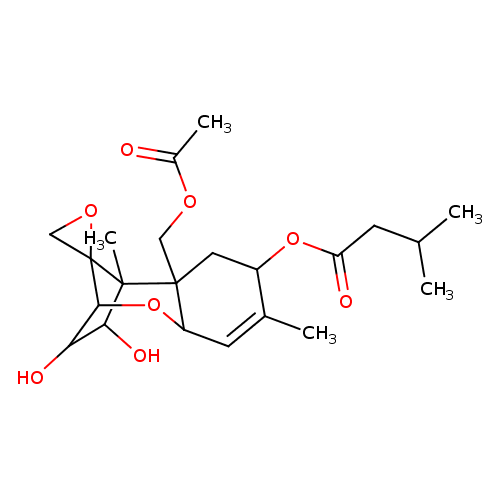
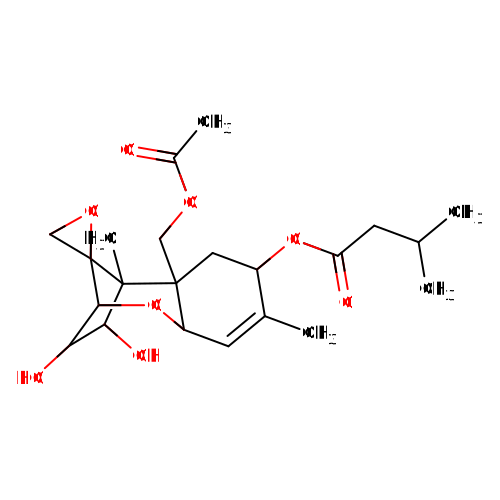
HT-2 toxin is a type-A trichothecene mycotoxin. Trichothecenes are a very large family of chemically related mycotoxins produced by various species of Fusarium, Myrothecium, Trichoderma, Trichothecium, Cephalosporium, Verticimonosporium, and Stachybotrys. The most important structural features causing the biological activities of trichothecenes are: the 12,13-epoxy ring, the presence of hydroxyl or acetyl groups at appropriate positions on the trichothecene nucleus and the structure and position of the side-chain. They are produced on many different grains like wheat, oats or maize by various Fusarium species such as F. graminearum, F. sporotrichioides, F. poae and F. equiseti. Some molds that produce trichothecene mycotoxins, such as Stachybotrys chartarum, can grow in damp indoor environments and may contribute to health problems among building occupants. (9, 1)
belongs to the class of organic compounds known as trichothecenes. These are sesquiterpene mycotoxins structurally characterized by the presence of an epoxide ring and a benzopyran derivative with a variant number of hydroxyl, acetyl, or other substituents. The most important structural features causing the biological activities of trichothecenes are the 12,13-epoxy ring, the presence of hydroxyl or acetyl groups at appropriate positions on the trichothecene nucleus and the structure and position of the side-chain.
Oral, dermal, inhalation, and parenteral (contaminated drugs). (7)
Mechanism of Toxicity
Unlike many other mycotoxins, trichothecenes do not require metabolic activation to exert their biological activity, instead directly reacting with cellular components. Trichothecenes are cytotoxic to most eukaryotic cells due to their powerful ability to inhibit protein synthesis. They do this by freely moving across the plasma membrane and binding specifically to ribosomes with high-affinity. Specifically, they interfere with the active site of peptidyl transferase at the 3'-end of large 28S ribosomal RNA and inhibit the initiation, elongation or termination step of protein synthesis, as well as cause polyribosomal disaggregation. Protein synthesis is an essential function in all tissues, but tissues where cells are actively and rapidly growing and dividing are very susceptible to the toxins. Additionally, binding to ribosomes is thought to activate proteins in downstream signalling events related to immune response and apoptosis, such as mitogen-activated protein kinases. This is known as ribotoxic stress response. Trichothecenes may also induce some alterations in membrane structure, leading to increased lipid peroxidation and inhibition of electron transport activity in the mitochondria. They can further induce apoptosis through generation of reactive oxygen species. Further secondary effects of trichothecenes include inhibition of RNA and DNA synthesis, and also inhibition of mitosis. (9, 10, 3, 4, 5, 6)
Metabolism
Trichothecenes are lipophilic and thus easily absorbed through the skin, gut, and pulmonary mucosa. They are metabolized mainly by cytochrome P-450 and trichothecene-specific carboxylesterase activity in the liver, although other tissues such as the kidney, spleen, and intestine also show some metabolic activity. Trichothecenes are metabolically transformed to less toxic metabolites by such reactions as hydrolysis, hydroxylation, de-epoxidation, and glucuronidation. HT-2 toxin is mainly hydroxylated to 3'-hydroxy HT-2 toxin. Metabolites are excreted in the urine and feces. (8, 10, 2)
No indication of carcinogenicity to humans (not listed by IARC).
Uses/Sources
Trichothecenes are a very large family of chemically related mycotoxins produced by various species of Fusarium, Myrothecium, Trichoderma, Trichothecium, Cephalosporium, Verticimonosporium, and Stachybotrys. They are produced on many different grains like wheat, oats or maize by various Fusarium species such as F. graminearum, F. sporotrichioides, F. poae and F. equiseti. Some molds that produce trichothecene mycotoxins, such as Stachybotrys chartarum, can grow in damp indoor environments and may contribute to health problems among building occupants. (9)
Minimum Risk Level
Not Available
Health Effects
Trichothecenes have multiorgan effects including anoerxia and weight loss, growth retardation, nervous disorders, cardiovascular alterations, immunodepression, hemostatic derangements, skin toxicity, decreased reproductive capacity, bone marrow damage, and alimentary toxic aleukia. (9, 10, 5)
Symptoms
After direct dermal application or oral ingestion, the trichothecene mycotoxins can cause rapid irritation to the skin or intestinal mucosa, including skin irritation, burning and itching, rash or blisters, and bleeding. Eye contact can cause tearing, eye pain, conjunctivitis, burning sensations about the eyes, and blurred vision for up to 1 week. Symptoms also include nausea, vomiting, fatigue, dyspnea, and acute vascular effects leading to hypotension and shock. (9, 10)
Treatment
There are no known antidotes to trichothecene mycotoxins. Treatments are directed at supporting hemopoietic abnormalities, gastrointestinal damage, and skin damage. Administer charcoal as a slurry in case of acute oral exposure. In case of inhalation: Move patient to fresh air. Monitor for respiratory distress. If cough or difficulty breathing develops, evaluate for respiratory tract irritation, bronchitis, or pneumonitis. Administer oxygen and assist ventilation as required. Treat bronchospasm with inhaled beta2 agonist and oral or parenteral corticosteroids. In case of eye exposure, Irrigate exposed eyes with copious amounts of room temperature water for at least 15 minutes. In case of dermal exposure, Remove contaminated clothing and wash exposed area thoroughly with soap and water. (11)