Record Information
Version1.0
Creation Date2010-04-15 16:55:14 UTC
Update Date2026-03-26 20:31:52 UTC
Accession NumberCHEM002638
Identification
Common NameAflatoxin B2
ClassSmall Molecule
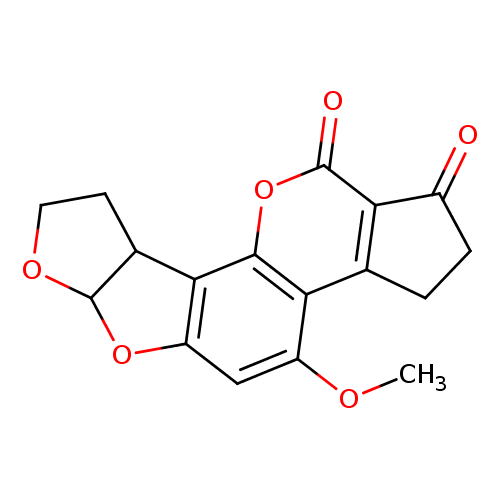
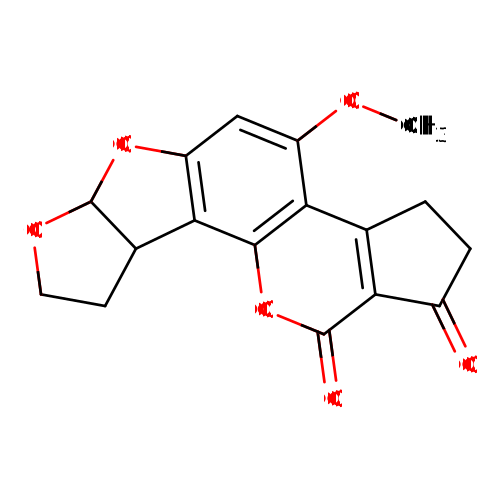
DescriptionAflatoxin B2 is a metabolite of Aspergillus flavus.
Contaminant Sources
  • FooDB Chemicals
  • IARC Carcinogens Group 1
  • STOFF IDENT Compounds
  • T3DB toxins
Contaminant Type
  • Ester
  • Ether
  • Food Toxin
  • Fungal Toxin
  • Furocoumarin
  • Metabolite
  • Mycotoxin
  • Natural Compound
  • Organic Compound
Chemical Structure
Thumb
Synonyms
ValueSource
Aflatoxin b2, (6ar-cis)-isomerMeSH
Aflatoxin b2 alphaHMDB
Dihydroafflatoxin b1HMDB
Dihydroaflatoxin b1HMDB
Dihydroaflatoxine b1HMDB
Aflatoxin b2MeSH
Chemical FormulaC17H14O6
Average Molecular Mass314.290 g/mol
Monoisotopic Mass314.079 g/mol
CAS Registry Number7220-81-7
IUPAC Name11-methoxy-6,8,19-trioxapentacyclo[10.7.0.0²,⁹.0³,⁷.0¹³,¹⁷]nonadeca-1(12),2(9),10,13(17)-tetraene-16,18-dione
Traditional Nameaflatoxin B2
SMILESCOC1=CC2=C(C3CCOC3O2)C2=C1C1=C(C(=O)CC1)C(=O)O2
InChI IdentifierInChI=1S/C17H14O6/c1-20-10-6-11-14(8-4-5-21-17(8)22-11)15-13(10)7-2-3-9(18)12(7)16(19)23-15/h6,8,17H,2-5H2,1H3
InChI KeyWWSYXEZEXMQWHT-UHFFFAOYSA-N
Chemical Taxonomy
Description belongs to the class of organic compounds known as difurocoumarocyclopentenones. These are polycyclic aromatic compounds containing a cyclopenten-2-one ring fused to the coumarin moiety of the difurocoumarin skeleton.
KingdomOrganic compounds
Super ClassPhenylpropanoids and polyketides
ClassCoumarins and derivatives
Sub ClassFuranocoumarins
Direct ParentDifurocoumarocyclopentenones
Alternative Parents
Substituents
  • Difurocoumarocyclopentenone
  • Difurocoumarin
  • Benzopyran
  • 1-benzopyran
  • Coumaran
  • Anisole
  • Aryl alkyl ketone
  • Aryl ketone
  • Alkyl aryl ether
  • Pyranone
  • Pyran
  • Benzenoid
  • Heteroaromatic compound
  • Tetrahydrofuran
  • Lactone
  • Ketone
  • Acetal
  • Organoheterocyclic compound
  • Ether
  • Oxacycle
  • Organooxygen compound
  • Hydrocarbon derivative
  • Organic oxide
  • Organic oxygen compound
  • Aromatic heteropolycyclic compound
Molecular FrameworkAromatic heteropolycyclic compounds
External Descriptors
Biological Properties
StatusDetected and Not Quantified
OriginExogenous
Cellular Locations
  • Cytoplasm
  • Extracellular
Biofluid LocationsNot Available
Tissue LocationsNot Available
PathwaysNot Available
ApplicationsNot Available
Biological RolesNot Available
Chemical RolesNot Available
Physical Properties
StateSolid
AppearanceColorless to pale yellow crystals.
Experimental Properties
PropertyValue
Melting Point310°C
Boiling PointNot Available
SolubilityNot Available
Predicted Properties
PropertyValueSource
Water Solubility0.39 g/LALOGPS
logP1.63ALOGPS
logP1.57ChemAxon
logS-2.9ALOGPS
pKa (Strongest Acidic)17.79ChemAxon
pKa (Strongest Basic)-4.1ChemAxon
Physiological Charge0ChemAxon
Hydrogen Acceptor Count5ChemAxon
Hydrogen Donor Count0ChemAxon
Polar Surface Area71.06 ŲChemAxon
Rotatable Bond Count1ChemAxon
Refractivity78.49 m³·mol⁻¹ChemAxon
Polarizability30.9 ųChemAxon
Number of Rings5ChemAxon
Bioavailability1ChemAxon
Rule of FiveYesChemAxon
Ghose FilterYesChemAxon
Veber's RuleNoChemAxon
MDDR-like RuleNoChemAxon
Spectra
Spectra
Spectrum TypeDescriptionSplash KeyView
GC-MSGC-MS Spectrum - EI-B (Non-derivatized)splash10-03di-0039000000-610151efc4e68c6939ebSpectrum
Predicted GC-MSPredicted GC-MS Spectrum - GC-MS (Non-derivatized) - 70eV, Positivesplash10-0080-0190000000-cdd965c2769a1d578fbaSpectrum
Predicted GC-MSPredicted GC-MS Spectrum - GC-MS (Non-derivatized) - 70eV, PositiveNot AvailableSpectrum
LC-MS/MSLC-MS/MS Spectrum - 50V, Positivesplash10-0a4l-0390000000-85aa7a411b52bfa748acSpectrum
LC-MS/MSLC-MS/MS Spectrum - 20V, Positivesplash10-014i-0009000000-306b14c6051334a7615dSpectrum
LC-MS/MSLC-MS/MS Spectrum - 10V, Positivesplash10-014i-0009000000-6117c5ee93218e1f3ee4Spectrum
LC-MS/MSLC-MS/MS Spectrum - 30V, Positivesplash10-014i-0069000000-e8cfaba3e9fca310b5f8Spectrum
LC-MS/MSLC-MS/MS Spectrum - 40V, Positivesplash10-0abi-0090000000-c1f0b82710fe7cf4a4faSpectrum
LC-MS/MSLC-MS/MS Spectrum - 50V, Positivesplash10-0a4l-0390000000-47a96f38cc39db4215d8Spectrum
LC-MS/MSLC-MS/MS Spectrum - 40V, Positivesplash10-0abi-0090000000-f0166b802bbb8d10da36Spectrum
Predicted LC-MS/MSPredicted LC-MS/MS Spectrum - 10V, Positivesplash10-014i-0039000000-d446a0adf08fa67d4d10Spectrum
Predicted LC-MS/MSPredicted LC-MS/MS Spectrum - 20V, Positivesplash10-014i-0094000000-7a6e82836edee1f981c1Spectrum
Predicted LC-MS/MSPredicted LC-MS/MS Spectrum - 40V, Positivesplash10-02t9-1490000000-29ed28bb149ea2411c26Spectrum
Predicted LC-MS/MSPredicted LC-MS/MS Spectrum - 10V, Negativesplash10-03di-0039000000-baac6939881949076644Spectrum
Predicted LC-MS/MSPredicted LC-MS/MS Spectrum - 20V, Negativesplash10-03di-1097000000-d8269f211e11ae5c68b8Spectrum
Predicted LC-MS/MSPredicted LC-MS/MS Spectrum - 40V, Negativesplash10-0fb9-2190000000-9ea1e85b37f388c7c5e5Spectrum
Predicted LC-MS/MSPredicted LC-MS/MS Spectrum - 10V, Negativesplash10-03di-0009000000-7c7169b7540bc9455826Spectrum
Predicted LC-MS/MSPredicted LC-MS/MS Spectrum - 20V, Negativesplash10-03di-0049000000-5b4008ed9ce6ec916cefSpectrum
Predicted LC-MS/MSPredicted LC-MS/MS Spectrum - 40V, Negativesplash10-0002-0492000000-e1dbbfaed1432ac0341fSpectrum
Predicted LC-MS/MSPredicted LC-MS/MS Spectrum - 10V, Positivesplash10-014i-0009000000-2ba875095a8aafa31ef7Spectrum
Predicted LC-MS/MSPredicted LC-MS/MS Spectrum - 20V, Positivesplash10-014i-0019000000-519c5d1d27095e3ff42bSpectrum
Predicted LC-MS/MSPredicted LC-MS/MS Spectrum - 40V, Positivesplash10-000i-0091000000-6cb76c17d0d87928e540Spectrum
MSMass Spectrum (Electron Ionization)splash10-03di-4189000000-6bab374050b1044ec494Spectrum
1D NMR13C NMR SpectrumNot AvailableSpectrum
1D NMR1H NMR SpectrumNot AvailableSpectrum
1D NMR13C NMR SpectrumNot AvailableSpectrum
1D NMR1H NMR SpectrumNot AvailableSpectrum
1D NMR13C NMR SpectrumNot AvailableSpectrum
1D NMR1H NMR SpectrumNot AvailableSpectrum
1D NMR13C NMR SpectrumNot AvailableSpectrum
1D NMR1H NMR SpectrumNot AvailableSpectrum
1D NMR13C NMR SpectrumNot AvailableSpectrum
1D NMR1H NMR SpectrumNot AvailableSpectrum
1D NMR13C NMR SpectrumNot AvailableSpectrum
1D NMR1H NMR SpectrumNot AvailableSpectrum
1D NMR13C NMR SpectrumNot AvailableSpectrum
1D NMR1H NMR SpectrumNot AvailableSpectrum
1D NMR13C NMR SpectrumNot AvailableSpectrum
1D NMR1H NMR SpectrumNot AvailableSpectrum
1D NMR13C NMR SpectrumNot AvailableSpectrum
1D NMR1H NMR SpectrumNot AvailableSpectrum
1D NMR13C NMR SpectrumNot AvailableSpectrum
1D NMR1H NMR SpectrumNot AvailableSpectrum
Toxicity Profile
Route of ExposureOral, dermal, inhalation, and parenteral (contaminated drugs). (5)
Mechanism of ToxicityAflatoxins produce singlet oxygen upon their exposure to UV (365-nm) light. Singlet oxygen in turn activates them to mutagens and DNA binding species. Aflatoxin metabolites can intercalate into DNA and alkylate the bases through their epoxide moiety, binding particularity to N7-guanine bases. In addition to randomly mutating DNA, this is thought to cause mutations in the p53 gene, an important gene in preventing cell cycle progression when there are DNA mutations, or signaling apoptosis. (11, 3, 4) The mechanism of action many furocoumarins is based on their ability to form photoadducts with DNA and other cellular components such as RNA, proteins, and several proteins found in the membrane such as phospholipases A2 and C, Ca-dependent and cAMPdependent protein-kinase and epidermal growth factor. Furocoumarins intercalate between base pairs of DNA and after ultraviolet-A irradiation, giving cycloadducts. (10)
MetabolismAflatoxin B2 is metabolized in the liver by microsomal monooxygenases to the less toxic reactive metabolite alfatoxin M2. Aflatoxin B2 is also proposed to be metabolized to B1, which in turn is transformed to M1. (2, 13)
Toxicity ValuesNot Available
Lethal DoseNot Available
Carcinogenicity (IARC Classification)1, carcinogenic to humans (9)
Uses/SourcesThe native habitat of Aspergillus is in soil, decaying vegetation, hay, and grains undergoing microbiological deterioration and it invades all types of organic substrates whenever conditions are favorable for its growth. Crops which are frequently affected include cereals (maize, sorghum, pearl millet, rice, wheat), oilseeds (peanut, soybean, sunflower, cotton), spices (chile peppers, black pepper, coriander, turmeric, ginger), and tree nuts (almond, pistachio, walnut, coconut, brazil nut). The toxin can also be found in the milk of animals which are fed contaminated feed. Thus, aflatoxins are usually encountered in thecontext of chronic exposure, via food intake or secondary to the handling of foodstuffs. (13)
Minimum Risk LevelNot Available
Health EffectsThe main target organ in mammals is the liver so aflatoxicosis is primarily a hepatic disease. Protracted exposure to aflatoxins may cause liver damage and necrosis, cholestasis, and hepatomas. Moreover, protracted exposure to aflatoxins has been associated with hepatocellular carcinoma, acute hepatitis, Reye's syndrome, bile duct cell proliferation, periportal fibrosis, hemorrhages, mucous membrane jaundice, fatty liver changes, cirrhosis in malnourished children, and kwashiorkor. However, aflatoxins accumulate in the presence of liver disease, and the association with hepatic cancer is confounded by the occurrence of hepatitis-B. Thus, it is not clear in these various instances whether aflatoxin is a primary cause of the disease, is an innocent bystander which accumulates secondary to the disease process, or is a contributing cause in conjunction with other factors. It is also mutagenic and teratogenic. Inhaled aflatoxins may produce pulmonary adenomatosis. Aflatoxins modify the immune system by affecting antibody formation, complement, cell-mediated immunity, and phagocytosis. (1, 13) Furocoumarins can cause photosensitization dermatitis especially if these compounds come into contact with the skin. Some furocoumarins, especially bifunctional furocoumarins, are known to be carcinogenic (6). Furocoumarin photochemotherapy is known to induce a number of side-effects including erythema, edema, hyperpigmentation, and premature aging of skin. All photobiological effects of furocoumarins result from their photochemical reactions. Because many dietary or water soluble furocoumarins are strong inhibitors of cytochrome P450s, they will also cause adverse drug reactions when taken with other drugs. Limited evidence of carcinogenic effect. (10)
SymptomsA broad range of symptoms can be found depending upon dosage, including, vomiting, abdominal pain, hemorrhage, and pulmonary edema. (12)
TreatmentAdministration of phonobarbital enhances hepatic transformation activities and also protects against AFB-induced toxicity, carcinogenicity and DNA binding in vivo. In cases of ingestion, feeding large quantities of an adsorbent such as activated charcoal may be used. Antioxidants such as ellagic acid and inducers of some cytochromes P450, such as indole-3-carbinol, may give a protective effect. (1, 12)
Concentrations
Not Available
DrugBank IDNot Available
HMDB IDHMDB0035208
FooDB IDFDB013855
Phenol Explorer IDNot Available
KNApSAcK IDC00023617
BiGG IDNot Available
BioCyc IDNot Available
METLIN IDNot Available
PDB IDNot Available
Wikipedia LinkNot Available
Chemspider ID22111
ChEBI IDNot Available
PubChem Compound ID23648
Kegg Compound IDC16753
YMDB IDNot Available
ECMDB IDNot Available
References
Synthesis ReferenceNot Available
MSDSNot Available
General References
1. Yannai, Shmuel. (2004) Dictionary of food compounds with CD-ROM: Additives, flavors, and ingredients. Boca Raton: Chapman & Hall/CRC.