Record Information
Version1.0
Creation Date2009-12-17 01:41:03 UTC
Update Date2026-04-17 19:11:56 UTC
Accession NumberCHEM002629
Identification
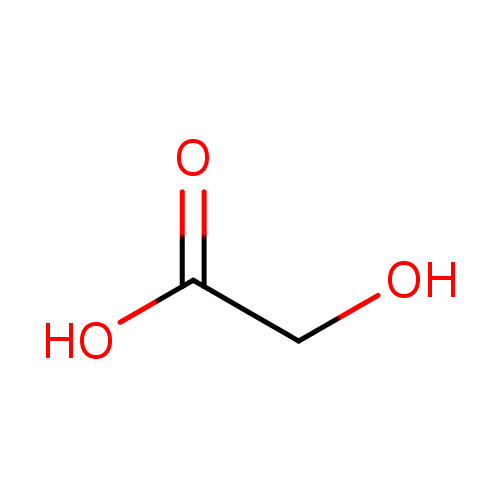
Common NameGlycolic acid
ClassSmall Molecule
DescriptionGlycolic acid (or hydroxyacetic acid) is the smallest alpha-hydroxy acid (AHA). This colorless, odorless, and hygroscopic crystalline solid is highly soluble in water. Due to its excellent capability to penetrate skin, glycolic acid finds applications in skin care products, most often as a chemical peel. It may reduce wrinkles, acne scarring, hyperpigmentation and improve many other skin conditions, including actinic keratosis, hyperkeratosis, and seborrheic keratosis. Once applied, glycolic acid reacts with the upper layer of the epidermis, weakening the binding properties of the lipids that hold the dead skin cells together. This allows the outer skin to dissolve revealing the underlying skin. (26)
Contaminant Sources
  • Cosmetic Chemicals
  • FooDB Chemicals
  • HMDB Contaminants - Feces
  • HMDB Contaminants - Urine
  • HPV EPA Chemicals
  • STOFF IDENT Compounds
  • T3DB toxins
  • ToxCast & Tox21 Chemicals
Contaminant Type
  • Cosmetic Toxin
  • Food Toxin
  • Household Toxin
  • Industrial/Workplace Toxin
  • Keratolytic Agent
  • Metabolite
  • Organic Compound
  • Synthetic Compound
Chemical Structure
Thumb
Synonyms
ValueSource
2-Hydroxyacetic acidChEBI
2-Hydroxyethanoic acidChEBI
alpha-Hydroxyacetic acidChEBI
Glycollic acidChEBI
HOCH2COOHChEBI
Hydroxyacetic acidChEBI
Hydroxyethanoic acidChEBI
2-HydroxyacetateGenerator
2-HydroxyethanoateGenerator
a-HydroxyacetateGenerator
a-Hydroxyacetic acidGenerator
alpha-HydroxyacetateGenerator
Α-hydroxyacetateGenerator
Α-hydroxyacetic acidGenerator
GlycollateGenerator
HydroxyacetateGenerator
HydroxyethanoateGenerator
GlycolateGenerator
GlycocideHMDB
GlyPureHMDB
GlyPure 70HMDB
Sodium glycolateHMDB
Glycolic acid, 2-(14)C-labeledHMDB
Glycolic acid, 1-(14)C-labeledHMDB
Glycolic acid, potassium saltHMDB
Glycolic acid, monopotassium saltHMDB
Glycolic acid, calcium saltHMDB
Glycolic acid, monoammonium saltHMDB
Glycolic acid, monolithium saltHMDB
Glycolic acid, monosodium saltHMDB
Potassium glycolateHMDB
Chemical FormulaC2H4O3
Average Molecular Mass76.051 g/mol
Monoisotopic Mass76.016 g/mol
CAS Registry Number79-14-1
IUPAC Name2-hydroxyacetic acid
Traditional Nameglycolic acid
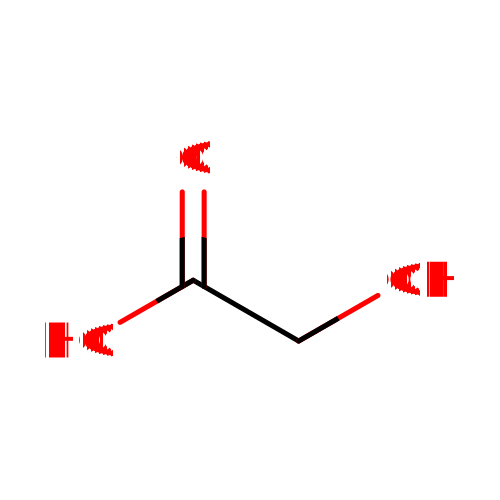
SMILESOCC(O)=O
InChI IdentifierInChI=1S/C2H4O3/c3-1-2(4)5/h3H,1H2,(H,4,5)
InChI KeyAEMRFAOFKBGASW-UHFFFAOYSA-N
Chemical Taxonomy
Description belongs to the class of organic compounds known as alpha hydroxy acids and derivatives. These are organic compounds containing a carboxylic acid substituted with a hydroxyl group on the adjacent carbon.
KingdomOrganic compounds
Super ClassOrganic acids and derivatives
ClassHydroxy acids and derivatives
Sub ClassAlpha hydroxy acids and derivatives
Direct ParentAlpha hydroxy acids and derivatives
Alternative Parents
Substituents
  • Alpha-hydroxy acid
  • Monocarboxylic acid or derivatives
  • Carboxylic acid
  • Carboxylic acid derivative
  • Organic oxygen compound
  • Organic oxide
  • Hydrocarbon derivative
  • Primary alcohol
  • Organooxygen compound
  • Carbonyl group
  • Alcohol
  • Aliphatic acyclic compound
Molecular FrameworkAliphatic acyclic compounds
External Descriptors
Biological Properties
StatusDetected and Not Quantified
OriginEndogenous
Cellular Locations
  • Cytoplasm
  • Extracellular
  • Mitochondria
  • Peroxisome
Biofluid LocationsNot Available
Tissue Locations
  • Bladder
  • Fibroblasts
  • Liver
  • Skin
  • Stratum Corneum
Pathways
NameSMPDB LinkKEGG Link
Primary Hyperoxaluria Type ISMP00352 Not Available
Applications
Biological Roles
Chemical RolesNot Available
Physical Properties
StateSolid
AppearanceWhite powder.
Experimental Properties
PropertyValue
Melting Point75-80°C
Boiling PointNot Available
Solubility1000 mg/mL at 25°C
Predicted Properties
PropertyValueSource
Water Solubility608 g/LALOGPS
logP-1ALOGPS
logP-1ChemAxon
logS0.9ALOGPS
pKa (Strongest Acidic)3.53ChemAxon
pKa (Strongest Basic)-3.6ChemAxon
Physiological Charge-1ChemAxon
Hydrogen Acceptor Count3ChemAxon
Hydrogen Donor Count2ChemAxon
Polar Surface Area57.53 ŲChemAxon
Rotatable Bond Count1ChemAxon
Refractivity14.35 m³·mol⁻¹ChemAxon
Polarizability6.2 ųChemAxon
Number of Rings0ChemAxon
Bioavailability1ChemAxon
Rule of FiveYesChemAxon
Ghose FilterNoChemAxon
Veber's RuleNoChemAxon
MDDR-like RuleNoChemAxon
Spectra
Spectra
Spectrum TypeDescriptionSplash KeyView
GC-MSGC-MS Spectrum - GC-EI-TOF (Pegasus III TOF-MS system, Leco; GC 6890, Agilent Technologies) (Non-derivatized)splash10-0002-0900000000-ed8b8e4a9e2556ea02e2Spectrum
GC-MSGC-MS Spectrum - GC-EI-TOF (Pegasus III TOF-MS system, Leco; GC 6890, Agilent Technologies) (2 TMS)splash10-00dj-9600000000-8bafc88c7bf4e90fb5e8Spectrum
GC-MSGC-MS Spectrum - GC-MS (2 TMS)splash10-003r-2910000000-bd50bf5bab6f5327eaf4Spectrum
GC-MSGC-MS Spectrum - EI-B (Non-derivatized)splash10-001i-9000000000-cadf899be6b15d008330Spectrum
GC-MSGC-MS Spectrum - EI-B (Non-derivatized)splash10-001i-9000000000-e66ed28d8419895e0fb4Spectrum
GC-MSGC-MS Spectrum - EI-B (Non-derivatized)splash10-0002-0900000000-7f84fac3284d17fa3ba6Spectrum
GC-MSGC-MS Spectrum - GC-EI-TOF (Non-derivatized)splash10-0002-0900000000-ed8b8e4a9e2556ea02e2Spectrum
GC-MSGC-MS Spectrum - GC-EI-TOF (Non-derivatized)splash10-00dj-9600000000-8bafc88c7bf4e90fb5e8Spectrum
GC-MSGC-MS Spectrum - GC-MS (Non-derivatized)splash10-003r-2910000000-bd50bf5bab6f5327eaf4Spectrum
GC-MSGC-MS Spectrum - GC-EI-TOF (Non-derivatized)splash10-0002-0900000000-d724c85a3b30e3c2e4bcSpectrum
Predicted GC-MSPredicted GC-MS Spectrum - GC-MS (Non-derivatized) - 70eV, Positivesplash10-0a7l-9000000000-1e9466549305eb20257bSpectrum
Predicted GC-MSPredicted GC-MS Spectrum - GC-MS (2 TMS) - 70eV, Positivesplash10-05i9-9520000000-5f0019fe63eb6e692109Spectrum
Predicted GC-MSPredicted GC-MS Spectrum - GC-MS (Non-derivatized) - 70eV, PositiveNot AvailableSpectrum
Predicted GC-MSPredicted GC-MS Spectrum - GC-MS (TMS_1_1) - 70eV, PositiveNot AvailableSpectrum
Predicted GC-MSPredicted GC-MS Spectrum - GC-MS (TMS_1_2) - 70eV, PositiveNot AvailableSpectrum
Predicted GC-MSPredicted GC-MS Spectrum - GC-MS (TBDMS_1_1) - 70eV, PositiveNot AvailableSpectrum
Predicted GC-MSPredicted GC-MS Spectrum - GC-MS (TBDMS_1_2) - 70eV, PositiveNot AvailableSpectrum
Predicted GC-MSPredicted GC-MS Spectrum - GC-MS (TBDMS_2_1) - 70eV, PositiveNot AvailableSpectrum
LC-MS/MSLC-MS/MS Spectrum - Quattro_QQQ 10V, Negative (Annotated)splash10-004i-9000000000-e942bdae1d60e5f5d649Spectrum
LC-MS/MSLC-MS/MS Spectrum - Quattro_QQQ 25V, Negative (Annotated)splash10-00di-9000000000-f225de2de3540c3f50a4Spectrum
LC-MS/MSLC-MS/MS Spectrum - Quattro_QQQ 40V, Negative (Annotated)splash10-00di-9000000000-7de217d97b44f53aad82Spectrum
LC-MS/MSLC-MS/MS Spectrum - LC-ESI-QQ (API3000, Applied Biosystems) 10V, Negativesplash10-00di-9000000000-88af2b259f82cd1d8938Spectrum
LC-MS/MSLC-MS/MS Spectrum - LC-ESI-QQ (API3000, Applied Biosystems) 20V, Negativesplash10-004i-9000000000-c968a24f0640b154325bSpectrum
LC-MS/MSLC-MS/MS Spectrum - LC-ESI-QQ (API3000, Applied Biosystems) 30V, Negativesplash10-0059-9000000000-1dfacf30bf94ce3bf8bbSpectrum
LC-MS/MSLC-MS/MS Spectrum - LC-ESI-QQ , negativesplash10-00di-9000000000-88af2b259f82cd1d8938Spectrum
LC-MS/MSLC-MS/MS Spectrum - LC-ESI-QQ , negativesplash10-004i-9000000000-c968a24f0640b154325bSpectrum
LC-MS/MSLC-MS/MS Spectrum - LC-ESI-QQ , negativesplash10-0059-9000000000-1dfacf30bf94ce3bf8bbSpectrum
LC-MS/MSLC-MS/MS Spectrum - QqQ 1V, positivesplash10-004i-9000000000-fa715ee3ce9abbc94edbSpectrum
LC-MS/MSLC-MS/MS Spectrum - QqQ 2V, positivesplash10-004i-9000000000-ace3c5f526d28fd24de9Spectrum
LC-MS/MSLC-MS/MS Spectrum - QqQ 3V, positivesplash10-004i-9000000000-ff7f922c2460adb6a10dSpectrum
LC-MS/MSLC-MS/MS Spectrum - QqQ 4V, positivesplash10-004i-9000000000-1d63aaaf9cbc6d3bb3b4Spectrum
LC-MS/MSLC-MS/MS Spectrum - QqQ 5V, positivesplash10-004j-9000000000-e9c74e7df728e016450cSpectrum
LC-MS/MSLC-MS/MS Spectrum - QqQ 6V, positivesplash10-002b-9000000000-d0963403f3a8ff9e576dSpectrum
LC-MS/MSLC-MS/MS Spectrum - QqQ 7V, positivesplash10-002b-9000000000-9e1d6b2e2b889232d610Spectrum
LC-MS/MSLC-MS/MS Spectrum - QqQ 8V, positivesplash10-0002-9000000000-e9824f68b2176db90d33Spectrum
LC-MS/MSLC-MS/MS Spectrum - QqQ 9V, positivesplash10-000t-9000000000-02329982bc7150d972bfSpectrum
LC-MS/MSLC-MS/MS Spectrum - QqQ 10V, positivesplash10-000t-9000000000-216d8ece56b0a44e5289Spectrum
Predicted LC-MS/MSPredicted LC-MS/MS Spectrum - 10V, Positivesplash10-004i-9000000000-d961c3c14ec415e3141eSpectrum
Predicted LC-MS/MSPredicted LC-MS/MS Spectrum - 20V, Positivesplash10-0a6r-9000000000-67f73be970ba9f885c4aSpectrum
Predicted LC-MS/MSPredicted LC-MS/MS Spectrum - 40V, Positivesplash10-0a4i-9000000000-f2ccf0b88e0ad65ed4c6Spectrum
Predicted LC-MS/MSPredicted LC-MS/MS Spectrum - 10V, Negativesplash10-004i-9000000000-7445713a5fe347bbc8b8Spectrum
Predicted LC-MS/MSPredicted LC-MS/MS Spectrum - 20V, Negativesplash10-004i-9000000000-26e13242443efc1aa846Spectrum
Predicted LC-MS/MSPredicted LC-MS/MS Spectrum - 40V, Negativesplash10-0a4i-9000000000-6ba976b949118cd0a86aSpectrum
MSMass Spectrum (Electron Ionization)splash10-001i-9000000000-2885890e3bb8c015742fSpectrum
1D NMR1H NMR SpectrumNot AvailableSpectrum
1D NMR13C NMR SpectrumNot AvailableSpectrum
1D NMR1H NMR SpectrumNot AvailableSpectrum
1D NMR13C NMR SpectrumNot AvailableSpectrum
1D NMR1H NMR SpectrumNot AvailableSpectrum
1D NMR13C NMR SpectrumNot AvailableSpectrum
1D NMR1H NMR SpectrumNot AvailableSpectrum
1D NMR13C NMR SpectrumNot AvailableSpectrum
1D NMR1H NMR SpectrumNot AvailableSpectrum
1D NMR13C NMR SpectrumNot AvailableSpectrum
1D NMR1H NMR SpectrumNot AvailableSpectrum
1D NMR13C NMR SpectrumNot AvailableSpectrum
1D NMR1H NMR SpectrumNot AvailableSpectrum
1D NMR13C NMR SpectrumNot AvailableSpectrum
1D NMR1H NMR SpectrumNot AvailableSpectrum
1D NMR13C NMR SpectrumNot AvailableSpectrum
1D NMR1H NMR SpectrumNot AvailableSpectrum
1D NMR13C NMR SpectrumNot AvailableSpectrum
1D NMR1H NMR SpectrumNot AvailableSpectrum
1D NMR13C NMR SpectrumNot AvailableSpectrum
1D NMR1H NMR SpectrumNot AvailableSpectrum
1D NMR13C NMR SpectrumNot AvailableSpectrum
1D NMR1H NMR SpectrumNot AvailableSpectrum
1D NMR13C NMR SpectrumNot AvailableSpectrum
2D NMR[1H,13C] 2D NMR SpectrumNot AvailableSpectrum
Toxicity Profile
Route of ExposureOral (26) ; dermal (26)
Mechanism of ToxicityGlycolic acid's toxicity is due to its metabolism to oxalic acid. Glycolic and oxalic acid, along with excess lactic acid, are responsible for the anion gap metabolic acidosis. Oxalic acid readily precipitates with calcium to form insoluble calcium oxalate crystals. Tissue injury is caused by widespread deposition of oxalate crystals and the toxic effects of glycolic acid. (1, 2)
MetabolismThe main path of the degradation of glycolic acid is to glyoxylic acid. This reaction is mediated by lactic dehydrogenase or glycolic acid oxidase. Once glyoxylic acid is formed, it is apparently degraded very rapidly to a variety of products, a few of which have been observed. Its breakdown to 2-hydroxy-3-oxoadipate it is thought, is mediated by thiamine pyrophosphate in the presence of magnesium ions. The formation of glycine involves pyridoxal phosphate and glyoxylate transaminase, whereas the formation of carbon dioxide and water via formic acid apparently involves coenzyme A (CoA) and flavin mononucleotides. (27)
Toxicity ValuesLD50: 1950 mg/kg (Oral, Rat) (3) LD50: 1000 mg/kg (Intravenous, Cat) (4) LC50: 7.7-14 mg/L over 4 hours (Inhalation, Rat) (4)
Lethal DoseNot Available
Carcinogenicity (IARC Classification)No indication of carcinogenicity to humans (not listed by IARC).
Uses/SourcesDue to its excellent capability to penetrate skin, glycolic acid finds applications in skin care products, most often as a chemical peel. It may reduce wrinkles, acne scarring, hyperpigmentation and improve many other skin conditions, including actinic keratosis, hyperkeratosis, and seborrheic keratosis. Glycolic acid is also a useful intermediate for organic synthesis and finds employment in the textile industry as a dyeing and tanning agent, in food processing as a flavoring agent and as a preservative. Glycolic acid is often included into emulsion polymers, solvents and additives for ink and paint in order to improve flow properties and impart gloss. (26)
Minimum Risk LevelNot Available
Health EffectsGlycolic acid metabolizes to oxalic acid, which reacts with calcium and forms calcium oxalate crystals in the kidney. This can cause kidney injury, leading to acute kidney failure. (25) Chronically high levels of glycolic acid are associated with the inborn error of metabolism known as Type I primary hyperoxaluria. Oxalate stones in primary hyperoxaluria tend to be severe, resulting in relatively early kidney damage (before age 20), which impairs the excretion of oxalate leading to a further acceleration in accumulation of oxalate in the body. After the development of renal failure patients may develop oxalate deposits in the bones, joints and bone marrow. Severe cases may develop haematological problems such as anaemia and thrombocytopaenia. The deposition of oxalate in the body is sometimes called "oxalosis" to be distinguished from "oxaluria" which refers to oxalate in the urine.
SymptomsGlycolic acid is a strong irritant. Accumulation of glycolic acid and its metabolite, oxalic acid, causes tachycardia, hypertension, hyperventilation, and metabolic acidosis. (25, 26)
TreatmentChronic Exposure: In some patients with primary hyperoxaluria type 1, pyridoxine treatment (vitamin B6) may decrease oxalate excretion and prevent kidney stone formation. Acute Exposure: EYES: irrigate opened eyes for several minutes under running water. INGESTION: do not induce vomiting. Rinse mouth with water (never give anything by mouth to an unconscious person). Seek immediate medical advice.
Concentrations
Not Available
DrugBank IDDB03085
HMDB IDHMDB0000115
FooDB IDFDB003298
Phenol Explorer IDNot Available
KNApSAcK IDC00007461
BiGG ID34090
BioCyc IDGLYCOLLATE
METLIN ID3219
PDB IDNot Available
Wikipedia LinkGlycolic_acid
Chemspider ID737
ChEBI ID17497
PubChem Compound ID757
Kegg Compound IDC03547
YMDB IDYMDB00807
ECMDB IDECMDB03035
References
Synthesis Reference

David Y. Tang, Arthur M. Foster, “(3-Trifluoromethylphenyl)-alpha-hydroxyacetic acid and process for preparation.” U.S. Patent US4296244, issued January, 1977.

MSDSLink
General References
1. https://www.ncbi.nlm.nih.gov/pubmed/?term=14585457
2. https://www.ncbi.nlm.nih.gov/pubmed/?term=15662707
3. https://www.ncbi.nlm.nih.gov/pubmed/?term=15716481
4. https://www.ncbi.nlm.nih.gov/pubmed/?term=15716482
5. https://www.ncbi.nlm.nih.gov/pubmed/?term=18498500
6. https://www.ncbi.nlm.nih.gov/pubmed/?term=19025792
7. https://www.ncbi.nlm.nih.gov/pubmed/?term=21950544
8. https://www.ncbi.nlm.nih.gov/pubmed/?term=22044748
9. https://www.ncbi.nlm.nih.gov/pubmed/?term=22128110
10. https://www.ncbi.nlm.nih.gov/pubmed/?term=22360337
11. https://www.ncbi.nlm.nih.gov/pubmed/?term=22421647
12. Witzemann, Edgar J. Preparation of glycollic acid. Journal of the American Chemical Society (1917), 39 109-12.
13. Witzemann, Edgar J. Preparation of glycollic acid. Journal of the American Chemical Society (1917), 39 109-12.
14. Horikoshi T, Matsumoto M, Usuki A, Igarashi S, Hikima R, Uchiwa H, Hayashi S, Brysk MM, Ichihashi M, Funasaka Y: Effects of glycolic acid on desquamation-regulating proteinases in human stratum corneum. Exp Dermatol. 2005 Jan;14(1):34-40.
15. Shoemaker JD, Elliott WH: Automated screening of urine samples for carbohydrates, organic and amino acids after treatment with urease. J Chromatogr. 1991 Jan 2;562(1-2):125-38.
16. DiNardo JC, Grove GL, Moy LS: Clinical and histological effects of glycolic acid at different concentrations and pH levels. Dermatol Surg. 1996 May;22(5):421-4.
17. Marangella M, Petrarulo M, Bianco O, Vitale C, Finocchiaro P, Linari F: Glycolate determination detects type I primary hyperoxaluria in dialysis patients. Kidney Int. 1991 Jan;39(1):149-54.
18. Tsiafoulis CG, Prodromidis MI, Karayannis MI: Development of amperometric biosensors for the determination of glycolic acid in real samples. Anal Chem. 2002 Jan 1;74(1):132-9.
19. Porter WH, Rutter PW, Yao HH: Simultaneous determination of ethylene glycol and glycolic acid in serum by gas chromatography-mass spectrometry. J Anal Toxicol. 1999 Nov-Dec;23(7):591-7.
20. Jacobsen D, Hewlett TP, Webb R, Brown ST, Ordinario AT, McMartin KE: Ethylene glycol intoxication: evaluation of kinetics and crystalluria. Am J Med. 1988 Jan;84(1):145-52.
21. Guneral F, Bachmann C: Age-related reference values for urinary organic acids in a healthy Turkish pediatric population. Clin Chem. 1994 Jun;40(6):862-6.
22. Bernstein EF, Lee J, Brown DB, Yu R, Van Scott E: Glycolic acid treatment increases type I collagen mRNA and hyaluronic acid content of human skin. Dermatol Surg. 2001 May;27(5):429-33.
23. Leumann EP, Dietl A, Matasovic A: Urinary oxalate and glycolate excretion in healthy infants and children. Pediatr Nephrol. 1990 Sep;4(5):493-7.
24. Booth ED, Dofferhoff O, Boogaard PJ, Watson WP: Comparison of the metabolism of ethylene glycol and glycolic acid in vitro by precision-cut tissue slices from female rat, rabbit and human liver. Xenobiotica. 2004 Jan;34(1):31-48.
25. Mahul P, Molliex S, Auboyer C, Levigne F, Jospe R, Dumont A, Gilloz A: [Neurotoxic role of glycocolle and derivatives in transurethral resection of the prostate]. Ann Fr Anesth Reanim. 1993;12(5):512-4.
26. Hoffmann GF, Meier-Augenstein W, Stockler S, Surtees R, Rating D, Nyhan WL: Physiology and pathophysiology of organic acids in cerebrospinal fluid. J Inherit Metab Dis. 1993;16(4):648-69.
27. Marangella M, Petrarulo M, Vitale C, Cosseddu D, Linari F: Plasma and urine glycolate assays for differentiating the hyperoxaluria syndromes. J Urol. 1992 Sep;148(3 Pt 2):986-9.
28. Effendy I, Kwangsukstith C, Lee JY, Maibach HI: Functional changes in human stratum corneum induced by topical glycolic acid: comparison with all-trans retinoic acid. Acta Derm Venereol. 1995 Nov;75(6):455-8.
29. Pien K, van Vlem B, van Coster R, Dacremont G, Piette M: An inherited metabolic disorder presenting as ethylene glycol intoxication in a young adult. Am J Forensic Med Pathol. 2002 Mar;23(1):96-100.
30. Dietzen DJ, Wilhite TR, Kenagy DN, Milliner DS, Smith CH, Landt M: Extraction of glyceric and glycolic acids from urine with tetrahydrofuran: utility in detection of primary hyperoxaluria. Clin Chem. 1997 Aug;43(8 Pt 1):1315-20.
31. Newman N, Newman A, Moy LS, Babapour R, Harris AG, Moy RL: Clinical improvement of photoaged skin with 50% glycolic acid. A double-blind vehicle-controlled study. Dermatol Surg. 1996 May;22(5):455-60.
32. Roe FJ: Perspectives in carbohydrate toxicology with special reference to carcinogenicity. Swed Dent J. 1984;8(3):99-111.
33. Porter WH, Rutter PW, Bush BA, Pappas AA, Dunnington JE: Ethylene glycol toxicity: the role of serum glycolic acid in hemodialysis. J Toxicol Clin Toxicol. 2001;39(6):607-15.
34. Kataoka M, Sasaki M, Hidalgo AR, Nakano M, Shimizu S: Glycolic acid production using ethylene glycol-oxidizing microorganisms. Biosci Biotechnol Biochem. 2001 Oct;65(10):2265-70. doi: 10.1271/bbb.65.2265.
35. Becker J, Lange A, Fabarius J, Wittmann C: Top value platform chemicals: bio-based production of organic acids. Curr Opin Biotechnol. 2015 Dec;36:168-75. doi: 10.1016/j.copbio.2015.08.022. Epub 2015 Sep 8.
36. MARTIN SM, STEEL R: Effect of phosphate on production of organic acids by Aspergillus niger. Can J Microbiol. 1955 Jun;1(6):470-2.