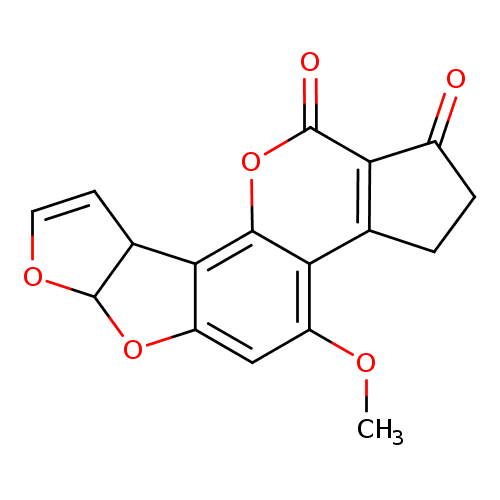
Aflatoxins are naturally occurring mycotoxins that are produced by many species of Aspergillus, a fungus, most notably Aspergillus flavus and Aspergillus parasiticus. At least 13 different types of aflatoxin are produced in nature. Aflatoxin B1 is considered the most toxic and is produced by both Aspergillus flavus and Aspergillus parasiticus. The native habitat of Aspergillus is in soil, decaying vegetation, hay, and grains undergoing microbiological deterioration and it invades all types of organic substrates whenever conditions are favorable for its growth. Favorable conditions include high moisture content (at least 7%) and high temperature. Aflatoxins B1 (AFB1) are contaminants of improperly stored foods; they are potent genotoxic and carcinogenic compounds, exerting their effects through damage to DNA. They can also induce mutations that increase oxidative damage. (10). Crops which are frequently affected by Aspergillus contamination include cereals (maize, sorghum, pearl millet, rice, wheat), oilseeds (peanut, soybean, sunflower, cotton), spices (chile peppers, black pepper, coriander, turmeric, ginger), and tree nuts (almond, pistachio, walnut, coconut, brazil nut).
belongs to the class of organic compounds known as difurocoumarocyclopentenones. These are polycyclic aromatic compounds containing a cyclopenten-2-one ring fused to the coumarin moiety of the difurocoumarin skeleton.
Oral, dermal, inhalation, and parenteral (contaminated drugs). (9)
Mechanism of Toxicity
Aflatoxin B1 requires epoxidation to aflatoxin B1 2,3-oxide for activation, which is performed by cytochome P-450 enzymes CYP1A2 and CYP3A4. It produces DNA damage, gene mutation and chromosomal anomalies. Aflatoxins produce singlet oxygen upon their exposure to UV (365-nm) light. Singlet oxygen in turn activates them to mutagens and DNA binding species. Aflatoxin metabolites can intercalate into DNA and alkylate the bases through their epoxide moiety, binding particularity to N7-guanine bases. In addition to randomly mutating DNA, this is thought to cause mutations in the p53 gene, an important gene in preventing cell cycle progression when there are DNA mutations, or signaling apoptosis. Mycotoxins are often able to enter the liver and kidney by human organic anion transporters (hOATs) and human organic cation transporters (hOCTs). They can also inhibit uptake of anions and cations by these transporters, interefering with the secretion of endogenous metabolites, drugs, and xenobiotics including themselves. This results in increased cellular accumulation of toxic compounds causing nephro- and hepatotoxicity. (12, 2, 7, 8)
Metabolism
After entering the body, aflatoxin B1 is metabolized in the liver by microsomal monooxygenases to the less toxic reactive intermediates aflatoxin M1 and aflatoxin Q1. After aflatoxin B1 is epoxidated to aflatoxin B1 2,3-oxide, it is detoxified by glutathione S-transferases. (12, 15, 7)
The native habitat of Aspergillus is in soil, decaying vegetation, hay, and grains undergoing microbiological deterioration and it invades all types of organic substrates whenever conditions are favorable for its growth. Crops which are frequently affected include cereals (maize, sorghum, pearl millet, rice, wheat), oilseeds (peanut, soybean, sunflower, cotton), spices (chile peppers, black pepper, coriander, turmeric, ginger), and tree nuts (almond, pistachio, walnut, coconut, brazil nut). The toxin can also be found in the milk of animals which are fed contaminated feed. Thus, aflatoxins are usually encountered in thecontext of chronic exposure, via food intake or secondary to the handling of foodstuffs. (15)
Minimum Risk Level
Not Available
Health Effects
The main target organ in mammals is the liver so aflatoxicosis is primarily a hepatic disease. Protracted exposure to aflatoxins may cause liver damage and necrosis, cholestasis, and hepatomas. Moreover, protracted exposure to aflatoxins has been associated with hepatocellular carcinoma, acute hepatitis, Reye's syndrome, bile duct cell proliferation, periportal fibrosis, hemorrhages, mucous membrane jaundice, fatty liver changes, cirrhosis in malnourished children, and kwashiorkor. However, aflatoxins accumulate in the presence of liver disease, and the association with hepatic cancer is confounded by the occurrence of hepatitis-B. Thus, it is not clear in these various instances whether aflatoxin is a primary cause of the disease, is an innocent bystander which accumulates secondary to the disease process, or is a contributing cause in conjunction with other factors. It is also mutagenic and teratogenic. Inhaled aflatoxins may produce pulmonary adenomatosis. Aflatoxins modify the immune system by affecting antibody formation, complement, cell-mediated immunity, and phagocytosis. (1, 15)
Symptoms
A broad range of symptoms can be found depending upon dosage, including, vomiting, abdominal pain, hemorrhage, and pulmonary edema. (14)
Treatment
Administration of phonobarbital enhances hepatic transformation activities and also protects against AFB-induced toxicity, carcinogenicity and DNA binding in vivo. In cases of ingestion, feeding large quantities of an adsorbent such as activated charcoal may be used. Antioxidants such as ellagic acid and inducers of some cytochromes P450, such as indole-3-carbinol, may give a protective effect. (1, 14)
Trost, Barry M.; Toste, F. Dean. Palladium Catalyzed Kinetic and Dynamic Kinetic Asymmetric Transformations of g-Acyloxybutenolides. Enantioselective Total Synthesis of (+)-Aflatoxin B1 and B2a. Journal of the American Chemical Society (2003), 125(10), 30