Record Information
Version1.0
Creation Date2009-07-30 17:58:34 UTC
Update Date2026-03-31 18:29:54 UTC
Accession NumberCHEM002500
Identification
Common NameAcetaldehyde
ClassSmall Molecule
DescriptionAcetaldehyde is a colorless, flammable liquid used in the manufacture of acetic acid, perfumes, and flavors. In the chemical industry, acetaldehyde is used as an intermediate in the production of acetic acid, certain esters, and a number of other chemicals. it is also an air pollutant resulting from combustion, such as automotive exhaust and tobacco smoke. It is also an intermediate in the metabolism of alcohol. It has a general narcotic action and also causes irritation of mucous membranes. Large doses may cause death from respiratory paralysis. Small amounts of acetaldehyde are produced naturally through gut microbial fermentation. Acetaldehyde is produced through the action of alcohol dehydrogenase on ethanol and is somewhate more toxic than ethanol. Acetaldehyde is linked to most of the negative clinical effects of alcohol. It has been shown to increase the risk of developing cirrhosis of the liver, multiple forms of cancer, and alcoholism.
Contaminant Sources
  • Clean Air Act Chemicals
  • Disinfection Byproducts
  • EAFUS Chemicals
  • FooDB Chemicals
  • HMDB Contaminants - Feces
  • HMDB Contaminants - Urine
  • HPV EPA Chemicals
  • IARC Carcinogens Group 1
  • IARC Carcinogens Group 2B
  • OSHA Hazardous Chemicals
  • STOFF IDENT Compounds
  • T3DB toxins
  • Tobacco Smoke Compounds
  • ToxCast & Tox21 Chemicals
Contaminant Type
  • Aldehyde
  • Cigarette Toxin
  • Food Toxin
  • Household Toxin
  • Industrial Precursor/Intermediate
  • Industrial/Workplace Toxin
  • Metabolite
  • Natural Compound
  • Organic Compound
  • Plant Toxin
  • Pollutant
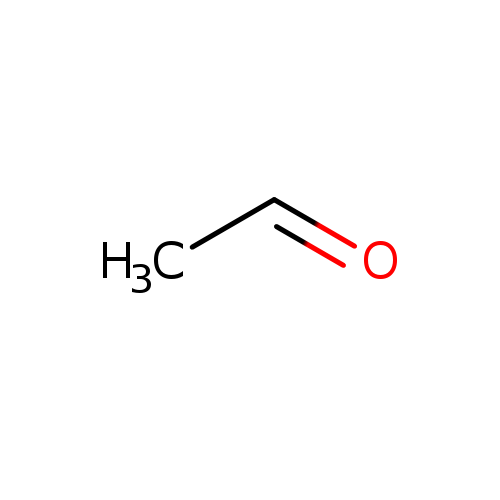
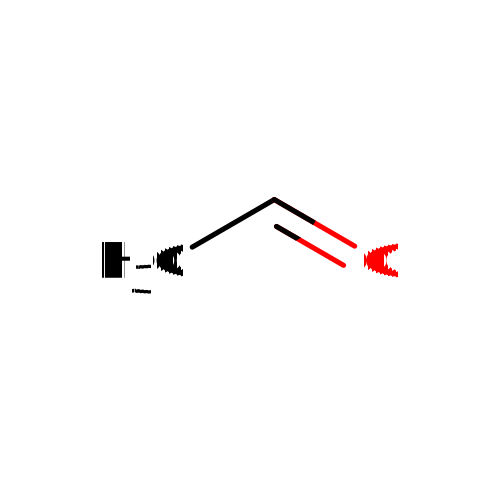
Chemical Structure
Thumb
Synonyms
ValueSource
AcetaldehydChEBI
AcetaldehydesChEBI
Acetic aldehydeChEBI
AzetaldehydChEBI
EthanalChEBI
Ethyl aldehydeChEBI
AldehydeHMDB
Chemical FormulaC2H4O
Average Molecular Mass44.053 g/mol
Monoisotopic Mass44.026 g/mol
CAS Registry Number75-07-0
IUPAC Nameacetaldehyde
Traditional Nameacetaldehyde
SMILESCC=O
InChI IdentifierInChI=1S/C2H4O/c1-2-3/h2H,1H3
InChI KeyIKHGUXGNUITLKF-UHFFFAOYSA-N
Chemical Taxonomy
Description belongs to the class of organic compounds known as short-chain aldehydes. These are an aldehyde with a chain length containing between 2 and 5 carbon atoms.
KingdomOrganic compounds
Super ClassOrganic oxygen compounds
ClassOrganooxygen compounds
Sub ClassCarbonyl compounds
Direct ParentShort-chain aldehydes
Alternative Parents
Substituents
  • Organic oxide
  • Hydrocarbon derivative
  • Short-chain aldehyde
  • Aliphatic acyclic compound
Molecular FrameworkAliphatic acyclic compounds
External Descriptors
Biological Properties
StatusDetected and Not Quantified
OriginEndogenous
Cellular Locations
  • Cytoplasm
  • Endoplasmic reticulum
  • Extracellular
  • Mitochondria
  • Peroxisome
Biofluid LocationsNot Available
Tissue Locations
  • Adrenal Medulla
  • Brain
  • Erythrocyte
  • Fibroblasts
  • Gonads
  • Intestine
  • Kidney
  • Liver
  • Muscle
  • Myelin
  • Nerve Cells
  • Neuron
  • Pancreas
  • Placenta
  • Platelet
  • Stratum Corneum
  • Testes
  • Thyroid Gland
Pathways
NameSMPDB LinkKEGG Link
Ethanol DegradationSMP00449 Not Available
Pyruvate MetabolismSMP00060 map00620
ApplicationsNot Available
Biological Roles
Chemical Roles
Physical Properties
StateLiquid
AppearanceColorless liquid.
Experimental Properties
PropertyValue
Melting Point-123°C
Boiling Point21°C (69.8°F)
Solubility1000 mg/mL at 25°C [RIDDICK,JA et al. (1986)]
Predicted Properties
PropertyValueSource
Water Solubility225 g/LALOGPS
logP-0.01ALOGPS
logP-0.38ChemAxon
logS0.71ALOGPS
pKa (Strongest Acidic)16.73ChemAxon
pKa (Strongest Basic)-6.9ChemAxon
Physiological Charge0ChemAxon
Hydrogen Acceptor Count1ChemAxon
Hydrogen Donor Count0ChemAxon
Polar Surface Area17.07 ŲChemAxon
Rotatable Bond Count0ChemAxon
Refractivity11.72 m³·mol⁻¹ChemAxon
Polarizability4.48 ųChemAxon
Number of Rings0ChemAxon
Bioavailability1ChemAxon
Rule of FiveYesChemAxon
Ghose FilterNoChemAxon
Veber's RuleYesChemAxon
MDDR-like RuleNoChemAxon
Spectra
Spectra
Spectrum TypeDescriptionSplash KeyView
Predicted GC-MSPredicted GC-MS Spectrum - GC-MS (Non-derivatized) - 70eV, Positivesplash10-0006-9000000000-69e31ccd415894a68912Spectrum
Predicted GC-MSPredicted GC-MS Spectrum - GC-MS (Non-derivatized) - 70eV, PositiveNot AvailableSpectrum
LC-MS/MSLC-MS/MS Spectrum - Quattro_QQQ 10V, Positive (Annotated)splash10-0002-9000000000-f1274d4b6066776ca898Spectrum
LC-MS/MSLC-MS/MS Spectrum - Quattro_QQQ 25V, Positive (Annotated)splash10-001l-9000000000-c1e37abbf2ad6054dc10Spectrum
LC-MS/MSLC-MS/MS Spectrum - Quattro_QQQ 40V, Positive (Annotated)splash10-000t-9000000000-2289ead4f7210282cd87Spectrum
Predicted LC-MS/MSPredicted LC-MS/MS Spectrum - 10V, Positivesplash10-0002-9000000000-cf54221d95714f5478c4Spectrum
Predicted LC-MS/MSPredicted LC-MS/MS Spectrum - 20V, Positivesplash10-0002-9000000000-8d8afe7422ae76f7ebb9Spectrum
Predicted LC-MS/MSPredicted LC-MS/MS Spectrum - 40V, Positivesplash10-004j-9000000000-d68dec9f846cfe9acc72Spectrum
Predicted LC-MS/MSPredicted LC-MS/MS Spectrum - 10V, Negativesplash10-0006-9000000000-4430d6a790eca4132aa4Spectrum
Predicted LC-MS/MSPredicted LC-MS/MS Spectrum - 20V, Negativesplash10-0006-9000000000-607a755de038203a6b68Spectrum
Predicted LC-MS/MSPredicted LC-MS/MS Spectrum - 40V, Negativesplash10-0006-9000000000-63c9f623d8dc4b1e60a2Spectrum
Predicted LC-MS/MSPredicted LC-MS/MS Spectrum - 10V, Positivesplash10-0002-9000000000-00ba25458eb6c0cc2940Spectrum
Predicted LC-MS/MSPredicted LC-MS/MS Spectrum - 20V, Positivesplash10-0002-9000000000-00ba25458eb6c0cc2940Spectrum
Predicted LC-MS/MSPredicted LC-MS/MS Spectrum - 40V, Positivesplash10-0002-9000000000-0d922cdfd7f6947230c0Spectrum
Predicted LC-MS/MSPredicted LC-MS/MS Spectrum - 10V, Negativesplash10-0006-9000000000-452a5f79625d3401d495Spectrum
Predicted LC-MS/MSPredicted LC-MS/MS Spectrum - 20V, Negativesplash10-0006-9000000000-452a5f79625d3401d495Spectrum
Predicted LC-MS/MSPredicted LC-MS/MS Spectrum - 40V, Negativesplash10-0006-9000000000-2758497e574a09010547Spectrum
MSMass Spectrum (Electron Ionization)splash10-002f-9000000000-65d53ef91644a0bacd6cSpectrum
1D NMR1H NMR SpectrumNot AvailableSpectrum
1D NMR13C NMR SpectrumNot AvailableSpectrum
1D NMR1H NMR SpectrumNot AvailableSpectrum
1D NMR13C NMR SpectrumNot AvailableSpectrum
1D NMR1H NMR SpectrumNot AvailableSpectrum
1D NMR13C NMR SpectrumNot AvailableSpectrum
1D NMR1H NMR SpectrumNot AvailableSpectrum
1D NMR13C NMR SpectrumNot AvailableSpectrum
1D NMR1H NMR SpectrumNot AvailableSpectrum
1D NMR13C NMR SpectrumNot AvailableSpectrum
1D NMR1H NMR SpectrumNot AvailableSpectrum
1D NMR13C NMR SpectrumNot AvailableSpectrum
1D NMR1H NMR SpectrumNot AvailableSpectrum
1D NMR13C NMR SpectrumNot AvailableSpectrum
1D NMR1H NMR SpectrumNot AvailableSpectrum
1D NMR13C NMR SpectrumNot AvailableSpectrum
1D NMR1H NMR SpectrumNot AvailableSpectrum
1D NMR13C NMR SpectrumNot AvailableSpectrum
1D NMR1H NMR SpectrumNot AvailableSpectrum
1D NMR13C NMR SpectrumNot AvailableSpectrum
1D NMR1H NMR SpectrumNot AvailableSpectrum
1D NMR13C NMR SpectrumNot AvailableSpectrum
1D NMR1H NMR SpectrumNot AvailableSpectrum
Toxicity Profile
Route of ExposureNot Available
Mechanism of ToxicityAcetaldehyde can form adducts with DNA, causing damage such as cross-links. (1)
MetabolismIn the liver, the enzyme acetaldehyde dehydrogenase converts acetaldehyde into the harmless compound acetic acid. (22)
Toxicity ValuesLD50: 661 mg/kg (Oral, Rat) (24) LD50: 212 mg/kg (Intravenous, Mouse) (24) LD50: 3540 mg/kg (Dermal, Rabbit) (24) LD50: 640 mg/kg (Subcutaneous, Rat) (25) LD50: 96 mg/kg (Intratracheal, Hamster) (24) LD50: 500 mg/kg (Intraperitoneal, Mouse) (23) LC50: 1500 ppm over 4 hours (Inhalation, Mouse) (24)
Lethal DoseNot Available
Carcinogenicity (IARC Classification)2B, possibly carcinogenic to humans. Acetaldehyde associated with consumption of alcoholic beverages is carcinogenic to humans (Group 1). (21)
Uses/SourcesAcetaldehyde occurs naturally in ripe fruit, coffee, and bread, and is produced by plants as part of their normal metabolism. It is popularly known as a chemical that causes hangovers, as it is produced from the breakdown of ethanol. In the chemical industry, acetaldehyde is used as an intermediate in the production of acetic acid, certain esters, and a number of other chemicals. it is also an air pollutant resulting from combustion, such as automotive exhaust and tobacco smoke. (22)
Minimum Risk LevelNot Available
Health EffectsAcetaldehyde is a probable carcinogen. (22)
SymptomsSkin contact with acetaldehyde causes irritation. (22)
TreatmentNot Available
Concentrations
Not Available
DrugBank IDNot Available
HMDB IDHMDB0000990
FooDB IDFDB008297
Phenol Explorer IDNot Available
KNApSAcK IDC00007392
BiGG ID33792
BioCyc IDACETALD
METLIN ID3200
PDB IDNot Available
Wikipedia LinkAcetaldehyde
Chemspider ID172
ChEBI ID15343
PubChem Compound ID177
Kegg Compound IDC00084
YMDB IDYMDB00022
ECMDB IDECMDB00990
References
Synthesis ReferenceWertheim, E. Laboratory preparation of acetaldehyde. Journal of the American Chemical Society (1922), 44 2658-9.
MSDSLink
General References
1. Wertheim, E. Laboratory preparation of acetaldehyde. Journal of the American Chemical Society (1922), 44 2658-9.
2. Toso B, Procida G, Stefanon B: Determination of volatile compounds in cows' milk using headspace GC-MS. J Dairy Res. 2002 Nov;69(4):569-77.
3. Brigitta Gaspardo et al. Determination of volatile fractions in raw milk and ripened cheese by means of GC-MS. Results of a survey performed in the marginal area between Italy and Slovenia. Italian Jounal of Animal Science Vol 8, 377-390, 2009
4. Wertheim, E. Laboratory preparation of acetaldehyde. Journal of the American Chemical Society (1922), 44 2658-9.
5. Nakamura K, Iwahashi K, Furukawa A, Ameno K, Kinoshita H, Ijiri I, Sekine Y, Suzuki K, Iwata Y, Minabe Y, Mori N: Acetaldehyde adducts in the brain of alcoholics. Arch Toxicol. 2003 Oct;77(10):591-3. Epub 2003 Sep 17.
6. Takeuchi M, Watai T, Sasaki N, Choei H, Iwaki M, Ashizawa T, Inagaki Y, Yamagishi S, Kikuchi S, Riederer P, Saito T, Bucala R, Kameda Y: Neurotoxicity of acetaldehyde-derived advanced glycation end products for cultured cortical neurons. J Neuropathol Exp Neurol. 2003 May;62(5):486-96.
7. Higuchi S, Matsushita S, Masaki T, Yokoyama A, Kimura M, Suzuki G, Mochizuki H: Influence of genetic variations of ethanol-metabolizing enzymes on phenotypes of alcohol-related disorders. Ann N Y Acad Sci. 2004 Oct;1025:472-80.
8. Oba T, Maeno Y, Ishida K: Differential contribution of clinical amounts of acetaldehyde to skeletal and cardiac muscle dysfunction in alcoholic myopathy. Curr Pharm Des. 2005;11(6):791-80.
9. Nishimura FT, Fukunaga T, Kajiura H, Umeno K, Takakura H, Ono T, Nishijo H: Effects of aldehyde dehydrogenase-2 genotype on cardiovascular and endocrine responses to alcohol in young Japanese subjects. Auton Neurosci. 2002 Nov 29;102(1-2):60-70.
10. Boyden TW, Silvert MA, Pamenter RW: Acetaldehyde acutely impairs canine testicular testosterone secretion. Eur J Pharmacol. 1981 Apr 9;70(4):571-6.
11. Theruvathu JA, Jaruga P, Nath RG, Dizdaroglu M, Brooks PJ: Polyamines stimulate the formation of mutagenic 1,N2-propanodeoxyguanosine adducts from acetaldehyde. Nucleic Acids Res. 2005 Jun 21;33(11):3513-20. Print 2005.
12. Burton A: Acetaldehyde links alcohol consumption to cancer. Lancet Oncol. 2005 Sep;6(9):643.
13. Hard ML, Iqbal U, Brien JF, Koren G: Binding of acetaldehyde to human and Guinea pig placentae in vitro. Placenta. 2003 Feb-Mar;24(2-3):149-54.
14. Forn-Frias C, Sanchis-Segura C: [The possible role of acetaldehyde in the brain damage caused by the chronic consumption of alcohol]. Rev Neurol. 2003 Sep 1-15;37(5):485-93.
15. Deitrich RA: Acetaldehyde: deja vu du jour. J Stud Alcohol. 2004 Sep;65(5):557-72.
16. Tyulina OV, Prokopieva VD, Boldyrev AA, Johnson P: Erythrocyte and plasma protein modification in alcoholism: a possible role of acetaldehyde. Biochim Biophys Acta. 2006 May;1762(5):558-63. Epub 2006 Apr 3.
17. Morozov IuE, Salomatin EM, Okhotin VE: [Brain acetaldehyde and ethanol: method of determination and diagnostic significance in ethanol poisoning]. Sud Med Ekspert. 2002 Mar-Apr;45(2):35-40.
18. Tyulina OV, Prokopieva VD, Dodd RD, Hawkins JR, Clay SW, Wilson DO, Boldyrev AA, Johnson P: In vitro effects of ethanol, acetaldehyde and fatty acid ethyl esters on human erythrocytes. Alcohol Alcohol. 2002 Mar-Apr;37(2):179-86.
19. Brooks PJ, Theruvathu JA: DNA adducts from acetaldehyde: implications for alcohol-related carcinogenesis. Alcohol. 2005 Apr;35(3):187-93.
20. Matsuse H, Shimoda T, Fukushima C, Mitsuta K, Kawano T, Tomari S, Saeki S, Kondoh Y, Machida I, Obase Y, Asai S, Kohno S: Screening for acetaldehyde dehydrogenase 2 genotype in alcohol-induced asthma by using the ethanol patch test. J Allergy Clin Immunol. 2001 Nov;108(5):715-9.
21. Yokoyama T, Saito K, Lwin H, Yoshiike N, Yamamoto A, Matsushita Y, Date C, Tanaka H: Epidemiological evidence that acetaldehyde plays a significant role in the development of decreased serum folate concentration and elevated mean corpuscular volume in alcohol drinkers. Alcohol Clin Exp Res. 2005 Apr;29(4):622-30.
22. Mascia MP, Maiya R, Borghese CM, Lobo IA, Hara K, Yamakura T, Gong DH, Beckstead MJ: Does acetaldehyde mediate ethanol action in the central nervous system? Alcohol Clin Exp Res. 2001 Nov;25(11):1570-5.
23. Takeuchi M, Saito T: Cytotoxicity of acetaldehyde-derived advanced glycation end-products (AA-AGE) in alcoholic-induced neuronal degeneration. Alcohol Clin Exp Res. 2005 Dec;29(12 Suppl):220S-4S.
24. Latvala J, Melkko J, Parkkila S, Jarvi K, Makkonen K, Niemela O: Assays for acetaldehyde-derived adducts in blood proteins based on antibodies against acetaldehyde/lipoprotein condensates. Alcohol Clin Exp Res. 2001 Nov;25(11):1648-53.
25. Salaspuro M: Microbial metabolism of ethanol and acetaldehyde and clinical consequences. Addict Biol. 1997 Jan;2(1):35-46. doi: 10.1080/13556219772840.
26. Nosova T, Jousimies-Somer H, Jokelainen K, Heine R, Salaspuro M: Acetaldehyde production and metabolism by human indigenous and probiotic Lactobacillus and Bifidobacterium strains. Alcohol Alcohol. 2000 Nov-Dec;35(6):561-8.
27. Brunk E, Sahoo S, Zielinski DC, Altunkaya A, Drager A, Mih N, Gatto F, Nilsson A, Preciat Gonzalez GA, Aurich MK, Prlic A, Sastry A, Danielsdottir AD, Heinken A, Noronha A, Rose PW, Burley SK, Fleming RMT, Nielsen J, Thiele I, Palsson BO: Recon3D enables a three-dimensional view of gene variation in human metabolism. Nat Biotechnol. 2018 Mar;36(3):272-281. doi: 10.1038/nbt.4072. Epub 2018 Feb 19.
28. https://www.ncbi.nlm.nih.gov/pubmed/?term=11058591
29. https://www.ncbi.nlm.nih.gov/pubmed/?term=110589
30. https://www.ncbi.nlm.nih.gov/pubmed/?term=11087437
31. https://www.ncbi.nlm.nih.gov/pubmed/?term=11290854
32. https://www.ncbi.nlm.nih.gov/pubmed/?term=15239123
33. https://www.ncbi.nlm.nih.gov/pubmed/?term=15833031
34. https://www.ncbi.nlm.nih.gov/pubmed/?term=16404561
35. https://www.ncbi.nlm.nih.gov/pubmed/?term=16485909
36. https://www.ncbi.nlm.nih.gov/pubmed/?term=18001279
37. https://www.ncbi.nlm.nih.gov/pubmed/?term=19396661
38. https://www.ncbi.nlm.nih.gov/pubmed/?term=2233695
39. https://www.ncbi.nlm.nih.gov/pubmed/?term=24282063
40. https://www.ncbi.nlm.nih.gov/pubmed/?term=24326678
41. https://www.ncbi.nlm.nih.gov/pubmed/?term=24503565
42. https://www.ncbi.nlm.nih.gov/pubmed/?term=4239189
43. https://www.ncbi.nlm.nih.gov/pubmed/?term=5526694
44. https://www.ncbi.nlm.nih.gov/pubmed/?term=6036728
45. https://www.ncbi.nlm.nih.gov/pubmed/?term=7163973
46. https://www.ncbi.nlm.nih.gov/pubmed/?term=9171333