Record Information
Version1.0
Creation Date2009-07-30 17:58:32 UTC
Update Date2026-03-26 21:33:52 UTC
Accession NumberCHEM002496
Identification
Common NameCyclohexane
ClassSmall Molecule
DescriptionCyclohexane is found in kohlrabi. Diluent in colour additive mixtures for food use Cyclohexane has been shown to exhibit beta-oxidant, anti-nociceptive and antibiotic functions (3, 4, 5). Cyclohexane belongs to the family of Cycloalkanes. These are alkanes containing one or more rings of carbon atoms.
Contaminant Sources
  • Clean Air Act Chemicals
  • EAFUS Chemicals
  • FooDB Chemicals
  • HMDB Contaminants - Feces
  • HPV EPA Chemicals
  • OECD HPV Chemicals
  • STOFF IDENT Compounds
  • T3DB toxins
  • ToxCast & Tox21 Chemicals
Contaminant Type
  • Food Toxin
  • Gasoline Additive/Component
  • Household Toxin
  • Industrial Precursor/Intermediate
  • Industrial/Workplace Toxin
  • Metabolite
  • Natural Compound
  • Organic Compound
Chemical Structure
Thumb
Synonyms
ValueSource
CyclohexanChEBI
HexahydrobenzeneChEBI
HexamethyleneChEBI
HexanaphtheneChEBI
hexahydro-BenzeneHMDB
Chemical FormulaC6H12
Average Molecular Mass84.160 g/mol
Monoisotopic Mass84.094 g/mol
CAS Registry Number110-82-7
IUPAC Namecyclohexane
Traditional Namecyclohexane
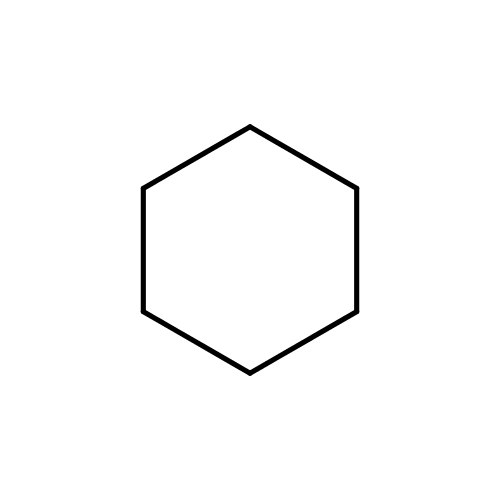
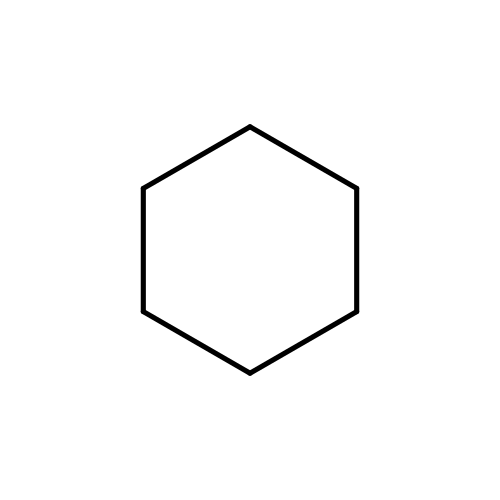
SMILESC1CCCCC1
InChI IdentifierInChI=1S/C6H12/c1-2-4-6-5-3-1/h1-6H2
InChI KeyXDTMQSROBMDMFD-UHFFFAOYSA-N
Chemical Taxonomy
Description belongs to the class of organic compounds known as cycloalkanes. These are saturated monocyclic hydrocarbons (with or without side chains).
KingdomOrganic compounds
Super ClassHydrocarbons
ClassSaturated hydrocarbons
Sub ClassCycloalkanes
Direct ParentCycloalkanes
Alternative ParentsNot Available
Substituents
  • Cycloalkane
  • Aliphatic homomonocyclic compound
Molecular FrameworkAliphatic homomonocyclic compounds
External Descriptors
Biological Properties
StatusDetected and Not Quantified
OriginExogenous
Cellular Locations
  • Membrane
Biofluid LocationsNot Available
Tissue LocationsNot Available
PathwaysNot Available
Applications
Biological RolesNot Available
Chemical Roles
Physical Properties
StateLiquid
AppearanceNot Available
Experimental Properties
PropertyValue
Melting Point6.5°C
Boiling Point80.7°C (177.3°F)
Solubility0.055 mg/mL at 25°C
Predicted Properties
PropertyValueSource
Water Solubility0.039 g/LALOGPS
logP3.46ALOGPS
logP2.67ChemAxon
logS-3.3ALOGPS
Physiological Charge0ChemAxon
Hydrogen Acceptor Count0ChemAxon
Hydrogen Donor Count0ChemAxon
Polar Surface Area0 ŲChemAxon
Rotatable Bond Count0ChemAxon
Refractivity27.61 m³·mol⁻¹ChemAxon
Polarizability11.07 ųChemAxon
Number of Rings1ChemAxon
Bioavailability1ChemAxon
Rule of FiveYesChemAxon
Ghose FilterNoChemAxon
Veber's RuleYesChemAxon
MDDR-like RuleNoChemAxon
Spectra
Spectra
Spectrum TypeDescriptionSplash KeyView
GC-MSGC-MS Spectrum - EI-B (Non-derivatized)splash10-0a4i-9000000000-fa371e4a0a1a00f32fb2Spectrum
GC-MSGC-MS Spectrum - EI-B (Non-derivatized)splash10-0a4l-9000000000-c9adeb7bca08187b71b6Spectrum
GC-MSGC-MS Spectrum - EI-B (Non-derivatized)splash10-0a4l-9000000000-14e97092ea29e622dae3Spectrum
GC-MSGC-MS Spectrum - EI-B (Non-derivatized)splash10-0a4l-9000000000-34ac8fd123caac81b782Spectrum
GC-MSGC-MS Spectrum - CI-B (Non-derivatized)splash10-001i-9000000000-0bd8fb51fcff3d162a79Spectrum
GC-MSGC-MS Spectrum - EI-B (Non-derivatized)splash10-0a4i-9000000000-fa371e4a0a1a00f32fb2Spectrum
GC-MSGC-MS Spectrum - EI-B (Non-derivatized)splash10-0a4l-9000000000-c9adeb7bca08187b71b6Spectrum
GC-MSGC-MS Spectrum - EI-B (Non-derivatized)splash10-0a4l-9000000000-14e97092ea29e622dae3Spectrum
GC-MSGC-MS Spectrum - EI-B (Non-derivatized)splash10-0a4l-9000000000-34ac8fd123caac81b782Spectrum
GC-MSGC-MS Spectrum - CI-B (Non-derivatized)splash10-001i-9000000000-0bd8fb51fcff3d162a79Spectrum
Predicted GC-MSPredicted GC-MS Spectrum - GC-MS (Non-derivatized) - 70eV, Positivesplash10-001l-9000000000-b615c4245974ad3f563bSpectrum
Predicted GC-MSPredicted GC-MS Spectrum - GC-MS (Non-derivatized) - 70eV, PositiveNot AvailableSpectrum
Predicted LC-MS/MSPredicted LC-MS/MS Spectrum - 10V, Positivesplash10-000i-9000000000-9cf791d15a6c7c100243Spectrum
Predicted LC-MS/MSPredicted LC-MS/MS Spectrum - 20V, Positivesplash10-000i-9000000000-2e3db4a621e8d150655eSpectrum
Predicted LC-MS/MSPredicted LC-MS/MS Spectrum - 40V, Positivesplash10-0006-9000000000-0909e8df2dab6a8a3038Spectrum
Predicted LC-MS/MSPredicted LC-MS/MS Spectrum - 10V, Negativesplash10-001i-9000000000-b52cb2415db29a5e580eSpectrum
Predicted LC-MS/MSPredicted LC-MS/MS Spectrum - 20V, Negativesplash10-001i-9000000000-b52cb2415db29a5e580eSpectrum
Predicted LC-MS/MSPredicted LC-MS/MS Spectrum - 40V, Negativesplash10-001i-9000000000-10ba67e4fd716d27d8f7Spectrum
Predicted LC-MS/MSPredicted LC-MS/MS Spectrum - 10V, Positivesplash10-052u-9000000000-ed8117234e8d524e8c12Spectrum
Predicted LC-MS/MSPredicted LC-MS/MS Spectrum - 20V, Positivesplash10-0a4l-9000000000-84249c478e4c6109e438Spectrum
Predicted LC-MS/MSPredicted LC-MS/MS Spectrum - 40V, Positivesplash10-052f-9000000000-15f05f245efaabc1e46dSpectrum
Predicted LC-MS/MSPredicted LC-MS/MS Spectrum - 10V, Negativesplash10-001i-9000000000-8ebf781741cf0155b2cdSpectrum
Predicted LC-MS/MSPredicted LC-MS/MS Spectrum - 20V, Negativesplash10-001i-9000000000-1fe2685b7f3004ca04a3Spectrum
Predicted LC-MS/MSPredicted LC-MS/MS Spectrum - 40V, Negativesplash10-001i-9000000000-0ad8ca1202d0c546ee33Spectrum
MSMass Spectrum (Electron Ionization)splash10-0a5c-9000000000-dac3fa3cc6a9fe8db32aSpectrum
1D NMR1H NMR SpectrumNot AvailableSpectrum
1D NMR13C NMR SpectrumNot AvailableSpectrum
Toxicity Profile
Route of ExposureOral (7) ; inhalation (7) ; dermal (7)
Mechanism of ToxicityPetroleum distillates are central nervous system depressants and cause pulmonary damage. (2)
MetabolismVolatile hydrocarbons are absorbed mainly through the lungs, and may also enter the body after ingestion via aspiration. (2)
Toxicity ValuesLD50: 1.30 g/kg (Oral, Mouse) (10)
Lethal DoseNot Available
Carcinogenicity (IARC Classification)Cyclohexane is found in gasoline, which is possibly carcinogenic to humans (Group 2B). (6)
Uses/SourcesCyclohexane is a component of gasoline and is used as a solvent in the chemical industry, and also as a raw material for the industrial production of adipic acid and caprolactam, both of which are intermediates used in the production of nylon. (9)
Minimum Risk LevelNot Available
Health EffectsPetroleum distillates are aspiration hazards and may cause pulmonary damage, central nervous system depression, and cardiac effects such as cardiac arrhythmias. They may also affect the blood, immune system, liver, and kidney. (2, 8)
SymptomsPetroleum distillate poisoning may cause nausea, vomiting, cough, pulmonary irritation progressing to pulmonary edema, bloody sputum, and bronchial pneumonia. At high amounts, central nervous system depression may also occur, with symptoms such as weakness, dizziness, slow and shallow respiration, unconsciousness, and convulsions. Petroleum distillates are also irritating to the skin. (1)
TreatmentTreatment is mainly symptomatic and supportive. Gastric lavage, emesis, and the administration of activated charcoal should be avoided, as vomiting increases the risk of aspiration. (2)
Concentrations
Not Available
DrugBank IDNot Available
HMDB IDHMDB0029597
FooDB IDFDB000761
Phenol Explorer IDNot Available
KNApSAcK IDC00007453
BiGG IDNot Available
BioCyc IDCPD-8923
METLIN IDNot Available
PDB IDCHX
Wikipedia LinkCyclohexane
Chemspider ID7787
ChEBI ID29005
PubChem Compound ID8078
Kegg Compound IDC11249
YMDB IDNot Available
ECMDB IDNot Available
References
Synthesis Reference

Brian J. Willis, Philip A. Christenson, Robert Mack, “Halogen containing cyclohexane derivatives, methods of preparation and compositions containing same.” U.S. Patent US4308401, issued July, 1934.

MSDSLink
General References
1. https://www.ncbi.nlm.nih.gov/pubmed/?term=11234809
2. https://www.ncbi.nlm.nih.gov/pubmed/?term=24334480
3. Antunes-Fernandes EC, van Gastelen S, Dijkstra J, Hettinga KA, Vervoort J: Milk metabolome relates enteric methane emission to milk synthesis and energy metabolism pathways. J Dairy Sci. 2016 Aug;99(8):6251-6262. doi: 10.3168/jds.2015-10248. Epub 2016 May 26.
4. Tulliez JE, Durand EF, Peleran JC: Mitochondrial hydroxylation of the cyclohexane ring as a result of beta-oxidation blockade of a cyclohexyl substituted fatty acid. Lipids. 1981 Dec;16(12):888-92.
5. Haas JS, Viana AF, Heckler AP, von Poser GL, Rates SM: The antinociceptive effect of a benzopyran (HP1) isolated from Hypericum polyanthemum in mice hot-plate test is blocked by naloxone. Planta Med. 2010 Sep;76(13):1419-23. doi: 10.1055/s-0029-1240942. Epub 2010 Mar 22.
6. Randall LP, Woodward MJ: Multiple antibiotic resistance (mar) locus in Salmonella enterica serovar typhimurium DT104. Appl Environ Microbiol. 2001 Mar;67(3):1190-7.
7. Yannai, Shmuel. (2004) Dictionary of food compounds with CD-ROM: Additives, flavors, and ingredients. Boca Raton: Chapman & Hall/CRC.