Record Information
Version1.0
Creation Date2009-07-30 17:58:18 UTC
Update Date2026-03-27 00:48:36 UTC
Accession NumberCHEM002469
Identification
Common NameOctane
ClassSmall Molecule
DescriptionOctane is an alkane with the chemical formula C8H18. It has 18 isomers. One of the isomers, 2,2,4-trimethylpentane or isooctane, is of major importance, as it has been selected as the 100 point on the octane rating scale, with n-heptane as the zero point. Octane ratings are ratings used to represent the anti-knock performance of petroleum-based fuels (octane is less likely to prematurely combust under pressure than heptane), given as the percentage of 2,2,4-trimethylpentane in an 2,2,4-trimethylpentane / n-heptane mixture that would have the same performance. It is an important constituent of gasoline.
Contaminant Sources
  • FooDB Chemicals
  • HMDB Contaminants - Feces
  • HPV EPA Chemicals
  • OECD HPV Chemicals
  • STOFF IDENT Compounds
  • Sludge Chemicals
  • T3DB toxins
  • ToxCast & Tox21 Chemicals
Contaminant Type
  • Food Toxin
  • Gasoline Additive/Component
  • Industrial/Workplace Toxin
  • Metabolite
  • Natural Compound
  • Organic Compound
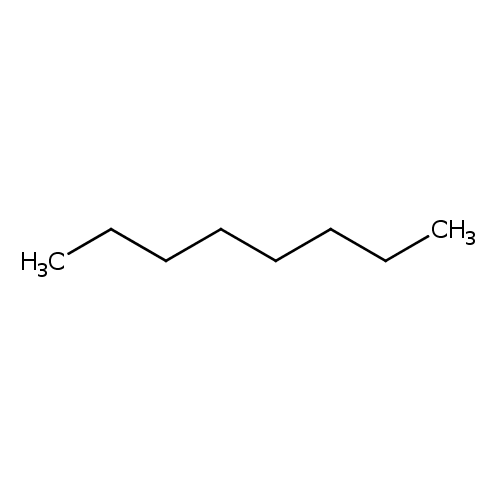
Chemical Structure
Thumb
Synonyms
ValueSource
CH3-[CH2]6-CH3ChEBI
N-OctaneChEBI
N-OktanChEBI
OktanChEBI
Chemical FormulaC8H18
Average Molecular Mass114.229 g/mol
Monoisotopic Mass114.141 g/mol
CAS Registry Number111-65-9
IUPAC Nameoctane
Traditional Nameoctane
SMILESCCCCCCCC
InChI IdentifierInChI=1S/C8H18/c1-3-5-7-8-6-4-2/h3-8H2,1-2H3
InChI KeyTVMXDCGIABBOFY-UHFFFAOYSA-N
Chemical Taxonomy
Description belongs to the class of organic compounds known as alkanes. These are acyclic branched or unbranched hydrocarbons having the general formula CnH2n+2 , and therefore consisting entirely of hydrogen atoms and saturated carbon atoms.
KingdomOrganic compounds
Super ClassHydrocarbons
ClassSaturated hydrocarbons
Sub ClassAlkanes
Direct ParentAlkanes
Alternative ParentsNot Available
Substituents
  • Acyclic alkane
  • Alkane
  • Aliphatic acyclic compound
Molecular FrameworkAliphatic acyclic compounds
External Descriptors
Biological Properties
StatusDetected and Not Quantified
OriginExogenous
Cellular Locations
  • Membrane
Biofluid LocationsNot Available
Tissue LocationsNot Available
PathwaysNot Available
ApplicationsNot Available
Biological Roles
Chemical RolesNot Available
Physical Properties
StateLiquid
AppearanceColorless liquid.
Experimental Properties
PropertyValue
Melting Point-56.8°C
Boiling Point125.6°C (258.1°F)
Solubility0.00066 mg/mL at 25°C [YALKOWSKY,SH & DANNENFELSER,RM (1992)]
Predicted Properties
PropertyValueSource
Water Solubility0.0034 g/LALOGPS
logP4.73ALOGPS
logP4.02ChemAxon
logS-4.5ALOGPS
Physiological Charge0ChemAxon
Hydrogen Acceptor Count0ChemAxon
Hydrogen Donor Count0ChemAxon
Polar Surface Area0 ŲChemAxon
Rotatable Bond Count5ChemAxon
Refractivity38.61 m³·mol⁻¹ChemAxon
Polarizability16.42 ųChemAxon
Number of Rings0ChemAxon
Bioavailability1ChemAxon
Rule of FiveYesChemAxon
Ghose FilterNoChemAxon
Veber's RuleYesChemAxon
MDDR-like RuleNoChemAxon
Spectra
Spectra
Spectrum TypeDescriptionSplash KeyView
GC-MSGC-MS Spectrum - EI-B (Non-derivatized)splash10-052o-9000000000-dff2329c36bee36d9e67Spectrum
GC-MSGC-MS Spectrum - EI-B (Non-derivatized)splash10-0006-9000000000-8dd19c0387246b61990cSpectrum
GC-MSGC-MS Spectrum - EI-B (Non-derivatized)splash10-0006-9000000000-d2e1916d68421b915616Spectrum
GC-MSGC-MS Spectrum - CI-B (Non-derivatized)splash10-08fr-9600000000-0ad297c5bbdcd8255dfcSpectrum
GC-MSGC-MS Spectrum - EI-B (Non-derivatized)splash10-052o-9000000000-dff2329c36bee36d9e67Spectrum
GC-MSGC-MS Spectrum - EI-B (Non-derivatized)splash10-0006-9000000000-8dd19c0387246b61990cSpectrum
GC-MSGC-MS Spectrum - EI-B (Non-derivatized)splash10-0006-9000000000-d2e1916d68421b915616Spectrum
GC-MSGC-MS Spectrum - CI-B (Non-derivatized)splash10-08fr-9600000000-0ad297c5bbdcd8255dfcSpectrum
Predicted GC-MSPredicted GC-MS Spectrum - GC-MS (Non-derivatized) - 70eV, Positivesplash10-056u-9100000000-734169bf6be23396487aSpectrum
Predicted GC-MSPredicted GC-MS Spectrum - GC-MS (Non-derivatized) - 70eV, PositiveNot AvailableSpectrum
LC-MS/MSLC-MS/MS Spectrum - Quattro_QQQ 10V, N/A (Annotated)splash10-014i-9200000000-7fa018b6e4635a551621Spectrum
LC-MS/MSLC-MS/MS Spectrum - Quattro_QQQ 25V, N/A (Annotated)splash10-05mo-9000000000-ad7800923a7f89ae82a7Spectrum
LC-MS/MSLC-MS/MS Spectrum - Quattro_QQQ 40V, N/A (Annotated)splash10-0aru-9100000000-a5dddfe6f629d1371facSpectrum
LC-MS/MSLC-MS/MS Spectrum - EI-B (JEOL JMS-D-3000) , Positivesplash10-052o-9000000000-dff2329c36bee36d9e67Spectrum
LC-MS/MSLC-MS/MS Spectrum - EI-B (HITACHI RMU-6M) , Positivesplash10-0006-9000000000-8dd19c0387246b61990cSpectrum
LC-MS/MSLC-MS/MS Spectrum - EI-B (HITACHI M-80B) , Positivesplash10-0006-9000000000-0f2c1fefb3562ddd291cSpectrum
LC-MS/MSLC-MS/MS Spectrum - CI-B (FINNIGAN-MAT 4500) , Positivesplash10-08fr-9600000000-0ad297c5bbdcd8255dfcSpectrum
Predicted LC-MS/MSPredicted LC-MS/MS Spectrum - 10V, Positivesplash10-014i-0900000000-3d7f12397b129744ef33Spectrum
Predicted LC-MS/MSPredicted LC-MS/MS Spectrum - 20V, Positivesplash10-014i-2900000000-c56ee324b0ebcfc751e7Spectrum
Predicted LC-MS/MSPredicted LC-MS/MS Spectrum - 40V, Positivesplash10-052f-9000000000-fdc491d96317782d7412Spectrum
Predicted LC-MS/MSPredicted LC-MS/MS Spectrum - 10V, Negativesplash10-03di-0900000000-eaa7ee0ef9699808e700Spectrum
Predicted LC-MS/MSPredicted LC-MS/MS Spectrum - 20V, Negativesplash10-03di-0900000000-486b5b971ea4d9a97ecbSpectrum
Predicted LC-MS/MSPredicted LC-MS/MS Spectrum - 40V, Negativesplash10-03di-9600000000-9ddf08fb6c571b873cbeSpectrum
Predicted LC-MS/MSPredicted LC-MS/MS Spectrum - 10V, Positivesplash10-0ab9-9100000000-c3e1fce5b7d3e8c85d1aSpectrum
Predicted LC-MS/MSPredicted LC-MS/MS Spectrum - 20V, Positivesplash10-0ab9-9000000000-6a868d2187f17076cbf6Spectrum
Predicted LC-MS/MSPredicted LC-MS/MS Spectrum - 40V, Positivesplash10-052f-9000000000-8fc55807287b28c39f95Spectrum
Predicted LC-MS/MSPredicted LC-MS/MS Spectrum - 10V, Negativesplash10-03di-0900000000-e85376f8875d5d8518a4Spectrum
Predicted LC-MS/MSPredicted LC-MS/MS Spectrum - 20V, Negativesplash10-03di-0900000000-7f4fa004fea60c3d18b7Spectrum
Predicted LC-MS/MSPredicted LC-MS/MS Spectrum - 40V, Negativesplash10-08fr-9500000000-7ccbab85bd6d6023347eSpectrum
MSMass Spectrum (Electron Ionization)splash10-0006-9000000000-6a16a91b5d2378134116Spectrum
1D NMR1H NMR SpectrumNot AvailableSpectrum
1D NMR13C NMR SpectrumNot AvailableSpectrum
Toxicity Profile
Route of ExposureOral (11) ; inhalation (11) ; dermal (11)
Mechanism of ToxicityPetroleum distillates are central nervous system depressants and cause pulmonary damage. (2)
MetabolismVolatile hydrocarbons are absorbed mainly through the lungs, and may also enter the body after ingestion via aspiration. (2)
Toxicity ValuesNot Available
Lethal DoseNot Available
Carcinogenicity (IARC Classification)No indication of carcinogenicity to humans (not listed by IARC).
Uses/SourcesOctanes may be found in gasoline. (12)
Minimum Risk LevelNot Available
Health EffectsPetroleum distillates are aspiration hazards and may cause pulmonary damage, central nervous system depression, and cardiac effects such as cardiac arrhythmias. They may also affect the blood, immune system, liver, and kidney. (2, 13)
SymptomsPetroleum distillate poisoning may cause nausea, vomiting, cough, pulmonary irritation progressing to pulmonary edema, bloody sputum, and bronchial pneumonia. At high amounts, central nervous system depression may also occur, with symptoms such as weakness, dizziness, slow and shallow respiration, unconsciousness, and convulsions. Petroleum distillates are also irritating to the skin. (1)
TreatmentTreatment is mainly symptomatic and supportive. Gastric lavage, emesis, and the administration of activated charcoal should be avoided, as vomiting increases the risk of aspiration. (2)
Concentrations
Not Available
DrugBank IDNot Available
HMDB IDHMDB0001485
FooDB IDFDB000758
Phenol Explorer IDNot Available
KNApSAcK IDC00035857
BiGG IDNot Available
BioCyc IDCPD-148
METLIN ID6270
PDB IDNot Available
Wikipedia LinkOctane
Chemspider ID349
ChEBI ID17590
PubChem Compound ID356
Kegg Compound IDC01387
YMDB IDNot Available
ECMDB IDNot Available
References
Synthesis ReferenceNot Available
MSDSLink
General References
1. https://www.ncbi.nlm.nih.gov/pubmed/?term=11255151
2. https://www.ncbi.nlm.nih.gov/pubmed/?term=24354334
3. Lewis, H. F.; Yohe, G. R. The preparation of pure octane. Proceedings of the Iowa Academy of Science (1925), 32 327-8.
4. Lewis, H. F.; Yohe, G. R. The preparation of pure octane. Proceedings of the Iowa Academy of Science (1925), 32 327-8.
5. Kiso Y: Antioxidative roles of sesamin, a functional lignan in sesame seed, and it's effect on lipid- and alcohol-metabolism in the liver: a DNA microarray study. Biofactors. 2004;21(1-4):191-6.
6. Claes C, Zivojnovic R: The use of perfluorocarbon liquids in vitreous surgery. Bull Soc Belge Ophtalmol. 1990;238:145-50.
7. Kramer KE, Andrews AR: Screening method for 11-nor-delta9-tetrahydrocannabinol-9-carboxylic acid in urine using hollow fiber membrane solvent microextraction with in-tube derivatization. J Chromatogr B Biomed Sci Appl. 2001 Aug 25;760(1):27-36.
8. Ivanova M, Piunti A, Marziali E, Komarova N, Raggi MA, Kenndler E: Microemulsion electrokinetic chromatography applied for separation of levetiracetam from other antiepileptic drugs in polypharmacy. Electrophoresis. 2003 Mar;24(6):992-8.
9. Le Mer Y, Haut J: [Use of perfluoro-octane liquid in the treatment of giant tears with inversion of the retina: preliminary results]. J Fr Ophtalmol. 1990;13(5):247-51.
10. Watzer B, Reinalter S, Seyberth HW, Schweer H: Determination of free and glucuronide conjugated 20-hydroxyarachidonic acid (20-HETE) in urine by gas chromatography/negative ion chemical ionization mass spectrometry. Prostaglandins Leukot Essent Fatty Acids. 2000 Mar;62(3):175-81.
11. Hahn I, Scherer PW, Mozell MM: A mass transport model of olfaction. J Theor Biol. 1994 Mar 21;167(2):115-28.
12. Stone WL: Hydrophobic interaction of alkanes with liposomes and lipoproteins. J Biol Chem. 1975 Jun 10;250(11):4368-70.