Record Information
Version1.0
Creation Date2009-07-23 18:26:20 UTC
Update Date2026-04-06 04:34:15 UTC
Accession NumberCHEM002442
Identification
Common NameAnabasine
ClassSmall Molecule
DescriptionAnabasine is a nicotinic receptor agonist toxin and Cholinesterase inhibitor which acts upon the nicotinic acetylcholine receptors. Anabasine is an unstable yellow liquid which is succeptable to light, heat and moisture. It's decomposition products include Nitrogen oxides, carbon monoxide, irritating and toxic fumes and gases and carbon dioxide. Anabasine is a pyridine alkaloid found in the stem of the (Nicotiana glauca) plant, a close relative of (Nicotiana tabacum) the common tobacco plant. Anabasine is a metabolite of nicotine which can be used as an indicator of a person's exposure to tobbacco smoke. A piperidine botanical insecticide.
Contaminant Sources
  • FooDB Chemicals
  • HMDB Contaminants - Urine
  • T3DB toxins
  • Tobacco Smoke Compounds
Contaminant Type
  • Amine
  • Food Toxin
  • Metabolite
  • Natural Compound
  • Organic Compound
  • Pesticide
  • Plant Toxin
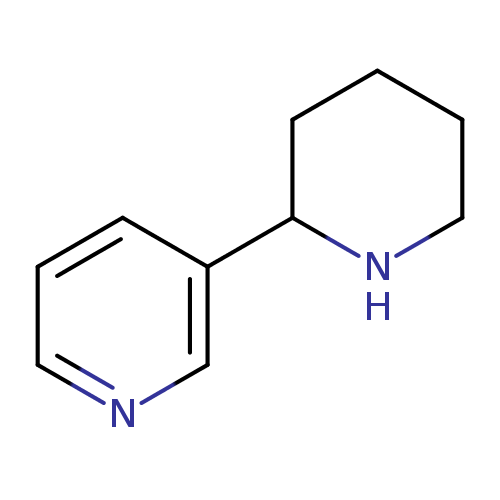
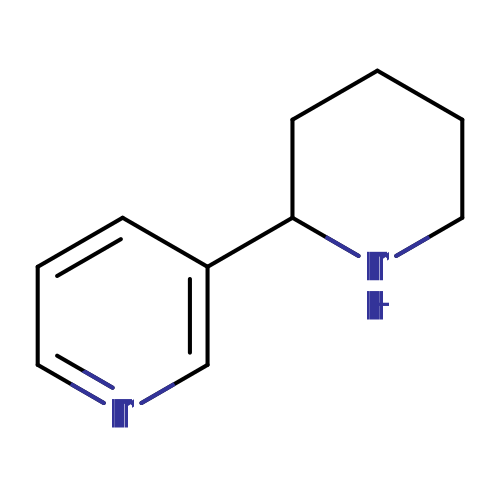
Chemical Structure
Thumb
Synonyms
ValueSource
(+-)-AnabasineChEBI
NeonicotineMeSH
(+/-)-anabasineHMDB
(-)-2-(3'-Pyridyl)piperidineHMDB
(-)-AnabasineHMDB
(S)-3-(2-Piperidinyl)pyridineHMDB
2-(3'-Pyridyl) piperidineHMDB
2-(3-Pyridinyl)piperidineHMDB
3-(2-Piperidinyl)pyridineHMDB
AnabasinHMDB
AnabazinHMDB
DL-AnabasineHMDB
L-3-(2'-Piperidyl)pyridineHMDB
NeonikotinHMDB
S-(-)-AnabasineHMDB
Chemical FormulaC10H14N2
Average Molecular Mass162.232 g/mol
Monoisotopic Mass162.116 g/mol
CAS Registry Number13078-04-1
IUPAC Name3-(piperidin-2-yl)pyridine
Traditional Nameanabasine
SMILESC1CCC(NC1)C1=CN=CC=C1
InChI IdentifierInChI=1S/C10H14N2/c1-2-7-12-10(5-1)9-4-3-6-11-8-9/h3-4,6,8,10,12H,1-2,5,7H2
InChI KeyMTXSIJUGVMTTMU-UHFFFAOYSA-N
Chemical Taxonomy
Description belongs to the class of organic compounds known as alkaloids and derivatives. These are naturally occurring chemical compounds that contain mostly basic nitrogen atoms. This group also includes some related compounds with neutral and even weakly acidic properties. Also some synthetic compounds of similar structure are attributed to alkaloids. In addition to carbon, hydrogen and nitrogen, alkaloids may also contain oxygen, sulfur and more rarely other elements such as chlorine, bromine, and phosphorus.
KingdomOrganic compounds
Super ClassAlkaloids and derivatives
ClassNot Available
Sub ClassNot Available
Direct ParentAlkaloids and derivatives
Alternative Parents
Substituents
  • Alkaloid or derivatives
  • Aralkylamine
  • Pyridine
  • Piperidine
  • Heteroaromatic compound
  • Azacycle
  • Organoheterocyclic compound
  • Secondary amine
  • Secondary aliphatic amine
  • Organic nitrogen compound
  • Organopnictogen compound
  • Hydrocarbon derivative
  • Organonitrogen compound
  • Amine
  • Aromatic heteromonocyclic compound
Molecular FrameworkAromatic heteromonocyclic compounds
External Descriptors
Biological Properties
StatusDetected and Not Quantified
OriginExogenous
Cellular Locations
  • Cytoplasm
  • Extracellular
Biofluid LocationsNot Available
Tissue LocationsNot Available
PathwaysNot Available
ApplicationsNot Available
Biological RolesNot Available
Chemical RolesNot Available
Physical Properties
StateLiquid
AppearanceNot Available
Experimental Properties
PropertyValue
Melting Point9°C
Boiling PointNot Available
Solubility1000 mg/mL at 25°C
Predicted Properties
PropertyValueSource
Water Solubility9.9 g/LALOGPS
logP0.9ALOGPS
logP1.22ChemAxon
logS-1.2ALOGPS
pKa (Strongest Basic)9ChemAxon
Physiological Charge1ChemAxon
Hydrogen Acceptor Count2ChemAxon
Hydrogen Donor Count1ChemAxon
Polar Surface Area24.92 ŲChemAxon
Rotatable Bond Count1ChemAxon
Refractivity48.96 m³·mol⁻¹ChemAxon
Polarizability18.71 ųChemAxon
Number of Rings2ChemAxon
Bioavailability1ChemAxon
Rule of FiveYesChemAxon
Ghose FilterYesChemAxon
Veber's RuleYesChemAxon
MDDR-like RuleNoChemAxon
Spectra
Spectra
Spectrum TypeDescriptionSplash KeyView
GC-MSGC-MS Spectrum - GC-MS (Non-derivatized)splash10-053r-7900000000-88d33f807290f3bd7e7cSpectrum
GC-MSGC-MS Spectrum - GC-EI-TOF (Non-derivatized)splash10-0a4i-1900000000-bf7a9e9e5bdeacb57bbbSpectrum
GC-MSGC-MS Spectrum - GC-EI-TOF (Non-derivatized)splash10-0kml-2910000000-8998ca2fea262a4021ceSpectrum
Predicted GC-MSPredicted GC-MS Spectrum - GC-MS (Non-derivatized) - 70eV, Positivesplash10-001i-1900000000-18b71ad7bc52e379dacbSpectrum
Predicted GC-MSPredicted GC-MS Spectrum - GC-MS (Non-derivatized) - 70eV, PositiveNot AvailableSpectrum
Predicted LC-MS/MSPredicted LC-MS/MS Spectrum - 10V, Positivesplash10-03di-0900000000-5a686c662d6e37ef9d11Spectrum
Predicted LC-MS/MSPredicted LC-MS/MS Spectrum - 20V, Positivesplash10-03di-1900000000-d94f02a74cab1b211399Spectrum
Predicted LC-MS/MSPredicted LC-MS/MS Spectrum - 40V, Positivesplash10-0f89-9300000000-2b092796296acf051347Spectrum
Predicted LC-MS/MSPredicted LC-MS/MS Spectrum - 10V, Negativesplash10-03di-0900000000-d98806e1a4faa4246128Spectrum
Predicted LC-MS/MSPredicted LC-MS/MS Spectrum - 20V, Negativesplash10-03di-2900000000-ba5523c7fa5f41235683Spectrum
Predicted LC-MS/MSPredicted LC-MS/MS Spectrum - 40V, Negativesplash10-0059-9600000000-8c76b42506e94084b3e2Spectrum
Predicted LC-MS/MSPredicted LC-MS/MS Spectrum - 10V, Negativesplash10-03fr-6900000000-32163e39b50ba07665f8Spectrum
Predicted LC-MS/MSPredicted LC-MS/MS Spectrum - 20V, Negativesplash10-03fr-7900000000-187fc863f08d0439768aSpectrum
Predicted LC-MS/MSPredicted LC-MS/MS Spectrum - 40V, Negativesplash10-004i-9400000000-2fbda0bf5810a0a48b08Spectrum
Predicted LC-MS/MSPredicted LC-MS/MS Spectrum - 10V, Positivesplash10-03di-0900000000-f3be6a7a178ad995ccc7Spectrum
Predicted LC-MS/MSPredicted LC-MS/MS Spectrum - 20V, Positivesplash10-03di-1900000000-c94897436e062f4c32e8Spectrum
Predicted LC-MS/MSPredicted LC-MS/MS Spectrum - 40V, Positivesplash10-07f3-9600000000-21fed8f3fc193b2877d0Spectrum
1D NMR1H NMR SpectrumNot AvailableSpectrum
1D NMR13C NMR SpectrumNot AvailableSpectrum
1D NMR1H NMR SpectrumNot AvailableSpectrum
1D NMR13C NMR SpectrumNot AvailableSpectrum
1D NMR1H NMR SpectrumNot AvailableSpectrum
1D NMR13C NMR SpectrumNot AvailableSpectrum
1D NMR1H NMR SpectrumNot AvailableSpectrum
1D NMR13C NMR SpectrumNot AvailableSpectrum
1D NMR1H NMR SpectrumNot AvailableSpectrum
1D NMR13C NMR SpectrumNot AvailableSpectrum
1D NMR1H NMR SpectrumNot AvailableSpectrum
1D NMR13C NMR SpectrumNot AvailableSpectrum
1D NMR1H NMR SpectrumNot AvailableSpectrum
1D NMR13C NMR SpectrumNot AvailableSpectrum
1D NMR1H NMR SpectrumNot AvailableSpectrum
1D NMR13C NMR SpectrumNot AvailableSpectrum
1D NMR1H NMR SpectrumNot AvailableSpectrum
1D NMR13C NMR SpectrumNot AvailableSpectrum
1D NMR1H NMR SpectrumNot AvailableSpectrum
1D NMR13C NMR SpectrumNot AvailableSpectrum
1D NMR1H NMR SpectrumNot AvailableSpectrum
2D NMR[1H,13C] 2D NMR SpectrumNot AvailableSpectrum
Toxicity Profile
Route of ExposureOral (ingestion) (7) ; dermal (7)
Mechanism of ToxicityAnabasine is a cholinesterase or acetylcholinesterase (AChE) inhibitor. A cholinesterase inhibitor (or 'anticholinesterase') suppresses the action of acetylcholinesterase. Because of its essential function, chemicals that interfere with the action of acetylcholinesterase are potent neurotoxins, causing excessive salivation and eye-watering in low doses, followed by muscle spasms and ultimately death. Nerve gases and many substances used in insecticides have been shown to act by binding a serine in the active site of acetylcholine esterase, inhibiting the enzyme completely. Acetylcholine esterase breaks down the neurotransmitter acetylcholine, which is released at nerve and muscle junctions, in order to allow the muscle or organ to relax. The result of acetylcholine esterase inhibition is that acetylcholine builds up and continues to act so that any nerve impulses are continually transmitted and muscle contractions do not stop. Among the most common acetylcholinesterase inhibitors are phosphorus-based compounds, which are designed to bind to the active site of the enzyme. The structural requirements are a phosphorus atom bearing two lipophilic groups, a leaving group (such as a halide or thiocyanate), and a terminal oxygen.
MetabolismParaoxonase (PON1) is a key enzyme in the metabolism of organophosphates. PON1 can inactivate some organophosphates through hydrolysis. PON1 hydrolyzes the active metabolites in several organophosphates insecticides as well as, nerve agents such as soman, sarin, and VX. The presence of PON1 polymorphisms causes there to be different enzyme levels and catalytic efficiency of this esterase, which in turn suggests that different individuals may be more susceptible to the toxic effect of OP exposure.
Toxicity ValuesNot Available
Lethal DoseNot Available
Carcinogenicity (IARC Classification)No indication of carcinogenicity to humans (not listed by IARC).
Uses/SourcesAnabasine is a plant toxin found in the Tree Tobacco plant (Nicotiana glauca). It is similar to nicotine and has been used as an insecticide. Anabasine is also present in small amounts in tobacco smoke. (6)
Minimum Risk LevelNot Available
Health EffectsAcute exposure to cholinesterase inhibitors can cause a cholinergic crisis characterized by severe nausea/vomiting, salivation, sweating, bradycardia, hypotension, collapse, and convulsions. Increasing muscle weakness is a possibility and may result in death if respiratory muscles are involved. Accumulation of ACh at motor nerves causes overstimulation of nicotinic expression at the neuromuscular junction. When this occurs symptoms such as muscle weakness, fatigue, muscle cramps, fasciculation, and paralysis can be seen. When there is an accumulation of ACh at autonomic ganglia this causes overstimulation of nicotinic expression in the sympathetic system. Symptoms associated with this are hypertension, and hypoglycemia. Overstimulation of nicotinic acetylcholine receptors in the central nervous system, due to accumulation of ACh, results in anxiety, headache, convulsions, ataxia, depression of respiration and circulation, tremor, general weakness, and potentially coma. When there is expression of muscarinic overstimulation due to excess acetylcholine at muscarinic acetylcholine receptors symptoms of visual disturbances, tightness in chest, wheezing due to bronchoconstriction, increased bronchial secretions, increased salivation, lacrimation, sweating, peristalsis, and urination can occur. Certain reproductive effects in fertility, growth, and development for males and females have been linked specifically to organophosphate pesticide exposure. Most of the research on reproductive effects has been conducted on farmers working with pesticides and insecticdes in rural areas. In females menstrual cycle disturbances, longer pregnancies, spontaneous abortions, stillbirths, and some developmental effects in offspring have been linked to organophosphate pesticide exposure. Prenatal exposure has been linked to impaired fetal growth and development. Neurotoxic effects have also been linked to poisoning with OP pesticides causing four neurotoxic effects in humans: cholinergic syndrome, intermediate syndrome, organophosphate-induced delayed polyneuropathy (OPIDP), and chronic organophosphate-induced neuropsychiatric disorder (COPIND). These syndromes result after acute and chronic exposure to OP pesticides.
SymptomsAnabasine produces symptoms similar to nicotine poisoning, such as nausea, abdominal pain, vomiting, diarrhea, diaphoresis, flushing, dizziness, disturbed hearing and vision, confusion, weakness, palpitations, altered respiration and hypotension. (4)
TreatmentIf the compound has been ingested, rapid gastric lavage should be performed using 5% sodium bicarbonate. For skin contact, the skin should be washed with soap and water. If the compound has entered the eyes, they should be washed with large quantities of isotonic saline or water. In serious cases, atropine and/or pralidoxime should be administered. Anti-cholinergic drugs work to counteract the effects of excess acetylcholine and reactivate AChE. Atropine can be used as an antidote in conjunction with pralidoxime or other pyridinium oximes (such as trimedoxime or obidoxime), though the use of '-oximes' has been found to be of no benefit, or possibly harmful, in at least two meta-analyses. Atropine is a muscarinic antagonist, and thus blocks the action of acetylcholine peripherally.

Concentrations
Not Available
DrugBank IDNot Available
HMDB IDHMDB0004350
FooDB IDFDB023366
Phenol Explorer IDNot Available
KNApSAcK IDC00002015
BiGG IDNot Available
BioCyc IDNot Available
METLIN ID3283
PDB IDNot Available
Wikipedia LinkAnabasine
Chemspider ID21106257
ChEBI ID28986
PubChem Compound ID2181
Kegg Compound IDC06180
YMDB IDNot Available
ECMDB IDNot Available
References
Synthesis ReferenceHasse, K.; Berg, P. Formation of anabasine from cadaverine in the presence of plant extracts. Biochemische Zeitschrift (1959), 331 349-55.
MSDSLink
General References
1. https://www.ncbi.nlm.nih.gov/pubmed/?term=25122040
2. https://www.ncbi.nlm.nih.gov/pubmed/?term=7226846
3. Hasse, K.; Berg, P. Formation of anabasine from cadaverine in the presence of plant extracts. Biochemische Zeitschrift (1959), 331 349-55.
4. Hasse, K.; Berg, P. Formation of anabasine from cadaverine in the presence of plant extracts. Biochemische Zeitschrift (1959), 331 349-55.
5. Mizrachi N, Levy S, Goren ZQ: Fatal poisoning from Nicotiana glauca leaves: identification of anabasine by gas-chromatography/mass spectrometry. J Forensic Sci. 2000 May;45(3):736-41.
6. Moyer TP, Charlson JR, Enger RJ, Dale LC, Ebbert JO, Schroeder DR, Hurt RD: Simultaneous analysis of nicotine, nicotine metabolites, and tobacco alkaloids in serum or urine by tandem mass spectrometry, with clinically relevant metabolic profiles. Clin Chem. 2002 Sep;48(9):1460-71.
7. Xu X, Iba MM, Weisel CP: Simultaneous and sensitive measurement of anabasine, nicotine, and nicotine metabolites in human urine by liquid chromatography-tandem mass spectrometry. Clin Chem. 2004 Dec;50(12):2323-30. Epub 2004 Oct 7.