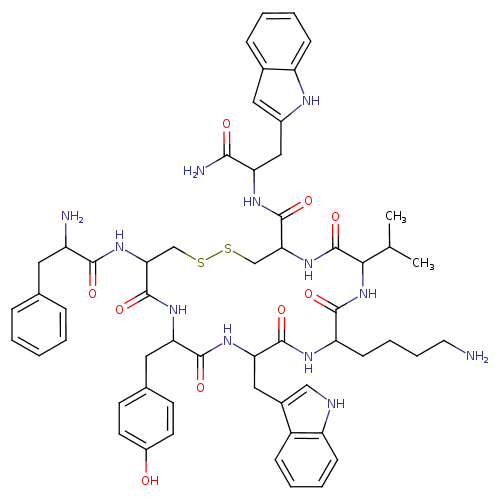
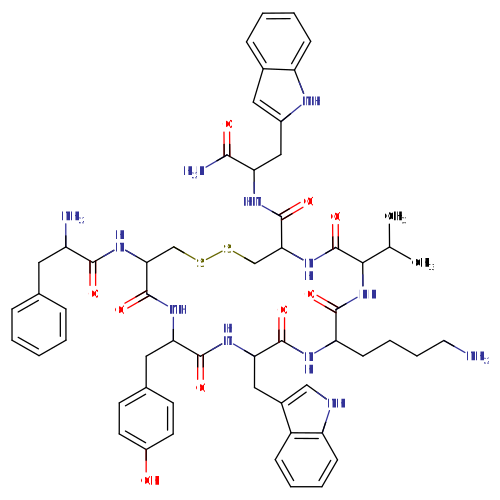
Vapreotide is an exogenous compound that exists as a solid at room temperature. It has the chemical formula C57H70N12O9S2. Vapreotide belongs to the amino acids, peptides, and analogues, a subclass of carboxylic acids and derivatives within the organic compounds. With an average molecular weight of 1,131 g/mol, Vapreotide is a heavy molecule.
This synthetic octapeptide somatostatin analog has been studied for the treatment of cancer. Recorded protein targets for the compound include somatostatin receptor type 2 (SSTR2), somatostatin receptor type 5 (SSTR5), and the Substance-P receptor (TACR1). While the exact mechanism of action is unknown, one study has provided in vitro and in vivo evidence for a tachykinin NK1 receptor antagonist effect in the analgesic effects of vapreotide.
belongs to the class of organic compounds known as hydroxyquinolones. Hydroxyquinolones are compounds containing a quinoline moiety bearing a hydroxyl group and a ketone. Quinoline or benzo[b]pyridine is a bicyclic compound that consists of benzene fused to a pyridine.
The exact mechanism of action is unknown, although one study has provided in vitro and in vivo evidence for a tachykinin NK1 receptor antagonist effect in the analgesic effects of vapreotide (8).
Metabolism
Route of Elimination: Vapreotide is 76% eliminated in bile. The remainder is renally eliminated.
Half Life: 30 minutes
No indication of carcinogenicity to humans (not listed by IARC).
Uses/Sources
For the treatment of esophageal variceal bleeding in patients with cirrhotic liver disease and has also shown efficacy in the treatment of patients with AIDS-related diarrhea.
Minimum Risk Level
Not Available
Health Effects
Not Available
Symptoms
Safety data are limited, however, headache, fatigue, diarrhea, nausea, vomiting, and abdominal pain have been reported commonly with the use of vapreotide.