Record Information
Version1.0
Creation Date2009-07-21 20:28:16 UTC
Update Date2026-05-14 16:57:10 UTC
Accession NumberCHEM002334
Identification
Common NameMelatonin
ClassSmall Molecule
DescriptionMelatonin is a biogenic amine that is found in animals, plants and microbes. Aaron B. Lerner of Yale University is credited for naming the hormone and for defining its chemical structure in 1958. In mammals, melatonin is produced by the pineal gland. The pineal gland is small endocrine gland, about the size of a rice grain and shaped like a pine cone (hence the name), that is located in the center of the brain (rostro-dorsal to the superior colliculus) but outside the blood-brain barrier. The secretion of melatonin increases in darkness and decreases during exposure to light, thereby regulating the circadian rhythms of several biological functions, including the sleep-wake cycle. In particular, melatonin regulates the sleep-wake cycle by chemically causing drowsiness and lowering the body temperature. Melatonin is also implicated in the regulation of mood, learning and memory, immune activity, dreaming, fertility and reproduction. Melatonin is also an effective antioxidant. Most of the actions of melatonin are mediated through the binding and activation of melatonin receptors. Individuals with autism spectrum disorders (ASD) may have lower than normal levels of melatonin. A 2008 study found that unaffected parents of individuals with ASD also have lower melatonin levels, and that the deficits were associated with low activity of the ASMT gene, which encodes the last enzyme of melatonin synthesis. Reduced melatonin production has also been proposed as a likely factor in the significantly higher cancer rates in night workers.
Contaminant Sources
  • FooDB Chemicals
  • HMDB Contaminants - Urine
  • STOFF IDENT Compounds
  • T3DB toxins
  • ToxCast & Tox21 Chemicals
Contaminant Type
  • Adjuvant, Immunologic
  • Amide
  • Amine
  • Animal Toxin
  • Anticonvulsant
  • Antioxidant
  • Central Nervous System Depressant
  • Drug
  • Ether
  • Food Toxin
  • Free Radical Scavenger
  • Metabolite
  • Natural Compound
  • Nutraceutical
  • Organic Compound
  • Plant Toxin
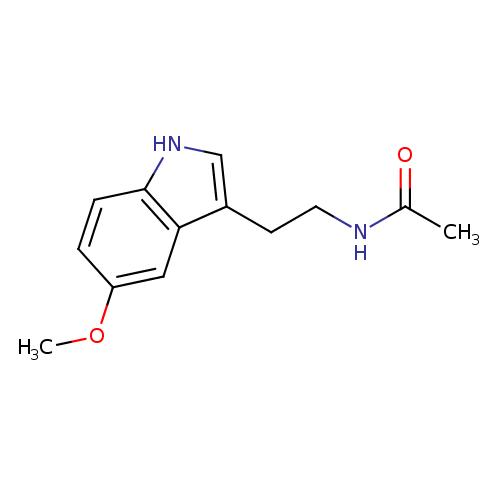
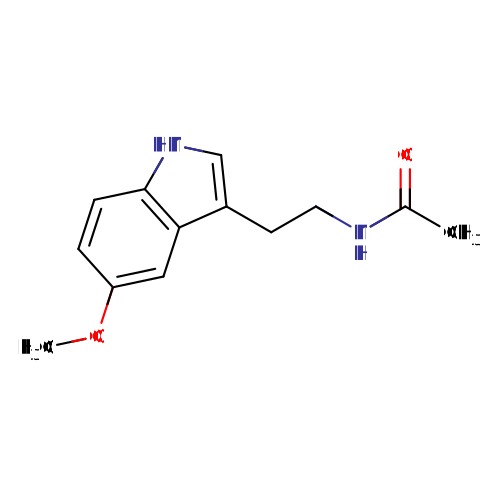
Chemical Structure
Thumb
Synonyms
ValueSource
5-Methoxy-N-acetyltryptamineChEBI
MelatonineChEBI
N-[2-(5-Methoxyindol-3-yl)ethyl]acetamideChEBI
N-Acetyl-5-methoxytryptamineChEBI
MelatoninaKegg
CircadinHMDB
MelatolHMDB
Melatonin (synth.) standard-gradeHMDB
Melatonin (synth.) ultra-pureHMDB
MelovineHMDB
MT6HMDB
N-(2-(5-Methoxy-1H-indol-3-yl)ethyl)acetamideHMDB
N-(2-(5-Methoxyindol-3-yl)ethyl)-acetamideHMDB
N-(2-(5-Methoxyindol-3-yl)ethyl)acetamideHMDB
N-Acetyl-5-methoxy-tryptamineHMDB
N-Acetyl-5-methoxy-tryptamine melatonineHMDB
N-[2-(5-Methoxy-1H-indol-3-yl)ethyl)acetamideHMDB
N-[2-(5-Methoxy-1H-indol-3-yl)ethyl]-acetamideHMDB
N-[2-(5-Methoxy-1H-indol-3-yl)ethyl]acetamideHMDB
N-[2-(5-Methoxyindol-3-yl)ethyl]-acetamideHMDB
RegulinHMDB
{N-[2-(5-methoxy-1H-indol-3-yl)ethyl]-} acetamideHMDB
{N-[2-(5-methoxyindol-3-yl)ethyl]-} acetamideHMDB
3-(2-Acetamidoethyl)-5-methoxyindoleHMDB
MelatoninHMDB
Chemical FormulaC13H16N2O2
Average Molecular Mass232.278 g/mol
Monoisotopic Mass232.121 g/mol
CAS Registry Number73-31-4
IUPAC NameN-[2-(5-methoxy-1H-indol-3-yl)ethyl]acetamide
Traditional Namemelatonin
SMILESCOC1=CC2=C(NC=C2CCNC(C)=O)C=C1
InChI IdentifierInChI=1S/C13H16N2O2/c1-9(16)14-6-5-10-8-15-13-4-3-11(17-2)7-12(10)13/h3-4,7-8,15H,5-6H2,1-2H3,(H,14,16)
InChI KeyDRLFMBDRBRZALE-UHFFFAOYSA-N
Chemical Taxonomy
Description belongs to the class of organic compounds known as 3-alkylindoles. 3-alkylindoles are compounds containing an indole moiety that carries an alkyl chain at the 3-position.
KingdomOrganic compounds
Super ClassOrganoheterocyclic compounds
ClassIndoles and derivatives
Sub ClassIndoles
Direct Parent3-alkylindoles
Alternative Parents
Substituents
  • 3-alkylindole
  • Anisole
  • Alkyl aryl ether
  • Substituted pyrrole
  • Benzenoid
  • Pyrrole
  • Heteroaromatic compound
  • Propargyl-type 1,3-dipolar organic compound
  • Ether
  • Carboximidic acid derivative
  • Carboximidic acid
  • Organic 1,3-dipolar compound
  • Azacycle
  • Organic oxygen compound
  • Hydrocarbon derivative
  • Organopnictogen compound
  • Organic nitrogen compound
  • Organooxygen compound
  • Organonitrogen compound
  • Aromatic heteropolycyclic compound
Molecular FrameworkAromatic heteropolycyclic compounds
External Descriptors
Biological Properties
StatusDetected and Not Quantified
OriginEndogenous
Cellular Locations
  • Cytoplasm
  • Extracellular
Biofluid LocationsNot Available
Tissue Locations
  • Adipose Tissue
  • Adrenal Cortex
  • Adrenal Gland
  • Adrenal Medulla
  • Bladder
  • Brain
  • Fibroblasts
  • Gastrointestinal Tract
  • Gonads
  • Gut
  • Intestine
  • Kidney
  • Liver
  • Nerve Cells
  • Neuron
  • Neutrophil
  • Ovary
  • Pancreas
  • Pineal Gland
  • Placenta
  • Platelet
  • Prostate
  • Skeletal
Pathways
NameSMPDB LinkKEGG Link
Tryptophan MetabolismSMP00063 map00380
Applications
Biological Roles
Chemical Roles
Physical Properties
StateSolid
AppearanceWhite powder.
Experimental Properties
PropertyValue
Melting Point117°C
Boiling PointNot Available
SolubilityNot Available
Predicted Properties
PropertyValueSource
Water Solubility0.14 g/LALOGPS
logP1.42ALOGPS
logP1.15ChemAxon
logS-3.2ALOGPS
pKa (Strongest Acidic)15.8ChemAxon
pKa (Strongest Basic)-1.6ChemAxon
Physiological Charge0ChemAxon
Hydrogen Acceptor Count2ChemAxon
Hydrogen Donor Count2ChemAxon
Polar Surface Area54.12 ŲChemAxon
Rotatable Bond Count4ChemAxon
Refractivity66.28 m³·mol⁻¹ChemAxon
Polarizability25.65 ųChemAxon
Number of Rings2ChemAxon
Bioavailability1ChemAxon
Rule of FiveYesChemAxon
Ghose FilterYesChemAxon
Veber's RuleNoChemAxon
MDDR-like RuleNoChemAxon
Spectra
Spectra
Spectrum TypeDescriptionSplash KeyView
GC-MSGC-MS Spectrum - GC-EI-TOF (Pegasus III TOF-MS system, Leco; GC 6890, Agilent Technologies) (Non-derivatized)splash10-001i-0490000000-aa93967315af900a76ceSpectrum
GC-MSGC-MS Spectrum - GC-EI-TOF (Pegasus III TOF-MS system, Leco; GC 6890, Agilent Technologies) (Non-derivatized)splash10-03k9-0900000000-a15ee6def3f8d75b1231Spectrum
GC-MSGC-MS Spectrum - GC-EI-TOF (Pegasus III TOF-MS system, Leco; GC 6890, Agilent Technologies) (Non-derivatized)splash10-001j-0490000000-94ef1be9ab930060778aSpectrum
GC-MSGC-MS Spectrum - GC-MS (2 TMS)splash10-001i-1490000000-03e24298c7bd1ed4066aSpectrum
GC-MSGC-MS Spectrum - GC-MS (Non-derivatized)splash10-001i-1490000000-03e24298c7bd1ed4066aSpectrum
GC-MSGC-MS Spectrum - GC-EI-TOF (Non-derivatized)splash10-001j-0590000000-63d5e32dd5f7877a4402Spectrum
GC-MSGC-MS Spectrum - GC-EI-TOF (Non-derivatized)splash10-001i-0590000000-52b3a733f8b49582d3fbSpectrum
GC-MSGC-MS Spectrum - GC-EI-TOF (Non-derivatized)splash10-0229-1900000000-d81c6f617bc486066136Spectrum
Predicted GC-MSPredicted GC-MS Spectrum - GC-MS (Non-derivatized) - 70eV, Positivesplash10-0076-4920000000-a8d9d614e9f8769a1359Spectrum
Predicted GC-MSPredicted GC-MS Spectrum - GC-MS (Non-derivatized) - 70eV, PositiveNot AvailableSpectrum
LC-MS/MSLC-MS/MS Spectrum - Quattro_QQQ 10V, Positive (Annotated)splash10-00di-0920000000-f90ec9b77e1a245e35a8Spectrum
LC-MS/MSLC-MS/MS Spectrum - Quattro_QQQ 25V, Positive (Annotated)splash10-05fr-0900000000-49e4482c65e82ac64b66Spectrum
LC-MS/MSLC-MS/MS Spectrum - Quattro_QQQ 40V, Positive (Annotated)splash10-003r-0900000000-8a4ae0fd610cca992d74Spectrum
LC-MS/MSLC-MS/MS Spectrum - LC-ESI-QQ (API3000, Applied Biosystems) 20V, Negativesplash10-0159-0090000000-939a1caf5760c0ba189cSpectrum
LC-MS/MSLC-MS/MS Spectrum - LC-ESI-QQ (API3000, Applied Biosystems) 30V, Negativesplash10-0006-0930000000-9e6fcea2c634ac9d85a0Spectrum
LC-MS/MSLC-MS/MS Spectrum - LC-ESI-QQ (API3000, Applied Biosystems) 40V, Negativesplash10-0006-0900000000-ddd29e731a7de56c1808Spectrum
LC-MS/MSLC-MS/MS Spectrum - LC-ESI-QQ (API3000, Applied Biosystems) 50V, Negativesplash10-0006-0900000000-34b4fb52810a15ea5bd6Spectrum
LC-MS/MSLC-MS/MS Spectrum - LC-ESI-QQ (API3000, Applied Biosystems) 10V, Negativesplash10-001i-0090000000-5ca2df63ec2baefdae8cSpectrum
LC-MS/MSLC-MS/MS Spectrum - LC-ESI-QQ (API3000, Applied Biosystems) 10V, Positivesplash10-001i-0190000000-5bae6e63e9b40e60e0a4Spectrum
LC-MS/MSLC-MS/MS Spectrum - LC-ESI-QQ (API3000, Applied Biosystems) 20V, Positivesplash10-00di-0900000000-529bf6d5c2091993f865Spectrum
LC-MS/MSLC-MS/MS Spectrum - LC-ESI-QQ (API3000, Applied Biosystems) 30V, Positivesplash10-00di-0900000000-158a60fe696120b23b41Spectrum
LC-MS/MSLC-MS/MS Spectrum - LC-ESI-QQ (API3000, Applied Biosystems) 40V, Positivesplash10-0a5c-0900000000-5e86b2de659ce47762c0Spectrum
LC-MS/MSLC-MS/MS Spectrum - LC-ESI-QQ (API3000, Applied Biosystems) 50V, Positivesplash10-001i-0900000000-881c0d57239d56c46f2dSpectrum
LC-MS/MSLC-MS/MS Spectrum - LC-ESI-IT (LC/MSD Trap XCT, Agilent Technologies) , Positivesplash10-00di-0910000000-f256f78adbcbeb2464deSpectrum
LC-MS/MSLC-MS/MS Spectrum - LC-ESI-IT (LC/MSD Trap XCT, Agilent Technologies) , Positivesplash10-0a4i-0900000000-bd15d952a2fc6c5cbb23Spectrum
LC-MS/MSLC-MS/MS Spectrum - DI-ESI-qTof , Positivesplash10-05fr-0900000000-7acf9405f4beeb34566cSpectrum
LC-MS/MSLC-MS/MS Spectrum - DI-ESI-qTof , Positivesplash10-00di-0900000000-13245183cd8c8cd511c3Spectrum
LC-MS/MSLC-MS/MS Spectrum - LC-ESI-qTof , Positivesplash10-05ai-2900000000-07b3d32f002dba733c10Spectrum
LC-MS/MSLC-MS/MS Spectrum - LC-ESI-QQ , negativesplash10-0159-0090000000-939a1caf5760c0ba189cSpectrum
Predicted LC-MS/MSPredicted LC-MS/MS Spectrum - 10V, Positivesplash10-0019-0950000000-3561167f9cf6abf87465Spectrum
Predicted LC-MS/MSPredicted LC-MS/MS Spectrum - 20V, Positivesplash10-00dr-0900000000-7c590c12649f6abfac96Spectrum
Predicted LC-MS/MSPredicted LC-MS/MS Spectrum - 40V, Positivesplash10-006x-1900000000-6fc07c212072dc15cda1Spectrum
Predicted LC-MS/MSPredicted LC-MS/MS Spectrum - 10V, Negativesplash10-001i-1390000000-afe87f80bc60da102bf6Spectrum
Predicted LC-MS/MSPredicted LC-MS/MS Spectrum - 20V, Negativesplash10-0019-3940000000-44812f1a2c7f6216bd23Spectrum
Predicted LC-MS/MSPredicted LC-MS/MS Spectrum - 40V, Negativesplash10-052f-9300000000-995e110e7943eff538adSpectrum
MSMass Spectrum (Electron Ionization)splash10-03k9-1900000000-45ee4fdc7acdb33dad3bSpectrum
1D NMR1H NMR SpectrumNot AvailableSpectrum
1D NMR13C NMR SpectrumNot AvailableSpectrum
2D NMR[1H,13C] 2D NMR SpectrumNot AvailableSpectrum
Toxicity Profile
Route of ExposureThe absorption and bioavailability of melatonin varies widely.
Mechanism of ToxicityMelatonin is a derivative of tryptophan. It binds to melatonin receptor type 1A, which then acts on adenylate cylcase and the inhibition of a cAMP signal transduction pathway. Melatonin not only inhibits adenylate cyclase, but it also activates phosphilpase C. This potentiates the release of arachidonate. By binding to melatonin receptors 1 and 2, the downstream signallling cascades have various effects in the body. The melatonin receptors are G protein-coupled receptors and are expressed in various tissues of the body. There are two subtypes of the receptor in humans, melatonin receptor 1 (MT1) and melatonin receptor 2 (MT2). Melatonin and melatonin receptor agonists, on market or in clinical trials, all bind to and activate both receptor types.The binding of the agonists to the receptors has been investigated for over two decades or since 1986. It is somewhat known, but still not fully understood. When melatonin receptor agonists bind to and activate their receptors it causes numerous physiological processes. MT1 receptors are expressed in many regions of the central nervous system (CNS): suprachiasmatic nucleus of the hypothalamus (SNC), hippocampus, substantia nigra, cerebellum, central dopaminergic pathways, ventral tegmental area and nucleus accumbens. MT1 is also expressed in the retina, ovary, testis, mammary gland, coronary circulation and aorta, gallbladder, liver, kidney, skin and the immune system. MT2 receptors are expressed mainly in the CNS, also in the lung, cardiac, coronary and aortic tissue, myometrium and granulosa cells, immune cells, duodenum and adipocytes. The binding of melatonin to melatonin receptors activates a few signaling pathways. MT1 receptor activation inhibits the adenylyl cyclase and its inhibition causes a rippling effect of non activation; starting with decreasing formation of cyclic adenosine monophosphate (cAMP), and then progressing to less protein kinase A (PKA) activity, which in turn hinders the phosphorilation of cAMP responsive element-binding protein (CREB binding protein) into P-CREB. MT1 receptors also activate phospholipase C (PLC), affect ion channels and regulate ion flux inside the cell. The binding of melatonin to MT2 receptors inhibits adenylyl cyclase which decreases the formation of cAMP.[4] As well it hinders guanylyl cyclase and therefore the forming of cyclic guanosine monophosphate (cGMP). Binding to MT2 receptors probably affects PLC which increases protein kinase C (PKC) activity. Activation of the receptor can lead to ion flux inside the cell.
MetabolismHepatically metabolized to at least 14 identified metabolites (identified in mouse urine): 6-hydroxymelatonin glucuronide, 6-hydroxymelatonin sulfate, N-acetylserotonin glucuronide, N-acetylserotonin sulfate, 6-hydroxymelatonin, 2-oxomelatonin, 3-hydroxymelatonin, melatonin glucuronide, cyclic melatonin, cyclic N-acetylserotonin glucuronide, cyclic 6-hydroxymelatonin, 5-hydroxyindole-3-acetaldehyde, di-hydroxymelatonin and its glucuronide conjugate. 6-Hydroxymelatonin glucuronide is the major metabolite found in mouse urine (65-88% of total melatonin metabolites in urine). Half Life: 35 to 50 minutes
Toxicity ValuesLD50: 3200 mg/kg (Oral, Rat) (1)
Lethal DoseNot Available
Carcinogenicity (IARC Classification)No indication of carcinogenicity to humans (not listed by IARC).
Uses/SourcesUsed orally for jet lag, insomnia, shift-work disorder, circadian rhythm disorders in the blind (evidence for efficacy), and benzodiazepine and nicotine withdrawal. Evidence indicates that melatonin is likely effective for treating circadian rhythm sleep disorders in blind children and adults. It has received FDA orphan drug status as an oral medication for this use. A number of studies have shown that melatonin may be effective for treating sleep-wake cycle disturbances in children and adolescents with mental retardation, autism, and other central nervous system disorders. It appears to decrease the time to fall asleep in children with developmental disabilities, such as cerebral palsy, autism, and mental retardation. It may also improve secondary insomnia associated with various sleep-wake cycle disturbances. Other possible uses for which there is some evidence for include: benzodiazepine withdrawal, cluster headache, delayed sleep phase syndrome (DSPS), primary insomnia, jet lag, nicotine withdrawal, preoperative anxiety and sedation, prostate cancer, solid tumors (when combined with IL-2 therapy in certain cancers), sunburn prevention (topical use), tardive dyskinesia, thrombocytopenia associated with cancer, chemotherapy and other disorders.
Minimum Risk LevelNot Available
Health EffectsTolerance can develop, in which the person needs larger doses to achieve the desired effect; this can lead to overdose and death. Accidents or injury can also occur due to the side effects of loss of coordination, slowed reaction time, sleepiness and impaired judgment. Drugs in this category have a high potential for physical and psychological dependence. May cause a potentially dangerous rash that may develop into Stevens Johnson syndrome, an extremely rare but potentially fatal skin disease.
SymptomsLoss of coordination, slowed reaction time, sleepiness and impaired judgment.
TreatmentNot Available
Concentrations
Not Available
DrugBank IDDB01065
HMDB IDHMDB0001389
FooDB IDFDB004234
Phenol Explorer IDNot Available
KNApSAcK IDNot Available
BiGG ID37965
BioCyc IDN-ACETYL-5-METHOXY-TRYPTAMINE
METLIN ID73
PDB IDNot Available
Wikipedia LinkMelatonin
Chemspider ID872
ChEBI ID16796
PubChem Compound ID896
Kegg Compound IDC01598
YMDB IDNot Available
ECMDB IDM2MDB005304
References
Synthesis Reference

Robert A. S. Welch, Keith Betteridge, “Method of stimulating cashmere growth on cashmere-producing goats using melatonin.” U.S. Patent US4855313, issued August, 1986.

MSDSLink
General References
1. Eriksson L, Valtonen M, Laitinen JT, Paananen M, Kaikkonen M: Diurnal rhythm of melatonin in bovine milk: pharmacokinetics of exogenous melatonin in lactating cows and goats. Acta Vet Scand. 1998;39(3):301-10.
2. Helmut M. Hügel and Faizul Nurlawis. Short synthesis of melatonin. Heterocycles (2003), Vol. 60, No. 10, pp. 2349 - 2354.
3. Drake MJ, Mills IW, Noble JG: Melatonin pharmacotherapy for nocturia in men with benign prostatic enlargement. J Urol. 2004 Mar;171(3):1199-202.
4. Slominski A, Pisarchik A, Zbytek B, Tobin DJ, Kauser S, Wortsman J: Functional activity of serotoninergic and melatoninergic systems expressed in the skin. J Cell Physiol. 2003 Jul;196(1):144-53.
5. Lahiri DK, Chen D, Lahiri P, Rogers JT, Greig NH, Bondy S: Melatonin, metals, and gene expression: implications in aging and neurodegenerative disorders. Ann N Y Acad Sci. 2004 Dec;1035:216-30.
6. Bangha E, Lauth D, Kistler GS, Elsner P: Daytime serum levels of melatonin after topical application onto the human skin. Skin Pharmacol. 1997;10(5-6):298-302.
7. Bubenik GA: Localization, physiological significance and possible clinical implication of gastrointestinal melatonin. Biol Signals Recept. 2001 Nov-Dec;10(6):350-66.
8. Christofides J, Bridel M, Egerton M, Mackay GM, Forrest CM, Stoy N, Darlington LG, Stone TW: Blood 5-hydroxytryptamine, 5-hydroxyindoleacetic acid and melatonin levels in patients with either Huntington's disease or chronic brain injury. J Neurochem. 2006 May;97(4):1078-88. Epub 2006 Mar 29.
9. Abdel-Wahhab MA, Abdel-Galil MM, El-Lithey M: Melatonin counteracts oxidative stress in rats fed an ochratoxin A contaminated diet. J Pineal Res. 2005 Mar;38(2):130-5.
10. Chen HM, Hsu JT, Chen JC, Ng CJ, Chiu DF, Chen MF: Delayed neutrophil apoptosis attenuated by melatonin in human acute pancreatitis. Pancreas. 2005 Nov;31(4):360-4.
11. Fabis M, Pruszynska E, Mackowiak P: In vivo and in situ action of melatonin on insulin secretion and some metabolic implications in the rat. Pancreas. 2002 Aug;25(2):166-9.
12. Messner M, Huether G, Lorf T, Ramadori G, Schworer H: Presence of melatonin in the human hepatobiliary-gastrointestinal tract. Life Sci. 2001 Jun 22;69(5):543-51.
13. Nishida S: Metabolic effects of melatonin on oxidative stress and diabetes mellitus. Endocrine. 2005 Jul;27(2):131-6.
14. Peschke E, Frese T, Chankiewitz E, Peschke D, Preiss U, Schneyer U, Spessert R, Muhlbauer E: Diabetic Goto Kakizaki rats as well as type 2 diabetic patients show a decreased diurnal serum melatonin level and an increased pancreatic melatonin-receptor status. J Pineal Res. 2006 Mar;40(2):135-43.
15. Reiter RJ, Sainz RM, Lopez-Burillo S, Mayo JC, Manchester LC, Tan DX: Melatonin ameliorates neurologic damage and neurophysiologic deficits in experimental models of stroke. Ann N Y Acad Sci. 2003 May;993:35-47; discussion 48-53.
16. Okatani Y, Wakatsuki A, Shinohara K, Kaneda C, Fukaya T: Melatonin stimulates glutathione peroxidase activity in human chorion. J Pineal Res. 2001 May;30(4):199-205.
17. Bubenik GA: Gastrointestinal melatonin: localization, function, and clinical relevance. Dig Dis Sci. 2002 Oct;47(10):2336-48.
18. Wurtman RJ, Ozaki Y: Physiological control of melatonin synthesis and secretion: mechanisms, generating rhythms in melatonin, methoxytryptophol, and arginine vasotocin levels and effects on the pineal of endogenous catecholamines, the estrous cycle, and environmental lighting. J Neural Transm Suppl. 1978;(13):59-70.
19. Kobayashi H, Kromminga A, Dunlop TW, Tychsen B, Conrad F, Suzuki N, Memezawa A, Bettermann A, Aiba S, Carlberg C, Paus R: A role of melatonin in neuroectodermal-mesodermal interactions: the hair follicle synthesizes melatonin and expresses functional melatonin receptors. FASEB J. 2005 Oct;19(12):1710-2. Epub 2005 Jul 19.
20. Johe PD, Osterud B: The in vivo effect of melatonin on cellular activation processes in human blood during strenuous physical exercise. J Pineal Res. 2005 Oct;39(3):324-30.
21. Paakkonen T, Makinen TM, Leppaluoto J, Vakkuri O, Rintamaki H, Palinkas LA, Hassi J: Urinary melatonin: a noninvasive method to follow human pineal function as studied in three experimental conditions. J Pineal Res. 2006 Mar;40(2):110-5.
22. Atkinson G, Holder A, Robertson C, Gant N, Drust B, Reilly T, Waterhouse J: Effects of melatonin on the thermoregulatory responses to intermittent exercise. J Pineal Res. 2005 Nov;39(4):353-9.
23. Hattori A, Migitaka H, Iigo M, Itoh M, Yamamoto K, Ohtani-Kaneko R, Hara M, Suzuki T, Reiter RJ: Identification of melatonin in plants and its effects on plasma melatonin levels and binding to melatonin receptors in vertebrates. Biochem Mol Biol Int. 1995 Mar;35(3):627-34.
24. Reiter RJ, Acuna-Castroviejo D, Tan DX, Burkhardt S: Free radical-mediated molecular damage. Mechanisms for the protective actions of melatonin in the central nervous system. Ann N Y Acad Sci. 2001 Jun;939:200-15.
25. Caniato R, Filippini R, Piovan A, Puricelli L, Borsarini A, Cappelletti EM: Melatonin in plants. Adv Exp Med Biol. 2003;527:593-7.
26. Boutin JA, Audinot V, Ferry G, Delagrange P: Molecular tools to study melatonin pathways and actions. Trends Pharmacol Sci. 2005 Aug;26(8):412-9.
27. Hardeland R: Antioxidative protection by melatonin: multiplicity of mechanisms from radical detoxification to radical avoidance. Endocrine. 2005 Jul;27(2):119-30.
28. Ma X, Chen C, Krausz KW, Idle JR, Gonzalez FJ: A metabolomic perspective of melatonin metabolism in the mouse. Endocrinology. 2008 Apr;149(4):1869-79. doi: 10.1210/en.2007-1412. Epub 2008 Jan 10.
29. https://www.ncbi.nlm.nih.gov/pubmed/?term=16678784
30. https://www.ncbi.nlm.nih.gov/pubmed/?term=18212404
31. https://www.ncbi.nlm.nih.gov/pubmed/?term=18485664