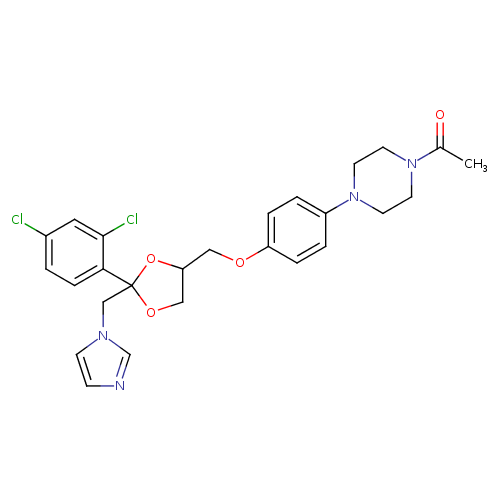
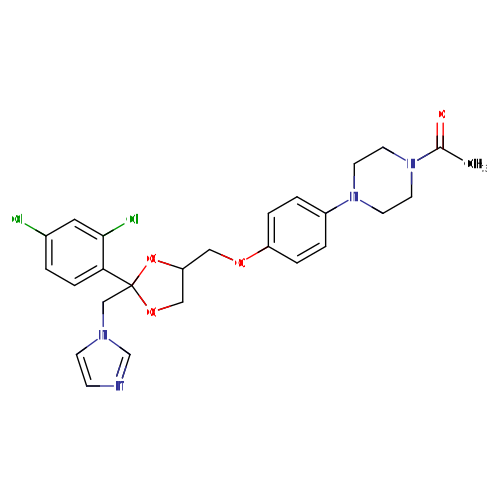
Ketoconazole is only found in individuals that have used or taken this drug. It is a broad spectrum antifungal agent used for long periods at high doses, especially in immunosuppressed patients. [PubChem]Ketoconazole interacts with 14-α demethylase, a cytochrome P-450 enzyme necessary for the conversion of lanosterol to ergosterol. This results in inhibition of ergosterol synthesis and increased fungal cellular permeability. Other mechanisms may involve the inhibition of endogenous respiration, interaction with membrane phospholipids, inhibition of yeast transformation to mycelial forms, inhibition of purine uptake, and impairment of triglyceride and/or phospholipid biosynthesis. Ketoconazole can also inhibit the synthesis of thromboxane and sterols such as aldosterone, cortisol, and testosterone.
belongs to the class of organic compounds known as phenylpiperazines. Phenylpiperazines are compounds containing a phenylpiperazine skeleton, which consists of a piperazine bound to a phenyl group.
Ketoconazole interacts with 14-α demethylase, a cytochrome P-450 enzyme necessary for the conversion of lanosterol to ergosterol. This results in inhibition of ergosterol synthesis and increased fungal cellular permeability. Other mechanisms may involve the inhibition of endogenous respiration, interaction with membrane phospholipids, inhibition of yeast transformation to mycelial forms, inhibition of purine uptake, and impairment of triglyceride and/or phospholipid biosynthesis. Ketoconazole can also inhibit the synthesis of thromboxane and sterols such as aldosterone, cortisol, and testosterone. (2, 3, 4, 5)
Metabolism
Hepatic. Ketoconazole is partially metabolized in the liver to several inactive metabolites by oxidation and degradation of the imidazole and piperazine rings, by oxidative O-dealkylation, and by aromatic hydroxylation. (1)
Half Life: 2 hours
No indication of carcinogenicity to humans (not listed by IARC).
Uses/Sources
Ketoconazole is an antifungal agent. It is sold commercially as an anti-dandruff shampoo, topical cream, and oral tablet, under the trademark name Nizoral by Johnson & Johnson. (8). It is used for the treatment of the following systemic fungal infections: candidiasis, chronic mucocutaneous candidiasis, oral thrush, candiduria, blastomycosis, coccidioidomycosis, histoplasmosis, chromomycosis, and paracoccidioidomycosis.
Side effects of the potential hepatotoxicity of Ketoconazole include abdominal pain or tenderness, clay-colored stools, dark urine, decreased appetite, fever, headache, itching, loss of appetite, nausea and vomiting, skin rash, swelling of the feet or lower legs, unusual tiredness or weakness, and yellow eyes or skin. (6)
Treatment
In the event of accidental overdosage, supportive measures, including gastric lavage with sodium bicarbonate, should be employed. (7)